

P0301 on 2010-2017 Volvo XC60 3.2L: Cylinder 1 Misfire Causes and Fixes
P0301 on a 2010-2017 Volvo XC60 3.2L almost always indicates a failed ignition coil or a worn spark plug on cylinder 1. Swapping the coil with cylinder 2 is the fastest way to confirm. A single coil costs about $40-$80, and a spark plug is around $15. If both are good, the fuel injector is a known, albeit less common, culprit on this engine platform.
- P0301 on your XC60 3.2L means cylinder 1 is misfiring.
- The most likely cause is a bad ignition coil, followed by a worn spark plug.
- The fastest diagnosis is to swap the cylinder 1 ignition coil with another cylinder's coil and see if the code follows.
- If the coil and plug are good, a faulty fuel injector is a known issue on this specific engine.
- If the Check Engine Light is flashing, stop driving immediately to prevent expensive catalytic converter damage.
What's Unique About the 2010-2017 Volvo XC60

On the Volvo 3.2L I6 engine (B6324S), also known as the SI6, the ignition system is a very common source for misfire codes like P0301. The individual coil-on-plug design is reliable, but coils and spark plugs are considered regular maintenance items that wear out over time. While vacuum leaks can cause misfires on many engines, on this platform, a single-cylinder misfire is less likely to be a vacuum leak and more likely to be a component specific to that cylinder. Notably, this engine platform, also used in the Land Rover LR2, has a documented history of fuel injector failures that can cause a persistent single-cylinder misfire, making it a stronger possibility here than on other vehicles.
Symptoms You May Notice
- Rough or shaky idle
- Hesitation or stumbling during acceleration
- Noticeable loss of engine power
- Flashing or solid Check Engine Light
- A smell of gasoline from the exhaust
- Reduced fuel economy
- Difficulty starting the engine
- Replacing the oxygen (O2) sensor. A bad O2 sensor will typically set its own specific codes and is unlikely to cause a consistent misfire on only one cylinder.
- Replacing the Mass Air Flow (MAF) sensor. A faulty MAF sensor usually causes lean or rich codes and affects all cylinders, leading to random misfires (P0300) rather than a specific cylinder misfire.
Most Likely Causes

- Failing Ignition Coil 🔴 High Probability Coil-on-plug units are wear items. Heat cycles and high voltage eventually cause the internal windings to fail, leading to a weak or no spark. In some cases, the coil can short and melt, potentially blowing a fuse and causing a no-start condition.
How to confirm: Swap the ignition coil from cylinder 1 with the coil from cylinder 2. Clear the codes and drive the vehicle. If the code changes to P0302 (Cylinder 2 Misfire), the ignition coil is faulty. This is the universally accepted first diagnostic step.
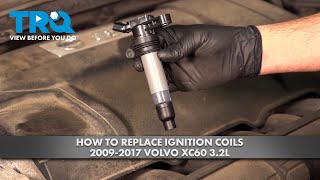
Typical fix: Replace the faulty ignition coil. 🎬 Watch: Step-by-step guide to replacing your ignition coils. Many owners and mechanics recommend replacing all six coils and spark plugs at the same time for preventative maintenance and to ensure long-term reliability.
Est. part cost: $40-$80 for a single aftermarket coil, $70-$110 for OEM/Genuine. - Worn or Fouled Spark Plug 🔴 High Probability Spark plugs have a finite service life, typically around 75,000 miles on the 3.2L I6. The electrode can wear down, increasing the gap, or become fouled with carbon or oil deposits, preventing a strong spark. Oil in the spark plug wells, often from a failing valve cover gasket or PCV issue, can also saturate the coil boot and cause a misfire.
How to confirm: After ruling out the coil, remove the spark plug from cylinder 1. Inspect it for wear (worn electrode), damage (cracked ceramic), or fouling (black carbon, wet with oil or fuel). Compare it to a new plug. The gap should be correct (approx 0.039in / 1.0mm).
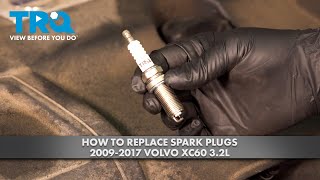
Typical fix: Replace the spark plug. It is best practice to replace all six spark plugs at the same time to ensure consistent performance. New plugs should be torqued to spec 🎬 See how to properly install and torque new spark plugs. (approx. 30 Nm or 22 ft-lbs).
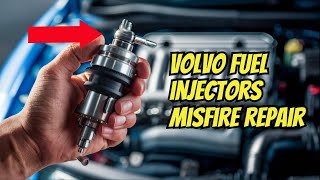
Est. part cost: $10-$25 per plug - Faulty Fuel Injector 🟡 Medium Probability This specific Volvo/Land Rover engine has a known history of fuel injector failures. Land Rover issued a Special Service Message (SSM 71894) to investigate injector issues causing cold start misfires and rough running. A leaking injector can drip fuel into the cylinder after shutdown, causing a rich misfire on the next startup.
How to confirm: This is more complex. After confirming the coil and plug are good, the injector is the next logical suspect. A professional may use a diagnostic tool to perform a fuel injector balance test. A DIY method involves swapping injectors between cylinders, similar to the coil swap, but this is a more labor-intensive job requiring fuel system depressurization.
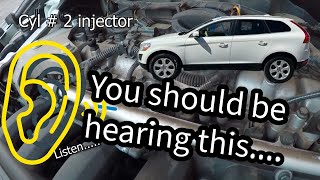
Typical fix: Replace the faulty fuel injector. This involves removing the fuel rail. 🎬 Watch: Detailed walkthrough for replacing faulty fuel injectors.
Est. part cost: $50-$150
Rare But Worth Checking
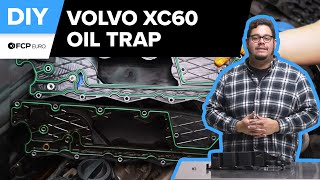
- Clogged PCV/Oil Trap System: While a clogged PCV system on Volvos often causes multiple or random misfires due to crankcase pressure issues affecting seals and air/fuel mixtures, a severe or uniquely failed component could potentially contribute to a single-cylinder issue. Symptoms often include a whistling noise or excessive vacuum at the oil cap. Oil being forced into spark plug wells is another common symptom.
- Low Engine Compression: This indicates a mechanical engine problem, such as a bad valve, worn piston rings, or a blown head gasket. A compression test is needed to confirm this. This is the least likely and most serious cause.
- Vacuum Leak: A vacuum leak, especially from an intake manifold gasket near cylinder 1, could potentially cause a single-cylinder misfire by leaning out the air/fuel mixture for that specific cylinder. However, vacuum leaks on this engine more commonly cause random misfire codes (P0300).
Diagnosis Steps

- Verify the code is P0301 using an OBD-II scanner.
- Turn off the engine and allow it to cool. Remove the plastic engine cover by pulling it straight up.
- Locate cylinder 1, which is the one closest to the front (belt side) of the engine, on the passenger side of the vehicle (for US models).
- Disconnect the electrical connector from the ignition coil on cylinder 1 and cylinder 2. Remove the 8mm bolt holding each coil.
- Swap the ignition coil from cylinder 1 to cylinder 2, and the coil from cylinder 2 to cylinder 1. Reinstall the bolts and reconnect the electrical connectors. Ensure connectors are not switched between cylinders.
- Clear the trouble codes with the scanner and start the engine. Drive until the Check Engine Light reappears.
- Scan for codes again. If the code is now P0302, the ignition coil you moved is faulty and must be replaced.
- If the code remains P0301, the coil is likely good. The next step is to inspect the spark plug. Repeat the process by swapping the spark plug from cylinder 1 to cylinder 2.
- If the code moves to P0302 after swapping plugs, the spark plug is the culprit. Replace all six plugs for best results.
- If the code still remains P0301 after swapping both the coil and the plug, the issue is more likely with the fuel injector or a mechanical problem in cylinder 1. Given the platform's history, the fuel injector is a strong suspect. At this point, professional diagnosis may be required.
Parts You'll Likely Need
- Ignition Coil
(OEM #30684245)— This is the most frequent failure point for a single-cylinder misfire on this engine. The OEM part is often made by NGK or Denso.
Trusted brands: Bosch, Hella, Delphi, NGK, Beru, Bremi
OEM price range: $70-$110
Aftermarket price range: $40-$80 - Spark Plug
(OEM #31293000)— As a primary component of the ignition system, spark plugs are a common wear item that can cause misfires when they exceed their service life. The OEM plug is often a Denso Iridium plug.
Trusted brands: Volvo (OEM), NGK, Denso (IKH20TT, FK20HQR10), Bosch (0 242 236 528)
OEM price range: $20-$30
Aftermarket price range: $10-$20
Related Codes That Often Appear With This One
- P0300 — If the misfire is intermittent or begins to affect other cylinders, a P0300 (Random/Multiple Misfire Detected) code may appear alongside P0301.
- P0302, P0303, etc. — If other cylinder-specific misfire codes are present, it may point to a common problem affecting multiple cylinders, such as a vacuum leak or fuel delivery issue, rather than a single bad coil or plug.
- P0316 — This code indicates a misfire was detected within the first 1,000 engine revolutions after startup. It often points towards a leaking fuel injector that dripped fuel into the cylinder while the car was off.
Technical Service Bulletins (TSBs) & Recalls

- Land Rover Special Service Message (SSM) 71894: While not a Volvo TSB, this bulletin was issued for the identical 3.2L I6 engine used in the Land Rover LR2. It documents an investigation into fuel injector failures causing cold start misfires and rough running.
Platform-Specific Known Issues
- Real Owner Experience: Misfire Persisted After Coil/Plug Swap: On Land Rover forums discussing the same 3.2L engine, an owner reported a persistent P0301 misfire that was not resolved by swapping coils or replacing plugs. The ultimate fix was replacing the fuel injector for cylinder 1, which was found to be faulty. This corroborates the Land Rover TSB regarding injector issues on this platform.
Mechanic-Grade Diagnostic Values
- Fuel Injector Resistance — expected: 10-16 Ohms at 68°F (20°C). All injectors should be within 0.5 Ohms of each other. A more precise value is 14.5 ± 0.7 Ohms. A user reported a healthy reading of 14.1 Ohms.. Failure: A reading of infinite resistance (open circuit), near-zero (short circuit), or a value that is an outlier compared to the other five injectors.
- Fuel Rail Pressure — expected: Approximately 55 PSI (3.8 bar) at the rail under normal operating conditions.. Failure: Significantly low pressure (e.g., below 40 PSI) can indicate a failing fuel pump, which would typically cause multiple/random misfires, not just P0301.
- Spark Plug Resistance — expected: Approximately 5000 Ohms (5kΩ) for compatible Denso Iridium TT plugs.. Failure: A significantly different resistance value or an open circuit.
- PCV System Vacuum — expected: A very slight vacuum at the oil filler cap when the engine is idling.. Failure: A strong suction that makes the oil cap difficult to remove, often accompanied by a whistling or howling noise, indicates a failed PCV diaphragm.
Hidden / Shadow Codes Worth Checking
- Cylinder-Specific Misfire Counters: Volvo's VIDA software can display live misfire counts for each individual cylinder. This allows a technician to see small numbers of misfires that haven't yet reached the threshold to set a permanent P0301 code. It can also show if other cylinders are misfiring occasionally. (see via Volvo VIDA/DiCE diagnostic tool.)
- Fault Status Bits: VIDA can show detailed status information for a DTC, such as if the fault is 'confirmed' (persistent) or 'unconfirmed' (temporary/intermittent). This helps differentiate a hard failure from a momentary glitch. (see via Volvo VIDA/DiCE diagnostic tool.)
Scan Tool Commands That Help
- Volvo VIDA or advanced professional scanner: Fuel Injector Actuation Test — After confirming the spark plug and ignition coil are good, this test can be used to audibly verify if the fuel injector is mechanically opening and closing. The tool commands the injector to click without starting the engine.
- Volvo VIDA: Live Data Monitoring (Misfire Counters) — Used as a primary diagnostic step to confirm which cylinder is misfiring and by how much. It is crucial for diagnosing intermittent misfires or confirming if a repair was successful by observing if the counter for cylinder 1 stops increasing.
Wiring & Ground Locations
- 31/89 — Engine bay, specific location on the engine block for the ignition coil ground connection.. A loose or corroded ground connection at this point could cause a weak or inconsistent spark for one or more ignition coils, leading to misfires. While it would likely affect more than one cylinder, it's a critical point to check for any ignition-related fault.
- Ignition Coil Connector — On top of each ignition coil.. The 4-pin connector provides power, ground, and a trigger signal from the ECM. The pins and wiring harness can become brittle from heat and vibration. A damaged wire or loose pin for the cylinder 1 coil connector will directly cause a P0301. The connector is a 12V, 4-pin type for this non-turbo engine.
Real Owner Repair Stories
- YouTube channel 'Another Lap' (2013 Volvo XC60 3.2L B6324S4) — Misfire on startup (P0303 in this case, but same diagnostic principle), which improved slightly as the engine warmed up.
❌ Tried (didn't work) Swapping ignition coils between cylinders., Swapping spark plugs between cylinders.
✅ What actually fixed it The fuel injector was swapped from the misfiring cylinder (3) to another cylinder (2). The misfire code followed the injector, changing to P0302, confirming the fuel injector was the faulty component. Replacing the single fuel injector resolved the misfire.
OEM Part Supersession History
30684245→30684245 (current)— This part number has remained stable for the ignition coil.
Heads up: This part also cross-references to Land Rover part number LR002954, as it was used in the LR2 with the same 3.2L engine.
Model Year Variations Within This Range
- 2010-2016: The engine in 2010-2016 XC60 3.2L models is technically the B6324S5, an updated version of the earlier B6324S (2006-2010). However, for the purposes of diagnosing a P0301 misfire, the key ignition and fuel components like the coils (PN 30684245) and spark plugs (PN 31293000) remained the same, making the diagnostic procedure identical.
Diagnostic Flowchart
Other Known Issues on This Vehicle
Issues unrelated to this code that are worth knowing about as an owner of this generation:
- Leaking Brake Vacuum Pump 🟠 Medium — Very common, especially on higher mileage vehicles (over 80k miles). Causes an oil leak onto the top of the transmission. (Ref: No TSB, but a well-documented issue. Volvo offers a reseal kit (Part # 31401556) as a cheaper alternative to replacing the entire pump.)
- Rear End Accessory Drive (READ) Unit Failure 🔴 High — Less common than the vacuum pump leak, but a much more severe and expensive repair. Failure of the internal bearing or drive gear can cause a whining/growling noise from the transmission side of the engine. Can require engine or transmission removal to service. (Ref: Volvo Service Bulletin TJ 21-9 describes a noise from a failing drive gear.)
- Oil Consumption (Early Models) 🟠 Medium — More prevalent on pre-2011 models (B6324S). Caused by issues with piston rings. The issue was largely addressed in the updated B6324S5 engine variant from 2011 onwards. (Ref: No recall, but was a known issue addressed under warranty for some vehicles with updated pistons/rings.)
- Auxiliary/Serpentine Belt and Tensioner Wear 🟠 Medium — The tensioner pulley bearing is a known weak point and can fail prematurely, sometimes well before the 150k mile replacement interval. Failure can shred the belt.
- Clogged PCV / Oil Trap 🟠 Medium — Common after 80,000-100,000 miles. A failed diaphragm can cause a loud whistling noise, high crankcase pressure, oil leaks from seals (like the cam cover or main seals), and increased oil consumption. (Ref: Volvo issued a service bulletin for this issue.)
Used vs. New Parts: Buying Guide for This Vehicle
When a used part is the smart pick: For this repair, buying used parts is generally not recommended as the primary causes are wear-and-tear items. A used engine cover or bolts are acceptable, but functional components like coils, plugs, or injectors should be purchased new.
Donor-vehicle mileage cap: roughly under 75000 miles for the part to have meaningful remaining life.
What to inspect on the donor part:
- For a fuel injector, ask for the donor vehicle's mileage and history if possible.
- Avoid parts from engines that show signs of heavy oil leaks or sludge, as this can indicate poor maintenance.
OEM-only on this vehicle (don't cheap out):
- While not strictly 'OEM-only', it is highly recommended to use either Genuine Volvo parts or parts from the original equipment manufacturer (e.g., Denso, Bosch) for ignition coils and fuel injectors to avoid premature failure and repeat repairs.
Aftermarket brands forum-validated for this vehicle:
- Ignition Coils: Bosch, Beru, Bremi, NGK.
- Spark Plugs: Denso (OEM supplier), NGK.
Brands owners have reported issues with on this vehicle:
- Unnamed 'white-box' or no-name ignition coils from major online marketplaces are a frequent cause of repeat failures and are best avoided.
Real Owner Stories
Aggregated from forums and TSBs cited above. Mileages and costs reflect what owners reported in those sources.
Land Rover LR2 3.2L I6 (B6324S)
Symptoms: Persistent P0301 misfire that was not resolved by swapping ignition coils or replacing spark plugs.
What fixed it: Replacing the fuel injector for cylinder 1.
Source hint: landroverforums.com thread regarding TSB SSM71894 and persistent single-cylinder misfires
2010 Volvo XC60 3.2L — ~85000 miles
Symptoms: Oil leaking onto the top of the transmission.
What fixed it: Resealing the brake vacuum pump using Volvo kit Part # 31401556.
Source hint: Known issue: Leaking Brake Vacuum Pump
Related OBD-II Codes
Frequently Asked Questions
Does the Land Rover Special Service Message (SSM) 71894 apply to my Volvo XC60 3.2L?
What is the recommended spark plug gap and torque for the B6324S engine?
I have oil in my spark plug wells; could this cause my P0301 code?
Is there a cheaper way to fix the common oil leak on the transmission side of the engine?
What is the first diagnostic step I should take for a P0301 code on my XC60?
How often should I replace the spark plugs on my 2010-2017 XC60 3.2L?
Helpful Videos
We Have This Part in Stock



The information in this article is provided for general reference and educational purposes only. Vehicle specifications, procedures, and part compatibility can vary by production date, trim level, and region. Always consult your vehicle's factory service manual and verify part numbers before purchasing or performing repairs. Safety-critical components such as airbags, seat belts, and braking systems should be installed by a qualified professional.
- Volvo XC60:
- 🎬 Helpful Videos
- 🛍️ Shop This Part
- What's Unique About the 2010-2017 Volvo XC60
- Symptoms You May Notice
- Most Likely Causes
- Rare But Worth Checking
- Diagnosis Steps
- Parts You'll Likely Need
- Related Codes That Often Appear With This One
- Technical Service Bulletins (TSBs) & Recalls
- Platform-Specific Known Issues
- Mechanic-Grade Diagnostic Values
- Hidden / Shadow Codes Worth Checking
- Scan Tool Commands That Help
- Wiring & Ground Locations
- Real Owner Repair Stories
- OEM Part Supersession History
- Model Year Variations Within This Range
- Diagnostic Flowchart
- Other Known Issues on This Vehicle
- Used vs. New Parts: Buying Guide for This Vehicle
- Real Owner Stories
- Land Rover LR2 3.2L I6 (B6324S)
- 2010 Volvo XC60 3.2L — ~85000 miles
- Related OBD-II Codes
- Frequently Asked Questions
- 🎟️ Get 5% Off