

P0301 on 2012-2018 Audi A6: Cylinder 1 Misfire Causes and Fixes
P0301 indicates a misfire in cylinder 1. On the Audi A6 (C7), this is most often caused by a failed ignition coil or a worn spark plug. A simple diagnostic is to swap the coil and plug from cylinder 1 to another cylinder to see if the misfire follows. If ignition parts are good, carbon buildup on intake valves is the next most likely cause, especially on higher mileage direct-injection engines.
- P0301 on a 2012-2018 Audi A6 means cylinder 1 is misfiring.
- The most likely culprits are a bad ignition coil or a worn spark plug. Start your diagnosis by swapping these parts to another cylinder.
- If you also have a P130A code, it confirms the misfire is severe enough for the ECU to shut down the cylinder to prevent damage.
- Due to the direct injection design of the 2.0T and 3.0T engines, carbon buildup on the intake valves is a common cause of misfires, especially on cars with over 60,000 miles.
- Do not ignore a flashing check engine light, as continued driving can destroy your catalytic converter, a very expensive repair.
What's Unique About the 2012-2018 Audi A6
For the 2012-2018 (C7) Audi A6, both the 2.0T and 3.0T engines use Gasoline Direct Injection (GDI). While efficient, this design allows oil vapor and combustion byproducts to bake onto the intake valves over time, as they are no longer cleaned by fuel spray. This carbon buildup is a very common cause of misfires, especially on higher-mileage vehicles (typically over 60,000 miles), and can lead to codes like P0301. Additionally, a specific Audi TSB (2033768) links misfire codes (P0301-P0306) with a secondary code, P130A, which indicates the ECU is intentionally disabling the cylinder to prevent damage, often due to severe misfires caused by this carbon buildup.
Symptoms You May Notice
- Rough or shaking idle
- Flashing or solid Check Engine Light
- Noticeable loss of power and sluggish acceleration
- Engine hesitation or stumbling
- Decreased fuel economy
- Smell of unburned fuel from the exhaust
- Whistling or hissing noise from the engine bay (if related to PCV failure)
- Replacing the Mass Airflow (MAF) sensor. While a faulty MAF sensor can cause performance issues, it typically affects all cylinders and would be more likely to set a random misfire code (P0300) or a MAF-specific code, not a single cylinder misfire like P0301.
Most Likely Causes
- Faulty Ignition Coil 🔴 High Probability Ignition coils are a common failure item on many modern engines, including Audi's, due to high heat and electrical stress. The factory coils on the 2.0T and 3.0T engines are known for premature failure due to thermal breakdown.
How to confirm: Swap the ignition coil from cylinder 1 with the coil from another cylinder (e.g., cylinder 2). Clear the codes and drive the car. If the code changes to P0302 (Cylinder 2 Misfire), the ignition coil is faulty.
Typical fix: Replace the faulty ignition coil. It is often recommended to replace all coils at the same time, especially if they are original and the vehicle has high mileage. Many owners upgrade to the red top 'R8' style coils for better durability.
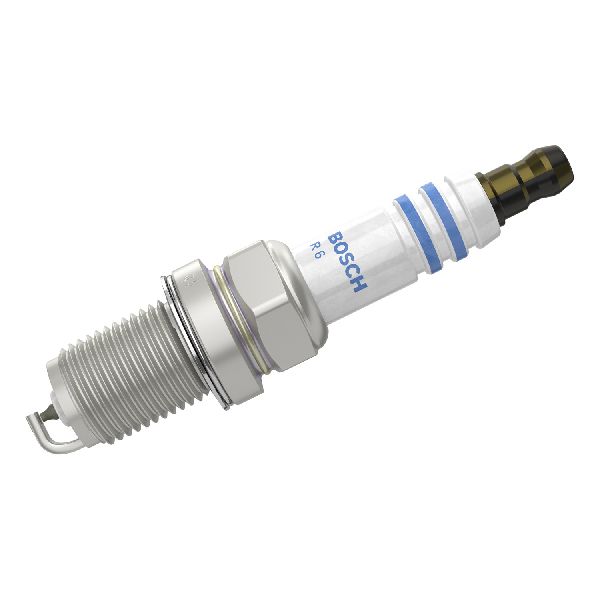
Est. part cost: $30-$60 per coil - Worn or Fouled Spark Plug 🔴 High Probability Spark plugs are a regular maintenance item. High-performance turbocharged and supercharged engines can be particularly demanding on spark plugs, leading to faster wear or fouling from oil or carbon.
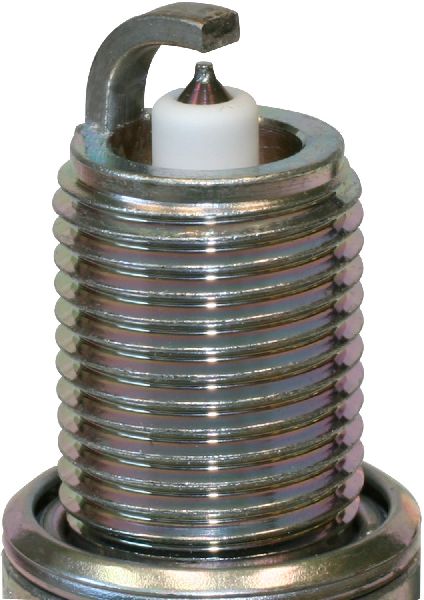
How to confirm: After ruling out the ignition coil, swap the spark plug from cylinder 1 with another cylinder. If the misfire code moves to the new cylinder, the spark plug is the issue. Visually inspect the plug for wear, carbon fouling, or oil/coolant deposits. Ashy, white deposits can indicate a coolant leak.
Typical fix: Replace the spark plug in cylinder 1. It is best practice to replace all spark plugs as a set at the manufacturer's recommended interval, which is typically every 55,000 miles for the 3.0T.
Est. part cost: $15-$30 per plug - Carbon Buildup on Intake Valves 🟡 Medium Probability Both the 2.0T and 3.0T engines use Gasoline Direct Injection (GDI), which sprays fuel directly into the cylinder. This means fuel detergents don't wash over the intake valves, allowing carbon deposits to accumulate and restrict airflow, causing misfires. This issue typically becomes noticeable after 60,000-80,000 miles.
How to confirm: This is difficult to confirm without disassembly. A technician can use a borescope to visually inspect the intake valves by inserting it through an intake port. Misfires that occur primarily on a cold start and then clear up as the engine warms are a classic symptom of carbon buildup.
Typical fix: The intake manifold (and supercharger on the 3.0T) must be removed to clean the valves. This is typically done through media blasting (e.g., walnut shell blasting) to physically remove the carbon deposits.
Est. part cost: $20-$50 for cleaning materials (if DIY), but labor is significant, often costing $800-$1500 at a shop. - Faulty Fuel Injector ⚪ Low Probability While less common than ignition issues, direct injectors operate under high pressure and can become clogged or fail electronically over time. An injector that is stuck open or has a poor spray pattern can cause a misfire.
How to confirm: This is a more advanced diagnostic step. It involves swapping injectors between cylinders, which is labor-intensive, or having a professional test the injector's flow rate and spray pattern. A technician can also monitor fuel pressure to diagnose injector issues. A dead injector was the confirmed fix for a P0304 on a similar 2.0T engine after plugs and coils didn't solve it.
Typical fix: Replace the faulty fuel injector. It's often recommended to replace the injector seal at the same time.
Est. part cost: $50-$200 per injector
Rare But Worth Checking
- Low Cylinder Compression: A mechanical engine issue, such as a worn piston ring, a burnt valve, or jumped timing can cause a loss of compression and a persistent misfire. A compression test followed by a leak-down test is needed to diagnose this. In one documented case on a 2014 A6 3.0T, persistent misfires on cylinder 2 were ultimately caused by a burnt valve stem, which required replacing the cylinder head.
- Leaking Supercharger Intercooler Core (3.0T): On the 3.0T engine, the intercoolers (heat exchangers) are located within the supercharger housing. They can develop leaks, allowing coolant to enter the intake air stream and cause misfires. Symptoms include mysterious coolant loss with no visible external leaks and white, ashy deposits on the spark plug of the affected cylinder.
- PCV System Failure: A failed Positive Crankcase Ventilation (PCV) valve, also called an oil separator, is common on both engines. A torn diaphragm in the valve creates a vacuum leak, leading to a rough idle, lean codes, a whistling noise, and sometimes misfires that clear up above idle RPM. On the 3.0T, the PCV is located under the supercharger, making replacement labor-intensive.
Diagnosis Steps
- Read the fault codes with an OBD-II scanner to confirm P0301 and check for any other codes, especially P130A or other P030x codes.
- Check the misfire counter in the scanner's live data (e.g., using VCDS/VAG-COM in measuring blocks 015 and 016) to see if the misfires are actively occurring on cylinder 1.
- Swap the ignition coil from cylinder 1 to cylinder 2. Clear the codes and drive the vehicle. Rescan to see if the fault has moved to cylinder 2 (P0302). If it has, the coil is bad.
- If the misfire remains on cylinder 1, swap the spark plug from cylinder 1 to cylinder 3. Clear codes and drive. If the fault moves to cylinder 3 (P0303), the spark plug is bad.
- If the misfire still remains on cylinder 1, inspect the wiring and connector for the ignition coil and fuel injector on cylinder 1 for any damage or corrosion.
- Perform a vacuum test on the engine. While the engine is idling, try to remove the oil filler cap. If there is extreme suction and the engine stumbles or stalls, the PCV valve diaphragm is likely torn.
- If ignition and PCV are good, a compression test on cylinder 1 should be performed to rule out mechanical engine damage.
- If compression is good, a borescope inspection of the intake valves for carbon buildup is recommended, especially if the car has over 60,000 miles.
- For 3.0T engines, if compression is good and you have unexplained coolant loss, suspect a leaking supercharger intercooler. Inspect the spark plug for white ash.
- If all other tests pass, the fuel injector for cylinder 1 is the most likely remaining culprit.
Parts You'll Likely Need
- Ignition Coil
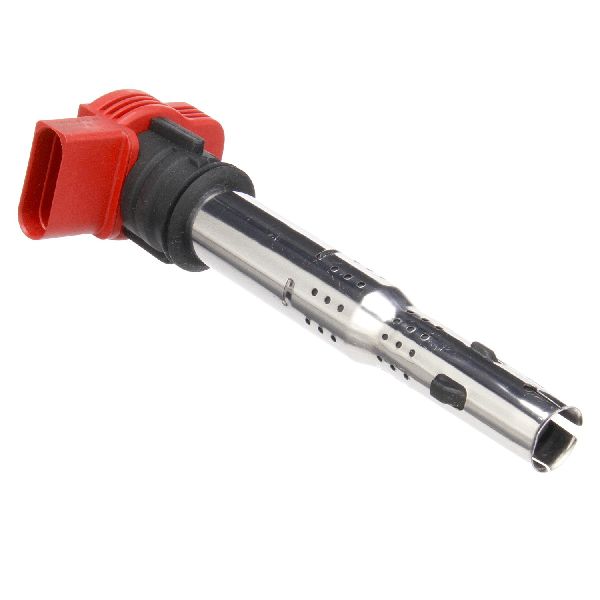
(OEM #06E905115G (Red Top, common upgrade for both engines), 07K905715F (Black Top))— This is one of the most common failure points for a single-cylinder misfire on Audi engines.
Trusted brands: Bosch, NGK, Eldor, Beru
OEM price range: $50-$75
Aftermarket price range: $30-$60 - Spark Plug
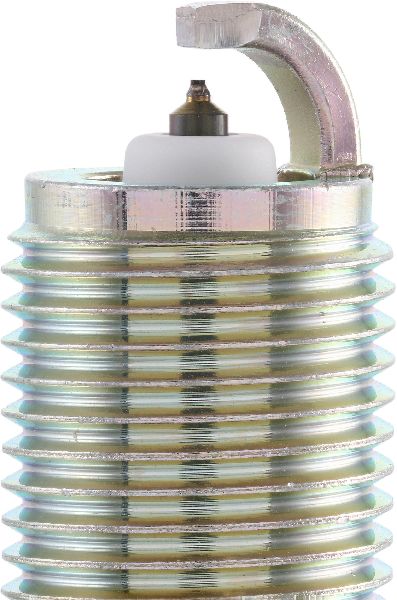
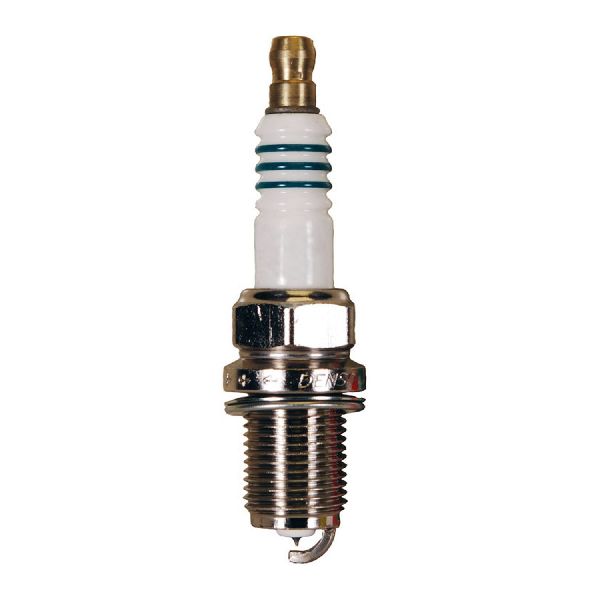
(OEM #3.0T: NGK PFR8S8EG. 2.0T: NGK PFR7S8EG (or OEM 06H905601A).)— A worn or fouled spark plug is a very common and simple-to-fix cause of a P0301 code.
Trusted brands: NGK, Bosch
OEM price range: $20-$30
Aftermarket price range: $15-$25
Related Codes That Often Appear With This One
- P130A — This Audi-specific code means 'Cylinder Disabling' or 'Hide Cylinder'. The ECU sets this code when it detects a severe or continuous misfire (like P0301) and intentionally shuts off fuel and spark to that cylinder to protect the engine and catalytic converter. Seeing P130A confirms the misfire is significant and is often linked to carbon buildup issues under heavy load.
- P0300 — This code means 'Random/Multiple Cylinder Misfire'. If you see P0301 along with P0300, it means that while cylinder 1 is the primary offender, other cylinders are misfiring as well. This could point towards a more systemic issue like carbon buildup, a vacuum leak (e.g., PCV valve), or low fuel pressure.
- P0171 — This code means 'System Too Lean (Bank 1)'. A vacuum leak, often from a failed PCV valve, can cause this code to appear alongside a misfire code as unmetered air enters the engine.
Technical Service Bulletins (TSBs) & Recalls
- TSB #01138920337681 (also cited as 2033768): Mentions that a cylinder misfire fault (P0301-P0306) stored with P130A is a known issue. Forum discussions point to this being related to carbon buildup restricting airflow, particularly under heavy load.
Platform-Specific Known Issues
- A Technical Service Bulletin (TSB #01138920337681) was issued by Audi for a 'cylinder misfire fault (DTC P0301 – P0306) with DTC P130A'. Forum discussions suggest this TSB is often related to carbon buildup on the intake valves, particularly under heavy load.
Mechanic-Grade Diagnostic Values
- Live Misfire Counts per Cylinder — expected: 0 at idle and under load.. Failure: Any count greater than 0 indicates a misfire event on that specific cylinder. A rapidly increasing count points to a persistent problem.
- Short-Term Fuel Trim (STFT) & Long-Term Fuel Trim (LTFT) — expected: Ideally between -5% and +5% at idle and steady cruise.. Failure: Consistently high positive values (e.g., > +10%) suggest the engine is compensating for a lean condition, which could be caused by a vacuum leak or a clogged fuel injector on that bank. Consistently high negative values suggest a rich condition, possibly from a leaking injector.
Scan Tool Commands That Help
- VCDS (VAG-COM) or ODIS: Advanced Measuring Values / Measuring Blocks — To monitor live misfire counts for each individual cylinder (Blocks 015, 016 for older controllers). This is critical to confirm the misfire is exclusively on cylinder 1 and to verify if a repair (like swapping a coil) has successfully moved the misfire to another cylinder.
- VCDS (VAG-COM) or ODIS: Injector Quantity / Balance Test — After ruling out ignition components, this function can help identify a faulty fuel injector by comparing its fueling deviation relative to the others. A significant deviation on cylinder 1 points to an injector problem.
Wiring & Ground Locations
- Engine Block Ground Strap — On the right side of the engine compartment, near the alternator. There are also smaller ground wires for each ignition coil harness.. A corroded or loose main engine ground or individual coil ground can cause erratic voltage supply to the ignition coils, leading to weak spark and intermittent misfires that are difficult to diagnose. A visual inspection for corrosion and a voltage drop test are recommended if ignition problems are suspected but coils and plugs are good.
Real Owner Repair Stories
- AudiWorld Forums (2014 Audi A6 3.0T) — Persistent Check Engine Light with misfire faults on cylinder 2 over a period of two years. EPC light would also illuminate.
❌ Tried (didn't work) Replacing multiple fuel injectors (3 in total)., Swapping ignition coils and spark plugs (misfire remained on cylinder 2)., Dealer could not reproduce the problem initially and suggested a carbon cleaning, which was declined.
✅ What actually fixed it A compression test showed a leak. Upon pulling the cylinder head, a burnt valve stem was discovered. The final repair was the replacement of the entire passenger side (cylinders 1, 2, 3) cylinder head. - Reddit r/Audi (2.0 TFSI engine (in a TT, but same engine family)) — P0304 (Cylinder 4 Misfire), violent shaking when applying more than 30% throttle, flashing check engine light.
❌ Tried (didn't work) Changing spark plugs.
✅ What actually fixed it The cause was a dead fuel injector. Replacing the injector resolved the misfire.
OEM Part Supersession History
06E905115, 06E905115A, B, C, D, E, F→06E905115G— Progressive updates to improve reliability and prevent premature failure due to heat and electrical stress. The 'G' revision is the latest and most robust version.
Heads up: All previous versions (A through F) are replaced by the 'G' version. While older versions will work, the 'G' revision is considered the most durable replacement.
Model Year Variations Within This Range
- 2012-2015 (C7) vs 2016-2018 (C7.5 Facelift): The 3.0T engine was updated for the C7.5 generation. A key physical difference is the supercharger pulley; C7 models have a press-on pulley, while C7.5 models have a 4-bolt pulley. The C7.5 2.0T engine is the 3rd generation EA888, which is generally considered more reliable, though early versions could still have issues.
Diagnostic Flowchart
Other Known Issues on This Vehicle
Issues unrelated to this code that are worth knowing about as an owner of this generation:
- Timing Chain Tensioner Failure (2.0T) 🔴 High — Common on pre-2015 EA888 Gen 2 engines. Failure can cause the chain to jump, leading to catastrophic engine damage. (Ref: Subject of a class-action lawsuit which led to warranty extensions for some vehicles.)
- Water Pump & Thermostat Failure (3.0T & 2.0T) 🟠 Medium — Very common around 60,000-100,000 miles. The plastic housings crack, causing coolant leaks and potential overheating. (Ref: A recall was issued for an auxiliary electric coolant pump on some 2.0T models, but the main engine water pump is also a frequent failure point.)
- Excessive Oil Consumption (2.0T) 🔴 High — Primarily affects earlier EA888 Gen 2 engines (approx. 2012-2014) due to piston ring design. Can require piston/ring replacement to fix. (Ref: Subject of a class-action lawsuit.)
- Motor Mount Failure 🟠 Medium — The fluid-filled electronic engine mounts tend to fail around 80,000-120,000 miles, causing excessive vibration at idle.
- PCV Valve Failure (3.0T & 2.0T) 🟠 Medium — Common failure item. On the 3.0T, it is located under the supercharger, making replacement a labor-intensive job often paired with thermostat replacement and carbon cleaning.
Used vs. New Parts: Buying Guide for This Vehicle
When a used part is the smart pick: For this repair, buying used parts is generally not recommended for the most common failure items. However, if a larger component like an intake manifold or the supercharger housing itself is damaged, a used part from a reputable salvage yard with a known low-mileage donor car can be a cost-effective option.
Donor-vehicle mileage cap: roughly under 70000 miles for the part to have meaningful remaining life.
What to inspect on the donor part:
- For a supercharger assembly, check for any play in the pulley and ensure the rotors spin smoothly.
- Inspect any used electronic component (like a coil or injector harness) for brittle plastic, cracked connectors, or signs of corrosion.
- Ask for the VIN of the donor car to verify its year and engine type to ensure compatibility, especially between C7 and C7.5 generations.
OEM-only on this vehicle (don't cheap out):
- PCV Valve / Oil Separator: Aftermarket PCV valves for these engines have a high failure rate. It is strongly recommended to use an OEM part to avoid repeat repairs.
- Fuel Injectors: While some aftermarket brands are reputable, OEM or OEM-supplier (Bosch) injectors are the safest bet to ensure correct flow rates and spray patterns for direct injection.
- Supercharger Intercooler Cores: There are few aftermarket options, and OEM units are recommended to prevent leaks that can cause misfires and potential engine damage.
Aftermarket brands forum-validated for this vehicle:
- Ignition Coils: Bosch, NGK, Eldor (often the OEM supplier). The red-top 'R8' coils (Part # 06E905115G) are a popular and reliable upgrade.
- Spark Plugs: NGK and Bosch are the OEM suppliers and are highly recommended. Sticking to the specific plug (e.g., NGK PFR8S8EG for the 3.0T) is critical.
Brands owners have reported issues with on this vehicle:
- Unnamed/white-box ignition coils and sensors from online marketplaces. These often have a very high failure rate and can cause more diagnostic headaches than they solve.
Real Owner Stories
Aggregated from forums and TSBs cited above. Mileages and costs reflect what owners reported in those sources.
2013 Audi A6 3.0T
Symptoms: Misfires occurring only on one bank (Bank 1) even after replacing spark plugs and ignition coils.
What fixed it: The issue was identified as a more complex problem than basic ignition components, pointing toward fuel injection or mechanical issues after standard swaps failed.
Source hint: AudiWorld thread titled 'Misfires only on bank 1...'
2012-2018 Audi A6 2.0T
Symptoms: P0304 (misfire on a similar cylinder) that persisted after new plugs and coils were installed.
What fixed it: A dead fuel injector was the confirmed fix.
Source hint: Article context reference regarding 2.0T injector failure
2012-2018 Audi A6 (Tuned)
Symptoms: P0301 code; owner replaced coils and plugs with no success.
What fixed it: The issue was more complex than basic ignition components, often requiring deeper diagnostic steps like injector testing or carbon cleaning.
Source hint: AudiWorld forum discussion regarding tuned Audi P0301
2012-2018 Audi A6 3.0T — ~70000 miles
Symptoms: Misfires that occur primarily on a cold start and then clear up as the engine warms.
What fixed it: Media blasting (walnut shell blasting) to remove carbon deposits from the intake valves.
Source hint: Ross-Tech forum discussion referencing TSB 2033768/1
Related OBD-II Codes
Frequently Asked Questions
My Audi A6 has a P0301 and a P130A code; is there a known issue for this?
At what mileage should I expect carbon buildup to cause misfires on my 3.0T or 2.0T engine?
Can I use the 'Red Top' coils I see online for my A6 misfire?
How often should I change the spark plugs on my A6 3.0T to prevent P0301?
Why does my A6 stumble when I try to remove the oil cap while idling?
I have a P0301 and I'm losing coolant on my 3.0T; are they related?
Helpful Videos
Used OEM Parts in Stock


New Aftermarket Parts Available


The information in this article is provided for general reference and educational purposes only. Vehicle specifications, procedures, and part compatibility can vary by production date, trim level, and region. Always consult your vehicle's factory service manual and verify part numbers before purchasing or performing repairs. Safety-critical components such as airbags, seat belts, and braking systems should be installed by a qualified professional.
- Audi A6:
- 🎬 Helpful Videos
- 🛍️ Shop This Part
- What's Unique About the 2012-2018 Audi A6
- Symptoms You May Notice
- Most Likely Causes
- Rare But Worth Checking
- Diagnosis Steps
- Parts You'll Likely Need
- Related Codes That Often Appear With This One
- Technical Service Bulletins (TSBs) & Recalls
- Platform-Specific Known Issues
- Mechanic-Grade Diagnostic Values
- Scan Tool Commands That Help
- Wiring & Ground Locations
- Real Owner Repair Stories
- OEM Part Supersession History
- Model Year Variations Within This Range
- Diagnostic Flowchart
- Other Known Issues on This Vehicle
- Used vs. New Parts: Buying Guide for This Vehicle
- Real Owner Stories
- 2013 Audi A6 3.0T
- 2012-2018 Audi A6 2.0T
- 2012-2018 Audi A6 (Tuned)
- 2012-2018 Audi A6 3.0T — ~70000 miles
- Related OBD-II Codes
- Frequently Asked Questions
- 🎟️ Get 5% Off