

P0300 on 2013-2016 Lincoln MKZ 2.0L EcoBoost: Random Misfire Causes and Fixes
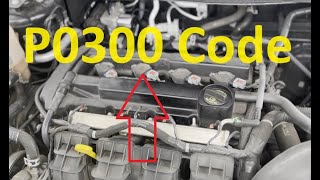
P0300 on a 2013-2016 Lincoln MKZ with the 2.0L EcoBoost engine most often points to worn spark plugs or failing ignition coils. However, for models with the later-design 'twin-scroll' engine (common in 2015-2016), it can be a critical warning for coolant leaking into the engine cylinders. This is a well-documented defect that Ford addressed for 2017-2019 models in TSB 19-2346, but the same engine design is known to fail in earlier years. A basic tune-up with plugs and coils costs around $150-$30
- For any 2013-2016 MKZ 2.0L with a P0300 code, immediately check the coolant level. Unexplained loss is a major red flag for a serious engine defect, especially on 2015-2016 models.
- The most common, less severe causes are worn spark plugs and/or ignition coils. Replace plugs with high-quality parts gapped to 0.027-0.031 inches.
- A flashing check engine light means the misfire is severe and can damage your catalytic converter. Pull over and minimize driving.
- Do not use liquid head gasket sealers or stop-leak additives. They will not fix the engine block flaw and can cause more damage to the cooling system.
What's Unique About the 2013-2016 Lincoln MKZ
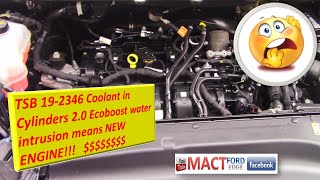
For the 2013-2016 Lincoln MKZ with the 2.0L EcoBoost, the P0300 code has two very different stories. For all years, these turbocharged, direct-injection engines are hard on spark plugs, making ignition components a frequent cause of misfires. However, for 2015 and later models which may have the updated 'twin-scroll' engine design, this code is a significant warning sign for a known engine block design flaw. The flaw is a coolant passage slit between the cylinders in the 'open-deck' block that can crack, allowing coolant to leak directly into the cylinders. This issue is so severe that Ford/Lincoln issued Technical Service Bulletin 19-2346 🎬 Watch: Detailed breakdown of the coolant intrusion TSB and engine flaw. (superseding 19-2208) for 2017-2019 models, with the only permanent fix being a complete long block engine replacement. Therefore, unexplained coolant loss accompanying a P0300 code on a 2015-2016 model must be treated as a potential catastrophic failure.
Symptoms You May Notice
- Rough or vibrating idle, especially on a cold start.
- Hesitation or stumbling during acceleration
- Flashing check engine light (indicates a severe misfire)
- Solid (non-flashing) check engine light
- Reduced engine power
- Poor fuel economy
- White, sweet-smelling smoke from the exhaust (a key sign of coolant intrusion).
- Noticeable drop in the coolant reservoir level with no visible external leaks.
- Replacing only spark plugs when the underlying cause is coolant intrusion. The new plugs will quickly become fouled by the coolant, and the misfire will return, a common experience reported by owners.
- Replacing a single ignition coil when multiple coils are weak or when the spark plugs are the actual problem.
- Assuming the issue is a simple tune-up on a 2015-2016 model without first checking the coolant level and ruling out the engine block defect.
- Mistaking the coolant intrusion for a simple head gasket failure, when the issue is a crack in the engine block itself.
Most Likely Causes
- Worn or Fouled Spark Plugs 🔴 High Probability Turbocharged EcoBoost engines are known to be hard on spark plugs, requiring more frequent changes than naturally aspirated engines. The gap must be set precisely.
How to confirm: Remove the spark plugs and inspect them. Look for worn electrodes, carbon tracking, oil fouling, or a white, chalky residue which indicates coolant is burning in the cylinder.
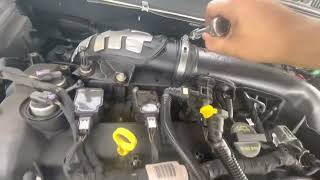
Typical fix: Replace all four spark plugs. 🎬 See this walkthrough for replacing your spark plugs and ignition coils. It is critical to use the correct OEM-spec plugs (e.g., Motorcraft SP-537 or the superseding SP-550) and ensure the gap is set correctly, typically between 0.027-0.031 inches.
Est. part cost: $40-$80 - Engine Coolant Intrusion (2015-2016 models) 🔴 High Probability A flaw in the 'open-deck' engine block design can allow coolant to leak into the cylinders from a passage between them. This is a well-documented issue covered by Ford TSB 19-2346 for 2017-2019 models, but the same engine design began appearing in 2015-2016 models and is known to fail.
How to confirm: Check for a consistently dropping coolant level without any visible external leaks. Perform a cooling system pressure test to see if it holds pressure. A definitive diagnosis requires a technician to use a borescope to look for coolant inside the engine cylinders.
Typical fix: The only manufacturer-recommended permanent repair is the replacement of the long block engine assembly with a redesigned part.
Est. part cost: $4000-$7000+ - Failing Ignition Coil(s) 🟡 Medium Probability Heat and vibration cause ignition coils to fail over time. While one coil failure would typically cause a single-cylinder misfire code (e.g., P0301), multiple weak coils can contribute to a random P0300 code.
How to confirm: If a specific cylinder is also logging a misfire (e.g., P0302), swap that cylinder's ignition coil with another cylinder's coil. Clear the codes and see if the misfire code follows the coil to the new cylinder.
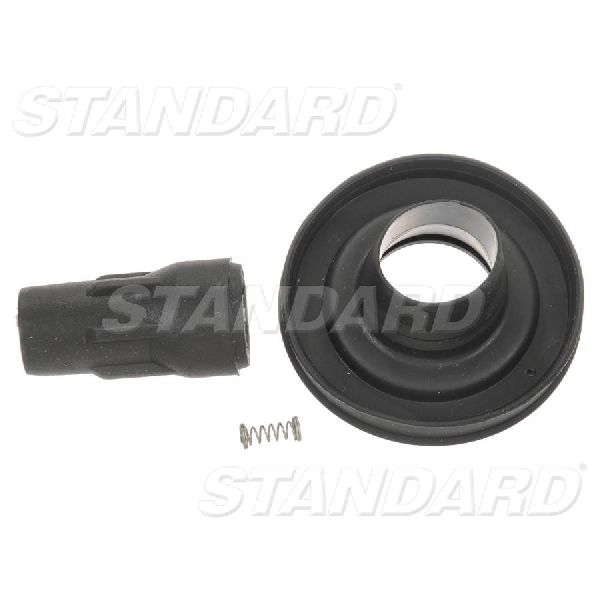
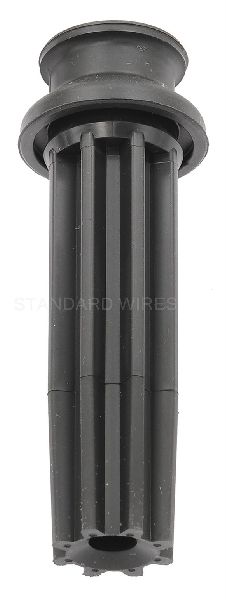
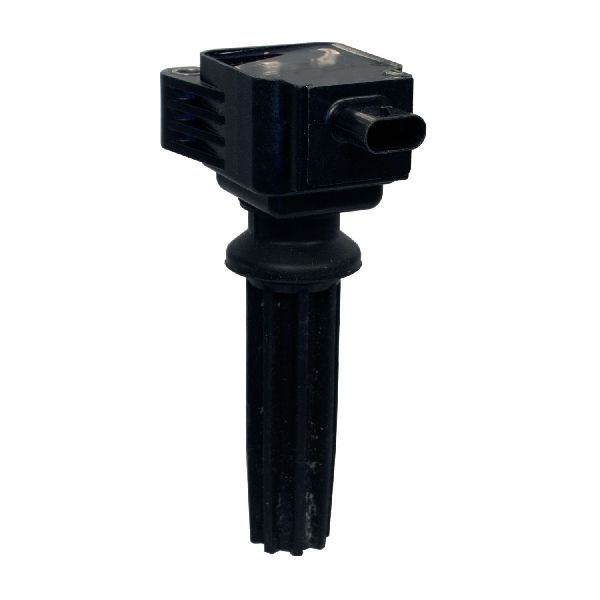
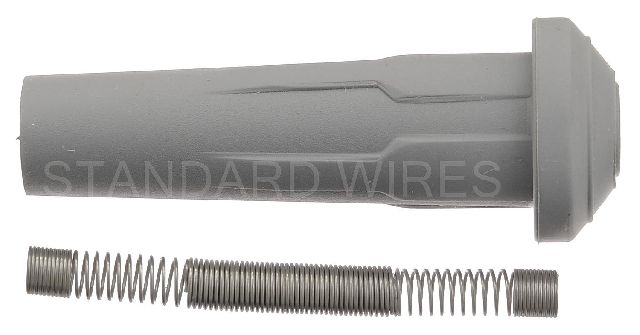
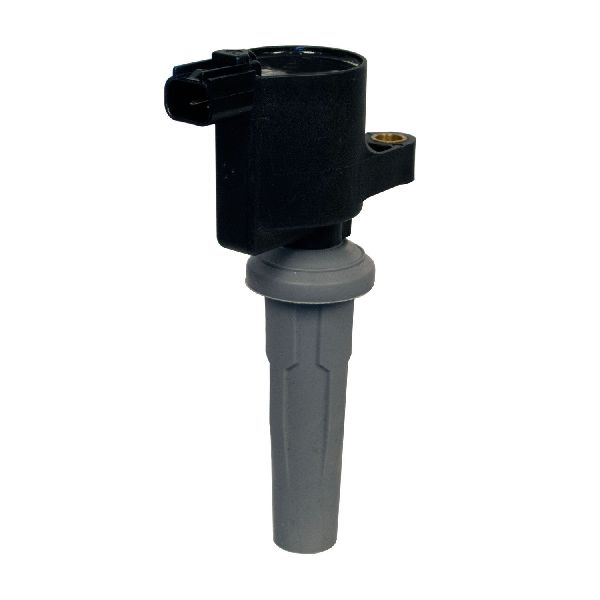
Typical fix: Replace the faulty ignition coil. The OEM part number is CM5Z-12029-K (this part may supersede earlier numbers like CM5E-12A366-CA). It is often recommended to replace all coils at the same time as the spark plugs.
Est. part cost: $40-$70 per coil - Vacuum Leak (EVAP Purge Valve) ⚪ Low Probability A common but often overlooked cause on EcoBoost engines is a faulty EVAP canister purge valve that sticks open, creating a vacuum leak that the computer cannot account for, leading to a lean condition and misfires.
How to confirm: A mechanic can command the valve closed with a scan tool and watch fuel trims, or perform a smoke test on the intake system to find the source of the leak. The valve's resistance can also be tested; a reading between 12 and 80 Ohms is typically within spec.
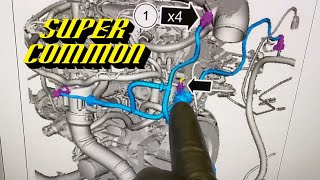
Typical fix: Replace the faulty EVAP purge valve. Look for OEM part numbers like AU5Z-9C915-E or F2GZ-9D289-A 🎬 Watch: How to diagnose and replace a faulty EVAP purge valve., though several revisions exist.
Est. part cost: $50-$150
Rare But Worth Checking
- Clogged or Faulty Fuel Injectors: Direct injection (GDI) systems operate under very high pressure and injectors can become clogged or fail, leading to poor fuel atomization and misfires. This usually triggers other codes but can contribute to a P0300.
- Low Fuel Pressure: A weak in-tank fuel pump or a failing high-pressure fuel pump (HPFP) can cause the engine to run lean and misfire randomly, especially under load.
- Faulty Crankshaft Position Sensor (CKP): An erratic CKP sensor can send incorrect data to the PCM, which can be misinterpreted as random misfires. A 'Misfire Monitor Neutral Profile Correction' procedure may be needed after replacement.
Diagnosis Steps
- Check the coolant reservoir for any signs of coolant loss. This is the most critical first step for 2015-2016 models.
- Use an OBD-II scanner to check for any other accompanying codes, such as specific cylinder misfires (P0301-P0304), startup misfires (P0316), or overheat codes (P0217, P1299).
- Inspect all four spark plugs. Look for signs of wear, damage, or fouling (especially white, chalky deposits indicating coolant). Verify the spark plug gap is correct (0.027-0.031 inches).
- If a specific cylinder misfire code is present, swap the ignition coil of the misfiring cylinder with a known good cylinder. If the misfire follows the coil, the coil is bad.
- If coolant loss is evident, perform a cooling system pressure test. If it fails or if suspicion remains high, a borescope inspection of the cylinders is necessary to visually confirm coolant intrusion.
- If no coolant issue is found, check for vacuum leaks. Pay close attention to the PCV system and the EVAP purge valve, which can fail in an open position.
- If other diagnostics fail, test fuel pressure (both low and high pressure systems) and perform an engine compression test to check for mechanical issues.
Parts You'll Likely Need
- Spark Plugs
(OEM #SP-537 (superseded by SP-550 / CYFS-12Y-PCT))— These engines have a specified service interval for spark plugs, and worn plugs are the most common cause of general misfires.
Trusted brands: Motorcraft, NGK
OEM price range: $40-$60
Aftermarket price range: $30-$50 - Ignition Coils
(OEM #CM5Z-12029-K (replaces CM5E-12A366-CA))— Ignition coils provide the high voltage needed to fire the spark plugs. Over time, they can weaken and fail, causing misfires.
Trusted brands: Motorcraft, DENSO, Bosch
OEM price range: $50-$75 per coil
Aftermarket price range: $30-$60 per coil - EVAP Canister Purge Valve
(OEM #AU5Z-9C915-E / F2GZ-9D289-A)— This valve can stick open, creating a constant vacuum leak that leads to a lean air-fuel mixture and random misfires.
Trusted brands: Motorcraft, Dorman
OEM price range: $50-$150
Aftermarket price range: $30-$80
Related Codes That Often Appear With This One
- P0301-P0304 — These are cylinder-specific misfire codes. P0300 often appears with one or more of these, indicating which cylinders are most frequently affected. They are explicitly mentioned in TSB 19-2346.
- P0316 — This code means a misfire was detected within the first 1,000 engine revolutions on startup. It's commonly seen with coolant intrusion, as coolant that has pooled in a cylinder overnight will cause a misfire immediately upon starting. This code is also listed in TSB 19-2346.
- P0171 — System Too Lean (Bank 1). This can be caused by a vacuum leak, such as a stuck-open EVAP purge valve, that allows unmetered air into the engine, leading to misfires.
- P0217, P1285, P1299 — These are engine overheat codes. They are strongly associated with the coolant intrusion issue as the loss of coolant leads to overheating. All are mentioned in TSB 19-2346.
Technical Service Bulletins (TSBs) & Recalls
- TSB 19-2346: Supersedes 19-2208. Covers 2.0L EcoBoost coolant intrusion in 2015-2018 Edge, 2017-2019 Escape, 2017-2019 Fusion, 2017-2019 MKC, and 2017-2019 MKZ. Recommends long block replacement.
- TSB 19-2208: The original bulletin for the coolant intrusion issue, later updated and superseded by 19-2346.
Platform-Specific Known Issues
- A known design defect in the 2.0L EcoBoost engine block, particularly prevalent in 2015-2019 models, can cause coolant to leak into the cylinders, leading to misfires and eventual engine failure. This is documented in TSB 19-2208.
Mechanic-Grade Diagnostic Values
- Ignition Coil Primary Resistance — expected: 0.4 - 0.7 Ohms. Failure: A reading of zero (short) or a significantly higher reading (open circuit).
- Ignition Coil Secondary Resistance — expected: 6.6k - 7.9k Ohms. Failure: A reading outside this range indicates a faulty coil winding.
- Low-Pressure Fuel System (KOEO or Idle) — expected: 50 - 80 PSI. Failure: Pressure significantly below this range indicates a weak in-tank pump or faulty driver module. A reading of 0 PSI on a scan tool while the engine is running points to a failed sensor.
- High-Pressure Fuel System (Idle) — expected: Can exceed 2,000 PSI. Failure: Significantly low pressure, often triggering code P0087, points to a failing High-Pressure Fuel Pump (HPFP).
- EVAP Canister Purge Valve Solenoid Resistance — expected: 12 - 80 Ohms. Failure: A reading outside this range suggests the internal coil is faulty and the valve needs replacement.
- Ignition Coil Connector Power Pin Voltage (KOEO) — expected: ~12 Volts (Battery Voltage). Failure: No voltage points to a problem in the power supply circuit, such as a fuse or wiring.
Hidden / Shadow Codes Worth Checking
- Mode 6, Test ID $A2-$AB: This is not a DTC but live data from the PCM's non-continuous monitors. It provides raw misfire counts for each individual cylinder from the last 10 driving cycles, even if the count isn't high enough to set a specific P030x code. For a P0300, this data is invaluable for determining if the 'random' misfires are actually concentrated on one or two cylinders. (see via A professional scan tool (like Ford's IDS) or advanced consumer software (like FORScan) with Mode 6 data capability is required.)
Scan Tool Commands That Help
- Ford IDS (or equivalent professional scanner): Misfire Monitor Neutral Profile Correction — This procedure MUST be performed after replacing the PCM, crankshaft position sensor (CKP), or after any major engine or transmission repair. It relearns the crankshaft's rotational profile, and failure to perform it can cause the PCM to falsely detect misfires and set a P0300 code. The procedure involves revving the engine and letting it coast down to allow the PCM to calibrate.
Wiring & Ground Locations
- G104 — Right side of the engine compartment.. This is a primary ground point for various engine compartment components and modules. A loose or corroded connection here can cause erratic behavior from sensors and the PCM, potentially leading to false misfire detection.
- G102 — Left front of the engine compartment.. Another key engine bay ground point. Ensuring all main grounds are clean and tight is a fundamental step in diagnosing any electronic engine control issue, including misfires.
- PCM (Powertrain Control Module) — Located in the right rear of the engine compartment.. The PCM is the brain of the engine management system. It receives data from the CKP sensor to detect misfires and sends the signal to fire the ignition coils. Any corrosion or pushed-out pins at its connector can be a direct cause of P0300.
- Low-Pressure Fuel Sensor — On the fuel line, typically located on the driver's side near the firewall.. This sensor provides critical fuel pressure data to the PCM. A faulty sensor can lead to incorrect fuel delivery calculations, causing lean conditions and random misfires. Its location is important for testing and replacement.
Real Owner Repair Stories
- YouTube user comment/video summary (Newer Ford F-250 (demonstrates a common Ford procedure)) — Flashing check engine light with P0300, P0304, and P0307 only under wide-open throttle. No drivability issues otherwise, but hesitation would begin after the light started flashing.
❌ Tried (didn't work) The vehicle had a new engine installed by an independent shop, which is what precipitated the issue.
✅ What actually fixed it The owner took the truck to a dealer, who performed the 'Misfire Monitor Neutral Profile Correction' using the Ford IDS scan tool. The procedure took five minutes, involved revving the engine past 3,200 RPM and letting it coast, and completely resolved the false misfire codes.
"I Checked Everything" — The Actual Cause
- A vehicle may pass a smoke test for vacuum leaks and have all new ignition components, but still set a P0300 code if the 'Misfire Monitor Neutral Profile' has not been learned by the PCM after a major repair like an engine or transmission replacement. The PCM misinterprets normal crankshaft variations as misfires.
When the Usual Fixes Don't Work
- While a P0300 code is very commonly caused by spark plugs or ignition coils, a technician must not stop there if the problem persists. On this specific platform, two major counter-narratives exist. First, if the vehicle is losing any coolant without an external leak, the cause is almost certainly the known engine block defect, and a tune-up will be a waste of money. Second, if the code appeared after a major engine or transmission repair, the root cause may not be a faulty part at all, but rather the need to perform a 'Misfire Monitor Neutral Profile Correction' with a dealer-level scan tool to recalibrate the crankshaft position sensor profile.
OEM Part Supersession History
TSB 19-2208→TSB 19-2346— The technical service bulletin for the 2.0L EcoBoost coolant intrusion issue was updated primarily to revise the parts list required for the long block engine replacement.Original 2.0L EcoBoost Engine Block (Slotted Design)→Revised 2.0L EcoBoost Engine Block (Drilled-Hole Design)— The original block design featured a thin slot for coolant to pass between cylinders, which was prone to cracking and causing coolant intrusion. The revised block, introduced mid-2019, uses drilled holes for better structural integrity.
Heads up: The fix for a failed original block is a complete long block replacement with the new design; the old design is defective.
Model Year Variations Within This Range
- 2013-2016: All vehicles in this range use the 2.0L EcoBoost engine with the 'open-deck' block design that features a slot between the cylinders. This design is susceptible to the coolant intrusion failure, though it is most commonly reported and documented in the 2015-2016 model years which used a twin-scroll turbo variant of this engine.
Diagnostic Flowchart
Real Owner Stories
Aggregated from forums and TSBs cited above. Mileages and costs reflect what owners reported in those sources.
2017 Lincoln MKZ 2.0L EcoBoost
Symptoms: Persistent P0300 and P0301 misfire codes appeared after an overheat and coolant loss issue.
What fixed it: A mechanic initially replaced the spark plugs and one ignition coil, but the misfire returned two days later, pointing to the deeper engine coolant intrusion issue.
Source hint: Reddit r/AskAMechanic thread titled '2017 Lincoln MKZ check engine P0300, P0301'
2016 Lincoln MKZ 2.0T — 128000 miles
Symptoms: Rough cold idle, white exhaust smoke smelling of coolant, and a low coolant reservoir.
What fixed it: A mechanic confirmed that head gasket sealers do not work for this specific failure and that a long block replacement is the only proper repair.
Source hint: Reddit r/Ford thread titled '2016 Lincoln MKZ 2.0T coolant intrusion'
2017 Lincoln MKZ
Symptoms: Recurring P0300 engine warning code.
What fixed it: The dealer's first attempt to fix it was replacing coil packs and spark plugs. The second attempt was 'computer programming,' illustrating the common, and often incorrect, diagnostic path taken before identifying coolant intrusion.
Source hint: Lincoln MKZ Forum thread titled 'Anyone with insight on a reoccurring P0300 engine warning code not flashing'
Related OBD-II Codes
Frequently Asked Questions
Does TSB 19-2346 apply to my 2015-2016 Lincoln MKZ 2.0L EcoBoost?
Why is my MKZ losing coolant but there are no puddles under the car?
What spark plugs should I use to fix a P0300 on my 2.0L EcoBoost, and what is the gap?
Can I use a head gasket sealer to fix the coolant leak causing my misfire?
My dealer replaced the spark plugs and ignition coils (CM5Z-12029-K), but the P0300 came back. What's next?
Could a vacuum leak cause a P0300 on this engine?
Helpful Videos
Used OEM Parts in Stock


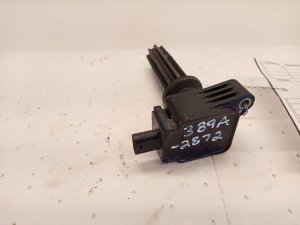
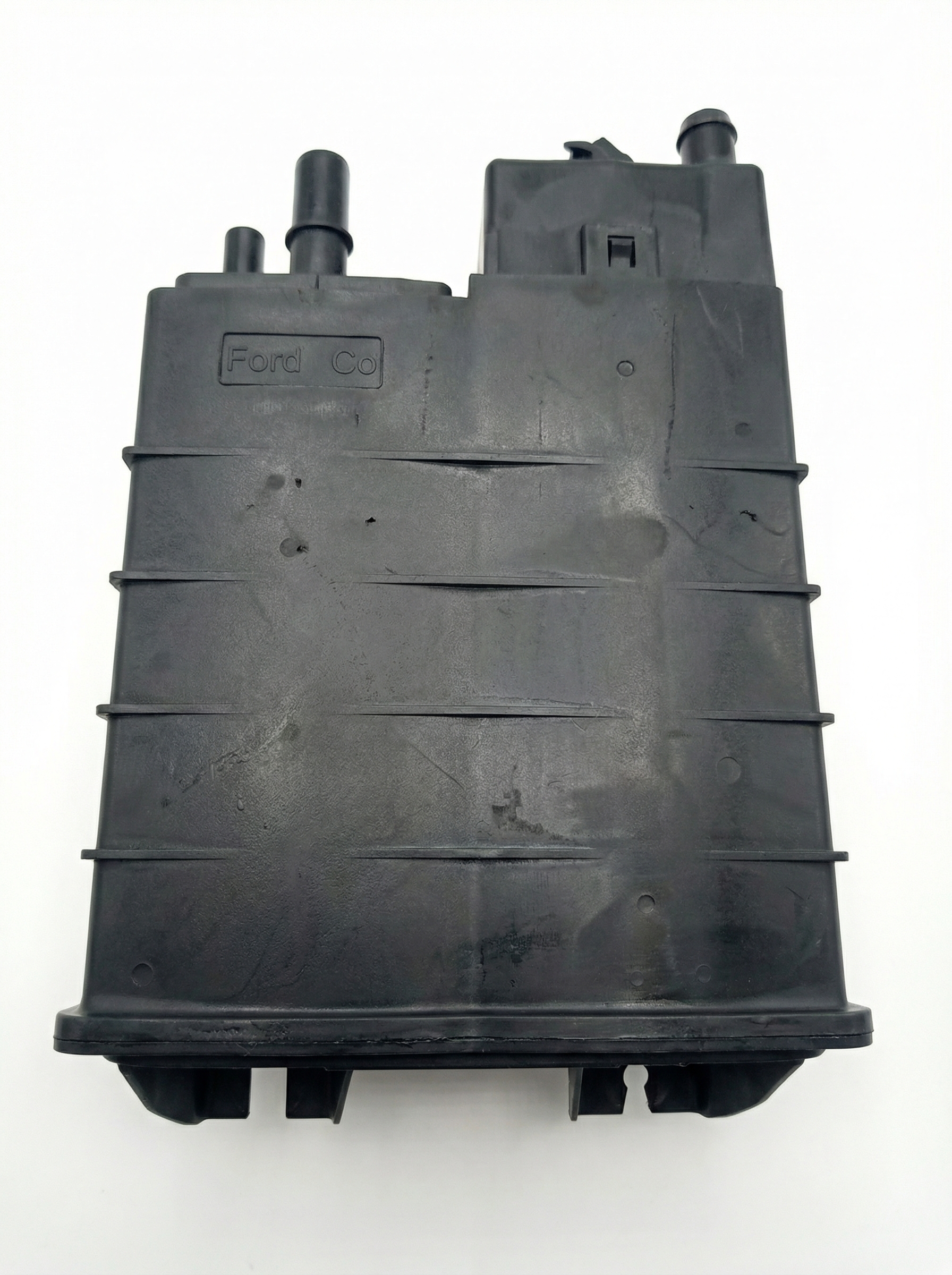

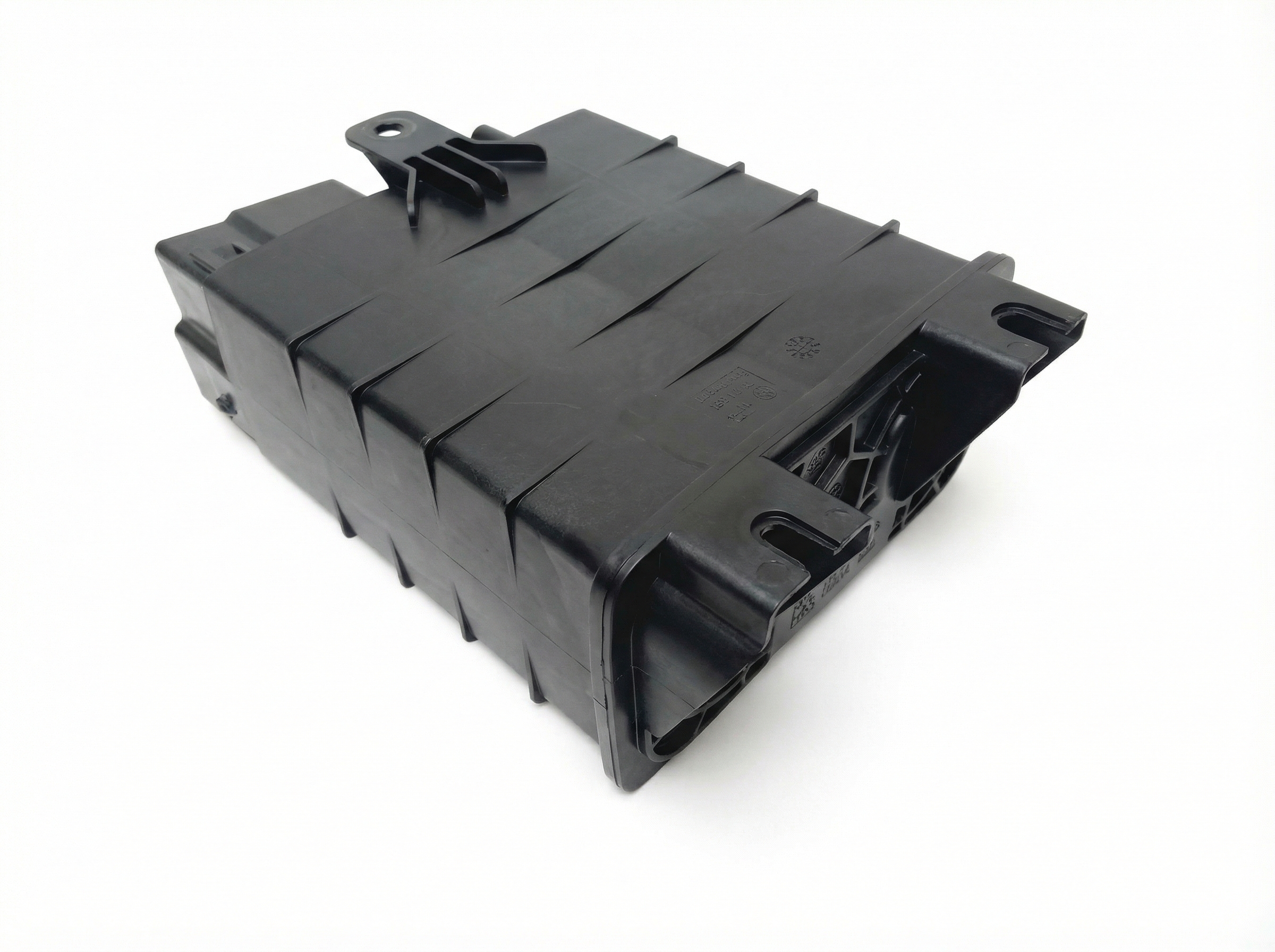
New Aftermarket Parts Available
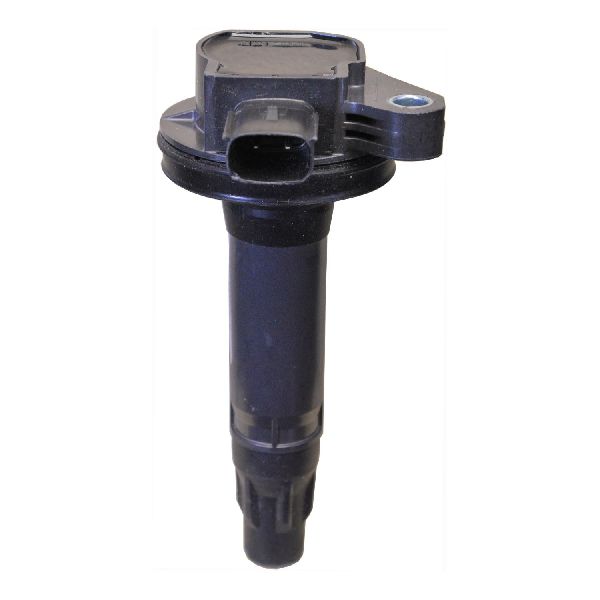

The information in this article is provided for general reference and educational purposes only. Vehicle specifications, procedures, and part compatibility can vary by production date, trim level, and region. Always consult your vehicle's factory service manual and verify part numbers before purchasing or performing repairs. Safety-critical components such as airbags, seat belts, and braking systems should be installed by a qualified professional.
- Lincoln MKZ:
- 🎬 Helpful Videos
- 🛍️ Shop This Part
- What's Unique About the 2013-2016 Lincoln MKZ
- Symptoms You May Notice
- Most Likely Causes
- Rare But Worth Checking
- Diagnosis Steps
- Parts You'll Likely Need
- Related Codes That Often Appear With This One
- Technical Service Bulletins (TSBs) & Recalls
- Platform-Specific Known Issues
- Mechanic-Grade Diagnostic Values
- Hidden / Shadow Codes Worth Checking
- Scan Tool Commands That Help
- Wiring & Ground Locations
- Real Owner Repair Stories
- "I Checked Everything" — The Actual Cause
- When the Usual Fixes Don't Work
- OEM Part Supersession History
- Model Year Variations Within This Range
- Diagnostic Flowchart
- Real Owner Stories
- 2017 Lincoln MKZ 2.0L EcoBoost
- 2016 Lincoln MKZ 2.0T — 128000 miles
- 2017 Lincoln MKZ
- Related OBD-II Codes
- Frequently Asked Questions
- 🎟️ Get 5% Off