

P0223 on 2016-2020 Kia Optima 2.4L: Throttle Position Sensor 'B' Circuit High Causes and Fixes
On a 2016-2020 Kia Optima with the 2.4L engine, code P0223 almost always means the entire electronic throttle body assembly has failed. The throttle position sensor is integrated and cannot be replaced separately. The fix is to replace the complete throttle body, which costs around $250-$400 for an OEM part and is a DIY-friendly job (2/5 difficulty). Before replacement, it is critical to ensure the vehicle is not in limp mode due to the more serious P1326 engine failure code.
- P0223 on a 2016-2020 Optima 2.4L almost certainly requires replacing the entire electronic throttle body assembly.
- The throttle position sensor (TPS) is built into the throttle body and cannot be purchased separately.
- Before replacing parts, verify the vehicle isn't in limp mode due to the engine's Knock Sensor Detection System (look for code P1326), as this indicates a much more severe engine problem.
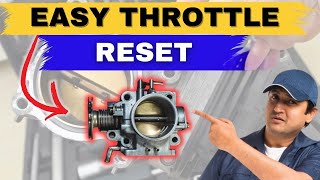
- After replacing the throttle body, a simple 'relearn' procedure is required, which can often be done at home without special tools.
What's Unique About the 2016-2020 Kia Optima
On this specific generation of Kia Optima with the 2.4L GDI engine, the throttle position sensor (TPS) is not a separate, replaceable component. It is permanently integrated into the electronic throttle body assembly. This design simplifies diagnosis but increases repair cost, as the entire unit must be replaced when the internal sensor fails, which is a very common issue on this platform and its Hyundai counterparts. This is a known weak point, with many owners reporting failures.
Symptoms You May Notice
- Check Engine Light is illuminated
- Vehicle enters 'limp mode' (drastically reduced engine power)
- Poor, delayed, or no acceleration
- Hesitation or stumbling when pressing the gas pedal
- Engine may stall, especially at idle
- Unstable or erratic idle speed
- Cruise control may not function
- Engine is hard to start or will not start at all
- Replacing only the accelerator pedal position sensor (APPS). While the APPS is part of the throttle control system, the P0223 code specifically points to the sensor on the throttle body.
- Replacing the throttle body without checking the wiring first. A simple damaged wire can mimic the symptoms of a failed throttle body.
- Ignoring the possibility of heavy carbon buildup. On GDI engines, cleaning a dirty throttle body should be attempted before replacement, as buildup can cause the throttle plate to stick.
Most Likely Causes
- Faulty Electronic Throttle Body Assembly 🔴 High Probability The internal electronics of the integrated throttle position sensor are a known common failure point on the Theta II engine platform. The non-serviceable sensor inside the assembly wears out, leading to voltage signals that are out of range.
How to confirm: Use a scan tool to monitor live data for the Throttle Position Sensor 'B' voltage (sometimes labeled TPS2). With the ignition on and engine off, the voltage should be stuck high (typically above 4.5V) and not change when the accelerator pedal is pressed. A healthy sensor should read low voltage at idle (around 0.5V) and sweep smoothly to ~4.5V at wide-open throttle.
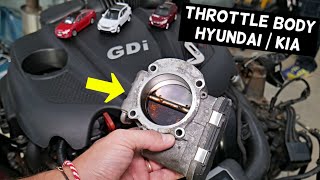
Typical fix: Replace the entire electronic throttle body assembly and the associated gasket. 🎬 Watch this step-by-step throttle body replacement guide. A throttle relearn procedure must be performed after installation. This can often be done without a scan tool by cycling the ignition.
Est. part cost: $250-$400 (OEM), $70-$180 (Aftermarket) - Wiring Harness or Connector Issue ⚪ Low Probability The wiring harness is located near the front of the engine bay and can be susceptible to damage from heat, vibration, or rodents.
How to confirm: Visually inspect the wiring harness and connector going to the throttle body for any signs of damage, corrosion, or loose pins. With the ignition on, check for a stable 5V reference and good ground at the connector using a multimeter. Perform a 'wiggle test' on the harness while monitoring live data to see if the voltage fluctuates, indicating an intermittent connection.
Typical fix: Repair the damaged section of wiring or replace the connector pigtail.
Est. part cost: $10-$50
Rare But Worth Checking
- Powertrain Control Module (PCM) Fault: This is extremely rare and should only be considered after the throttle body and wiring have been definitively ruled out as the cause. A PCM failure would likely present with multiple other unrelated codes.
Diagnosis Steps
- Read all fault codes with an OBD-II scanner. If P1326 is present, stop and address that first as it indicates a severe engine problem.
- Check for Technical Service Bulletins (TSBs) related to the throttle body or engine management system.
- Visually inspect the throttle body connector and wiring harness for any damage, corrosion, or loose connections.
- Using a scan tool, view the live data for Throttle Position Sensor 'B' (TPS2). The voltage should be low at idle (around 0.5V) and increase smoothly to around 4.5V at wide-open throttle.
- If the voltage for sensor 'B' is stuck high (e.g., 4.7V or higher) and unresponsive to pedal input, the throttle body assembly has failed.
- If the readings are erratic, perform a 'wiggle test' on the harness to see if the voltage fluctuates, indicating a wiring issue.
- With the connector unplugged and key on, use a multimeter to verify a 5-volt reference signal and a good ground at the connector pins to rule out a wiring or PCM supply issue. 🎬 See how to test and replace the electronic throttle body.
- If the throttle body and wiring appear to be functioning correctly, the issue may be with the PCM, but this is highly unlikely.
Parts You'll Likely Need
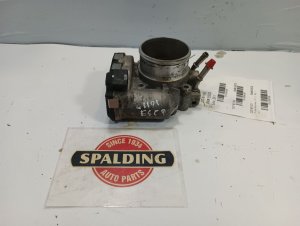
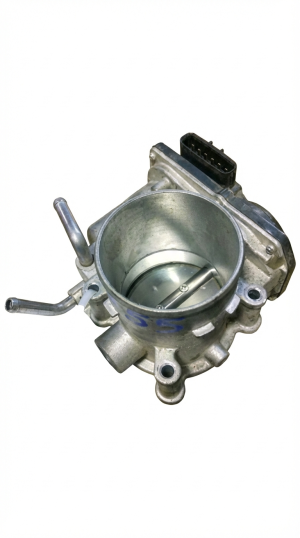
- Electronic Throttle Body Assembly
(OEM #35100-2G700)— This is the most common failure for a P0223 code on this vehicle, as the throttle position sensor is integrated into this assembly and is not sold separately. Verify the exact part number with the vehicle's VIN, as 35100-2GGA7 may also be applicable.
Trusted brands: Kia (OEM), Hyundai (OEM), Bosch, Standard Motor Products
OEM price range: $250-$400
Aftermarket price range: $70-$180 - Throttle Body Gasket
(OEM #35101-2G700)— It is best practice to replace the gasket anytime the throttle body is removed to prevent vacuum leaks.
Trusted brands: Kia (OEM), Fel-Pro
OEM price range: $5-$15
Aftermarket price range: $3-$10
Related Codes That Often Appear With This One
- P0123 — This is the 'Circuit High' code for the 'A' sensor. Seeing both codes together strongly points to a failure of the entire throttle body assembly or a shared power/ground issue.
- P2135 — This code indicates a voltage correlation error between the 'A' and 'B' throttle position sensors. It's often triggered when one sensor fails and its readings no longer match the other sensor's readings, confirming a fault within the assembly.
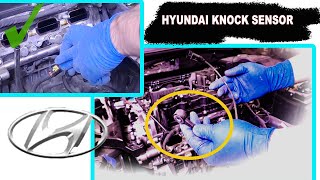
- P1326 — This code is for the Knock Sensor Detection System (KSDS) and indicates the vehicle is in limp mode due to detected engine vibrations, often from rod bearing wear. The symptoms (limp mode) are nearly identical to a throttle body failure, so it's critical to check for this code. A P1326 code points to a potential engine failure, which is a far more serious issue covered by a lifetime warranty extension in many cases. 🎬 Watch this diagnostic and replacement guide for code P1326.
Technical Service Bulletins (TSBs) & Recalls
- TSB ENG222: Outlines the procedure for testing excessive oil consumption on Theta II engines, a related platform issue.
- Product Improvement Campaign PI1802: Relates to the installation of the Knock Sensor Detection System (KSDS) to monitor for engine bearing failure, which can cause similar limp-mode symptoms. This TSB instructs dealers to update the ECU software.
Platform-Specific Known Issues
- The 2.4L Theta II GDI engine is subject to recalls and a class-action settlement for issues related to engine bearing wear and potential engine failure. A Knock Sensor Detection System (KSDS) software update was issued under campaigns like PI1802 to detect these failures and put the car in limp mode (triggering code P1326). These symptoms can be identical to a throttle body failure, so it is crucial to rule out engine-related issues first.
- This engine is also known for high oil consumption, which can lead to other issues. While not directly related to P0223, it's important context for any owner of this vehicle.
Mechanic-Grade Diagnostic Values
- Throttle Position Sensor 'B' (TPS2) Signal Voltage — expected: Approximately 0.3V - 0.5V at closed throttle, sweeping smoothly up to approximately 4.5V - 4.8V at wide-open throttle.. Failure: Voltage is stuck high, above 4.75V, regardless of throttle plate angle.
- 5V Reference Voltage at Throttle Body Connector — expected: 4.8V - 5.2V with ignition on, engine off.. Failure: Voltage is significantly lower than 4.8V or is absent, indicating a wiring or PCM issue.
- Ground Circuit at Throttle Body Connector — expected: Near 0V, with very low resistance (less than 1 ohm) to chassis ground.. Failure: Voltage is present on the ground wire, or resistance to ground is high, indicating a bad ground connection.
Scan Tool Commands That Help
- Kia GDS (Global Diagnostic System): Vehicle S/W Management > Resetting adaptive values — This function should be used after replacing the electronic throttle body to clear the old learned values and allow the PCM to adapt to the new component's characteristics.
Wiring & Ground Locations
- Engine Ground Wiring Assembly — This harness provides critical ground paths for engine-mounted sensors. A specific part for the 2016-2020 Optima is the 'Wiring Assembly-Engine Ground', part number 91860D5010.. A poor or corroded engine ground can cause floating or incorrect voltage readings on sensor circuits, including the throttle position sensor, mimicking a sensor failure.
- Throttle Body Connector — The 6-pin electrical connector located directly on the electronic throttle body assembly at the engine's air intake.. This is the primary point for testing power, ground, and signal wires for the integrated throttle position sensors. Damage, corrosion, or pushed-out pins in this connector are a common cause of circuit-high faults.
Real Owner Repair Stories
- YouTube video by 'World Mechanics' (2013 Kia Optima (demonstration applicable to 2016-2020 models)) — Check engine light with codes P0220-P0224.
❌ Tried (didn't work) The video emphasizes checking wiring and for a dirty throttle body before replacement.
✅ What actually fixed it The video identifies the most common causes as a dirty/sticking throttle body plate, a bad internal motor or gears in the throttle body assembly, or damaged wiring. For electronic failure (like P0223), replacement of the entire throttle body assembly is the standard fix.
OEM Part Supersession History
35100-2G700→N/A— This part number appears to be consistent for the 2.4L engine in this generation, though some sources list it for earlier models as well.
Heads up: Always verify the part number with the vehicle's VIN. The part for the 2.0L Turbo and 1.6L Turbo engines is different and not interchangeable.
Model Year Variations Within This Range
- 2019-2020: The Kia Optima received a facelift for the 2019 model year which included revised front-end styling and updated interior tech. However, there were no powertrain changes for the 2.4L engine, so the throttle body assembly, causes, and fixes for P0223 remain identical to the 2016-2018 models.
Diagnostic Flowchart
Other Known Issues on This Vehicle
Issues unrelated to this code that are worth knowing about as an owner of this generation:
- Catastrophic Engine Bearing Failure 🔴 High — Very common across the entire Theta II 2.4L GDI engine family, leading to class-action lawsuits and recalls. Can occur at various mileages. (Ref: NHTSA Recalls 17V224, 20V750 and Kia Service Campaign PI1802)
- Excessive Oil Consumption 🔴 High — Widespread owner reports of consuming a quart of oil or more between changes, which can lead to engine damage if not monitored closely. (Ref: TSB ENG222)
- Intake Valve Carbon Buildup 🟠 Medium — A common problem for all Gasoline Direct Injection (GDI) engines, including the Theta II. Typically becomes noticeable after 60,000-80,000 miles, causing misfires, rough idle, and reduced performance.
- Faulty Door Latch Actuators 🟡 Low — A common complaint where door latches fail, preventing doors from being opened from the inside or outside.
- Window Regulator Failure 🟡 Low — Owners report failures of the window motors or regulators, causing windows to fall into the door or become inoperable.
Used vs. New Parts: Buying Guide for This Vehicle
When a used part is the smart pick: A used OEM throttle body from a low-mileage donor vehicle can be a cost-effective option, as the part is a simple electronic and mechanical assembly. However, given the high failure rate of the internal electronics, it carries some risk.
Donor-vehicle mileage cap: roughly under 60000 miles for the part to have meaningful remaining life.
What to inspect on the donor part:
- Verify the part number on the used unit matches the original exactly.
- Inspect the electrical connector for any bent, corroded, or pushed-out pins.
- Check the throttle plate for excessive carbon buildup, which could indicate high mileage or other engine issues.
- Ensure there are no cracks or damage to the plastic housing of the connector or sensor area.
OEM-only on this vehicle (don't cheap out):
- While not strictly 'OEM-only', a new OEM part from Kia/Hyundai is the most reliable option to avoid premature failure, which can be a risk with some lower-quality aftermarket units.
Aftermarket brands forum-validated for this vehicle:
- Standard Motor Products
- Bosch
- Dorman (specifically their 'OE FIX' models which claim improved internal seals)
- Hitachi
Brands owners have reported issues with on this vehicle:
- Unbranded, no-name parts sold on marketplaces like eBay or Amazon should be treated with caution, as quality control on the internal electronics can be inconsistent.
Real Owner Stories
Aggregated from forums and TSBs cited above. Mileages and costs reflect what owners reported in those sources.
2017 Kia Optima 2.4L GDI
Symptoms: The car received a 'new sensor' after a recall, but there was confusion regarding whether it was a physical sensor or a software update for the KSDS to detect engine failure and trigger limp mode.
What fixed it: Clarified as a software update (KSDS) rather than a physical sensor replacement to monitor for engine bearing failure.
Source hint: Car Talk Community - '2017 Kia Optima - new sensor after recall'
2016-2020 Kia Optima 2.4L GDI
Symptoms: Vehicle went into limp mode; owner experienced a long history of issues with the vehicle platform.
What fixed it: A dealer 'software update' (likely the KSDS update) was applied to address the limp mode symptoms.
Source hint: Reddit r/kia - 'A list of things that have broken on my Kia Optima...'
Related OBD-II Codes
Frequently Asked Questions
My 2017 Kia Optima is in limp mode; could this be related to the PI1802 Product Improvement Campaign?
Can I perform the throttle relearn on my Optima without a professional scan tool?
Is the P0223 code on my 2.4L Theta II engine caused by a sensor I can replace individually?
Should I be worried about oil consumption if I'm seeing throttle-related codes on my 2016 Optima?
What voltage should I see for TPS2 (Sensor B) on my Kia if the throttle body is working correctly?
Are there any recalls for the engine issues that mimic P0223 symptoms?
Helpful Videos


Used OEM Parts in Stock

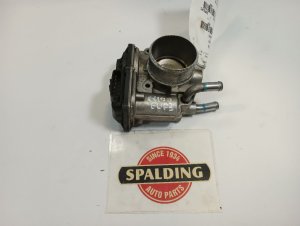

New Aftermarket Parts Available




The information in this article is provided for general reference and educational purposes only. Vehicle specifications, procedures, and part compatibility can vary by production date, trim level, and region. Always consult your vehicle's factory service manual and verify part numbers before purchasing or performing repairs. Safety-critical components such as airbags, seat belts, and braking systems should be installed by a qualified professional.
- Kia Optima:
- 🎬 Helpful Videos
- 🛍️ Shop This Part
- What's Unique About the 2016-2020 Kia Optima
- Symptoms You May Notice
- Most Likely Causes
- Rare But Worth Checking
- Diagnosis Steps
- Parts You'll Likely Need
- Related Codes That Often Appear With This One
- Technical Service Bulletins (TSBs) & Recalls
- Platform-Specific Known Issues
- Mechanic-Grade Diagnostic Values
- Scan Tool Commands That Help
- Wiring & Ground Locations
- Real Owner Repair Stories
- OEM Part Supersession History
- Model Year Variations Within This Range
- Diagnostic Flowchart
- Other Known Issues on This Vehicle
- Used vs. New Parts: Buying Guide for This Vehicle
- Real Owner Stories
- 2017 Kia Optima 2.4L GDI
- 2016-2020 Kia Optima 2.4L GDI
- Related OBD-II Codes
- Frequently Asked Questions
- 🎟️ Get 5% Off