

P0223 on 2013-2017 Honda Accord: Throttle Position Sensor Circuit High Voltage Causes and Fixes
P0223 on a 2013-2017 Accord almost always means the throttle body has failed, as the sensor is built-in. The fix is to replace the entire throttle body assembly. Expect to pay around $250 for the part and $350-$500 for a shop repair. An idle relearn procedure is mandatory after replacement.
- P0223 on a 2013-2017 Accord points to a problem with the throttle position sensor 'B' circuit, specifically a high voltage reading.
- The most likely cause is a failed sensor, which requires replacing the entire throttle body assembly as the sensor is built-in. The updated OEM part number is 16400-5A2-A02.
- Do not immediately replace the gas pedal (APP sensor); diagnose the throttle body and its wiring first, as this is a common misdiagnosis.
- Driving with this code is unsafe due to the risk of the car entering 'limp mode' with sudden power loss or stalling.
- After replacing the throttle body, an idle relearn procedure is mandatory to ensure proper engine idle speed and performance.
What's Unique About the 2013-2017 Honda Accord
For the 9th generation Honda Accord (2013-2017), the throttle position sensor is not a separate, replaceable part. It is integrated directly into the electronic throttle body assembly. This design choice means that if the sensor itself is faulty—a very common cause for P0223—the entire throttle body must be replaced as a single unit. After replacement, the vehicle requires a specific 'idle relearn' procedure for the computer to recognize and calibrate to the new throttle body's parameters.
Symptoms You May Notice
- Check Engine Light is on
- Flashing D4 light (on automatic transmission models)
- Vehicle enters 'limp mode' with severely limited power and RPM (often won't exceed 1,500-2,000 RPM).
- Poor, delayed, or no throttle response.
- Hesitation or surging during acceleration
- Rough or unstable idle, sometimes hunting up and down.
- Engine may stall, especially when coming to a stop or at low speeds.
- Replacing the Accelerator Pedal Position (APP) sensor. P0223 specifically relates to the sensor on the throttle body ('B' circuit), not the sensor on the gas pedal assembly. While APP sensor failure is common on some Hondas, it typically throws different codes (e.g., P2122, P2123, P2138).
Most Likely Causes
- Faulty Throttle Body Assembly 🔴 High Probability The Throttle Position Sensor (TPS) is integrated into the throttle body and cannot be replaced separately. An internal failure of the sensor's electronic components is a common point of failure.
How to confirm: With a scan tool, observe the live data for 'TPS B' voltage with the key on, engine off. If the voltage is stuck high (e.g., above 4.5V) and does not change as the throttle is commanded open, the sensor inside the throttle body has failed. A normal reading at idle (closed throttle) should be around 0.5V.
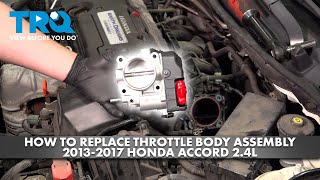
Typical fix: Replace the entire throttle body assembly. 🎬 Watch: Step-by-step guide to replacing the throttle body assembly. After replacement, perform the idle relearn procedure to calibrate the new part.
Est. part cost: $200-$350 - Wiring Harness or Connector Issue 🟡 Medium Probability Wiring can become damaged from engine heat, vibration, or improper servicing, leading to a short to power on the signal wire.
How to confirm: Visually inspect the wiring harness going to the 6-pin throttle body connector for any signs of damage, chafing, or corrosion. Unplug the connector and check for bent, loose, or corroded pins. Use a multimeter to check for a short to power on the signal wire (THL2).
Typical fix: Repair the damaged section of the wiring harness or clean/replace the connector.
Est. part cost: $10-$50 - Dirty or Sticking Throttle Body ⚪ Low Probability Carbon can build up around the throttle plate over time, causing it to stick or not close properly.
How to confirm: Remove the air intake hose and visually inspect the throttle body bore and plate for significant carbon deposits. A sticking plate could potentially cause the sensor to report an incorrect high value if it cannot return to its home position.
Typical fix: Clean the throttle body bore and plate thoroughly with a dedicated throttle body cleaner and a soft, lint-free cloth. Do not force the electronic throttle plate by hand; have a helper turn the key to 'ON' (engine off) to make it easier to move.
Est. part cost: $10-$20
Rare But Worth Checking
- Faulty Powertrain Control Module (PCM): This is very rare. The PCM should only be suspected after all other possibilities, including the throttle body and wiring, have been definitively ruled out. A PCM failure can cause false DTCs.
Diagnosis Steps
- Check for any Technical Service Bulletins (TSBs) for your vehicle related to this code. No specific TSBs for P0223 were found, but related drivability TSBs exist.
- Using an OBD-II scanner, check for any other stored trouble codes. Address other codes first, especially those related to the throttle system like P0123 or P2135.
- Observe the live data stream for TP Sensor 'B' voltage. With the key on and engine off, the voltage should be low (around 0.5V) and should increase smoothly as the throttle is commanded open. If it's stuck high (e.g., >4.8V), this points towards a sensor or wiring issue.
- Visually inspect the throttle body 6-pin connector and its wiring harness for any obvious damage, corrosion, or loose connections.
- If wiring looks good, test the circuit. Using a wiring diagram, disconnect the throttle body and PCM connectors to test for continuity on the signal (THL2) and ground (SG3) wires. Resistance should be less than 1 ohm.
- If the wiring and connector are confirmed to be good and the voltage reading is still stuck high, the throttle position sensor has failed. Since it is integrated, the entire throttle body assembly must be replaced.
- After replacing the throttle body, clear the DTCs and perform the idle relearn procedure.
Parts You'll Likely Need
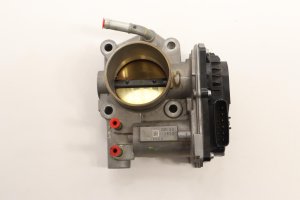
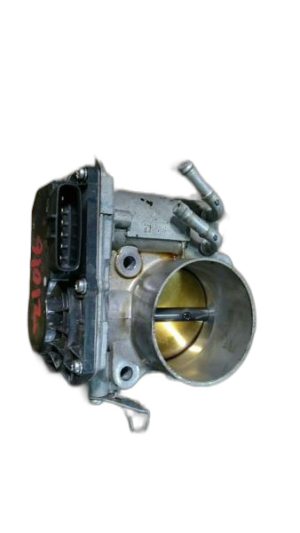
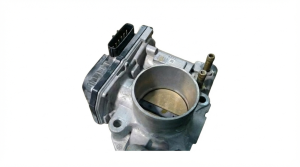
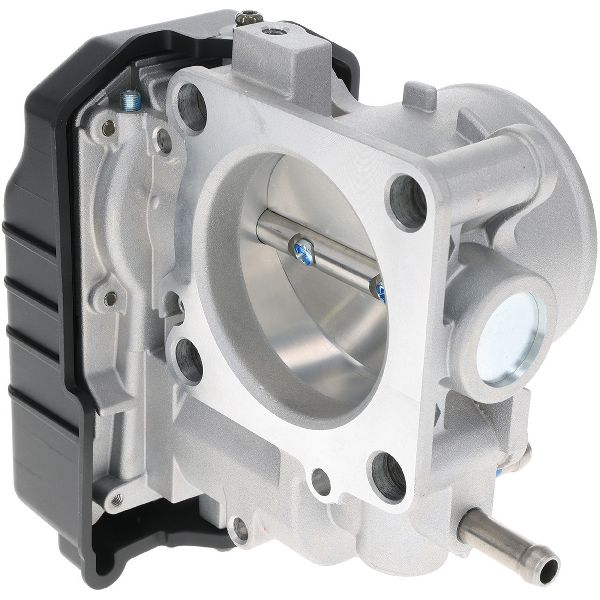
- Throttle Body Assembly
(OEM #16400-5A2-A02 (supersedes 16400-5A2-A01))— This is the most common fix because the faulty Throttle Position Sensor (TPS) is integrated into this assembly and is not sold separately for this vehicle generation.
Trusted brands: Honda (Genuine OE), Hitachi (OEM supplier), Standard Motor Products, Bosch
OEM price range: $250-$350
Aftermarket price range: $180-$280
Related Codes That Often Appear With This One
- P0123 — P0123 is for 'Throttle Position Sensor A Circuit High'. Since the throttle body has two redundant sensors (A and B), a failure can sometimes affect both circuits, often pointing to a shared power or ground issue or a complete internal failure of the throttle body.
- P2135 — This code indicates 'Throttle/Pedal Position Sensor/Switch A/B Voltage Correlation'. It means the PCM is seeing a disagreement between the signals from sensor A and sensor B, which is very common when one of them fails and gets stuck on a high voltage reading while the other responds normally.
Platform-Specific Known Issues
- Mandatory Idle Relearn Procedure: After replacing the throttle body or disconnecting the battery for an extended period, an idle relearn procedure must be performed. Failure to do so can result in an unstable or high idle. The procedure involves warming the engine to operating temperature (until the radiator fan cycles on), then holding the engine at 3,000 RPM until the fan cycles on again, and finally letting it idle for at least 5 minutes with all accessories off. 🎬 See this easy DIY idle relearn procedure in action.
Mechanic-Grade Diagnostic Values
- Throttle Position Sensor (TPS) 'B' Signal Voltage at Closed Throttle — expected: Approximately 0.5V (typically 0.45V - 0.5V).. Failure: For code P0223, the voltage will be stuck high, often above 4.5V, and will not return to the 0.5V range when the throttle is closed.
- Throttle Position Sensor (TPS) 'B' Signal Voltage at Wide-Open Throttle (WOT) — expected: Approximately 4.5V.. Failure: The voltage will not sweep smoothly from ~0.5V to ~4.5V as the throttle is opened. It may be stuck at a high value, jump erratically, or have dead spots.
- PCM 5V Reference Voltage at TPS Connector — expected: Approximately 5.0V.. Failure: A reading below 4.7V or no voltage indicates a problem in the wiring or the PCM itself, not necessarily the throttle body.
- Sensor Ground Circuit Voltage Drop — expected: Less than 0.1V.. Failure: A voltage reading higher than 0.1V on the ground wire indicates high resistance in the ground circuit, which can cause incorrect sensor readings. This points to a bad ground connection (like G101) or a wiring issue.
Hidden / Shadow Codes Worth Checking
- OBD Status Check: While Honda does not use 'shadow codes' in the same way as some German manufacturers, the official Honda Diagnostic System (HDS) provides a post-repair verification function called 'OBD Status'. This displays results for a specific DTC test as 'PASSED', 'FAILED', 'EXECUTING', or 'NOT COMPLETED', giving a deeper insight than a standard scanner which only shows if the code is present or not. (see via Honda Diagnostic System (HDS) or i-HDS software.)
Scan Tool Commands That Help
- Honda Diagnostic System (HDS/i-HDS): ETCS (TAC) TEST — This is a bidirectional test found in the INSPECTION MENU used to command the throttle actuator motor and verify the response of the TP sensors. It is a critical step to confirm if the throttle body is responding to PCM commands before replacing it.
- Honda Diagnostic System (HDS/i-HDS): Clear TP Learned Values — For some vehicles, especially if a high idle persists after replacement, it may be necessary to use the HDS to clear the throttle's learned values before performing the manual idle relearn procedure.
Wiring & Ground Locations
- G101 — Located in the engine bay on the driver's side, typically bolted to the intake manifold plenum or the thermostat housing.. G101 is a primary power and logic ground termination point for the ECU and multiple sensors in the engine harness. A poor connection here can cause erratic sensor readings, including the high voltage fault of P0223, and can lead to stalling or no-start conditions.
- Throttle Body Connector (6-Pin) — Directly on the electronic throttle body assembly.. The signal wire for TP Sensor B (THL2) is located here. For diagnostic testing, continuity should be checked between the PCM connector and the throttle body connector. On similar Honda models, the TP Sensor B signal wire is at terminal 3 of this connector. A 'wiggle test' of this connector and harness while monitoring live data can reveal intermittent shorts or opens.
OEM Part Supersession History
16400-5A2-A01→16400-5A2-A02— Standard part revision by the manufacturer. Often includes minor improvements to materials or electronics for durability.
Heads up: None found. Part 16400-5A2-A02 is a direct replacement for 16400-5A2-A01 for all 2013-2017 Accord models with the 2.4L engine.
Model Year Variations Within This Range
- 2013-2017: No significant variations were found for the throttle body assembly (for a given engine) within this generation. The 2016 model year facelift did not alter the part number or design of the throttle body for the 2.4L or 3.5L engines.
Diagnostic Flowchart
Used vs. New Parts: Buying Guide for This Vehicle
When a used part is the smart pick: A used OEM throttle body from a reputable salvage yard is often a smart choice. The integrated electronics in new, cheap aftermarket units can be of questionable quality, making a used original part a more reliable and cost-effective option.
Donor-vehicle mileage cap: roughly under 80000 miles for the part to have meaningful remaining life.
What to inspect on the donor part:
- Verify the part number matches your engine (2.4L vs 3.5L).
- Inspect the electrical connector pins to ensure they are straight, clean, and free of corrosion.
- Check the throttle body bore for deep scoring or physical damage (light carbon is normal and can be cleaned).
- Ensure there are no cracks in the plastic housing of the connector or sensor assembly.
OEM-only on this vehicle (don't cheap out):
- Throttle Body Assembly
Aftermarket brands forum-validated for this vehicle:
- Hitachi (often the original OEM supplier).
Brands owners have reported issues with on this vehicle:
- Unbranded 'white-box' parts from online marketplaces should be avoided, as forum members frequently report issues with non-OEM electronic sensors on Hondas.
Real Owner Stories
Aggregated from forums and TSBs cited above. Mileages and costs reflect what owners reported in those sources.
2008 Acura TL base
Symptoms: Vehicle won't go past 2,000 RPM and is in limp mode with codes P0123 and P0223.
What fixed it: The owner first replaced the Accelerator Pedal Sensor in error. The actual fix was replacing the entire throttle body assembly, which contains the faulty Throttle Position Sensor.
Source hint: Reddit: 2008 Acura TL base - won't go past 2k rpm
Honda Accord
Symptoms: After replacing the throttle body, the owner experienced subsequent drivability issues.
What fixed it: The resolution involved ensuring the correct throttle body part number was used for the vehicle's specific transmission (manual vs. automatic) and properly performing the idle relearn procedure.
Source hint: Honda Accord Forum: Replaced throttle body. TPS makes no difference
Related OBD-II Codes
Frequently Asked Questions
Can I just replace the Throttle Position Sensor (TPS) on my 2013-2017 Accord, or do I need the whole throttle body?
I replaced the throttle body to fix P0223, but now my idle is high and unstable. What did I do wrong?
My car is in 'limp mode' and won't accelerate past 2,000 RPM. Is this a common symptom for code P0223?
Is it a good idea to buy a used throttle body from a junkyard for my Accord?
Are there any official Honda Technical Service Bulletins (TSBs) for code P0223 on this vehicle?
Should I try cleaning my throttle body before replacing it?
What other vehicles use the same throttle body as my 2.4L Honda Accord?
Helpful Videos

Used OEM Parts in Stock
New Aftermarket Parts Available



The information in this article is provided for general reference and educational purposes only. Vehicle specifications, procedures, and part compatibility can vary by production date, trim level, and region. Always consult your vehicle's factory service manual and verify part numbers before purchasing or performing repairs. Safety-critical components such as airbags, seat belts, and braking systems should be installed by a qualified professional.
- Honda Accord:
- 🎬 Helpful Videos
- 🛍️ Shop This Part
- What's Unique About the 2013-2017 Honda Accord
- Symptoms You May Notice
- Most Likely Causes
- Rare But Worth Checking
- Diagnosis Steps
- Parts You'll Likely Need
- Related Codes That Often Appear With This One
- Platform-Specific Known Issues
- Mechanic-Grade Diagnostic Values
- Hidden / Shadow Codes Worth Checking
- Scan Tool Commands That Help
- Wiring & Ground Locations
- OEM Part Supersession History
- Model Year Variations Within This Range
- Diagnostic Flowchart
- Used vs. New Parts: Buying Guide for This Vehicle
- Real Owner Stories
- 2008 Acura TL base
- Honda Accord
- Related OBD-II Codes
- Frequently Asked Questions
- 🎟️ Get 5% Off