

P0222 on 2007-2013 Chevrolet Silverado 1500 6.2L: Causes and Fixes for Reduced Engine Power
On a 2007-2013 Silverado, P0222 almost always triggers 'Reduced Engine Power' mode. The most common fix is replacing the entire electronic throttle body assembly, as the sensor is integrated. Expect to pay $150-$300 for an OEM-quality part like ACDelco. Always check the wiring harness near the throttle body and engine block grounds for damage or looseness first, as these are also common culprits.
- P0222 will almost certainly put your Silverado in 'Reduced Engine Power' mode.
- The most likely culprit is a failed sensor inside the throttle body, requiring replacement of the entire assembly.
- Before buying parts, always inspect the wiring harness near the throttle body for chafing or damage, as this is a known weak point.
- Cleaning a dirty throttle body is a worthwhile first step and may solve the issue.
- After replacing the throttle body, a throttle relearn procedure is necessary for the truck to idle and drive correctly.
What's Unique About the 2007-2013 Chevrolet Silverado 1500
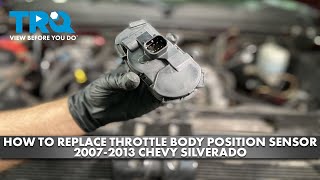
For this generation of Silverado (GMT900), the throttle position sensor (TPS) is integrated into the electronic throttle body assembly and is not sold as a separate component. This means a sensor failure often requires replacing the entire throttle body. Furthermore, these trucks are known for issues with the wiring harness chafing near the throttle body or firewall, which can mimic sensor failure and is a critical point of inspection. Poor ground connections at the back of the cylinder heads are also a surprisingly common cause for this code on this platform, often being overlooked.
Symptoms You May Notice
- "Reduced Engine Power" message on the instrument cluster
- Check Engine Light is on
- "Service Stabilitrak" or "Service Dynamic Stability Control" messages may also appear
- Severely limited acceleration and power (Limp Mode)
- Accelerator pedal has little to no effect
- Hesitation or jerky acceleration
- Rough or unstable idle
- Engine may stall or be hard to start
- Repeatedly replacing the throttle body with cheap aftermarket parts. Forum users report that issues often return until a high-quality OEM part (like ACDelco) is used.
- Replacing the throttle body or APP sensor when the root cause is a damaged wire in the harness or a loose engine ground.
Most Likely Causes
- Faulty Electronic Throttle Body Assembly 🔴 High Probability The Throttle Position Sensor (TPS) is integrated into the throttle body and cannot be replaced separately. The internal electronics of the sensor are a common failure point. Aftermarket parts are reported to fail quickly; using an OEM ACDelco part is highly recommended.
How to confirm: With a scan tool, monitor the voltage of TPS Sensor 1 and TPS Sensor 2. As the throttle is slowly opened, the voltages should change smoothly. A P0222 code indicates Sensor 2 voltage is low or not responding. If Sensor 1 reads correctly but Sensor 2 does not, and wiring is confirmed good, the throttle body is faulty.
Typical fix: Replace the entire throttle body assembly. After replacement, a throttle relearn procedure is required.
Est. part cost: $150-$350 - Wiring Harness or Connector Damage 🟡 Medium Probability The engine wiring harness, specifically near the throttle body connector, is known to chafe against brackets or other components, leading to short circuits or broken wires. Vibration and heat cycles contribute to this wear over time. The yellow wire in the harness is frequently cited as the one that breaks internally.
How to confirm: Visually inspect the wiring harness leading to the throttle body connector for any signs of rubbing, melting, or exposed wires. With the key on, gently wiggle the connector and harness to see if the fault code appears or disappears, or if the sensor voltage on a scan tool fluctuates wildly. Pull gently on each wire at the connector; a broken wire may stretch or come out.
Typical fix: Repair the damaged section of the wire(s) using solder and heat shrink. If the connector itself is damaged, it may need to be replaced with a new pigtail (e.g., ICT Billet WPTHB30).
Est. part cost: $15-$50 - Poor Ground Connections 🟡 Medium Probability The main engine-to-chassis ground straps, particularly those at the back of the cylinder heads (G103 and G104), can become loose or corroded. This creates electrical noise and voltage drops that can trigger sensor codes like P0222. This is a well-documented fix in owner forums.
How to confirm: Check the main ground cable from the battery to the body and frame for looseness or corrosion. Locate the ground straps on the rear of the engine cylinder heads; they are difficult to see but can be reached. Check for tightness. A YouTube video by user '737mechanic' details how simply loosening and re-tightening these grounds fixed a persistent P0222 issue after a throttle body and ECM were already replaced.
Typical fix: Remove, clean, and securely re-tighten all main ground connections between the battery, engine block, frame, and firewall. Replacing the main negative battery cable if corrosion is severe is also a good measure.
Est. part cost: $0-$60 - Dirty or Sticking Throttle Body ⚪ Low Probability Carbon and oil vapor from the PCV system can build up inside the throttle body, causing the throttle plate to stick or move slowly. This can cause a mismatch between the commanded and actual throttle position, triggering a sensor code.
How to confirm: Remove the air intake tube from the throttle body and inspect the throttle plate and bore for black carbon buildup. Check if the plate moves smoothly.
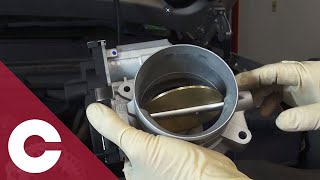
Typical fix: Clean the throttle body bore and plate thoroughly with a dedicated throttle body cleaner and a soft brush or rag. Do not force the plate open manually; have an assistant press the gas pedal with the key on.
Est. part cost: $10-$20 - Faulty Accelerator Pedal Position (APP) Sensor ⚪ Low Probability While less common than throttle body failure for this specific code, the APP sensor on the accelerator pedal assembly is also an electronic component that can fail. However, a faulty APP sensor usually triggers its own specific codes (like P2122 or P2127).
How to confirm: Using a scan tool, monitor the voltage readings for APP Sensor 1 and APP Sensor 2 while pressing and releasing the gas pedal. If the readings are erratic, drop out, or don't correlate correctly, the APP sensor is likely faulty.
Typical fix: Replace the accelerator pedal assembly, which contains the integrated APP sensor.
Est. part cost: $70-$150
Rare But Worth Checking
- Faulty Powertrain Control Module (PCM): This is very rare. The PCM itself can fail, but all other possibilities, especially wiring and grounds, should be exhaustively ruled out before condemning the PCM. One owner on YouTube replaced the PCM only to find the actual issue was a bad ground.
Diagnosis Steps
- Scan for any other accompanying trouble codes. Codes like P2135 or P0122 can provide additional diagnostic clues.
- CRITICAL: Check all major ground connections. Inspect the main negative battery cable and its connections to the body and frame. Locate and tighten the engine ground straps, which are often found on the back of the cylinder heads (G103, G104).
- Visually inspect the wiring harness and connector at the throttle body. Look for any signs of chafing, melting, or corrosion. Gently wiggle the harness with the key on to see if it triggers the fault. Gently pull on each individual wire at the connector to check for internal breaks.
- Remove the air intake hose and inspect the throttle body for heavy carbon buildup. If dirty, clean it thoroughly with throttle body cleaner.
- Using a scan tool with live data, observe the voltage readings for 'TPS Sensor 1' and 'TPS Sensor 2'. With the key on (engine off), have an assistant slowly press and release the accelerator pedal. Both voltage readings should change smoothly and correlate with each other. For P0222, you will likely see TPS Sensor 2 voltage stuck at a very low value (under 0.31V) or not changing at all.
- If wiring and grounds are confirmed to be intact and the throttle body is clean, but the TPS Sensor 2 voltage is still incorrect, the throttle body assembly is faulty and needs replacement.
- If both TPS sensors appear to be working but the problem persists, perform the same live data test on the 'APP Sensor 1' and 'APP Sensor 2' to rule out a faulty accelerator pedal.
- After any repair, clear the codes and perform a throttle relearn procedure. A common method is to idle the engine for 3 minutes, turn it off for 60 seconds, idle for 3 minutes again, and then drive the vehicle to allow the PCM to adapt.
Parts You'll Likely Need
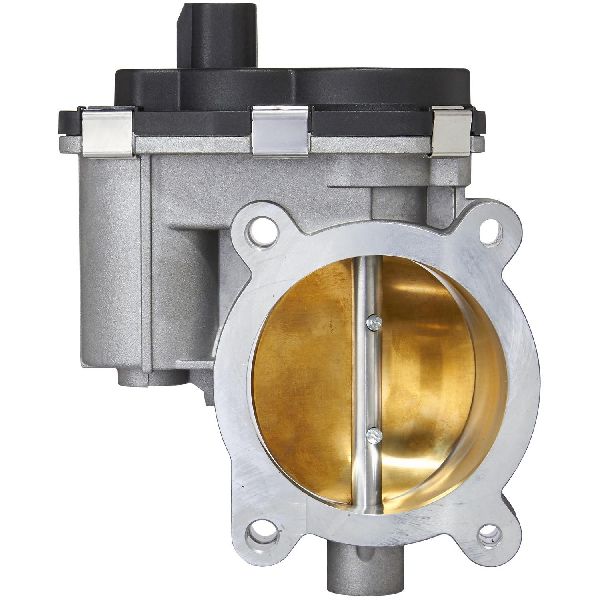
- Electronic Throttle Body Assembly
(OEM #12678223 (superseded by 12740727))— This is the most frequent cause of P0222 on this vehicle, as the internal Throttle Position Sensor (TPS) fails and is not serviceable separately.
Trusted brands: ACDelco, Bosch
OEM price range: $200-$350
Aftermarket price range: $120-$250
Related Codes That Often Appear With This One
- P2135 — This code indicates a 'Throttle/Pedal Position Sensor/Switch A/B Voltage Correlation' error. It often appears with P0222 because the PCM is seeing a disagreement between the two throttle position sensors.
- P0122 — This is 'Throttle/Pedal Position Sensor/Switch 'A' Circuit Low Input'. If both sensor circuits fail or have a common wiring issue (like a bad ground or 5V reference), you may see codes for both Sensor A (P0122) and Sensor B (P0222).
- P1516 — This is a GM-specific code for 'Throttle Actuator Control (TAC) Module Throttle Actuator Position Performance'. It means the PCM has detected a problem with the throttle body's ability to match the commanded position, which can be caused by the same faults that trigger P0222.
Technical Service Bulletins (TSBs) & Recalls
- PIP4786C: While not directly for P0222, this TSB addresses sensor issues (P0521) caused by restricted oil flow to sensors on many GM V8s, including the 6.2L. It points to a small filter screen that can get clogged, causing erroneous sensor readings. This highlights the sensitivity of the electrical system.
- PIP4568P: Addresses engine misfires and ticking noises resulting from faulty Active Fuel Management (AFM) lifters, a common issue on related engines that can sometimes present with various electrical codes due to engine instability.
Platform-Specific Known Issues
- A known issue is the wiring harness for the throttle body chafing on engine components, causing shorts or opens.
- Loose or corroded ground straps, especially at the rear of the cylinder heads, are a common and often misdiagnosed cause of this code.
- GM Technical Service Bulletin (TSB) PIP4786C, while for a low oil pressure code (P0521), highlights the sensitivity of engine sensors to issues like sludge and debris, reinforcing the importance of clean oil and engine maintenance for overall electronic stability.
Mechanic-Grade Diagnostic Values
- TPS Sensor 2 (Circuit B) Signal Voltage — expected: Smoothly sweeps from ~0.5V (closed throttle) to ~4.5V (wide open throttle).. Failure: Voltage is stuck below the PCM's minimum threshold, typically less than 0.3125 volts.
- 5V Reference Voltage at Throttle Body Connector — expected: Approximately 4.8V to 5.2V with key on, engine off.. Failure: Voltage is missing or significantly lower, indicating a wiring or PCM issue.
- Throttle Body Connector Pin D (TPS 2 Signal) to Pin H (Low Reference/Ground) — expected: Voltage should sweep smoothly as the throttle is opened.. Failure: Voltage remains below 0.3125V, confirming the low circuit condition at the sensor.
Scan Tool Commands That Help
- Tech2 / GDS2: Throttle/Idle Learn — Required after replacing the throttle body or cleaning it. This function resets the learned idle and off-idle throttle position values in the PCM. While a manual relearn often works, a scan tool command is the official and most reliable method.
- Tech2 / GDS2: Live Data - TP Sensor 1 and TP Sensor 2 Voltage — This is the primary diagnostic step to confirm P0222. It allows you to see the voltage output from both sensors in real-time to verify that Sensor 2 is the one reading low, as opposed to a correlation issue (P2135).
Wiring & Ground Locations
- G104 — On the rear of the driver's side (left) cylinder head.. This is a primary engine block to chassis ground. A loose or corroded connection here can cause unstable voltage references for multiple sensors, including the throttle position sensor, leading to codes like P0222.
- G103 — On the rear of the passenger's side (right) engine block.. Similar to G104, this is a critical engine ground. Some service bulletins suggest checking both G103 and G104 for this type of fault.
- Throttle Body Connector (8-pin) — Directly on the electronic throttle body assembly.. This is the direct interface for the sensor. Specific pins are used for TPS Sensor 2: Pin B (LT BLU/BLK) is the 5V reference, Pin D (PPL) is the signal wire, and Pin H (BLK/WHT) is the low reference (ground). Testing at these pins confirms if the fault is in the wiring or the throttle body itself.
Real Owner Repair Stories
- Chevrolet Forum user (2007-2013 Silverado with 6.2L engine) — Reduced Engine Power, Stabilitrak light, P0222 and other related codes.
❌ Tried (didn't work) Replacing the throttle body, Replacing the ECM
✅ What actually fixed it The truck was missing the G103 and G104 ground straps from the rear of the engine block to the firewall, likely not reinstalled after a previous engine replacement. Installing the missing ground straps resolved the issue permanently. - PerformanceTrucks.net forum user (GMT900 truck) — P1516 (Throttle Actuator Control Performance) which is often related to P0222.
❌ Tried (didn't work) Initial diagnostics pointing to the throttle body itself.
✅ What actually fixed it A partial break in the yellow wire near the 8-pin throttle body connector. The wire was not fully severed but had high resistance, causing a weak signal to the throttle motor. Repairing the wire fixed the problem.
OEM Part Supersession History
12678223→12740727— Standard part lifecycle update by GM. The new part number is the current OEM replacement.
Heads up: The new part number 12740727 is listed for 2014+ vehicles but also supersedes the older part for the GMT900 platform, indicating backward compatibility. However, always verify fitment with the vehicle's VIN before purchasing.
Model Year Variations Within This Range
- 2007-2008: The 6.2L V8 engine in these years is the L92. It features Variable Valve Timing (VVT) but does not have Active Fuel Management (AFM).
- 2009-2013: The 6.2L V8 engine was updated to the L9H. The primary change was the addition of E85 Flex-Fuel capability. Like the L92, it has VVT but does not have AFM in the truck applications (AFM was present in the SUV versions).
Diagnostic Flowchart
Other Known Issues on This Vehicle
Issues unrelated to this code that are worth knowing about as an owner of this generation:
- Active Fuel Management (AFM) Lifter Failure 🔴 High — Common, especially on 5.3L engines but also possible on 6.2L variants with AFM (L94/L99). Failures can occur from 50,000 miles onward, often leading to camshaft damage. (Ref: TSB PIP4568P)
- Cracked Dashboard 🟠 Medium — Extremely common across all GMT900 trucks and SUVs. Cracks typically form near the driver-side airbag and instrument cluster cowling, regardless of mileage or sun exposure. (Ref: No recall issued, but subject of class-action lawsuits.)
- Excessive Oil Consumption 🟠 Medium — Widespread on 5.3L engines and some 6.2L engines, often linked to the AFM system and PCV valve design. Can consume 1-2 quarts between oil changes. (Ref: Multiple TSBs exist for updated valve covers and oil pan shields.)
- Transfer Case Position Sensor Failure 🟡 Low — Common on 4WD models. The sensor fails, causing a 'Service 4WD' message and inability to switch transfer case modes. It's an inexpensive part but requires replacement.
Used vs. New Parts: Buying Guide for This Vehicle
When a used part is the smart pick: A used OEM throttle body from a low-mileage donor vehicle can be a cost-effective alternative to a new aftermarket part, as OEM electronics are generally more reliable. It is a viable option if the wiring and grounds have been confirmed to be good and the throttle body is the definite point of failure.
Donor-vehicle mileage cap: roughly under 75000 miles for the part to have meaningful remaining life.
What to inspect on the donor part:
- Verify the donor vehicle's mileage.
- Inspect the throttle body connector pins for any corrosion, damage, or signs of overheating.
- Check the throttle plate for excessive carbon buildup, which might indicate a poorly maintained engine.
- Ensure the part is a genuine GM/ACDelco unit, not an aftermarket part from a junkyard vehicle.
OEM-only on this vehicle (don't cheap out):
- Electronic Throttle Body Assembly
Aftermarket brands forum-validated for this vehicle:
- Bosch
Brands owners have reported issues with on this vehicle:
- Unbranded or 'white-box' parts from online marketplaces are frequently reported to fail prematurely or be dead-on-arrival.
- Duralast and Cardone have mixed reviews for this specific component.
Real Owner Stories
Aggregated from forums and TSBs cited above. Mileages and costs reflect what owners reported in those sources.
2011 Chevrolet Silverado 1500
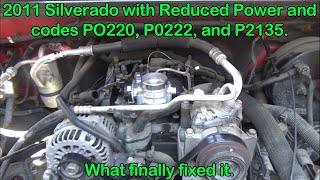
Symptoms: Reduced Engine Power message and P0222 code. The owner replaced both the throttle body and the ECM, but the fault persisted.
What fixed it: Cleaning and tightening the hard-to-reach ground connections on the back of the engine heads.
Source hint: YouTube video by user '737mechanic' titled 'What Fixed the 2011 Silverado Reduced Engine Power with codes P0220, P0222...'
Related OBD-II Codes
Frequently Asked Questions
My 2011 Silverado is showing 'Reduced Engine Power' and P0222; I already replaced the throttle body and ECM but the code is still there. What else could it be?
Can I just replace the Throttle Position Sensor (TPS) on my 6.2L V8 Silverado?
Is there a specific wire in the harness I should check for my P0222 code?
Does GM TSB PIP4786C apply to my 6.2L Silverado's sensor issues?
What should I do after replacing the throttle body to clear the 'Reduced Engine Power' message?
Are aftermarket throttle bodies recommended for the 2007-2013 Silverado 1500?
Helpful Videos
Used OEM Parts in Stock



New Aftermarket Parts Available


The information in this article is provided for general reference and educational purposes only. Vehicle specifications, procedures, and part compatibility can vary by production date, trim level, and region. Always consult your vehicle's factory service manual and verify part numbers before purchasing or performing repairs. Safety-critical components such as airbags, seat belts, and braking systems should be installed by a qualified professional.
- Chevrolet Silverado 1500:
- 🎬 Helpful Videos
- 🛍️ Shop This Part
- What's Unique About the 2007-2013 Chevrolet Silverado 1500
- Symptoms You May Notice
- Most Likely Causes
- Rare But Worth Checking
- Diagnosis Steps
- Parts You'll Likely Need
- Related Codes That Often Appear With This One
- Technical Service Bulletins (TSBs) & Recalls
- Platform-Specific Known Issues
- Mechanic-Grade Diagnostic Values
- Scan Tool Commands That Help
- Wiring & Ground Locations
- Real Owner Repair Stories
- OEM Part Supersession History
- Model Year Variations Within This Range
- Diagnostic Flowchart
- Other Known Issues on This Vehicle
- Used vs. New Parts: Buying Guide for This Vehicle
- Real Owner Stories
- 2011 Chevrolet Silverado 1500
- Related OBD-II Codes
- Frequently Asked Questions
- 🎟️ Get 5% Off