

P0222 on 2014-2020 Chevrolet Impala: Throttle Position Sensor Circuit Low Causes and Fixes
This code usually points to a faulty throttle body assembly or accelerator pedal position sensor. Expect symptoms like 'Reduced Engine Power' mode and erratic acceleration. The most common fix is replacing the entire throttle body, which can cost between $485 and $644 at a shop. Cleaning the throttle body and checking for wiring damage are important first steps.
- P0222 on a 2014-2020 Impala indicates a low voltage signal from the 'B' circuit of either the throttle position sensor or the accelerator pedal sensor.
- The most common symptom is the 'Reduced Engine Power' message, which severely limits acceleration.
- The most probable cause is a failed electronic throttle body assembly, followed by a faulty accelerator pedal sensor.
- Before replacing any parts, it's wise to check the associated wiring and connectors for damage or corrosion.
- After replacing the throttle body, a 'throttle relearn' procedure is required.
What's Unique About the 2014-2020 Chevrolet Impala
The 10th generation Impala (2014-2020) uses a fully electronic throttle control system. While the P0222 code is a generic powertrain code, on this specific platform and its relatives (like the Cadillac XTS and Buick LaCrosse), it is frequently associated with the failure of the electronic throttle body assembly itself, rather than just a wiring issue. Owners often report seeing a 'Reduced Engine Power' message on the dash, which is the car's self-preservation or 'limp' mode, as a primary symptom before the Check Engine Light and this code appear. This is often accompanied by the more specific GM code P2135 (Throttle Position Sensor 1-2 Correlation), which strongly points to a faulty throttle body.
Symptoms You May Notice
- Check Engine Light is on
- "Reduced Engine Power" message displayed
- Vehicle is in 'limp mode' with limited acceleration
- Hesitation, stumbling, or jerky acceleration
- Unresponsive or delayed accelerator pedal
- Rough or unstable idle
- Engine may stall or be hard to start
- Flashing check engine light during acceleration
- Replacing the accelerator pedal sensor when the throttle body is the actual problem (or vice-versa).
- Replacing the PCM without first confirming the throttle body, pedal sensor, and wiring are all in good working order.
- Replacing the throttle body without first checking for a simpler wiring or connector issue.
Most Likely Causes
- Faulty Throttle Body Assembly 🔴 High Probability The integrated throttle position sensors (TPS) within the electronic throttle body are a common failure point on many GM vehicles of this era, including the Impala and its platform mates. Over time, the internal electronic components and contact points wear out, leading to signal loss.
How to confirm: Use a scan tool to monitor the voltage of TPS Sensor 1 and Sensor 2. As the throttle is slowly opened, the voltage should increase smoothly on one sensor and decrease on the other. If Sensor 2 ('B' circuit) shows a consistently low (under 0.3V) or erratic voltage, the throttle body is likely faulty. A related code, P2135, is also a strong indicator of throttle body failure.
Typical fix: Replacement of the entire throttle body assembly. After replacement, a throttle relearn procedure must be performed for the ECM to recognize the new part's parameters. This often involves letting the car idle for several minutes, then driving it under varied conditions.
Est. part cost: $150-$300 - Faulty Accelerator Pedal Position (APP) Sensor 🟡 Medium Probability Similar to the throttle body, the pedal sensor is electronic and can wear out over time, especially with high mileage. It contains two separate sensors for redundancy.
How to confirm: Use a scan tool to monitor the APP sensor 1 and 2 voltages. If the 'B' circuit shows a low or unresponsive voltage as you press and release the pedal, the APP sensor assembly is the likely cause.
Typical fix: Replacement of the accelerator pedal assembly, which contains the integrated sensors. This is typically a straightforward bolt-in replacement inside the cabin.
Est. part cost: $50-$100 - Wiring or Connector Issue ⚪ Low Probability Vibrations, heat, and time can cause wires to break or chafe, and connectors can become corroded or loose, particularly at the throttle body connector which is exposed to engine heat.
How to confirm: Visually inspect the wiring harness and connectors going to both the throttle body and the accelerator pedal. Look for any signs of damage, corrosion, or loose pins. Perform a 'wiggle test' on the harness with the engine running and live data on screen to see if the voltage reading for Sensor 2 flickers, indicating a poor connection. Use a multimeter to check for continuity and for a short to ground on the sensor's 'B' circuit wire.
Typical fix: Repair the damaged section of the wiring harness or clean/replace the faulty connector.
Est. part cost: $10-$50
Rare But Worth Checking
- Faulty Powertrain Control Module (PCM): This is the least likely cause. The PCM should only be considered after all other possibilities (sensor, wiring) have been thoroughly ruled out. A PCM failure can sometimes cause it to misinterpret a normal sensor voltage as being too low.
- Excessive Carbon Buildup in Throttle Body: Heavy carbon deposits can cause the throttle plate to stick or not close properly, which may lead to erratic sensor readings at idle. Cleaning the throttle body is a good first step before replacing parts.
Diagnosis Steps
- Connect a capable OBD-II scanner and verify that P0222 is present. Check for any other related codes, especially P2135 or P0122.
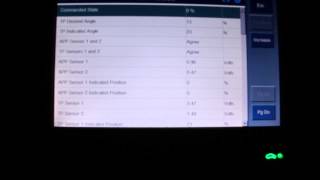
- Using the scanner's live data function, observe the voltage readings for both Throttle Position Sensor 1 and Sensor 2. On most GM vehicles, at idle (throttle closed), one sensor should read low (e.g., ~0.8V) and the other high (e.g., ~4.2V). As you open the throttle, their values should move smoothly in opposite directions.
- If the Sensor 2 ('B' circuit) voltage is stuck low (e.g., below 0.3V) and doesn't respond to throttle movement, the issue is likely the throttle body or its wiring.
- If the throttle sensors appear to work, check the live data for the Accelerator Pedal Position (APP) sensors. There will be two or three. Check for a similar low, unresponsive reading on one of the APP sensor circuits as you press the pedal.
- If a sensor is identified as the problem, inspect its wiring connector first. Check for loose pins, corrosion, or damage. Perform a 'wiggle test' on the connector and nearby harness while watching live data to see if the voltage jumps, indicating a bad connection.
- If the connector is fine, inspect the wiring harness leading to the component for any visible damage, chafing, or melting, especially where the harness might rub against the engine or other components.
- As a preliminary step, consider cleaning the throttle body bore and plate with a dedicated cleaner, as heavy carbon buildup can sometimes cause sticking and erroneous readings.
- If wiring looks good and cleaning doesn't help, the next step is to replace the component (either the throttle body or the accelerator pedal assembly) that showed the faulty reading.
- After replacing the throttle body, perform the Idle Learn/Throttle Relearn procedure. This can often be done without a scan tool by starting the engine, letting it reach operating temperature, and then letting it idle in drive for 2-3 minutes, followed by idling in park for 2-3 minutes. 🎬 Watch: How to perform a GM throttle relearn with a scan tool.
- If all sensors and wiring check out, the final, and least likely, possibility is a fault within the Powertrain Control Module (PCM).
Parts You'll Likely Need
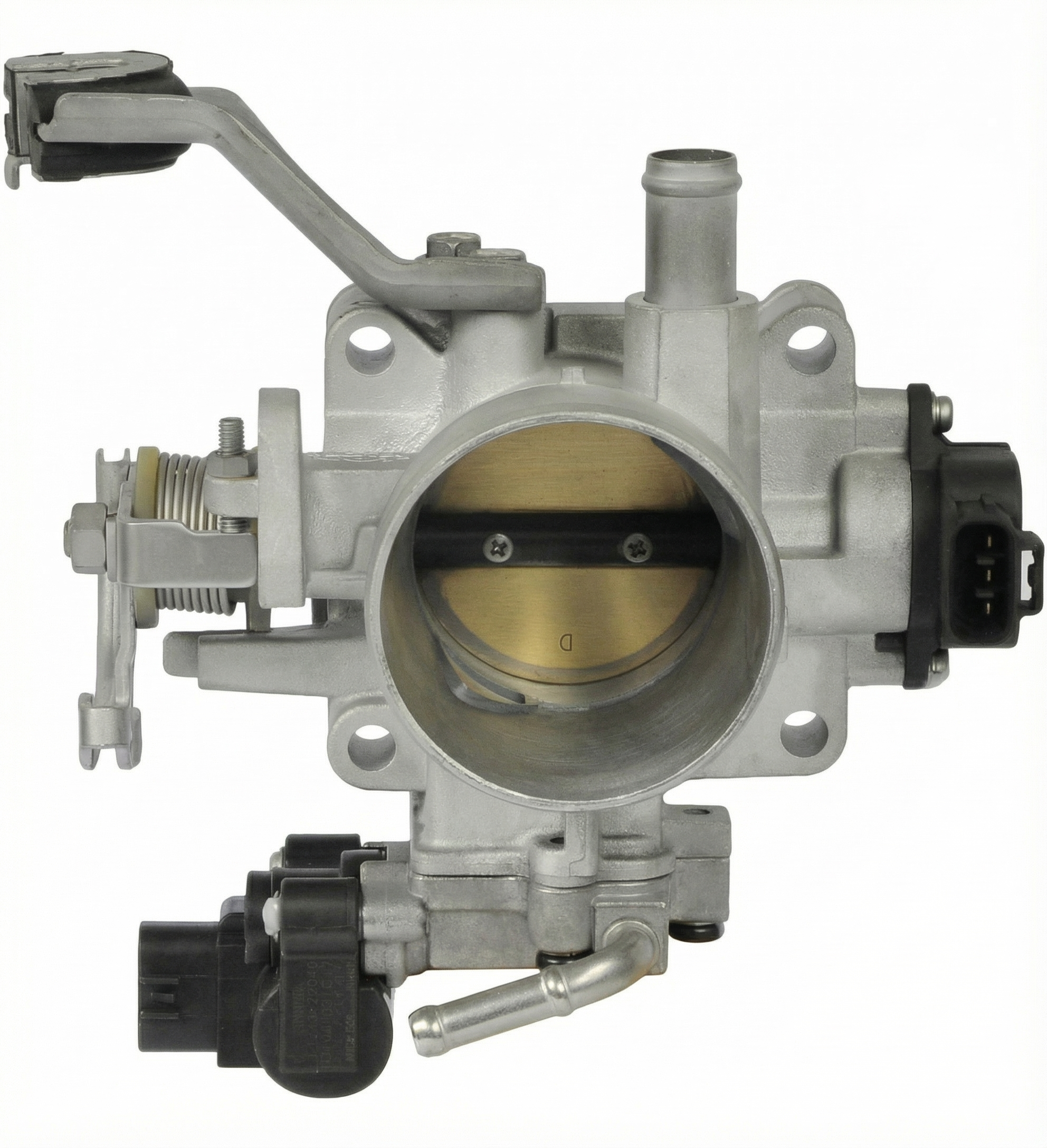
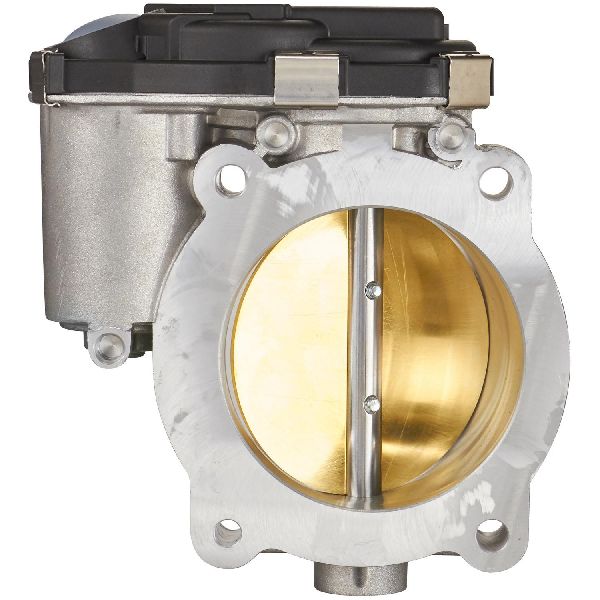
- Fuel Injection Throttle Body Assembly
(OEM #12670981 (For 3.6L V6, supersedes 12632172, 12669016))— This is the most frequent cause of P0222 on this vehicle. The internal position sensors fail, requiring replacement of the entire assembly. This part requires a relearn procedure after installation.
Trusted brands: ACDelco (GM Genuine), Bosch, Hitachi
OEM price range: $250-$400
Aftermarket price range: $150-$250 - Accelerator Pedal Position Sensor Assembly
(OEM #22741792)— If diagnosis rules out the throttle body, the sensor in the accelerator pedal is the next most likely cause. It is sold as a complete pedal assembly.
Trusted brands: ACDelco, Dorman
OEM price range: $70-$120
Aftermarket price range: $50-$80
Related Codes That Often Appear With This One
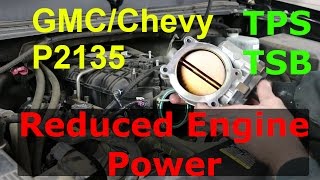
- P2135 — Stands for 'Throttle/Pedal Position Sensor/Switch 'A'/'B' Voltage Correlation'. This code is very common on GM vehicles and often points directly to a failing throttle body, as the computer sees a disagreement between the two internal sensors. GM issued TSB 11-06-04-007B for this code. 🎬 Watch: Troubleshooting the P2135 code and reduced engine power message.
- P0122 — This is the equivalent 'Circuit Low' code for the 'A' sensor (TPS 1). If you see both P0122 and P0222, it strongly suggests a problem with the throttle body assembly or its main connector/wiring.
Technical Service Bulletins (TSBs) & Recalls
- 11-06-04-007B: Addresses diagnostic trouble code P2135, which is highly related to P0222 and involves the correlation between the two throttle position sensors. It provides a detailed diagnostic flow but is aimed at preventing unnecessary throttle body replacement.
- 18-NA-355: Addresses a transmission shudder condition on some 6-speed automatic transmissions by recommending a fluid exchange with Mobil 1 Synthetic LV ATF HP fluid. This is unrelated to P0222 but is a common drivetrain issue for this car.
Platform-Specific Known Issues
- General Motors has a Technical Service Bulletin (TSB 11-06-04-007B) for a related code, P2135, which often accompanies or precedes P0222. The bulletin addresses diagnostics for the throttle position sensors and acknowledges the high failure rate of the throttle body assembly on this platform.
Mechanic-Grade Diagnostic Values
- Throttle Position Sensor 2 (B) Signal Voltage — expected: Approx. 0.2V - 1.0V at closed throttle, sweeping smoothly to 4.0V - 4.8V at wide-open throttle.. Failure: Voltage is stuck below the PCM's threshold, often less than 0.3125V, and does not change with throttle plate movement.
- 5-Volt Reference at Throttle Body Connector — expected: 4.8V - 5.2V with Key On, Engine Off (KOEO).. Failure: Voltage is near 0V or significantly lower than 4.8V, indicating a wiring issue or a problem with the PCM's 5V reference circuit.
- Ground Circuit Resistance at Throttle Body Connector — expected: Less than 1 ohm to a known good chassis ground.. Failure: High resistance (e.g., >5 ohms) indicates a poor ground connection, which can cause floating or incorrect voltage readings.
Scan Tool Commands That Help
- GDS2 (or equivalent professional scanner): Special Functions > Engine > Electronic Throttle Control > Throttle Body Adaptation — This function can be used to command the throttle body through its range of motion to test its response and perform a reset/relearn after cleaning or replacement, helping to distinguish a mechanical jam from an electrical failure.
- Manual Procedure (No Scan Tool): Idle Learn / Throttle Relearn Procedure — Required after replacing the throttle body or disconnecting the battery. The common procedure is: 1) Start engine and idle for 3 minutes. 2) Turn engine off for 60 seconds. 3) Restart engine and idle for another 3 minutes. The PCM learns the new closed-throttle position. A drive cycle may be needed to finalize the learn.
Wiring & Ground Locations
- Throttle Body Connector (X125 on some diagrams) — On the electronic throttle body assembly, mounted to the intake manifold.. This is the primary connection point for the TPS sensors. For P0222, check for a 5V reference (often Pin B, LT BLU/BLK), a signal wire (often Pin D, PPL), and a low reference/ground (often Pin H, BLK/WHT). A loose pin, corrosion, or damaged wire here is a direct cause of the code.
- Strut Tower Connector — A large, grey electrical connector located on the driver's side strut tower.. This connector is a known weak point for water intrusion on this GM platform. Corrosion within this pass-through connector can disrupt the signals from the throttle body to the ECM, causing intermittent P0222 or P2135 codes even when the throttle body and its pigtail are good.
- G103 / G105 — G103 is often on the cowl in the left rear of the engine bay, above the brake booster. G105 is often at the left front of the engine bay, behind cooling fan relays.. These are major chassis and engine component ground points. The ECM and its related sensors rely on a clean ground path. A corroded or loose ground at these locations can introduce electrical noise and voltage offsets, potentially causing the PCM to misread the TPS voltage and set a P0222.
- ECM Connector X1 — One of the main connectors on the Engine Control Module (ECM). For the 3.6L LFX engine, it is typically a black connector with a blue terminal position assurance lock.. This is the destination for the TPS signal. Verifying pin integrity here is the final step in ruling out a wiring issue between the sensor and the computer.
Real Owner Repair Stories
- GMTNation Forum (2004 Buick Rainier (similar GM platform)) — P0222 code and 'Reduced Engine Power' mode immediately after cleaning the throttle body.
❌ Tried (didn't work) Swapping the throttle body with a known-good unit from another vehicle.
✅ What actually fixed it The problem was traced to a bad pin or poor connection in the wiring harness connector that plugs into the throttle body. The connector itself was the fault, not the throttle body. - ScannerDanner Forum (2008 Chevrolet Impala (similar GM platform)) — Intermittent P2135 (correlation code often seen with P0222) that would appear randomly.
❌ Tried (didn't work) Replacing the throttle body three times., Replacing the throttle body pigtail connector., Replacing the PCM., Load testing all six wires from the PCM to the throttle body, which all tested good.
✅ What actually fixed it A contributing user noted two common, hard-to-find causes for this on GM platforms: 1) A grey connector on the driver's strut tower that collects water and corrodes, and 2) A faulty accelerator pedal. In a separate but similar case, the user fixed the issue with a used OEM accelerator pedal after a brand new Dorman aftermarket pedal did not work.
OEM Part Supersession History
12632172, 12669016→12670981— Standard part evolution, integrating design updates and new materials.
Heads up: The newest part number, 12670981, is the correct service replacement for the 2014-2020 Impala 3.6L. Using older stock is not recommended. This part requires a programming/relearn procedure after installation.
Model Year Variations Within This Range
- 2014-2019 vs 2020: The 2014-2019 Impala primarily used the 3.6L LFX V6 engine, while the 2020 model year switched to the updated 3.6L LGX V6. While they share architecture, some sensors and electronics can differ. However, the throttle body part number 12670981 is listed as compatible with the V6 Impala through the 2020 model year, suggesting this specific part remained consistent.
Diagnostic Flowchart
Other Known Issues on This Vehicle
Issues unrelated to this code that are worth knowing about as an owner of this generation:
- Transmission Shudder (6T70/6T75) 🟠 Medium — Common between 30-80k miles, especially on 2014-2015 models. Feels like driving over rumble strips at low speeds/shifts. (Ref: Multiple TSBs exist, including 18-NA-355 and 23-NA-072, which often recommend a specific fluid flush or, in severe cases, valve body or torque converter replacement.)
- Water Leak in Trunk 🟡 Low — Widespread issue where water pools in the spare tire well. Onset can be anytime. (Ref: TSB 15-08-57-002A (and others like 14047 mentioned in videos) points to failed taillight housing gaskets. The fix is to replace the thin original gaskets with thicker, updated versions (P/N 23211647 & 23211648).)
- MyLink Infotainment System Glitches/Black Screen 🟡 Low — Intermittent issue where the screen freezes, becomes unresponsive, or goes black. (Ref: No specific TSB, but common owner fixes include a soft reset (holding Home and Fast Forward buttons), a power cycle by opening the driver's door, or disconnecting the battery. In some cases, a dealer software update or HMI module replacement is needed.)
- Carbon Buildup on Intake Valves (3.6L LFX V6) 🟠 Medium — Common on direct-injection engines over 70,000 miles. Can cause rough idle, hesitation, and misfires. (Ref: No specific TSB, but it's a known characteristic of the engine design. Walnut shell blasting of the intake ports is the recommended cleaning procedure.)
- Crankshaft Reluctor Wheel Movement (3.6L LFX V6) 🔴 High — A less common but severe issue where the crankshaft position reluctor wheel can move, causing timing correlation codes (P0016-P0019) and significant engine performance problems. (Ref: No recall, but requires significant engine work to replace the crankshaft.)
Used vs. New Parts: Buying Guide for This Vehicle
When a used part is the smart pick: A used OEM accelerator pedal assembly from a reputable salvage yard can be a smart choice. Forum evidence suggests that in some cases, a used original part performs better and is more compatible than a new aftermarket alternative. A used throttle body is less recommended due to unknown wear on the internal motor and gears, but can be used for temporary diagnosis.
Donor-vehicle mileage cap: roughly under 80000 miles for the part to have meaningful remaining life.
What to inspect on the donor part:
- For an accelerator pedal, ensure the connector pins are straight and free of corrosion.
- For a throttle body, look inside the bore. Minimal carbon is okay, but heavy, oily buildup may suggest the donor engine had other issues.
- Verify the part number on the used component matches the required OEM number or its superseded versions.
- Check for any physical damage to the plastic housing or connector.
OEM-only on this vehicle (don't cheap out):
- Accelerator Pedal Position Sensor: Based on forum reports of new aftermarket parts failing to resolve the issue, sticking with a new GM Genuine part or a low-mileage used OEM part is strongly recommended for the pedal assembly.
Aftermarket brands forum-validated for this vehicle:
- ACDelco (This is the GM Original Equipment supplier)
- Bosch
- Hitachi
Brands owners have reported issues with on this vehicle:
- Dorman: While Dorman makes many quality parts, at least one detailed repair story for a similar GM platform indicated a new Dorman accelerator pedal assembly did not fix a correlation code when a used OEM part did, suggesting a potential compatibility issue.
Real Owner Stories
Aggregated from forums and TSBs cited above. Mileages and costs reflect what owners reported in those sources.
GM Vehicle (similar to Impala)
Symptoms: Experienced code P0222 after cleaning the throttle body.
What fixed it: The problem was traced to a bad pin and poor connection in the wiring harness connector at the throttle body, not the throttle body itself.
Source hint: GMTNation forum titled 'P0222 - OBD-II Trouble Code - GMTNation'
Chevrolet Tahoe/Suburban
Symptoms: Owner received a P2135 code, which is highly related to P0222.
What fixed it: The owner was told by a technician that the entire throttle body assembly needed to be replaced to fix the issue.
Source hint: Chevrolet Forum titled 'Throttle position sensor - Chevrolet Forum'
Related OBD-II Codes
Frequently Asked Questions
Is there a specific recall or TSB for code P0222 on my 2014-2020 Impala?
My Impala is in 'Reduced Engine Power' mode. Is it safe to continue driving?
If I replace the throttle body myself, is there a special procedure I need to follow afterwards?
Could a dirty throttle body cause the P0222 code, or do I definitely need a new part?
The throttle body and its wiring seem fine. What's the next most likely cause for P0222 on my Impala?
Are other GM cars like the Buick LaCrosse or Cadillac XTS also known for this throttle body issue?
Helpful Videos

Used OEM Parts in Stock


New Aftermarket Parts Available


The information in this article is provided for general reference and educational purposes only. Vehicle specifications, procedures, and part compatibility can vary by production date, trim level, and region. Always consult your vehicle's factory service manual and verify part numbers before purchasing or performing repairs. Safety-critical components such as airbags, seat belts, and braking systems should be installed by a qualified professional.
- Chevrolet Impala:
- 🎬 Helpful Videos
- 🛍️ Shop This Part
- What's Unique About the 2014-2020 Chevrolet Impala
- Symptoms You May Notice
- Most Likely Causes
- Rare But Worth Checking
- Diagnosis Steps
- Parts You'll Likely Need
- Related Codes That Often Appear With This One
- Technical Service Bulletins (TSBs) & Recalls
- Platform-Specific Known Issues
- Mechanic-Grade Diagnostic Values
- Scan Tool Commands That Help
- Wiring & Ground Locations
- Real Owner Repair Stories
- OEM Part Supersession History
- Model Year Variations Within This Range
- Diagnostic Flowchart
- Other Known Issues on This Vehicle
- Used vs. New Parts: Buying Guide for This Vehicle
- Real Owner Stories
- GM Vehicle (similar to Impala)
- Chevrolet Tahoe/Suburban
- Related OBD-II Codes
- Frequently Asked Questions
- 🎟️ Get 5% Off