

P0217 on 2019-2020 Ford Edge 2.0L EcoBoost: Engine Overheating Causes and Fixes
On a 2019-2020 Ford Edge with the 2.0L EcoBoost, code P0217 is a critical overheating warning, most often caused by a leaking EGR cooler as documented in Ford TSB 20-2234. This is a serious issue that requires immediate attention to prevent engine damage. Diagnosis should begin with checking for a PCM update and then pressure testing the EGR cooler before investigating other causes.
- P0217 is a critical code that means 'STOP DRIVING' to avoid catastrophic engine damage.
- For a 2019-2020 Ford Edge 2.0L, the most likely cause is a leaking EGR cooler, as per Ford TSB 20-2234.
- Symptoms to watch for are the temperature gauge spiking, coolant loss without an obvious leak, and white smoke from the exhaust.
- Diagnosis must start with investigating the EGR cooler before assuming more common issues like a bad thermostat.
- Due to the risk of severe engine damage and the specific nature of the most likely fault, professional diagnosis and repair are strongly recommended.
What's Unique About the 2019-2020 Ford Edge
While P0217 is a generic code, its appearance on a 2019-2020 Edge 2.0L EcoBoost is highly specific. Unlike many vehicles where a stuck thermostat is the primary suspect, Ford has issued Technical Service Bulletin (TSB) 20-2234 that directly links P0217 on these models to a failing EGR cooler that leaks coolant internally. This TSB, along with SSM 48345, also applies to platform mates like the Lincoln Nautilus and Ford Escape. Diagnosis must start here. While earlier 2.0L EcoBoost engines (2015-2018) were notorious for a coolant intrusion defect requiring engine replacement, the 2019-2020 models are more prone to this specific EGR cooler failure, a crucial distinction during diagnosis.
Symptoms You May Notice
- Temperature gauge reading high or in the red
- Engine temperature warning light illuminated on the dashboard
- White smoke coming from the exhaust pipe (a sign of coolant burning in the engine)
- Noticeable loss of engine coolant without visible external leaks
- Reduced engine power as the vehicle enters a protective 'limp mode'
- Steam or smoke coming from the engine bay
- Loud boiling or gurgling sounds from the engine
- No heat or poor performance from the cabin heater, which can be an early symptom before overheating begins
- Replacing the thermostat without first investigating the known EGR cooler issue. Given the specific TSB for this vehicle, the EGR cooler should be the primary suspect.
- Assuming the issue is the major coolant intrusion defect affecting earlier 2015-2018 models. While it's the same engine family, the 2019-2020 models have a different primary failure point (EGR cooler) for this symptom, a distinction confirmed by owner experiences and TSBs.
Most Likely Causes
- Leaking EGR Cooler 🔴 High Probability This is a well-documented issue in Ford TSB 20-2234 and SSM 48345 for the 2019-2020 2.0L EcoBoost engine. The cooler develops internal leaks, allowing coolant to enter the intake and exhaust. A YouTube video from a 2019 Edge owner documents this exact failure and repair process under warranty.
How to confirm: Follow the procedure in TSB 20-2234: first, check for a PCM software update. Then, perform a cooling system pressure test and visually inspect the EGR cooler for internal or external leaks. White smoke from the exhaust and rapid coolant loss are strong indicators.
Typical fix: Replacement of the EGR cooler (Part No. K2GZ-9F464-A), EGR outlet tube, and all associated gaskets. The PCM must also be updated to the latest calibration as part of the repair. The specified labor time for this job is approximately 3.3 to 3.6 hours.
Est. part cost: $300-$500 for the OEM EGR cooler assembly. Associated gaskets and tube will add to the cost. - Stuck-Closed Thermostat 🟡 Medium Probability
How to confirm: After the engine has warmed up, both the upper and lower radiator hoses should be hot. If the lower hose remains cool, it indicates coolant is not circulating because the thermostat is stuck closed.
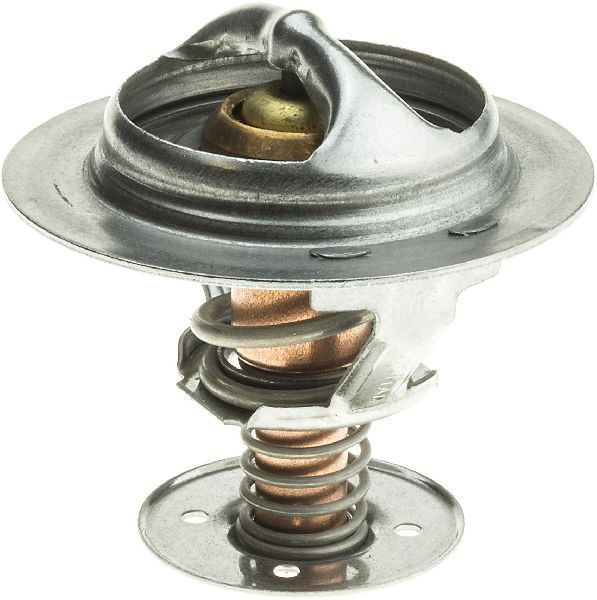
Typical fix: Replace the thermostat and housing assembly (Part No. K2GZ-8575-C). It is strongly recommended to replace the entire plastic housing, not just the thermostat, as the plastic can become brittle and crack.
Est. part cost: $50-$100 for an OEM Motorcraft thermostat housing assembly. - Failing Water Pump ⚪ Low Probability
How to confirm: Diagnosis involves checking for coolant leaks from the pump's weep hole, listening for grinding or whining noises from the pump bearing, and verifying coolant flow. This can be difficult as the pump is driven by the timing belt.
Typical fix: Replacement of the water pump. This is a labor-intensive job that often includes replacing the timing belt and tensioner at the same time.
Est. part cost: $70-$150 for an OEM Motorcraft water pump. - Low Engine Coolant Level (from other leaks) ⚪ Low Probability
How to confirm: Visually inspect the radiator, coolant hoses, reservoir tank, and water pump for any signs of external coolant leaks (stains, drips, or crusty residue). A cooling system pressure test can reveal hard-to-find leaks.
Typical fix: Repair the source of the leak, which typically involves replacing the faulty hose, clamp, or radiator, followed by refilling and bleeding the cooling system.
Est. part cost: $20-$400 depending on the leaking component.
Rare But Worth Checking
- Faulty Engine Coolant Temperature (ECT) Sensor: A faulty ECT sensor can send an incorrect high-temperature signal to the PCM, triggering a P0217 code even if the engine isn't actually overheating. Ford SSM 48991 notes that wiring issues can also cause false overheating warnings on some EcoBoost engines.
- Cooling Fan Malfunction: If the electric cooling fans fail to activate when the engine gets hot (especially in traffic or at idle), the temperature can quickly rise and trigger the code. This could be due to a bad fan motor, relay, or control module. On the 2019 Edge, the fan relays are #32, #38, and #39 in the under-hood fuse box.
- Blocked Radiator: External fins blocked by debris (leaves, bags) or internal passages clogged by sediment can reduce the radiator's ability to dissipate heat, leading to overheating.
Diagnosis Steps
- Verify the code with a quality OBD-II scanner. Do not clear the code.
- SAFETY FIRST: Do not open the coolant reservoir cap when the engine is hot. Allow the engine to cool completely for several hours.
- Check the coolant level in the reservoir. If it is low, this is a key symptom.
- Note any other symptoms, especially white smoke from the exhaust, a sweet coolant smell, or a lack of cabin heat.
- Follow the diagnostic procedure in Ford TSB 20-2234. First, use a Ford diagnostic scan tool to check if a PCM software update is available. Reprogram the PCM if an update exists.
- After addressing the software, perform a cooling system pressure test to check for leaks. Pay close attention to the EGR cooler for any signs of internal or external leakage as outlined in the TSB.
- If the EGR cooler passes inspection, proceed with standard diagnostics.
- Check for a stuck thermostat by feeling the upper and lower radiator hoses once the engine is at operating temperature.
- Verify the operation of the electric cooling fans. They should turn on when the A/C is activated or when the engine temperature rises.
- Inspect for any external coolant leaks from hoses, the radiator, or the water pump area.
- If an internal leak is still suspected and the EGR cooler is good, a chemical test for combustion gases in the coolant may be necessary to check for a head gasket failure.
Parts You'll Likely Need
- EGR Cooler
(OEM #K2GZ-9F464-A)— This is the most probable cause of P0217 on this specific vehicle, as identified in Ford TSB 20-2234.
Trusted brands: Motorcraft
OEM price range: $300-$500
Aftermarket price range: $200-$400 - EGR Cooler Gasket Kit (Multiple)
(OEM #K2GZ-9D476-A, K2GZ-9D476-B, K2GZ-9E464-D)— These specific gaskets are required when replacing the EGR cooler, per TSB 20-2234.
Trusted brands: Motorcraft
OEM price range: $40-$70 (for all required gaskets)
Aftermarket price range: $20-$50 - Engine Coolant Thermostat Assembly
(OEM #K2GZ-8575-C)— A stuck thermostat is a common cause of overheating in any vehicle. It's recommended to replace the entire housing assembly.
Trusted brands: Motorcraft
OEM price range: $50-$100
Aftermarket price range: $40-$80
Related Codes That Often Appear With This One
- P1299 — This code for 'Cylinder Head Over Temperature Protection Active' is often set alongside P0217 as the PCM takes protective measures. TSB 20-2234 and SSM 48345 both list this as an expected companion code.
- P1026 — This code for 'ECT/CHT Sensor Signal Mismatch' is also listed in TSB 20-2234 and SSM 48345 as a common code to appear when the EGR cooler fails and causes erratic temperature readings.
- P0128 — Although it means 'Coolant Temperature Below Thermostat Regulating Temperature', it can sometimes appear with other cooling system faults. TSB 20-2234 lists it as a possible companion code to P0217 when the EGR cooler fails.
- P0300-P0304 — Misfire codes (e.g., P0301, P0302) can occur if a leaking EGR cooler or a more serious internal leak allows coolant to enter the cylinders, fouling the spark plugs and affecting combustion.
Technical Service Bulletins (TSBs) & Recalls
- TSB 20-2234: Addresses P0217 and coolant loss on 2019-2020 Edge 2.0L models, pointing to a faulty EGR cooler and/or a PCM software update.
- SSM 48345: A Special Service Message that also notes a leaking EGR cooler can cause coolant consumption, white smoke, and overheating codes like P0217.
- SSM 48991: Notes that false overheating warnings (P0217, P1299) can be caused by the ECT sensor or knock sensor wiring harness.
Platform-Specific Known Issues
- TSB 20-2234 / SSM 48345: Specifically for 2019-2020 models, these bulletins identify a leaking EGR cooler as a primary cause for P0217, coolant loss, and white smoke. The repair involves replacing the cooler and potentially reprogramming the PCM.
Mechanic-Grade Diagnostic Values
- Engine Coolant Temperature (ECT) Sensor Resistance (Cold) — expected: 2000-3000 Ω at 68°F (20°C).. Failure: A reading significantly outside this range, or an open (infinite) or shorted (near zero) reading indicates a failed sensor.
- Engine Coolant Temperature (ECT) Sensor Resistance (Hot) — expected: 200-300 Ω at 194°F (90°C).. Failure: Resistance that does not drop as the engine warms up indicates a faulty sensor.
- Engine Coolant Temperature (ECT) Sensor Voltage (Key On, Engine Off, Cold) — expected: 2.0V to 3.0V.. Failure: Voltage stuck at 5.0V (indicates an open circuit or bad ground) or near 0V (indicates a short circuit).
- Cylinder Head Temperature (CHT) Sensor Voltage (at PCM) — expected: Decreases as temperature increases. Example: 0.78V at 80°C (176°F), 0.60V at 90°C (194°F).. Failure: Voltage below 0.244V (short circuit) or above 4.96V (open circuit) will trigger a fault.
Scan Tool Commands That Help
- Ford IDS (Integrated Diagnostic System): PCM Reprogramming — TSB 20-2234 requires checking for and applying a PCM software update as the first step when diagnosing P0217, as software settings could be a contributing factor.
- Ford IDS (Integrated Diagnostic System): Cooling System Pressure Test — This is a guided function within the workshop manual procedures called out by TSB 20-2234. It is used to pressurize the cooling system to find leaks, specifically to inspect the EGR cooler for internal or external leakage.
Wiring & Ground Locations
- Cooling Fan Relays — In the main under-hood fuse box. Specifically, relays #32 (Electronic fan 1), #38 (Electronic fan 2), and #39 (Electronic fan 3).. A failed relay will prevent one or more cooling fans from activating, leading to overheating, especially in low-speed or idle conditions.
- Cooling Fan Fuses — In the 'hidden' fuse box located underneath the main under-hood fuse box. Fuses #59 (40A), #60 (40A), and #63 (25A) are for the fans.. A blown fuse will disable the corresponding fan circuit. Access requires removing the main fuse box to get to the panel below.
- ECT/CHT Sensor Harness — The Cylinder Head Temperature (CHT) sensor is located on the cylinder head, and its wiring is subject to high heat and vibration. On some EcoBoost engines, wiring issues in the harness shared by the ECT and knock sensors are a known cause of false temperature readings per TSB SSM 48991.. A damaged or chafed wire in this harness can send an incorrect high-temperature signal to the PCM, triggering a false P0217 code even if the engine is not actually overheating.
Real Owner Repair Stories
- MACTFORDEDGE on YouTube (2019 Ford Edge Titanium (built Dec 2018)) — Losing coolant over time (about a pint over a 500-mile drive), but no visible external leaks. The owner was preparing to take it to the dealer for diagnosis under warranty.
❌ Tried (didn't work) The owner had a previous PCM update for an injector fault, which did not resolve the coolant loss.
✅ What actually fixed it The owner documented the entire process, referencing TSB 20-2234. The diagnosis confirmed an internal leak in the EGR cooler, and the final repair was the replacement of the EGR cooler and associated tubes/gaskets by the Ford dealership under an extended warranty.
OEM Part Supersession History
K2GZ-9F464-A→K2GZ-9F464-B— Standard part revision by the manufacturer. The new part number is a direct replacement for the old one.
Heads up: The -B version is a direct replacement for the -A version and should be used for all repairs.K2GZ-8575-A, K2GZ-8575-B→K2GZ-8575-C— Standard part revision for the thermostat assembly.
Heads up: K2GZ-8575-C is the current and correct part number for the thermostat assembly, replacing previous versions.
Model Year Variations Within This Range
- 2019-2020: There are no significant mechanical differences in the 2.0L EcoBoost engine or cooling system between the 2019 and 2020 model years that would affect the diagnosis of P0217. The primary change for 2020 was making dual-zone climate control a standard feature. TSB 20-2234 applies equally to both model years.
Diagnostic Flowchart
Used vs. New Parts: Buying Guide for This Vehicle
When a used part is the smart pick: For this specific P0217 issue, using used parts is generally not recommended for the primary failure components. However, a used cooling fan assembly or coolant reservoir from a low-mileage, collision-damaged donor vehicle could be a cost-effective option if those parts are confirmed to be the cause.
Donor-vehicle mileage cap: roughly under 50000 miles for the part to have meaningful remaining life.
What to inspect on the donor part:
- For a cooling fan, check for cracked blades, signs of heat damage on the motor housing, and ensure the connector is intact.
- For a coolant reservoir, inspect for hairline cracks, especially around the hose nipples and mounting points. Ensure the cap seals properly.
- Verify the donor vehicle was not involved in a front-end collision that could have damaged the cooling components.
OEM-only on this vehicle (don't cheap out):
- EGR Cooler: Given that the original part (K2GZ-9F464-A) is known to fail, installing a used one is a major risk. Always install a new, preferably the latest superseded OEM part (K2GZ-9F464-B), to ensure you have the most current design.
- Thermostat Assembly: This is a critical, high-failure, and relatively inexpensive part. The plastic housing can become brittle with age. It is not worth the labor to install a used thermostat. Always use a new OEM Motorcraft assembly.
Brands owners have reported issues with on this vehicle:
- Unbranded EGR Coolers: Avoid no-name EGR coolers from online marketplaces. The internal construction quality is critical to prevent premature failure, and OEM or reputable OE-supplier quality is essential for this specific repair.
Real Owner Stories
Aggregated from forums and TSBs cited above. Mileages and costs reflect what owners reported in those sources.
2019 Ford Edge 2.0L EcoBoost
Symptoms: Symptoms started with no heat from the cabin vents, followed by overheating warnings, noticeable coolant loss, white smoke from the exhaust, and eventually stalling.
What fixed it: Replacement of the EGR cooler.
Cost: $1200-$1200
Source hint: r/FordEdge - '2019 Ford Edge 2.0L EcoBoost EGR coolant intrusion problem'
2019 Ford Edge 2.0L Ecoboost
Symptoms: The owner experienced coolant loss that was not from an external leak or the common engine block issue found on earlier models.
What fixed it: The issue was diagnosed as an internal EGR cooler leak and the repair was covered under an extended warranty.
Source hint: Ford Edge Forum - '2019 Ford Edge 2.0 Ecoboost Coolant loss not what you think - EGR cooler leak'
Related OBD-II Codes
Frequently Asked Questions
Does TSB 20-2234 apply to my 2019 Ford Edge with the 2.0L EcoBoost engine?
I have code P0217 and white smoke coming from my exhaust. What is the most likely cause on this specific vehicle?
My mechanic says the thermostat is stuck. Should I just replace the thermostat itself?
I'm getting a false overheating warning. Could it be something other than the cooling system?
What's the first step a technician should take when diagnosing P0217 on my 2020 Edge?
Are other Ford or Lincoln vehicles known to have this same EGR cooler problem?
Used OEM Parts in Stock


New Aftermarket Parts Available


The information in this article is provided for general reference and educational purposes only. Vehicle specifications, procedures, and part compatibility can vary by production date, trim level, and region. Always consult your vehicle's factory service manual and verify part numbers before purchasing or performing repairs. Safety-critical components such as airbags, seat belts, and braking systems should be installed by a qualified professional.
- Ford Edge:
- 🛍️ Shop This Part
- What's Unique About the 2019-2020 Ford Edge
- Symptoms You May Notice
- Most Likely Causes
- Rare But Worth Checking
- Diagnosis Steps
- Parts You'll Likely Need
- Related Codes That Often Appear With This One
- Technical Service Bulletins (TSBs) & Recalls
- Platform-Specific Known Issues
- Mechanic-Grade Diagnostic Values
- Scan Tool Commands That Help
- Wiring & Ground Locations
- Real Owner Repair Stories
- OEM Part Supersession History
- Model Year Variations Within This Range
- Diagnostic Flowchart
- Used vs. New Parts: Buying Guide for This Vehicle
- Real Owner Stories
- 2019 Ford Edge 2.0L EcoBoost
- 2019 Ford Edge 2.0L Ecoboost
- Related OBD-II Codes
- Frequently Asked Questions
- 🎟️ Get 5% Off