

P0174 on 2020-2021 Ford Transit V6: System Too Lean (Bank 2) Causes and Fixes
On a 2020-2021 Ford Transit, code P0174 is most often caused by a kinked EVAP hose, detailed in Ford TSB 21-2106. The fix is simple and may only require a zip tie. If that's not the cause, suspect a vacuum leak (especially intake manifold gaskets), a dirty MAF sensor, or water intrusion from a clogged cowl drain saturating the air filter.
- First, check for the kinked EVAP hose described in TSB 21-2106, especially if you also have EVAP-related codes.
- Do NOT replace the oxygen sensor first; it is almost always reporting the problem correctly.
- If the TSB doesn't apply, the most likely causes are a vacuum leak (intake gaskets, PCV) or a dirty MAF sensor.
- If you have both P0174 and P0171 codes, the problem affects the whole engine. Focus on the MAF sensor, fuel delivery, or a major intake leak.
What's Unique About the 2020-2021 Ford Transit
For this specific Transit generation, Ford issued a Technical Service Bulletin (TSB 21-2106) for vehicles built on or before November 30, 2020, that directly addresses P0174. The cause is often a simple physical issue—a kinked evaporator emissions fresh air line—rather than a failed sensor. This makes the diagnosis unique, as the first step should always be to check for this specific TSB-related problem. Additionally, a known cowl design issue can lead to water saturating the air filter, another platform-specific cause of lean codes.
Symptoms You May Notice
- Check Engine Light is on
- Rough idle or high idle.
- Hesitation or stumbling during acceleration.
- Reduced engine power.
- Poor fuel economy
- Difficulty filling the fuel tank (pump clicks off repeatedly).
- Loud squealing or hissing noise from the engine bay (indicating a vacuum leak).
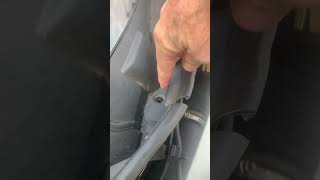
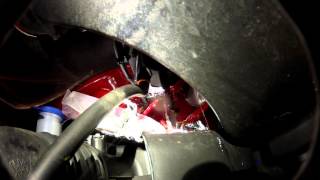
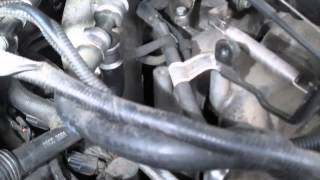
- Replacing the Bank 2 Oxygen (O2) Sensor. The O2 sensor is almost always just doing its job by correctly reporting the lean condition. The P0174 code means the sensor is working, 🎬 See this walkthrough on diagnosing Ford system lean codes but the air/fuel mixture it's reading is wrong. Replacing it will not fix the underlying problem.
Most Likely Causes
- Kinked EVAP Fresh Air Vent Line (TSB 21-2106) 🔴 High Probability A specific manufacturing issue identified by Ford where the EVAP vent line can become kinked, restricting airflow and causing a lean code, particularly on vehicles built on or before November 30, 2020.
How to confirm: Visually inspect the evaporator emissions fresh air vent line near the EVAP canister (located under the driver's door area) for kinks or sharp bends. This is often accompanied by a slow fuel fill condition and other EVAP system codes like P0171, P1450, P0451, P0455, P0456, and/or P0496.
Typical fix: Reroute the hose to remove the kink and secure it in place with a zip tie to prevent it from happening again, as per TSB 21-2106.
Est. part cost: $0-$5 - Vacuum Leak (Intake Manifold Gaskets, PCV Hoses) 🟡 Medium Probability Intake manifold gaskets are a known weak point on many Ford V6 engines that can leak unmetered air, causing a lean condition. PCV hoses can also crack with age and heat.
How to confirm: With the engine running, listen for hissing sounds around the intake manifold. You can also carefully spray short bursts of brake cleaner or an unlit propane torch around suspected areas; a change in engine RPM indicates a leak. A smoke test is the most definitive method.
Typical fix: Replace the failed gasket or cracked hose. Intake manifold gasket replacement is a moderately difficult job. See forum discussions where owners replaced multiple other parts before finding this was the root cause.
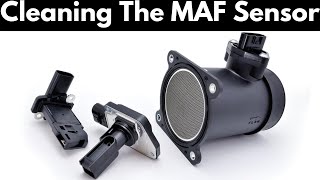
Est. part cost: $15-$100 - Dirty Mass Airflow (MAF) Sensor 🟡 Medium Probability Oil vapor from the PCV system or fine dust can contaminate the MAF sensor's delicate wire, causing it to under-report the amount of air entering the engine. The PCM then commands too little fuel, creating a lean condition. Note: Some 2020 models may use a Manifold Absolute Pressure (MAP) sensor instead of a MAF sensor.
How to confirm: Remove the MAF sensor from the intake tube and inspect the small wires inside for any dirt or film. Do not touch the wires. A scan tool showing lower-than-expected airflow (g/s) readings at idle can also indicate a dirty sensor.
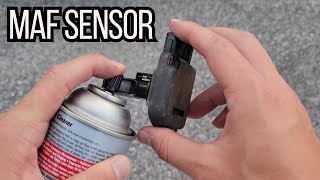
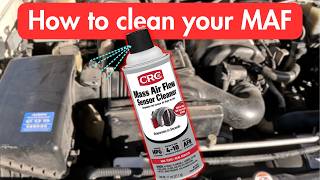
Typical fix: Clean the sensor using only dedicated MAF sensor cleaner spray. 🎬 Watch: How to clean your MAF sensor the right way If cleaning doesn't resolve the issue, the sensor must be replaced.
Est. part cost: $10-$15 (cleaner), $70-$150 (new sensor) - Low Fuel Delivery ⚪ Low Probability Not a platform-specific issue, but a possibility for any vehicle. Could be a weak fuel pump or clogged filter.
How to confirm: Connect a fuel pressure gauge to the fuel rail to check if pressure is within specification. A scan tool can also monitor fuel trim values; if they are highly positive and increase with RPM, it suggests a fuel delivery problem.
Typical fix: Replace the weak fuel pump or clogged fuel filter.
Est. part cost: $40-$300
Rare But Worth Checking
- Cowl Drain Water Leak: While TSBs for this issue (e.g., 18-2321) primarily cover earlier models (2015-2018), the cowl design can still allow drains to clog. Owners of 2020+ models report this, causing rainwater to overflow into the engine bay, saturating the air filter, and leading to incorrect MAF/MAP readings and lean codes. Check the air filter for moisture. 🎬 Watch: How to fix a wet engine air filter
- Exhaust Leak: A leak in the exhaust manifold or pipe before the upstream O2 sensor can draw in outside air, making the sensor incorrectly report a lean condition.
- Stuck-Open EVAP Purge Valve: A stuck-open EVAP purge valve can introduce unmetered fuel vapor, acting like an internal vacuum leak. This may not be found with a standard intake smoke test. It can be diagnosed by checking for vacuum at the valve's inlet port when it should be closed.
Diagnosis Steps
- Check for TSB 21-2106: Before any other step, inspect the EVAP fresh air vent line for kinks, especially if the vehicle was built on or before 11/30/2020 and you experience slow fueling.
- Check for Other Codes: Scan for other codes. If P0171 is also present, focus on causes that affect both banks (MAF, fuel delivery, main intake leak). If EVAP codes are present, focus on the TSB issue.
- Inspect for Cowl Water Intrusion: Open the airbox and check the air filter for any signs of moisture, water staining, or debris that would suggest a clogged cowl drain is overflowing into the intake.
- Inspect for Vacuum Leaks: Visually inspect all vacuum and PCV hoses for cracks or disconnection. Listen for hissing sounds. Perform a smoke test for a definitive diagnosis, paying close attention to the intake manifold gaskets.
- Inspect and Clean the MAF Sensor: Remove the MAF sensor and inspect it for contamination. Clean it with dedicated MAF sensor cleaner. Verify it's not a MAP-only system.
- Check Fuel Pressure: If leaks and sensor issues are ruled out, verify fuel pressure is within spec using a fuel pressure gauge.
- Inspect O2 Sensor Operation: Use a scan tool to monitor the Bank 2, Sensor 1 O2 sensor voltage. It should fluctuate rapidly. If it's stuck low (e.g., under 0.3V), it's confirming the problem, not causing it.
Parts You'll Likely Need
- Mass Airflow (MAF) Sensor Cleaner — Often, the MAF sensor is just dirty, not broken. Cleaning is a cheap and effective first step before replacement.
Trusted brands: CRC, Liqui Moly
OEM price range: N/A
Aftermarket price range: $10-$15 - Intake Manifold Gasket Set
(OEM #AA5Z-9439-B (EcoBoost, Oval Port))— These gaskets are a known failure point on this platform, causing vacuum leaks that trigger lean codes.
Trusted brands: Motorcraft, Fel-Pro
OEM price range: $60-$100
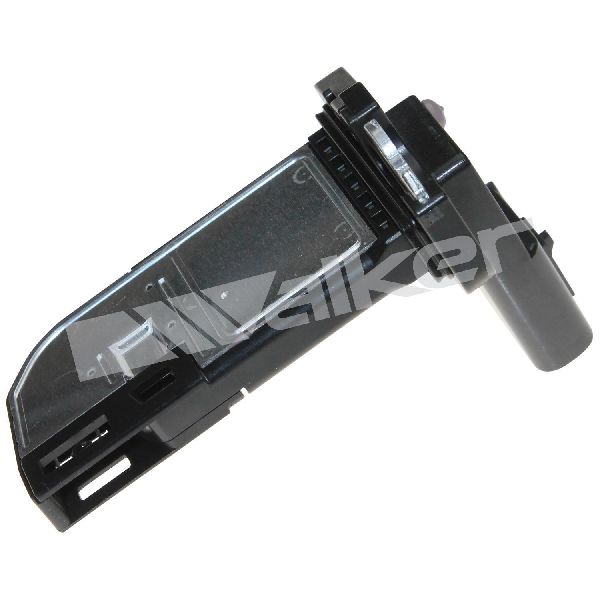
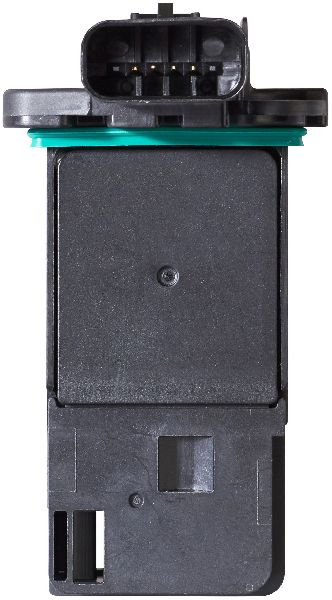
Aftermarket price range: $30-$60 - Mass Airflow (MAF) Sensor
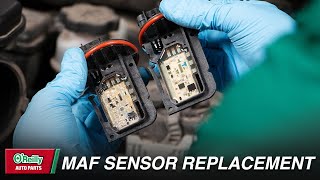
(OEM #Hitachi MAF0012 (common aftermarket replacement))— If cleaning the MAF sensor doesn't resolve the issue, it may have failed and require replacement.
Trusted brands: Motorcraft, Hitachi, Bosch
OEM price range: $120-$180
Aftermarket price range: $70-$150
Related Codes That Often Appear With This One
- P0171 — System Too Lean (Bank 1). If both codes are present, the cause is something that affects the entire engine, like a dirty MAF sensor, a large vacuum leak affecting the whole intake plenum, or a fuel delivery problem.
- P1450, P0451, P0455, P0456, P0496 — These are EVAP (Evaporative Emission) system codes. Their presence alongside P0174 and/or P0171 strongly points to the kinked EVAP vent line issue described in TSB 21-2106.
Technical Service Bulletins (TSBs) & Recalls
- TSB 21-2106: Some 2017-2021 Transit vehicles may exhibit an illuminated MIL with DTC P0171, P0174, P0451, P0455, P0456, P0496 and/or P1450 stored in the PCM, possibly due to a kinked evaporator
Platform-Specific Known Issues
- TSB 21-2106: Kinked EVAP Line: On vehicles built on or before November 30, 2020, a kinked evaporator emissions fresh air vent line can cause P0174. The fix is to reroute the line and secure it with a zip tie. This is often accompanied by a slow fuel fill issue.
- Cowl Water Leak: The cowl drain design can allow water to enter the engine bay, especially if clogged. This water can saturate the air filter, causing erroneous sensor readings and lean codes. TSB 18-2321 addresses this for earlier models, but owner forums confirm the potential for this issue on 2020+ Transits.
Mechanic-Grade Diagnostic Values
- Long-Term Fuel Trim (LTFT) Bank 2 — expected: -5% to +5% at idle on a warm engine.. Failure: Sustained positive values above +15% indicate a lean condition. The code typically sets when LTFT exceeds +20-25%.
- Mass Airflow (MAF) Sensor Reading at Idle — expected: Approximately 4-7 grams/second (g/s) for a 3.5L V6 engine on a warm engine. A common rule of thumb is engine displacement in liters multiplied by two.. Failure: Significantly lower readings (e.g., <3 g/s) suggest the sensor is dirty or there is a vacuum leak after the sensor.
- Mass Airflow (MAF) Sensor Reading at 2500 RPM — expected: 15 to 25 g/s. The reading should increase smoothly and linearly with RPM.. Failure: A reading that does not increase linearly with RPM or is significantly lower than expected points to a faulty sensor or a major leak in the intake tract.
- Low-Side Fuel Pressure (Key On, Engine Running) — expected: Approximately 55 PSI +/- 5 PSI for the port-injected 3.7L V6 (similar expected for 3.5L PFDI). For 3.5L EcoBoost (GDI), this is the low-pressure feed to the high-pressure pump.. Failure: Pressure significantly below specification indicates a failing low-pressure fuel pump, clogged filter, or faulty fuel pressure regulator.
- Upstream O2 Sensor (HO2S B2S1) Voltage — expected: Rapidly fluctuating between approximately 0.1V (lean) and 0.9V (rich) on a warm, closed-loop engine.. Failure: Voltage is stuck low (e.g., consistently below 0.3V), which confirms the PCM is seeing a lean mixture. This indicates the sensor is correctly reporting a problem, not that the sensor itself is the cause.
Scan Tool Commands That Help
- Ford IDS / FORScan / Capable Bidirectional Scanner: Keep Alive Memory (KAM) Reset — After replacing a component like a MAF sensor, intake gaskets, or O2 sensor, a KAM reset clears the learned fuel trim adaptations. This forces the PCM to relearn the new baseline values immediately, which can resolve rough idle or performance issues that may persist after a repair.
- Ford IDS / Capable Bidirectional Scanner: Power Balance Test — If a single-bank lean code (P0174) is suspected to be caused by a fuel injector issue on that bank, this test can help identify a specific cylinder that is contributing less power, pointing to a potential clogged or failing injector.
- Ford IDS / Capable Bidirectional Scanner: EVAP System Test / Purge Valve Command — To test the EVAP purge valve. The scanner can command the valve to open and close to verify its mechanical function, helping to rule out a stuck-open valve that could cause a vacuum leak.
Wiring & Ground Locations
- Battery Ground — The main battery is located under the driver's seat.. A poor main battery ground can cause a host of electrical issues and incorrect sensor readings. While not a primary cause of a single-bank lean code, it should be clean and tight.
- Engine/Chassis Ground Points — Various points on the chassis and engine block. One common user-referenced ground point is the B-Pillar D-Ring mounting bolt.. The PCM, MAF sensor, and O2 sensors all rely on a solid ground reference. A corroded or loose ground strap can cause erratic sensor readings, potentially leading to incorrect fuel calculations and lean codes.
- Fuse/Relay Boxes — There is a primary fuse box in the engine compartment and a secondary one in the passenger compartment.. These locations house fuses and relays for the PCM, fuel pump, and other critical components. A fault in one of these circuits could cause a fuel delivery issue leading to a lean code.
Real Owner Repair Stories
- Ford Transit USA Forum user (2020 Ford Transit 3.5L (non-EcoBoost)) — Check Engine Light with codes P0171 and P0174.
❌ Tried (didn't work) Cleaned MAF sensor, Replaced MAF sensor, Replaced both upstream O2 sensors
✅ What actually fixed it The intake manifold gaskets were found to be leaking. After replacing the upper and lower intake manifold gaskets, the fuel trims returned to normal and the codes were resolved.
"I Checked Everything" — The Actual Cause
- In some cases across Ford platforms, a smoke test of the intake may come back clean, but a lean code can still be caused by a leaking brake booster. The diaphragm inside the booster can fail, creating a large vacuum leak that is difficult to detect with a standard smoke test focused on the intake manifold itself.
Model Year Variations Within This Range
- 2020-2021: The standard engine is the 3.5L PFDI (Port Fuel/Direct Injection) V6, which features two injectors per cylinder for increased performance over older port-only injection systems. The optional engine is the 3.5L EcoBoost V6, which uses twin turbochargers and direct injection. While both can experience P0174, the EcoBoost's high-pressure fuel system adds another layer of diagnostic complexity if a fuel delivery issue is suspected.
Diagnostic Flowchart
Real Owner Stories
Aggregated from forums and TSBs cited above. Mileages and costs reflect what owners reported in those sources.
2017-2021 Ford Transit
Symptoms: Illuminated Check Engine Light with DTC P0174 and EVAP codes, accompanied by a slow fuel fill condition.
What fixed it: Rerouted the evaporator emissions fresh air vent line to remove a kink and secured it in place with a zip tie.
Source hint: TSB 21-2106
Ford Transit
Symptoms: Water getting past the cowl and overflowing onto the airbox area, potentially saturating the air filter.
What fixed it: Addressed the cowl water leak to prevent water intrusion into the engine bay and intake system.
Source hint: https://www.fordtransitusaforum.com/threads/transit-cowl-water-leak-findings-and-fixes.95315/
Ford Ranger V6
Symptoms: Classic P0171 and P0174 lean codes after checking multiple other items.
What fixed it: Replaced the intake plenum gaskets, which are a common source of vacuum leaks on Ford V6 engines.
Source hint: https://www.ford-trucks.com/forums/926902-intake-plenum-gaskets-codes-p0171-p0174.html
Ford F-150
Symptoms: Both P0171 and P0174 lean codes appeared immediately after performing other engine work.
What fixed it: Fixed a vacuum leak at the intake manifold that was accidentally created during reassembly.
Source hint: https://www.f150forum.com/f6/p-0171-p-0174-a-528770/
Related OBD-II Codes
Frequently Asked Questions
Does TSB 21-2106 apply to my 2020-2021 Ford Transit?
Why is my Transit having trouble filling up with gas and showing code P0174?
Can water leaking from the windshield cowl cause a P0174 code on my Transit?
What other codes should I look for alongside P0174 on my Transit?
Is an intake manifold gasket leak common on the Transit V6?
Helpful Videos

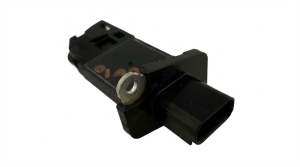
Used OEM Parts in Stock


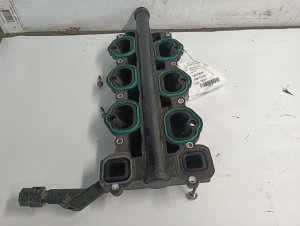

New Aftermarket Parts Available

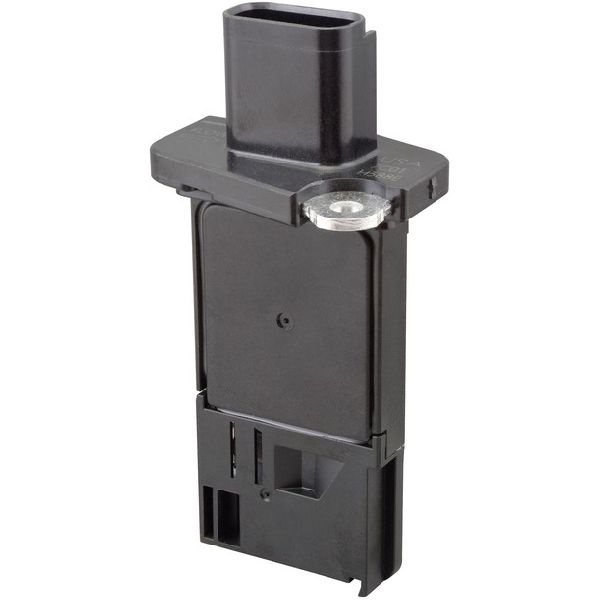


The information in this article is provided for general reference and educational purposes only. Vehicle specifications, procedures, and part compatibility can vary by production date, trim level, and region. Always consult your vehicle's factory service manual and verify part numbers before purchasing or performing repairs. Safety-critical components such as airbags, seat belts, and braking systems should be installed by a qualified professional.
- Ford Transit:
- 🎬 Helpful Videos
- 🛍️ Shop This Part
- What's Unique About the 2020-2021 Ford Transit
- Symptoms You May Notice
- Most Likely Causes
- Rare But Worth Checking
- Diagnosis Steps
- Parts You'll Likely Need
- Related Codes That Often Appear With This One
- Technical Service Bulletins (TSBs) & Recalls
- Platform-Specific Known Issues
- Mechanic-Grade Diagnostic Values
- Scan Tool Commands That Help
- Wiring & Ground Locations
- Real Owner Repair Stories
- "I Checked Everything" — The Actual Cause
- Model Year Variations Within This Range
- Diagnostic Flowchart
- Real Owner Stories
- 2017-2021 Ford Transit
- Ford Transit
- Ford Ranger V6
- Ford F-150
- Related OBD-II Codes
- Frequently Asked Questions
- 🎟️ Get 5% Off