

P0172 on 2011-2021 Dodge Durango 3.6L: System Too Rich Causes and Fixes
Code P0172 on a Dodge Durango 3.6L most often points to a faulty upstream oxygen (O2) sensor on the passenger side (Bank 1) or a leaking fuel injector. Expect to pay $50-$150 for an O2 sensor or $70-$200 per injector for parts.
- P0172 means your Durango's engine is running too rich on the passenger side (Bank 1).
- The most likely culprits are a bad upstream O2 sensor or a leaking fuel injector on that bank.
- Before buying parts, check simple things like the air filter and use a scan tool to analyze live data.
- If you also have a P0175 code (Bank 2 rich), the problem is likely something that affects the whole engine, like the MAP sensor or fuel pressure.
- Driving for too long with this code can damage your catalytic converter, a much more expensive repair.
What's Unique About the 2011-2021 Dodge Durango
The 3.6L Pentastar V6 in the Durango uses a MAP (Manifold Absolute Pressure) sensor, not a MAF (Mass Air Flow) sensor, to help calculate fuel delivery. While the causes for P0172 are common across many vehicles, issues like a failing upstream O2 sensor or a leaking fuel injector are frequently reported by owners of Pentastar-equipped vehicles. The problem can be tricky to diagnose, as evidenced by owner complaints where multiple parts like O2 sensors and injectors were replaced before finding the root cause. [NHTSA ODI #11534233]
Symptoms You May Notice
- Check Engine Light illuminated
- Reduced fuel economy
- Rough or unstable idle
- Strong smell of gasoline from the exhaust
- Black smoke coming from the tailpipe
- Engine hesitation or lack of power during acceleration
- Engine coughing or sputtering
- Replacing the O2 sensor without testing it first. While it's a common cause, a leaking injector or other issue could be the real problem.
- Replacing spark plugs alone. Fouled plugs are a symptom of the rich condition, not the cause. As one owner reported, replacing plugs, O2 sensors, and injectors can become a costly chase without proper diagnosis. [NHTSA ODI #11534233]
- Mistaking a leaking oil filter housing for a rear main seal leak. The plastic oil filter housing on the 3.6L Pentastar is prone to cracking and leaking oil down the back of the engine, which can be misdiagnosed as a rear main seal leak.
Most Likely Causes
- Faulty Upstream Oxygen Sensor (Bank 1, Sensor 1) 🔴 High Probability O2 sensors degrade over time and can become slow to respond or biased, sending inaccurate data to the PCM, causing it to command an overly rich mixture.
How to confirm: Use an OBD-II scanner to monitor the live voltage data from the Bank 1 Sensor 1 O2 sensor. A healthy sensor will show voltage rapidly fluctuating between approximately 0.1V and 0.9V. A sensor that is stuck high (above 0.8V) or responds slowly is likely faulty.
Typical fix: Replace the Bank 1, Sensor 1 (upstream, passenger side) oxygen sensor. The Mopar part number is often 5149171AA for earlier models, but always verify with VIN.
Est. part cost: $50-$150 - Leaking Fuel Injector(s) on Bank 1 🟡 Medium Probability Injectors can become stuck partially open due to internal wear or contaminants, causing them to leak fuel into a cylinder even when not commanded.
How to confirm: Pull the spark plugs on Bank 1 (passenger side cylinders: 1, 3, 5). A plug that is black, sooty, or wet with fuel indicates a leaking injector in that cylinder. A fuel pressure leak-down test can also confirm a leaking injector. If misfire codes (P0301, P0303, P0305) are present, they can help pinpoint the specific cylinder.
Typical fix: Replace the faulty fuel injector(s) on Bank 1. It is often recommended to replace them as a set on that bank. The OEM part number is often 05184085AC (interchanges with Bosch 0280158233).
Est. part cost: $70-$200 per injector - Faulty MAP (Manifold Absolute Pressure) Sensor 🟡 Medium Probability
How to confirm: With a scan tool, check the MAP sensor reading with the key on, engine off. It should read close to the current barometric pressure. With the engine idling, it should read a low pressure (high vacuum). Compare readings to specifications. An incorrect reading can cause the PCM to miscalculate load and over-fuel the engine.
Typical fix: Replace the MAP sensor.
Est. part cost: $40-$100 - Stuck-Open EVAP Purge Solenoid ⚪ Low Probability
How to confirm: With the engine off, disconnect the vapor line from the purge solenoid and attempt to blow through it. If air passes through, the valve is stuck open. You can also use a scan tool to command the valve closed and apply a vacuum pump to see if it holds vacuum. A stuck open valve allows un-metered fuel vapors into the intake manifold, creating a rich condition.
Typical fix: Replace the EVAP purge solenoid/valve.
Est. part cost: $30-$80
Rare But Worth Checking
- High Fuel Pressure: This is often caused by a failing fuel pressure regulator or a restricted fuel return line. The Pentastar uses a returnless fuel system. It would typically cause a rich condition on both banks (P0172 and P0175), but it's worth checking fuel pressure with a gauge if other causes are ruled out.
- Clogged Air Filter: A severely restricted engine air filter can starve the engine of air, leading to a rich mixture. This is a simple and essential check before moving to more complex diagnostics.
- Contaminated Engine Oil: If engine oil is heavily contaminated with fuel (e.g., from excessive blow-by or leaking injectors), the fuel vapors can be drawn through the PCV system into the intake, contributing to a rich condition. Check the oil for a strong gasoline smell.
Diagnosis Steps
- Use an OBD-II scanner to confirm P0172 and check for any other codes, especially P0175, P030x, or O2 sensor codes.
- Analyze Freeze Frame data to see the engine conditions (RPM, load, temperature) when the code was set.
- Monitor live data, focusing on Long-Term Fuel Trim (LTFT) and Short-Term Fuel Trim (STFT) for Bank 1. A strongly negative number (e.g., -15% or more) confirms the PCM is subtracting fuel to correct a rich condition.
- Inspect the engine air filter for dirt or blockages and replace if necessary.
- Inspect the intake system for any obstructions between the filter and the throttle body.
- Test the Bank 1, Sensor 1 (upstream) O2 sensor's performance via the scanner's live data graph. Look for slow switching or a signal biased high (rich).
- Test the fuel pressure using a mechanical gauge to ensure it is within the manufacturer's specified range.
- Inspect the spark plugs on Bank 1 (passenger side) for signs of heavy carbon fouling or being wet with fuel, which can indicate a leaking injector in a specific cylinder.
- Test the EVAP purge solenoid to ensure it is not stuck open, allowing fuel vapors into the intake at idle.
- Test the MAP sensor for accurate readings at key-on/engine-off and at idle.
Parts You'll Likely Need
- Upstream Oxygen Sensor (Bank 1, Sensor 1)
(OEM #5149171AA (verify with VIN))— This sensor is critical for fuel mixture calculation and is a common failure point causing rich conditions.
Trusted brands: Mopar, Denso, Bosch, NTK
OEM price range: $100-$180
Aftermarket price range: $50-$120 - Fuel Injector
(OEM #05184085AC / 5184085AC (interchanges with Bosch 0280158233, FJ1147))— A leaking fuel injector is a frequent cause of a rich condition isolated to one bank.
Trusted brands: Mopar, Bosch, Standard Motor Products (SMP)
OEM price range: $150-$250
Aftermarket price range: $70-$150 - MAP Sensor
(OEM #5149231AA (verify with VIN))— An inaccurate MAP sensor can cause the PCM to miscalculate engine load, leading to incorrect fueling across both banks.
Trusted brands: Mopar, Delphi, Hitachi
OEM price range: $70-$120
Aftermarket price range: $40-$80
Related Codes That Often Appear With This One
- P0175 — System Too Rich (Bank 2). If both P0172 and P0175 are present, it points to a problem affecting the entire engine, such as a faulty MAP sensor, high fuel pressure, or a stuck EVAP purge valve.
- P0300, P0301, P0303, P0305 — Cylinder Misfire on Bank 1. A severely leaking fuel injector can foul the spark plug and cause a misfire on one of the passenger-side cylinders (1, 3, or 5).
- P113D — O2 Sensor 1/1 Slow Response. This code often accompanies P0172 and directly points to a failing upstream oxygen sensor on Bank 1, confirming it as a likely culprit.
Technical Service Bulletins (TSBs) & Recalls
- TSB 09-008-15: Addresses oil filter housing leakage on 2014 model year vehicles.
- TSB 09-003-25: Advises technicians to properly diagnose oil leaks with dye before replacing the entire Oil Filter Assembly (OFA) on 2022-2025 models, as leaks are often from simpler seals.
- TSB 09-011-25: Relates to a manufacturing issue with camshafts and rocker arms, a known cause of the 'Pentastar tick'.
Platform-Specific Known Issues
- A recall (NHTSA #14V-530, Chrysler V62) was issued for the fuel pump relay within the Totally Integrated Power Module (TIPM) on 2011-2013 Dodge Durango models. The root cause was identified as deformation of the relay's contact spring due to heat. While this typically causes a no-start or stalling condition, a failing relay could theoretically contribute to erratic fuel pressure issues. The official fix was to install an external fuel pump relay, bypassing the problematic internal one.
Mechanic-Grade Diagnostic Values
- Fuel Injector Resistance — expected: Approximately 12.0 - 12.5 Ohms. Failure: A significantly higher reading (e.g., 24 Ohms) or an open circuit (infinite resistance) indicates a faulty injector.
- Fuel Pressure (Key On, Engine Off) — expected: 45-55 psi. Failure: Pressure significantly above this range can cause a rich condition. Pressure that bleeds down quickly after the pump primes may indicate a leaking injector.
- Long Term Fuel Trim (LTFT) for Bank 1 — expected: Close to 0%, ideally within +/- 5%. Failure: A strong negative number, such as -15% or more, confirms the PCM is consistently subtracting fuel to compensate for a rich condition detected by the O2 sensor.
Scan Tool Commands That Help
- wiTECH (Chrysler/Dodge Dealer Tool) or equivalent high-end scanner: Fuel Injector Kill — To isolate a single leaking injector. While the engine is running, disable one injector at a time on Bank 1. If disabling an injector causes little to no change in RPM, but disabling others causes a noticeable drop, the non-responsive cylinder likely has a leaking injector that is continuously supplying fuel.
- wiTECH or equivalent: EVAP Purge Solenoid Actuation Test — To test the purge solenoid functionality. You can command the valve to open and close while monitoring engine RPM or vacuum on the line. If the valve doesn't respond or is stuck, it needs replacement. This is more precise than manual testing.
Real Owner Repair Stories
- RamForum.com user (Ram 1500 with 3.6L Pentastar (similar engine and systems)) — P0172 code, hard starting (required two cranks), poor fuel economy (11-12 MPG).
❌ Tried (didn't work) Initial diagnosis pointed towards common causes.
✅ What actually fixed it Replacing the PCV valve resolved the hard starting issue for a period, suggesting it was a contributing factor to the fuel trim issues.
OEM Part Supersession History
05184085AC (or 5184085AC)→05184085AD (also seen as RL184085AC for remanufactured)— Standard part revision and improvement.
Heads up: The parts are interchangeable for the 2011-2021 Durango 3.6L. The Bosch equivalent is part number 0280158233.Original 4-hole fuel injectors (e.g., 05184085AC)→Newer 8-hole fuel injectors (Mopar P/N: 05281427AA) from the Pentastar Upgrade (PUG) engine.— The 8-hole design offers better fuel atomization, which can lead to smoother idle, better throttle response, and potentially improved fuel economy.
Heads up: This is considered an upgrade, not a direct replacement. While it is a popular swap among enthusiasts, it is not the standard repair part.
Model Year Variations Within This Range
- 2011-2013: These early models use a different oil filter (cartridge style) and have a different oil filter housing design compared to 2014+ models. They were also the primary models affected by the TIPM fuel pump relay recall.
- 2014-2015: A significant refresh occurred in 2014, introducing an 8-speed automatic transmission across the board and a new oil filter housing design (part # 68105583AA) that is notoriously prone to cracking and leaking.
- 2016-2021: The 3.6L Pentastar engine received an update (known as the PUG - Pentastar Upgrade) starting in 2016. This included a two-stage variable valve lift system, improved EGR, and new eight-hole fuel injectors for better atomization. While parts are often interchangeable, the factory-installed components differ from earlier years.
Diagnostic Flowchart
Other Known Issues on This Vehicle
Issues unrelated to this code that are worth knowing about as an owner of this generation:
- Cracked Oil Filter Housing/Cooler Assembly 🔴 High — Very common, especially on models from 2014-2017. The plastic housing can become brittle and crack, causing significant oil and/or coolant leaks in the engine valley. (Ref: TSB #09-008-15, TSB #09-003-25. TSBs advise proper diagnosis with oil dye before replacing the entire assembly, as leaks can also come from the cap O-ring or valve cover gaskets.)
- Rocker Arm and Camshaft Failure ('Pentastar Tick') 🔴 High — A known issue, particularly on earlier Pentastar engines, but can occur at higher mileage on any year. It presents as a distinct ticking sound from the top of the engine, caused by premature wear of the rocker arm bearings, which can lead to camshaft damage. (Ref: A class-action lawsuit was filed regarding this issue. TSB 09-011-25 suggests a manufacturing issue with the cam/rocker from a parts supplier.)
- Totally Integrated Power Module (TIPM) Failure 🔴 High — Most prevalent on 2011-2013 models. A faulty fuel pump relay inside the TIPM can cause the engine to stall while driving, fail to start, or have the fuel pump run continuously, draining the battery. (Ref: Recall V62 / NHTSA #14V-530. The initial fix involved installing an external relay, as replacing the entire TIPM was costly and parts were scarce.)
Used vs. New Parts: Buying Guide for This Vehicle
When a used part is the smart pick: For major electronic modules like the PCM or TIPM, a used part from a reputable salvage yard can be a cost-effective solution, provided the part numbers match exactly. Structural components like intake manifolds (if not cracked) are also good candidates for used parts.
Donor-vehicle mileage cap: roughly under 80000 miles for the part to have meaningful remaining life.
What to inspect on the donor part:
- For fuel injectors, ask for the donor vehicle's mileage; lower is always better.
- Inspect O-rings on used injectors for cracking or brittleness; plan to replace them regardless.
- When buying a used sensor, check for physical damage, corrosion on the connector pins, or oil contamination.
OEM-only on this vehicle (don't cheap out):
- Fuel Injectors: While some high-quality aftermarket options like Bosch exist, it is generally recommended to use Mopar injectors to avoid compatibility and performance issues.
- MAP Sensor: Critical sensors like the MAP are best sourced from Mopar or a primary OEM supplier like Delphi to ensure accurate readings.
Aftermarket brands forum-validated for this vehicle:
- O2 Sensors: NTK and Denso are highly regarded OEM suppliers and are considered safe, reliable alternatives to Mopar-branded sensors.
- Oil Filter Housing: Dorman offers an upgraded aluminum version (e.g., 926-876) that is a popular and durable fix for the failure-prone OEM plastic housing.
Brands owners have reported issues with on this vehicle:
- Avoid unbranded, 'white-box' O2 sensors and fuel injectors from online marketplaces. Forum users frequently report that these parts are either dead-on-arrival or fail quickly, causing repeat diagnostic work.
Real Owner Stories
Aggregated from forums and TSBs cited above. Mileages and costs reflect what owners reported in those sources.
2004 Dodge Durango 5.7L
Symptoms: The vehicle was experiencing both P0172 (rich) and P0174 (lean) codes simultaneously.
What fixed it: The issue was caused by catastrophic internal engine damage, specifically a dropped valve seat that resulted in zero compression in two cylinders on one bank.
Source hint: DodgeForum.com - Thread: '04 Durango 5.7L P0174 & P0172'
Related OBD-II Codes
Frequently Asked Questions
Could the fuel pump relay recall on my 2011-2013 Durango be related to the P0172 code?
Which oxygen sensor should I replace for a P0172 code on my 3.6L Pentastar?
I have a 'Pentastar tick' and a P0172 code; does TSB 09-011-25 apply?
Is there a specific fuel injector part number for the 2011-2021 Durango 3.6L?
Can a leak in my oil filter housing cause engine codes on my 2014 Durango?
How can I tell if my P0172 is caused by the EVAP system instead of a sensor?
Helpful Videos
![How to Fix P0172 Engine Code in 7 Minutes [4 DIY Methods / Only $6.99]](https://img.youtube.com/vi/hdzyKwSat5U/mqdefault.jpg)

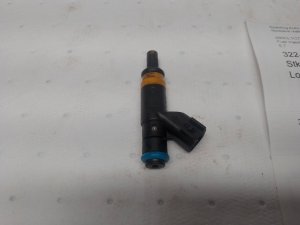
Used OEM Parts in Stock
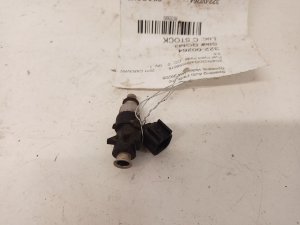


New Aftermarket Parts Available


The information in this article is provided for general reference and educational purposes only. Vehicle specifications, procedures, and part compatibility can vary by production date, trim level, and region. Always consult your vehicle's factory service manual and verify part numbers before purchasing or performing repairs. Safety-critical components such as airbags, seat belts, and braking systems should be installed by a qualified professional.
- Dodge Durango:
- 🎬 Helpful Videos
- 🛍️ Shop This Part
- What's Unique About the 2011-2021 Dodge Durango
- Symptoms You May Notice
- Most Likely Causes
- Rare But Worth Checking
- Diagnosis Steps
- Parts You'll Likely Need
- Related Codes That Often Appear With This One
- Technical Service Bulletins (TSBs) & Recalls
- Platform-Specific Known Issues
- Mechanic-Grade Diagnostic Values
- Scan Tool Commands That Help
- Real Owner Repair Stories
- OEM Part Supersession History
- Model Year Variations Within This Range
- Diagnostic Flowchart
- Other Known Issues on This Vehicle
- Used vs. New Parts: Buying Guide for This Vehicle
- Real Owner Stories
- 2004 Dodge Durango 5.7L
- Related OBD-II Codes
- Frequently Asked Questions
- 🎟️ Get 5% Off