

P0140 on 2009-2018 Ram 1500 5.7L HEMI: Causes and Fixes for O2 Sensor No Activity
P0140 on a 4th Gen Ram 1500 almost always means the passenger-side downstream O2 sensor has failed or its wiring is damaged. Replacing the sensor with a quality brand like NTK, Denso, or Mopar is the most common fix. Cheap aftermarket sensors are known to fail and cause the code to return. Expect to pay $50-$100 for a quality aftermarket sensor and $100-$160 for OEM.
- P0140 points to a problem with the passenger side, post-catalytic converter O2 sensor circuit.
- The most likely cause is a failed O2 sensor, followed by damaged wiring.
- Do not use cheap, off-brand O2 sensors. Stick to Mopar, NTK, or Denso to avoid the code returning.
- You can safely drive the truck, but you will not pass an emissions test until it is fixed.
- Before replacing the sensor, always perform a quick visual inspection of the wiring for obvious melting or damage, and check the related fuse.
What's Unique About the 2009-2018 Ram 1500
The 4th generation Ram 1500 is not particularly unique for this code, as it's a common failure on many vehicles. However, owner forums for the 5.7L HEMI repeatedly emphasize that this platform's PCM can be highly sensitive to the brand of replacement O2 sensor. Using cheap, unbranded sensors often leads to the code returning quickly. A user on RamForum.com explicitly noted that their recurring P0140 issue was only resolved after replacing cheap '4 for $50' Amazon sensors with proper NTK/NGK parts. Sticking with the OEM supplier (NTK or Denso) or Mopar-branded parts is highly recommended for a lasting repair.
Generation note: The 2009-2018 model years cover the entire fourth generation of the Ram 1500 (DS/DJ). The information in this guide is consistent across this generation for the 5.7L HEMI engine.
Symptoms You May Notice
- Check Engine Light is on.
- Vehicle will fail an an emissions test.
- No noticeable driveability symptoms are expected.
- Replacing the O2 sensor with a cheap, off-brand part. Many owners report that these parts fail quickly or don't work at all with the Chrysler PCM, causing the P0140 code to return.
- Replacing the wrong sensor. P0140 is specifically for Bank 1 (passenger side) and Sensor 2 (downstream/after-cat). Always confirm the location before replacing parts.
- Assuming the catalytic converter is bad. P0140 indicates the monitoring sensor isn't working. A bad converter would typically trigger a P0420 code, which requires a functional sensor to be diagnosed.
Most Likely Causes
- Failed Bank 1 Sensor 2 Oxygen Sensor 🔴 High Probability Oxygen sensors are wear items that fail from constant exposure to high heat and exhaust gases. They have a finite lifespan, and failure of the internal sensing element or heater circuit is common.
How to confirm: After confirming wiring and fuses are good, the lack of a fluctuating voltage signal on a scan tool's live data for 'O2S B1S2' points to a dead sensor. Replacing the sensor is the definitive test.
Typical fix: Replace the Bank 1, Sensor 2 (passenger side, downstream) oxygen sensor. It is strongly recommended to use a quality OEM or OEM-equivalent brand (Mopar, NTK, Denso) to avoid repeat failures.
Est. part cost: $50-$160 - Damaged Wiring or Connector 🟡 Medium Probability The wiring harness is routed near the hot exhaust and is exposed under the truck, making it susceptible to melting, chafing against the frame or driveshaft, or corrosion from road salt and debris.
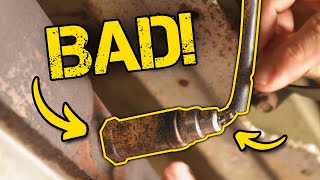
How to confirm: Visually inspect the entire harness from the O2 sensor to where it connects higher up on the chassis. Look for melted plastic, frayed wires, or green corrosion in the connector pins. Perform a continuity test on the signal, ground, and heater circuit wires if no visual damage is found.
Typical fix: Repair the damaged section of wire or replace the connector pigtail. Secure the harness away from the exhaust pipe with high-temp zip ties to prevent future damage.
Est. part cost: $10-$30 - Blown O2 Sensor Heater Fuse ⚪ Low Probability A short circuit in the sensor's internal heater element is a common cause for the associated fuse to blow. This is often a precursor to total sensor failure.
How to confirm: Locate the fuse box (Totally Integrated Power Module or TIPM, under the hood) and check the fuse designated for the O2 sensor heaters. If the fuse is blown, it confirms a short circuit in the heater side of the O2 sensor or its wiring.
Typical fix: Replace the blown fuse after diagnosing and fixing the short circuit that caused it to blow. Simply replacing the fuse without finding the root cause (usually a bad sensor) will result in the new fuse blowing as well.
Est. part cost: $1-$5
Rare But Worth Checking
- Exhaust Leak: An exhaust leak upstream of or near the B1S2 sensor can introduce outside oxygen, causing incorrect readings that the PCM might interpret as a fault. This is usually accompanied by a louder exhaust noise, especially a 'ticking' sound on cold starts, which on this platform is often due to broken exhaust manifold bolts.
- Powertrain Control Module (PCM) Failure: In very rare instances, the internal driver circuit in the PCM that reads the O2 sensor can fail. This should only be considered after all other possibilities (sensor, wiring, fuses, connectors) have been exhaustively ruled out by a professional.
Diagnosis Steps
- Connect an OBD-II scanner and confirm that P0140 is the primary code. Check for any other codes, especially heater circuit codes like P0141.
- Visually inspect the Bank 1 Sensor 2 (passenger side, after the catalytic converter) oxygen sensor. Follow its electrical connector and wiring harness as far back as possible, looking for any signs of melting, chafing, corrosion, or disconnection.
- Using a scan tool with live data, monitor the voltage for 'O2S B1S2'. A healthy downstream sensor shows a relatively stable voltage that changes slowly. If the reading is flat, stuck at 0V, or a static ~0.45V with no activity, the circuit is inactive as the code suggests.
- Check the fuse for the O2 sensor heater circuit in the under-hood fuse box (TIPM). If it's blown, suspect a short in the sensor or wiring.
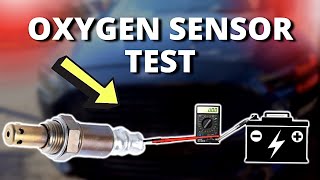
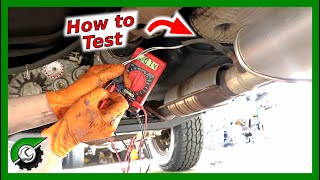
- If the fuse is good, use a multimeter to test for battery voltage and ground at the sensor's electrical connector (with the key on, engine off). If power or ground is missing, trace the wiring back to find the break.
- If the wiring, connector, and fuse are all confirmed to be good, the oxygen sensor itself has almost certainly failed and must be replaced.
Parts You'll Likely Need
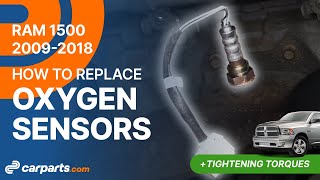
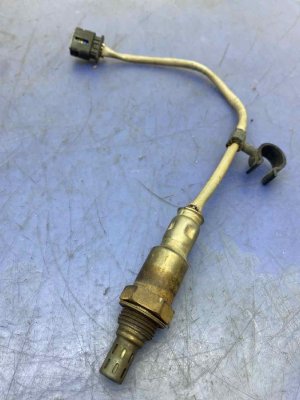
- Oxygen Sensor (Bank 1, Sensor 2)
(OEM #56029049AA, 56028994AA)— This is the sensor that has failed. It is located on the passenger side, after the catalytic converter. WARNING: Mopar often uses the same base part number for multiple sensor locations which differ by wire length and connector keying. Always verify fitment with your VIN. Part number 56029049AA is widely listed, but may apply to other locations as well.
Trusted brands: Mopar, NTK, Denso
OEM price range: $100-$160
Aftermarket price range: $50-$100
Related Codes That Often Appear With This One
- P0141 — P0141 refers to a malfunction in the heater circuit of the same sensor (Bank 1, Sensor 2). A failed sensor often has both a dead signal element and a failed heater, so these codes frequently appear together.
- P0420 — P0420 indicates 'Catalyst System Efficiency Below Threshold (Bank 1)'. While P0140 means the sensor isn't working, a P0420 means the sensor IS working and has detected that the catalytic converter is failing. They are related to the same components, but P0140 must be fixed first to get an accurate reading for P0420.
Platform-Specific Known Issues
- This platform is known to be sensitive to aftermarket oxygen sensors. Owners frequently report issues with cheap sensors, leading to a quick return of the check engine light. Using OEM (Mopar) or the original equipment supplier (NTK is often cited) is the most reliable solution.
Mechanic-Grade Diagnostic Values
- O2 Sensor Heater Element Resistance — expected: Between 2.0 and 30.0 ohms at 70°F (21°C).. Failure: A reading of infinite resistance (open circuit) or zero resistance (short circuit) indicates a failed heater element within the sensor.
- O2 1/2 Signal Circuit Voltage (at harness connector, sensor disconnected, key on) — expected: Between 4.1 and 5.0 Volts.. Failure: Voltage outside this range indicates a problem with the PCM or the wiring between the PCM and the sensor connector.
- O2 Return Downstream Circuit Voltage (at harness connector, sensor disconnected, key on) — expected: Approximately 2.5 Volts.. Failure: Voltage significantly different from 2.5V suggests an issue with the PCM's reference voltage supply or the return circuit wiring.
- Live Data B1S2 Voltage (engine warm, at idle) — expected: A healthy downstream sensor will show a relatively stable voltage, typically between 0.5V and 0.8V, with slow fluctuations.. Failure: A voltage that is stuck at 0V, ~0.45V, or does not fluctuate at all indicates no activity, triggering the P0140 code.
Scan Tool Commands That Help
- wiTECH (or equivalent professional scanner): O2 Sensor Heater Test — This function allows the technician to command the O2 sensor heater on and monitor its effect on the sensor's voltage and warm-up time. It can be used to verify if the heater circuit is receiving the command from the PCM and if the sensor is responding as expected after a cold start.
Wiring & Ground Locations
- Engine to Firewall Ground Strap — There is a critical ground strap located at the back of the driver's side cylinder head, connecting the engine block to the firewall.. A corroded or broken ground strap at this location can cause a host of electrical issues, including erratic sensor readings. The PCM relies on a stable ground reference; a poor ground can cause voltage offsets that make a good sensor appear faulty.
- Frame Ground Point — A common chassis ground point is located on the frame in the driver's side wheel well, forward of the upper control arm.. While the O2 sensor has a dedicated ground return wire to the PCM, all vehicle grounds are interconnected. Corrosion at major frame grounds, especially in salt-belt regions, can contribute to electrical noise and unstable sensor operation.
- O2 Sensor Connector Pinout (Typical 4-wire) — At the sensor connector for Bank 1, Sensor 2.. Knowing the function of each pin is essential for testing. The four wires are typically: Heater Power (12V+), Heater Control (PCM-controlled ground), Sensor Signal (0-1V), and Sensor Ground/Return (reference voltage from PCM). Verifying power, ground, and signal integrity at this connector is a primary diagnostic step.
Real Owner Repair Stories
- RamForum.com user 'DCMojoJim' (2004 Ram 1500 5.7L HEMI (Note: 3rd Gen, but the principle is identical and cited in Pass 2)) — Recurring P0140 and P0141 codes, failing emissions inspection due to 'monitor not ready'.
❌ Tried (didn't work) Replacing the O2 sensor twice with cheap '4 for $50' sensors from Amazon.
✅ What actually fixed it Replacing the cheap sensors with brand-name NTK/NGK sensors solved the problem immediately. The user noted the cheap part tested as 'working' with a multimeter but was not compatible with the PCM.
Model Year Variations Within This Range
- 2009: The 2009 model year was a transition period. Early 2009 models may have the EZD 5.7L HEMI, while models built from mid-2009 onward have the revised EZH engine. While the O2 sensor function is identical, there were internal engine revisions. When sourcing parts, it's crucial to verify the build date or use a VIN to confirm which engine is present, as some part listings differentiate between the two.
- 2013-2018: Starting in 2013, the 8-speed automatic transmission became available and eventually standard. While this doesn't change the O2 sensor's function, the physical exhaust routing and harness lengths may differ slightly from the earlier 2009-2012 models with 5- and 6-speed transmissions. Always verify part numbers against the vehicle's specific configuration.
Diagnostic Flowchart
Other Known Issues on This Vehicle
Issues unrelated to this code that are worth knowing about as an owner of this generation:
- HEMI Tick (Camshaft/Lifter Failure) 🔴 High — Widespread issue, often appearing between 70,000 and 130,000 miles, but can occur earlier. Often attributed to insufficient oil lubrication to the camshaft/lifters at idle.
- Broken Exhaust Manifold Bolts 🟠 Medium — Extremely common. Causes a ticking noise loudest at cold start that may quiet down as the engine warms. Caused by the different expansion rates of the cast iron manifold and steel bolts, which shear the bolts (usually the rearmost ones).
- TIPM (Totally Integrated Power Module) Failure 🟠 Medium — Common source of a wide range of difficult-to-diagnose electrical problems, such as fuel pump issues, horn honking randomly, or starter problems.
- Active Air Suspension Failure 🟠 Medium — The optional air suspension system is prone to failure, especially in cold climates. Common failures include the compressor and leaking air bags, leading to a disabled or uneven suspension.
Used vs. New Parts: Buying Guide for This Vehicle
When a used part is the smart pick: For this repair, a used part is almost never a smart choice. The primary failure component is the O2 sensor itself, which is a wear-and-tear item. A used sensor from a junkyard has an unknown lifespan and may fail shortly after installation. The only time a used part might be considered is for a section of the wiring harness or connector pigtail if the original is physically damaged.
Donor-vehicle mileage cap: roughly under 40000 miles for the part to have meaningful remaining life.
What to inspect on the donor part:
- If salvaging a connector, ensure the plastic is not brittle or cracked.
- Check for any signs of green corrosion on the pins.
- Ensure the locking tab on the connector is intact.
OEM-only on this vehicle (don't cheap out):
- Oxygen Sensor
Aftermarket brands forum-validated for this vehicle:
- NTK (often the OEM supplier)
- Denso
Brands owners have reported issues with on this vehicle:
- Unbranded, generic 'multi-pack' sensors from online marketplaces like Amazon or eBay are frequently reported to cause immediate or recurring issues on this platform.
Real Owner Stories
Aggregated from forums and TSBs cited above. Mileages and costs reflect what owners reported in those sources.
2004 Ram 1500 5.7L Hemi — 52000 miles
Symptoms: Check engine light with code P0140/P0141. Failed inspection due to 'monitor not ready'. Engine runs fine in closed loop but throws the code when switching over.
What fixed it: Replaced the cheap Amazon O2 sensors with quality NTK/NGK sensors ($100 for front, $60 for rear).
Source hint: RamForum.com thread 'P0140 code keeps coming back'
2009-2018 Ram 1500 5.7L Hemi
Symptoms: Persistent P0140 codes even after replacing parts with non-OEM brands.
What fixed it: Installing brand-name NTK/NGK or Denso sensors, as Chrysler PCMs often reject signals from other aftermarket suppliers.
Source hint: DodgeForum.com thread 'Why Denso or NTK/NGK O2 sensor?'
2009-2018 Ram 1500 5.7L Hemi
Symptoms: Heater circuit high codes and inactive sensor readings.
What fixed it: Advanced troubleshooting of the wiring harness and PCM drivers after new sensors failed to resolve the issue.
Source hint: RamForum.com thread 'P0052 - 5.7 - heater circuit high - new sensors'
Related OBD-II Codes
Frequently Asked Questions
Where is the Bank 1 Sensor 2 oxygen sensor located on my 5.7L HEMI Ram?
Can I use a cheap universal O2 sensor to fix the P0140 code on my Ram 1500?
Will a P0140 code cause my Ram to fail an emissions test?
Could my Ram's ticking noise be related to the P0140 code?
Where should I check for a blown fuse related to this code?
What should I look for when inspecting the wiring for the downstream sensor?
Helpful Videos
We Have This Part in Stock

The information in this article is provided for general reference and educational purposes only. Vehicle specifications, procedures, and part compatibility can vary by production date, trim level, and region. Always consult your vehicle's factory service manual and verify part numbers before purchasing or performing repairs. Safety-critical components such as airbags, seat belts, and braking systems should be installed by a qualified professional.
- Ram 1500:
- 🎬 Helpful Videos
- 🛍️ Shop This Part
- What's Unique About the 2009-2018 Ram 1500
- Symptoms You May Notice
- Most Likely Causes
- Rare But Worth Checking
- Diagnosis Steps
- Parts You'll Likely Need
- Related Codes That Often Appear With This One
- Platform-Specific Known Issues
- Mechanic-Grade Diagnostic Values
- Scan Tool Commands That Help
- Wiring & Ground Locations
- Real Owner Repair Stories
- Model Year Variations Within This Range
- Diagnostic Flowchart
- Other Known Issues on This Vehicle
- Used vs. New Parts: Buying Guide for This Vehicle
- Real Owner Stories
- 2004 Ram 1500 5.7L Hemi — 52000 miles
- 2009-2018 Ram 1500 5.7L Hemi
- 2009-2018 Ram 1500 5.7L Hemi
- Related OBD-II Codes
- Frequently Asked Questions
- 🎟️ Get 5% Off