

OBD-II Code P0052: O2 Sensor Heater Control Circuit High (Bank 2, Sensor 1)
What P0052 means, why it triggers, and how to fix it
- Code P0052 indicates an open electrical circuit in the Bank 2, Sensor 1 oxygen sensor heater, preventing it from reaching its 600°F operating temperature.
- Replacing the faulty oxygen sensor resolves this code 80% of the time, costing between $150 and $350 at a repair shop.
- Driving with P0052 drops fuel economy by 10-15% and guarantees an emissions test failure.
- Before buying parts, test the sensor's heater pins with a multimeter; a reading outside the 2-30 Ohm range confirms the sensor is dead.
What Does P0052 Mean?

The Powertrain Control Module (PCM) detected an electrical problem with the Bank 2, Sensor 1 oxygen (O2) sensor. This sensor has an internal heater to warm it up quickly for accurate readings. Code P0052 means the PCM sees the heater circuit voltage as too high. 🎬 Watch: A quick overview of P0052 causes and fixes. This almost always indicates an 'open' circuit—a broken connection like a burned-out heater element or a severed wire. Without current flowing to pull the voltage down, the PCM reads the full source voltage.
Technical definition: HO2S Heater Control Circuit High (Bank 2 Sensor 1). The Powertrain Control Module (PCM) detects the voltage on the control side of the Bank 2 upstream oxygen sensor heater circuit exceeds 12.5V. This condition is typically caused by an open circuit (e.g., a severed wire or burned-out internal heater element), preventing current flow from pulling the circuit voltage down to its expected near-zero level when commanded on.
Can I Drive With P0052?
Yes, But With Caution. Yes, you can drive for short trips, but address it within two weeks. Ignoring this code causes a 10-15% drop in gas mileage and guarantees an emissions test failure. Driving several hundred miles with a faulty sensor forces a rich fuel condition, which overheats and permanently damages the catalytic converter, turning a $150 sensor fix into a $1,500+ repair.
Common Causes

- Faulty Heated Oxygen Sensor (Bank 2, Sensor 1) (Very Common) — The internal heater element is a wear item that eventually burns out, creating an open circuit. The PCM detects this lack of current flow as a high voltage condition on the control circuit.
- Damaged Wiring, Connector, or Short Circuit (Common) — The wiring harness or connector for the O2 sensor often melts or corrodes due to proximity to the hot exhaust. This breaks the electrical connection or shorts the control wire to a 12V power source.
- Blown Heater Circuit Fuse (Less Common) — The O2 sensor heater circuit is protected by a fuse. If a short circuit blows the fuse, it creates an open circuit, causing the computer to see high voltage.
- Fluid Contamination (Less Common) — Engine oil or coolant leaking from a valve cover gasket drips onto the O2 sensor connector. This fluid penetrates the connector, corroding the pins and leading to a high-circuit fault.
- Faulty O2 Sensor Heater Relay or TIPM (Rare) — On Chrysler/Dodge/Jeep models, the relay controlling power to the heater circuit frequently fails. This relay is integrated into the Totally Integrated Power Module (TIPM), a known failure point.
- Outdated PCM Software or Faulty PCM (Very Rare) — The original PCM software is sometimes overly sensitive, setting a false P0052 code requiring a dealership update. In extremely rare cases, the PCM's internal heater driver circuit fails entirely.
Symptoms
- Check Engine Light is On — The light illuminates and stays on as long as the fault is present. This is often the only noticeable symptom.
- Worse Gas Mileage — The engine's computer stays in 'open-loop' mode longer after a cold start, increasing fuel consumption by 10-15%.
- Failed Emissions Test — A vehicle with an active P0052 code automatically fails any state smog or emissions test.
- Rough Idle or Hesitation on Cold Starts — The engine runs rough for the first minute after a cold start because it lacks accurate O2 sensor data to manage the fuel mixture.
- Unusual Exhaust Odor or Black Smoke — The PCM defaults to a rich fuel mixture, resulting in a strong smell of unburned gasoline or visible black smoke from the tailpipe.
- Fuel Trim Drift (scan-tool only — no driver-felt sign) — On a scan tool, short-term fuel trim numbers drift higher than normal (+5% to +10%) during warm-up as the PCM compensates for the slow sensor response.
Diagnostic Flowchart
Tap your situation to follow the diagnostic path that matches what you're seeing on this code.
Common Fixes & Costs
- Replace Bank 2, Sensor 1 Oxygen Sensor
— Parts: $50-$150, Labor: $100-$200, ~1.2 hr book time
(DIY)
Chrysler/Dodge/Jeep (3.6L V6, e.g., 2014 Grand Cherokee): OEM Mopar 5149171AB (Alt: Denso 234-4545, NTK 23158)
Ford (5.0L V8, e.g., 2013 F-150): OEM Ford BL3Z-9F472-A (Alt: Bosch 17022, Denso 234-5051)
Chevrolet/GMC (5.3L V8, e.g., 2012 Silverado): OEM ACDelco 213-4229 (GM 12609457) (Alt: Denso 234-4256, NTK 21066) - Repair Damaged Wiring or Connector — Parts: $10-$50, Labor: $100-$200, ~1.5 hr book time (Intermediate)
- Replace Blown Fuse — Parts: $2-$5, Labor: $0-$50, ~0.3 hr book time (DIY)
- Replace O2 Sensor Heater Relay or TIPM — Parts: $20-$800, Labor: $100-$300, ~2 hr book time (Professional)
- Reprogram or Replace Powertrain Control Module (PCM) — Parts: $500-$1000, Labor: $150-$300, ~1.5 hr book time (Professional)
DIY vs Professional
- Replace Bank 2, Sensor 1 Oxygen Sensor — Beginner:
- Repair Damaged Wiring or Connector — Beginner:
- Replace Blown Fuse — Beginner:
- Replace O2 Sensor Heater Relay or TIPM — Beginner:
- Reprogram or Replace Powertrain Control Module (PCM) — Beginner:
Used vs. New Parts: Buying Guide
When a used part is worth it: Buying a used oxygen sensor never makes sense. It is a wear-and-tear electrical component with a finite lifespan. The savings are minimal compared to the risk of premature failure.
Donor-vehicle mileage cap: roughly under 40000 miles for the part to have meaningful remaining life.
Donor quality checklist:
- If forced to buy used, only source from a very low-mileage vehicle wrecked for non-engine related reasons.
- Avoid sensors from vehicles with high mileage or from rust-belt regions.
- Verify the part number exactly; identical-looking sensors have different internal calibrations.
Decision logic:
- If The part is an oxygen sensor → Buy new from an OEM or reputable OEM-supplier (Denso, NTK, Bosch). The part is too critical to justify the risk of a used component.
- If The part is a related component like a TIPM or PCM → A professionally refurbished unit with a warranty is a cost-effective alternative to a new OEM part.
Warranty tradeoff: Used O2 sensors typically have no warranty. New aftermarket sensors offer a 1-year or longer warranty. A used part that fails requires paying for labor a second time.
Worst-case if a used part fails: $150-$350 if a used O2 sensor fails shortly after installation, representing the cost of a new sensor plus repeat labor.
What Happens If You Wait — Timeline
- 0-2 weeks: Check Engine Light illuminates. The PCM detects the open heater circuit on the first cold start. No other symptoms are noticed. (MPG impact: 0-5%% · Added cost: $0)
- 2 weeks - 3 months: A noticeable drop in fuel economy occurs as the engine stays in open-loop mode longer. Slight engine hesitation is felt for the first minute of driving. (MPG impact: 5-15%% · Added cost: $20-$60 in wasted fuel per month.)
- 3-8 months: The engine consistently runs a default-rich fuel mixture. Unburned fuel enters the exhaust, overheating the catalytic converter and degrading its efficiency. (MPG impact: 10-20%% · Added cost: $50-$150 in wasted fuel, plus early-stage catalytic converter damage begins.)
- 8+ months: The catalytic converter is permanently damaged. Its internal ceramic substrate melts or clogs, causing a major exhaust restriction and triggering P0420/P0430 codes. (MPG impact: 15-25%% · Added cost: $1,200 - $2,800 for catalytic converter replacement.)
Cost of Not Fixing It

- 0-1 month: Noticeable drop in fuel economy (5-15%) and guaranteed failure of an emissions test. (Added cost: $20-$50 per month in extra fuel costs.)
- 1-6 months: The engine runs consistently rich, causing unburned fuel to enter the exhaust. This overheats the catalytic converter, reducing its lifespan. (Added cost: Early-stage catalytic converter damage begins.)
- 6+ months: Permanent damage to the catalytic converter is highly likely. The internal substrate melts or becomes coated, requiring complete replacement. (Added cost: $1,200-$2,800 for catalytic converter replacement.)
Diagnosis Steps

- Read the Code and Freeze Frame Data
Use an OBD-II scanner to confirm P0052 is the active code. Examine the freeze frame data to see the engine conditions when the fault occurred. Clear the code and test drive to see if it returns immediately.
Tools: OBD-II Scanner (Beginner) - Visually Inspect the Sensor and Wiring
Locate Bank 2, Sensor 1 (upstream, opposite cylinder #1). Check for melted connectors, frayed wires, or corrosion from road salt or fluid leaks.
Tools: Flashlight, Safety Glasses (Beginner) - Check the O2 Sensor Heater Fuse
Consult your owner's manual to find the fuse for the O2 sensor heaters (often labeled 'O2 HTR' or 'A/F SENSOR'). Check if the fuse is blown.
Tools: Owner's Manual, Fuse Puller (Beginner) - Test the Sensor's Heater Circuit Resistance
Unplug the O2 sensor. Using a multimeter set to Ohms (Ω), measure the resistance between the two heater circuit pins on the sensor itself (usually two wires of the same color). A good sensor reads between 2 and 30 Ohms. An infinite reading (OL) confirms a dead sensor.
Tools: Multimeter (Intermediate) - Check for Power and Ground at the Connector
With the sensor unplugged and the key 'On' (engine off), test the vehicle-side connector. One pin must have battery voltage (approx. 12V). If power is missing, the problem is upstream in the wiring or fuse box.
Tools: Multimeter (Intermediate) - Analyze Live Data with a Scan Tool
Monitor the live data PIDs for the B2S1 heater circuit. Look for 'O2 Heater Current' or 'O2 Heater Duty Cycle'. With a P0052 fault, you will see 0% duty cycle and 0 Amps, confirming the PCM sees an open circuit.
Tools: Advanced Scan Tool (Advanced) - Perform Bi-Directional Control Test
Enter the PCM's output controls menu on a professional scanner. Command the B2S1 heater 'On' and 'Off' while monitoring voltage on the control wire at the sensor connector. When commanded 'On', voltage must drop to near zero. If it never drops, suspect a wiring issue or faulty PCM driver.
Tools: Professional Scan Tool, Multimeter (Advanced) - Check Heater Circuit Amperage
Clamp a low-amp probe around the power feed wire for the B2S1 heater. A healthy circuit draws 0.5 to 2.0 Amps when commanded on. A 0 Amp reading confirms no current is flowing.
Tools: Low-Amp Clamp, Multimeter (Advanced) - Analyze Heater Circuit Waveform
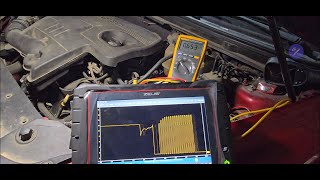
Connect an oscilloscope to the heater control wire and ground. With the engine running, a healthy circuit shows a square wave. A P0052 fault shows a flat line near battery voltage, confirming the PCM is not grounding the circuit.
Tools: Oscilloscope (Advanced) - Test the PCM
If the sensor, fuse, and wiring test good, and bi-directional tests fail, the PCM is faulty. Check for manufacturer software updates (TSBs) before replacing the module. Take the vehicle to a diagnostic technician if multimeter tests are inconclusive.
Tools: Advanced Scan Tool, Multimeter (Professional)
When This Code Triggers (Freeze-Frame Conditions)
- Engine Coolant Temp: Below 122°F (50°C) (During a cold start. The heater monitor runs to warm the sensor quickly.)
- RPM: Idle (700-900 RPM) (The heater circuit test runs within the first 2-3 minutes of idling after a cold start.)
- Engine Load: Low (under 20%) (During idle or very light throttle application shortly after startup.)
- Time Since Start: 20-180 seconds (The PCM commands the heater on immediately after starting the engine and expects a correct electrical response within minutes.)
Related Codes
- P0051 — The direct opposite of P0052. It indicates the heater control circuit voltage is too low, usually from a short to ground. P0052 points to an open circuit.
- P0050 — A general fault code for the Bank 2, Sensor 1 heater control circuit. The PCM knows there is a fault but cannot determine if it is a high or low voltage condition.
- P0155 — A generic heater circuit fault code for Bank 2, Sensor 1. P0052 specifically identifies a 'high voltage' condition, giving a stronger clue towards an open circuit.
- P0174 — Means 'System Too Lean (Bank 2)'. An unheated O2 sensor sends slow data, causing the PCM to misinterpret the mixture as lean. Always fix P0052 first.
Climate & Environmental Factors
- Cold Climates / Road Salt: Regions using road salt see a higher incidence of P0052. The corrosive salt degrades the O2 sensor's wiring insulation and penetrates electrical connectors, causing open circuits.
- High Humidity: Humid environments accelerate corrosion on electrical pins within the O2 sensor connector, leading to poor connections and triggering a high circuit code.
- Cold Starts: Cold weather makes the symptoms more noticeable. The heater gets the sensor to its 600°F operating temperature quickly. When broken, the sensor relies solely on exhaust heat, leading to prolonged rough running and poor fuel economy.
How to Talk to a Mechanic About This Code
Say this: "I have a P0052 code for the Bank 2 Sensor 1 O2 sensor heater circuit. I'd like to book a diagnostic appointment. Please test the sensor's heater resistance and verify power and ground at the harness connector before replacing any parts."
This signals that you understand the code relates to an electrical circuit. It directs the mechanic to perform necessary diagnostic steps, preventing them from simply replacing the most common part without verification.
Avoid saying:
- 'My check engine light is on, can you look at it?'
- 'My car is running rough, I think it's an O2 sensor.'
- 'Just replace the Bank 2 O2 sensor.'
Questions to ask before authorizing the repair:
- What was the resistance reading on the old sensor's heater circuit?
- Did you confirm there is 12-volt power and a good ground signal at the harness connector?
- Is the replacement sensor an OEM part or from an OEM supplier like Denso or NTK?
- What is the warranty on the part and the labor for this repair?
Where to Take It: Dealer vs Independent vs Chain
- Dealer:
Recommended only if initial diagnosis at an independent shop fails or if a known TSB points to a dealer-only fix.
Best for: Vehicles under warranty, Complex, manufacturer-specific issues like a Chrysler TIPM or a PCM software update
Downsides: Highest labor rates, May recommend replacing related parts unnecessarily, increasing cost (Typical cost: +50% vs. baseline) - Independent Shop:
Best fit for most P0052 scenarios. An experienced independent mechanic easily diagnoses and repairs a faulty sensor or wiring issue.
Best for: Out-of-warranty vehicles, Straightforward sensor replacement and electrical wiring diagnosis
Downsides: Quality and diagnostic capabilities vary greatly; look for ASE certifications. (Typical cost: +0% vs. baseline) - Chain Shop:
Acceptable for a simple sensor swap, but use caution. If the problem is more complex, they misdiagnose or perform unnecessary repairs.
Best for: Simple part replacement when you are certain the sensor is the only issue.
Downsides: Technicians lack deep electrical diagnostic experience., High pressure to upsell unrelated services like fuel system cleanings. (Typical cost: -10% vs. baseline)
When to Walk Away From the Repair
If the estimated repair cost for P0052, combined with any other known needed repairs, exceeds 50% of the car's private-party value, consider selling or trading it in.
- Car worth $3500, fix is $300: Fix it. The repair cost is a small fraction of the car's value.
- Car worth $8000, fix is $2800: Borderline. This assumes the P0052 fault led to catalytic converter failure. Get a second opinion before authorizing such an expensive repair.
- Car worth $2000, fix is $1300: Walk away. The repair cost is too high relative to the vehicle's value. The risk of another expensive failure is high.
What Scan Tool You Need for This Code
Minimum: An OBD-II scanner that reads and clears codes and displays live data for the O2 sensor circuits.
A basic $20 code reader only tells you code P0052 is present. It cannot show live voltage or current data from the heater circuit, which is essential to confirm whether the problem is the sensor, the wiring, or the computer's command.
Budget: BlueDriver Pro (~$100) — Reads and clears codes, provides freeze-frame data, and graphs live O2 sensor heater voltage and current. This determines if the heater circuit is open before you buy parts.
Mid-range: Foxwell NT510 Elite (~$180) — Offers all features of the budget pick, plus bidirectional controls. This allows you to command the O2 sensor heater on and off directly from the tool to test the circuit's response.
Professional: Autel MaxiCOM MK808 (~$500) — Provides full bidirectional control, all-system diagnostics, and detailed live data graphing. It tests the PCM's output driver for the heater circuit, offering near-dealership diagnostic capability.
Rent vs buy: Auto parts stores lend basic code readers for free, but these lack live data capabilities. To properly diagnose P0052, purchasing a scanner with live data is a worthwhile investment.
How to Clear the Code After You Fix It
- Use an OBD-II scan tool to clear the P0052 code.
- Perform a complete OBD-II drive cycle to run the internal self-tests.
- Check readiness monitor status with the scan tool to confirm the O2 Sensor and O2 Heater monitors show 'Ready'.
Drive cycle (~20 minutes): A generic drive cycle includes: a cold start (sit overnight), 2-3 minutes of idling with electrical loads on (A/C, defroster), 5-10 minutes of steady highway driving (55 mph), and a period of coasting down without braking.
Readiness monitors affected: O2 Sensor Heater Monitor, O2 Sensor Monitor, Catalyst Monitor
Before emissions retest: drive at least 50 miles to fully set monitors.
Watch out for:
- Clearing the code with a scanner does not make the vehicle ready for an emissions test; the readiness monitors must be set to 'Ready'.
- Disconnecting the battery clears the code but resets all readiness monitors, requiring a full drive cycle.
- The code returns immediately if the underlying electrical fault was not correctly repaired.
Will This Fail Emissions / State Inspection?
Yes — this code typically fails an OBD-II emissions inspection.
- California: An active P0052 code is an automatic test failure. After repair, the O2 Sensor and Catalyst readiness monitors must be set to 'Ready'. It takes 50-100 miles of driving to complete the drive cycle.
- New York: The NYVIP3 inspection includes an OBD-II scan. A Check Engine Light with code P0052 causes an immediate failure. The O2 sensor heater monitor must complete successfully before a re-test.
- Texas: In counties requiring emissions testing, a P0052 code results in a 'Not Ready' or 'Fail' status on the OBD portion of the inspection.
Most Commonly Affected Vehicles
- Chrysler/Dodge/Jeep Grand Caravan, Town & Country, Grand Cherokee, Ram 1500 (2011-2021) — Extremely common on the 3.6L V6. Before replacing the sensor, investigate a faulty Totally Integrated Power Module (TIPM), which contains the heater relay. Check for TSB #18-059-16.
- Ford F-150, Explorer, Mustang (2004-2024) — On V8 and EcoBoost engines, the Bank 2 sensor connector is prone to corrosion from water and road debris.
- Chevrolet/GMC Silverado, Sierra, Tahoe, Suburban (2007-2018) — Affects V8 models (4.8L, 5.3L, 6.2L). Check the engine block ground straps; a poor ground causes high resistance readings in the O2 heater circuit.
- Hyundai/Kia Santa Fe, Tucson, Sorento, Optima (2005-2015) — A PCM software update was released to correct false P0052 codes. Check for TSBs before replacing the sensor.
- BMW 3-Series (E90), X3 (E83), X5 (E70) (2006-2013) — On 6-cylinder engines, Bank 2 is the rear set of cylinders (4-5-6). Access is tight, making replacement difficult.
- Nissan Altima (V6), Maxima, Murano, Frontier (2004-2015) — On VQ-series V6 engines, Bank 2 is the firewall side, making access to Sensor 1 challenging.
- Subaru Outback, Forester, Impreza (Non-turbo) (2008-2016) — Subaru vehicles are highly sensitive to aftermarket sensors. Using a non-OEM sensor causes the P0052 code to return immediately.
- Toyota/Lexus Camry (V6), Sienna, Highlander, ES350 (2005-2017) — These models use Air-Fuel Ratio (A/F) sensors. The cause is almost always a failed sensor heater. Use Denso or OEM sensors exclusively.
Manufacturer-Specific Notes

- Chrysler/Dodge/Jeep: The Totally Integrated Power Module (TIPM) is a known failure point. The internal relays for the O2 heater circuit fail, triggering P0052. TSB #18-059-16 recommends a PCM software update before replacing hardware.
- Ford: The Bank 2, Sensor 1 connector is located in an area prone to water and debris exposure, leading to a high rate of failure from internal connector corrosion.
- Toyota/Honda/Subaru: These brands require exact OEM resistance calibrations. Using a cheap, generic aftermarket sensor causes the P0052 code to return. Always use OEM, Denso, or NTK sensors.
- General Motors (GM): A corroded main engine ground strap (block to frame) causes voltage drops that the PCM misinterprets as an O2 sensor heater circuit fault.
Real Owner Stories
2012 Dodge Charger 3.6L, mileage unknown
Check Engine Light appeared with P0052 and a random misfire code (P0300).
What they tried:
- Replaced all four O2 sensors with aftermarket Bosch units.
- Replaced the Bank 2 camshaft sensor.
- Replaced all spark plugs.
Outcome: The P0052 code remained after replacing the sensor. The owner suspected a wiring issue or a problem with using non-OEM sensors, as Chrysler vehicles are highly sensitive to aftermarket parts.
Lesson: On Chrysler/Dodge/Jeep vehicles, if P0052 persists after sensor replacement, investigate the wiring harness and use an OEM or NTK brand sensor before suspecting the PCM.
2011 Chrysler Town & Country 3.6L, mileage unknown
P0052 code appeared, indicating a fault with the Bank 2, Sensor 1 heater circuit.
What they tried:
- Initial diagnosis pointed to a failed O2 sensor.
- Owner forums and TSBs suggested another likely culprit.
Outcome: The root cause was identified as a faulty Totally Integrated Power Module (TIPM). Chrysler TSB #18-059-16 directly links P0052 to TIPM problems.
Lesson: Don't automatically replace the O2 sensor on Chrysler/Dodge/Jeep models without considering a faulty TIPM, especially if other electrical issues are present.
2008 Jeep Wrangler JKU 3.8L at 135k miles
P0052 code appeared. The owner had replaced this same sensor for the same code two years prior.
What they tried:
- Replaced the Bank 2, Sensor 1 O2 sensor again.
- Attempted to clear the code with two different scanners and by disconnecting the battery.
Outcome: The Check Engine Light would not clear. The owner suspected a cracked exhaust manifold or a wiring ground issue, as simply replacing the sensor did not resolve the persistent code.
Lesson: If a new sensor doesn't fix the code, the problem is in the circuit. Meticulously inspect the wiring harness for damage and check for exhaust leaks near the sensor.
How to Prevent This Code From Triggering
- Use Top Tier Certified Gasoline (Every fill-up) — Top Tier fuels contain detergents that prevent carbon deposit buildup on the oxygen sensor tip, maintaining fast response times.
- Address Engine Fluid Leaks Promptly (As needed) — Oil or coolant leaking from gaskets degrades the O2 sensor wiring insulation and penetrates the connector, causing shorts or corrosion.
- Apply Dielectric Grease to Connector (During sensor replacement) — Applying dielectric grease to the connector housing seals out moisture and road salt, preventing terminal corrosion.
- Perform Regular Visual Inspections (During oil changes) — Ensures the O2 sensor wiring is properly secured and not rubbing against hot exhaust components, preventing chafing and open circuits.
- Proactive Replacement on High-Mileage Vehicles (Once per 100,000 miles) — Oxygen sensors are wear items. Replacing them proactively maintains peak fuel efficiency and prevents future check engine lights.
Frequently Asked Questions
What does 'Bank 2, Sensor 1' mean?
On a V-shaped engine, 'Bank 1' contains cylinder #1, and 'Bank 2' is the opposite side. 'Sensor 1' is the upstream sensor located before the catalytic converter. It measures exhaust oxygen levels to control the engine's air-fuel mixture.
My P0052 code came back after replacing the sensor. What now?
If the code returns, the problem is in the wiring, fuse, or control module, not the sensor. The most common overlooked causes are melted wiring harnesses or blown heater fuses. On Chrysler/Dodge vehicles, a faulty TIPM is a frequent culprit.
Does the brand of the replacement O2 sensor matter?
Yes, brand matters significantly. Japanese vehicles (Toyota, Honda, Subaru) have engine computers calibrated to the specific resistance of OEM sensors. Using a cheap aftermarket sensor often causes the P0052 code to return immediately.
Can I fix P0052 myself?
Yes, replacing an O2 sensor is a straightforward DIY repair if you have a specialized slotted O2 sensor socket. The main risk is the old sensor being rusted into the exhaust manifold. Always soak the sensor threads in penetrating oil on a cold engine before attempting removal.
What happens if I don't fix P0052?
Ignoring P0052 causes a 10-15% drop in fuel economy and guarantees an emissions test failure. Over time, the resulting rich fuel mixture overheats and permanently damages the catalytic converter. This turns a $150 sensor replacement into a $1,500+ exhaust repair.
Can a vacuum leak cause a P0052 code?
No, a vacuum leak cannot trigger a P0052 code. P0052 is strictly an electrical circuit fault, not an engine performance code. However, a vacuum leak triggers a P0174 (System Too Lean Bank 2) code, which sometimes appears alongside P0052.
What is 'fuel trim drift' and how does it relate to P0052?
Fuel trim refers to the PCM's adjustments to the fuel injection rate. 'Drift' means the PCM is making sustained, incorrect adjustments because the unheated O2 sensor is sending slow or inaccurate data. The PCM compensates by adding unnecessary fuel, causing the trim numbers to drift high.
Key Takeaways
- Code P0052 indicates an open electrical circuit in the Bank 2, Sensor 1 oxygen sensor heater, preventing it from reaching its 600°F operating temperature.
- Replacing the faulty oxygen sensor resolves this code 80% of the time, costing between $150 and $350 at a repair shop.
- Driving with P0052 drops fuel economy by 10-15% and guarantees an emissions test failure.
- Before buying parts, test the sensor's heater pins with a multimeter; a reading outside the 2-30 Ohm range confirms the sensor is dead.
Helpful Videos

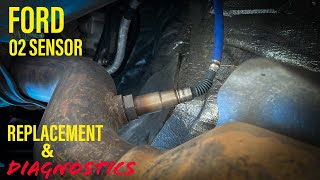

The information in this article is provided for general reference and educational purposes only. Vehicle specifications, procedures, and part compatibility can vary by production date, trim level, and region. Always consult your vehicle's factory service manual and verify part numbers before purchasing or performing repairs. Safety-critical components such as airbags, seat belts, and braking systems should be installed by a qualified professional.
- 🎬 Helpful Videos
- What Does P0052 Mean?
- Can I Drive With P0052?
- Common Causes
- Symptoms
- Diagnostic Flowchart
- Common Fixes & Costs
- DIY vs Professional
- Used vs. New Parts: Buying Guide
- What Happens If You Wait — Timeline
- Cost of Not Fixing It
- Diagnosis Steps
- When This Code Triggers (Freeze-Frame Conditions)
- Related Codes
- Climate & Environmental Factors
- How to Talk to a Mechanic About This Code
- Where to Take It: Dealer vs Independent vs Chain
- When to Walk Away From the Repair
- What Scan Tool You Need for This Code
- How to Clear the Code After You Fix It
- Will This Fail Emissions / State Inspection?
- Most Commonly Affected Vehicles
- Manufacturer-Specific Notes
- Real Owner Stories
- 2012 Dodge Charger 3.6L, mileage unknown
- 2011 Chrysler Town & Country 3.6L, mileage unknown
- 2008 Jeep Wrangler JKU 3.8L at 135k miles
- How to Prevent This Code From Triggering
- Frequently Asked Questions
- What does 'Bank 2, Sensor 1' mean?
- My P0052 code came back after replacing the sensor. What now?
- Does the brand of the replacement O2 sensor matter?
- Can I fix P0052 myself?
- What happens if I don't fix P0052?
- Can a vacuum leak cause a P0052 code?
- What is 'fuel trim drift' and how does it relate to P0052?
- Key Takeaways
- 🎟️ Get 5% Off