

Ultimate P0141 Guide: O2 Sensor Heater Circuit Malfunction
The definitive, expert-driven guide to diagnosing and fixing OBD-II code P0141, designed to outrank all others.
- Code P0141 indicates a failure in the internal heater of the Bank 1, Sensor 2 oxygen sensor, requiring a multimeter test of the sensor's resistance (typically 4-10 Ohms) to confirm.
- Inspect the 15-amp 'O2 HTR' or 'A/F HEATER' fuse before buying parts; a blown fuse is a $2 fix that resolves the code instantly, especially if paired with codes like P0135 or P0161.
- Driving with an active P0141 code reduces fuel economy by 10-15% and guarantees an emissions test failure, but it will not leave you stranded.
- Install only OEM-branded replacement sensors (like Denso for Honda and Toyota, or the updated 22690AB08A part for Subaru) to prevent the code from returning due to strict heater resistance tolerances.
- Ignoring P0141 for over 6 months forces the engine to run in open-loop mode longer, risking irreversible damage to the catalytic converter—a repair costing upwards of $2,500.
What Does P0141 Mean?

P0141 means the Powertrain Control Module (PCM) detects a fault in the heater circuit of the 'Bank 1, Sensor 2' oxygen (O2) sensor. Located in the exhaust system after the catalytic converter, this sensor uses a built-in heater to reach its 600°F (300°C) operating temperature quickly, ensuring accurate emissions monitoring immediately from a cold start.
Technical definition: O2 Sensor Heater Circuit Malfunction (Bank 1, Sensor 2). The PCM sets this diagnostic trouble code (DTC) when it detects the current draw, resistance, or voltage in the downstream Bank 1 oxygen sensor heater circuit falls outside the expected range. The PCM tests this circuit on startup and triggers the Check Engine Light if it finds an open circuit, a short, or excessive resistance.
Can I Drive With P0141?
Yes, But With Caution. Yes, you can drive with a P0141 code, but address it within a few weeks. The issue will not stop your car, but it causes lower gas mileage and guarantees an emissions test failure. On modern vehicles (like Subaru), this code disables safety and convenience features like cruise control, EyeSight, or remote start. Ignoring it for months forces the engine to rely on incorrect air-fuel data, reducing the lifespan of the catalytic converter—a repair costing between $800 and $2,500.
Common Causes

- Faulty Oxygen (O2) Sensor (Very Common) — The internal heater element is the most frequent failure point. Like a light bulb filament, this delicate resistor burns out or breaks from thousands of thermal cycles, creating an open circuit.
- Blown Fuse or Faulty Relay (Common) — A blown fuse instantly cuts power to the heater. If multiple heater codes (e.g., P0135, P0161) appear simultaneously, a blown shared fuse or faulty relay is the guaranteed culprit.
- Damaged Wiring or Connectors (Common) — Positioned under the vehicle, the sensor's wiring suffers exposure to exhaust heat, road debris, and moisture. Melted wires or corroded connector pins create high resistance or short circuits.
- Poor Ground Connection (Less Common) — The heater circuit requires a solid ground. A corroded engine-to-chassis ground strap creates high resistance, preventing the heater from drawing necessary current.
- Contamination of the Sensor (Less Common) — Internal engine leaks force oil or coolant into the exhaust stream. This coats the O2 sensor, destroying both the sensing element and its internal heater.
- Aftermarket Remote Starter Issue (Rare) — Improperly installed remote starters sometimes fail to power all necessary circuits. This starves the O2 sensor heaters of voltage, triggering multiple heater codes.
- Exhaust Leak (Rare) — A severe exhaust leak near the sensor introduces outside oxygen, skewing readings. While this typically triggers P0140, it occasionally tricks the PCM into flagging a heater circuit fault.
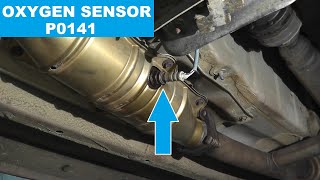
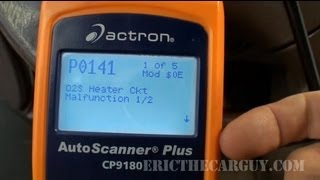
- Faulty Powertrain Control Module (PCM) (Very Rare) — The PCM's internal heater control driver can fail. Consider this only after exhaustively testing the sensor, wiring, fuses, and grounds. 🎬 Watch: EricTheCarGuy's professional guide to diagnosing heater circuit failure codes.
Symptoms

- Check Engine Light is On — The PCM illuminates the Malfunction Indicator Lamp (MIL) immediately after detecting the heater fault during its cold-start self-test.
- Failed Emissions Test — The O2 sensor readiness monitor cannot complete without a functioning heater, resulting in an automatic emissions test failure.
- Decreased Fuel Economy — A slow-to-respond sensor keeps the engine in a less efficient 'open loop' state longer, dropping gas mileage by 10-15%.
- Disabled Vehicle Features — Modern vehicles (especially Subaru) disable cruise control, remote start, and advanced safety systems (like EyeSight) when this code sets. 🎬 See this step-by-step O2 sensor replacement for Subaru owners.
- Rough Idle on Cold Start — The engine idles roughly for the first few minutes because the PCM lacks valid O2 sensor data to optimize the air-fuel mixture.
- Heater Circuit Duty Cycle at 0% or 100% (scan-tool only — no driver-felt sign) — Live data shows the B1S2 heater duty cycle stuck at 0% (open circuit) or 100% (short to ground) instead of fluctuating normally.
Diagnostic Flowchart
Tap your situation to follow the diagnostic path that matches what you're seeing on this code.
Common Fixes & Costs
- Replace the Bank 1, Sensor 2 Oxygen Sensor — Parts: $40-$250, Labor: $100-$200, ~0.8 hr book time (DIY)
- Replace Blown O2 Sensor Heater Fuse — Parts: $1-$10, Labor: $0-$50, ~0.1 hr book time (DIY)
- Repair Damaged Wiring Harness — Parts: $10-$50, Labor: $100-$250, ~1.5 hr book time (Intermediate)
- Clean or Replace Corroded Connector — Parts: $5-$60, Labor: $50-$150, ~0.7 hr book time (Intermediate)
- Replace Engine Control Module (ECM/PCM) — Parts: $500-$1200, Labor: $150-$300, ~1.8 hr book time (Professional)
DIY vs Professional
- Replace Oxygen Sensor — Beginner: Yes, this is a common and achievable DIY repair for beginners with the right tools.
Tools: Jack and jack stands, safety glasses, penetrating oil, O2 sensor socket set (7/8" or 22mm), ratchet (flex-head recommended), torque wrench, wire brush for threads. - Replace Blown Fuse — Beginner: Yes, this is one of the easiest diagnostic steps and fixes.
Tools: Owner's manual, fuse puller (often included in the fuse box) or small pliers. - Repair Damaged Wiring — Beginner: Possible, but not recommended for a first-time wiring repair. A poor connection introduces resistance and causes the code to return.
Tools: Multimeter, wire strippers, wire cutters, quality butt connectors, heat shrink tubing, heat gun, soldering iron (recommended). - Replace PCM — Beginner: No. This is not a DIY job.
Tools: Advanced bi-directional scan tool for programming/coding, vehicle-specific service information.
Used vs. New Parts: Buying Guide
When a used part is worth it: Never buy a used oxygen sensor. They are wear items with a 100,000-mile lifespan. The labor risk outweighs the $40 part savings.
Donor-vehicle mileage cap: roughly under 20000 miles for the part to have meaningful remaining life.
Donor quality checklist:
- Only consider a used sensor from a very low-mileage vehicle that was wrecked.
- Ensure the part is a genuine OEM sensor (e.g., Denso, NTK, Bosch).
- Inspect the connector for any signs of corrosion or damage.
Decision logic:
- If The part is an oxygen sensor. → Buy a new, quality OEM or equivalent aftermarket part. The low cost of the part does not justify the risk and potential repeat labor cost.
- If Vehicle is a Honda, Subaru, or other brand known for sensitivity. → Buy a new OEM-branded sensor (e.g., Denso) to avoid compatibility issues with heater resistance.
- If Budget is extremely tight and the sensor is very easy to access. → A used OEM sensor from a verifiable low-mileage wreck is a last-resort option, but still not recommended.
Warranty tradeoff: Used sensors from a salvage yard typically have a 30-day warranty. New aftermarket sensors offer a 1-year to limited lifetime warranty.
Worst-case if a used part fails: $150-$300 if a used sensor fails after installation, requiring repeat labor costs plus the cost of another sensor.
What Happens If You Wait — Timeline
- 0-2 weeks: Check Engine Light is on. The O2 heater readiness monitor will not complete. No other symptoms are likely to be perceived by the driver. (MPG impact: 0-5%% · Added cost: $0)
- 2 weeks - 3 months: A noticeable drop in fuel economy becomes apparent. The vehicle automatically fails any emissions test. On some models, convenience features like cruise control disable. A slight rough idle occurs on cold starts. (MPG impact: 5-10%% · Added cost: $20-$60 in wasted fuel.)
- 3-9 months: The engine runs in 'open loop' for longer periods with a richer fuel mixture. This increases carbon deposits and begins degrading the precious metals inside the catalytic converter due to thermal stress. (MPG impact: 10-15%% · Added cost: $50-$150 in wasted fuel, plus increased risk of catalyst damage.)
- 9+ months: Sustained exposure to an incorrect air-fuel mixture causes the catalytic converter's ceramic substrate to overheat, crack, or melt. This leads to irreversible damage, triggering a P0420 code. (MPG impact: 15-25%% · Added cost: $800-$2,500 for catalytic converter replacement, in addition to the original O2 sensor repair.)
Cost of Not Fixing It
- 0-1 month: Guaranteed emissions failure and 10-15% drop in fuel economy. Safety features like cruise control disable on some models. (Added cost: $20-$50 per month in wasted fuel.)
- 1-6 months: Prolonged open-loop operation runs the engine rich, increasing carbon buildup and thermal stress on the catalytic converter. (Added cost: Negligible, but risk of catalyst damage increases.)
- 6+ months: Sustained rich mixture overheats and melts the catalytic converter substrate, causing irreversible damage. (Added cost: $800-$2,500 for catalytic converter replacement.)
Diagnosis Steps

- Check for Technical Service Bulletins (TSBs)
Before touching the car, search online for TSBs related to P0141 for your specific vehicle. Manufacturers frequently release bulletins for known issues, like the updated sensor design for Subaru models (TSB 09-115-24R), saving you from a repeat failure.
Tools: Internet Access (Beginner) - Confirm Code and Review Freeze Frame Data
Use an OBD-II scanner to verify P0141 is active. Analyze the 'Freeze Frame' data. A cold engine coolant temperature (< 122°F) in the freeze frame strongly confirms a cold-start heater circuit issue.
Tools: OBD-II Scanner (Beginner) - Inspect the Heater Circuit Fuse
Consult your owner's manual to locate the O2 sensor heater fuse (often labeled 'O2 HTR' or 'A/F HEATER'). Visually inspect and replace it if blown. A blown fuse indicates a short circuit that requires further tracing.
Tools: Owner's Manual, Fuse Puller (Beginner) - Visually Inspect Sensor, Wiring, and Connector
Safely raise the vehicle. Locate 'Bank 1, Sensor 2' (downstream, after the catalytic converter). Meticulously inspect the sensor's pigtail and vehicle harness for melting, chafing against the driveshaft, or road debris damage. Check the connector for green or white corrosion.
Tools: Jack and Jack Stands, Flashlight (Beginner) - Test Heater Element Resistance
Disconnect the sensor. Using a multimeter on the Ohms (Ω) setting, measure resistance between the two heater pins on the sensor side (usually two wires of the same color). A good sensor reads between 4 and 10 Ohms. An 'OL' (infinite) reading means an open circuit, confirming a bad sensor.
Tools: Multimeter (Intermediate) - Check for Power at the Harness Connector
With the sensor unplugged and the ignition key 'On' (engine off), check for voltage at the vehicle's harness connector. One heater circuit pin must show battery voltage (~12V). No voltage means the problem is upstream in the wiring, fuse, or relay.
Tools: Multimeter, Vehicle Wiring Diagram (Intermediate) - Perform a Voltage Drop Test on the Ground Circuit
If 12V power is present, test the ground circuit. Reconnect the sensor. With the key on, engine off, back-probe the ground pin on the harness connector with the red lead, and touch the black lead to a clean chassis ground. A reading above 0.1 volts indicates high resistance in the ground wire.
Tools: Multimeter with Back-Probes, Wiring Diagram (Advanced) - Analyze Live Data for Heater Operation
Using a capable scanner, view live data PIDs from a cold start. Monitor the temperature PID for O2S B1S2. A functioning heater causes the sensor's temperature to reach 600°F (315°C) in under two minutes. Slow or zero temperature rise confirms a dead heater circuit.
Tools: Live Data OBD-II Scanner (Advanced) - Measure Heater Circuit Current Draw
Clamp a low-amp current probe around the heater circuit's power wire. With the engine running from a cold start, a healthy heater circuit draws between 0.4 and 1.0 amps. Zero draw indicates an open circuit; excessive draw indicates a short.
Tools: Low-Amp Current Probe, Oscilloscope or Graphing Multimeter (Professional) - Check the PCM Driver with an Oscilloscope
Connect an oscilloscope to the ground control wire of the heater circuit. With the engine running cold, the PCM sends a pulsed ground signal (square wave) to control temperature. If you have 12V power but see a flat line on the scope, the PCM driver has failed.
Tools: Oscilloscope, Wiring Diagram (Professional)
When This Code Triggers (Freeze-Frame Conditions)
- Engine Coolant Temp: < 122°F (50°C) (The PCM runs the heater test immediately upon cold startup to get the sensor to operating temperature quickly.)
- Time After Start: 5-60 seconds (Fault is detected shortly after engine start.)
- RPM: 600-1200 (Engine is at idle or fast-idle.)
- Battery Voltage: > 11V (PCM requires sufficient voltage to run the test accurately.)
Related Codes
- P0135 — Identical heater circuit malfunction code for Bank 1, Sensor 1 (upstream). Seeing P0135 and P0141 together strongly suggests a shared electrical issue, like a blown fuse.
- P0161 — Identical heater circuit failure code for Bank 2, Sensor 2. Seeing P0141 and P0161 together guarantees a shared fuse or relay failure.
- P0420 — Catalyst System Efficiency Below Threshold. A slow or non-functional O2 sensor triggers this falsely. Fix P0141 first, clear codes, and retest before replacing a catalytic converter.
- P0140 — O2 Sensor Circuit No Activity Detected. A non-heating sensor cannot produce a valid signal, often triggering both P0140 and P0141 simultaneously.
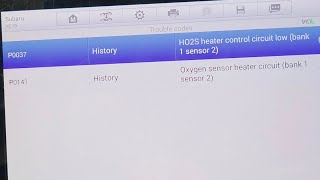
- P0036 / P0054 — Manufacturer-specific codes for HO2S Heater Control Circuit or Heater Resistance faults. The diagnostic process is identical, focusing on the heater's electrical integrity.
Climate & Environmental Factors
- Cold Climates: Triggers more frequently during cold starts because the heater's function is critical when the exhaust is cold. The PCM detects the malfunction immediately during its startup self-test.
- High Humidity / Road Salt: Salt Belt conditions accelerate corrosion on connector pins and wiring, creating the high resistance that causes P0141.
How to Talk to a Mechanic About This Code
Say this: "I have a P0141 code for the Bank 1 Sensor 2 O2 sensor heater circuit. Please test the sensor's heater resistance and verify power and ground at the harness connector before replacing the part."
This signals that you understand the code relates to a specific electrical circuit. It forces the technician to perform a proper diagnosis to rule out a simple wiring or fuse issue, preventing them from defaulting to a parts cannon.
Avoid saying:
- 'My check engine light is on, can you look at it?' (Invites a costly, open-ended diagnostic process).
- 'Just replace the O2 sensor.' (Assumes the sensor is the problem, when it could be a cheap fuse or bad wire).
- 'Do whatever you think is best.' (Gives the shop a blank check and removes your control over the repair process).
Questions to ask before authorizing the repair:
- Did the sensor's heater circuit fail the resistance test, or was the issue a lack of power or ground from the car's wiring?
- Can you show me the old part and point out the failure?
- Is the replacement part an OEM or aftermarket brand, and what is the warranty on both the part and your labor?
Where to Take It: Dealer vs Independent vs Chain
- Dealer:
Best for: Vehicles still under the 8-year/80,000-mile federal emissions warranty., Known manufacturer-specific issues covered by a TSB (like on many Subarus).
Downsides: Labor rates are 50-100% higher than independent shops., Recommends OEM parts when a quality aftermarket alternative suffices at a lower cost. (Typical cost: +50% vs. baseline) - Independent Shop:
Best fit for most situations. A P0141 code is a routine repair that any competent independent shop diagnoses and fixes correctly, often for significantly less than a dealership.
Best for: Most out-of-warranty vehicles., Cost-conscious owners who want a reliable repair without paying a premium.
Downsides: Quality and expertise vary widely; choose a shop with good reviews and ASE-certified technicians. (Typical cost: +0% vs. baseline) - Chain Shop:
Acceptable, but with caution. Good for a simple part swap, but if the diagnosis is complex, an experienced independent shop is a better choice.
Best for: Simple, straightforward O2 sensor replacement when you have already confirmed the sensor itself is the fault.
Downsides: Technicians lack experience with electrical diagnosis if the problem is wiring-related., High pressure to upsell additional services like fuel system cleanings unrelated to the P0141 code. (Typical cost: -10% vs. baseline)
When to Walk Away From the Repair
If the estimated repair cost exceeds 50% of your car's private-party value, seriously consider replacing the vehicle instead of repairing it.
- Car worth $4000, fix is $250: Fix it. This repair is a very small fraction of the car's value and is necessary to pass emissions.
- Car worth $12000, fix is $350: Fix it. This is a routine maintenance cost for a vehicle of this value.
- Car worth $2500, fix is $1500: Walk away. The repair cost is over 50% of the car's value. This money is better spent as a down payment on a more reliable vehicle.
What Scan Tool You Need for This Code

Minimum: A code reader that displays live data for O2 sensor voltage and heater circuit status. A basic code reader that only shows the code number is insufficient.
A $20 code reader only tells you the P0141 code exists. It cannot show the live data needed to determine if the heater circuit receives power, which is essential to distinguish between a bad sensor and a wiring problem.
Budget: BlueDriver Pro (~$100) — Connects to your smartphone via Bluetooth and displays live O2 sensor data, including heater circuit voltage, allowing you to see if the circuit works.
Mid-range: Foxwell NT604 Elite (~$170) — A dedicated handheld scanner providing live data graphing for O2 sensors. This allows you to visually track the heater's performance from a cold start.
Professional: Autel MaxiCOM MK808S (~$500) — Offers full bidirectional control, allowing a technician to command the O2 sensor heater on and off directly to test the circuit's integrity.
Rent vs buy: If this is a one-time repair, major auto parts stores like AutoZone offer a loaner tool program. You can 'rent' a capable OBD-II scanner for free by leaving a refundable deposit.
How to Clear the Code After You Fix It
- Use an OBD-II scan tool to clear the active and pending codes.
- Perform a complete OBD-II drive cycle to allow readiness monitors to run.
- Do not disconnect the battery, as this resets monitors without verifying the fix.
Drive cycle (~20 minutes): Cold start, idle for 3 minutes, drive mixed city/highway for 15 minutes including steady 55 mph cruising and coast-down decelerations without braking.
Readiness monitors affected: Oxygen Sensor Heater Monitor, Oxygen Sensor Monitor, Catalyst Monitor
Before emissions retest: drive at least 50 miles to fully set monitors.
Watch out for:
- Disconnecting the battery causes immediate emissions failure by resetting all monitors to 'incomplete'.
- The code returns instantly if a blown fuse or bad wire wasn't fixed.
- Some vehicles require specific conditions, like turning the A/C and rear defroster on during idle, to run the O2 heater monitor.
Will This Fail Emissions / State Inspection?
Yes — this code typically fails an OBD-II emissions inspection.
- California: Active P0141 is an automatic fail. Must complete drive cycle after repair to set readiness monitors before re-testing.
- New York: The Check Engine Light being on for P0141 causes an immediate test failure.
- Texas: Fails emissions test, blocking annual safety inspection until repaired and cleared.
Most Commonly Affected Vehicles
- Subaru Outback, Forester, Impreza, Crosstrek (2017-2024) — A known defect addressed by TSB 09-115-24R. Replace the sensor with the updated OEM part (p/n 22690AB08A) which features an optimized coating. Using the old part number guarantees a repeat code.
- Chevrolet / GMC Silverado, Sierra, Suburban, Yukon (2000-2013) — Wiring frequently rubs against the transmission crossmember or front driveshaft. Swap the two downstream sensors (Bank 1 and Bank 2); if the code changes to P0161, the sensor is faulty.
- Ford F-150, Escape, Focus (2001-2012) — If P0141 appears with P0054 (Heater Resistance), suspect a wiring or connector issue common to that circuit. Bank 1 is the passenger side on V-engines.
- Honda Accord, Civic, CR-V, Element (2003-2011) — Highly sensitive to non-OEM sensors. Use the original equipment brand (Denso) to prevent the code from returning due to strict resistance tolerances.
- Hyundai / Kia Sonata, Optima, Sorento, Elantra (2010-2017) — High failure rate of the downstream sensor's heater element. OEM or equivalent quality sensors are required to ensure proper heater resistance.
- Toyota Camry, Tacoma, Corolla (2002-2012) — Typically caused by sensor failure. The fuse for the circuit is often labeled 'A/F Heater' and pairs with an 'A/F HTR' relay in the under-hood fuse box.
- Nissan Altima, Sentra, Maxima (2002-2012) — Almost always resolved by replacing the Bank 1, Sensor 2 unit due to internal heater failure.
- Volkswagen / Audi Jetta, Passat, A4 (2010-2016) — Inspect the wiring harness closely for breaks near the flex pipe. On tuned vehicles, O2 sensor spacers or 'defoulers' complicate diagnosis.
Manufacturer-Specific Notes
- General Motors (Chevy/GMC/Cadillac): Bank 1 is the driver's side of the engine. Swap the rear O2 sensors between Bank 1 and Bank 2 to definitively prove if the sensor itself is faulty.
- Ford: Bank 1 is the passenger's side of the engine on most V8s, opposite of GM and Chrysler. Verify cylinder #1 location to avoid replacing the wrong sensor.
- Honda / Acura: Intolerant of aftermarket oxygen sensors. Using a non-OEM sensor results in the code returning within a few drive cycles. Use an OEM-branded sensor (Denso) for a lasting repair.
- Subaru: TSB 09-115-24R requires replacing the sensor with the updated OEM part (p/n 22690AB08A) to fix a factory defect in the heater element coating.
- All: Check the 8-year/80,000-mile Federal Emissions Performance Warranty before paying out of pocket. Dealerships must replace defective emissions components for free if you qualify.
Real Owner Stories
2019 Subaru Forester with recurring P0141
Check engine light and EyeSight disabled. Code read as P0141. Owner cleared the code, but it returned on the next drive cycle.
What they tried:
- Replaced the rear O2 sensor with an aftermarket part for $75. The code returned within an hour.
- Took the vehicle to a Subaru dealer who identified TSB 09-115-24R.
Outcome: The dealer replaced the sensor with the updated OEM part (22690AB08A) under the 8-year/80,000-mile federal emissions warranty. The code did not return.
Lesson: For modern Subarus, a recurring P0141 is a known issue. Aftermarket sensors fail; the only reliable fix is the updated OEM part. Always check for TSBs and emissions warranty coverage.
2001 Chevy Silverado 5.3L with intermittent P0141
Check engine light illuminated intermittently. Owner tested the sensor's heater resistance (15 ohms) and confirmed 12V power at the connector.
What they tried:
- Cleared the code, but it returned after long intervals.
- Performed a thorough visual inspection of the wiring harness.
Outcome: The O2 sensor wiring harness rubbed against the front driveshaft, causing an intermittent short circuit. The damaged sensor was replaced, and the new wiring secured away from the driveshaft.
Lesson: Even if the sensor tests good, wiring is a common failure point. On 4WD trucks, inspect harness routing near driveshafts and crossmembers for rubbing or heat damage.
1999 Honda Civic with persistent P0141 after multiple parts
Car had a persistent P0141 check engine light despite having no major driving symptoms.
What they tried:
- Replaced the downstream O2 sensor three separate times, including with a Denso OEM sensor.
- Replaced the catalytic converter.
- Replaced the ECU (engine computer).
Outcome: The code persisted, leading the owner to suspect a bad ground connection for the heater circuit. The problem was not fully resolved, highlighting the frustration of a difficult diagnosis.
Lesson: Do not replace expensive parts like a catalytic converter or ECU for a P0141 code. If a new, quality sensor fails to fix it, perform a voltage drop test on the power and ground wires.
2007 Honda CR-V with sudden P0141 and loud noise
Owner started the car and heard a loud growling noise from underneath, accompanied by a burning smell and a new P0141 code.
What they tried:
- Owner correctly suspected an exhaust issue and towed it to a mechanic.
Outcome: The cause was a stolen catalytic converter. The P0141 code triggered because the sensor and exhaust section were missing entirely.
Lesson: If P0141 appears suddenly with a loud exhaust noise, look under the car. Catalytic converter theft is common, and the missing component triggers multiple codes.
How to Prevent This Code From Triggering
- Use Top Tier certified gasoline (Every fill-up) — Gasolines with higher levels of polyether amine (PEA) detergents prevent carbon buildup. This leads to cleaner combustion, reducing soot that fouls the O2 sensor.
- Perform regular engine maintenance (Per vehicle schedule (e.g., 30k/60k/90k miles)) — Fixing oil or coolant leaks is critical. Engine leaks introduce contaminants like unburnt fuel, oil, and silicone into the exhaust, destroying the O2 sensor's sensing element and heater.
- Protect underbody wiring (During any under-vehicle service) — Inspect the O2 sensor harness. Ensure it secures away from hot exhaust pipes and driveshafts. Wrap brittle factory loom with high-temperature cloth harness tape or a silicone fiberglass heat sleeve.
- Clean chassis and engine ground connections (Every 2-3 years, especially in the Salt Belt) — The O2 heater circuit relies on a clean ground path to the PCM. Corrosion on main engine-to-chassis ground straps creates high resistance, preventing the heater from working.
- Replace aging upstream (Bank 1, Sensor 1) O2 sensor (Once per 80,000-100,000 miles) — The upstream sensor controls the air-fuel mixture. As it ages, its response slows, leading to a richer mixture that increases the workload and temperature of the catalytic converter and downstream sensor.
Frequently Asked Questions
What does 'Bank 1, Sensor 2' mean?
'Bank 1' is the engine side containing cylinder #1. 'Sensor 2' is the downstream sensor located in the exhaust pipe after the catalytic converter. It monitors catalytic converter efficiency.
How much does it cost to fix P0141?
DIY sensor replacement costs $40 to $250 for parts. A repair shop charges $150 to $450 total for parts and labor. A simple blown fuse costs under $5 to fix.
Can I pass an emissions test with a P0141 code?
No, a P0141 code causes an automatic emissions test failure. The active Check Engine Light is an immediate fail, and the fault prevents required readiness monitors from completing.
What is the most common mistake when fixing P0141?
The most common mistake is replacing the sensor without checking the $2 heater fuse first. Another frequent error is replacing the wrong sensor, such as Sensor 1 instead of Sensor 2. Always verify power and ground before buying parts.
Do I have to use an OEM oxygen sensor?
Quality aftermarket sensors work for many vehicles, but brands like Honda, Subaru, and Hyundai are highly sensitive to heater resistance. For these, use the OEM brand (like Denso) to prevent the code from returning. Cheap universal sensors often fail prematurely.
Will a bad catalytic converter cause a P0141 code?
No, P0141 is strictly an electrical circuit code for the sensor's internal heater. It does not measure catalytic converter performance. A failing catalytic converter triggers a different code, usually P0420.
What is the difference between code P0141 and P0140?
P0141 indicates a fault in the sensor's internal heater circuit. P0140 means 'No Activity Detected' from the sensor's signal circuit. They often appear together because a broken heater prevents the sensor from getting hot enough to generate a signal.
Key Takeaways
- Code P0141 indicates a failure in the internal heater of the Bank 1, Sensor 2 oxygen sensor, requiring a multimeter test of the sensor's resistance (typically 4-10 Ohms) to confirm.
- Inspect the 15-amp 'O2 HTR' or 'A/F HEATER' fuse before buying parts; a blown fuse is a $2 fix that resolves the code instantly, especially if paired with codes like P0135 or P0161.
- Driving with an active P0141 code reduces fuel economy by 10-15% and guarantees an emissions test failure, but it will not leave you stranded.
- Install only OEM-branded replacement sensors (like Denso for Honda and Toyota, or the updated 22690AB08A part for Subaru) to prevent the code from returning due to strict heater resistance tolerances.
- Ignoring P0141 for over 6 months forces the engine to run in open-loop mode longer, risking irreversible damage to the catalytic converter—a repair costing upwards of $2,500.
Helpful Videos

The information in this article is provided for general reference and educational purposes only. Vehicle specifications, procedures, and part compatibility can vary by production date, trim level, and region. Always consult your vehicle's factory service manual and verify part numbers before purchasing or performing repairs. Safety-critical components such as airbags, seat belts, and braking systems should be installed by a qualified professional.
- 🎬 Helpful Videos
- What Does P0141 Mean?
- Can I Drive With P0141?
- Common Causes
- Symptoms
- Diagnostic Flowchart
- Common Fixes & Costs
- DIY vs Professional
- Used vs. New Parts: Buying Guide
- What Happens If You Wait — Timeline
- Cost of Not Fixing It
- Diagnosis Steps
- When This Code Triggers (Freeze-Frame Conditions)
- Related Codes
- Climate & Environmental Factors
- How to Talk to a Mechanic About This Code
- Where to Take It: Dealer vs Independent vs Chain
- When to Walk Away From the Repair
- What Scan Tool You Need for This Code
- How to Clear the Code After You Fix It
- Will This Fail Emissions / State Inspection?
- Most Commonly Affected Vehicles
- Manufacturer-Specific Notes
- Real Owner Stories
- 2019 Subaru Forester with recurring P0141
- 2001 Chevy Silverado 5.3L with intermittent P0141
- 1999 Honda Civic with persistent P0141 after multiple parts
- 2007 Honda CR-V with sudden P0141 and loud noise
- How to Prevent This Code From Triggering
- Frequently Asked Questions
- What does 'Bank 1, Sensor 2' mean?
- How much does it cost to fix P0141?
- Can I pass an emissions test with a P0141 code?
- What is the most common mistake when fixing P0141?
- Do I have to use an OEM oxygen sensor?
- Will a bad catalytic converter cause a P0141 code?
- What is the difference between code P0141 and P0140?
- Key Takeaways
- 🎟️ Get 5% Off