

P0135 on 2004-2008 Ford F-150 5.4L: O2 Sensor Heater Circuit Causes and Fixes
This code indicates a malfunction in the heater circuit of the upstream oxygen sensor on the passenger's side (Bank 1). The most common fix is replacing the sensor itself, which costs about $40-$80 for an aftermarket part or $70-$120 for an OEM Motorcraft part. It's a DIY-friendly job for most owners.
- P0135 points to a problem with the heater in the passenger-side upstream O2 sensor.
- The most likely cause is a failed O2 sensor, which is a common wear-and-tear item.
- Before buying a new sensor, always check for a blown fuse, especially if you have other codes like P0155 or P0443.
- Visually inspect the sensor's wiring for any signs of melting or damage, as this is a common issue.
- Replacing the sensor is a manageable DIY job with the right tool (an O2 sensor socket) and some penetrating oil for the old, stuck sensor.
What's Unique About the 2004-2008 Ford F-150

On the 11th generation F-150 with the 5.4L Triton engine, the P0135 code is a straightforward and very common issue, almost always pointing to the failure of the original oxygen sensor's heating element. While wiring issues can occur, they are less frequent than the sensor simply wearing out. A notable quirk on this platform is that if you see P0135 along with other circuit codes like P0155 (the other bank's O2 sensor) and P0443 (EVAP), the root cause is often a single blown fuse, typically caused by a shorted wire somewhere in the shared circuit. The most common location for this short is where the passenger side O2 sensor harness rests against the exhaust manifold or engine block, causing it to melt.
Symptoms You May Notice
- Check Engine Light is on
- Reduced fuel economy
- Failing an emissions test
- Rough running or hesitation, particularly when the engine is cold
- Replacing the O2 sensor without checking the fuse first, especially when multiple circuit codes are present.
- Replacing the wrong O2 sensor (e.g., the downstream sensor or the sensor on the driver's side).
- Replacing the fuse without finding and fixing the underlying short circuit, causing the new fuse to blow instantly.
Most Likely Causes

- Failed O2 Sensor Internal Heater 🔴 High Probability The heating element inside the oxygen sensor is a wear item and simply burns out over time and with high mileage. This is the most common reason for a P0135 code.
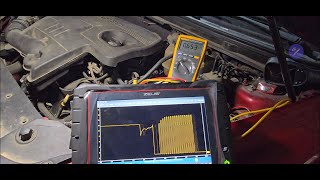
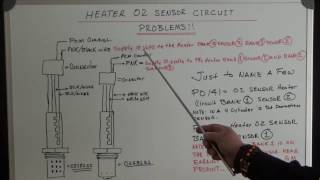
How to confirm: Using a multimeter, disconnect the sensor and measure the resistance between the two heater circuit wires (often the two wires of the same color, e.g., two white wires). 🎬 See this guide on testing oxygen sensor heater circuits. A reading of 'OL' (over-limit) or infinite resistance indicates an open circuit and a failed sensor. A healthy heater should have low resistance, typically between 2 and 30 ohms.
Typical fix: Replace the Bank 1, Sensor 1 (passenger side, upstream) oxygen sensor. 🎬 Watch: Step-by-step O2 sensor replacement for the 5.4L F-150.
Est. part cost: $40-$120 - Damaged Wiring or Connector 🟡 Medium Probability The O2 sensor wiring harness is routed close to the hot exhaust manifold and other engine components. The harness for the passenger side (Bank 1) sensor is particularly known for resting on the exhaust and melting, causing a short to ground.
How to confirm: Visually inspect the wiring harness from the O2 sensor connector back towards the engine. Look for any signs of melting, chafing, or corrosion on the connector pins. Check for 12V power at the heater circuit wire in the harness connector with the key on.
Typical fix: Repair the damaged section of the wiring harness or clean/replace the connector. Use high-temperature wire loom and zip ties to secure the repaired harness away from the exhaust.
Est. part cost: $5-$50 - Blown Fuse ⚪ Low Probability This is more likely if other circuit-related codes (like P0155, P0443, P0010, P0020) appear at the same time as P0135. A short in any component on the shared circuit can blow the fuse, cutting power to all of them. This is almost always caused by the aforementioned melted O2 sensor wiring. 🎬 Watch: How to find a wiring short on Ford trucks.
How to confirm: Check fuse #32 (15A) in the Central Junction Box (passenger kick panel fuse box). If the fuse is blown, it confirms a short circuit that must be found before replacing the fuse, otherwise it will blow again immediately.
Typical fix: Find and repair the short circuit (usually a melted O2 sensor wire on the passenger side) and then replace the blown fuse.
Est. part cost: $1-$5
Rare But Worth Checking
- Powertrain Control Module (PCM) Fault: This is extremely rare. The PCM's internal driver for the heater circuit can fail, but this should only be considered after all other possibilities (sensor, wiring, fuses) have been exhaustively ruled out.
Diagnosis Steps

- Scan for other codes. If multiple circuit codes (P0155, P0443, P0010, P0020) are present, go directly to step 2.
- Check fuse #32 (15A) in the passenger compartment fuse panel (Central Junction Box). If it's blown, proceed to inspect the O2 sensor wiring harnesses (especially Bank 1) for shorts to the exhaust manifold before replacing the fuse.
- If the fuse is good, visually inspect the Bank 1, Sensor 1 wiring and connector. Look for obvious signs of damage like melting, chafing, or corrosion in the pins.
- If the visual inspection passes, disconnect the sensor. Use a multimeter to test for 12-volt power on the heater power wire in the harness-side connector (key on, engine off).
- With the sensor still disconnected, use the multimeter to measure the resistance of the heater element across the two heater pins on the sensor itself. A reading of infinite resistance (OL) means the sensor is bad and needs replacement. A good sensor should read between 2-30 Ohms.
- If power is present at the harness and the sensor's heater has correct resistance, the issue is likely in the ground control wire between the sensor and the PCM, which is a more complex wiring issue to trace.
Parts You'll Likely Need
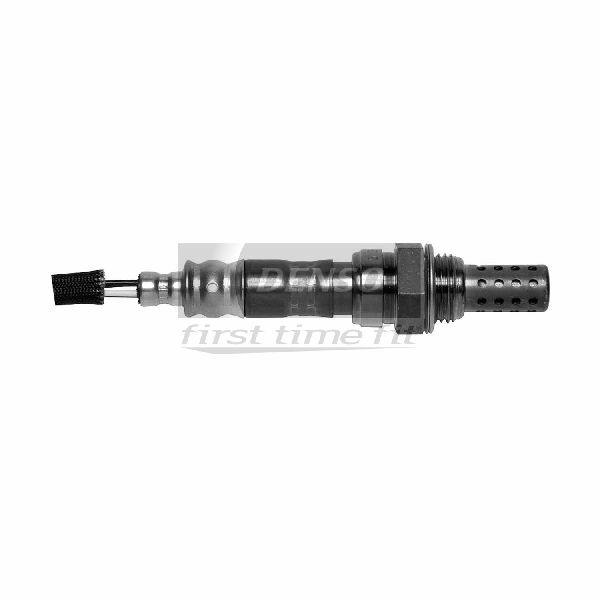
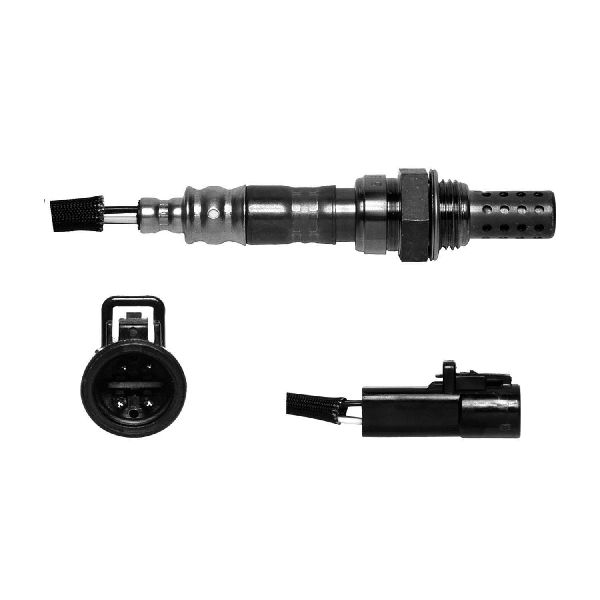
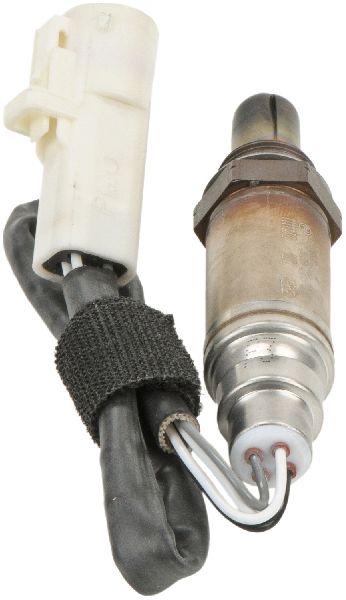
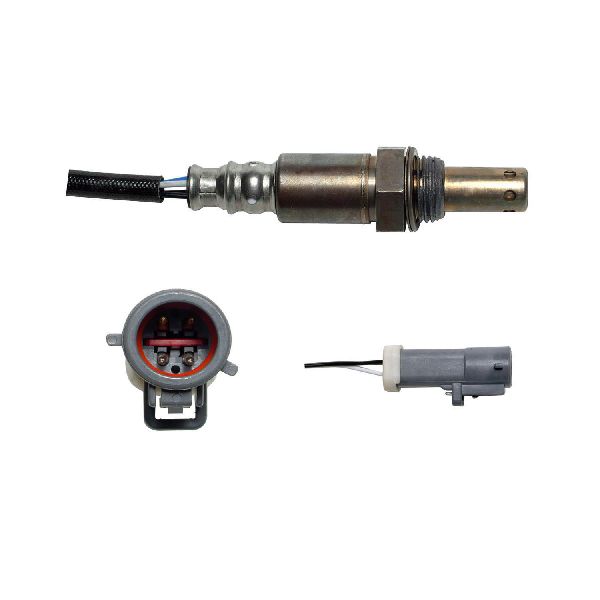
- Oxygen Sensor (Bank 1, Sensor 1)
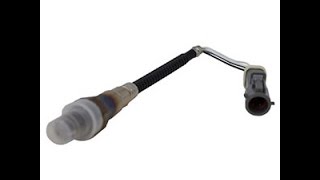
(OEM #Motorcraft DY-835)— This is the upstream sensor on the passenger side. Its internal heater element is the most common failure point for code P0135.
Trusted brands: Motorcraft, Bosch, Denso, NGK/NTK
OEM price range: $70-$120
Aftermarket price range: $40-$80
Related Codes That Often Appear With This One
- P0155 — This is the heater circuit code for Bank 2, Sensor 1 (driver's side). If both appear together, it strongly suggests a problem common to both, like a blown fuse or a wiring issue affecting the shared power supply.
- P0443 — This code for the EVAP Purge Control Valve Circuit often shares the same power fuse as the O2 sensor heaters. Seeing P0135 and P0443 together is a strong indicator of a blown fuse #32.
- P0171 — System Too Lean (Bank 1). While not directly related to the heater circuit, a failing O2 sensor can eventually lead to incorrect fuel trim adjustments, potentially causing lean or rich codes.
Technical Service Bulletins (TSBs) & Recalls
- TSB 20-2380: While for a newer model F-Super Duty, this TSB highlights a known Ford issue where water intrusion into O2 sensor harness connectors causes various heater circuit codes, including P0135. It advises inspecting connectors for moisture/corrosion and replacing the harness and sensor if found.
- TSB 08-7-6: Not directly related to P0135, but highly relevant to any work done on a 5.4L 3V engine. This TSB details the specific, careful procedure required to remove the original two-piece spark plugs to minimize the chance of them breaking off in the cylinder head.
Platform-Specific Known Issues
- A known issue involves multiple circuit codes (P0135, P0155, P0443, P0010, P0020) appearing simultaneously due to a blown 15A fuse in position #32 of the passenger kick panel fuse box. This is almost always caused by a short in the Bank 1 (passenger side) O2 sensor wiring harness where it has melted against the hot exhaust manifold.
Mechanic-Grade Diagnostic Values
- O2 Sensor Heater Element Resistance — expected: 2 to 30 Ohms when cold. Some sources cite a tighter range of 4-8 Ohms.. Failure: A reading of 'OL' (infinite resistance) indicates an open circuit. A reading near zero ohms indicates a short circuit. Both mean the sensor is bad.
- Heater Circuit Power Supply Voltage (KOEO) — expected: 11-13 Volts (Battery Voltage) at the harness-side connector on the power supply wire.. Failure: 0V indicates a blown fuse or a break in the power wire between the fuse box and the sensor.
- O2 Sensor Connector Pinout (Bank 1, Sensor 1) — expected: On the harness side connector: Pin 1 (White/Light Blue) - Heater Power (12V+), Pin 2 (Red/Yellow) - Heater Control (PCM Ground), Pin 3 (Gray/Red) - Signal, Pin 4 (Brown/Light Green) - Signal Ground.. Failure: Incorrect or missing voltages at these pins indicate a wiring or PCM issue.
Scan Tool Commands That Help
- Ford IDS (Integrated Diagnostic System): O2 Heater Monitor Test — This is a self-test commanded by the PCM to check the integrity of the heater circuits. A technician can use IDS to view the status of this monitor ('Heater Fault: Yes/No') and see if the PCM is detecting the fault in real-time, which can help differentiate between an intermittent and a hard fault.
Wiring & Ground Locations

- G101 / G104 — Located in the engine compartment on the right (passenger) and left (driver) side, near the radiator support and firewall/cowl area.. These are primary engine and chassis ground points. While not directly for the O2 sensor's dedicated circuit, a poor connection here can cause unstable voltages and erratic behavior in the entire engine management system, leading to a variety of codes.
- G203 — Located behind the lower right kick panel in the passenger footwell.. This is a major interior ground point for multiple components. Forum users have reported that corrosion at this specific ground bolt can cause a host of seemingly unrelated electrical issues. While not a primary suspect for P0135 alone, it's a known trouble spot on these trucks for any electrical diagnosis.
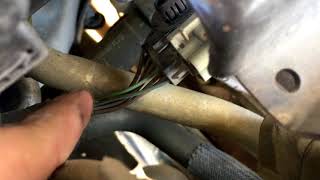
- Bank 1 Sensor 1 Connector — On the passenger side of the vehicle, where the upstream O2 sensor's pigtail connects to the main engine harness. It is typically clipped to the transmission bellhousing or a nearby bracket.. This is the primary point for testing. It's also susceptible to damage from heat, oil, and road debris. The wiring harness leading to it is known to melt from contact with the exhaust manifold.
Real Owner Repair Stories
- f150forum.com user report (2005 Ford F-150 5.4L) — Check Engine Light with multiple codes: P0135, P0155, P0443, P0446, P0452, P1000.
❌ Tried (didn't work) Initially replacing just one O2 sensor., Clearing codes without finding the root cause.
✅ What actually fixed it The user discovered fuse #32 was blown. After replacing it, it blew again instantly. A visual inspection revealed the wiring harness for the Bank 1 (passenger side) O2 sensor had fallen from its clip and melted against the exhaust manifold, causing a direct short to ground. The fix was to repair the melted wires, properly insulate them with high-temp loom, secure the harness away from the exhaust, and then replace the fuse.
OEM Part Supersession History
XL3Z9F472AA→DY-835— Standard part number update and consolidation by Motorcraft.
Heads up: DY-835 is the correct and current OEM replacement for the original part number XL3Z9F472AA for this application. There are no known incompatibility issues.
Model Year Variations Within This Range
- Late 2007-2008: Engines with a build date of 10/9/2007 and later feature redesigned cylinder heads that use a one-piece spark plug, eliminating the notorious issue of the earlier two-piece plugs breaking during removal. These later engines also received updated VCT solenoids. This does not directly affect the P0135 code but is a critical piece of information for anyone working on a late-model-year 5.4L 3V.
Diagnostic Flowchart
Other Known Issues on This Vehicle
Issues unrelated to this code that are worth knowing about as an owner of this generation:
- Cam Phaser Failure ('Triton Tick') 🔴 High — Extremely common, especially on higher-mileage (75k+ miles) engines. Often caused by low oil pressure from worn components or clogged VCT solenoid screens.
- Two-Piece Spark Plug Breakage During Removal 🔴 High — Affects engines built before October/November 2007. Carbon buildup seizes the lower portion of the spark plug in the cylinder head, causing it to break during removal. (Ref: TSB 08-7-6)
- Timing Chain Tensioner & Guide Failure 🔴 High — Common over 100,000 miles. Plastic timing chain guides break, and tensioners fail due to oil pressure issues, leading to chain slap, noise, and potential catastrophic engine failure.
- Fuel Pump Driver Module (FPDM) Failure 🟠 Medium — The module, mounted to a crossmember under the spare tire, has an aluminum backplate that corrodes when in contact with the steel frame, causing failure. Symptoms include intermittent no-start, stalling, and rough running.
- Ignition Coil-on-Plug (COP) Boot Failure 🟡 Low — The rubber boots on the ignition coils can deteriorate and crack over time, allowing spark to arc to the cylinder head (plug well) instead of the spark plug, causing misfires under load.
Used vs. New Parts: Buying Guide for This Vehicle
When a used part is the smart pick: For this repair, obtaining a used part from a junkyard is almost never a smart choice. The O2 sensor is a wear item with a finite lifespan, and its failure is due to age and use, not a manufacturing defect. A used sensor will have an unknown amount of life remaining and could fail shortly after installation.
Donor-vehicle mileage cap: roughly under 10000 miles for the part to have meaningful remaining life.
What to inspect on the donor part:
- Not applicable for O2 sensors. Do not buy used.
OEM-only on this vehicle (don't cheap out):
- While not strictly 'OEM-only', it is highly recommended to use the Motorcraft sensor (DY-835) or a high-quality aftermarket equivalent from brands known to be OEM suppliers, such as NTK/NGK or Denso. Cheap, unbranded sensors from online marketplaces are notorious for failing quickly or being dead-on-arrival.
Aftermarket brands forum-validated for this vehicle:
- NTK/NGK
- Denso
- Bosch
Brands owners have reported issues with on this vehicle:
- Unbranded, 'no-name' sensors sold on marketplaces like Amazon or eBay without a reputable brand history.
Real Owner Stories
Aggregated from forums and TSBs cited above. Mileages and costs reflect what owners reported in those sources.
2004-2008 Ford F-150 5.4L Triton V8
Symptoms: Check Engine Light on with multiple codes: P0135, P0155, P0443, P0446, P0452, and P1000.
What fixed it: Traced the issue to a melted O2 sensor harness that was shorting out fuse #32.
Source hint: f150forum.com thread titled 'P0135, P0155, P0443, P0446, P0452, P1000... help!'
2004-2008 Ford F-150 5.4L Triton V8
Symptoms: P0135 and P0155 codes present simultaneously.
What fixed it: Replacing both upstream oxygen sensors (Bank 1 Sensor 1 and Bank 2 Sensor 1).
Source hint: ford-trucks.com thread titled 'P0135 and P0155 Codes'
Related OBD-II Codes
Frequently Asked Questions
I have P0135 along with P0155, P0443, and P0010. Is it likely all these sensors failed at once?
Does TSB 08-7-6 apply to my 5.4L Triton when I'm fixing an O2 sensor code?
Where is the fuse for the O2 sensor heater circuit located on a 2004-2008 F-150?
My F-150 has a rough idle when cold and a P0135 code. Could this be related to the 'Triton Tick'?
Could water in the connector be causing my P0135 code?
Helpful Videos
![How to Fix FORD P0135 Engine Code in 2 Minutes [1 DIY Method / Only $19.66]](https://img.youtube.com/vi/cYf32lC6hN4/mqdefault.jpg)
We Have This Part in Stock



The information in this article is provided for general reference and educational purposes only. Vehicle specifications, procedures, and part compatibility can vary by production date, trim level, and region. Always consult your vehicle's factory service manual and verify part numbers before purchasing or performing repairs. Safety-critical components such as airbags, seat belts, and braking systems should be installed by a qualified professional.
- Ford F-150:
- 🎬 Helpful Videos
- 🛍️ Shop This Part
- What's Unique About the 2004-2008 Ford F-150
- Symptoms You May Notice
- Most Likely Causes
- Rare But Worth Checking
- Diagnosis Steps
- Parts You'll Likely Need
- Related Codes That Often Appear With This One
- Technical Service Bulletins (TSBs) & Recalls
- Platform-Specific Known Issues
- Mechanic-Grade Diagnostic Values
- Scan Tool Commands That Help
- Wiring & Ground Locations
- Real Owner Repair Stories
- OEM Part Supersession History
- Model Year Variations Within This Range
- Diagnostic Flowchart
- Other Known Issues on This Vehicle
- Used vs. New Parts: Buying Guide for This Vehicle
- Real Owner Stories
- 2004-2008 Ford F-150 5.4L Triton V8
- 2004-2008 Ford F-150 5.4L Triton V8
- Related OBD-II Codes
- Frequently Asked Questions
- 🎟️ Get 5% Off