

OBD-II Code P0020: "A" Camshaft Position Actuator Circuit (Bank 2)
The Ultimate Guide to What P0020 Means, Why It Triggers, and How to Fix It for Good
- P0020 indicates an electrical open or short in the Bank 2 intake VVT solenoid circuit, not a mechanical timing failure.
- Test the VVT solenoid's resistance with a multimeter; a healthy solenoid reads between 5.0 and 20.0 Ohms, while an 'OL' reading confirms a dead part.
- Check your engine oil level and condition immediately, as dirty oil clogs the VVT solenoid's fine mesh screens and burns out the coil.
- Never replace the VVT solenoid without first verifying 12V power at the wiring harness connector to rule out a blown fuse or broken wire.
- Driving with an active P0020 code reduces fuel economy by up to 15% and risks a $1,500 catalytic converter replacement from unburned fuel overheating the exhaust.
What Does P0020 Mean?

Your car's Powertrain Control Module (PCM) detects an electrical open or short in the Bank 2 intake camshaft position actuator circuit. This actuator, also called a Variable Valve Timing (VVT) solenoid or oil control valve, uses pressurized engine oil to change the camshaft's angle. Code P0020 specifically means the computer detects a broken wire, a shorted connection, or abnormal voltage preventing it from controlling the Bank 2 solenoid.
Technical definition: Intake "A" Camshaft Position Actuator Circuit / Open (Bank 2). The engine control module (ECM) triggers this code when it commands the VVT solenoid to a specific duty cycle, but the resulting voltage or current draw falls outside the expected range, indicating an electrical open or short circuit.
Can I Drive With P0020?
Yes, But With Caution. You can drive with P0020 for a short trip to a repair shop, but daily driving is unsafe. Your engine suffers reduced power, a rough idle, and unexpected stalling in traffic. Ignoring the code forces unburned fuel into the exhaust, destroying the catalytic converter (a $1,500+ repair) within months. Prolonged operation with a failing VVT system also accelerates internal engine wear.
Common Causes

- Faulty VVT Solenoid / Oil Control Valve (Very Common) — The solenoid's internal electromagnetic coil fails, creating an open or short circuit. Cheap aftermarket solenoids frequently fail prematurely or have incorrect resistance out of the box, immediately triggering this code.
- Low, Dirty, or Incorrect Engine Oil (Common) — Sludge and metallic debris clog the fine mesh screens on the VVT solenoid. While P0020 is an electrical code, severe sludge forces the solenoid to overwork, burning out its internal coil. Using the wrong oil viscosity also delays actuator response, sometimes confusing the PCM into flagging a circuit error.
- Wiring Harness or Connector Issue (Common) — Engine heat and vibration damage the wiring to the VVT solenoid. Wires fray, break, or melt against the engine block. The plastic connector becomes brittle and cracks, or the internal pins corrode, breaking the electrical connection.
- Stretched Timing Chain or Worn Phasers (Less Common) — Severe mechanical timing issues sometimes cause the PCM to default to a circuit error. If a timing chain stretches significantly, the camshaft's position falls so far out of range that the computer assumes the control circuit is dead.
- Failed Camshaft Position Sensor (Rare) — The camshaft position sensor provides feedback on VVT adjustments. If this sensor sends erratic data, the PCM incorrectly blames the actuator control circuit.
- Faulty Powertrain Control Module (PCM) (Very Rare) — An internal failure of the PCM's driver circuit that controls the Bank 2 VVT solenoid causes this code. Consider this only after exhaustively ruling out the solenoid, wiring, and oil condition.
Symptoms

- Check Engine Light is On — The PCM stores P0020 and illuminates the malfunction indicator lamp (MIL) immediately upon detecting the circuit fault.
- Rough Idle, Stalling, and Hesitation — With the camshaft timing stuck, the engine shakes at low RPMs, stalls at stoplights, and feels sluggish during acceleration.
- Engine Rattling or Ticking Noises — A distinct rattling sound emerges from the top of the engine, caused by the VVT phaser chattering due to improper oil pressure control.
- Poor Fuel Economy — The engine loses its ability to optimize valve timing, causing a 10-15% drop in fuel efficiency.
- Hard Starting — The engine cranks for an extended period before firing up because the camshaft is locked in a position not optimized for ignition.
- Failed Emissions Test (also visible on scanner) — An active P0020 code triggers an automatic failure of any OBD-II smog check.
Diagnostic Flowchart
Tap your situation to follow the diagnostic path that matches what you're seeing on this code.
Common Fixes & Costs
- Replace VVT Solenoid / Oil Control Valve
— Parts: $50-$150, Labor: $130-$250, ~1.5 hr book time
(DIY)
Ford F-150 (5.0L/5.4L): OEM ML3Z-6M280-B (Alt: {"brand": "Dorman", "part_number": "917-200", "price_comparison": "40-60% less than OEM"})
Chevy Equinox (2.4L): OEM 12679099 (Alt: {"brand": "ACDelco", "part_number": "12679099", "price_comparison": "Identical to dealer part"})
Toyota Camry (V6): OEM 15330-0P020 (Alt: {"brand": "Denso", "part_number": "Varies by application", "price_comparison": "20-40% less than OEM"}) - Engine Oil and Filter Change — Parts: $40-$80, Labor: $40-$80, ~0.5 hr book time (DIY)
- Repair or Replace Wiring Harness/Connector — Parts: $20-$100, Labor: $130-$300, ~2.0 hr book time (Intermediate)
- Perform Engine Flush — Parts: $20-$40, Labor: $100-$150, ~1.0 hr book time (DIY)
- Replace Camshaft Position Sensor — Parts: $40-$100, Labor: $80-$150, ~1.0 hr book time (DIY)
Used vs. New Parts: Buying Guide
When a used part is worth it: Buy a used OEM solenoid from a low-mileage salvage yard only if a new OEM part is prohibitively expensive and you want to avoid cheap aftermarket brands.
Donor-vehicle mileage cap: roughly under 60000 miles for the part to have meaningful remaining life.
Donor quality checklist:
- Verify the donor vehicle was not scrapped for engine failure.
- Match the part number exactly.
- Reject any used part with metallic debris or sludge on the filter screen.
Decision logic:
- If A new OEM or high-quality aftermarket solenoid (Denso, ACDelco) is under $100 → Buy new for the warranty and guaranteed performance.
- If The vehicle has over 150,000 miles and you need a budget repair → A tested, used OEM part is safer than a $20 no-name aftermarket part.
- If The solenoid requires removing the valve cover to access → Buy a new OEM part to avoid paying labor twice for a premature failure.
Warranty tradeoff: Used parts offer 30-90 days. New aftermarket parts offer 1-year to lifetime. New OEM parts offer 1-year.
Worst-case if a used part fails: 200-500
What Happens If You Wait — Timeline
- 0-1 month: Check Engine Light is on. You notice a slightly rougher idle and minor hesitation. The issue is contained to the electrical circuit. (MPG impact: 3-5%% · Added cost: $0-$40 in wasted fuel)
- 1-3 months: Stalling at stops becomes frequent. Fuel economy drops noticeably, and engine rattling begins as timing control is lost. (MPG impact: 5-10%% · Added cost: $50-$150 in wasted fuel)
- 3-6 months: Inefficient combustion forces unburned fuel into the exhaust, overheating and damaging the catalytic converter. (MPG impact: 10-15%% · Added cost: $800-$2500)
- 6+ months: Continued operation with incorrect timing stretches timing chains and destroys camshaft phasers, requiring internal engine repair. (MPG impact: 15-25%% · Added cost: $3000-$8000)
Cost of Not Fixing It
- 0-1 Month: 10-15% decrease in fuel economy, rough idle, and engine hesitation. High risk of stalling in traffic. (Added cost: 50-100)
- 1-6 Months: Unburned fuel enters the exhaust, overheating and destroying the catalytic converter. Carbon buildup accelerates. (Added cost: 1200-2800)
- 6+ Months: Severe engine wear from improper lubrication and timing. Timing chains stretch and phasers fail, causing catastrophic internal damage. (Added cost: 3000-8000)
Diagnosis Steps

- Check Engine Oil Level and Condition
Pull the dipstick. If the oil is low, dark black, gritty, or sludgy, perform an oil and filter change immediately. Dirty oil destroys VVT solenoids.
Tools: Rag (Beginner) - Visually Inspect the Wiring and Connector
Locate the Bank 2 VVT solenoid. Inspect the electrical connector for corrosion, pushed-out pins, or a loose fit. Trace the wires looking for burns, fraying, or exposed copper.
Tools: Flashlight (Beginner) - Test the VVT Solenoid's Resistance
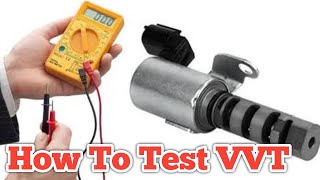
Disconnect the solenoid. Set a multimeter to Ohms (Ω) and probe the two pins on the solenoid. A healthy solenoid reads between 5.0 and 20.0 Ohms (check your manual for exact specs). A reading of 'OL' means the internal wire is broken; near zero means it is shorted. Replace the solenoid in either case.
Tools: Multimeter, Vehicle-specific repair manual (Intermediate) - Test for Voltage at the Connector
Turn the ignition to 'On' (engine off). Set the multimeter to DC Volts. Ground the black probe to the battery. Probe the harness connector terminals with the red probe. One wire must show 12V battery voltage. No voltage indicates a blown fuse or a broken power wire.
Tools: Multimeter (Intermediate) - [PRO TIP] Bench Test the Solenoid
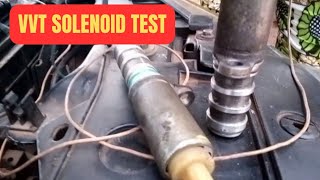
Remove the solenoid. Use jumper wires to apply 12V power directly from the battery to the solenoid's pins. You must hear a sharp, audible 'click' as the plunger moves. No click means the solenoid is mechanically seized or electrically dead.
Tools: Jumper wires, 12V battery (Intermediate) - Command the Solenoid with a Scan Tool
Use a bidirectional scan tool to command the VVT solenoid on and off while the engine idles. You should hear a click and the engine RPM should drop or stumble. If nothing happens, the circuit is dead.
Tools: Bidirectional OBD-II Scan Tool (Advanced) - Monitor Live Data PIDs
Watch 'VVT Commanded Angle' and 'VVT Actual Angle' for Bank 2 on a scan tool. As you raise RPM, the 'Actual' must follow the 'Commanded' value. A large discrepancy confirms the solenoid is not responding to PCM commands.
Tools: Advanced OBD-II Scan Tool (Advanced) - Check for Wiring Continuity to the PCM
If the solenoid is good but lacks power or ground, disconnect the battery, solenoid, and PCM. Set the multimeter to continuity mode and test the control wire from the solenoid connector to the PCM pin. No beep confirms a broken wire in the harness.
Tools: Multimeter, Vehicle-specific wiring diagram (Advanced) - [PRO TIP] Check for Voltage Spikes
Briefly apply power to the solenoid's control circuit using an oscilloscope. When power is removed, the collapsing magnetic field induces a voltage spike. A weak spike indicates a failing coil winding, even if static resistance is normal.
Tools: Oscilloscope (Advanced) - Check VVT Oil Pressure
Tap into the VVT oil galley with a pressure gauge. Expect at least 20-25 PSI at hot idle. Low pressure indicates a blocked passage, failing oil pump, or internal engine wear starving the VVT system.
Tools: Oil pressure gauge with adapters (Advanced)
When This Code Triggers (Freeze-Frame Conditions)
- Engine Coolant Temp: 180-210°F (The fault is detected when the engine is fully warmed up and in closed-loop operation.)
- Engine RPM: 1500-3000 RPM (The PCM actively commands VVT adjustments under light to moderate load, such as steady cruising.)
- Engine Load: 25-70% (The code sets when the PCM expects the VVT system to respond to load changes, rarely at idle.)
- Vehicle Speed: 30-60 mph (Triggered during city or highway driving when the VVT system is most active.)
Related Codes
- P0021 — P0020 is an electrical circuit code; P0021 is a mechanical performance code (timing over-advanced). If you have both, the electrical failure (P0020) is preventing the PCM from correcting the mechanical position.
- P0022 — Similar to P0021, this indicates timing is over-retarded. Fix the P0020 electrical issue first, and the P0022 performance code usually resolves with it.
- P0345 — Camshaft Position Sensor Circuit Bank 2. If P0020 and P0345 appear together, a damaged wiring harness is affecting both components, as they share routing.
- P0010 — The identical fault code for Bank 1. Seeing both P0010 and P0020 means a shared power supply failed (blown fuse), oil is catastrophically low, or the PCM is faulty. Two solenoids rarely die simultaneously.
Climate & Environmental Factors
- Cold Weather: Extreme cold thickens incorrect oil grades, slowing actuator response and triggering codes. It also makes plastic wiring insulation brittle and prone to cracking.
- High Heat: Sustained engine bay heat accelerates the breakdown of the solenoid's internal coil windings and bakes plastic connectors until they shatter.
- High Humidity / Salt: Moisture and road salt penetrate unsealed connectors, corroding pins and creating the high electrical resistance that triggers P0020.
How to Talk to a Mechanic About This Code
Say this: "I have a P0020 code for the Bank 2 intake camshaft actuator circuit. Please start by testing the solenoid's resistance and verifying 12V power and ground at the connector before quoting any mechanical timing work."
This proves you understand P0020 is strictly an electrical circuit code, preventing the shop from immediately upselling an expensive timing chain or phaser replacement.
Avoid saying:
- 'Just fix whatever's wrong'
- 'My check engine light is on, can you look at it?'
- 'I think I need a new timing chain'
Questions to ask before authorizing the repair:
- What was the resistance reading on the old solenoid?
- Did you confirm there is 12-volt power at the harness connector?
- If you are recommending a wiring repair, can you show me the damaged section?
Where to Take It: Dealer vs Independent vs Chain
- Dealer:
Best for: Vehicles under powertrain warranty, Complex wiring harness issues requiring complete replacement, Manufacturer-specific quirks (e.g., BMW VANOS TSBs)
Downsides: Labor rates are 50-100% higher than independent shops., Often recommend replacing entire harnesses instead of repairing a single wire. (Typical cost: +50% vs. baseline) - Independent Shop:
Best fit. P0020 is a common code, and competent independent shops diagnose and repair solenoids or simple wiring faults affordably.
Best for: Out-of-warranty vehicles., Straightforward diagnosis and replacement of the VVT solenoid., Simple connector or pigtail soldering repairs.
Downsides: Diagnostic capabilities for complex PCM electrical issues vary by shop. (Typical cost: +0% vs. baseline) - Chain Shop:
Avoid for diagnosis. Acceptable only for a simple, pre-diagnosed solenoid replacement.
Best for: An oil change if you suspect dirty oil is the root cause.
Downsides: Technicians often lack experience for proper electrical circuit diagnosis., High pressure to sell parts leads to replacing the solenoid without testing the wiring. (Typical cost: -10% vs. baseline)
When to Walk Away From the Repair
If the estimated repair cost exceeds 40-50% of the car's private-party value, seriously consider selling it.
- Car worth $4000, fix is $1800: Borderline. Get a second opinion if the diagnosis involves a timing chain. If it's just a solenoid, the quote is too high.
- Car worth $12000, fix is $300: Fix it. A standard solenoid replacement is well below the threshold.
- Car worth $2500, fix is $1500: Walk away. The repair cost is too high relative to the vehicle's value.
What Scan Tool You Need for This Code
Minimum: A basic code reader that reads and clears engine trouble codes.
A $20 reader only confirms P0020 is present. It cannot show live camshaft position data or command the solenoid to test it, leaving you guessing on the repair.
Budget: BlueDriver Pro (~$100) — Reads codes, provides freeze-frame data, and graphs live data PIDs like commanded vs. actual camshaft position.
Mid-range: Innova 5610 or Foxwell NT510 Elite (~$350) — Includes full bidirectional controls to command the VVT solenoid on and off directly, confirming mechanical and electrical function.
Professional: Autel MaxiCOM MK808S (~$450) — Offers OEM-level diagnostics, full bidirectional control, and performs special adaptations if the PCM requires reprogramming.
Rent vs buy: Auto parts stores read codes for free. To properly diagnose P0020 yourself using live data or bidirectional tests, you must buy a capable scanner.
How to Clear the Code After You Fix It
- Reconnect the battery if disconnected.
- Use an OBD-II scan tool to clear the P0020 code from the PCM.
- Perform a complete drive cycle to reset readiness monitors.
Drive cycle (~30 minutes): Start cold, idle for 3 minutes, drive 15 minutes in mixed city/highway conditions (including steady 55 mph), and let cool down.
Readiness monitors affected: Comprehensive Component Monitor (CCM), Catalyst Monitor, Oxygen (O2) Sensor Monitor
Before emissions retest: drive at least 100 miles to fully set monitors.
Watch out for:
- Disconnecting the battery clears the code but resets monitors to 'Not Ready', causing an instant emissions failure.
- The code returns immediately if the electrical fault (bad solenoid, broken wire) remains unfixed.
Will This Fail Emissions / State Inspection?
Yes — this code typically fails an OBD-II emissions inspection.
- California: An active P0020 is an automatic failure. You must complete a full drive cycle (often 100+ miles) to set readiness monitors to 'Ready' before re-testing.
- New York: The NYS DMV inspection includes an OBD-II scan. An illuminated Check Engine Light results in an automatic failure.
- Texas: In emissions-testing counties, clearing the code is not enough; readiness monitors must be 'Ready' to pass.
Most Commonly Affected Vehicles
- Ford F-150, Explorer, Mustang (2004-2024) — Extremely common on 3-valve and Coyote Ti-VCT engines. On 2009+ models, valve covers must be removed to access solenoids, pushing repair costs over $500.
- Chevrolet / GM Equinox, Malibu, Traverse (2010-2019) — The 2.4L Ecotec and 3.6L V6 engines are highly prone to this. High oil consumption on the 2.4L leads to low oil levels, destroying the solenoids.
- Toyota Camry (V6), Highlander, RAV4 (2007-2024) — On the 2GR-FE V6, the Bank 2 (front bank) Oil Control Valve fails frequently but is very easy to replace as a DIY job.
- Honda Accord (V6), Odyssey, Pilot (2003-2024) — Bank 2 is the rear cylinder bank on Honda V6s, making access difficult. Rodent damage to the VTC wiring harness is a known issue.
- Hyundai / Kia Sonata, Tucson, Santa Fe (2011-2020) — Theta II engines generate metallic debris from bearing wear, which clogs and destroys VVT solenoids. Check oil for metal shavings immediately.
- BMW 3-Series, 5-Series, X3 (2006-2023) — Relates to the VANOS system. On 2020-2023 330e models, BMW issued TSB 21-03-02 for a wiring harness that wears from vibration, causing P0020.
Manufacturer-Specific Notes
- Ford: Low system voltage from an aging battery during cranking causes intermittent P0020 codes. Test the battery before replacing solenoids.
- Toyota/Lexus: The Bank 2 VVT solenoid is a highly common standalone failure item on V6 engines, making it the primary suspect without needing deep electrical diagnosis.
- BMW: TSB 21-03-02 addresses a specific VANOS actuator control harness that rubs and shorts out from engine vibration on 2020-2023 330e models.
- Hyundai/Kia: Treat P0020 with extreme caution on 2011-2020 models. It often indicates catastrophic engine bearing failure (covered under lifetime warranty extensions) rather than a simple solenoid issue.
Real Owner Stories
2005 Ford F-150 5.4L - Simple Connector Issue
Check Engine Light with codes P0020 and P0021 appeared after a car wash. The truck ran perfectly fine.
What they tried:
- Performed an oil change, which did not clear the codes.
- Inspected the VCT solenoid connector on Bank 2 and found it loose with water inside.
Outcome: The owner dried the connector, applied dielectric grease, and cleared the codes. The problem was resolved.
Lesson: If a code appears after a car wash or heavy rain, always check electrical connectors for water intrusion before buying parts.
2006 Ford F-150 5.4L - Misleading Double Code
Truck threw both P0010 (Bank 1) and P0020 (Bank 2) codes simultaneously.
What they tried:
- Tested and confirmed 12V power at both connectors and continuity through both solenoids.
Outcome: The simultaneous appearance pointed to a shared power supply issue. The root cause was a damaged main wiring harness rubbing against the engine block, shorting out the shared power wire for both solenoids.
Lesson: When you get circuit codes for both banks, the problem is a single systemic issue (bad fuse, shared wiring fault) rather than two separate solenoids failing at exactly the same time.
Lexus LS430 - The "Clean and Pray" Method
P0020 appeared. The owner removed the Bank 2 actuator and cleaned it thoroughly with gasoline.
What they tried:
- Cleaned the solenoid, checked the connector, and cleared the codes.
Outcome: The code returned after 8 minutes of driving. The solenoid's internal coil was electrically dead, which cleaning cannot fix. The owner replaced the solenoid.
Lesson: Cleaning a solenoid only works for mechanical sticking. It will never fix the electrical open or short circuit that P0020 indicates.
How to Prevent This Code From Triggering
- Use high-quality full synthetic motor oil. (Every oil change) — Synthetic oils resist thermal breakdown and prevent the sludge that clogs VVT solenoids.
- Adhere to the 'severe service' oil change interval. (Every 3,000-5,000 miles) — Frequent changes remove contaminants before they form sludge and block the fine mesh screens of the VVT system.
- Use the manufacturer-specified oil viscosity. (Every oil change) — VVT systems are hydraulic. Incorrect viscosity alters actuator response time, triggering performance and circuit codes.
Frequently Asked Questions
What is Bank 2 and where is it?
Bank 1 contains cylinder #1, and Bank 2 is the opposite side. On most American and German V-engines, Bank 2 is the driver's side, while on Japanese V-engines, it is usually the front bank. Always consult your vehicle's specific engine diagram to confirm.
What is the most common mistake when diagnosing P0020?
The biggest mistake is replacing the VVT solenoid without checking the wiring first. P0020 is a circuit code. A 5-minute multimeter test confirms if the problem is the solenoid or a broken wire, saving you money.
Can I just swap the Bank 1 and Bank 2 solenoids to diagnose the problem?
Yes, swapping the Bank 2 (faulty) solenoid with the Bank 1 (good) solenoid is an excellent diagnostic trick. If the trouble code changes to P0010 after clearing codes and driving, the solenoid is definitively bad. If P0020 returns, the issue lies in the Bank 2 wiring or PCM.
Why did the P0020 code come back after I replaced the solenoid?
A returning code means the new part is defective, or the root cause is an overlooked wiring short. It also happens if severe oil sludge immediately contaminates the new solenoid. Always test a new aftermarket part's resistance before installation to ensure it meets OEM specifications.
Will an engine flush fix a P0020 code?
An engine flush frees up a mechanically sticking solenoid, but it cannot fix an electrical open or short circuit. Use it as a preventative measure, not a cure for a dead electrical component.
What happens if I get a P0020 code after a timing chain replacement?
The VVT solenoid connector was likely left unplugged or damaged during the repair. Re-check all electrical connections on the front of the engine.
Will my car pass an emissions test with a P0020 code?
No. An active Check Engine Light is an automatic failure for any OBD-II emissions test.
Key Takeaways
- P0020 indicates an electrical open or short in the Bank 2 intake VVT solenoid circuit, not a mechanical timing failure.
- Test the VVT solenoid's resistance with a multimeter; a healthy solenoid reads between 5.0 and 20.0 Ohms, while an 'OL' reading confirms a dead part.
- Check your engine oil level and condition immediately, as dirty oil clogs the VVT solenoid's fine mesh screens and burns out the coil.
- Never replace the VVT solenoid without first verifying 12V power at the wiring harness connector to rule out a blown fuse or broken wire.
- Driving with an active P0020 code reduces fuel economy by up to 15% and risks a $1,500 catalytic converter replacement from unburned fuel overheating the exhaust.
Helpful Videos

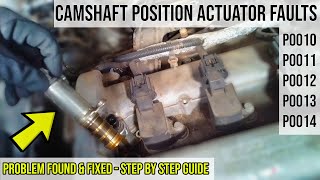
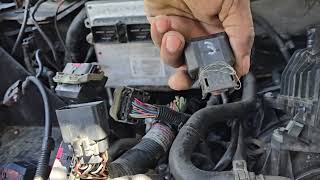
![How to Fix TOYOTA P0020 Engine Code in 4 Minutes [1 DIY Method / Only $19.45]](https://img.youtube.com/vi/YXXahRWalU0/mqdefault.jpg)

The information in this article is provided for general reference and educational purposes only. Vehicle specifications, procedures, and part compatibility can vary by production date, trim level, and region. Always consult your vehicle's factory service manual and verify part numbers before purchasing or performing repairs. Safety-critical components such as airbags, seat belts, and braking systems should be installed by a qualified professional.
- 🎬 Helpful Videos
- What Does P0020 Mean?
- Can I Drive With P0020?
- Common Causes
- Symptoms
- Diagnostic Flowchart
- Common Fixes & Costs
- Used vs. New Parts: Buying Guide
- What Happens If You Wait — Timeline
- Cost of Not Fixing It
- Diagnosis Steps
- When This Code Triggers (Freeze-Frame Conditions)
- Related Codes
- Climate & Environmental Factors
- How to Talk to a Mechanic About This Code
- Where to Take It: Dealer vs Independent vs Chain
- When to Walk Away From the Repair
- What Scan Tool You Need for This Code
- How to Clear the Code After You Fix It
- Will This Fail Emissions / State Inspection?
- Most Commonly Affected Vehicles
- Manufacturer-Specific Notes
- Real Owner Stories
- 2005 Ford F-150 5.4L - Simple Connector Issue
- 2006 Ford F-150 5.4L - Misleading Double Code
- Lexus LS430 - The "Clean and Pray" Method
- How to Prevent This Code From Triggering
- Frequently Asked Questions
- What is Bank 2 and where is it?
- What is the most common mistake when diagnosing P0020?
- Can I just swap the Bank 1 and Bank 2 solenoids to diagnose the problem?
- Why did the P0020 code come back after I replaced the solenoid?
- Will an engine flush fix a P0020 code?
- What happens if I get a P0020 code after a timing chain replacement?
- Will my car pass an emissions test with a P0020 code?
- Key Takeaways
- 🎟️ Get 5% Off