

P0135 on 2012-2020 Chevrolet Sonic 1.4L Turbo: O2 Sensor Heater Fixes and Causes
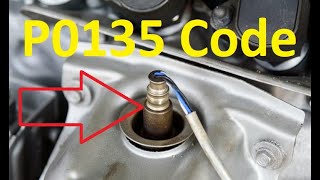
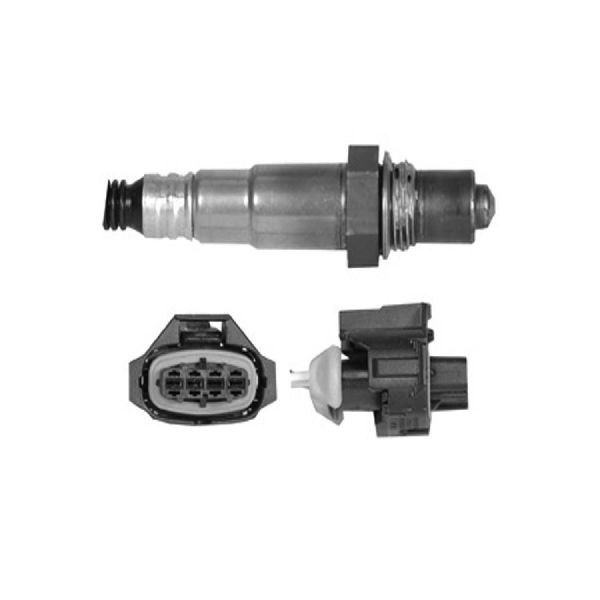
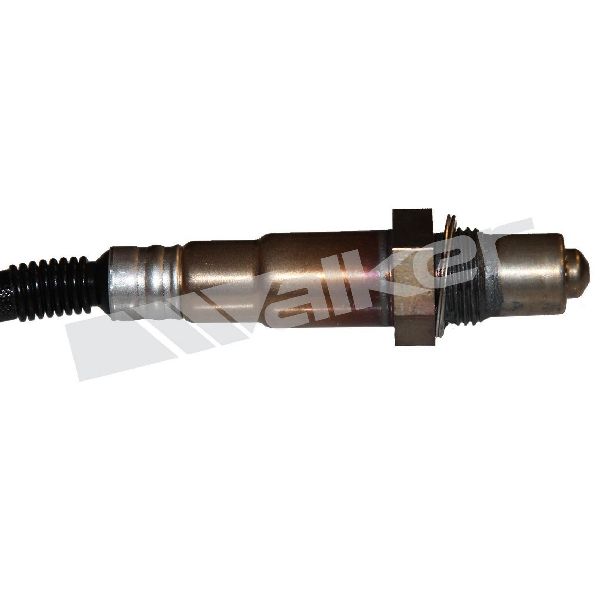
On a 2012-2020 Sonic 1.4L Turbo, code P0135 is almost always a failed internal heater in the upstream oxygen sensor. Before replacing it, check the 10A fuse in the under-hood fuse box. An OEM ACDelco sensor costs about $70-$100, and it's a DIY-friendly fix.
- P0135 on your Sonic 1.4L Turbo almost always points to the upstream O2 sensor on top of the turbo.
- Always check the 10A fuse in the under-hood fuse box (position F24) before buying any parts. It's a quick, free check.
- The most probable fix is replacing the upstream O2 sensor. This is a manageable DIY job with a special 22mm (or 7/8") O2 sensor socket.
- If you recently had other engine work done, double-check that the O2 sensor and boost pressure sensor connectors are not swapped; they are identical.
- Do not replace the downstream sensor (after the catalytic converter) for this code.
What's Unique About the 2012-2020 Chevrolet Sonic
For the Chevy Sonic and its platform-mates (Cruze, Trax, and Buick Encore) with the 1.4L turbo engine, this is a very common and straightforward code. The upstream O2 sensor (Bank 1, Sensor 1) is easily accessible on top of the turbocharger housing right at the back of the engine bay. A unique issue on this platform is the potential to accidentally swap the identical electrical connectors for the O2 sensor and the nearby turbo boost pressure sensor after other repairs, which can cause a confusing cluster of diagnostic codes including P0135.
Generation note: The 2012-2020 Sonic covers a single generation (T300), which received a major facelift for the 2017-2020 model years. However, the engine, turbo, and exhaust components related to this code are mechanically almost identical across all years, so the diagnosis and repair are the same.
Symptoms You May Notice
- Check Engine Light is on
- Reduced fuel economy, especially on short trips or in cold weather
- Failing a vehicle emissions test
- Rough or unstable idle in some cases
- "Reduced Propulsion" messages on the dash in some Chevrolet hybrid/electric models using similar engine architectures (NHTSA ODI #11632222)
- Replacing the downstream (Bank 1, Sensor 2) oxygen sensor. This code is specific to the upstream sensor before the catalytic converter.
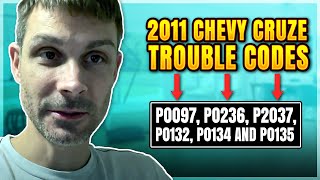
- Swapping the upstream O2 sensor and turbo boost pressure sensor connectors. After a repair like replacing the valve cover, it is easy to mix these up as they are physically identical. This will cause a cluster of O2 sensor and boost sensor codes to appear, including P0135, P0132, P0236, and others. 🎬 See how swapped connectors cause this confusing cluster of codes.
Most Likely Causes
- Failed Upstream Oxygen Sensor 🔴 High Probability The internal heater element is a common failure point due to constant heat cycles. It's the most frequent reason for a P0135 code on this vehicle.
How to confirm: After confirming the fuse and wiring are good, test the resistance of the heater circuit pins on the sensor connector with a multimeter. An open circuit (infinite resistance) confirms the internal heater has failed.
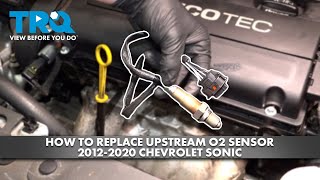
Typical fix: Replace the upstream (Bank 1, Sensor 1) oxygen sensor. The common service replacement part is ACDelco 213-4764.
Est. part cost: $70-$130 - Blown O2 Sensor Heater Fuse 🟡 Medium Probability A short circuit in the sensor's heater element can cause the corresponding fuse to blow as a protective measure. In some Chevrolet vehicles, a blown fuse (such as F03) can be caused by a stuck EGR valve, leading to P0135 and a long list of other codes (NHTSA ODI #11632222).
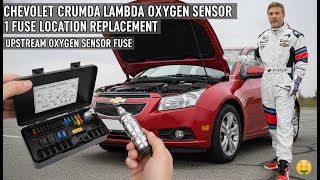
How to confirm: Inspect the 10-amp fuse in the under-hood fuse box. On the Sonic and Cruze platform, this is often in position F24 or F47. 🎬 Watch this quick video to find and fix the heater fuse. If the fuse is blown, a short circuit exists.
Typical fix: Replace the 10A fuse. If it blows again immediately, you must diagnose a short in the wiring or the O2 sensor itself.
Est. part cost: $1-$5 - Damaged Wiring or Connector ⚪ Low Probability The wiring harness is close to hot exhaust components. Over time, the plastic loom can become brittle and wires can get damaged or melt, causing a short or open circuit.
How to confirm: Visually inspect the entire wiring harness leading to the upstream O2 sensor. Check for melted plastic, frayed or broken wires, and corrosion inside the connector pins.
Typical fix: Repair the damaged section of the wiring harness or clean/replace the connector.
Est. part cost: $10-$50
Rare But Worth Checking
- Oil Contamination from PCV System Failure: The 1.4L LUV engine is notorious for failures in its PCV system, specifically a missing check valve in the intake manifold and a torn diaphragm in the valve cover. This can pressurize the crankcase and force oil into the exhaust, which contaminates and destroys the oxygen sensor. If you have recurring P0135 codes after replacing the sensor, or also see codes like P0171 or P1101, this is a likely root cause.
- Poor Engine Ground Connection: A GM service bulletin for similar electrical issues on this platform advises checking the main engine ground point (G105), located on the frame rail under the battery tray. A loose or corroded ground can cause a variety of unpredictable electrical faults.
Diagnosis Steps
- Read the trouble codes with an OBD-II scanner to confirm P0135 is the primary code.
- Open the under-hood fuse box and inspect the 10-amp fuse for the oxygen sensor heater (often labeled O2S HTR or similar, in position F24). If it's blown, replace it.
- If the fuse is good, locate the upstream O2 sensor on top of the turbocharger housing.
- Carefully inspect the sensor's wiring harness and electrical connector for any signs of melting, chafing, or corrosion.
- If the wiring looks good, disconnect the sensor. Use a multimeter set to Ohms (Ω) to measure the resistance between the two heater circuit pins on the sensor side of the connector. A reading of 'OL' or infinite resistance means the heater element is broken and the sensor must be replaced.
- If resistance is within spec (typically 4-15 Ohms, but refer to a service manual for exact values), check for 12V power at the heater power wire on the harness side with the key on, engine off.
- If power and ground are present and the sensor resistance is good, but the code persists, the issue may be an intermittent wiring problem or a rare PCM fault.
Parts You'll Likely Need
- Upstream Oxygen Sensor (Bank 1, Sensor 1)
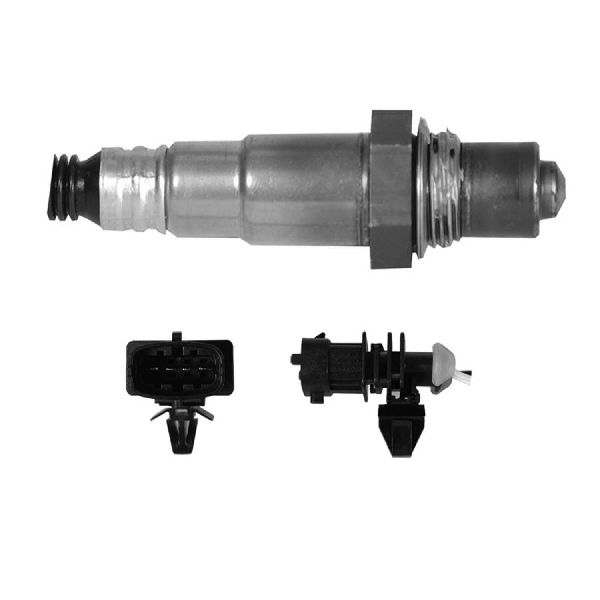
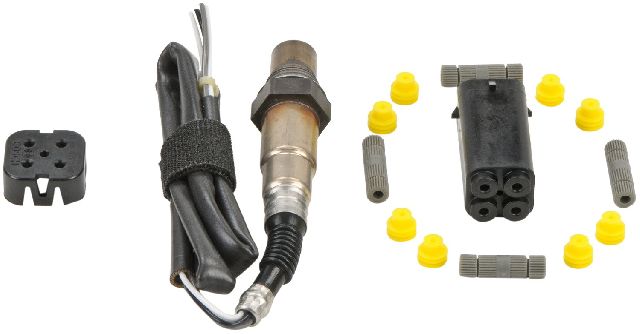
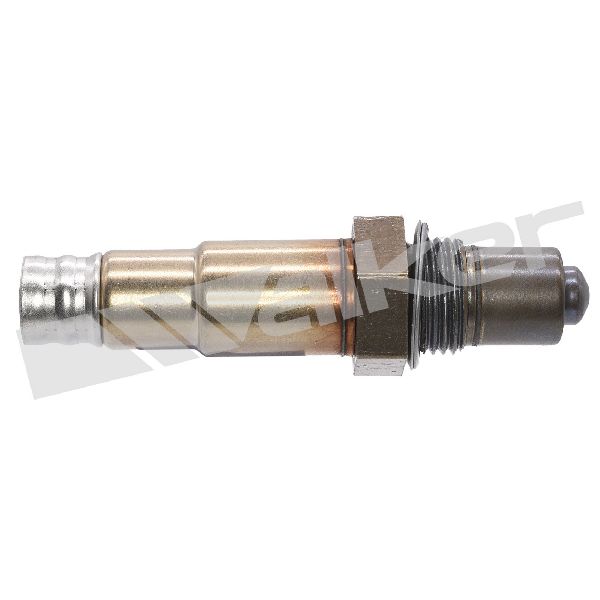
(OEM #55572215 (Original), ACDelco 213-4764 (Service Replacement))— The internal heater element fails from age and heat cycles, which is the most common cause of code P0135.
Trusted brands: ACDelco (213-4764), Bosch, Denso, NGK/NTK
OEM price range: $70-$130
Aftermarket price range: $30-$90
Related Codes That Often Appear With This One
- P0141 — This code is for the heater circuit on the downstream sensor (Bank 1, Sensor 2). If the fuse that powers both heaters is blown, you may see both codes together.
- P0171 — This code means 'System Too Lean'. It can be triggered by a failed PCV system, which is also a rare root cause of O2 sensor failure on this engine. Seeing these together may point toward a larger PCV issue.
- P1101 — This code for 'Intake Air Flow System Performance' is another key indicator of the classic PCV system failure on the 1.4L Turbo. Its presence alongside P0135 strongly suggests the root cause is more than just the O2 sensor.
- P0403, P0405, P0443, P0458, P0489, P0597, P0598, P06DA, P06DB — These codes, along with P0135, have been reported to appear simultaneously in some Chevrolet vehicles when a central fuse is blown (NHTSA ODI #11448862, #11681144).
Technical Service Bulletins (TSBs) & Recalls
- PIP5197M: Addresses excessive oil consumption, blue smoke, and various DTCs (P0171, P0299) related to PCV system failure on the 1.4L engine.
- N192282200: A GM Special Coverage Adjustment (extended warranty) for the PCV valve cover diaphragm failure on certain model years, extending coverage to 10 years or 120,000 miles.
- PI1366: Addresses DTC P0299 (Engine Underboost) which can be caused by wear in the turbocharger wastegate linkage.
Platform-Specific Known Issues
- A known PCV system defect in the intake manifold and/or valve cover can cause oil to foul the O2 sensor, leading to repeat failures. This is a widespread issue covered by TSB PIP5197M.
- The electrical connectors for the upstream O2 sensor and the turbo boost pressure sensor are identical and located near each other, making them easy to swap by mistake during reassembly. This has been documented by owners and mechanics.
Mechanic-Grade Diagnostic Values
- Upstream O2 Sensor Heater Resistance — expected: 4-15 Ohms. Failure: A reading of 'OL' (Open Loop) or infinite resistance indicates a broken heater element. A reading of 0 Ohms indicates a short circuit.
- Voltage at O2 Sensor Heater Power Pin (Harness Side) — expected: Approximately 12V with Key On, Engine Off (KOEO). Failure: 0V indicates a blown fuse, a problem with the relay, or a break in the power wire from the fuse box.
Scan Tool Commands That Help
- GDS2 / Tech2 (or equivalent professional scan tool): HO2S Heater Resistance Learn Reset — According to a GM service manual procedure, this reset should be performed after replacing the heated oxygen sensor to ensure the ECM correctly learns the characteristics of the new heater element.
Wiring & Ground Locations
- G105 — On the left frame rail, directly under the battery tray. The tray must be removed for access.. This is a primary engine and chassis ground point. A GM Preliminary Information bulletin (PIC5574A) specifically calls out inspecting this ground for looseness, paint, or weld slag as a fix for various intermittent electrical and communication codes on the Sonic. Poor grounding can cause unpredictable voltage drops and current issues in sensor circuits.
- G103 — On the cowl at the left rear of the engine compartment, above the brake booster.. This ground serves the Body Control Module (BCM) and Instrument Panel Cluster (IPC). While not directly tied to the O2 sensor circuit, a fault here can cause a wide range of bizarre electrical issues that could be misdiagnosed.
- Upstream O2 Sensor Connector Pins — On the 4-wire connector for the sensor located on top of the turbocharger.. Technicians need to know which pins to probe for testing. While wire colors can vary, typically two wires of the same color (e.g., two black or two white wires) are for the heater circuit. These are the pins to test for resistance on the sensor side and for 12V/ground on the harness side.
Real Owner Repair Stories
- CorvetteForum user (Vehicle not a Sonic, but story is about sensor brands.) — Check engine light / trouble code.
❌ Tried (didn't work) Concern about using Bosch aftermarket sensors due to past experiences.
✅ What actually fixed it Replaced both front O2 sensors with NTK brand sensors. The user reported they were good quality, a direct fit, and resolved the trouble code. - Chevrolet Owner (NHTSA ODI #10156207) — Reported a recurring check engine light where the dealer found codes P1189, P0135, and C1216. Despite testing "good" per the trouble tree, the warnings returned the following day.
- Chevrolet Owner (NHTSA ODI #10207750) — Reported a vehicle that would not start after several attempts; an OBDII scanner read a failure code P0135, which the owner associated with the crank position sensor.
OEM Part Supersession History
55572215→ACDelco 213-4764— Service replacement consolidation.
Heads up: The original GM part number 55572215 is listed for the 1.8L engine in some catalogs, while 213-4764 is specified for the 1.4L Turbo. However, many cross-references show 213-4764 as the correct service part for the 1.4L across all years. Always verify fitment with VIN, as some early models (2012-2013) had a '1st Design' sensor that may differ.
Model Year Variations Within This Range
- 2012-2013: Some parts catalogs specify a '1st Design' for the upstream oxygen sensor on early models, suggesting a mid-production change. While the service replacement ACDelco 213-4764 is listed for most of the generation, it is critical to verify fitment by VIN for these early years to avoid getting an incompatible part.
Diagnostic Flowchart
Other Known Issues on This Vehicle
Issues unrelated to this code that are worth knowing about as an owner of this generation:
- PCV System Failure (Valve Cover & Intake Manifold) 🔴 High — Extremely common, often occurring between 60,000 and 120,000 miles. A check valve in the intake manifold fails, which then causes a diaphragm in the valve cover to rupture, creating a massive vacuum leak. (Ref: TSB PIP5197M; Special Coverage Adjustment N192282200 (extends warranty to 10 yrs/120k miles on some vehicles).)
- Cracked Plastic Coolant Water Outlet 🔴 High — Very common failure. The OEM plastic housing becomes brittle from heat cycles and cracks, causing significant coolant leaks. Often fails without warning.
- Turbocharger Underboost (P0299) 🟠 Medium — Commonly occurs alongside PCV failure but can also be caused by a worn wastegate actuator arm or retaining clip on the turbo itself. (Ref: TSB PI1366 / PIP5023A)
- Leaking Water Pump 🟠 Medium — A known issue where the water pump leaks from its weep hole or shaft seal, leading to slow coolant loss and potential overheating. (Ref: TSB 14371A)
Used vs. New Parts: Buying Guide for This Vehicle
When a used part is the smart pick: For this repair, a used part is almost never a smart choice. The primary failure is the oxygen sensor itself, which is a wear-and-tear item with a finite lifespan. Installing a used sensor is risky as it may have limited life remaining or be faulty already.
Donor-vehicle mileage cap: roughly under 20000 miles for the part to have meaningful remaining life.
What to inspect on the donor part:
- If forced to use a used sensor, source it from a very low-mileage vehicle.
- Inspect the sensor tip for heavy soot, oil, or white (coolant) contamination, which indicates it came from a failing engine.
- Ensure the wiring and connector are not brittle, melted, or damaged.
Aftermarket brands forum-validated for this vehicle:
- ACDelco (OEM supplier)
- NTK / NGK (Highly regarded by mechanics, often OEM for other brands)
- Denso (Highly regarded, often OEM for other brands)
- Bosch (Generally good, though some forum users prefer NTK/Denso for aftermarket replacements)
Brands owners have reported issues with on this vehicle:
- Unnamed, ultra-cheap 'white box' brands from online marketplaces often have high failure rates or cause performance issues.
Real Owner Stories
Aggregated from forums and TSBs cited above. Mileages and costs reflect what owners reported in those sources.
2012 Sonic 1.4L
Symptoms: Gradual 15% drop in highway fuel economy (34 mpg to 29 mpg), engine stumbling slightly when accelerating from a stop (particularly when cold), and occasional stalling at red lights.
What fixed it: Replacement of the oxygen sensor after a scan confirmed a P0135 heater circuit malfunction.
Source hint: owner_reports - AliExpress Blog
2011 Chevrolet Cruze 1.4L Turbo
Symptoms: A flood of codes including P0097, P0236, P2037, P0132, P0134, and P0135 appearing simultaneously after engine work.
What fixed it: Correcting the electrical connectors; the O2 sensor and boost pressure sensor connectors are identical and had been swapped by mistake.
Source hint: YouTube - '2011 Chevy Cruze Diagnostic trouble codes P0097, P0236, P2037, P0132, P0134 and P0135'
2013 Chevrolet Sonic 1.4L Turbo — ~90000 miles
Symptoms: Massive vacuum leak symptoms caused by a ruptured diaphragm in the valve cover, often leading to fouled sensors.
What fixed it: Replacing the intake manifold and valve cover to address the full PCV system failure.
Source hint: Reddit r/ChevySonic - 'Potential PCV Issur'
Related OBD-II Codes
Frequently Asked Questions
Is there a specific ACDelco part number I should use for the upstream O2 sensor on my 1.4L Turbo Sonic?
Could my P0135 code be related to the common PCV system failure on the LUJ/LUV engine?
Which fuse should I check for the O2 sensor heater circuit on a Chevrolet Sonic?
Is the PCV issue that might be fouling my O2 sensor covered under an extended warranty?
I just finished a turbo repair and now have a P0135 code. Could I have plugged something in wrong?
Where exactly is the Bank 1, Sensor 1 oxygen sensor located on the 1.4L Turbo engine?
Documented NHTSA Reports
- An owner reported a "Reduced Propulsion" message on the dash alongside P0135 and found a blown fuse [F03] likely caused by a stuck EGR valve (NHTSA ODI #11632222).
- NHTSA ODI #11448862 and #11681144 describe instances where P0135 appeared in a large cluster of codes including P0403, P0443, and P06DA, sometimes resulting in the engine going offline.
- A report in NHTSA ODI #10156207 noted that even when items were tested per the trouble tree and found to be "good," codes like P0135 and P1189 could persist.
Used vs. New Parts: Buying Guide for This Vehicle
When a used part is the smart pick: For this repair, a used part is almost never a smart choice. The primary failure is the oxygen sensor itself, which is a wear-and-tear item with a finite lifespan. Installing a used sensor is risky as it may have limited life remaining or be faulty already.
Donor-vehicle mileage cap: roughly under 20000 miles for the part to have meaningful remaining life.
What to inspect on the donor part:
- If forced to use a used sensor, source it from a very low-mileage vehicle.
- Inspect the sensor tip for heavy soot, oil, or white (coolant) contamination, which indicates it came from a failing engine.
- Ensure the wiring and connector are not brittle, melted, or damaged.
Aftermarket brands forum-validated for this vehicle:
- ACDelco (OEM supplier)
- NTK / NGK (Highly regarded by mechanics, often OEM for other brands)
- Denso (Highly regarded, often OEM for other brands)
- Bosch (Generally good, though some forum users prefer NTK/Denso for aftermarket replacements)
Brands owners have reported issues with on this vehicle:
- Unnamed, ultra-cheap 'white box' brands from online marketplaces often have high failure rates or cause performance issues.
Real Owner Stories
Aggregated from forums and TSBs cited above. Mileages and costs reflect what owners reported in those sources.
2012 Sonic 1.4L
Symptoms: Gradual 15% drop in highway fuel economy (34 mpg to 29 mpg), engine stumbling slightly when accelerating from a stop (particularly when cold), and occasional stalling at red lights.
What fixed it: Replacement of the oxygen sensor after a scan confirmed a P0135 heater circuit malfunction.
Source hint: owner_reports - AliExpress Blog
2011 Chevrolet Cruze 1.4L Turbo
Symptoms: A flood of codes including P0097, P0236, P2037, P0132, P0134, and P0135 appearing simultaneously after engine work.
What fixed it: Correcting the electrical connectors; the O2 sensor and boost pressure sensor connectors are identical and had been swapped by mistake.
Source hint: YouTube - '2011 Chevy Cruze Diagnostic trouble codes P0097, P0236, P2037, P0132, P0134 and P0135'
2013 Chevrolet Sonic 1.4L Turbo — ~90000 miles
Symptoms: Massive vacuum leak symptoms caused by a ruptured diaphragm in the valve cover, often leading to fouled sensors.
What fixed it: Replacing the intake manifold and valve cover to address the full PCV system failure.
Source hint: Reddit r/ChevySonic - 'Potential PCV Issur'
Related OBD-II Codes
Frequently Asked Questions
Is there a specific ACDelco part number I should use for the upstream O2 sensor on my 1.4L Turbo Sonic?
Could my P0135 code be related to the common PCV system failure on the LUJ/LUV engine?
Which fuse should I check for the O2 sensor heater circuit on a Chevrolet Sonic?
Is the PCV issue that might be fouling my O2 sensor covered under an extended warranty?
I just finished a turbo repair and now have a P0135 code. Could I have plugged something in wrong?
Where exactly is the Bank 1, Sensor 1 oxygen sensor located on the 1.4L Turbo engine?
Helpful Videos

We Have This Part in Stock


The information in this article is provided for general reference and educational purposes only. Vehicle specifications, procedures, and part compatibility can vary by production date, trim level, and region. Always consult your vehicle's factory service manual and verify part numbers before purchasing or performing repairs. Safety-critical components such as airbags, seat belts, and braking systems should be installed by a qualified professional.
- Chevrolet Sonic:
- 🎬 Helpful Videos
- 🛍️ Shop This Part
- What's Unique About the 2012-2020 Chevrolet Sonic
- Symptoms You May Notice
- Most Likely Causes
- Rare But Worth Checking
- Diagnosis Steps
- Parts You'll Likely Need
- Related Codes That Often Appear With This One
- Technical Service Bulletins (TSBs) & Recalls
- Platform-Specific Known Issues
- Mechanic-Grade Diagnostic Values
- Scan Tool Commands That Help
- Wiring & Ground Locations
- Real Owner Repair Stories
- OEM Part Supersession History
- Model Year Variations Within This Range
- Diagnostic Flowchart
- Other Known Issues on This Vehicle
- Used vs. New Parts: Buying Guide for This Vehicle
- Real Owner Stories
- 2012 Sonic 1.4L
- 2011 Chevrolet Cruze 1.4L Turbo
- 2013 Chevrolet Sonic 1.4L Turbo — ~90000 miles
- Related OBD-II Codes
- Frequently Asked Questions
- Documented NHTSA Reports
- Used vs. New Parts: Buying Guide for This Vehicle
- Real Owner Stories
- 2012 Sonic 1.4L
- 2011 Chevrolet Cruze 1.4L Turbo
- 2013 Chevrolet Sonic 1.4L Turbo — ~90000 miles
- Related OBD-II Codes
- Frequently Asked Questions
- 🎟️ Get 5% Off