

P0133 on 2015-2017 Chrysler 200 2.4L: Slow O2 Sensor Causes and Fixes
On a 2015-2017 Chrysler 200 2.4L, code P0133 is very often caused by outdated engine computer (PCM) software. Before replacing parts, check with a dealer for TSBs (like 18-023-16) or Emissions Recall U90. If no software fix is needed, the upstream oxygen sensor is the likely cause, costing $50-$120 for an aftermarket part.
- For a P0133 code on this car, ALWAYS check for software updates and recalls with a dealer before buying any parts.
- Emissions Recall U90 for some 2016 models is a free fix that replaces the O2 sensors and catalytic converter.
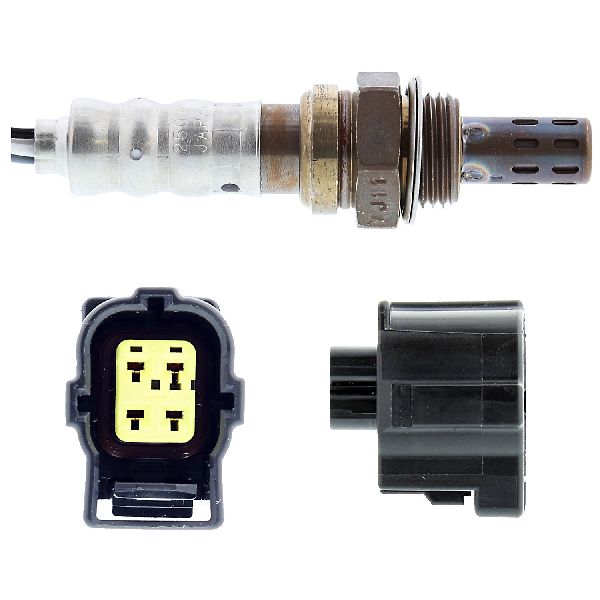
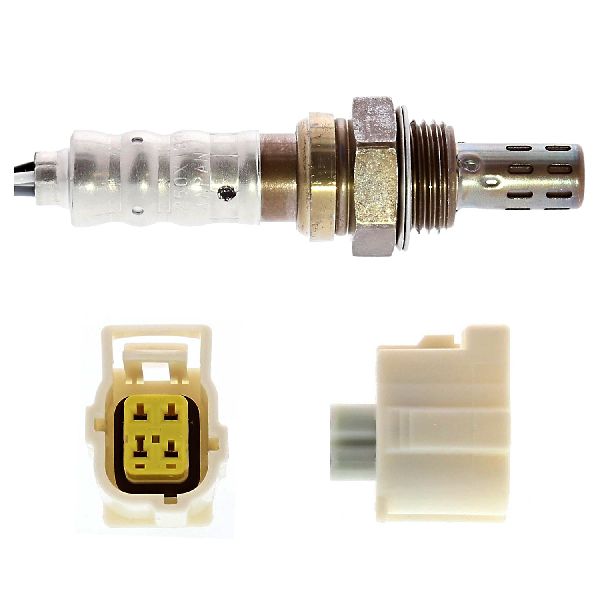
- If you must replace the sensor, use the correct upstream (Bank 1, Sensor 1) part, OEM #68195741AA, and choose a reputable brand like Mopar, Denso, or NTK.
- This code is often accompanied by other, seemingly unrelated codes (like EVAP or crankshaft sensor codes), which is a strong sign that the root cause is a PCM software glitch.
What's Unique About the 2015-2017 Chrysler 200
For this specific Chrysler 200 and its platform mates with the 2.4L engine, P0133 is not a simple 'replace the sensor' issue. Chrysler released multiple Technical Service Bulletins (TSBs) acknowledging that overly sensitive software in the Powertrain Control Module (PCM) can falsely trigger this code, often bundled with other unrelated codes. Furthermore, some 2016 models are covered by Emissions Recall U90, which replaces the catalytic converter and both oxygen sensors for free to solve an emissions issue that can be related to this code. Therefore, checking for a required software update or an open recall is the critical first step before any parts are purchased.
Symptoms You May Notice
- Check Engine Light is on
- Reduced fuel economy
- Rough or uneven idling
- Engine hesitation or sluggish acceleration
- Failing an emissions test
- Replacing the oxygen sensor before checking for required PCM software updates. Many owners replace the part only to have the code return because the root cause was software-related.
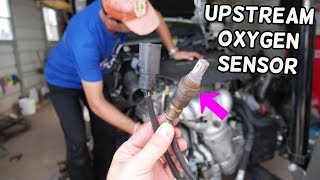
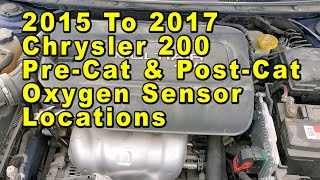
- Replacing the downstream (Sensor 2) oxygen sensor instead of the upstream (Sensor 1) sensor. 🎬 Watch: Locate your upstream and downstream sensors here.
- Using a cheap, low-quality universal oxygen sensor. Owners often report that only OEM (Mopar) or high-quality brands like Denso or NTK will perform to the PCM's expectations and keep the code from returning.
Most Likely Causes
- Outdated Powertrain Control Module (PCM) Software 🔴 High Probability Chrysler issued TSBs #18-023-16 REV. C and #18-022-17 REV. A specifically for the 2015 Chrysler 200 2.4L to correct overly sensitive diagnostic logic that improperly sets code P0133. This is a well-documented issue across the entire 2.4L MultiAir engine family.
How to confirm: Contact a Chrysler dealership or a qualified shop with your VIN. They can check their system to see if the software updates from the TSBs are available for your vehicle and have not yet been performed. The presence of other codes like P0456, P0335, P2172, or P1607 alongside P0133 is a strong indicator that the software flash is needed.
Typical fix: The PCM must be reprogrammed ('flashed') with the latest software. This is a dealer or professional-level repair requiring a wiTECH scan tool.
Est. part cost: $0 - Failing Upstream Oxygen Sensor 🟡 Medium Probability The sensor is a wear-and-tear item. Contamination from carbon, oil (especially on these oil-consuming engines), or coolant over time can degrade the sensing element, causing it to respond slowly.
How to confirm: If software is confirmed to be up-to-date, use a scan tool with live data to monitor the Bank 1 Sensor 1 voltage. At operating temperature, a healthy sensor's voltage should fluctuate rapidly and consistently between approximately 0.1V and 0.9V. A slow or 'lazy' switching sensor is faulty.
Typical fix: Replace the Bank 1, Sensor 1 (upstream) oxygen sensor. An O2 sensor socket (22mm or 7/8") is requ 🎬 Watch this step-by-step upstream O2 sensor replacement guide.ired.
Est. part cost: $50-$180 - Exhaust Leak ⚪ Low Probability
How to confirm: Visually inspect the exhaust manifold and the pipe leading to the sensor for cracks or broken studs. Listen for a 'ticking' or 'puffing' sound from the engine bay, especially on a cold start, which can indicate a leak. An exhaust leak allows outside air to enter the exhaust stream, which can trick the O2 sensor and cause it to read incorrectly.
Typical fix: Repair the leak. This may involve replacing a gasket, tightening bolts, or welding a crack in the manifold or pipe.
Est. part cost: $10-$200
Rare But Worth Checking
- Wiring or Connector Issue: A damaged wire or corroded connector pins for the O2 sensor can add resistance to the circuit, slowing down the signal to the PCM. Inspect the harness for any visible damage, especially where it might contact hot exhaust components.
Diagnosis Steps
- Connect an OBD-II scanner to confirm P0133 is the primary code. Note any other codes present, especially P0456, P0335, P2172, P1607, or P2610.
- CRITICAL FIRST STEP: Contact a Chrysler dealership with your VIN. Ask them to check for two things: 1) Emissions Recall U90 and 2) TSBs 18-023-16 or 18-022-17. If your vehicle is eligible for the recall or a software update, this is the most likely fix and should be performed first.
- If no recall or software update is needed, inspect the exhaust manifold and front pipe for signs of a leak (soot trails, cracks) or audible ticking sounds.
- If no leaks are found, use a scan tool to observe the live data for the 'O2 Sensor Voltage B1S1'. At operating temperature and steady RPM, the voltage should switch rapidly. If it is slow, stuck, or lazy, the sensor has failed.
- Inspect the oxygen sensor's wiring harness and connector for any signs of melting, corrosion, or damage.
- If the sensor signal is slow and all other checks are negative, replace the upstream oxygen sensor with an OEM Mopar, NTK, or Denso part to avoid compatibility issues.
Parts You'll Likely Need
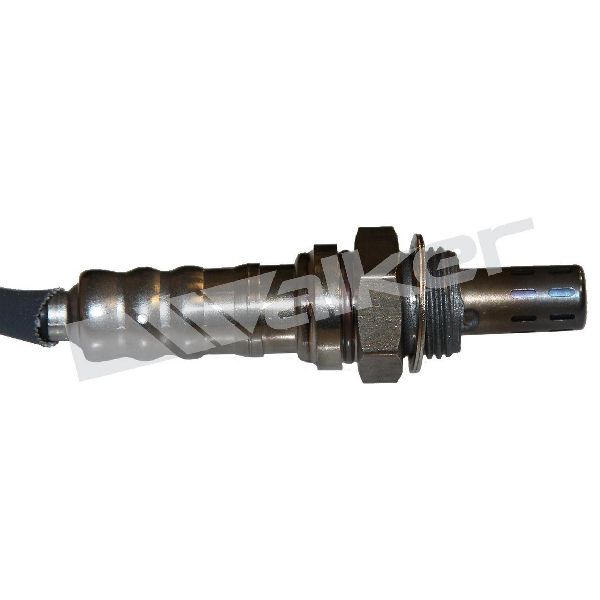
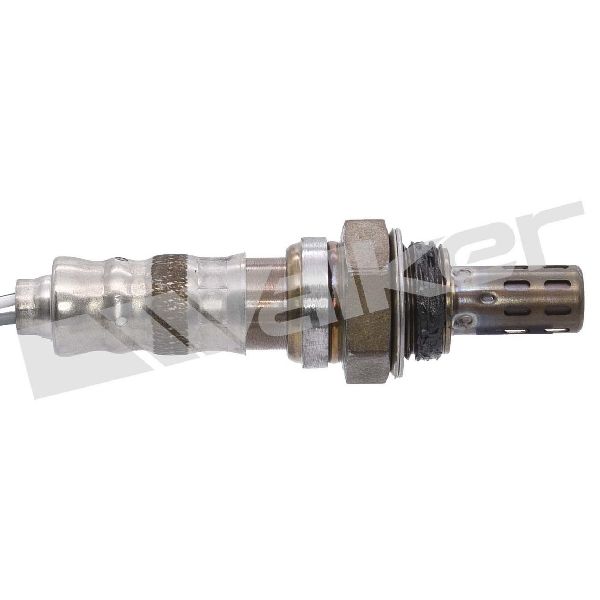
- Upstream Oxygen Sensor
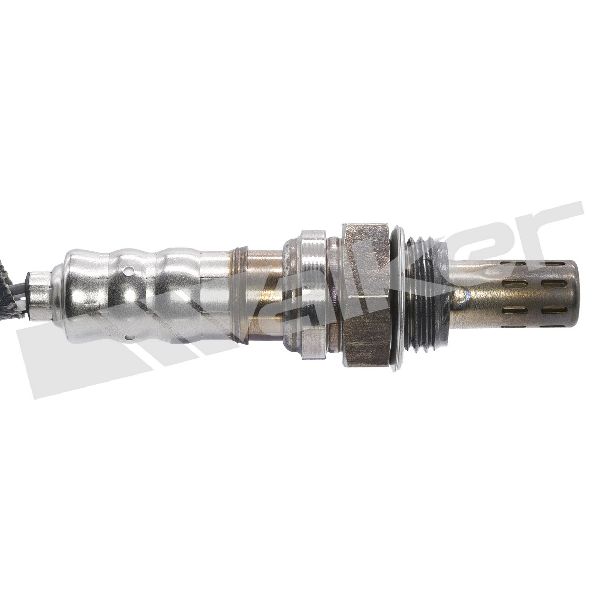
(OEM #68195741AA)— This is the sensor (Bank 1, Sensor 1) that the code directly identifies. If software and exhaust leaks are ruled out, this sensor is the component that has failed. It is highly recommended to use OEM Mopar or OEM-supplier (NTK/Denso) parts, as many owners report issues with aftermarket brands not meeting the PCM's strict response time requirements.
Trusted brands: Mopar, Denso, NGK/NTK, Bosch
OEM price range: $95-$180
Aftermarket price range: $50-$120
Related Codes That Often Appear With This One
- P0456 — EVAP System Small Leak. This code is specifically listed alongside P0133 in Chrysler's TSBs (like 18-023-16) as being resolved by the same PCM software update.
- P0335 — Crankshaft Position Sensor Circuit. This is another code often listed in the same TSBs as P0133, indicating a software glitch rather than multiple hardware failures.
- P2172 — High Airflow/Vacuum Leak Detected. Also listed in the software update TSBs, suggesting a calibration issue in how the PCM interprets sensor data.
- P1607 / P2610 — PCM Internal Shutdown Timer Rationality. These codes are classic indicators of the software bug addressed by the TSBs. Seeing them with P0133 makes the software update the almost certain fix.
Technical Service Bulletins (TSBs) & Recalls
- 18-023-16 REV. C: Flash: Powertrain Control Module (PCM) Updates for 2015 Chrysler 200 2.4L, lists P0133 as a covered code.
- 18-022-17 REV. A: Flash: Powertrain Control Module (PCM) Updates for 2015 Chrysler 200 2.4L, also lists P0133 as a covered code.
- Emissions Recall U90 (NHTSA ID: 10226018): For certain 2016 models, involves replacement of catalyst, O2 sensors, and software updates.
Platform-Specific Known Issues
- Emissions Recall U90: Affects some 2016 models with the 2.4L engine. The fix for excessive emissions includes replacing the catalytic converter, both oxygen sensors, and updating the PCM/TCM software, which directly addresses all likely causes of P0133. Owners should check their VIN for eligibility before paying for any repairs.
- PCM Software Glitches: TSBs 18-023-16 and 18-022-17 were released for 2015 models to fix overly sensitive software that could incorrectly trigger P0133 and other codes. This is the most common cause for this code on this specific vehicle.
Mechanic-Grade Diagnostic Values
- Upstream O2 Sensor Heater Element Resistance — expected: 4 to 6 Ohms at 68°F (20°C). Some sources cite a wider range of 2 to 30 Ohms for similar engines.. Failure: Infinite resistance (Open Loop/OL) or zero resistance indicates a failed heater element.
- Upstream O2 Sensor Signal Harness Resistance — expected: Less than 0.5 Ω from the sensor connector to the PCM pin.. Failure: Resistance greater than 0.5 Ω can dampen the signal and cause a slow response code even with a good sensor.
- O2 Sensor Heater Circuit Voltage Supply — expected: Battery voltage (~12V) at the harness connector with the key on, engine off.. Failure: Low or no voltage points to a problem in the supply circuit (fuse, relay, wiring) rather than the sensor itself.
- Scan Tool Mode $06, Test ID for O2 Sensor Switching — expected: The component value returned by the scan tool should be below the maximum threshold set by the PCM.. Failure: If the test value exceeds the maximum limit, it provides a non-graphical confirmation that the sensor's switching speed is too slow, validating the P0133 fault.
Scan Tool Commands That Help
- wiTECH (Chrysler OEM): Reprogram PCM / Flash Module — This is the specific function required to perform the software update outlined in TSBs 18-023-16 and 18-022-17, which is the most common fix for P0133 on this vehicle, especially when other codes are present.
- Advanced Aftermarket Scanner: Reset Fuel Trims / Clear Adaptive Memory — After replacing a faulty O2 sensor or fixing an exhaust/vacuum leak, this function should be used to force the PCM to immediately relearn the fuel strategy with the new, correct sensor data, rather than waiting for the slow adaptive learning process.
Wiring & Ground Locations
- G905A — In the engine compartment, below the left (driver's side) headlight assembly.. This is a primary engine compartment ground point. A poor, corroded, or loose connection here can introduce electrical noise and voltage offsets, causing a variety of sensor faults, including slow or erratic O2 sensor readings.
- Engine Ground Strap — A braided strap often connected from the engine block or cylinder head to the chassis or firewall. One is visible connected to the top of the passenger-side engine mount.. The O2 sensor circuit relies on a solid engine ground. If this strap is corroded, frayed, or broken, the sensor's signal can become unstable or slow, directly leading to a P0133 code. This is often overlooked during diagnosis.
- Upstream O2 Sensor Connector (C103) — The harness-side connector for the upstream O2 sensor, easily accessible at the top front of the engine.. This is the primary point for testing. The 'O2 RETURN (UPSTREAM)' signal wire is on Pin 11 of the PCM C2 connector (Tan/Yellow wire), allowing for continuity checks from this connector back to the PCM.
Real Owner Repair Stories
- General FCA Platform Experience (Dodge Dart with shared 2.4L engine) (Dodge Dart, unknown year/mileage) — Check Engine Light with P0141 (Heater Circuit code, but illustrates a relevant electrical principle for P0133).
❌ Tried (didn't work) Replacing the O2 sensor with a universal/aftermarket part.
✅ What actually fixed it The aftermarket sensor's heater had a resistance of 4.5 ohms, while the required OEM sensor was 14.5 ohms. The PCM detected this difference and set a fault. Replacing it with the correct OEM-spec sensor resolved the code, highlighting that the PCM is calibrated for a specific sensor resistance.
OEM Part Supersession History
68087364AA→68195741AA— Part number consolidation and potential design revision by Mopar.
Heads up: 68195741AA is the correct and current part number for the 2015-2017 Chrysler 200 2.4L. Using the older number is not advised.
Model Year Variations Within This Range
- 2016: Some 2016 models are covered by Emissions Recall U90, which provides a free replacement of the catalytic converter and both O2 sensors, plus a PCM software update. This is a comprehensive fix not offered for 2015 or 2017 models.
- 2015: The 2015 model year is the primary target for TSBs 18-023-16 and 18-022-17, which address the software glitch causing false P0133 codes. While the issue may exist on other years, the TSBs are specifically written for the 2015 model.
Diagnostic Flowchart
Other Known Issues on This Vehicle
Issues unrelated to this code that are worth knowing about as an owner of this generation:
- Excessive Oil Consumption 🔴 High — Widespread issue affecting many 2.4L Tigershark engines. Owners report consuming a quart of oil every 1,000-2,000 miles. The problem stems from piston rings that don't seal properly, allowing oil to burn in the combustion chamber. This can lead to engine stall if oil levels get critically low, especially during turns. (Ref: Subject of class-action lawsuits (e.g., Case No. 2:20-cv-11924 in E.D. of Michigan).)
- ZF 9-Speed Transmission Problems 🔴 High — Very common, especially in the 2015 model year. Symptoms include harsh/abrupt shifting, lurching, hesitation, and unexpectedly shifting into neutral while driving. Many issues were addressed via software updates (TSBs) and a recall for a wiring harness issue. (Ref: Recall S55 / NHTSA 16V-529 (wiring harness); numerous TSBs for software updates.)
- Electronic Throttle Body (ETB) Failure 🟠 Medium — A common failure point that causes the 'Electronic Throttle Control' warning light (a lightning bolt symbol) to illuminate, often putting the car into 'limp mode' with reduced power. Symptoms include stalling, rough idle, and surging.
- Engine Stalling / Shutting Off While Driving 🔴 High — Widely reported problem, particularly in the 2015 model. Can be caused by low oil levels due to consumption, transmission faults, or throttle body issues. This is a significant safety concern. (Ref: Multiple underlying causes, some addressed by recalls/TSBs for transmission and oil consumption.)
Used vs. New Parts: Buying Guide for This Vehicle
When a used part is the smart pick: For this repair, a used part is almost never a smart choice. The primary failure component, the oxygen sensor, is a wear-and-tear item with a finite lifespan. Installing a used sensor is likely to lead to the same failure in a short time.
Donor-vehicle mileage cap: roughly under 20000 miles for the part to have meaningful remaining life.
What to inspect on the donor part:
- If forced to use a used sensor for temporary diagnosis, choose one from a low-mileage, collision-damaged vehicle.
- Avoid sensors from vehicles with known engine issues, high mileage, or visible signs of oil burning (soot in tailpipe).
- Inspect the sensor tip; it should be light gray, not covered in black soot or white deposits.
OEM-only on this vehicle (don't cheap out):
- Oxygen Sensor: Due to the PCM's sensitivity to heater resistance and response time, only Mopar (OEM) or the original equipment suppliers (NTK/Denso) are recommended.
- Powertrain Control Module (PCM): If the PCM is diagnosed as faulty, it must be replaced with a unit that is professionally programmed to the vehicle's specific VIN and options.
Aftermarket brands forum-validated for this vehicle:
- NTK (often the OEM supplier for Chrysler)
- Denso
Brands owners have reported issues with on this vehicle:
- Universal-fit sensors (require splicing and are a common failure point).
- Unbranded, low-cost sensors from online marketplaces, as they often have incorrect heater resistance or slow response times out of the box.
Real Owner Stories
Aggregated from forums and TSBs cited above. Mileages and costs reflect what owners reported in those sources.
2015 Chrysler 200 2.4L
Symptoms: The owner replaced the oxygen sensor multiple times but the P0133 code kept returning.
What fixed it: Discovering and performing the TSB for the PCM flash (software update).
Source hint: 200forums.com - 'P0133 - O2 Sensor Circuit Slow Response Bank 1 Sensor 1'
2015 Chrysler 200 2.4L
Symptoms: Engine stalling during turns.
What fixed it: The issue was linked to severe oil consumption fouling engine components and causing low oil levels.
Source hint: Reddit (r/MechanicAdvice) - '2015 Chrysler 200 stalls'
2016 Chrysler 200 2.4L
Symptoms: Excessive emissions and P0133 code.
What fixed it: Emissions Recall U90, which included replacing the catalytic converter, O2 sensors, and updating software.
Source hint: Emissions Recall U90 (NHTSA ID: 10226018)
Related OBD-II Codes
Frequently Asked Questions
Does TSB 18-023-16 or 18-022-17 apply to my 2015 Chrysler 200 2.4L?
Is there a recall for the P0133 code on the 2016 Chrysler 200?
Can I use any aftermarket oxygen sensor to fix this code?
Why is my Chrysler 200 stalling and throwing a P0133 code?
How can I confirm if my car needs a software update instead of a new sensor?
What tool is required to perform the software fix mentioned in the TSBs?
Helpful Videos
We Have This Part in Stock


The information in this article is provided for general reference and educational purposes only. Vehicle specifications, procedures, and part compatibility can vary by production date, trim level, and region. Always consult your vehicle's factory service manual and verify part numbers before purchasing or performing repairs. Safety-critical components such as airbags, seat belts, and braking systems should be installed by a qualified professional.
- Chrysler 200:
- 🎬 Helpful Videos
- 🛍️ Shop This Part
- What's Unique About the 2015-2017 Chrysler 200
- Symptoms You May Notice
- Most Likely Causes
- Rare But Worth Checking
- Diagnosis Steps
- Parts You'll Likely Need
- Related Codes That Often Appear With This One
- Technical Service Bulletins (TSBs) & Recalls
- Platform-Specific Known Issues
- Mechanic-Grade Diagnostic Values
- Scan Tool Commands That Help
- Wiring & Ground Locations
- Real Owner Repair Stories
- OEM Part Supersession History
- Model Year Variations Within This Range
- Diagnostic Flowchart
- Other Known Issues on This Vehicle
- Used vs. New Parts: Buying Guide for This Vehicle
- Real Owner Stories
- 2015 Chrysler 200 2.4L
- 2015 Chrysler 200 2.4L
- 2016 Chrysler 200 2.4L
- Related OBD-II Codes
- Frequently Asked Questions
- 🎟️ Get 5% Off