

OBD-II Code P2610: Engine Computer Not Tracking 'Off' Time
What P2610 means, why it triggers, and how to fix it
- Code P2610 indicates the engine computer's internal 'off' timer has failed, preventing the vehicle from running required emissions self-tests.
- Over 80% of P2610 codes stem from a weak battery dropping below 10.5V during cranking or outdated factory software, rather than a failed computer.
- Always perform a professional battery load test and check for manufacturer Technical Service Bulletins (TSBs) before authorizing a $1,000+ ECM replacement.
- For 2014-2018 Toyota, Lexus, Honda, and Chrysler models, the official fix is typically a 1-hour dealer software update costing $100-$250.
What Does P2610 Mean?

Your car's Engine Control Module (ECM) uses an internal clock to time how long the engine remains shut off. Code P2610 indicates this timer has malfunctioned. The computer relies on this timer to run critical emissions self-tests (which require a specific 'soak time') and to adjust fuel and ignition timing for the next startup.
Technical definition: ECM/PCM Internal Engine Off Timer Performance
🎬 Watch: A complete overview of P2610 causes and fixes.Can I Drive With P2610?
Yes, But With Caution. Yes, you can drive, but it is not recommended long-term. The vehicle will automatically fail emissions tests. While the code rarely causes immediate drivability issues, the underlying fault can escalate into unpredictable stalling or a no-start condition.
Common Causes

- Weak or Failing Battery (Very Common) — Low system voltage from an aging battery is the leading cause. The ECM's internal memory requires constant, stable power. Voltage drops below 10.5V during cranking, especially in cold weather, corrupt this memory and trigger the code.
- Outdated ECM/PCM Software (Very Common) — The ECM software often contains bugs or overly sensitive logic. Manufacturers frequently release software updates (reflashes) to correct this, serving as the primary fix for many Toyota, Lexus, Honda, and Chrysler vehicles. 🎬 Watch: Diagnosing the P2610 timer malfunction on a Honda.
- Improper Power-Down or Reset Procedure (Common) — Disconnecting the battery, jump-starting the vehicle, or clearing codes improperly prevents the ECM from saving its memory. This triggers a temporary P2610 that usually resolves after clearing the code and completing a drive cycle.
- Internal ECM/PCM Failure (Common) — The computer itself can fail due to burnt circuits, failed capacitors, water intrusion, or electrostatic surges. This is the confirmed root cause for many 2015-2019 Subaru models and requires a full module replacement.
- Faulty Charging System (Alternator) (Less Common) — A failing alternator that undercharges or overcharges the battery creates an unstable voltage supply, confusing the ECM and triggering the timer fault.
- Wiring or Connector Issues (Less Common) — Corroded power wires, poor ground connections, or aftermarket electronics interfering with the ECM interrupt power, causing the internal timer to reset improperly.
- Faulty Engine Coolant Temperature (ECT) Sensor (Rare) — The ECM cross-references its timer with the Engine Coolant Temperature (ECT) sensor to verify engine cooling. A skewed ECT sensor provides conflicting data, contributing to the timer fault.
Symptoms

- Check Engine Light is On — This is the most common, and often the only, symptom you will notice.
- Failed Emissions Test — The vehicle cannot complete its internal readiness monitors because the timer is offline, resulting in an automatic failure of a smog inspection.
- Hard Starting or Long Crank Times — The engine takes longer than usual to start because the computer lacks the correct timer information to prepare the fuel mixture for a cold start.
- Auto Start/Stop System Malfunction — On equipped vehicles, the engine fails to shut off at stops or behaves erratically.
- Instrument Cluster Clock Resetting — The dashboard or infotainment clock resets itself, confirming a systemic power supply issue.
- Intermittent Stalling or No-Start — A severe internal ECM fault causes the engine to shut off unexpectedly while driving or fail to start entirely.
Diagnostic Flowchart
Tap your situation to follow the diagnostic path that matches what you're seeing on this code.
Common Fixes & Costs
- Replace Vehicle Battery
— Parts: $150-$300, Labor: $50-$100, ~0.5 hr book time
(DIY)
Toyota Camry (2017): OEM 28800-YZZUF (Alt: DieHard Gold (24F-6), Duralast Gold (35-DLG))
Subaru WRX (2018): OEM SOA821B400 (Alt: Optima YellowTop (D35), Super Start Extreme (35EXT)) - Update or Reprogram ECM/PCM — Parts: $0, Labor: $100-$250, ~1.0 hr book time (Professional)
- Repair Wiring or Ground Connection — Parts: $10-$50, Labor: $150-$300, ~1.5 hr book time (Intermediate)
- Replace ECM/PCM
— Parts: $600-$1500, Labor: $150-$400, ~2.0 hr book time
(Professional)
Subaru WRX (2018): OEM Must be latest part number specified by dealer per TSB 11-191-19R. (Alt: Not recommended; OEM updated part is required for the fix.)
Dodge Grand Caravan (2016): OEM 68273488AB (Alt: Pre-programmed OEM units from specialists like Flashmasters.)
Used vs. New Parts: Buying Guide
When a used part is worth it: For an ECM/PCM, a used unit from a reputable dismantler is a cost-effective option for older, high-mileage vehicles where a new OEM part is prohibitively expensive. Match the part number exactly.
Donor-vehicle mileage cap: roughly under 100000 miles for the part to have meaningful remaining life.
Donor quality checklist:
- Verify the part number on the used ECM is an exact match to your original.
- Purchase from a supplier that offers a warranty (30-90 days is common) and tests their modules.
- Avoid units from flood-damaged or severely wrecked vehicles.
Decision logic:
- If A Technical Service Bulletin (TSB) exists that calls for a software update or an improved part number → Buy a new OEM part with the updated software/hardware. A used part has the same original flaw.
- If Vehicle is less than 10 years old and the budget allows → Buy a new or remanufactured ECM. Remanufactured units are fully tested and often come with a 1-year warranty.
- If Vehicle is over 10 years old, a budget-friendly repair is the priority, and no TSB applies → A used ECM with a matching part number and a short-term warranty is an acceptable risk.
Warranty tradeoff: Used parts typically have a 30-90 day warranty covering only the part itself. Remanufactured units carry a 1-year warranty. New OEM parts have the best warranty but at the highest cost.
Worst-case if a used part fails: $300-$600 if a used ECM is faulty or requires unexpected programming, including repeat diagnostic and labor fees.
What Happens If You Wait — Timeline
- Immediate: Check Engine Light illuminates. The car's readiness monitors cannot set, resulting in an automatic failure of any emissions test. No drivability symptoms are noticeable. (MPG impact: 0%% · Added cost: $0-$100 in potential emissions re-test fees.)
- 1-3 months: If the cause is a weak battery, you experience occasional hard starting or long crank times, especially in cold weather. Startup fuel calculations are slightly off. (MPG impact: 0-2%% · Added cost: $50-$100 in wasted fuel and increased risk of being stranded.)
- 3-6 months: If the root cause is a failing ECM or alternator, intermittent issues become frequent. This includes unpredictable stalling, no-start conditions, or erratic behavior of other electronic systems. (MPG impact: 2-5%% · Added cost: $200+ for a tow plus the cost of diagnosing the escalating primary failure.)
- 6+ months: Complete failure of the root-cause component. If it was the alternator, it damages the battery. If it was the ECM, the vehicle is unreliable and fails to start. (MPG impact: 5-10%% · Added cost: $800-$2500+ to cover towing, diagnostics, and replacement of the primary failed part and secondary damage.)
Cost of Not Fixing It
- Immediate: Automatic failure of any state emissions or smog inspection because readiness monitors cannot be set. (Added cost: $50-$100 in re-test fees.)
- 0-3 months: Potential for unpredictable behavior, including hard starting, long crank times, or erratic auto start/stop functionality. Minor decrease in fuel economy. (Added cost: $20-$50 in wasted fuel.)
- 3+ months: If the root cause is a failing ECM, it leads to intermittent stalling or a no-start condition. If the cause is a failing alternator, it destroys the new battery. (Added cost: $200+ for a tow, plus the escalating cost of the primary failure.)
Diagnosis Steps
- Read Codes & Review Freeze Frame Data
Use an OBD-II scanner to confirm P2610. Check the freeze frame data to see the system voltage when the code set. Look for other codes, such as low voltage (P0562) or a computer fault (P0607), which point directly to the root cause.
Tools: OBD-II Scanner (Beginner) - Inspect and Test the Battery & Charging System
Visually inspect battery terminals for corrosion. Use a multimeter to test battery voltage. A healthy battery reads 12.4-12.7V with the engine off. With the engine running, voltage must be 13.5-14.5V to confirm the alternator is charging.
Tools: Wrench set, wire brush, Multimeter or professional battery tester (Beginner) - Check for Technical Service Bulletins (TSBs)
Search online for your specific vehicle's make, model, year, and 'P2610 TSB'. Manufacturers issue bulletins for known problems with specific fixes, saving immense diagnostic time. This is mandatory for Toyota, Lexus, Honda, Subaru, and Chrysler models.
Tools: Internet access (Beginner) - Verify ECM/PCM Software Version
Use a professional scan tool or visit a dealership to check if the ECM/PCM software is outdated. For many Honda, Toyota, and Chrysler vehicles, a software update (reflash) is the final and correct repair.
Tools: Advanced scan tool (J2534 compatible) or Dealer Software (Professional) - Inspect ECM/PCM Wiring, Fuses, and Connectors
Locate the ECM/PCM and inspect its connectors for corrosion, moisture, or bent pins. Check all fuses labeled 'ECM', 'PCM', 'ECU', or 'Keep-Alive Memory'. Verify the main power and ground connections to the chassis are clean and tight.
Tools: Basic hand tools, contact cleaner, multimeter (Intermediate) - Pro Tip: Perform a Parasitic Draw Test
If the battery dies overnight, a parasitic draw is causing the low voltage that triggers P2610. With the vehicle off, use a multimeter in series with the negative battery cable to measure current draw. A healthy car draws less than 50-85 milliamps after modules sleep.
Tools: Multimeter with milliamp function (Advanced) - Pro Tip: Perform ECM/PCM Voltage Drop Test
A voltage drop test under load checks circuit integrity. With the key on, connect a multimeter between the positive battery post and the ECM's main power pin. A reading above 0.2 volts indicates excessive resistance. Repeat for the ground side; a reading above 0.1 volts is a problem.
Tools: Multimeter, vehicle-specific wiring diagram (Advanced) - Advanced: Test Engine Coolant Temperature (ECT) Sensor
With the sensor disconnected, use a multimeter to measure its resistance. A typical sensor reads 2,000-3,000 Ohms at room temperature and drops to 250-350 Ohms at operating temperature. Compare readings to your vehicle's service manual.
Tools: Multimeter, vehicle-specific ECT resistance chart (Advanced) - Advanced: Analyze Live Scan Tool Data
Monitor live data PIDs. Watch 'Battery Voltage' during engine cranking; a sharp drop below 10V causes memory corruption. Observe 'Engine Coolant Temperature' after a cold soak; it must match ambient air temperature.
Tools: Advanced OBD-II Scanner with Live Data (Advanced) - Consider ECM/PCM Failure
If the battery is strong, software is up-to-date, and wiring is intact, the ECM/PCM has an internal hardware fault. This is the confirmed fix for certain Subaru models and requires module replacement.
Tools: Advanced diagnostic knowledge (Advanced)
When This Code Triggers (Freeze-Frame Conditions)
- Engine State: During initial startup (The code typically sets during the first few seconds after the engine starts, when the ECM checks its internal timer against other sensor data to verify a 'cold start'.)
- System Voltage: Below 10.5V (during crank) (Freeze frame data showing a low voltage reading at the moment the code triggered points directly to a weak battery as the root cause.)
- Key Cycles Since Clear: 2 (The code sets as a pending fault on the first failed timer check and becomes a confirmed, MIL-illuminating code after the second consecutive failure.)
- Related DTCs: P0562, P0607, P0118 (Codes for low voltage (P0562), general module failure (P0607), or ECT sensor faults (P0118) in the freeze frame provide definitive clues to the underlying cause.)
Related Codes
- P0607 — Control Module Performance. P2610 is a specific timer issue, while P0607 indicates the entire processor failed a self-check. If you see P0607 with P2610, the ECM is faulty and needs replacement.
- P0562 — System Voltage Low. This code appears with P2610 because a weak battery or failing alternator is the root cause for both. Diagnose the voltage issue first; fixing it clears P2610.
- P0606 — ECM/PCM Processor Fault. Similar to P0607, this is a general and severe internal computer error. If you see P0606 with P2610, the ECM is the culprit.
- P0118 — Engine Coolant Temperature (ECT) Sensor Circuit High. The ECM compares its internal timer to the ECT sensor reading. If the ECT sensor is faulty, it sends conflicting data and contributes to P2610.
Climate & Environmental Factors
- Cold Weather: At temperatures below 32°F (0°C), a battery's chemical efficiency drops, reducing power output. Simultaneously, cold engine oil increases the starter's power demand. This combination causes system voltage to drop low enough during cranking to corrupt the ECM's keep-alive memory, triggering P2610.
How to Talk to a Mechanic About This Code
Say this: "I have an OBD-II code P2610. My research indicates this is often caused by a weak battery, a wiring issue, or an ECM software bug. Before diagnosing the ECM itself, could you please start by load-testing the battery and checking for any manufacturer TSBs related to a PCM reflash for this code?"
This signals you are an informed consumer and steers the diagnostic process toward the most common and least expensive fixes first. It prevents a shop from immediately quoting an expensive ECM replacement.
Avoid saying:
- 'My check engine light is on, can you just fix it?'
- 'I think I need a new computer.'
- 'Just do whatever you think is right.'
Questions to ask before authorizing the repair:
- If you're recommending a new battery, did the old one fail a load test? What were its voltage and CCA readings?
- If you're recommending a software reflash, can you tell me the TSB number that applies to my vehicle?
- If you're recommending an ECM replacement, what specific tests did you perform to rule out the battery, charging system, wiring, and software?
Where to Take It: Dealer vs Independent vs Chain
- Dealer:
Recommended for specific makes with known software/hardware TSBs. This is often the fastest and most cost-effective path.
Best for: Vehicles under warranty (powertrain or emissions)., Toyota, Lexus, Honda, or Chrysler vehicles, where a software reflash is the most common fix and requires dealer tools., Subaru models with a known TSB for ECM replacement.
Downsides: Typically highest labor rate., Less willing to diagnose wiring issues vs. simply replacing a module. (Typical cost: +25% vs. baseline) - Independent Shop:
A good choice for initial diagnosis (battery, alternator, wiring) but cannot perform the final repair if a software update is needed.
Best for: Out-of-warranty vehicles where the cause is likely a battery or wiring issue., Getting a second opinion if a dealer recommends an expensive ECM replacement without clear justification.
Downsides: Lacks the specific manufacturer software to perform a necessary ECM reflash., Quality varies; choose a shop known for strong electrical diagnostics. (Typical cost: +0% vs. baseline) - Chain Shop:
Acceptable ONLY for a free battery test. AVOID for any further diagnosis or repair of code P2610.
Best for: Free or low-cost battery and alternator testing.
Downsides: Technicians lack the expertise for in-depth electrical diagnosis beyond a battery swap., High risk of misdiagnosis or being sold parts you don't need. (Typical cost: -10% vs. baseline)
When to Walk Away From the Repair
If the estimated repair cost for a confirmed ECM/PCM failure exceeds 40-50% of your car's private-party value, consider selling or trading it in.
- Car worth $4000, fix is $1500: Walk away. The repair cost is too high relative to the car's value.
- Car worth $12000, fix is $1500: Fix it. This repair cost is well within a reasonable budget for a car of this value.
- Car worth $8000, fix is $200: Fix it. If the diagnosis is just a weak battery or a simple reflash, the repair is a small fraction of the car's value.
What Scan Tool You Need for This Code

Minimum: A scanner that reads and clears codes, and displays both Freeze Frame data and Live Data PIDs (Parameter IDs).
A $20 reader only shows the code. To diagnose P2610, you must see the system voltage in the freeze frame data when the code set, and watch live battery voltage during engine cranking.
Budget: ANCEL AD310 / Motopower MP69033 (~$50) — Reads codes, shows freeze frame data, and displays basic live data streams like system voltage and coolant temperature. Enough to perform initial checks for a weak battery.
Mid-range: BlueDriver Pro / Foxwell NT510 Elite (~$120) — Graphs live data, making spotting voltage drops during cranking much easier. Provides access to a database of reported fixes and TSBs.
Professional: Autel MaxiCOM MK808BT / MK808S (~$450-600) — Provides full-system diagnostics and identifies the specific software version on the ECM, which is necessary to confirm if a dealer reflash TSB applies.
Rent vs buy: For a one-time diagnosis, auto parts stores have a free loaner tool program to read the code and check freeze frame data. If you plan to do your own maintenance, buying a midrange scanner for $100 is a worthwhile investment.
How to Clear the Code After You Fix It
- Perform the specified repair (e.g., replace battery, update software).
- Use an OBD-II scan tool to 'Clear DTCs' or 'Reset Codes'.
- Perform a complete drive cycle to allow the readiness monitors to run.
Drive cycle (~30 minutes): A generic drive cycle includes: 1) Cold start and idle for 2-3 minutes. 2) Drive in stop-and-go city traffic for 15 minutes with several accelerations and decelerations. 3) Drive at a steady highway speed (55-60 mph) for 10 minutes. 4) Allow the vehicle to cool down completely (several hours) to complete the EVAP monitor.
Readiness monitors affected: EVAP System Monitor, Catalyst Monitor, Oxygen (O2) Sensor Monitor
Before emissions retest: drive at least 100 miles to fully set monitors.
Watch out for:
- Disconnecting the battery clears the code but resets all readiness monitors, guaranteeing an immediate emissions test failure.
- If the underlying cause is not fixed, the code returns after two key cycles.
- Not completing the full drive cycle leaves readiness monitors 'Not Ready', which is an automatic fail in most states.
Will This Fail Emissions / State Inspection?
Yes — this code typically fails an OBD-II emissions inspection.
- California: A P2610 code is an automatic failure. The Check Engine Light must be off, and all required OBD-II readiness monitors must be set to 'Ready'.
- New York: The NYS DMV inspection includes an OBD-II scan. An active P2610 code causes the vehicle to fail the emissions portion of the inspection.
- Texas: In the 17 counties requiring emissions testing, a vehicle fails if the Check Engine Light is on for a code like P2610 or if the OBD-II readiness monitors are not complete.
Most Commonly Affected Vehicles
- Toyota / Lexus Camry, Sequoia, Tundra, 4Runner, Avalon, Corolla, RAV4, Highlander, Venza, Yaris / IS, CT, ES (2014-2018) — A widespread software logic issue is the cause. Toyota/Lexus issued multiple TSBs advising a dealer software update. The ECM should not be replaced.
- Subaru Forester (2.0L DIT), WRX (2015-2019) — TSB 11-191-19R was issued for an internal ECM fault caused by electrostatic surges. The only permanent fix is replacing the ECM with an updated part.
- Honda / Acura Accord, Civic / Various models (2006-2015) — This code is commonly caused by outdated ECM/PCM software. A software update from a dealership is the typical repair. On some Acura models, P2610 is caused by water damage to the PCM.
- Chrysler / Dodge 200, 300, Town & Country / Grand Caravan (2013-2016) — A known software glitch is the primary cause. TSBs 18-070-20 and 18-073-20 call for a PCM software update (reflash).
- Ford Expedition, F-150, Lincoln Navigator (2009-2015) — TSB ASI-44707 notes this code appears from improper PCM shutdown (e.g., after a battery disconnect). A simple battery disconnect/reconnect resolves temporary glitches.
- Chevrolet / GMC Aveo, Cruze, Sonic, Silverado, Equinox / Sierra, Yukon, Acadia (2008-2018) — This code is caused by internal ECM failure or wiring harness issues. On the Aveo, it links to the ECM clock not synchronizing with the EVAP system timer.
- Mazda CX-5, Mazda3 (2017-2025) — There is a strong correlation between this code and a weak battery during cold weather. Replacing the original equipment battery resolves the issue permanently.
- Hyundai / Kia Creta, i20, Tucson, Elantra / Various (2015-2021) — These models are prone to engine off timer malfunctions triggering P2610, pointing to an outdated program, wiring fault, or internal ECM issue.
Manufacturer-Specific Notes

- Toyota / Lexus: For 2014-2018 models, P2610 is almost guaranteed to be a software issue. Multiple TSBs call for an ECM software update, not a replacement. Check for Federal Emission Warranty coverage before paying for repairs.
- Subaru: For 2015-2019 models with the 2.0L DIT engine, P2610 is a known hardware flaw in the ECM documented in TSB 11-191-19R. The only permanent fix is replacing the ECM.
- Chrysler / Dodge: On vehicles like the Chrysler 200/300 and Dodge Grand Caravan, P2610 is a software bug. TSBs exist to update the PCM software, which resolves other codes like P0335 simultaneously.
- Honda / Acura: The most common fix for P2610 on models like the Accord and Civic is a software update (reflash) of the ECM/PCM performed at a dealership. On Acuras, check for water damage in the passenger footwell near the PCM.
- Ford: On trucks and SUVs like the F-150 and Expedition, P2610 sets simply by disconnecting the battery or not allowing the PCM to fully power down before a reset. This is documented in TSB ASI-44707.
Real Owner Stories
2017 Mazda CX-5 at 60K miles - The Simple Battery Fix
Check Engine Light with code P2610 appeared during the first cold snap of winter. The car had slightly slower cranking but otherwise ran normally.
What they tried:
- Took the car to an auto parts store, where a basic test showed the battery was 'good'.
- Cleared the code, but it returned the next morning.
- Read online forums suggesting the original battery was a common culprit despite passing simple tests.
Outcome: Replaced the 4-year-old original battery with a new EFB type battery for $250. The code was cleared and did not return. The engine cranked noticeably faster on cold starts.
Lesson: A battery can be too weak to reliably power all modules during a cold start but still pass a simple voltage test. If the battery is over 3-4 years old, replacing it is often the fastest fix for P2610.
2016 Toyota Camry at 75K miles - The Misdiagnosis Story
P2610 code appeared with no other symptoms. The car ran perfectly fine. The battery was only a year old.
What they tried:
- An independent mechanic confirmed the battery was strong and recommended replacing the ECM for $1,200.
- Owner decided to get a second opinion from a Toyota dealership.
- The dealer service advisor immediately recognized the symptom and checked for Technical Service Bulletins (TSBs).
Outcome: The dealer found Toyota TSB T-SB-0083-16, which prescribed a simple ECM software update. The dealer reflashed the ECM for $150. The code was cleared and never returned.
Lesson: Never replace an ECM for code P2610 on a Toyota, Lexus, Honda, or Chrysler without first checking for software-related TSBs. A dealer reflash is the official, permanent repair.
2018 Subaru WRX at 55K miles - The TSB-Mandated ECM Replacement
P2610 code appeared intermittently, sometimes causing hard starting. The owner lived in a region with frequent thunderstorms.
What they tried:
- Replaced the battery, as it was the most common cause found online. The code returned within a week.
- Paid for a diagnostic at a trusted shop, which found no wiring issues and suggested the ECM might be the cause.
- Before approving the repair, the owner searched specifically for 'P2610 Subaru WRX TSB'.
Outcome: The owner found Subaru TSB 11-191-19R, detailing an internal ECM failure due to electrostatic surges. The bulletin explicitly states the only fix is replacing the ECM with an updated part number. The owner had the dealer replace the ECM for $900, solving the problem permanently.
Lesson: On certain vehicles like the Subaru WRX, P2610 is a known hardware failure. A TSB turns a confusing diagnosis into a clear action plan, preventing wasted money on incorrect repairs.
How to Prevent This Code From Triggering
- Test Battery Health Seasonally (Twice a year (before winter and summer)) — Cold weather reduces a battery's cranking power. A professional load test identifies a weakening battery before it causes voltage-related codes like P2610.
- Use a Battery Tender/Maintainer (For any vehicle stored or not driven for more than a week) — Modern cars have a constant parasitic draw. A maintainer keeps the battery at an optimal charge, preventing deep voltage drops that corrupt ECM memory.
- Follow Proper Battery Disconnect/Reconnect Procedures (Anytime the battery is serviced) — Improper procedures cause voltage spikes. Always disconnect the negative terminal first and reconnect it last to minimize the risk of damaging the ECM.
- Keep Battery Terminals Clean (Annually or as needed) — Corrosion acts as an electrical resistor, causing voltage drops during engine starting. Cleaning terminals ensures a solid connection.
- Inquire About Software Updates During Dealer Service (During routine maintenance visits) — For many makes, P2610 is a known software bug. Asking the service advisor to check for ECM/PCM updates proactively fixes the issue before the code appears.
Frequently Asked Questions
What is an 'engine off timer' anyway?
It is an internal stopwatch inside your car's main computer that starts counting the moment you turn the engine off. The computer uses this time to schedule important emissions tests that require the car to sit for a specific period. If the timer fails, these tests cannot run.
Is it safe to keep driving with code P2610?
Yes, it is generally safe to drive short distances, as the car will likely run normally. However, you will automatically fail an emissions inspection. Ignoring it long-term risks unpredictable stalling or a no-start condition if the underlying cause worsens.
Why shouldn't I immediately replace the ECM for a P2610 code?
Replacing the ECM is an expensive misdiagnosis for this code. The root cause is far more likely to be a weak battery, a poor connection, or outdated software. On many vehicles, the official fix is a simple $150 software update.
My mechanic replaced the battery, and now I have a P2610 code. What happened?
Interrupting the power supply to the ECM by disconnecting the battery causes the internal timer to lose its stored value. This triggers the code on the next startup. Simply clear the code with a scanner; it rarely returns after a battery swap.
Will just clearing the code with my scanner fix the problem?
If the code was a one-time glitch from a voltage spike or a battery disconnect, clearing it provides a permanent fix. However, if an underlying problem like a weak battery or outdated software exists, the code returns after two key cycles.
Why did my P2610 code appear during a cold spell?
Cold weather significantly reduces a battery's power output while increasing the starter's electrical demand. This causes system voltage to drop severely during cranking, scrambling the computer's memory and triggering the code. Replacing an aging battery usually solves this.
Can a jump-start or disconnecting the battery cause this code?
Yes. Jump-starting interrupts the constant power supply to the car's computer and introduces voltage spikes. This resets the internal timer and triggers the code on the next startup, but it can usually be cleared without further repair.
I have P2610 and P0607. What does that mean?
Seeing both codes together strongly indicates a failing ECM/PCM. P2610 is a specific timer problem, while P0607 indicates a general internal performance failure of the computer's processor. When they appear together, the ECM itself requires replacement.
Key Takeaways
- Code P2610 indicates the engine computer's internal 'off' timer has failed, preventing the vehicle from running required emissions self-tests.
- Over 80% of P2610 codes stem from a weak battery dropping below 10.5V during cranking or outdated factory software, rather than a failed computer.
- Always perform a professional battery load test and check for manufacturer Technical Service Bulletins (TSBs) before authorizing a $1,000+ ECM replacement.
- For 2014-2018 Toyota, Lexus, Honda, and Chrysler models, the official fix is typically a 1-hour dealer software update costing $100-$250.
Helpful Videos
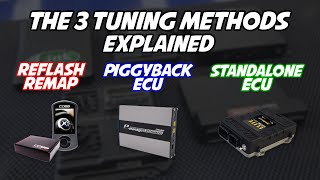
![How To Reflash YOUR ECU | Lesson 1 Of 4 [FREE LESSON]](https://img.youtube.com/vi/5KdbEXYD224/mqdefault.jpg)

The information in this article is provided for general reference and educational purposes only. Vehicle specifications, procedures, and part compatibility can vary by production date, trim level, and region. Always consult your vehicle's factory service manual and verify part numbers before purchasing or performing repairs. Safety-critical components such as airbags, seat belts, and braking systems should be installed by a qualified professional.
- 🎬 Helpful Videos
- What Does P2610 Mean?
- Can I Drive With P2610?
- Common Causes
- Symptoms
- Diagnostic Flowchart
- Common Fixes & Costs
- Used vs. New Parts: Buying Guide
- What Happens If You Wait — Timeline
- Cost of Not Fixing It
- Diagnosis Steps
- When This Code Triggers (Freeze-Frame Conditions)
- Related Codes
- Climate & Environmental Factors
- How to Talk to a Mechanic About This Code
- Where to Take It: Dealer vs Independent vs Chain
- When to Walk Away From the Repair
- What Scan Tool You Need for This Code
- How to Clear the Code After You Fix It
- Will This Fail Emissions / State Inspection?
- Most Commonly Affected Vehicles
- Manufacturer-Specific Notes
- Real Owner Stories
- 2017 Mazda CX-5 at 60K miles - The Simple Battery Fix
- 2016 Toyota Camry at 75K miles - The Misdiagnosis Story
- 2018 Subaru WRX at 55K miles - The TSB-Mandated ECM Replacement
- How to Prevent This Code From Triggering
- Frequently Asked Questions
- What is an 'engine off timer' anyway?
- Is it safe to keep driving with code P2610?
- Why shouldn't I immediately replace the ECM for a P2610 code?
- My mechanic replaced the battery, and now I have a P2610 code. What happened?
- Will just clearing the code with my scanner fix the problem?
- Why did my P2610 code appear during a cold spell?
- Can a jump-start or disconnecting the battery cause this code?
- I have P2610 and P0607. What does that mean?
- Key Takeaways
- 🎟️ Get 5% Off