

P0123 on 2004-2008 Ford F-150 5.4L: Throttle Position Sensor 'A' Circuit High Causes and Fixes
On a 2004-2008 F-150 with the 5.4L V8, code P0123 almost always points to a failed Throttle Position Sensor (TPS). On this truck, the sensor is integrated into the electronic throttle body and is not sold separately. The fix is to replace the entire throttle body assembly, which costs between $100-$250 for the part. Aftermarket parts are available, but many owners report premature failures and recommend using an OEM Motorcraft part to ensure longevity. A PCM relearn procedure is required after i
- P0123 on this F-150 almost always means the entire electronic throttle body has failed and needs to be replaced.
- Symptoms often mimic a serious transmission problem; always diagnose this code before authorizing transmission work.
- Using a genuine Motorcraft replacement part is highly recommended to avoid repeat failures common with cheaper aftermarket units.
- After replacing the throttle body, a PCM relearn procedure is mandatory for proper engine operation.
What's Unique About the 2004-2008 Ford F-150
The 2004-2008 F-150 uses an electronic 'drive-by-wire' throttle system. Unlike older trucks where the Throttle Position Sensor (TPS) was a small, separate, and inexpensive part, on this platform the TPS is integrated directly into the electronic throttle body assembly. This means that if the sensor fails (which is the most common cause of P0123), the entire throttle body must be replaced as a single unit. This makes the repair more expensive and involved than on previous generations.
Symptoms You May Notice
- Check Engine Light is on
- Harsh, erratic, or delayed transmission shifting
- Hesitation or stumbling during acceleration
- Engine goes into 'limp mode' (reduced power or forced idle)
- Unstable or rough idle
- Sudden, unintended acceleration or deceleration.
- Difficulty starting the engine
- Replacing the Accelerator Pedal Position (APP) sensor. P0123 specifically refers to the sensor on the throttle body ('A' circuit), not the sensor at the gas pedal.
- Assuming a major transmission failure. The harsh and erratic shifting is a very common symptom of a bad TPS signal, which directly affects shift strategy. Always diagnose engine codes like P0123 before condemning the transmission.
Most Likely Causes
- Failed Throttle Position Sensor (TPS) / Throttle Body Assembly 🔴 High Probability The TPS is a known high-failure item on this platform due to the internal electronic contacts wearing out over time. Because it is integrated into the throttle body, the entire assembly must be replaced. Many owners report that cheaper aftermarket throttle bodies fail quickly and strongly recommend using a genuine Motorcraft part for this repair.
How to confirm: Use an OBD-II scanner with live data to monitor the TPS voltage (PID: TP V). With the key on and engine off, the voltage will likely be stuck high (at or near 5.0V) and will not change as you press the accelerator pedal. A normal reading should be just under 1.0V at closed throttle and sweep smoothly to ~4.5V at wide-open throttle.
Typical fix: Replace the entire electronic throttle body assembly. After replacement, a PCM 'relearn' procedure is required. This involves disconnecting the negative battery terminal for at least 15 minutes to clear the PCM's memory. After reconnecting, turn the key to the 'ON' position (without starting) for one minute, then start the engine and let it idle for several minutes to allow the PCM to learn the new throttle body's idle and range values.
Est. part cost: $100-$250 - Wiring Harness or Connector Issue 🟡 Medium Probability The wiring harness near the engine is exposed to heat and vibration, which can lead to chafing, corrosion, or loose pins in the connector over time. The harness can rub against engine brackets or the firewall.
How to confirm: Visually inspect the wiring and connector at the throttle body for any signs of damage, corrosion, or loose connections. With the engine running, carefully wiggle the connector to see if it affects the idle. Use a multimeter to check for a stable 5V reference and good ground at the connector pins. If either is missing, the fault is in the wiring.
Typical fix: Repair the damaged section of the wiring harness or replace the pigtail connector. The connector pigtail is available as an aftermarket part (e.g., Dorman 645-208).
Est. part cost: $15-$50
Rare But Worth Checking
- Faulty Powertrain Control Module (PCM): This is very rare. The PCM should only be considered after the throttle body and wiring have been definitively ruled out as the cause. A failed PCM input circuit can mimic a sensor failure.
- Dirty or Binding Throttle Body: While less common to cause a 'high input' code, severe carbon buildup can cause the throttle plate to stick slightly open, preventing it from returning to the true idle position. This can cause the TPS to report a voltage higher than expected for a closed throttle. Cleaning the throttle body is recommended maintenance.
Diagnosis Steps
- Connect an OBD-II scanner and confirm P0123 is the active code. Note any other codes present, like P2135 or P2104.
- Access the live data stream on your scanner. Monitor the Throttle Position Voltage (PID: TP V) or Throttle Position Percentage.
- With the Key On, Engine Off (KOEO), observe the reading. For a P0123 fault, the voltage will likely be stuck at or near 5.0 volts (or 99-100% position) regardless of pedal input.
- A healthy sensor should read approximately 0.5V to 1.0V with the throttle closed and sweep smoothly up to about 4.5V at wide-open throttle.
- If the voltage is stuck high, perform a thorough visual inspection of the throttle body's electrical connector and the surrounding wiring harness. Look for frayed wires, corrosion, or bent pins.
- If you suspect a wiring issue, unplug the connector and use a multimeter to verify you have a 5-volt reference signal and a good ground at the appropriate pins with the key on. If power and ground are present, the wiring is likely good.
- If the wiring and connector are confirmed to be good, and the TPS voltage is stuck high, the fault is internal to the throttle body assembly, which must be replaced as a unit.
Parts You'll Likely Need
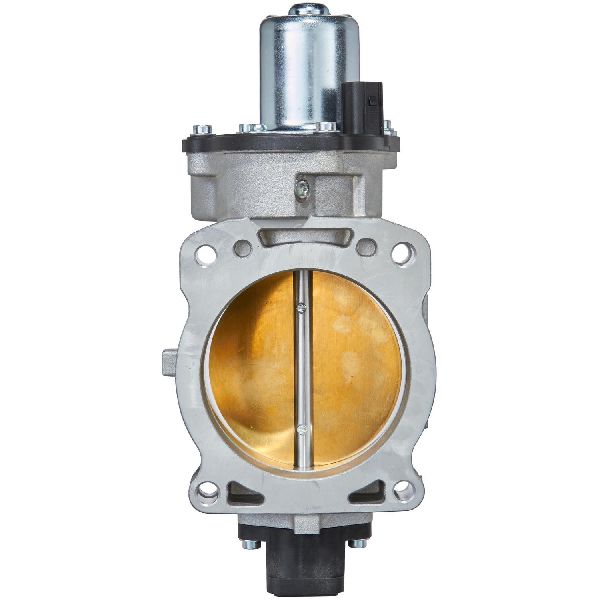
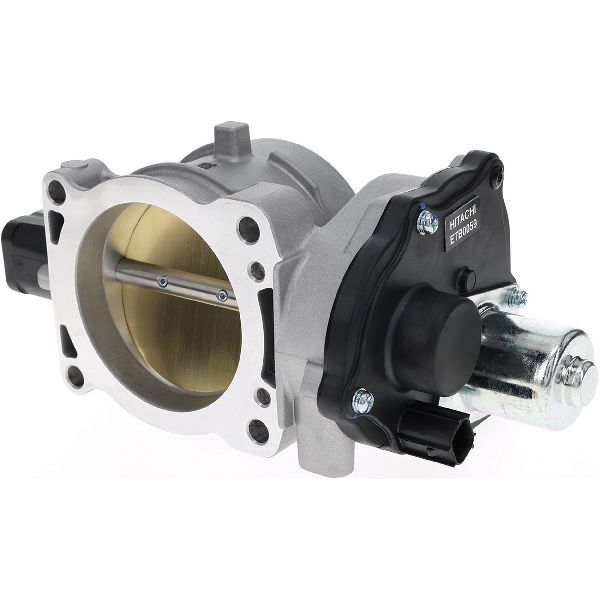
- Electronic Throttle Body Assembly
(OEM #8L3Z-9E926-A)— This is the primary fix for code P0123 on this vehicle, as the Throttle Position Sensor (TPS) is an integral, non-serviceable part of the assembly. The original part number 3L3Z-9E926-AA was superseded by 6L3Z-9E926-A, then 8L3Z-9E926-A, 8L3Z-9E926-B, and finally 8L3Z-9E926-C. Any of these later numbers will work.
Trusted brands: Motorcraft (OEM), Spectra Premium, SKP, BBK, Dorman
OEM price range: $180-$325
Aftermarket price range: $100-$180
Related Codes That Often Appear With This One
- P2135 — Stands for 'Throttle/Pedal Position Sensor/Switch A/B Voltage Correlation'. The TPS assembly has two internal sensors for redundancy. This code sets when their signals don't agree, which is common when one fails and triggers P0123.
- P2104 — Stands for 'Throttle Actuator Control System - Forced Idle'. This is an informational code indicating the PCM has detected a critical fault (like P0123) and has put the truck into a safety 'limp mode' to protect the engine.
- P0122 — The opposite code, for 'TPS 'A' Circuit Low Input'. Seeing both P0122 and P0123 can indicate an intermittent short/open in the wiring or a completely failed sensor with erratic readings.
Technical Service Bulletins (TSBs) & Recalls
- TSB 08-7-6: This Technical Service Bulletin is noted as being related to P0123 issues, detailing the official diagnostic and repair procedures from Ford.
Platform-Specific Known Issues
- The most significant issue is the integrated design of the TPS. Owners accustomed to replacing only the sensor on other vehicles must be aware that the entire throttle body is the required replacement part for this F-150.
- Many owners in forums strongly advise against using cheap, non-OEM throttle bodies, citing high rates of early failure that lead to the same P0123 code returning within months. Spending more for a Motorcraft part is often the most cost-effective long-term solution.
Mechanic-Grade Diagnostic Values
- TPS Reference Voltage (VREF) at connector — expected: 4.5 to 5.0 Volts DC (Key On, Engine Off). Failure: Voltage is 0V or significantly below 4.5V, indicating a wiring issue or faulty PCM.
- TPS Signal 'A' Voltage (TP1) with live data scanner — expected: ~0.9V to 1.0V at closed throttle, sweeping smoothly to ~4.8V at wide-open throttle.. Failure: Voltage is stuck high (at or near 5.0V) and does not change with throttle input.
- TPS Resistance (disconnected sensor) — expected: ~3,000-4,000 Ohms at closed throttle, decreasing to ~350 Ohms at wide-open throttle (measured between Signal Return and TP terminals).. Failure: An open circuit (O.L.) or readings significantly outside this range.
Scan Tool Commands That Help
- Ford IDS (Integrated Diagnostic System): TPS Calibration — Used after replacing the throttle body to calibrate the new sensor's position. The software guides the technician through the process to set the new baseline values for the PCM.
- Ford IDS (Integrated Diagnostic System): Reset All Adaptations — This function can be used to clear the Keep Alive Memory (KAM) in the PCM, forcing it to relearn all adaptive values, including those for the throttle body. This is a more thorough alternative to simply disconnecting the battery.
Wiring & Ground Locations
- Throttle Body Connector — Plugged into the electronic throttle body on the front of the engine's intake manifold.. This 6-pin connector provides power, ground, and signal lines for both the Throttle Position Sensor (TPS) and the Throttle Control Motor. A loose connection, corrosion on the pins, or damaged wires here are common causes for P0123. A wiring diagram from a forum confirms the specific wire colors and functions for diagnosis.
- Main PCM Ground Strap — A braided ground strap located on the firewall, to the right (passenger side) of the PCM. It connects to a double-threaded stud on the back of the passenger side cylinder head.. This is a critical ground point for the PCM. A loose or corroded connection here can cause intermittent and difficult-to-diagnose electrical issues, including erratic sensor readings that could potentially trigger a P0123 code by causing the sensor's ground reference to float.
Real Owner Repair Stories
- f150online.com user story (2004 Ford F-150 5.4L 3V V8) — P0123 code present, erratic automatic transmission shifting.
❌ Tried (didn't work) Replacing the Throttle Position Sensor (TPS) twice.
✅ What actually fixed it The owner discovered there was zero voltage getting to the sensor connector. The final fix was repairing a fault in the wiring harness, which restored power to the sensor. - Go-Parts aggregated forum story (2007 Ford F-150 5.4L) — Codes P0121, P2104, P2135; truck entered limp mode, especially in hot weather.
❌ Tried (didn't work) Cleaning the throttle body., Replacing only the TPS sensor.
✅ What actually fixed it Replacing the entire throttle body assembly with a new Motorcraft unit. The conclusion was that the internal electronics of the original throttle body were failing when hot. - f150forum.com user story (2006 Ford F-150 5.4L, 185,000 miles) — Code P0123 along with a moving misfire affecting multiple cylinders.
❌ Tried (didn't work) Replacing spark plugs and coils.
✅ What actually fixed it The owner cleaned all coil-on-plug and fuel injector connectors with contact cleaner and replaced all fuel injectors. This suggests a widespread electrical connection issue, potentially due to harness degradation, was causing multiple faults including the P0123.
OEM Part Supersession History
3L3Z-9E926-AA→6L3Z-9E926-A, 8L3Z-9E926-A, 8L3Z-9E926-B, 8L3Z-9E926-C— Ford incrementally updated the part over the years to improve reliability of the internal electronics and sensor contacts.
Heads up: All listed superseded part numbers are interchangeable for this application. However, using an early-design part (like 3L3Z) from a donor vehicle is not recommended as it is more prone to the original failure mode.
Model Year Variations Within This Range
- 2004-2008: While the electronic throttle body and P0123 code are common across the entire 2004-2008 range, there were internal engine changes. Notably, the spark plug design was updated in late 2007 (engines built after 10/09/07) to a one-piece design, and some sources suggest 2004 model year engines had unique camshafts. These changes do not directly affect the P0123 diagnosis but are important to be aware of when working on the engine.
Diagnostic Flowchart
Other Known Issues on This Vehicle
Issues unrelated to this code that are worth knowing about as an owner of this generation:
- Spark Plug Breakage During Removal 🔴 High — Extremely common on engines built before 10/09/2007. The original two-piece spark plug design (Motorcraft SP-515) allows carbon to build up, seizing the lower part of the plug in the cylinder head. Attempting removal often snaps the plug, requiring a special extraction tool. (Ref: TSB 08-7-6)
- Cam Phaser Failure / Timing Chain Rattle 🔴 High — Very common, often presenting as a diesel-like knocking or ticking sound at hot idle between 800-1200 RPM. Caused by worn timing chain tensioners with blown seals leading to low oil pressure at the VCT solenoids and phasers. Frequent oil changes (every 3,000-5,000 miles) with 5W-30 synthetic oil are believed to mitigate the issue. (Ref: TSB 06-19-8, TSB 14-0114)
- Fuel Pump Driver Module (FPDM) Failure 🟠 Medium — A very frequent no-start or stalling issue. The module is mounted to a steel crossmember near the spare tire, and galvanic corrosion between the aluminum module housing and the steel frame causes it to crack and fail. Symptoms include a no-start condition, stalling, sputtering, and code P0191. Replacement modules come with standoffs to prevent direct contact with the frame.
Used vs. New Parts: Buying Guide for This Vehicle
When a used part is the smart pick: A used OEM (Motorcraft) throttle body from a low-mileage donor vehicle can be a cost-effective option, but it carries risk. Given the high failure rate of this part, a used one may not have much life left. It is generally only recommended if the budget is extremely tight and a new OEM part is not feasible.
Donor-vehicle mileage cap: roughly under 75000 miles for the part to have meaningful remaining life.
What to inspect on the donor part:
- Verify the donor vehicle's mileage if possible.
- Inspect the electrical connector pins for any corrosion or damage.
- Manually move the throttle plate (if possible); it should move smoothly without binding or sticking.
- Check for excessive carbon buildup inside the throttle bore, as this can indicate high mileage or poor engine health.
OEM-only on this vehicle (don't cheap out):
- Electronic Throttle Body Assembly
Aftermarket brands forum-validated for this vehicle:
- While OEM Motorcraft is strongly recommended, some users have had success with Spectra Premium as a higher-tier aftermarket option.
Brands owners have reported issues with on this vehicle:
- Dorman
- Unbranded/no-name eBay or Amazon parts
Real Owner Stories
Aggregated from forums and TSBs cited above. Mileages and costs reflect what owners reported in those sources.
2005 F150 5.4L
Symptoms: Hesitation / hiccup at very low RPM during acceleration under moderate load, like going up a hill. Live scan showed blip-type peaks on the TPS signal during hesitation, though it didn't replicate during a KOEO sweep.
What fixed it: The owner was monitoring the TPS with a scan tool to identify the blip-type peaks, pointing toward a failing sensor/throttle body assembly.
Source hint: Ford Truck Enthusiasts Forums
2004-2008 Ford F-150 5.4L
Symptoms: High idle and the P0123 code. The owner attempted to replace just the TPS on an aftermarket throttle body that allowed it.
What fixed it: Replacing the TPS on the aftermarket unit only temporarily fixed the high idle but did not clear the code, leading to a recommendation for OEM parts.
Source hint: f150forum.com Thread 'P0123, need help' (https://www.f150forum.com/f4/p0123-need-help-486800/)
Related OBD-II Codes
Frequently Asked Questions
Can I just replace the sensor on my 2004-2008 F-150 5.4L throttle body?
Is there a specific TSB for P0123 on my 5.4L 3V Triton?
Should I buy an aftermarket throttle body to save money?
Do I need to do anything special after installing the new throttle body?
Could my transmission shifting issues be caused by code P0123?
What should the TPS voltage look like on a scan tool for this Ford engine?
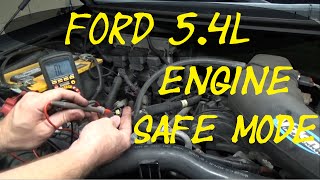
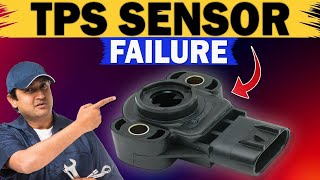
Helpful Videos
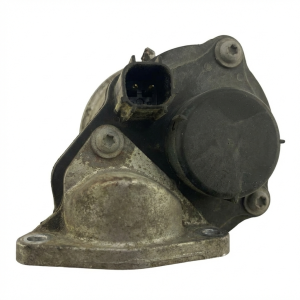
Used OEM Parts in Stock



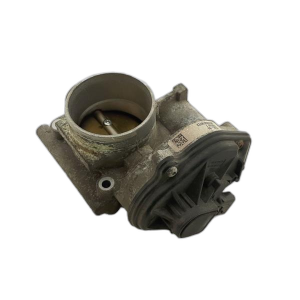
New Aftermarket Parts Available


The information in this article is provided for general reference and educational purposes only. Vehicle specifications, procedures, and part compatibility can vary by production date, trim level, and region. Always consult your vehicle's factory service manual and verify part numbers before purchasing or performing repairs. Safety-critical components such as airbags, seat belts, and braking systems should be installed by a qualified professional.
- Ford F-150:
- 🎬 Helpful Videos
- 🛍️ Shop This Part
- What's Unique About the 2004-2008 Ford F-150
- Symptoms You May Notice
- Most Likely Causes
- Rare But Worth Checking
- Diagnosis Steps
- Parts You'll Likely Need
- Related Codes That Often Appear With This One
- Technical Service Bulletins (TSBs) & Recalls
- Platform-Specific Known Issues
- Mechanic-Grade Diagnostic Values
- Scan Tool Commands That Help
- Wiring & Ground Locations
- Real Owner Repair Stories
- OEM Part Supersession History
- Model Year Variations Within This Range
- Diagnostic Flowchart
- Other Known Issues on This Vehicle
- Used vs. New Parts: Buying Guide for This Vehicle
- Real Owner Stories
- 2005 F150 5.4L
- 2004-2008 Ford F-150 5.4L
- Related OBD-II Codes
- Frequently Asked Questions
- 🎟️ Get 5% Off