

OBD-II Code P0505: Idle Control System Malfunction
The Ultimate Guide to What P0505 Means, Why It Triggers, and How to Fix It
- Code P0505 indicates the engine computer cannot maintain the target 650-750 RPM idle speed, causing dangerous stalling at stops.
- Clean the throttle body and Idle Air Control (IAC) valve passages with a $10 can of cleaner before buying replacement parts, as carbon buildup causes over 45% of idle issues.
- Perform a smoke test to locate vacuum leaks if your idle is consistently high (above 1,000 RPM), as unmetered air bypassing the throttle is a primary trigger.
- Stop driving immediately if P0505 appears on a 2000-2003 Nissan Maxima or Pathfinder; a shorted IAC valve will permanently destroy the Engine Control Module (ECM), resulting in a $1,000+ repair.
What Does P0505 Mean?

P0505 means your car's main computer, the Powertrain Control Module (PCM), has lost its ability to regulate the engine's speed at idle. The actual engine speed is either much higher or lower than the target speed (typically 650-750 RPM), or it fluctuates uncontrollably.
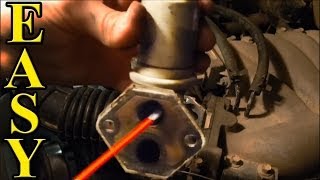
Technical definition: The official SAE/OBD-II definition for code P0505 is "Idle Control System Malfunction." This indicates the powertrain control module (PCM or ECM) detects it cannot control the engine's idle speed within predetermined specifications. 🎬 Watch: A breakdown of P0505 causes, symptoms, and fixes. The code sets when the actual idle speed deviates from the target idle speed by a specified amount (e.g., more than 200 RPM) for a set period.
Can I Drive With P0505?
No — Do Not Drive. Driving is not recommended. The engine stalls unexpectedly when you come to a stop, creating a significant safety hazard by disabling power steering and braking assist. Continuing to drive with a severe idle issue causes poor combustion, which damages expensive components like the catalytic converter over time, adding $1,000+ to the repair bill.
Common Causes

- Vacuum Leaks (Including PCV System) (Very Common) — Cracked vacuum hoses, leaking intake manifold gaskets, or a stuck PCV valve introduce unmetered air into the engine. The idle control system cannot compensate for this excess air, leading to an erratic or high idle.
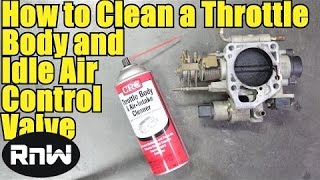
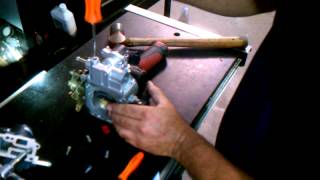
- Dirty or Clogged Throttle Body and Passages (Very Common) — The throttle body and the small air passages leading to the IAC valve become restricted with carbon and sludge. This blockage prevents the IAC valve from effectively controlling the airflow 🎬 See how to clean your throttle body and IAC valve. needed to maintain a stable idle.
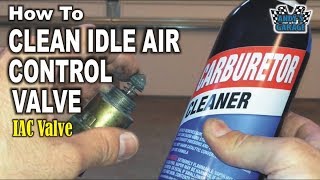
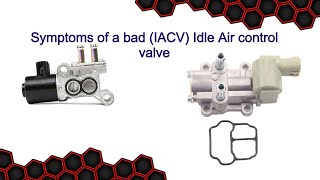
- Faulty Idle Air Control (IAC) Valve (Common) — The IAC valve, a small motor managing airflow at idle, frequently sticks due to carbon buildup. In other cases, the valve's internal motor fails, shorts out, or the seal deteriorates.
- Corrupted PCM Memory / Idle Relearn Needed (Less Common) — After disconnecting a battery, the PCM loses its learned idle values stored in its Keep Alive Memory (KAM). If the base idle strategy cannot cope with a dirty throttle body, it triggers P0505 until an idle relearn procedure is performed.
- IAC Circuit Issues (Less Common) — Damaged wires, corroded connector pins, or a poor electrical ground prevent the PCM's signals from reaching the IAC valve. Wires fray or melt from proximity to hot engine components.
- Misadjusted Throttle Cable or Stop Screw (Uncommon) — On older vehicles, a tightly adjusted throttle cable or stop screw holds the throttle plate slightly open. This prevents the engine from returning to idle, causing the computer to flag P0505 because it cannot lower the RPM.
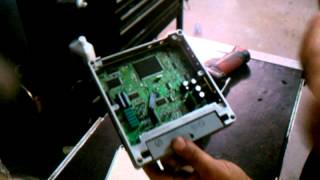
- Internal IAC Valve Coolant Leak (Nissan Specific) (Rare) — On 2000-2003 Nissan models, engine coolant flows through the IAC valve. An internal seal fails, allowing coolant to short out the IAC valve's electronics, which subsequently destroys the engine computer (ECM). 🎬 Watch this walkthrough for the Nissan-specific IAC and ECM failure.
- Faulty Powertrain Control Module (PCM) (Rare) — The fault lies within the vehicle's main computer. This is a software glitch, a failed internal driver circuit, or physical damage to the circuit board. Consider this only after exhausting all other possibilities.
Symptoms

- Erratic, High, or Low Idle — The engine's RPM is unstable when stopped. It races to a high RPM, drops very low, or fluctuates up and down by 400 RPM or more.
- Engine Stalling — The engine stalls when braking to a stop, shifting into gear, or when the engine is under load (like turning on the A/C).
- Rough Idle or Engine Vibration — The car shakes or vibrates while stopped in gear at a traffic light due to the unstable engine speed.
- Difficulty Starting — The engine struggles to start without pressing the gas pedal, or it starts and immediately stalls.
- Check Engine Light On (also visible on scanner) — The Powertrain Control Module illuminates the Check Engine Light on your dashboard.
Diagnostic Flowchart
Tap your situation to follow the diagnostic path that matches what you're seeing on this code.
Common Fixes & Costs
- Cleaning the Throttle Body and IAC Valve — Parts: $10-$20, Labor: $115-$165, ~1.0 hr book time (DIY)
- Repairing a Vacuum Leak — Parts: $5-$30, Labor: $110-$200, ~1.0 hr book time (DIY)
- Replacing the Idle Air Control (IAC) Valve
— Parts: $50-$200, Labor: $75-$150, ~0.8 hr book time
(Intermediate)
2000-2003 Nissan Maxima/Pathfinder: OEM
1997-2004 Jeep Grand Cherokee/Wrangler (4.0L): OEM
1997-2004 Toyota Camry (4-Cyl & V6): OEM - Replacing the PCV Valve — Parts: $10-$40, Labor: $50-$100, ~0.5 hr book time (DIY)
- Replacing a Faulty Powertrain Control Module (PCM)
— Parts: $400-$900, Labor: $150-$300, ~1.5 hr book time
(Professional)
2000-2003 Nissan Maxima: OEM
DIY vs Professional
- Cleaning the Throttle Body and IAC Valve — Beginner: Yes.
Tools: Screwdrivers/wrenches, throttle body cleaner, rags, toothbrush. - Repairing a Vacuum Leak — Beginner: Yes, for visible hoses.
Tools: Flashlight, screwdriver, pliers. For complex leaks: smoke machine, brake cleaner. - Replacing the Idle Air Control (IAC) Valve — Beginner: Yes.
Tools: Basic hand tools (screwdrivers, socket set). - Replacing the PCV Valve — Beginner: Yes.
Tools: Pliers, screwdrivers. - Replacing a Faulty Powertrain Control Module (PCM) — Beginner: No. Take the vehicle to a professional diagnostic technician.
Tools: Basic hand tools, specialized dealer/shop tools for programming.
Used vs. New Parts: Buying Guide
When a used part is worth it: Buying a used Idle Air Control (IAC) valve is risky but budget-friendly for vehicles over 15 years old. An OEM part from a low-mileage wrecked vehicle outlasts a cheap, non-brand aftermarket part.
Donor-vehicle mileage cap: roughly under 60000 miles for the part to have meaningful remaining life.
Donor quality checklist:
- Verify the donor vehicle's mileage and ensure it wasn't scrapped for engine-related issues.
- Match the part number exactly; visual similarities do not guarantee compatibility.
- For sensitive makes like Jeep, a used OEM part is preferable to a new aftermarket one.
Decision logic:
- If Vehicle is a known sensitive model (e.g., Jeep, Nissan) or the part cost is under $150 → Buy new OEM or a high-quality aftermarket brand (e.g., Denso, Hitachi) to prevent repeat failures.
- If Vehicle is over 15 years old and the budget is tight → Buy a used OEM part, but expect a shorter lifespan.
- If The failure is the 2000-2003 Nissan IAC/ECM short → Never buy used. Install a new IAC valve and a new or professionally remanufactured ECM simultaneously.
Warranty tradeoff: Used parts typically offer a 30-90 day warranty. New aftermarket parts range from 1 year to a limited lifetime warranty. New OEM parts usually carry a 1-year warranty.
Worst-case if a used part fails: $150-$400 if a used or cheap aftermarket part fails shortly after installation, requiring repeat labor costs.
What Happens If You Wait — Timeline
- 0-4 weeks: Check Engine Light illuminates. Idle fluctuates by 100-200 RPM, but stalling is rare. (MPG impact: 0-5%% · Added cost: $0-$20 in wasted fuel.)
- 1-3 months: Idle fluctuates by 400+ RPM. Engine stalls occasionally at stops or when A/C engages. Fuel economy drops noticeably. (MPG impact: 5-15%% · Added cost: $50-$100 in wasted fuel.)
- 3-6 months: Stalling becomes frequent and dangerous. On 2000-2003 Nissans, the shorted IAC valve burns out the ECM driver chip. Incorrect air-fuel ratios stress the catalytic converter. (MPG impact: 10-20%% · Added cost: $500-$1500 (Potential ECM replacement on affected models).)
- 6+ months: Chronic stalling destroys the starter motor and engine mounts. Rich/lean conditions overheat and destroy the catalytic converter. (MPG impact: 15-25%% · Added cost: $1500-$3000+ (Catalytic converter, starter, and/or engine mount replacement).)
Cost of Not Fixing It
- Immediate: Unsafe driving conditions due to unexpected engine stalling at stops, and a 5-15% drop in fuel economy. (Added cost: $5-$15 per tank of gas)
- 1-6 months: An incorrect air-fuel ratio from the idle issue overheats the catalytic converter, causing internal damage and failure. (Added cost: $1200-$2800)
- 6+ months: On specific 2000-2003 Nissan models, continued driving causes a shorted IAC valve to destroy the Engine Control Module (ECM). In all cars, chronic stalling destroys the starter, battery, and engine mounts. (Added cost: $500-$2000+)
Diagnosis Steps

- Read the Code and Freeze Frame Data
Connect an OBD-II scanner to the diagnostic port. Confirm P0505 is active and check for related codes (e.g., P0506, P0507, P0101). Review the freeze frame data to note the idle RPM vs. the desired RPM at the moment the code set.
Tools: OBD-II Scanner (Beginner) - Perform a Visual Inspection
Inspect the engine bay for disconnected or cracked vacuum hoses, a torn air intake duct, or corroded electrical connectors around the throttle body. Verify the throttle cable has slight slack and isn't holding the throttle open.
Tools: Flashlight (Beginner) - Inspect and Clean the Throttle Body and IAC Passages
Remove the air intake duct. Inspect the throttle plate and the inside of the throttle body for heavy carbon buildup. Clean it and the dedicated IAC air passages using a toothbrush and throttle body cleaner. Ensure the throttle plate closes completely.
Tools: Screwdrivers/Wrenches, Throttle Body Cleaner, Toothbrush/Rag (Intermediate) - Check for Vacuum Leaks
With the engine running, listen for hissing sounds around the intake manifold and PCV valve. Spray short bursts of brake cleaner around suspected areas; if the engine idle changes, you found the leak. A smoke machine is the most effective professional method to visually identify leaks.
Tools: Brake Cleaner or Propane Torch (unlit), Smoke Machine (Intermediate) - Test the IAC Electrical Circuit for Voltage
Disconnect the IAC valve's electrical connector. Turn the ignition to 'ON' (engine off). Use a multimeter to check for power on the power supply wire. Place the positive lead on the power pin and the negative lead on a good engine ground. You should see battery voltage (11.8V-12.5V).
Tools: Multimeter, Vehicle-specific Wiring Diagram (Advanced) - Test the IAC Motor Winding Resistance
With the IAC connector unplugged, set your multimeter to measure resistance (Ohms). Test the resistance between the pins on the IAC valve. Specifications vary greatly (e.g., 10-30 Ohms). A reading of infinite resistance (open) or zero resistance (short) indicates a failed valve. Consult a service manual for exact specs.
Tools: Multimeter, Service Manual (Advanced) - Advanced Diagnosis: Bidirectional Scan Tool
Use a professional scan tool to command the IAC valve to open or close. Monitor live data PIDs like 'Commanded Idle RPM' vs 'Actual RPM'. If the RPM doesn't change, but the circuit and valve resistance are good, the valve is mechanically stuck.
Tools: Bidirectional Scan Tool, Service Manual (Professional) - Test the Powertrain Control Module (PCM)
Confirm the PCM has good power and ground but is not sending the command signal to the IAC valve. On 2000-2003 Nissans, inspect the PCM circuit board for physical burn damage. This step requires professional programming if replacement is needed.
Tools: Advanced Scan Tool, Multimeter, Service Manual (Professional)
When This Code Triggers (Freeze-Frame Conditions)
- Engine Coolant Temp: 170-220°F (77-104°C) (The code typically sets when the engine is fully warmed up.)
- Vehicle Speed: 0 mph (The fault is detected when the vehicle is at a stop, though an enabling condition is often having driven above 6 mph and then returning to idle.)
- Engine RPM: Varies (e.g., 950 RPM or 550 RPM) (The key condition is a significant deviation from the target idle RPM. The freeze frame shows an actual RPM that is too high or too low.)
- Throttle Position: 0% (or near 0%) (The fault occurs when the driver's foot is off the accelerator pedal and the throttle plate is closed.)
Related Codes
- P0506 — Indicates idle RPM is lower than expected. Focus diagnosis on air restrictions, such as a stuck-closed IAC valve or heavily carboned throttle body.
- P0507 — Indicates idle RPM is higher than expected. Focus diagnosis on excess air, primarily large vacuum leaks or a stuck-open IAC valve.
- P0101, P0102, P0103 — Relate to the Mass Airflow (MAF) Sensor. Incorrect MAF data corrupts the PCM's idle calculations, triggering P0505. Fix MAF codes before addressing the idle system.
- P0121, P0122, P0123 — Relate to the Throttle Position Sensor (TPS). The PCM only activates idle control when it receives a closed-throttle signal. A faulty TPS prevents idle control, causing stalling.
Climate & Environmental Factors
- High Altitude: Thinner air at high altitudes forces the PCM to command a slightly higher idle RPM. This normal operation exacerbates pre-existing marginal issues, like a minor vacuum leak, triggering P0505.
- Cold Weather: The PCM commands a 1200-1500 RPM idle during cold starts to warm the engine. Carbon buildup prevents the IAC valve from opening fully, causing stalling in freezing temperatures.
- High Humidity: Moisture promotes corrosion on the IAC valve's electrical connector. This degrades electrical contact, causing intermittent circuit drops and triggering the code.
How to Talk to a Mechanic About This Code
Say this: "I have a P0505 code with an erratic idle. Please perform a smoke test for vacuum leaks and inspect the throttle body for carbon buildup before recommending any part replacements."
This directs the technician to follow a logical, cost-effective diagnostic process rather than immediately replacing the expensive IAC valve.
Avoid saying:
- 'My check engine light is on, can you just fix it?'
- 'My car is stalling, I think I need a new idle sensor.'
- 'Just do whatever you think is best.'
Questions to ask before authorizing the repair:
- Did the smoke test reveal any vacuum leaks?
- If replacing the IAC valve, did you test the electrical circuit to verify the old valve failed?
- Will you perform the factory idle re-learn procedure after the repair?
- What is the warranty on the parts and labor?
Where to Take It: Dealer vs Independent vs Chain
- Dealer:
Best for the critical Nissan issue or vehicles under warranty.
Best for: Vehicles still under powertrain or emissions warranty., 2000-2003 Nissan IAC/ECM failures requiring paired replacement and programming.
Downsides: Highest labor rates; often recommends replacing the entire throttle body assembly instead of cleaning it. (Typical cost: +50% vs. baseline) - Independent Shop:
Best fit for most P0505 situations. Competent mechanics fix common causes cost-effectively.
Best for: Most out-of-warranty vehicles., Diagnosing vacuum leaks, dirty throttle bodies, and faulty PCV valves.
Downsides: Diagnostic capabilities vary. Verify ASE certifications. (Typical cost: +0% vs. baseline) - Chain Shop:
Avoid for initial diagnosis. Acceptable only for straightforward, pre-diagnosed part swaps.
Best for: Simple part replacements if you already diagnosed a bad PCV valve.
Downsides: Technician skill varies dramatically., High pressure to upsell unnecessary throttle body replacements. (Typical cost: -10% vs. baseline)
When to Walk Away From the Repair
If the repair cost exceeds 50% of the vehicle's private-party value, consider selling it.
- Car worth $2500, fix is $1500: Walk away. The repair is 60% of the car's value.
- Car worth $8000, fix is $450: Fix it. The repair is under 6% of the value and restores safety.
- Car worth $3500, fix is $1200: Borderline. The cost is 34% of the value. Get a second opinion to confirm the diagnosis.
What Scan Tool You Need for This Code
Minimum: An OBD-II scanner that displays live Engine RPM data.
A basic $20 reader only shows the code. Live RPM data is critical to see if the idle is hunting, too high, or too low.
Budget: Ancel BD310 or Motopower MP69033 (~$60) — Reads codes and displays a live graph of Engine RPM to monitor idle behavior.
Mid-range: Foxwell NT530/NT604 Elite or Innova 5610 (~$180) — Includes bidirectional control to directly command the IAC valve open or closed, definitively testing the valve and circuit.
Professional: Autel MaxiCOM MK808BT or XTOOL D7 (~$500) — Offers full bidirectional control and executes automated factory idle re-learn procedures.
Rent vs buy: AutoZone's Loan-A-Tool program allows you to rent a scanner for free with a refundable deposit. Buy a scanner only if you plan to do your own diagnostics more than once a year.
How to Clear the Code After You Fix It
- Use an OBD-II scan tool to clear the P0505 code.
- Perform the vehicle-specific idle re-learn procedure.
- Complete a full OBD-II drive cycle to allow the readiness monitors to run.
Drive cycle (~20 minutes): A generic drive cycle includes: 1) A cold start (engine off for 8+ hours). 2) Idle for 2-3 minutes, turning on loads like A/C and rear defrost. 3) Drive for 5-10 minutes in stop-and-go city traffic. 4) Drive for 5-10 minutes at a steady highway speed (e.g., 55 mph). 5) Allow the vehicle to cool down.
Readiness monitors affected: Catalyst Monitor, Oxygen (O2) Sensor Monitor, EVAP System Monitor
Before emissions retest: drive at least 50 miles to fully set monitors.
Watch out for:
- Clearing the code with a scanner does not fix the underlying mechanical or electrical problem; the code returns immediately.
- Disconnecting the battery resets all readiness monitors, guaranteeing an emissions test failure until a full drive cycle is completed.
- Failing to perform a required idle re-learn procedure after cleaning the throttle body causes the code to persist.
Will This Fail Emissions / State Inspection?
Yes — this code typically fails an OBD-II emissions inspection.
- California: An active Check Engine Light causes an automatic smog check failure. After repair, complete a full drive cycle to set all readiness monitors before retesting.
- New York: The NYS DMV inspection includes an OBD-II scan. Code P0505 is an automatic emissions failure.
- Texas: Vehicles with code P0505 fail the OBD portion of the state emissions inspection.
Manufacturer-Specific Notes
- Nissan: CRITICAL: On 2000-2003 models (Maxima, Sentra, Pathfinder), a failing IAC valve shorts circuit and permanently destroys the ECM. Inspect the ECM for burn marks. Replace both the IAC and ECM simultaneously to prevent immediate failure of the new computer.
- Toyota: On 1997-2001 Camrys, installing the wrong emissions-spec throttle body causes a persistent P0505. TSB T-SB-0184-09 for 2005-2010 V6 models advises checking for PCV leaks before replacing the throttle body.
- Jeep: 1997-2004 4.0L engines reject cheap aftermarket IAC valves, causing P0505 to return immediately. Install an OEM Mopar part. Poor battery grounds also cause the PCM to lose idle memory.
- Honda: TSB 08-056 for 1999-2004 models (Odyssey, Pilot) links erratic idle to a broken power steering pressure switch wire. On 1997-2001 CR-Vs, a clogged Fast Idle Thermo Valve (FITV) triggers the code.
- Ford: TSB 12-8-1 for 2003-2008 models advises checking IACTRIM data PIDs. If values exceed 0.5 lb/min, clean sludge from the electronic throttle body before replacing parts.
Real Owner Stories
2001 Honda CR-V with surging idle
Vehicle had a P0505 code with a bad surging idle that caused the car to lunge forward.
What they tried:
- The owner replaced the IAC valve, but the code and symptoms persisted.
Outcome: A technician found a vacuum leak from a bad intake manifold gasket and a clogged Fast Idle Thermo Valve (FITV). Replacing the gasket and cleaning the throttle body resolved it.
Lesson: Vacuum leaks from brittle gaskets are common on older Hondas. Perform a vacuum leak test before replacing the IAC valve.
2001 Nissan Maxima with repeat failures
Car triggered P0505, and the owner smelled burning electronics inside the car.
What they tried:
- The owner replaced a fried IAC valve and repaired the ECU, but both failed again within 10 miles.
Outcome: The ultimate fix required replacing both the IAC and the ECU simultaneously with new parts.
Lesson: On 2000-2003 Nissans, a failed IAC valve destroys the ECU. Replace them as a pair. Reusing a damaged component instantly destroys the new one.
1999 Honda Civic with a mysterious high idle
Owner battled a persistent P0505 code for months. The idle was too high, but not erratic.
What they tried:
- Replaced the IAC valve, performed idle relearn procedures, and checked for vacuum leaks with no success.
Outcome: A previous owner incorrectly adjusted the throttle stop screw to compensate for a dirty throttle body. Readjusting the screw to let the throttle plate close fully solved the problem.
Lesson: A misadjusted throttle stop screw causes a persistent high idle. If a previous owner tinkered with the throttle body, check the factory stop screw calibration.
2003 Honda CR-V with multiple codes and parts replaced
Car was purchased with P0505 and O2 sensor codes.
What they tried:
- Replaced O2 sensors, IACV, VTEC pressure switch, and TPS connector with cheap aftermarket parts.
Outcome: The owner threw cheap aftermarket parts at the car. Live scan tool data showed a 9.5% throttle position at idle, indicating an unfound vacuum leak or faulty aftermarket sensor.
Lesson: Throwing cheap aftermarket parts at a P0505 code complicates diagnosis. Monitor live data; high throttle position at idle points to unmetered air.
How to Prevent This Code From Triggering
- Clean the throttle body. (Every 30,000-50,000 miles.) — Removes carbon buildup that restricts airflow and causes the throttle plate to stick, directly preventing stable idle.
- Replace the PCV valve. (Every 50,000 miles.) — A stuck PCV valve creates a vacuum leak, disrupting the air/fuel mixture. This $20 part prevents major idle control faults.
- Use a quality fuel system cleaner with Polyetheramine (P.E.A.). (Every 5,000 miles.) — Polyetheramine (P.E.A.) cleaners remove carbon deposits from intake valves, reducing the gunk that clogs the IAC valve.
- Periodically inspect vacuum hoses. (During every oil change.) — Visually check for cracks or soft spots on the PCV hose and intake duct. Catching a deteriorating hose prevents sudden vacuum leaks.
Frequently Asked Questions
What is an idle air control (IAC) system and what does it do?
The IAC system acts like a computer-controlled gas pedal for when your foot is off the accelerator. It uses a small valve to create a controlled air bypass around the closed throttle plate. This lets in just enough air to keep the engine running smoothly at a consistent, low RPM.
Is it safe to drive my car with a P0505 code?
No, driving is unsafe. The engine stalls when you slow down or stop, leaving you without power steering or power brakes in traffic. Get the issue diagnosed immediately.
Can I just clean the IAC valve instead of replacing it?
Yes, carbon buildup often makes the valve stick. Thoroughly cleaning the IAC valve and its air passages with throttle body cleaner restores function. This is a common, affordable first step before replacing parts.
Why did P0505 appear right after I replaced or disconnected my car battery?
Disconnecting the battery erases the Powertrain Control Module's (PCM) learned memory for fine idle adjustments. When it reverts to base programming, it cannot adapt to an already dirty throttle body or aging IAC valve. Performing a vehicle-specific 'idle re-learn' procedure fixes this.
What is an idle re-learn procedure?
An idle re-learn allows the vehicle's computer to recalibrate the base idle speed. The procedure typically involves warming up the engine, cycling the ignition, and letting the engine idle in park for several minutes. Perform this after cleaning the throttle body, replacing the IAC valve, or disconnecting the battery.
What are common mistakes when diagnosing a P0505 code?
A frequent mistake is immediately replacing the IAC valve without testing. Technicians often find the true cause is a simple vacuum leak, a dirty throttle body, or clogged air passages. Always check for vacuum leaks and clean the throttle system before buying expensive parts.
Will clearing the code with a scanner fix the problem?
No, clearing the code only turns off the Check Engine Light temporarily. It does not fix the underlying physical or electrical problem. The code returns as soon as the computer detects the fault again, usually within minutes.
Key Takeaways
- Code P0505 indicates the engine computer cannot maintain the target 650-750 RPM idle speed, causing dangerous stalling at stops.
- Clean the throttle body and Idle Air Control (IAC) valve passages with a $10 can of cleaner before buying replacement parts, as carbon buildup causes over 45% of idle issues.
- Perform a smoke test to locate vacuum leaks if your idle is consistently high (above 1,000 RPM), as unmetered air bypassing the throttle is a primary trigger.
- Stop driving immediately if P0505 appears on a 2000-2003 Nissan Maxima or Pathfinder; a shorted IAC valve will permanently destroy the Engine Control Module (ECM), resulting in a $1,000+ repair.
Helpful Videos



The information in this article is provided for general reference and educational purposes only. Vehicle specifications, procedures, and part compatibility can vary by production date, trim level, and region. Always consult your vehicle's factory service manual and verify part numbers before purchasing or performing repairs. Safety-critical components such as airbags, seat belts, and braking systems should be installed by a qualified professional.
- 🎬 Helpful Videos
- What Does P0505 Mean?
- Can I Drive With P0505?
- Common Causes
- Symptoms
- Diagnostic Flowchart
- Common Fixes & Costs
- DIY vs Professional
- Used vs. New Parts: Buying Guide
- What Happens If You Wait — Timeline
- Cost of Not Fixing It
- Diagnosis Steps
- When This Code Triggers (Freeze-Frame Conditions)
- Related Codes
- Climate & Environmental Factors
- How to Talk to a Mechanic About This Code
- Where to Take It: Dealer vs Independent vs Chain
- When to Walk Away From the Repair
- What Scan Tool You Need for This Code
- How to Clear the Code After You Fix It
- Will This Fail Emissions / State Inspection?
- Manufacturer-Specific Notes
- Real Owner Stories
- 2001 Honda CR-V with surging idle
- 2001 Nissan Maxima with repeat failures
- 1999 Honda Civic with a mysterious high idle
- 2003 Honda CR-V with multiple codes and parts replaced
- How to Prevent This Code From Triggering
- Frequently Asked Questions
- What is an idle air control (IAC) system and what does it do?
- Is it safe to drive my car with a P0505 code?
- Can I just clean the IAC valve instead of replacing it?
- Why did P0505 appear right after I replaced or disconnected my car battery?
- What is an idle re-learn procedure?
- What are common mistakes when diagnosing a P0505 code?
- Will clearing the code with a scanner fix the problem?
- Key Takeaways
- 🎟️ Get 5% Off