

P0121 on 2005-2010 Scion tC: Throttle Position Sensor Causes and Fixes
For a 2005-2010 Scion tC, code P0121 is almost always caused by a dirty throttle body or a failed integrated Throttle Position Sensor (TPS). Start by cleaning the throttle body with dedicated cleaner; if that doesn't work, replacing the entire throttle body assembly is the common and necessary fix. The OEM part costs around $350, with aftermarket options available for $150-$250.
- P0121 on a 2005-2010 Scion tC is a throttle position sensor performance problem, almost always originating from the throttle body itself.
- The easiest and most common first step is to thoroughly clean the throttle body of carbon buildup.
- If cleaning doesn't fix it, the entire throttle body assembly needs to be replaced, as the sensor is built-in. This is the definitive repair.
- This is a common DIY repair with a difficulty of 2 out of 5, requiring basic hand tools.
- Symptoms like stalling and poor acceleration can be a safety concern, so address this code promptly to avoid being stranded or causing an accident.
What's Unique About the 2005-2010 Scion tC
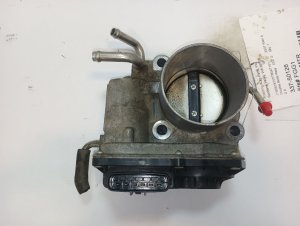
The first-generation Scion tC uses a traditional, mechanically-actuated throttle body controlled by a cable from the gas pedal. However, its Throttle Position Sensor (TPS) and Idle Air Control (IAC) valve are integrated into the throttle body assembly and are not sold as separate, serviceable OEM parts. This design means that if the non-serviceable electronic sensor fails, the entire throttle body assembly must be replaced. This is a very common point of failure on the 2AZ-FE engine after a thorough cleaning fails to resolve the issue.
Symptoms You May Notice
- Check Engine Light is on
- Rough, unstable, or bouncing idle, sometimes fluctuating between 500 and 1500 RPM
- Engine hesitates, stumbles, or jerks during acceleration
- Engine stalling, especially when coming to a stop or at low speeds
- Poor or unresponsive throttle (a 'dead' or 'laggy' gas pedal feel)
- Vehicle may enter 'limp mode' (fail-safe mode) with drastically reduced engine power
- Difficulty starting the engine
- Replacing only the Mass Airflow (MAF) sensor without checking the throttle body. While MAF issues can cause performance problems, P0121 is specific to the throttle position circuit performance.
- Replacing the accelerator pedal position sensor (APPS). This vehicle uses a mechanical throttle cable, so there is no sensor on the pedal itself; the computer relies solely on the TPS at the throttle body.
Most Likely Causes
- Dirty Throttle Body 🔴 High Probability Over many miles, carbon and oil vapor from the PCV (Positive Crankcase Ventilation) system build up a sticky, black layer around the throttle plate and bore. This buildup can cause the throttle plate to stick, preventing it from closing smoothly and accurately, which leads the TPS to send a signal that doesn't match the expected idle position.
How to confirm: Remove the air intake hose from the throttle body. Visually inspect the throttle plate and the inside of the throttle body for a thick, black layer of carbon buildup. Manually move the plate to feel for any sticking or binding.
Typical fix: Thoroughly clean the throttle body bore and plate with a dedicated throttle body cleaner and a soft, lint-free cloth or brush. Do not spray cleaner directly into the electronics. This often restores correct operation, though sometimes only temporarily.
Est. part cost: $5-$15 - Faulty Throttle Body Assembly (Internal TPS Failure) 🟡 Medium Probability The integrated Throttle Position Sensor is an electronic component with internal wipers that wear out over time. This wear creates 'dead spots' or erratic signals, causing the voltage to jump or drop out, which the ECM detects as a performance fault.
How to confirm: This is the most likely cause if a thorough cleaning does not fix the problem. A technician can use a scan tool to graph the TPS voltage while slowly opening and closing the throttle; any jumps, spikes, or dropouts in the voltage sweep indicate a bad sensor. A multimeter can also be used to check for a smooth, linear change in resistance or voltage.
Typical fix: Replace the entire throttle body assembly. The TPS is not sold separately for this vehicle. This is a confirmed fix in many owner forums.
Est. part cost: $150-$400 - Damaged Wiring or Connector ⚪ Low Probability Engine vibration and heat can, over many years, cause wires to fray or the plastic connector to become brittle and fail.
How to confirm: Visually inspect the wiring harness and connector going to the throttle position sensor. Look for any frayed wires, loose pins, signs of corrosion, or heat damage. Wiggle the connector with the engine running to see if it affects the idle.
Typical fix: Repair the damaged section of wire or replace the connector pigtail.
Est. part cost: $10-$30
Rare But Worth Checking
- Faulty Powertrain Control Module (PCM): This is extremely rare. The PCM should only be considered a potential cause after all other possibilities, including the throttle body and wiring, have been exhaustively tested and ruled out.
Diagnosis Steps
- Read the code with an OBD-II scanner to confirm P0121 is present and check for any other related codes.
- Disconnect the battery. Remove the engine cover and air intake hose to access the throttle body.
- Inspect the throttle body's electrical connector and wiring for any visible damage, looseness, or corrosion.
- Visually inspect the inside of the throttle body for heavy carbon buildup. If dirty, proceed to clean it.
- Clean the throttle body thoroughly using throttle body cleaner and a soft rag. Manually open the throttle plate to clean all surfaces. Avoid spraying cleaner directly into the electronic components.
- Reassemble the intake and reconnect the battery.
- Perform an idle relearn procedure: Start the engine and let it warm up to operating temperature. Turn the engine off. Start the engine again and let it idle for 5-10 minutes without touching the throttle or turning on any accessories like A/C. The idle should gradually stabilize.
- If the code returns, perform a more advanced test. Use a scan tool's live data to graph the TPS percentage or voltage while slowly opening the throttle. Look for any sudden drops or spikes. Alternatively, use a multimeter to back-probe the signal wire and check for a smooth voltage sweep from idle (~0.5-1.0V) to wide-open throttle (~4.5V).
- If the sensor test fails or if cleaning provided no long-term solution, replace the entire throttle body assembly. This involves disconnecting the throttle cable, electrical connector, and two small coolant hoses. Be prepared for minor coolant spillage. Remember to also replace the throttle body gasket.
- After replacement, perform the idle relearn procedure again as described in step 7.
Parts You'll Likely Need
- Throttle Body Assembly
(OEM #22030-28070 (Superseded by 22030-0H031))— This is the primary fix when cleaning fails. The Throttle Position Sensor (TPS) that causes code P0121 is integrated into this assembly and cannot be replaced separately on the Scion tC.
Trusted brands: Toyota (OEM), Aisin, Hitachi, Denso
OEM price range: $350-$500
Aftermarket price range: $150-$250 - Throttle Body Gasket
(OEM #22271-28020)— A new gasket is required when replacing the throttle body to prevent vacuum leaks, which can cause high idle and other performance issues.
Trusted brands: Toyota (OEM), Fel-Pro, Mahle
OEM price range: $5-$15
Aftermarket price range: $3-$10 - Throttle Body Cleaner — Required for the first, and often successful, step of cleaning the throttle plate and bore to resolve sticking that can cause the code.
Trusted brands: CRC, WD-40 Specialist, Berryman
Aftermarket price range: $5-$15
Related Codes That Often Appear With This One
- P0120, P0122, P0123: These are other TPS-related codes that point to general circuit malfunctions, low input, or high input, respectively.
- P2135: This indicates a correlation problem between the two internal TPS sensors (VTA1 and VTA2), which often points directly to a failing sensor within the throttle body assembly.
Technical Service Bulletins (TSBs) & Recalls
- While no TSB is specifically for P0121 on this model, Toyota document ES-128 for the 2AZ-FE engine details the exact monitoring strategy and malfunction thresholds (voltage difference between VTA1 and VTA2) that trigger the code.
Platform-Specific Known Issues
- Coolant Hoses on Throttle Body: The 2AZ-FE throttle body has two small coolant hoses connected to it. Their purpose is to circulate hot engine coolant to prevent the throttle plate from icing up in freezing temperatures. When replacing the throttle body, these hoses must be disconnected. It's advisable to have pliers or clamps ready to pinch them off to minimize coolant loss. Some owners in warm climates choose to bypass these lines, but it is not generally recommended.
Mechanic-Grade Diagnostic Values
- ECM Malfunction Threshold — expected: The voltage difference between VTA1 and VTA2 signals should be between 0.8V and 1.6V.. Failure: Code P0121 is set if the voltage difference is less than 0.8V or more than 1.6V for over 2 seconds.
- TPS Main Signal Voltage (VTA1) — expected: A smooth sweep from approximately 0.5V - 1.0V at idle to ~4.5V at wide-open throttle.. Failure: Any jumps, spikes, or drop-outs in voltage when the throttle is opened and closed slowly indicates a worn sensor.
- TPS Sensor Power Supply (VC) — expected: Approximately 5.0V at the throttle body connector with the key on, engine off.. Failure: No voltage or significantly lower voltage indicates a wiring or ECM issue.
- TPS Sensor Ground (E2) — expected: Near 0V, with good continuity to a chassis or engine block ground.. Failure: Voltage reading above a few millivolts or high resistance to ground indicates a bad ground connection.
Hidden / Shadow Codes Worth Checking
- Freeze Frame Data: While not a hidden code, professional scan tools like Toyota's Techstream can access Freeze Frame Data. This is a snapshot of all major engine parameters (RPM, vehicle speed, engine temp, etc.) at the exact moment the P0121 code was triggered. (see via This data is accessed using an advanced OBD-II scanner or Toyota Techstream software under the 'DTC INFO' or 'Freeze Frame' menu. It helps determine the conditions under which the fault occurred.)
Scan Tool Commands That Help
- Toyota Techstream or equivalent professional scanner: Live Data / Data List Monitoring — This is the primary diagnostic function for P0121. The technician should monitor the 'VTA1' and 'VTA2' voltage PIDs, or the 'THROTTLE POS' percentage, while slowly depressing and releasing the gas pedal. This allows direct observation of any signal dropouts or erratic behavior that confirms a failing sensor.
Wiring & Ground Locations
- Throttle Body Connector (E5) — The 6-pin electrical connector on the throttle body assembly itself.. This is the single point of connection for the TPS. The key pins to test are VTA1 (TPS Main Signal), VTA2 (TPS Sub-Signal), VC (5V Power), and E2 (Sensor Ground).
- Engine Ground Points (EG, EH) — The main ground points for the engine wiring harness are typically found on the left side of the cylinder head (EG) and the intake side of the cylinder block (EH).. The sensor's ground wire (E2) bundles with other sensor grounds and terminates at one of these locations. A loose or corroded main ground can cause floating voltages and trigger sensor performance codes like P0121.
Real Owner Repair Stories
- Reddit user SlumpsPax in r/SciontC (2010 Scion tC) — At a stop, the car would idle very low and cause the whole car to shake.
❌ Tried (didn't work) Initially ordered a Dorman brand aftermarket throttle body.
✅ What actually fixed it The aftermarket throttle body was missing a pipe and did not fit correctly. The owner instead thoroughly cleaned the original, carbon-caked throttle body and reinstalled it. This resolved the low, shaky idle. The owner also performed an idle relearn procedure.
OEM Part Supersession History
22030-28070→22030-0H031— Standard part revision and consolidation by the manufacturer.
Heads up: Part numbers 22030-0H021 and 22030-0H040 are also used for the 2AZ-FE engine in various Toyota/Scion applications. Always verify the correct part number for your specific VIN, especially for 2007+ models, as there were mid-cycle engine updates.
Model Year Variations Within This Range
- 2007-2010: For the 2007 model year, the 2AZ-FE engine received updates including a slightly different intake manifold, throttle body, and ECU tuning, which resulted in a minor horsepower increase. While parts are often interchangeable, using the exact part number for the vehicle's year is recommended to ensure correct performance and avoid compatibility issues, as noted by owners swapping parts between years.
Diagnostic Flowchart
Used vs. New Parts: Buying Guide for This Vehicle
When a used part is the smart pick: A used OEM throttle body from a junkyard can be a cost-effective option if the new OEM part is prohibitively expensive. Since the failure mode is electronic wear over time, this is only a smart choice if the donor vehicle has low mileage.
Donor-vehicle mileage cap: roughly under 80000 miles for the part to have meaningful remaining life.
What to inspect on the donor part:
- Visually inspect the electrical connector for cracks, brittleness, or corrosion.
- Manually actuate the throttle plate; it should move smoothly with no binding or sticking.
- Check the throttle bore for excessive, thick carbon buildup, which can indicate very high mileage or other engine issues.
- If possible, get the VIN of the donor car to verify its mileage.
OEM-only on this vehicle (don't cheap out):
- Throttle Body Assembly
Aftermarket brands forum-validated for this vehicle:
- Aisin
- Denso
- Hitachi
Brands owners have reported issues with on this vehicle:
- Dorman: A user on Reddit reported a Dorman-branded throttle body for a 2010 tC was missing a necessary vacuum/coolant pipe and did not fit correctly.
Real Owner Stories
Aggregated from forums and TSBs cited above. Mileages and costs reflect what owners reported in those sources.
Scion tC 1G
Symptoms: While driving, the car suddenly lost power and the accelerator pedal became completely unresponsive, as if the throttle went 'dead'. The engine was still running. After coasting to a stop and restarting the car, it drove normally for a while before the issue happened again.
What fixed it: Cleaning the throttle body was recommended as the first step to resolve the issue.
Source hint: ScionLife.com - 'DTC P0121'
Scion tC
Symptoms: The car experienced a no-start condition and threw code P0121 immediately after the battery had died.
What fixed it: The final solution was the replacement of the throttle body.
Source hint: ScionLife.com - 'Car will not start.....need help, reads P0121'
Related OBD-II Codes
Frequently Asked Questions
Can I just clean the throttle body, or do I need to replace it on my 2005-2010 Scion tC?
Is the Throttle Position Sensor (TPS) sold separately for the 2AZ-FE engine in my tC?
Do I need to perform an 'idle relearn' after working on the throttle body?
What are the two small hoses connected to my Scion tC's throttle body?
My tC went into 'limp mode' with code P0121. What does that mean?
Does this P0121 throttle body issue affect other Toyota models?
We Have This Part in Stock


The information in this article is provided for general reference and educational purposes only. Vehicle specifications, procedures, and part compatibility can vary by production date, trim level, and region. Always consult your vehicle's factory service manual and verify part numbers before purchasing or performing repairs. Safety-critical components such as airbags, seat belts, and braking systems should be installed by a qualified professional.
- Scion tC:
- 🛍️ Shop This Part
- What's Unique About the 2005-2010 Scion tC
- Symptoms You May Notice
- Most Likely Causes
- Rare But Worth Checking
- Diagnosis Steps
- Parts You'll Likely Need
- Related Codes That Often Appear With This One
- Technical Service Bulletins (TSBs) & Recalls
- Platform-Specific Known Issues
- Mechanic-Grade Diagnostic Values
- Hidden / Shadow Codes Worth Checking
- Scan Tool Commands That Help
- Wiring & Ground Locations
- Real Owner Repair Stories
- OEM Part Supersession History
- Model Year Variations Within This Range
- Diagnostic Flowchart
- Used vs. New Parts: Buying Guide for This Vehicle
- Real Owner Stories
- Scion tC 1G
- Scion tC
- Related OBD-II Codes
- Frequently Asked Questions
- 🎟️ Get 5% Off