

P0118 on 2005-2016 Scion tC: Engine Coolant Temp Sensor Circuit High Causes and Fixes
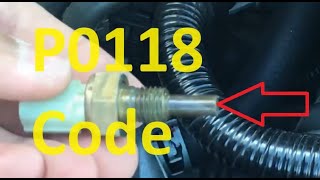
On a 2005-2016 Scion tC, code P0118 is almost always caused by a failed engine coolant temperature (ECT) sensor. This is a simple and affordable DIY fix, with the part costing between $20 for an aftermarket sensor and $70 for an OEM part. The root cause is typically an open circuit, which can be the sensor itself, its connector, or the wiring.
- P0118 on a Scion tC means the computer thinks the engine is extremely cold (often -40°F) due to a high voltage signal from the ECT sensor circuit.
- The most likely cause is a bad Engine Coolant Temperature (ECT) sensor, which is an inexpensive part. The OEM manufacturer is Denso.
- Symptoms include a constant running cooling fan, poor fuel economy, hard starting, and a dead temperature gauge.
- Diagnosis is straightforward: check for a -40°F reading on a scan tool, then test the sensor and wiring with a multimeter for an open circuit.
- This is a DIY-friendly repair that can be completed in under an hour with basic tools like a 19mm deep socket.
What's Unique About the 2005-2016 Scion tC
For the Scion tC, this code is a straightforward cooling system fault with no unique platform-specific traps. The issue spans both the first generation (2005-2010, 2AZ-FE engine) and second generation (2011-2016, 2AR-FE engine). The most common failure is simply the ECT sensor itself wearing out over time. The sensor's location is slightly different between the two generations but is accessible for a DIY repair in both cases. Denso is the original equipment manufacturer (OEM) for this part, making it a reliable choice for replacement.
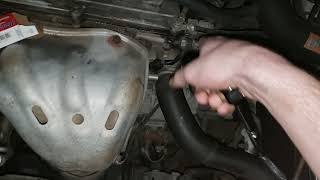
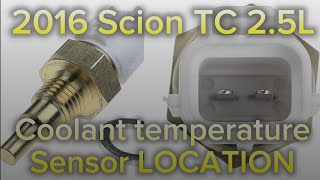
Generation note: The 2005-2016 range covers two generations of the Scion tC: - First Generation (2005-2010): Uses the 2.4L 2AZ-FE engine. The ECT sensor is located on the driver's side of the cylinder head, near the thermostat housing and requires a 19mm deep socket for removal. 🎬 Watch: First generation Scion tC sensor location and replacement guide. - Second Generation (2011-2016): Uses the 2.5L 2AR-FE engine. The ECT sensor is located on the side of the cylinder head with a gray connector and is easily accessible. 🎬 See this quick video showing the second generation sensor location. The function of the sensor and the cause of the P0118 code are identical for both generations.
Symptoms You May Notice
- Check Engine Light is on
- Cooling fans run constantly, even when the engine is cold
- Hard starting, especially when the engine is warm
- Rough idle or stalling
- Black smoke from the exhaust due to a rich fuel mixture
- Reduced fuel economy
- Inaccurate reading on the dashboard temperature gauge (may stay on 'C' or not move at all)
- Replacing the thermostat. While a thermostat can cause other cooling codes like P0128, it does not cause a P0118 circuit code.
- Replacing the ECM without proper diagnosis. This is an expensive and unnecessary repair in almost all cases of P0118.
Most Likely Causes
- Failed Engine Coolant Temperature (ECT) Sensor 🔴 High Probability Sensors fail over time due to age and constant exposure to heat cycles. This is the most common point of failure for this code, creating an internal open circuit.
How to confirm: Use a scan tool to check live data; if it reads -40°F, the sensor circuit is open. Test the sensor with a multimeter for resistance; an infinite resistance reading (OL) confirms an open circuit and a failed sensor. 🎬 Watch: How to test a faulty ECT sensor with a multimeter. A healthy sensor's resistance will decrease as it heats up.
Typical fix: Replace the ECT sensor. This involves partially draining the coolant or being prepared for a small spill, unscrewing the old sensor, installing the new one, and topping off the coolant. Bleeding the air from the cooling system afterward is recommended.
Est. part cost: $20-$70 - Damaged Wiring or Connector 🟡 Medium Probability Engine bay heat and vibrations can cause wiring insulation to become brittle and crack, or the connector's locking tab to break. Wires can also be damaged during other maintenance or by rodents.
How to confirm: Visually inspect the wiring harness and the connector for the ECT sensor. Look for breaks, corrosion, or loose pins. A common failure point is the wire breaking right at the back of the connector. Wiggle the connector while watching live data on a scan tool to see if the reading changes.
Typical fix: Repair the broken wire or replace the connector pigtail. If the wire is broken close to the connector, a new pigtail is the most reliable fix.
Est. part cost: $5-$25 - Low Engine Coolant ⚪ Low Probability While less common for a 'Circuit High' code, if the coolant is so low that the sensor is exposed to air, it can cause erratic readings which the ECM may interpret as a fault.
How to confirm: Check the coolant level in the radiator (when the engine is cold) and the overflow reservoir. Top up if low and check for leaks from components like the water pump or hoses.
Typical fix: Top off coolant and repair any leaks found in the cooling system.
Est. part cost: $15-$30 for coolant
Rare But Worth Checking
- Faulty Engine Control Module (ECM): This is extremely rare. The ECM should only be considered after all other possibilities, including the sensor and wiring, have been thoroughly tested and ruled out. A wiring short or open is far more likely than a failed ECM driver circuit.
Diagnosis Steps
- Connect an OBD-II scanner to the vehicle. Confirm that P0118 is the active code.
- View the live data stream on the scanner. Check the Engine Coolant Temperature (ECT) reading. If it shows -40°F or a similarly low, static temperature, it confirms an open circuit fault.
- Turn the engine off. Locate the ECT sensor. For Gen 1 (2005-2010), it's on the driver's side of the cylinder head. For Gen 2 (2011-2016), it's on the side of the head and more visible.
- Inspect the sensor's electrical connector and wiring for any visible damage, corrosion, or breaks, especially right at the connector.
- Disconnect the sensor. With the key on and engine off, use a multimeter to check for a 5-volt reference signal at one pin of the connector and a good ground at the other.
- If voltage and ground are present, the wiring to the ECM is likely okay. To confirm, you can jump the two pins on the connector with a paperclip or jumper wire. The scan tool's live data should now show a very high temperature (e.g., 284°F or higher), confirming the wiring and ECM are good. This strongly points to a bad sensor.
- If voltage or ground is missing, inspect the wiring harness for an open or short circuit back to the ECM.
- With the sensor unplugged, use a multimeter set to Ohms to test the resistance across the two pins on the sensor. If it reads infinite resistance (OL or open circuit), the sensor is bad and must be replaced. A good sensor should read approximately 2.2kΩ - 3.0kΩ at room temperature (20°C / 68°F).
- After replacing the part, clear the code with the scanner. Note that a permanent DTC (pDTC) may remain until the vehicle completes a full drive cycle and verifies the repair.
- Top off and bleed any air from the cooling system to prevent overheating issues.
Parts You'll Likely Need
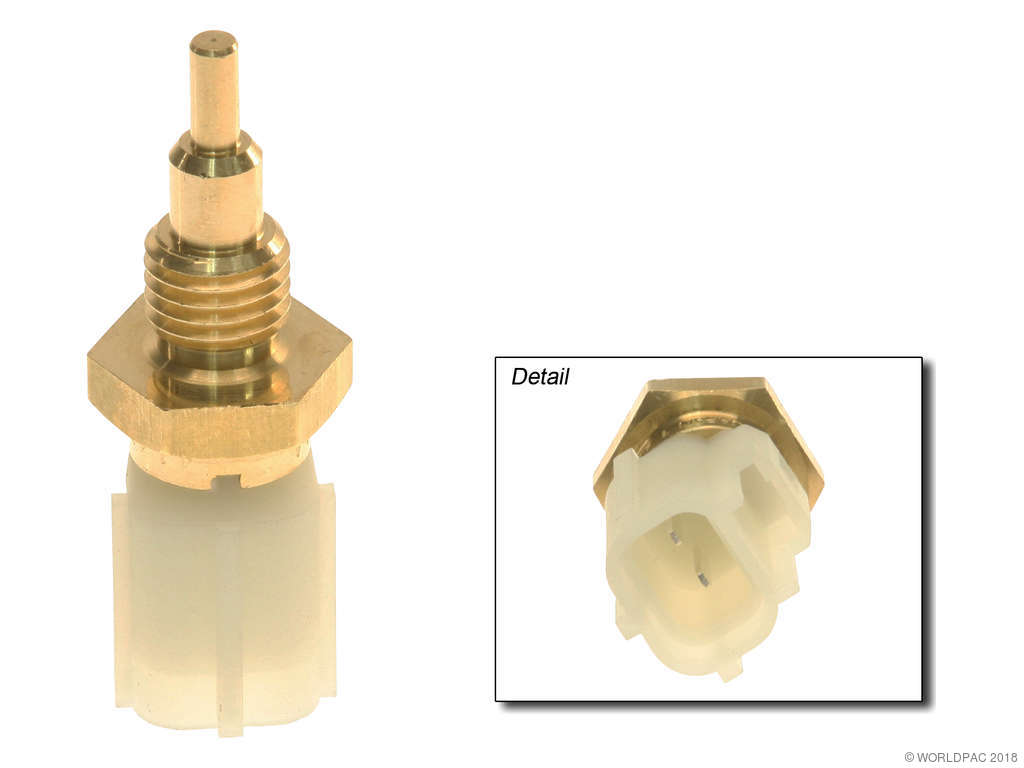
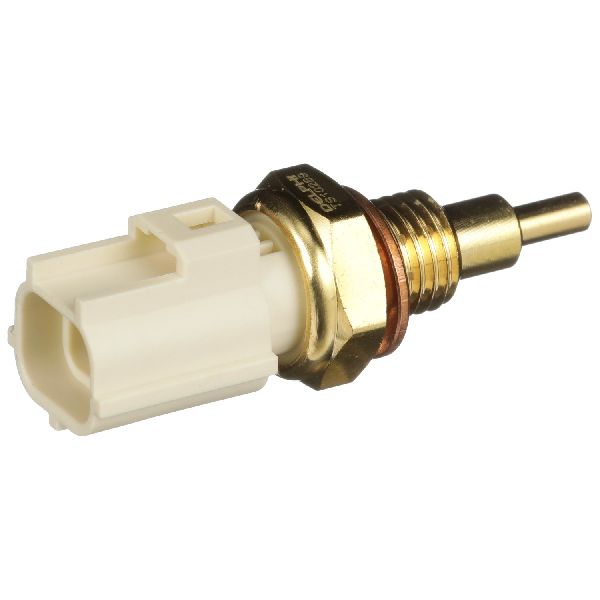
- Engine Coolant Temperature Sensor
(OEM #89422-35010)— This sensor is the most common cause of a P0118 code, as its internal thermistor fails over time, creating an open circuit.
Trusted brands: Denso (OEM), NTK, Standard Motor Products
OEM price range: $50-$75
Aftermarket price range: $20-$45 - ECT Sensor Connector Pigtail — If the wiring is broken right at the connector, or the connector itself is damaged, a replacement pigtail is needed for a solid repair.
Trusted brands: Dorman, Standard Motor Products
OEM price range: N/A
Aftermarket price range: $10-$25
Related Codes That Often Appear With This One
- P0117 — P0117 is 'ECT Circuit Low Input'. It can sometimes appear intermittently with P0118 if there is a loose connection or failing sensor causing the voltage to fluctuate wildly between an open and a short.
- P0128 — P0128 is 'Coolant Thermostat (Coolant Temperature Below Thermostat Regulating Temperature)'. While a separate issue, if the ECT sensor is providing faulty data, it could potentially lead the ECM to incorrectly flag a thermostat problem.
Mechanic-Grade Diagnostic Values
- ECT Sensor Resistance — expected: ~2.2kΩ to 3.0kΩ at 20°C (68°F); ~250Ω to 350Ω at 80°C (176°F). Failure: Infinite resistance (Open Line / OL) indicates a failed sensor. A reading outside the expected range for a given temperature also indicates a fault.
- ECT Sensor Circuit Voltage (at ECM) — expected: Signal voltage should be between ~0.5V (hot) and ~4.5V (cold).. Failure: A voltage reading above 4.91V for 0.5 seconds will trigger DTC P0118.
- ECT Live Data (Scan Tool) - Open Circuit — expected: Matches ambient temperature when cold.. Failure: A reading of -40°C or -40°F indicates an open circuit (P0118 condition).
- ECT Live Data (Scan Tool) - Jumpered Connector — expected: N/A. Failure: A reading of 140°C (284°F) or higher confirms the wiring harness and ECM are good.
Scan Tool Commands That Help
- Toyota Techstream: Data List > Coolant Temp — This is the primary function for diagnosing P0118. It allows you to see the exact temperature value the ECM is receiving. A reading of -40° confirms the open circuit fault. After jumping the connector pins, it should read over 284°F, confirming the wiring integrity to the ECM.
Wiring & Ground Locations
- ECT Sensor Connector (Gen 1 - 2AZ-FE) — On the driver's side of the cylinder head, near the thermostat housing.. This is where voltage and resistance measurements are taken. The two pins are the signal wire (THW) and the sensor ground (E2).
- ECT Sensor Connector (Gen 2 - 2AR-FE) — On the side of the cylinder head, typically with a gray connector.. This is the primary test point. The two pins are the signal wire (THW) and the sensor ground (E2).
- ECM Pins (Gen 1 - 2AZ-FE) — The ECT signal (THW) and sensor ground (E2) route to the Engine Control Module. On similar Toyota models of the era, these are often on connector E5, pins 19 (THW, Red-Yellow wire) and 28 (E2, Brown wire). Verify with a model-specific diagram.. This is the end-point for continuity testing of the sensor harness. A break in the wire between the sensor and these pins will cause the code.
- ECM Pins (Gen 2 - 2AR-FE) — The ECT signal (THW) and sensor ground (E2) route to the Engine Control Module. Pin locations vary by year and specific ECM, but they are typically labeled THW and E2 in the wiring diagram.. Required for end-to-end harness continuity checks if a wiring break is suspected.
- Engine Ground Points — Key grounds are located on the cylinder head (often a wire from the head to the firewall) and from the engine block to the chassis, near the battery or AC compressor bracket.. The sensor ground (E2) circuit relies on the ECM having a solid ground reference to the chassis. A corroded or loose engine ground can cause floating voltages and erratic sensor readings, although this is a less common cause for a static P0118.
Real Owner Repair Stories
- YouTube Channel 'YK RECREATION' (Vehicle with symptoms consistent with P0118 (constantly running fans, high circuit code).) — Check engine light with P0118, cooling fans running constantly even when cold.
❌ Tried (didn't work) Replacing the ECT sensor (the code remained).
✅ What actually fixed it The wiring harness for the ECT sensor had been rubbing against a hot coolant pipe, causing the insulation to melt and the wires to break. Repairing the broken wires and re-routing the harness away from the pipe resolved the issue. - YouTube Channel 'Fixing it with Friends' (2008 Saturn Astra (demonstrates a common P0118 cause applicable to many vehicles).) — Check engine light with P0118.
✅ What actually fixed it Rodents had chewed through the wires leading to the ECT sensor connector. The fix was to splice in a new connector pigtail. - Reddit user on r/SciontC (Scion tC (year not specified).) — Check engine light with code P0118, scan tool showing temperature as -40°.
❌ Tried (didn't work) User was in the diagnosis phase.
✅ What actually fixed it The thread confirms that a -40° reading is the classic symptom of an open circuit, with the community advising the user to replace the ECT sensor as the most probable fix.
When the Usual Fixes Don't Work
- In some cases, the P0118 code is not caused by a failed sensor but by a break in the wiring harness. One documented instance showed that after replacing the sensor did not fix the problem, the root cause was found to be wiring that had melted due to contact with a hot coolant pipe. This highlights the need to perform full circuit integrity tests (visual inspection, continuity checks) before concluding the sensor is the only possible cause.
OEM Part Supersession History
89422-35010→No direct supersession found; this part number remains widely used.— N/A
Heads up: This part number is cross-referenced with older numbers like 89422-20010 and 89422-30030. While they are often interchangeable, sticking with the specified 89422-35010 for this vehicle is the safest choice.
Model Year Variations Within This Range
- 2005-2010: Uses the 2.4L 2AZ-FE engine. The ECT sensor is on the driver's side of the cylinder head. ECM pinouts are specific to this engine family.
- 2011-2016: Uses the 2.5L 2AR-FE engine. The ECT sensor is located on the side of the cylinder head and is generally easier to access. ECM pinouts are specific to this engine family.
Diagnostic Flowchart
Other Known Issues on This Vehicle
Issues unrelated to this code that are worth knowing about as an owner of this generation:
- Excessive Oil Consumption (2.4L 2AZ-FE) 🔴 High — Very common on 2006-2009 models. Caused by faulty piston ring design. Can consume over 1 quart per 1,200 miles. (Ref: Toyota issued a warranty enhancement (ZE7) which has since expired. The fix involves replacing pistons and rings.)
- Broken/Melted Rear Hatch Handle (Gen 1) 🟡 Low — Extremely common on 2005-2010 tC models. The plastic handle garnish becomes brittle and breaks off. (Ref: Scion issued TSB S-SB-0001-10 and a warranty enhancement (ZTW), but both have likely expired for most vehicles.)
- Stripped Cylinder Head Threads (2.4L 2AZ-FE) 🔴 High — A known design flaw where the rear head bolts can pull the threads out of the engine block, causing a coolant leak and overheating.
- VVT-i Gear Rattle on Cold Start (2.5L 2AR-FE) 🟡 Low — Commonly reported issue where the engine makes a brief rattling or knocking sound for a few seconds on a cold start. (Ref: Toyota issued a TSB for this issue on other models with the same engine, recommending replacement of the VVT-i gear assembly.)
- Water Pump Failure (2.5L 2AR-FE) 🟠 Medium — While generally reliable, the water pump is a common failure point as the vehicle ages, leading to coolant leaks or, less commonly, internal failure causing overheating.
Used vs. New Parts: Buying Guide for This Vehicle
When a used part is the smart pick: For this repair, a used part is only recommended for the **connector pigtail**. If your connector is broken or the wires are damaged right at the connector, sourcing a used pigtail from a junkyard harness is a cost-effective and reliable solution.
Donor-vehicle mileage cap: roughly under 150000 miles for the part to have meaningful remaining life.
What to inspect on the donor part:
- For a connector pigtail, ensure the plastic is not brittle or cracked.
- Check that the locking tab is intact and functional.
- Ensure there are at least 4-6 inches of wire attached to allow for easy splicing.
- Look for clean copper wire, not green or black corroded wire, when you cut it from the donor harness.
OEM-only on this vehicle (don't cheap out):
- While not strictly 'OEM-only', it is strongly advised to avoid purchasing a **used ECT sensor**. The part is inexpensive new, and its failure mode is related to age and heat cycles, meaning a used sensor has a high probability of premature failure.
Aftermarket brands forum-validated for this vehicle:
- Denso (This is the Original Equipment Manufacturer and is the most recommended choice)
- NTK
- Standard Motor Products (SMP)
Brands owners have reported issues with on this vehicle:
- Unnamed, no-brand 'white box' parts from online marketplaces. These often have poor quality control and may not have the correct resistance curve, leading to incorrect temperature readings even if they clear the P0118 code.
Real Owner Stories
Aggregated from forums and TSBs cited above. Mileages and costs reflect what owners reported in those sources.
Scion tC (2005-2016)
Symptoms: Scan tool showed a -40° temperature reading.
What fixed it: Owner was advised to check the Engine Coolant Temperature (ECT) sensor.
Source hint: Reddit r/SciontC
Scion tC (2005-2016)
Symptoms: Check Engine Light with code P0118 and related symptoms.
What fixed it: Replacing the ECT sensor is the common fix reported by owners.
Source hint: ScionLife.com
Toyota with a similar engine
Symptoms: The P0118 code persisted even after replacing the ECT sensor.
What fixed it: The ultimate cause was a broken wire in the ECT sensor harness that had been damaged during a previous aftermarket installation.
Source hint: Reddit r/ToyotaTundra
Related OBD-II Codes
Frequently Asked Questions
Where is the Engine Coolant Temperature (ECT) sensor located on my Scion tC?
My scan tool shows the coolant temperature is -40°F. Does this mean the ECT sensor is bad?
Can low coolant cause a P0118 code on my tC?
I replaced the ECT sensor but the P0118 code came back. What should I check next?
How can I test the ECT sensor myself to confirm it's bad?
What other Toyota or Scion vehicles share this same P0118 problem?
Helpful Videos
Used OEM Parts in Stock

New Aftermarket Parts Available


The information in this article is provided for general reference and educational purposes only. Vehicle specifications, procedures, and part compatibility can vary by production date, trim level, and region. Always consult your vehicle's factory service manual and verify part numbers before purchasing or performing repairs. Safety-critical components such as airbags, seat belts, and braking systems should be installed by a qualified professional.
- Scion tC:
- 🎬 Helpful Videos
- 🛍️ Shop This Part
- What's Unique About the 2005-2016 Scion tC
- Symptoms You May Notice
- Most Likely Causes
- Rare But Worth Checking
- Diagnosis Steps
- Parts You'll Likely Need
- Related Codes That Often Appear With This One
- Mechanic-Grade Diagnostic Values
- Scan Tool Commands That Help
- Wiring & Ground Locations
- Real Owner Repair Stories
- When the Usual Fixes Don't Work
- OEM Part Supersession History
- Model Year Variations Within This Range
- Diagnostic Flowchart
- Other Known Issues on This Vehicle
- Used vs. New Parts: Buying Guide for This Vehicle
- Real Owner Stories
- Scion tC (2005-2016)
- Scion tC (2005-2016)
- Toyota with a similar engine
- Related OBD-II Codes
- Frequently Asked Questions
- 🎟️ Get 5% Off