

P0118 on 2000-2005 Dodge Neon: Engine Coolant Temp Circuit High Causes and Fixes
On a 2000-2005 Neon, P0118 is almost always caused by failed wiring near the sensor or the sensor itself. Inspect the wiring harness for oil damage before replacing the Engine Coolant Temperature (ECT) sensor. A new sensor or connector pigtail costs about $15-$40.
- P0118 on a 2000-2005 Neon means the engine computer thinks the engine is extremely cold (-40°F).
- Before buying any parts, carefully inspect the wiring and connector for the ECT sensor on the driver's side of the engine; oil damage causing broken wires is the most common cause.
- A scan tool is invaluable for diagnosis, as a fixed -40°F reading points directly to an open circuit, and a jumper wire test can quickly isolate the sensor from the wiring.
- The repair is DIY-friendly, typically involving a simple sensor swap or splicing a new connector pigtail, costing under $50 in parts.
What's Unique About the 2000-2005 Dodge Neon
On the second-generation Dodge Neon, the primary cause of a P0118 code is often not the sensor itself, but the wiring leading to it. The ECT sensor is located on the driver's side of the cylinder head, in an area prone to oil leaks from other components like the cam sensor or valve cover gasket. Over time, this oil soaks and degrades the wire insulation, leading to corrosion or a complete break in the circuit, which triggers the 'Circuit High' fault. This failure mode is well-documented by owners and mechanics specifically for this vehicle.
Symptoms You May Notice
- Check Engine Light is on
- Engine cooling fans run constantly from the moment the key is turned on, or do not turn on at all.
- Engine overheating, especially in stop-and-go traffic.
- Inaccurate or non-functional temperature gauge on the dashboard.
- Reduced fuel economy due to the engine running rich (too much fuel).
- Black smoke from the exhaust, indicating a rich fuel mixture.
- Rough idle or stalling.
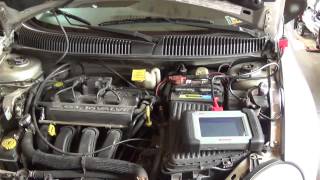
- Difficulty starting the engine, particularly when cold. 🎬 See this explanation of how P0118 affects engine performance.
- Replacing the thermostat. While a bad thermostat can cause heating issues, it will not directly cause a P0118 electrical circuit code.
- Replacing the PCM without testing the circuit. The wiring is a much more common failure point on this specific vehicle, and a much cheaper fix.
Most Likely Causes
- Damaged ECT Sensor Wiring or Connector 🔴 High Probability The wiring harness is often exposed to oil leaks from nearby engine components like the cam position sensor, which degrades the plastic insulation over time, causing wires to become brittle, break, or corrode right at the connector.
How to confirm: Visually inspect the two wires and the plastic connector attached to the ECT sensor on the driver's side of the cylinder head. Look for brittle, cracked, or bare wires. A scan tool showing a fixed -40°F reading is a strong indicator of an open circuit (broken wire).
Typical fix: Repair the broken wire(s) by soldering and using heat-shrink tubing, or replace the connector pigtail if it's damaged beyond repair.
Est. part cost: $10-$25 for a new connector pigtail. - Defective Engine Coolant Temperature (ECT) Sensor 🟡 Medium Probability The sensor is a simple thermistor that can fail with age and constant heat cycles, leading to an internal open circuit.
How to confirm: If the wiring is confirmed to be good, the sensor is the next likely failure point. You can test it by measuring its resistance with a multimeter. At room temperature (~68°F/20°C), it should read approximately 3520 Ohms. If the reading is infinite (OL), the sensor is internally open and bad.
Typical fix: Replace the ECT sensor. This usually requires a 19mm or 3/4" deep socket. The swap can be done quickly on a cold engine to minimize coolant loss.
Est. part cost: $15-$40
Rare But Worth Checking
- Low Engine Coolant or Air in the System: If the coolant level is so low that the sensor is exposed to air instead of coolant, it cannot read the temperature correctly. This usually triggers other symptoms like visible leaks, a gurgling noise from the reservoir, or overheating first.
- Faulty Powertrain Control Module (PCM): This is very rare. The PCM should only be considered after all other possibilities, including the sensor and the entire circuit between it and the PCM, have been thoroughly tested and ruled out.
Diagnosis Steps
- Connect an OBD-II scanner and verify P0118 is the active code.
- Check the live data from the ECT sensor on the scanner. A reading of -40°F or a similarly low, fixed temperature strongly suggests an open circuit.
- Turn the engine off and let it cool. Locate the ECT sensor on the driver's side of the cylinder head, near the heater hoses.
- Carefully inspect the wiring harness and connector leading to the sensor. Look for signs of oil saturation, corrosion, or physically broken wires right at the back of the connector. This is the most common point of failure.
- If wiring appears damaged, repair it. This may involve splicing in new wire or replacing the connector pigtail. 🎬 Watch: This video shows how to repair the broken ECT wiring. Use solder and heat-shrink tubing for a durable repair.
- If the wiring looks intact, disconnect the sensor. Use a multimeter set to Ohms to measure the resistance across the two pins of the sensor itself. A healthy sensor will have high resistance when cold (e.g., ~3.5k Ω at ~68°F/20°C) and low resistance when hot (e.g., ~241 Ω at 194°F/90°C).
- To test the vehicle's wiring, you can use a fused jumper wire to connect the two terminals in the harness connector (with the sensor unplugged). Turn the key to the 'On' position and check the scan tool. The temperature should now read a very high value (e.g., 260°F). If it does, the wiring to the PCM is good, and the sensor is bad.
- If the wiring and sensor test good, check for 5V reference and ground at the connector. If either is missing, the problem lies further up the harness or, very rarely, with the PCM itself.
Parts You'll Likely Need
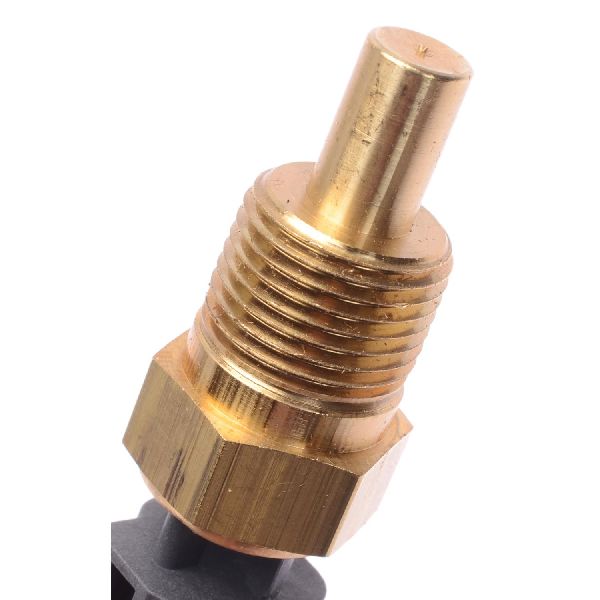
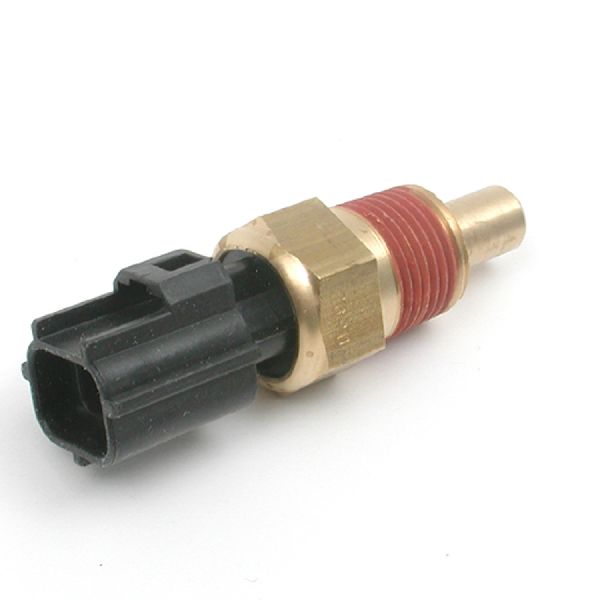
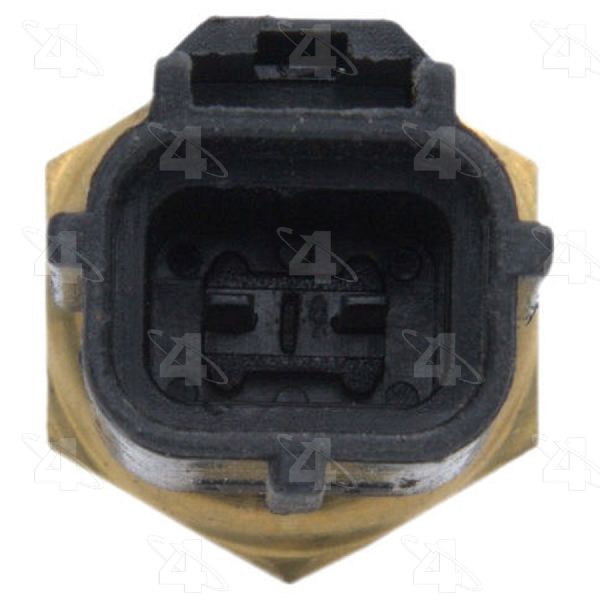
- Engine Coolant Temperature (ECT) Sensor
(OEM #5269870AB)— This sensor is the primary component that fails internally, after wiring issues are ruled out.
Trusted brands: Mopar, NTK/NGK, Delphi
OEM price range: $30-$50
Aftermarket price range: $15-$35 - ECT Sensor Connector Pigtail
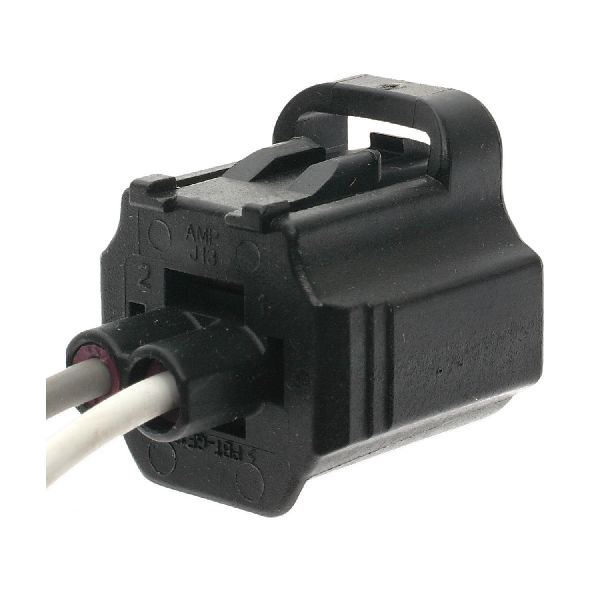
(OEM #Dorman 645-530 (or similar))— Often the original plastic connector becomes brittle from heat and oil exposure, and the wires break right at the connector, requiring a replacement pigtail to be spliced in.
Trusted brands: Dorman, Standard Motor Products (SMP)
OEM price range: $20-$30
Aftermarket price range: $10-$25
Related Codes That Often Appear With This One
- P0117 — P0117 is 'ECT Circuit Low Input'. It can appear if the faulty wiring intermittently shorts to ground instead of being open.
- P0128 — P0128 means 'Coolant Thermostat (Coolant Temperature Below Thermostat Regulating Temperature)'. The PCM might set this code if it sees the engine isn't 'warming up' as expected, which is what a P0118 fault would report.
Platform-Specific Known Issues
- Real Owner Experience: Broken Wires Inside Loom: A user on a popular forum found the wires for the ECT sensor were broken inside the protective loom, about two inches back from the connector itself. The external appearance was fine, but wiggling the harness caused the temperature reading on the scan tool to flicker, confirming an intermittent break that required cutting back the loom to find and repair.
- Video Diagnosis Confirms Oil Saturation Failure: A YouTube video by Pine Hollow Auto Diagnostics on a 2000 Neon with P0118 visually confirmed the cause was oil from a leaking cam sensor that had completely degraded the ECT sensor wires until they broke off the connector. The fix was to clean the area and splice the wires back together with heat shrink tubing.
Mechanic-Grade Diagnostic Values
- ECT Sensor Resistance vs. Temperature — expected: Approx. 100,700Ω @ -40°F, 3520Ω @ 68°F (20°C), 973Ω @ 122°F (50°C), 241Ω @ 194°F (90°C).. Failure: An infinite (OL) reading indicates an open internal circuit. A reading that doesn't change with temperature indicates a failed thermistor.
- ECT Sensor Signal Voltage at PCM (Key On, Engine Off) — expected: Approx. 3.0V - 3.5V on a cold engine (~70°F).. Failure: A reading near 5.0V indicates an open circuit (P0118). A reading near 0V indicates a short to ground (P0117).
- ECT Sensor Connector Pin Voltages (Key On, Sensor Unplugged) — expected: One pin should have ~5V (PCM reference voltage). The other pin should have near 0V (sensor ground).. Failure: Missing 5V reference or ground indicates a wiring problem between the connector and the PCM.
Scan Tool Commands That Help
- DRB III: View Live Sensor Data — The DRB III was the Chrysler dealer-level scan tool for this era. Using it to view live ECT data would be the first step in professional diagnosis, confirming the -40°F reading that indicates an open circuit.
- DRB III: Actuator Tests / System Tests — While there isn't a specific bidirectional command for the ECT sensor itself (as it's just an input), a technician could use the DRB III to command the cooling fans on and off to verify the fan control part of the circuit is working independently of the bad sensor signal.
Wiring & Ground Locations
- ECT Sensor Signal Wire — On a 2003 model, this is the Dark Green/Red wire at the ECT sensor connector. It runs to Pin 23 of the C2 PCM connector.. This is the wire that carries the variable voltage signal back to the PCM. A break anywhere along this wire will cause the P0118 code.
- ECT Sensor Ground Wire — On a 2003 model, this is the Black/Light Blue wire at the ECT sensor connector. It provides the ground reference for the sensor circuit from the PCM.. A break in this ground wire will also cause an open circuit and trigger a P0118 code, as the sensor will have no path to ground.
- G100 / G102 — Main engine/chassis ground points. G100 is often located on the top left side of the engine, while another key ground is on the strut tower.. While the ECT sensor ground is provided through the PCM, a poor main ground for the PCM itself can cause erratic sensor readings and various electrical issues. Checking that these main grounds are clean and tight is a good practice when diagnosing any electrical fault.
Real Owner Repair Stories
- neons.org forum user (2004 Dodge Neon SXT) — P0118 code, cooling fans running constantly.
❌ Tried (didn't work) Replaced the ECT sensor itself.
✅ What actually fixed it The user found that one of the wires had broken off right at the back of the plastic connector. The break was clean and hard to see without pulling on the wires. Splicing in a new pigtail connector resolved the issue. - YouTube video by 'Pine Hollow Auto Diagnostics' (2000 Dodge Neon) — P0118 code, scan tool reading -40°F.
✅ What actually fixed it The technician immediately identified two bare wires dangling near the ECT sensor location. Oil from a leaking cam sensor had destroyed the wire insulation. The fix was to clean the wires and solder them back to the original connector terminals, followed by heat shrinking for protection.
OEM Part Supersession History
Not specified, but multiple revisions likely exist.→5269870AB— Standard part consolidation and updates over time.
Heads up: The part 5269870AB is listed for a wide range of Chrysler/Dodge/Jeep vehicles from 2001-2010, including the Neon, indicating it is the correct service replacement for this generation.
Diagnostic Flowchart
Other Known Issues on This Vehicle
Issues unrelated to this code that are worth knowing about as an owner of this generation:
- Head Gasket Failure 🔴 High — Common, especially on the Single Overhead Cam (SOHC) 2.0L engine. Can occur at moderate mileage (as low as 55k miles) and is often preceded by overheating or unexplained coolant loss.
- Failed Engine/Transmission Mounts 🟠 Medium — Very common. The rubber in the upper passenger-side mount and lower torque struts degrades, causing excessive engine vibration at idle and clunking noises.
- Oil Leaks (Valve Cover, Cam/Crank Sensors, Oil Pan) 🟠 Medium — Widespread. Leaks from the valve cover gasket can fill spark plug tubes with oil, causing misfires. Leaks from the cam and oil pressure sensors are also frequent and can damage nearby wiring, as seen with the P0118 issue.
- Peeling Paint (Clear Coat Delamination) 🟡 Low — Common on certain colors, particularly white and blue. The clear coat and sometimes the color coat peel away from the primer, often on the roof and hood. Chrysler/Dodge has issued TSBs for similar issues on other models but not specifically a recall for the Neon. (Ref: No specific recall for Neon, but a known issue on many Chrysler products of the era.)
- Faulty Camshaft/Crankshaft Position Sensors 🟠 Medium — A known failure item that can cause intermittent stalling, no-start conditions, and poor performance.
Used vs. New Parts: Buying Guide for This Vehicle
When a used part is the smart pick: A used ECT sensor is generally not recommended. The cost of a new, reliable aftermarket sensor is very low ($15-$35), and it is a common failure item. The labor to replace it outweighs the small savings from a used part of unknown age and condition. A used connector pigtail from a junkyard is a viable option if the donor vehicle's harness is in good condition (not oil-soaked or brittle).
Donor-vehicle mileage cap: roughly under 100000 miles for the part to have meaningful remaining life.
What to inspect on the donor part:
- For a connector pigtail, ensure the donor harness is dry and free of oil.
- Flex the wires near the connector; they should be pliable, not stiff or brittle.
- Check the locking tab on the plastic connector to ensure it's not broken.
OEM-only on this vehicle (don't cheap out):
- No parts for this specific repair require OEM-only sourcing. Aftermarket sensors and connectors are widely available and generally reliable.
Aftermarket brands forum-validated for this vehicle:
- NGK/NTK
- Delphi
- Standard Motor Products (SMP)
Brands owners have reported issues with on this vehicle:
- No-name, unbranded sensors from online marketplaces should be avoided, as their thermistor accuracy and longevity can be questionable.
Real Owner Stories
Aggregated from forums and TSBs cited above. Mileages and costs reflect what owners reported in those sources.
2000 Dodge Neon
Symptoms: The Check Engine Light was on for code P0118, and a scan tool showed the engine coolant temperature was stuck at -40° F, indicating an open circuit.
What fixed it: The two wires leading to the ECT sensor were found to be broken and dangling, not attached to the connector. The insulation was degraded by an oil leak. The fix was to cut the damaged sections, solder the wires back together, and seal the repair with heat-shrink tubing.
Source hint: Pine Hollow Auto Diagnostics
2000-2005 Dodge Neon
Symptoms: The temperature reading on a scan tool would flicker when the wiring harness was wiggled, confirming an intermittent break in the circuit.
What fixed it: The wires for the ECT sensor were found to be broken inside the protective plastic loom, about two inches away from the connector itself. The repair involved cutting open the loom to access and splice the broken wires.
Source hint: A user on a popular forum
Related OBD-II Codes
Frequently Asked Questions
My scan tool is reading a fixed -40°F for the coolant temperature on my Neon. What does this mean?
Where is the ECT sensor located on a 2000-2005 Dodge Neon?
Could a common oil leak on my Neon cause the P0118 code?
What is the most likely part to have failed when I get a P0118 code on this car?
How can I test the ECT sensor itself on my Dodge Neon?
My engine's cooling fans are running constantly from the moment I turn the key. Is this related to P0118?
Is the P0118 issue also a known problem on the Chrysler PT Cruiser?
Helpful Videos
We Have This Part in Stock


The information in this article is provided for general reference and educational purposes only. Vehicle specifications, procedures, and part compatibility can vary by production date, trim level, and region. Always consult your vehicle's factory service manual and verify part numbers before purchasing or performing repairs. Safety-critical components such as airbags, seat belts, and braking systems should be installed by a qualified professional.
- Dodge Neon:
- 🎬 Helpful Videos
- 🛍️ Shop This Part
- What's Unique About the 2000-2005 Dodge Neon
- Symptoms You May Notice
- Most Likely Causes
- Rare But Worth Checking
- Diagnosis Steps
- Parts You'll Likely Need
- Related Codes That Often Appear With This One
- Platform-Specific Known Issues
- Mechanic-Grade Diagnostic Values
- Scan Tool Commands That Help
- Wiring & Ground Locations
- Real Owner Repair Stories
- OEM Part Supersession History
- Diagnostic Flowchart
- Other Known Issues on This Vehicle
- Used vs. New Parts: Buying Guide for This Vehicle
- Real Owner Stories
- 2000 Dodge Neon
- 2000-2005 Dodge Neon
- Related OBD-II Codes
- Frequently Asked Questions
- 🎟️ Get 5% Off