

P0113 on 2017-2018 Jaguar XE 2.0L: IAT Sensor Circuit High Causes and Fixes
On a 2017-2018 Jaguar XE with the 2.0L Ingenium petrol engine, code P0113 is most often caused by a faulty Intake Air Temperature (IAT) sensor, which is integrated into the Mass Airflow (MAF) sensor. However, before replacing the sensor, check for an air leak at the intake elbow as specified in Jaguar TSB SSM73671, a known issue on this engine that also triggers codes P0100, P0111, P2178, and P0299.
- P0113 on this Jaguar means the computer sees an impossibly high voltage from the air temperature sensor, making it think the air is -40 degrees.
- Before buying any parts, check for an air leak at the intake elbow near the throttle body, as this is a known issue (TSB SSM73671) for the 2.0L Ingenium engine.
- The Intake Air Temperature (IAT) sensor is not a separate part; it is built into the Mass Airflow (MAF) sensor located on the engine's air intake tube.
- If no air leak is found, the most common fix is to replace the entire MAF sensor assembly.
- Driving with this code will result in poor fuel mileage and can lead to other issues, so it should be addressed promptly.
What's Unique About the 2017-2018 Jaguar XE
For the 2.0L Ingenium petrol engine in the 2017-2018 XE, a key platform-specific issue is documented in Technical Service Bulletin (TSB) SSM73671. This TSB highlights that an improperly fitted air intake elbow below the throttle body can cause an unmetered air leak. This leak is known to trigger a cluster of codes: P0113 (IAT Circuit High), P0111 (IAT Range/Performance), P0100 (MAF Circuit), P2178 (System Too Rich Off Idle), and P0299 (Turbo Underboost). Therefore, unlike many other vehicles where P0113 points directly to a sensor failure, on this specific Jaguar engine, a mechanical issue (air leak) must be ruled out first. On these Ingenium engines, the IAT sensor is integrated into the Mass Airflow (MAF) sensor assembly.
Symptoms You May Notice
- Check Engine Light is on
- "Restricted Performance" message on the instrument cluster
- Reduced fuel economy
- Rough or uneven idle
- Engine hesitation or sluggish acceleration / lack of power
- Hard starting in some conditions
- Black, sooty spark plugs
- Replacing the MAF/IAT sensor without first checking for intake air leaks. Per TSB SSM73671, an air leak is a primary suspect on this specific engine and can mimic the symptoms of a failed sensor.
- Confusing the IAT sensor's location. On the 2.0L Ingenium, it is integrated with the MAF sensor, not a separate component as it is on other JLR engines like the 3.0L V6.
Most Likely Causes
- Improperly fitted air intake elbow causing a vacuum leak 🔴 High Probability This is a well-documented issue for the 2.0L Ingenium petrol engine, as cited in Jaguar TSB SSM73671. The elbow below the throttle body can be misaligned during manufacturing or previous service.
How to confirm: Perform a smoke test on the intake system. 🎬 See how to perform a smoke test to find vacuum leaks. The TSB specifically recommends using the 'JLR approved smoke tester' (Part Number 95-0106) and focusing on the connection between the intake elbow and the throttle body to check for leaks.
Typical fix: Loosen the clamp, ensure the intake elbow is fully and correctly seated onto the throttle body, and retighten the clamp. Clear the fault codes and re-test.
Est. part cost: $0-$50 - Faulty Intake Air Temperature (IAT) Sensor 🔴 High Probability The IAT sensor is integrated with the Mass Airflow (MAF) sensor on this engine. Over time, the internal thermistor can fail or become contaminated with oil vapor or dirt, leading to an open circuit condition.
How to confirm: Use a scan tool to monitor live IAT data. A reading of -40°F or -40°C with the engine running is a definitive sign of a circuit high fault. The sensor itself can be tested with a multimeter for resistance, but confirming the live data reading is the most effective method. 🎬 Watch: How to diagnose P0113 and test the sensor thermistor.
Typical fix: Replace the entire Mass Airflow (MAF) sensor assembly, as the IAT is integrated into it.
Est. part cost: $50-$250 - Damaged wiring or connector for the MAF/IAT sensor 🟡 Medium Probability The connector and harness are exposed to engine heat and vibration, which can cause wires to fray or pins to corrode over time, creating an open circuit.
How to confirm: Visually inspect the MAF sensor connector and the wiring harness leading to it for any signs of damage, corrosion, or loose pins. Use a multimeter to check for the 5V reference voltage and a good ground at the connector with the ignition on and sensor unplugged.
Typical fix: Repair the damaged section of the wiring harness or replace the connector pigtail.
Est. part cost: $15-$75
Rare But Worth Checking
- Faulty Powertrain Control Module (PCM): This is extremely rare. The PCM should only be considered after all other possibilities, including sensor, wiring, and air leaks, have been thoroughly ruled out.
Diagnosis Steps
- Connect an OBD-II scanner and confirm the presence of the P0113 code. Check for any other related codes listed in TSB SSM73671, such as P0100, P0111, P2178, or P0299.
- Using the scanner's live data function, view the Intake Air Temperature (IAT) reading. If it shows an extremely low value, such as -40°F or -40°C, this confirms the 'Circuit High' fault.
- Based on TSB SSM73671, the next step is to check for an unmetered air leak. Perform a smoke test on the intake system, paying close attention to the intake elbow below the throttle body. If a leak is found, repair it, clear the codes, and re-test.
- If no air leak is present, locate the Mass Airflow (MAF) sensor on the intake tube after the air filter box. Visually inspect the sensor's electrical connector and wiring for any signs of damage, corrosion, or loose connections.
- If the wiring appears intact, unplug the connector and check for 5V reference and ground signals at the pigtail with the ignition on.
- If wiring and signals are good, the most likely cause is a failed IAT sensor within the MAF assembly. Replacing the MAF sensor is the standard repair. 🎬 Watch: Step-by-step DIY guide for replacing a MAF sensor.
- After replacing the sensor, clear the OBD-II codes and perform a drive cycle to ensure the fault does not return. Some advanced scan tools may have a function to reset MAF sensor adaptations, which is recommended after replacement.
Parts You'll Likely Need
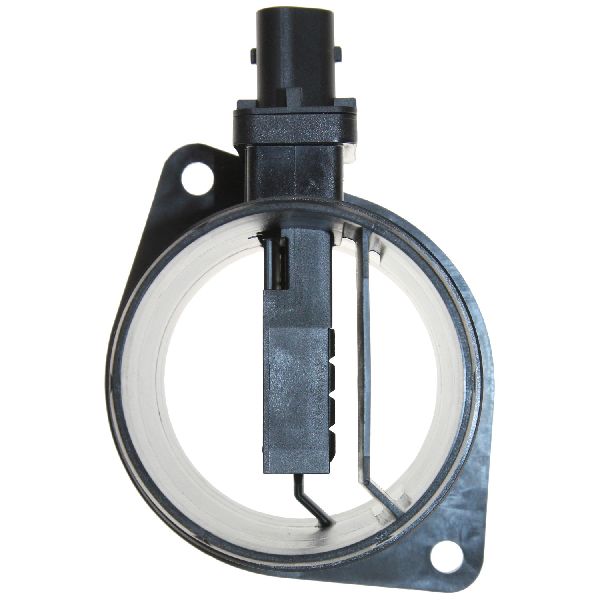
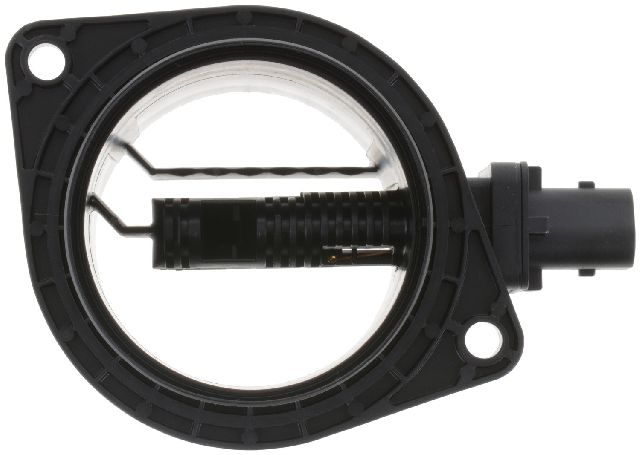
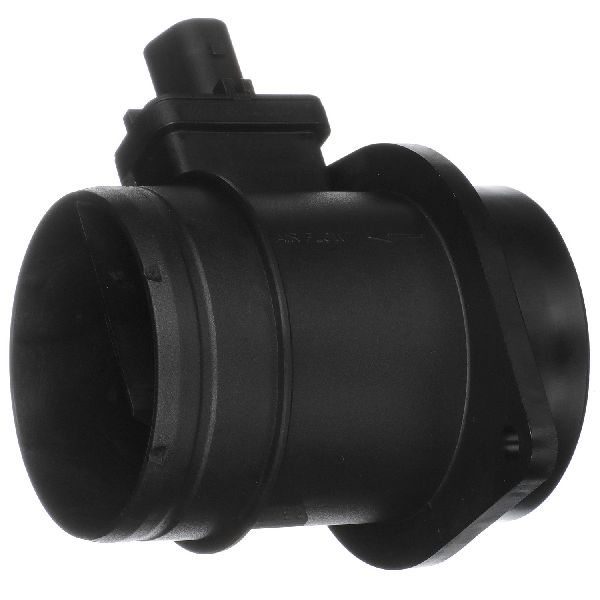
- Mass Airflow (MAF) / Intake Air Temperature (IAT) Sensor Assembly
(OEM #T2R26101)— On the 2.0L Ingenium engine, the IAT sensor is integrated into the MAF sensor. Failure of the internal IAT thermistor is a common cause of P0113, requiring replacement of the entire assembly.
Trusted brands: Bosch (OEM supplier), Denso, Genuine Jaguar
OEM price range: $230-$280
Aftermarket price range: $50-$150
Related Codes That Often Appear With This One
- P2178 — This code means 'System Too Rich Off Idle'. It is a direct consequence of P0113, as the PCM injects excess fuel based on the false -40° temperature reading. TSB SSM73671 lists these codes together.
- P0111 — This code for 'IAT Sensor 1 Circuit Range/Performance' often appears alongside P0113 because both relate to the same sensor circuit. An air leak or faulty sensor can cause both performance and circuit high faults. TSB SSM73671 lists them together.
- P0101 — Since the IAT is integrated with the Mass Airflow (MAF) sensor, a fault in the assembly or a significant air leak can also trigger MAF performance codes. TSB SSM73671 lists this as an expected related code.
- P0172 — This code for 'System Too Rich (Bank 1)' is a more general rich condition code that can be caused by the P0113 fault.
- P0299 — This code for 'Turbocharger/Supercharger "A" Underboost Condition' is also listed in TSB SSM73671. A significant unmetered air leak after the compressor can cause the system to fail to reach target boost levels.
Technical Service Bulletins (TSBs) & Recalls
- SSM73671: Links P0113 on 2.0L Ingenium petrol engines to a potential air leak at the intake elbow below the throttle body. It notes this can also cause codes P0100-38, P0111-84, P2178-00, and P0299-00. It recommends a smoke test before parts replacement. This bulletin specifically identifies P0113-00 as the Intake Air Temperature Sensor 1 Circuit High Bank 1 with no sub type information.
Platform-Specific Known Issues
- Jaguar Technical Service Bulletin SSM73671 specifically identifies that on 2017+ models with the 2.0L Ingenium petrol engine (including XE, XF, F-Pace, and F-Type), an improperly fitted air intake elbow can cause an air leak, which in turn triggers the P0113 code along with a suite of other performance codes.
Mechanic-Grade Diagnostic Values
- IAT Sensor Resistance vs. Temperature — expected: Approximately 3.75 kOhms at 20°C (68°F) and 2.4 kOhms at 30°C (86°F). Resistance is non-linear and decreases as temperature increases.. Failure: Infinite resistance (open circuit), near-zero resistance (short circuit), or a value that does not change when the sensor is gently heated.
- MAF/IAT Sensor Connector Voltage (Key-On, Engine-Off) — expected: Pin 1: ~5V (Reference), Pin 2: Ground (~0V), Pin 3: ~5V (Reference), Pin 4: ~12V (Battery Voltage). Note: This is based on a 2017 2.0L Turbo model and pin configuration may vary.. Failure: Absence of 12V power, 5V reference, or a ground reading significantly above 0V points to a problem in the wiring harness or PCM, not the sensor itself.
- Engine Ground Point Voltage Drop (During Cranking) — expected: Well under 0.5V (500mV) when measured between the engine block and the battery negative terminal.. Failure: A reading higher than 0.5V indicates a high-resistance ground connection, which can cause erratic sensor behavior and trigger various electrical faults.
Hidden / Shadow Codes Worth Checking
- P0113-00: Indicates a general 'No Subtype Information' fault for the IAT Sensor 1 Circuit High. This is the most common variant seen on JLR vehicles and typically points to a hard fault (like an unplugged sensor or internal open circuit) rather than an intermittent one. (see via JLR-specific diagnostic tools like SDD or Pathfinder, though many advanced OBD-II scanners will also display the -00 suffix.) TSB Bulletin #SSM73671 explicitly lists this code as a primary indicator for the intake elbow issue.
Scan Tool Commands That Help
- Jaguar Pathfinder (2017+): Live Data Monitoring — Essential for diagnosing P0113. Use this to view the 'Intake Air Temp Sensor 1' PID. A static reading of -40°C/-40°F confirms the circuit high fault condition the PCM is seeing.
- Advanced OBD-II Scanner: Reset MAF / Engine Adaptations — After replacing the MAF/IAT sensor assembly, it is good practice to reset any learned engine adaptations. This forces the PCM to immediately use data from the new sensor, rather than relying on old, potentially skewed learned values, ensuring a smoother transition and accurate performance.
Wiring & Ground Locations
- MAF/IAT Sensor Connector — On the air intake tube, immediately following the air filter box.. This is the primary connection point for the IAT sensor. Corrosion, backed-out pins, or harness damage here will cause an open circuit and trigger P0113. A 'wiggle test' of this connector while watching live data can reveal intermittent faults.
- Engine Ground Strap — Typically a braided strap connecting the engine block or transmission housing to the vehicle's chassis rail. On some JLR models, it is located directly under the starter on the right side lower frame.. A poor engine ground can cause a voltage potential difference between the sensor's ground reference and the PCM's ground, leading to incorrect sensor readings and seemingly random electrical faults, including sensor circuit codes.
- EMS LH Ground Stud — On the left front inner fender/wing area, as shown in Jaguar electrical diagrams.. The Engine Management System (EMS), or PCM, relies on several dedicated ground points. A loose or corroded ground stud for the PCM can directly impact the reference voltage it uses for all its sensors, potentially causing a P0113 fault.
OEM Part Supersession History
T2R26101→T2R26101 remains the current primary part number for this application.— N/A
Heads up: This part number (T2R26101) is also cross-referenced with Land Rover part number LR093998. It is used across a wide range of JLR vehicles with the 2.0L Ingenium engine, including the XE, XF, F-Pace, E-Pace, and various Land Rover models.
Diagnostic Flowchart
Used vs. New Parts: Buying Guide for This Vehicle
When a used part is the smart pick: A used OEM MAF/IAT sensor from a low-mileage donor vehicle can be a cost-effective option, especially if the failure is electronic and not due to contamination. Some forum users report better luck with cleaned, used OEM Denso sensors than with brand-new, non-OEM aftermarket parts.
Donor-vehicle mileage cap: roughly under 50000 miles for the part to have meaningful remaining life.
What to inspect on the donor part:
- Check the donor vehicle's VIN to ensure it had the same Ingenium engine.
- Inspect the sensor element for any signs of physical damage, oil contamination, or attempts to clean it with improper tools.
- Look at the connector pins to ensure they are straight and free of corrosion.
- If possible, get the mileage from the donor vehicle.
OEM-only on this vehicle (don't cheap out):
- While not strictly 'OEM-only', there is a strong consensus in owner forums that for critical sensors like the MAF, sticking to the OEM supplier (Bosch/Denso) or Genuine Jaguar parts is the most reliable path to avoid calibration issues that can cause performance problems, even without setting a fault code.
Aftermarket brands forum-validated for this vehicle:
- Bosch (OEM supplier)
- Denso (OEM supplier)
Brands owners have reported issues with on this vehicle:
- Unbranded, generic, or 'white-box' sensors from online marketplaces are frequently reported to be poorly calibrated, fail quickly, or be dead-on-arrival.
- A forum user reported a new Delphi MAF sensor did not work at all on their Jaguar, while the original Denso part did, suggesting potential calibration or compatibility issues with some aftermarket brands.
Real Owner Stories
Aggregated from forums and TSBs cited above. Mileages and costs reflect what owners reported in those sources.
2017 Jaguar XE 2.0 Turbo
Symptoms: The check engine light would only illuminate after holding the accelerator down for a period of time, triggering MAF and IAT codes. The engine would stall when the MAF/IAT sensor was plugged in, but would run if the sensor was unplugged.
What fixed it: The forum thread did not reach a conclusion or report a final fix.
Source hint: ScannerDanner Forum
2018 Land Rover Discovery Sport 2.0L engine
Symptoms: Owner reported receiving code P0113 along with P0101. Upon inspection, the MAP sensor was found to be covered in 'deep black sticky oil.'
What fixed it: The owner cleaning the oil-covered MAP sensor, which then caused new MAF temperature errors to appear, but a final resolution was not described in the source.
Source hint: LandyZone Forum: MAP sensor location and error P006D, P0101 and P0113
Related OBD-II Codes
Frequently Asked Questions
I have a P0113 code on my 2017 XE 2.0L. Is there a specific Technical Service Bulletin I should know about?
Where is the Intake Air Temperature (IAT) sensor located on my 2018 Jaguar XE?
My scan tool is showing an IAT reading of -40°F. What does that mean?
Should I replace the MAF sensor immediately if I get a P0113 code?
My 2018 XE is showing a 'Restricted Performance' message with the check engine light for P0113. Are these related?
Does this P0113 intake elbow issue affect other Jaguars besides the XE?
Helpful Videos
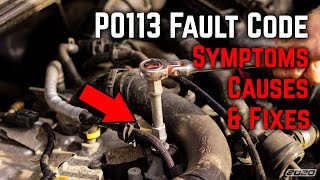



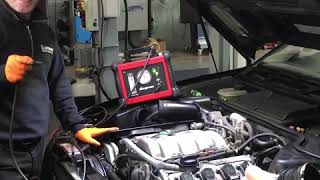
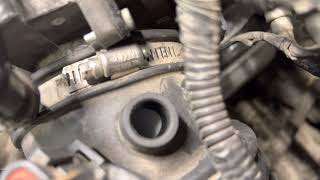

Used OEM Parts in Stock


New Aftermarket Parts Available


The information in this article is provided for general reference and educational purposes only. Vehicle specifications, procedures, and part compatibility can vary by production date, trim level, and region. Always consult your vehicle's factory service manual and verify part numbers before purchasing or performing repairs. Safety-critical components such as airbags, seat belts, and braking systems should be installed by a qualified professional.
- Jaguar XE:
- 🎬 Helpful Videos
- 🛍️ Shop This Part
- What's Unique About the 2017-2018 Jaguar XE
- Symptoms You May Notice
- Most Likely Causes
- Rare But Worth Checking
- Diagnosis Steps
- Parts You'll Likely Need
- Related Codes That Often Appear With This One
- Technical Service Bulletins (TSBs) & Recalls
- Platform-Specific Known Issues
- Mechanic-Grade Diagnostic Values
- Hidden / Shadow Codes Worth Checking
- Scan Tool Commands That Help
- Wiring & Ground Locations
- OEM Part Supersession History
- Diagnostic Flowchart
- Used vs. New Parts: Buying Guide for This Vehicle
- Real Owner Stories
- 2017 Jaguar XE 2.0 Turbo
- 2018 Land Rover Discovery Sport 2.0L engine
- Related OBD-II Codes
- Frequently Asked Questions
- 🎟️ Get 5% Off