

OBD-II Code P2178: System Too Rich Off-Idle (Bank 1)
What P2178 means, why it triggers, and how to fix it
- Code P2178 indicates your engine runs too rich (excess fuel) specifically during acceleration or cruising, but operates normally at idle.
- A dirty Mass Airflow (MAF) sensor or a leaking High-Pressure Fuel Pump (HPFP) causes over 70% of P2178 codes.
- Check your engine oil dipstick immediately; a strong gasoline odor confirms a leaking HPFP, requiring mandatory oil and pump replacement.
- Driving more than 100 miles with this code dumps raw fuel into the exhaust, risking a $2,000 catalytic converter meltdown.
What Does P2178 Mean?

Trouble code P2178 indicates the Engine Control Module (ECM) detects an excessively rich air-fuel mixture (too much fuel, not enough air) in Bank 1 during acceleration or cruising. This imbalance slashes gas mileage, degrades engine performance, and guarantees a failed emissions test.
Technical definition: The SAE/OBD-II definition is "System Too Rich Off Idle (Bank 1)". The powertrain control module (PCM) detects via the oxygen sensor that long-term fuel trim exceeds its rich calibration limit (typically beyond -25%) on the cylinder #1 bank while operating above idle speed.
Can I Drive With P2178?

Yes, But With Caution. Short trips are safe, but prolonged driving destroys the catalytic converter. An engine running rich dumps unburned fuel into the exhaust, which rapidly overheats the catalyst. Driving more than 50-100 miles with this code risks an additional $800 to $2,500 repair.
Common Causes

- Faulty or Dirty Mass Airflow (MAF) Sensor (Very Common) — A contaminated MAF sensor over-reports the amount of air entering the engine, forcing the computer to inject excess fuel.
- Leaking High-Pressure Fuel Pump (HPFP) (Very Common) — On Gasoline Direct Injection (GDI) engines (especially VW/Audi/BMW), the HPFP leaks fuel directly into the crankcase. The PCV system ingests these vapors, creating a rich mixture. Engine oil smelling of gasoline confirms this.
- Leaking or Stuck Fuel Injector(s) (Common) — An injector stuck open continuously dumps excess fuel into the cylinder, overwhelming the air-fuel ratio.
- Faulty Upstream Oxygen (O2) Sensor (Common) — A degraded O2 sensor sends a false 'lean' signal (low voltage) to the computer, tricking it into adding unnecessary fuel.
- EVAP System Malfunction (Common) — A stuck-open EVAP canister purge valve allows unmetered fuel vapors to enter the intake manifold, creating a rich condition.
- High Fuel Pressure (Less Common) — A failing fuel pressure regulator forces excessively high pressure through the injectors, spraying too much fuel per cycle.
- Faulty Engine Coolant Temperature (ECT) Sensor (Rare) — An ECT sensor stuck on a cold reading forces the ECM to command a richer warm-up fuel mixture perpetually.
Symptoms
- Check Engine Light On — The Malfunction Indicator Lamp (MIL) illuminates on the dashboard.
- Poor Fuel Economy — MPG drops by 10-15% or more as the engine consumes excess fuel.
- Strong Fuel Smell — Raw gasoline odor emits from the exhaust pipe or the engine oil dipstick.
- Sluggish Acceleration — The vehicle hesitates or responds slowly to accelerator pedal inputs.
- Black Smoke from Exhaust — Black smoke billows from the tailpipe under heavy acceleration, indicating partially burned fuel.
- Rough Engine Operation — The engine runs rough, misfires, or stalls when accelerating from a stop.
Diagnostic Flowchart

Tap your situation to follow the diagnostic path that matches what you're seeing on this code.
Common Fixes & Costs

- Clean or Replace Mass Airflow (MAF) Sensor 🎬 See how to clean your MAF sensor to clear P2178. — Parts: $10-$20 (cleaner) / $100-$300 (sensor), Labor: $50-$125, ~0.8 hr book time (DIY)
- Replace High-Pressure Fuel Pump (HPFP) — Parts: $300-$1,000, Labor: $200-$500, ~2.5 hr book time (Professional)
- Replace Leaking Fuel Injector(s) — Parts: $100-$1,000+, Labor: $200-$800, ~3 hr book time (Professional)
- Replace Upstream Oxygen (O2) Sensor — Parts: $50-$250, Labor: $100-$350, ~1.5 hr book time (Intermediate)
- Replace EVAP Canister Purge Valve — Parts: $25-$150, Labor: $75-$150, ~0.8 hr book time (DIY)
DIY vs Professional
- Clean/Replace MAF Sensor — Beginner:
Tools: Screwdriver/torx driver set, MAF Sensor Cleaner spray - Replace EVAP Purge Valve — Beginner:
Tools: Pliers, basic socket set - Replace Upstream O2 Sensor — Beginner:
Tools: O2 sensor socket (22mm or 7/8"), ratchet, penetrating oil, torch. - Replace High-Pressure Fuel Pump (HPFP) — Beginner:
Tools: High-pressure line wrenches, torque wrench, scan tool for priming.
Used vs. New Parts: Buying Guide
When a used part is worth it: Buy used only for high-cost, non-electronic components like an intake manifold. Electronic sensors (MAF, O2) and wear items (fuel pumps, injectors) require new OEM or high-quality aftermarket replacements.
Donor-vehicle mileage cap: roughly under 60000 miles for the part to have meaningful remaining life.
Donor quality checklist:
- Verify the donor vehicle was not scrapped for engine or emissions failures.
- Match the OEM part number exactly.
- Choose donors from dry, salt-free climates to avoid corrosion.
Decision logic:
- If The part is a sensor (MAF, O2) or a fuel pump/injector. → Buy new. The risk of premature failure on a used electronic part outweighs the savings.
- If The new OEM part exceeds $1,000 and no quality aftermarket version exists. → Source a used part from a verified low-mileage (<60k miles) donor.
Warranty tradeoff: Salvage yards offer 30-90 day functional warranties. New aftermarket parts include 1-year to lifetime warranties. New OEM parts carry 1-2 year warranties.
Worst-case if a used part fails: $300-$1000 for repeat labor and a second replacement part.
What Happens If You Wait — Timeline
- 0-2 weeks: Check Engine Light illuminates. No drivability symptoms are noticeable. (MPG impact: 0-5%% · Added cost: $0)
- 2 weeks - 2 months: Fuel economy drops noticeably. The vehicle feels sluggish. A raw fuel smell emits from the exhaust. (MPG impact: 5-15%% · Added cost: $50-150 in wasted fuel)
- 2-6 months: The catalytic converter overheats from unburned fuel. The engine runs rough and emits black smoke under acceleration. (MPG impact: 15-25%% · Added cost: $800-$2,800 (catalytic converter replacement required))
- 6+ months: Fuel dilution washes oil from cylinder walls, causing accelerated piston ring wear and catastrophic engine failure. (MPG impact: 25%+% · Added cost: $3,000-$8,000+ (engine replacement required))
Cost of Not Fixing It
- 0-1 Month: Fuel economy drops 10-15% and engine performance becomes sluggish. Spark plugs foul with carbon. (Added cost: $50-$100 in wasted fuel.)
- 1-6 Months: Excessive heat from unburned fuel melts the catalytic converter internally. This triggers a P0420 code and guarantees an emissions test failure. (Added cost: $800-$2,800 for catalytic converter replacement.)
- 6+ Months: Raw fuel washes oil from the cylinder walls, accelerating piston ring wear. Fuel dilutes the engine oil, destroying its lubricating properties and causing catastrophic internal engine damage. (Added cost: $3,000-$8,000+ for engine replacement.)
Diagnosis Steps
- Check Codes & Freeze Frame Data
Use an OBD-II scanner to read all codes. Address misfire codes (P030x) first. Review freeze frame data to see exact RPM and load when P2178 triggered.
Tools: OBD-II Scanner (Beginner) - Check Oil for Fuel Contamination
Pull the engine oil dipstick and smell it. A strong raw gasoline odor confirms a leaking high-pressure fuel pump (HPFP) or severely leaking injectors. If fuel is present, stop driving immediately.
Tools: Paper towel (Beginner) - Analyze Live Data Fuel Trims
Observe Short-Term (STFT) and Long-Term (LTFT) fuel trims for Bank 1. P2178 shows significant negative numbers (e.g., -15% to -25%). If trims worsen as RPM increases, suspect the MAF sensor. If trims improve as RPM increases, suspect leaking injectors.
Tools: Advanced OBD-II Scanner (Intermediate) - Analyze MAF Sensor Data
Monitor the MAF sensor reading in grams per second (g/s). A healthy 2.0L engine reads 2-4 g/s at warm idle and 15-25 g/s at 2500 RPM. Significantly higher readings indicate the MAF is over-reporting airflow.
Tools: Advanced OBD-II Scanner (Advanced) - Test O2 Sensor Voltage
Watch Bank 1, Sensor 1 (upstream) O2 voltage. It should fluctuate rapidly between 0.1V (lean) and 0.9V (rich). If stuck high (>0.7V) during revving, the sensor is biased. If stuck low, the ECM is overcompensating.
Tools: Advanced OBD-II Scanner (Advanced) - Perform a Smoke Test
Pressurize the intake and EVAP systems with smoke. Look for leaks from cracked hoses, intake gaskets, or a faulty EVAP purge valve. Unmetered air leaks cause the ECM to overcompensate with fuel off-idle.
Tools: Smoke Machine (Advanced) - Test Fuel Pressure
Connect a gauge to the low-pressure rail (KOEO pressure should be 50-75 PSI). For GDI engines, use a scanner to compare desired vs. actual high-pressure rail data. Actual pressure significantly exceeding desired pressure indicates HPFP failure.
Tools: Fuel Pressure Gauge, Advanced OBD-II Scanner (Advanced)
When This Code Triggers (Freeze-Frame Conditions)
- Engine Coolant Temp: 180-210°F (82-99°C) (The engine has reached full operating temperature.)
- RPM: 1200-3000 RPM (The code sets during steady-state cruising or light acceleration, never at idle.)
- Engine Load: 20-60% (The engine is under moderate load, consistent with maintaining speed.)
- Vehicle Speed: 35-65 mph (The fault triggers at city or highway cruising speeds.)
Related Codes
- P2188 — P2188 is "System Too Rich at Idle." If fuel trims are worst at idle, suspect a leaking injector (P2188). If trims worsen as RPMs increase, suspect a MAF sensor (P2178).
- P0172 — P0172 is the generic "System Too Rich" code. P2178 narrows the diagnosis to components affecting higher RPM and load.
- P2196 — P2196 means the O2 sensor signal is STUCK rich (sensor failure). P2178 means the system DETECTS a rich condition (sensor is working, engine is actually rich).
- P2177 — The direct opposite: "System Too Lean Off Idle". Seeing both intermittently points to an erratic MAF sensor or a complex intake leak.
Climate & Environmental Factors
- High Humidity: Moisture adheres to the MAF sensor element, altering its thermal properties and causing it to misreport incoming air mass, triggering a rich condition.
- High Altitude: Lower air density at altitude exposes slow-to-respond MAF sensors. The ECM injects excessive fuel for the available oxygen, triggering P2178 during acceleration.
How to Talk to a Mechanic About This Code
Say this: "I have a P2178 code indicating a rich condition off-idle. Please check the long-term fuel trims, MAF sensor readings at various RPMs, and inspect the oil for fuel contamination before recommending parts."
This directs the mechanic toward a data-driven diagnosis of the root causes (MAF, HPFP, injectors) and prevents them from blindly replacing the O2 sensor.
Avoid saying:
- 'My check engine light is on, can you just fix it?'
- 'I think it's the oxygen sensor, can you replace it?'
Questions to ask before authorizing the repair:
- Can you show me the live data printout for the fuel trims and MAF sensor readings?
- Did you confirm a leaking injector or HPFP by checking for fuel in the oil?
- If recommending an O2 sensor, how did you rule out a faulty MAF sensor?
Where to Take It: Dealer vs Independent vs Chain
- Dealer:
Use only for in-warranty cars or known manufacturer-specific software updates.
Best for: Vehicles under warranty., Complex HPFP failures on German brands., Repairs requiring proprietary software updates.
Downsides: Highest labor rates and parts costs., Tendency to replace entire assemblies rather than individual components. (Typical cost: +50% vs. baseline) - Independent Shop:
Best overall fit. A qualified independent shop effectively diagnoses P2178 at a reasonable cost.
Best for: Out-of-warranty vehicles., Diagnosing MAF sensors, O2 sensors, and EVAP purge valves.
Downsides: Diagnostic skill varies. Ensure the shop has ASE-certified diagnosticians. (Typical cost: +0% vs. baseline) - Chain Shop:
Avoid for initial diagnosis. Acceptable only for a simple MAF sensor swap if you are certain of the failure.
Best for: Simple, pre-diagnosed parts replacement like an air filter.
Downsides: Technicians lack the deep diagnostic experience required for complex fuel trim analysis. (Typical cost: -10% vs. baseline)
When to Walk Away From the Repair
If the total estimated repair cost exceeds 40-50% of your car's private-party market value, consider selling the vehicle.
- Car worth $4000, fix is $2200: Walk away. The repair cost exceeds 50% of the car's value.
- Car worth $12000, fix is $1800: Fix it. The repair cost is only 15% of the car's value.
What Scan Tool You Need for This Code
Minimum: A scanner that graphs live data, specifically Short-Term (STFT) and Long-Term (LTFT) fuel trims, MAF sensor g/s, and O2 sensor voltage.
A basic $20 code reader cannot show live fuel trims. Without this data, you will blindly replace parts, starting with the wrong one.
Budget: Bluetooth OBD-II Dongle (VEEPEAK) with OBD Fusion App (~$50) — Graphs live fuel trims, O2 sensor voltage, and MAF sensor data on your smartphone to confirm the rich condition.
Mid-range: XTOOL D7 (~$350) — Offers bidirectional control to command the EVAP purge valve open/closed and performs fuel pump priming.
Professional: Autel MaxiSys MS906BT (~$1000) — Provides ECU coding and access to Mode $06 test results to reveal underlying issues before they become hard faults.
Rent vs buy: Buy a budget-level scanner with live data capability. Free auto parts store scans do not provide the live data required for P2178.
How to Clear the Code After You Fix It
- Use an OBD-II scan tool to erase the diagnostic trouble codes.
- Perform a complete drive cycle to allow the ECU to re-learn and confirm the fix.
Drive cycle (~20 minutes): Start the engine cold and idle for 3 minutes. Drive at a steady 55-60 mph for 10 minutes. Perform 10 minutes of stop-and-go city driving. Coast down from 40 mph to 20 mph without touching the brakes.
Readiness monitors affected: Fuel System Monitor, Catalyst Monitor, O2 Sensor Monitor
Before emissions retest: drive at least 100 miles to fully set monitors.
Watch out for:
- Clearing the code without performing a drive cycle leaves readiness monitors 'Not Ready', causing an automatic emissions failure.
- The code returns within two drive cycles if the underlying mechanical fault remains unfixed.
Will This Fail Emissions / State Inspection?
Yes — this code typically fails an OBD-II emissions inspection.
- California: An illuminated Check Engine Light is an automatic failure. Readiness monitors must be set to 'Ready', requiring 100-200 miles of varied driving before a re-test.
- New York: The NYVIP3 inspection fails any vehicle with an active P2178 code. The Check Engine Light must be off and monitors complete.
- Texas: Vehicles 2001 and newer fail immediately with an illuminated Check Engine Light. Only one readiness monitor is permitted to be 'Not Ready'.
Most Commonly Affected Vehicles
- Volkswagen Golf, Jetta, GTI, Tiguan (2009-2017) — Frequently linked to a leaking high-pressure fuel pump (HPFP) contaminating the crankcase oil.
- Audi A4, A3, Q5 (2009-2016) — Turbocharged GDI models are highly prone to HPFP failures and faulty fuel injectors.
- Chevrolet HHR, Traverse, Silverado, Cruze (2008-2024) — Causes include dirty throttle bodies, faulty MAF sensors, and stuck EVAP purge valves.
- Ford F-150, Focus, Fusion (2010-2024) — A stuck-open EVAP purge valve is the primary cause of rich conditions on these models.
- BMW / Mini 3 Series, Cooper S (2008-2024) — Associated with leaking high-pressure fuel injectors or HPFP failures on turbocharged engines.
- Jaguar XF (2013-2018) — Caused by cracked plastic air intake ducts or outdated engine software requiring TSB updates.
Manufacturer-Specific Notes
- Volkswagen/Audi: On 2.0T TSI/FSI engines, P2178 is almost always a failing high-pressure fuel pump (HPFP) leaking into the crankcase. Always check the oil for a gasoline smell first.
- Ford: A stuck-open EVAP canister purge valve is the most common cause for rich condition codes. Test this component before replacing sensors.
- Jaguar: On 2013-2018 XF models, P2178 is often a physical crack in the plastic air intake duct. TSBs JTB00407NAS2 and JTB00429NAS1 address required software updates.
- GM (Chevrolet/GMC): A dirty throttle body causes incorrect airflow at off-idle speeds, leading the ECM to miscalculate fuel. Cleaning the throttle body is a highly effective fix.
Real Owner Stories
2013 Audi A4 2.0T with severe rich condition
Car ran rough with a rotten egg exhaust smell. Codes P2188, P2178, and multiple misfires were present.
What they tried:
- Technician checked for fuel in the engine oil, which was heavily contaminated.
- Live data showed extreme negative fuel trims (-36% to -75%).
Outcome: The high-pressure fuel pump (HPFP) leaked fuel directly into the crankcase. Replacing the HPFP and changing the oil restored normal fuel trims and resolved all codes.
Lesson: On VW/Audi 2.0T engines, a strong fuel smell in the oil is a classic sign of a failed HPFP. Check this before suspecting injectors or O2 sensors.
2015 Mini Cooper S with recurring P2178
Check engine light illuminated for P2178 with no drivability symptoms.
What they tried:
- Shop cleaned the MAF sensor and replaced the oxygen sensors.
- The code returned within two days.
Outcome: Advanced diagnosis revealed a leaking fuel injector. Replacing the faulty injector permanently fixed the issue.
Lesson: Do not replace the O2 sensor just because it reports a rich condition. It is usually the messenger, not the root cause.
2008 Chevrolet HHR SS losing turbo boost
P2178 triggered alongside a noticeable loss of turbo boost.
What they tried:
- Owner replaced the gas cap, O2 sensors, MAF sensor, and spark plugs. The code persisted.
Outcome: A smoke test revealed an air leak in the intake system. The ECU added fuel to compensate for unmetered air. Sealing the leak resolved the code.
Lesson: A 'rich' code can result from the ECU overcompensating for an air leak. Perform a smoke test before replacing expensive fuel system components.
How to Prevent This Code From Triggering
- Use Top Tier certified gasoline (Every fill-up) — Top Tier fuels contain detergents that prevent carbon deposits on fuel injectors, maintaining proper spray patterns and preventing rich conditions.
- Clean the Mass Airflow (MAF) sensor (Every 30,000 miles) — Removes oil and dirt from the delicate sensor wire, ensuring accurate airflow readings and preventing false rich codes.
- Replace engine air filter (Every 15,000-30,000 miles) — Prevents restricted airflow and keeps the MAF sensor clean.
Frequently Asked Questions
What is the most common misdiagnosis for P2178?
Immediately replacing the oxygen sensor is the most common mistake. The O2 sensor is usually just doing its job by reporting the rich condition. The actual cause is typically a dirty MAF sensor, leaking injector, or HPFP failure.
I have a misfire code (like P0301) along with P2178. Which do I fix first?
Always diagnose and fix the misfire code first. A misfire dumps unburnt fuel into the exhaust, which the O2 sensor correctly reads as a rich condition, triggering P2178. Fixing the misfire's root cause usually resolves the P2178 code.
How serious is code P2178?
It is moderately serious. Address it within two weeks to prevent poor fuel economy, failed emissions tests, and permanent damage to the catalytic converter from raw fuel saturation.
Can I fix P2178 myself?
Beginners can clean the MAF sensor or replace an accessible EVAP purge valve. However, definitive diagnosis and complex repairs like HPFP or injector replacement require advanced tools and professional experience.
Will clearing the code fix the problem?
No. Clearing the code only turns off the check engine light temporarily. The light returns as soon as the ECM's diagnostic monitors run and detect the persistent rich condition.
What's the difference between 'Bank 1' and 'Bank 2'?
On V-shaped engines (V6, V8), Bank 1 is the side containing the #1 cylinder, while Bank 2 is the opposite side. Inline engines (I4, I6) only have one bank, always referred to as Bank 1.
Can a bad fuel filter cause P2178?
It is highly unlikely. A clogged fuel filter restricts fuel flow, causing a lean condition rather than a rich one. However, if the fuel pressure regulator is integrated into the filter assembly, its failure causes high fuel pressure and a P2178 code.
Key Takeaways
- Code P2178 indicates your engine runs too rich (excess fuel) specifically during acceleration or cruising, but operates normally at idle.
- A dirty Mass Airflow (MAF) sensor or a leaking High-Pressure Fuel Pump (HPFP) causes over 70% of P2178 codes.
- Check your engine oil dipstick immediately; a strong gasoline odor confirms a leaking HPFP, requiring mandatory oil and pump replacement.
- Driving more than 100 miles with this code dumps raw fuel into the exhaust, risking a $2,000 catalytic converter meltdown.
Helpful Videos
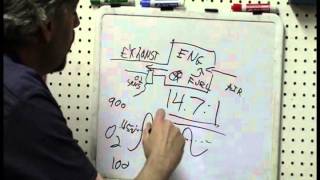
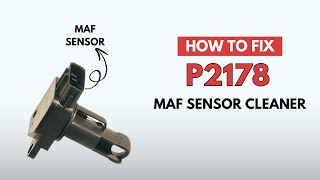

The information in this article is provided for general reference and educational purposes only. Vehicle specifications, procedures, and part compatibility can vary by production date, trim level, and region. Always consult your vehicle's factory service manual and verify part numbers before purchasing or performing repairs. Safety-critical components such as airbags, seat belts, and braking systems should be installed by a qualified professional.
- 🎬 Helpful Videos
- What Does P2178 Mean?
- Can I Drive With P2178?
- Common Causes
- Symptoms
- Diagnostic Flowchart
- Common Fixes & Costs
- DIY vs Professional
- Used vs. New Parts: Buying Guide
- What Happens If You Wait — Timeline
- Cost of Not Fixing It
- Diagnosis Steps
- When This Code Triggers (Freeze-Frame Conditions)
- Related Codes
- Climate & Environmental Factors
- How to Talk to a Mechanic About This Code
- Where to Take It: Dealer vs Independent vs Chain
- When to Walk Away From the Repair
- What Scan Tool You Need for This Code
- How to Clear the Code After You Fix It
- Will This Fail Emissions / State Inspection?
- Most Commonly Affected Vehicles
- Manufacturer-Specific Notes
- Real Owner Stories
- 2013 Audi A4 2.0T with severe rich condition
- 2015 Mini Cooper S with recurring P2178
- 2008 Chevrolet HHR SS losing turbo boost
- How to Prevent This Code From Triggering
- Frequently Asked Questions
- What is the most common misdiagnosis for P2178?
- I have a misfire code (like P0301) along with P2178. Which do I fix first?
- How serious is code P2178?
- Can I fix P2178 myself?
- Will clearing the code fix the problem?
- What's the difference between 'Bank 1' and 'Bank 2'?
- Can a bad fuel filter cause P2178?
- Key Takeaways
- 🎟️ Get 5% Off