

P0032 on 2004-2020 Ford F-150: Heater Circuit High Causes and Fixes
P0032 on a Ford F-150 almost always means the front oxygen sensor on the passenger side (Bank 1, Sensor 1) has failed. The internal heater shorts out, triggering the code. Replacing the sensor is the most common fix, costing around $50-$100 for an aftermarket part or $100-$200 for an OEM Motorcraft sensor. Before replacing, always check for melted wiring near the exhaust and the related fuse.
- P0032 points to the upstream oxygen sensor on the passenger side (Bank 1, Sensor 1).
- The most likely fix is replacing the oxygen sensor itself due to a failed internal heater.
- Always inspect the wiring harness for heat damage and check the associated fuse before replacing the sensor.
- Use a quality OEM (Motorcraft) or equivalent brand (Denso, NTK) sensor for a lasting repair.
- If you have a 2018-2020 2.7L EcoBoost, check for relevant TSBs or recalls before starting repairs.
What's Unique About the 2004-2020 Ford F-150
On the Ford F-150, Bank 1 is consistently the passenger side of the engine. The primary challenge owners face is not diagnosis, but access; the Bank 1 Sensor 1 is tucked tightly in the exhaust manifold, and replacing it can be difficult without the right tools like a 7/8" (22mm) slotted oxygen sensor so 🎬 Watch: A guide to replacing the Bank 1 Sensor 1cket. A very common failure point on these trucks is the wiring harness melting due to its proximity to the hot exhaust manifold. Forum users on F150Forum.com frequently report finding the loom melted or wires chafed through, making a thorough visual inspection critical before replacing the sensor itself. For 2009-2014 models, a separate known issue involving the fuel pump fuse (Fuse 27) melting its cavity in the battery junction box can cause various electrical problems, and while not a direct cause of P0032, it highlights the vulnerability of the fuse box to heat-related failures.
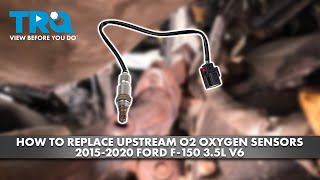
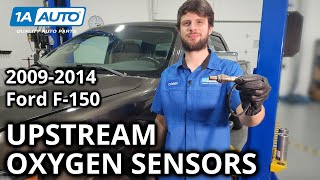
🎬 See this 2009-2014 F-150 upstream sensor replacement walkthroughGeneration note: This guide covers the 11th (2004-2008), 12th (2009-2014), and 13th (2015-2020) generations of the Ford F-150. 🎬 Watch: How to replace upstream sensors on 2015-2020 models The meaning of the code and its common causes are consistent across these years. However, the exact location of the sensor and wiring harness routing may vary slightly depending on the specific engine (e.g., 5.4L V8, 3.5L EcoBoost, 5.0L V8, 2.7L EcoBoost). A specific Technical Service Bulletin (TSB) and recall apply to 2018-2020 2.7L EcoBoost models. Fuse locations for the O2 heater circuit also vary; for example, on many 2009-2014 models, it is fuse #76 (15A) in the underhood fuse box.
Symptoms You May Notice
- Check Engine Light is on.
- Reduced fuel economy, potentially by 2-4 MPG as the engine stays in 'open-loop' mode longer.
- Vehicle will automatically fail an emissions or smog test.
- Rough idle or slight hesitation, especially during engine warm-up.
- Noticeable smell of gasoline from the exhaust due to a rich fuel mixture.
- Replacing the wrong oxygen sensor (e.g., the downstream Sensor 2 or the driver's side Bank 2 sensor). P0032 is specifically for Bank 1, Sensor 1.
- Replacing the sensor without first checking the wiring and fuse. A wiring short can cause the new sensor's heater to fail immediately or will not resolve the code.
Most Likely Causes
- Failed Bank 1, Sensor 1 Oxygen Sensor 🔴 High Probability The internal heater element within the oxygen sensor is a common failure point due to age and constant heat cycles. It's considered a routine maintenance item, often failing after 100,000 miles. An internal short in the heater element will cause a high current draw, triggering the code.
How to confirm: Disconnect the sensor and measure the resistance across the two heater circuit pins (usually the two wires of the same color, e.g., two whites or two blacks). A healthy sensor should have a low resistance, typically between 2 and 30 ohms. A reading near zero (short) or an infinite reading (open) confirms the heater has failed.
Typical fix: Replace the Bank 1, Sensor 1 (upstream, passenger side) oxygen sensor.
Est. part cost: $50-$200 - Damaged Wiring or Corroded Connector 🟡 Medium Probability The sensor's wiring harness is routed close to the hot exhaust manifold and other engine components, making it vulnerable to melting, chafing, or becoming brittle over time. This is a widely reported issue in owner forums. The connector is also exposed to road debris and moisture, which can lead to corrosion on the pins.
How to confirm: Visually inspect the entire wiring harness from the O2 sensor connector back to the main engine harness. Look for any signs of melting, frayed wires, or breaks. Unplug the connector and check for green or white corrosion on the pins. A short to a power source in the harness will cause a P0032.
Typical fix: If the damage is minimal, repair the broken wire(s) using solder and heat shrink. If the connector is damaged, replace it with a new pigtail connector (e.g., Motorcraft WPT-179). If the harness is severely melted, it may need to be replaced or re-routed.
Est. part cost: $20-$50 - Blown Fuse for O2 Heater Circuit ⚪ Low Probability
How to confirm: Consult your owner's manual or online resources to find the fuse for the O2 sensor heaters (often labeled 'O2 HTR' or similar). In many 2009-2014 F-150s, this is Fuse #76 (a 15A fuse) in the under-hood fuse box. For 2015+ F-150s, this may be Fuse #93 in the under-hood fuse box. Pull the fuse and visually inspect if the internal filament is broken. A blown fuse often indicates a short circuit in the wiring or the sensor itself that must be fixed first.
Typical fix: Replace the blown fuse after correcting the underlying short circuit.
Est. part cost: $1-$10
Rare But Worth Checking
- Faulty Powertrain Control Module (PCM): This is very uncommon. Before suspecting the PCM, you must exhaustively rule out the sensor, wiring, and fuses. A failure in the PCM's internal driver circuit can cause a persistent P0032 code even with a new sensor and good wiring. This can happen if a wiring short damages the PCM's internal transistor for that circuit.
Diagnosis Steps
- Confirm the Code: Use an OBD-II scanner to verify that P0032 is the active code. Note any other codes that are present.
- Visual Inspection: This is a critical step on the F-150. Carefully inspect the wiring harness for the passenger-side upstream O2 sensor. Trace it from the sensor up to the main loom, looking for any signs of melting, chafing, or broken wires, especially where the harness is close to the exhaust manifold or engine block.
- Check the Fuse: Locate the fuse for the oxygen sensor heater circuit in your F-150's fuse box (refer to the owner's manual) and check if it's blown. For example, on a 2012 F-150, this is often fuse F76 (15A) in the engine compartment fuse box. On a 2017 5.0L, this is often fuse F93 (15A) in the engine compartment fuse box.
- Inspect the Connector: Disconnect the sensor and inspect the electrical connector for corrosion, moisture, or damaged pins.
- Test the Sensor Heater: Set a multimeter to the resistance (Ohms) setting. Probe the two heater wires on the sensor side of the connector (they are typically the same color, often white or black). A good sensor will read between 2-30 Ohms. An infinite reading (OL) or a reading near zero indicates a failed heater element, and the sensor must be replaced.
- Test for Voltage: Turn the ignition to the 'ON' position (engine off). On the vehicle harness side of the connector, carefully test for voltage between the heater power wire and a good ground. You should see battery voltage (approx. 12V). If there is no voltage, the problem is upstream in the wiring or fuse box.
- Test the Control Circuit: The PCM controls the heater by grounding the circuit. A high voltage reading on the control wire when the PCM should be commanding the heater on indicates an open in this ground-side wire back to the PCM or a faulty PCM driver (rare).
- Check for Shorts: With the sensor disconnected, check for continuity between the heater power wire and ground. There should be no continuity. Any continuity indicates a short to ground in the harness, which would likely blow the fuse. Check for continuity between the heater control wire and a 12V power source; any continuity indicates a short to power.
Parts You'll Likely Need
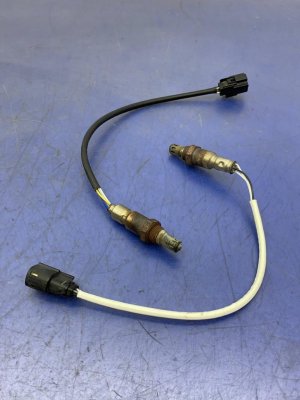
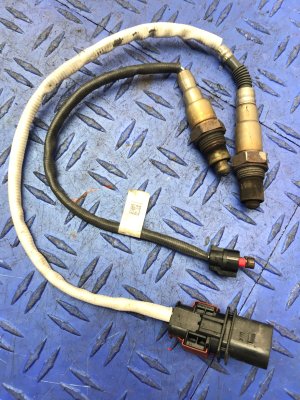
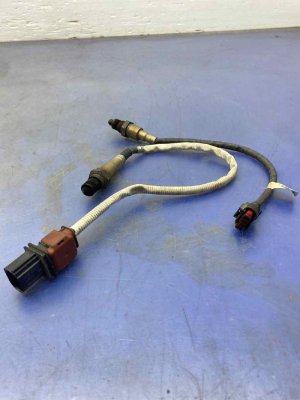
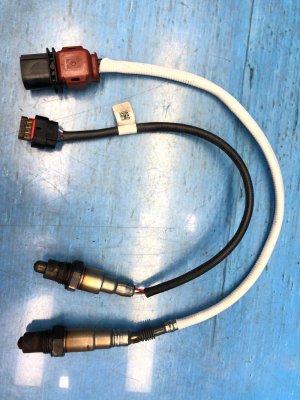
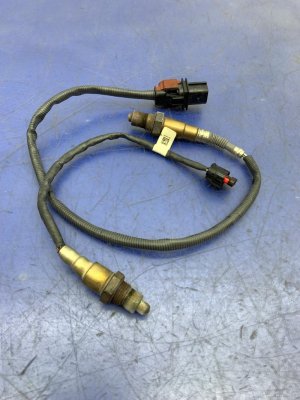
- Oxygen Sensor (Bank 1, Sensor 1)
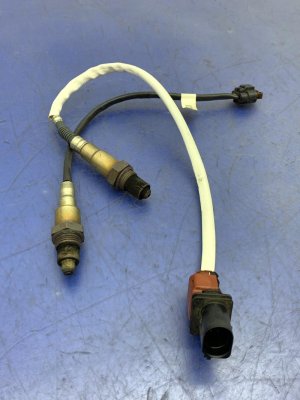
(OEM #Motorcraft DY-1161 (2011-14 F-150), Motorcraft DY-1325 (2015-17 F-150). Part numbers vary significantly by engine and year. Always verify with VIN.)— This is the most frequent cause of P0032. The internal heater element fails from age and heat stress.
Trusted brands: Motorcraft, Bosch, Denso, NTK
OEM price range: $100-$200
Aftermarket price range: $50-$100
Related Codes That Often Appear With This One
- P0052 — This is the identical 'Heater Control Circuit High' fault, but for Bank 2, Sensor 1 (driver's side). If both codes appear together, it strongly suggests a shared problem like a blown fuse or a faulty relay that powers both sensors.
- P0135 — This is a more generic code for 'O2 Sensor Heater Circuit Malfunction (Bank 1, Sensor 1)'. P0032 is the more specific fault indicating a 'high' voltage/current condition.
Technical Service Bulletins (TSBs) & Recalls
- TSB 22-2260: Addresses potential sulfur contamination from fuel affecting O2 sensor performance on 2018-2020 2.7L EcoBoost models, which could lead to various O2 sensor codes.
- Emission Recall 24E12: Calls for a PCM software update on some 2018-2020 2.7L EcoBoost models to correct logic that could falsely set O2 sensor-related diagnostic trouble codes.
- TSB 15-0137: Pertains to 2009-2014 F-150s where the fuel pump power fuse (Fuse 27) can overheat and melt the fuse box, causing a no-start or stall. While not a direct cause of P0032, it points to a known electrical vulnerability in the Battery Junction Box for this generation.
Platform-Specific Known Issues
- For 2018-2020 F-150 models with the 2.7L EcoBoost engine, Ford issued TSB 22-2260 and Emission Recall 24E12. These address issues where sulfur contamination from fuel could affect O2 sensor readings or where a PCM software update is needed to prevent false codes. It is recommended to have the PCM updated by a dealer before replacing sensors on these specific models to rule out a software-related issue.
Mechanic-Grade Diagnostic Values
- O2 Sensor Heater Element Resistance — expected: 2 to 30 Ohms. Failure: Near zero Ohms (shorted) or infinite/OL (open circuit).
- Heater Circuit Power Supply (Harness Side) — expected: ~12V (Battery Voltage) with Key On, Engine Off.. Failure: 0V indicates an open circuit upstream (e.g., blown fuse, broken wire).
- Mode $06, TID $81 — expected: This Test ID is often associated with O2 sensor heater monitor tests on Ford vehicles. A 'Pass' status indicates the monitor has run and found no fault.. Failure: A 'Fail' status for this test can point to a problem with the heater circuit before a full diagnostic trouble code is set.
Hidden / Shadow Codes Worth Checking
- Mode $06, Test ID (TID) $81: On many Ford systems, this test ID relates to the Oxygen Sensor Heater Monitor. It provides raw test data from the PCM's self-test of the heater circuit before a fault matures into a full-blown DTC like P0032. It can show a 'Fail' status on the first trip of a two-trip fault. (see via Requires a scan tool capable of displaying Mode $06 (non-continuous monitor test results).)
Scan Tool Commands That Help
- Ford IDS (Integrated Diagnostic System) or equivalent professional scanner: HO2S Heater PID (Parameter ID) — When viewing live data, a technician can monitor the PID for the O2 heater duty cycle or status (On/Off). This helps verify if the PCM is attempting to command the heater on. If the PCM commands it 'On' but voltage on the control wire remains high, it confirms an open in the ground control circuit or a faulty PCM driver.
Wiring & Ground Locations
- G103 / G104 — These are major chassis and engine grounds typically located on the passenger side of the engine bay, near the firewall or on the engine block itself. For example, on a 2012 F-150, G104 is on the right-hand front of the engine compartment.. The PCM and its related sensors rely on clean, solid ground connections. A corroded or loose main ground can introduce electrical noise or voltage offsets, potentially causing the PCM to misinterpret sensor readings and set false codes like P0032. While not a direct cause, checking major grounds is a crucial step when electrical issues are suspected.
- Heater Circuit Wires at Sensor Connector — At the O2 sensor's electrical connector.. For testing, you need to identify the two heater wires. On many Ford sensors, these are the two wires of the same color (e.g., two white wires or two black wires). One will be the 12V+ power feed from the fuse, and the other is the ground-side control wire that goes to the PCM.
Real Owner Repair Stories
- LegacyGT.com forum user (Subaru Legacy GT (similar principle)) — Persistent P0032 code.
❌ Tried (didn't work) Initial wiring repair.
✅ What actually fixed it The user had extended their O2 sensor harness after installing an aftermarket header. The splice eventually melted, causing the O2 heater wires to short together. This short circuit damaged the driver inside the Engine Control Module (ECM/PCM). The final fix required replacing both the O2 sensor and the ECM itself. - Ford Truck Enthusiasts Forum user (1997 Ford F-150 4.6L) — O2 heater trouble code.
❌ Tried (didn't work) Checking for voltage at the connector based on a manual's wiring diagram which turned out to be incorrect for the truck.
✅ What actually fixed it The user found a physical break in the heater wire within the O2 sensor's own pigtail harness by performing a continuity test from the connector pin to the wire. Repairing this break resolved the issue. This highlights that the failure can be in the sensor's integrated harness, not just the main vehicle harness.
OEM Part Supersession History
Varies greatly by year/engine→Varies greatly by year/engine— Ford frequently updates part numbers for minor revisions or supplier changes. For example, for 2021+ models, part number ML3Z-9F472-A was replaced by ML3Z-9F472-F.
Heads up: Using a sensor from a different engine or year range, even if it physically fits and plugs in, can cause this code. The PCM is calibrated for a specific heater resistance. Using a non-specified part, especially a cheap universal sensor, can lead to the P0032 code returning immediately.
Model Year Variations Within This Range
- 2009-2014: The underhood fuse box (Battery Junction Box) in this generation is known for the 'Fuse 27' issue, where the fuel pump fuse overheats. While this doesn't directly power the O2 heaters, it indicates a vulnerability to heat and high current in this specific fuse box design. The O2 heater fuse is often #76 (15A) in this box.
- 2015-2020: The underhood fuse box was redesigned. The O2 heater fuse is often #93 (15A) in this generation's Battery Junction Box.
- 2019+: Later model year trucks, particularly those with advanced engine management, may use 5-wire wideband oxygen sensors instead of traditional 4-wire sensors. While they still have a heater circuit, the diagnostic approach for the signal wires is different. P0032 still correctly identifies a fault in the heater portion of the sensor.
Diagnostic Flowchart
Other Known Issues on This Vehicle
Issues unrelated to this code that are worth knowing about as an owner of this generation:
- Ford 5.4L 3-Valve Cam Phaser Rattle & Timing Chain Failure 🔴 High — Extremely common on 2004-2010 models, often appearing between 80,000 and 150,000 miles. Causes a distinct diesel-like knocking or rattling sound at idle.
- Spark Plug Breakage During Removal (5.4L 3V) 🟠 Medium — Affects 2004-2008 F-150s with the 5.4L 3V engine. The original two-piece spark plug design can separate, leaving the lower portion seized in the cylinder head. Requires a special extraction tool.
- 3.5L EcoBoost (Gen 1 & 2) Timing Chain Stretch & Cam Phaser Rattle 🔴 High — Common on 2011-2020 models. Gen 1 (2011-2016) is prone to timing chain stretch, while Gen 2 (2017-2020) is known for cam phaser failure, causing a loud rattle on cold starts. Repair is labor-intensive and costs thousands. (Ref: Ford issued a customer satisfaction program for the cam phaser issue on some 2017-2020 models.)
- 2018-2020 5.0L V8 Excessive Oil Consumption 🟠 Medium — A significant number of 2018-2020 F-150s with the 5.0L Coyote V8 can consume a quart of oil or more every 1,000-3,000 miles due to issues with piston rings and cylinder bore plasma coating. (Ref: TSB 19-2365 was issued to address the concern, which involves a PCM reflash and potentially a new engine long block.)
- Warped Exhaust Manifolds (All Engines) 🟠 Medium — Common across many F-150 engines, particularly the V8s and EcoBoost models, due to heat cycling. Results in broken exhaust manifold studs and an audible ticking sound (exhaust leak) that is loudest on a cold start and may quiet down as the engine warms up.
- Fuse 27 Relocation (2009-2014) 🟡 Low — The original fuse for the fuel pump (Fuse 27) is prone to melting its housing, causing a no-start or crank-no-start condition. A common, preventative fix is to install a fuse relocation kit. (Ref: Ford released TSB 15-0137 for this issue.)
Used vs. New Parts: Buying Guide for This Vehicle
When a used part is the smart pick: A used part is generally NOT recommended for the oxygen sensor itself, as it is a wear item with a finite lifespan. However, sourcing a used wiring harness connector (pigtail) from a junkyard is a very smart and cost-effective repair if your original connector is melted or corroded.
Donor-vehicle mileage cap: roughly under 100000 miles for the part to have meaningful remaining life.
What to inspect on the donor part:
- For a used connector/pigtail: Inspect for any signs of melting, cracking, or brittleness in the plastic.
- Check that the wire insulation is still flexible and not hardened or frayed.
- Look inside the connector for clean, corrosion-free pins.
- Ensure the locking tab is intact and functional.
OEM-only on this vehicle (don't cheap out):
- Oxygen Sensor: While not strictly 'OEM-only', it is highly recommended to use either the OEM Motorcraft part or a direct OEM supplier like NTK or Denso. The PCM is calibrated to the specific resistance of the OEM heater, and many generic aftermarket sensors will cause the code to return.
Aftermarket brands forum-validated for this vehicle:
- Motorcraft (OEM)
- NTK
- Denso
- Bosch
Brands owners have reported issues with on this vehicle:
- Unnamed or 'white-box' generic brands from online marketplaces are frequently reported on forums as being incompatible or failing prematurely.
Real Owner Stories
Aggregated from forums and TSBs cited above. Mileages and costs reflect what owners reported in those sources.
2018 Ford F-150 2.7L EcoBoost
Symptoms: Check Engine Light was on with O2 sensor-related diagnostic trouble codes.
What fixed it: The issue was resolved by a PCM software update performed by a dealer, which was required to correct logic that could falsely set the codes.
Source hint: Emission Recall 24E12 for 2018-2020 2.7L EcoBoost models
2016 Ford F-150
Symptoms: Multiple O2 sensor heater codes appeared suddenly at the same time.
What fixed it: The root cause was a melted wiring harness near the engine. Repairing the damaged wires resolved all the codes.
Source hint: f150forum.com thread titled 'All my O2 sensors are suddenly bad?'
2011 Ford F-150 — ~110000 miles
Symptoms: Check Engine Light on, a noticeable drop in fuel economy by a few MPG, and a slight rough idle during warm-up.
What fixed it: The internal heater element in the original Bank 1, Sensor 1 oxygen sensor had failed. Replacing the sensor with a new one fixed the problem.
Source hint: Common Causes section describing typical O2 sensor failure after 100,000 miles due to heat cycles.
Related OBD-II Codes
Frequently Asked Questions
On my Ford F-150, which side is Bank 1, Sensor 1?
My 2019 F-150 with the 2.7L EcoBoost has a P0032 code. Should I replace the O2 sensor immediately?
I found the fuse for the O2 sensor heater was blown. Can I just replace it to fix the P0032 code?
What resistance reading should I get when testing the O2 sensor heater on my F-150?
I found melted wires near the passenger side exhaust manifold. Could this cause my P0032 code?
I have P0032 and other O2 sensor heater codes at the same time. What's the most likely cause?
Helpful Videos
We Have This Part in Stock

The information in this article is provided for general reference and educational purposes only. Vehicle specifications, procedures, and part compatibility can vary by production date, trim level, and region. Always consult your vehicle's factory service manual and verify part numbers before purchasing or performing repairs. Safety-critical components such as airbags, seat belts, and braking systems should be installed by a qualified professional.
- Ford F-150:
- 🎬 Helpful Videos
- 🛍️ Shop This Part
- What's Unique About the 2004-2020 Ford F-150
- Symptoms You May Notice
- Most Likely Causes
- Rare But Worth Checking
- Diagnosis Steps
- Parts You'll Likely Need
- Related Codes That Often Appear With This One
- Technical Service Bulletins (TSBs) & Recalls
- Platform-Specific Known Issues
- Mechanic-Grade Diagnostic Values
- Hidden / Shadow Codes Worth Checking
- Scan Tool Commands That Help
- Wiring & Ground Locations
- Real Owner Repair Stories
- OEM Part Supersession History
- Model Year Variations Within This Range
- Diagnostic Flowchart
- Other Known Issues on This Vehicle
- Used vs. New Parts: Buying Guide for This Vehicle
- Real Owner Stories
- 2018 Ford F-150 2.7L EcoBoost
- 2016 Ford F-150
- 2011 Ford F-150 — ~110000 miles
- Related OBD-II Codes
- Frequently Asked Questions
- 🎟️ Get 5% Off