

P0025 on 2015-2018 Ford Edge 3.5L V6: Causes, Symptoms, and Fixes
P0025 on a 2015-2018 Ford Edge usually means the exhaust camshaft on Bank 2 is timed incorrectly (over-retarded). The most common cause is a faulty Variable Camshaft Timing (VCT) solenoid, often due to dirty or low engine oil. Replacing the Bank 2 exhaust VCT solenoid is the typical fix, costing around $40-$90 for the part. This is a common issue across many Ford vehicles with the 3.5L engine.
- P0025 points to the exhaust camshaft on the front (radiator side) bank of cylinders running more retarded than commanded.
- The most likely cause is a faulty VCT solenoid or dirty/low engine oil. Always check your oil first.
- A simple diagnostic step is to swap the exhaust VCT solenoid with the intake VCT solenoid on the same bank to see if the code follows the part.
- Replacing the Bank 2 exhaust VCT solenoid is a DIY-friendly job with a difficulty of 2 out of 5.
- Ford is aware of this issue and has noted in a TSB that debris in the oil can cause the solenoid to stick.
What's Unique About the 2015-2018 Ford Edge
The 3.5L Cyclone V6 is a widely used and generally reliable engine, but it is sensitive to oil quality and level for its Variable Camshaft Timing (VCT) system to work correctly. Ford has issued multiple Technical Service Bulletins (TSBs) acknowledging that codes like P0025 can be triggered by small debris causing the VCT solenoids to stick (SSM 50067, SSM 47170). This suggests that before assuming a part has failed completely, considering an oil system flush or inspecting the solenoid for contamination is a valid, manufacturer-recognized diagnostic step. The solenoids for intake and exhaust on the same bank are often identical, allowing for a diagnostic swap.
Symptoms You May Notice
- Check Engine Light is on
- Rough or unstable idle, can include stalling at stops
- Reduced engine power and poor acceleration
- Engine hesitation or sluggish response
- Decreased fuel economy
- Engine may be hard to start
- Engine rattling noise (less common, may indicate mechanical timing issue)
- Replacing the camshaft position sensor when the VCT solenoid is the actual problem.
- Replacing the camshaft phaser (an expensive and labor-intensive job) before thoroughly diagnosing the VCT solenoid and oil condition.
- Assuming a major mechanical failure before performing an oil change and clearing the codes, which is the simplest and often effective first step.
Most Likely Causes
- Faulty Bank 2 Exhaust VCT Solenoid 🔴 High Probability As noted in Ford TSBs (SSM 50067, SSM 47170), these solenoids can stick due to small debris or sludge in the engine oil. The solenoid is an electromechanical part that can also fail internally over time, causing it to not respond to the PCM's commands.
How to confirm: Use a capable OBD-II scanner to monitor desired vs. actual camshaft position for Bank 2 Exhaust. You can also command the solenoid on and off to check its response. A common DIY method is to swap the suspect Bank 2 exhaust solenoid with the Bank 2 intake solenoid (they are identical parts, typically AT4Z-6M280-A or B). Clear the codes and drive. If the code changes to P0021 or P0022 (related to the intake cam), the solenoid you moved is faulty.
Typical fix: Replace the Bank 2 exhaust Variable Camshaft Timing (VCT) solenoid. It is located on the front valve cover (radiator side), and is the lower of the two solenoids.
Est. part cost: $40-$90 - Low or Dirty Engine Oil 🔴 High Probability The VCT system is hydraulic and relies entirely on clean oil at the correct pressure to function. Sludge or low oil levels can starve the VCT phasers and solenoids, preventing them from adjusting cam timing correctly. Many owner forums report VCT codes appearing near a scheduled oil change interval.
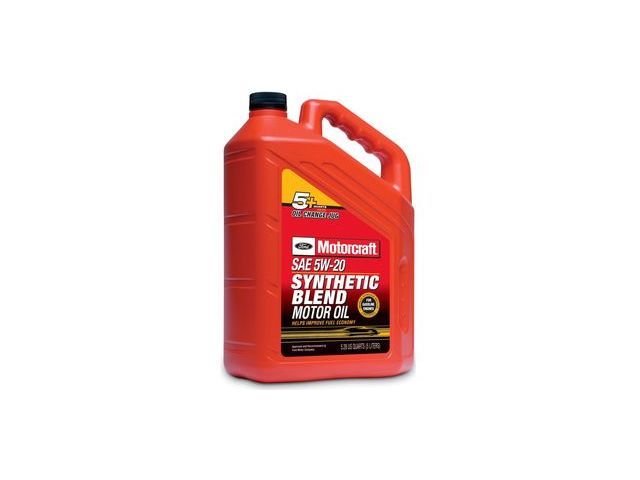
How to confirm: Check the engine oil dipstick for both level and condition. If the oil is below the minimum mark, black, or appears sludgy, this is a likely contributor. The recommended oil for this engine is typically 5W-20 Synthetic Blend.
Typical fix: Perform an engine oil and filter change using the manufacturer-specified grade of oil (e.g., Motorcraft 5W-20 Synthetic Blend). In cases of heavy sludge, an engine flush may be recommended by a professional before the oil change.
Est. part cost: $50-$100 - Failed Camshaft Position Sensor ⚪ Low Probability While less common than solenoid failure, the sensor that reads the camshaft's position can fail, sending incorrect data to the PCM. This is more likely if you see other codes specifically related to sensor circuits.
How to confirm: Test the sensor's output with a multimeter or oscilloscope. Often, a failing sensor will trigger other specific sensor-related fault codes (e.g., P0345, P0349).
Typical fix: Replace the Bank 2 exhaust camshaft position sensor. This sensor is also located on the front (radiator side) of the engine.
Est. part cost: $25-$60
Rare But Worth Checking
- Stretched Timing Chain or Failed Phaser: While not common on well-maintained engines, a stretched timing chain or a mechanically failed camshaft phaser can cause timing deviation that the VCT system cannot correct. This is a much more involved and expensive repair, often accompanied by rattling noises from the front of the engine, especially on startup. A user on Reddit with an F-150 and the same 3.5L engine reported P0025 along with P0019, pointing towards a potential timing chain issue.
- Wiring or Connector Issue: A damaged wire or corroded connector for the VCT solenoid or camshaft position sensor can interrupt the signal, causing the code. This should be checked before replacing components, especially if there is visible damage to the harness. The locking tabs on the connectors can become brittle.
Diagnosis Steps
- Check Engine Oil: Verify the oil level is correct and the oil is clean. The 3.5L Cyclone V6 typically specifies 5W-20 oil. If low or dirty, perform an oil and filter change, clear the code, and see if it returns.
- Scan Tool Data: Use an OBD-II scanner to view live data. Observe the desired vs. actual cam timing for Bank 2 Exhaust (B2E). A significant, persistent deviation points to a problem. Also check for related codes.
- Inspect Wiring: Visually inspect the wiring harness and connector for the Bank 2 exhaust VCT solenoid (on the front valve cover, lower position) for any damage, corrosion, or loose connections.
- Test the Solenoid (Swap Method): The easiest DIY test is to swap the Bank 2 exhaust solenoid with the Bank 2 intake solenoid (they are identical parts). They are located next to each other on the front valve cover. Clear the codes and drive the vehicle. If the code changes to P0021 or P0022, the solenoid you moved is faulty and needs replacement.
- Test the Solenoid (Electrical): Disconnect the solenoid and measure its resistance with a multimeter. A typical reading is between 6 and 12 ohms. An open circuit (infinite resistance) or short (zero resistance) indicates a failed solenoid.
- Mechanical Check: If all else fails, the issue may be mechanical (timing chain, tensioner, or phaser). This usually involves significant engine noise (rattling, whining) and should be diagnosed by a professional.
Parts You'll Likely Need
- Engine Variable Valve Timing (VVT) Solenoid
(OEM #AT4Z-6M280-A (or superseded by AT4Z-6M280-B))— This solenoid controls oil flow to the cam phaser and is the most common failure point for VCT-related codes, often due to sticking or electrical failure.
Trusted brands: Motorcraft, Standard Motor Products (SMP), Gates, Dorman
OEM price range: $60-$100
Aftermarket price range: $40-$80 - Engine Oil and Filter
(OEM #Motorcraft FL-500S (Filter), Motorcraft 5W-20 Synthetic Blend (Oil))— Clean oil at the proper level is critical for the VCT system to operate. This should always be the first step in addressing VCT codes.
Trusted brands: Motorcraft, Mobil 1, Valvoline, Pennzoil
OEM price range: $50-$80
Aftermarket price range: $40-$70
Related Codes That Often Appear With This One
- P0015 — This is the equivalent over-retarded code for the exhaust camshaft on Bank 1. Seeing both may indicate a systemic issue like low/dirty oil or low oil pressure.
- P0024 — This code is for 'B' Camshaft Position - Timing Over-Advanced (Bank 2). Seeing it with P0025 could indicate an erratic VCT solenoid or oil pressure problem causing the camshaft to move uncontrollably.
- P0016, P0017, P0018, P0019 — These are camshaft/crankshaft correlation codes. Their presence alongside P0025 points more strongly toward a base timing issue, such as a stretched timing chain or a problem with the tone ring.
Technical Service Bulletins (TSBs) & Recalls
- SSM 54366: Notes updated diagnostic procedures for a range of VCT codes including P0025.
- TSB-16-0093: Identifies P0025 as a potential DTC that may illuminate the Malfunction Indicator Lamp (MIL).
- SSM 50067 / SSM 47170: Specifically calls out that small debris can cause the VCT solenoid to stick, leading to codes like P0025, and recommends diagnosis before replacement.
Platform-Specific Known Issues
- Ford Technical Service Bulletin SSM 50067 and SSM 47170 note that P0025 (among other VCT codes) may be caused by small debris making the VCT solenoid stick, and advises against immediate component replacement without further diagnosis.
- Ford TSB SSM 54366 and TSB-16-0093 also list P0025 as a known diagnostic trouble code for this platform, indicating it's a recognized issue by the manufacturer.
- A video from a rebuilder on YouTube highlights that P0025 is a very common code across the Ford Edge lineup and that the VCT solenoid is the most frequent cause.
Mechanic-Grade Diagnostic Values
- VCT Solenoid Electrical Resistance — expected: 6.0 to 12.0 ohms. Failure: A reading of 0 ohms (short circuit) or infinite resistance (open circuit) indicates a failed solenoid.
- Engine Oil Pressure at Idle — expected: Minimum 15 PSI. Failure: Pressure below 15 PSI at normal operating temperature can prevent the VCT system from functioning correctly, even with a good solenoid.
Scan Tool Commands That Help
- Ford IDS (or equivalent high-level scanner): Pinpoint Test HK, Step HK12 — As recommended by Ford Service Message SSM 50067, this function cycles the VCT solenoid 10 times. It should be used before replacing the solenoid to attempt to dislodge small debris that may be causing it to stick.
- Advanced OBD-II Scanner: VCT Solenoid Bidirectional Control — To manually command the solenoid on and off while monitoring the desired vs. actual camshaft angle PIDs. If the angle does not change when commanded, it confirms a fault in the solenoid, wiring, or oil flow.
- N/A - Manual Procedure: PCM Keep Alive Memory (KAM) Reset — After replacing a component like a VCT solenoid, a KAM reset (typically by disconnecting the battery for 30+ minutes) forces the PCM to clear adaptive memory and relearn VCT parameters, which can resolve lingering performance issues.
Wiring & Ground Locations
- Main Engine-to-Chassis Ground — On the 2015+ Ford Edge, a primary ground connection is a stud on the firewall, located on the driver's side to the right of the battery.. A poor ground connection at this point can cause a variety of electrical issues and erratic sensor readings for engine components, including the VCT and camshaft position sensor circuits.
- VCT Solenoid Connector — On the Bank 2 (radiator side) valve cover. The exhaust solenoid is the lower of the two. The connectors have a locking tab (often purple or red) that must be disengaged before the main release tab can be pressed.. The connector itself or its wiring can become damaged from heat and vibration. The locking tabs are brittle and can break, leading to a poor connection that mimics a failed solenoid.
Real Owner Repair Stories
- YouTube channel 'Truck Lab' (2019 Ford F-150 3.5L EcoBoost (related engine with similar VCT system)) — Check engine light with codes P0018 and P0021, occasional power loss, and a cold start rattle.
❌ Tried (didn't work) Diagnosis pointed away from the common timing phaser failure despite the rattle.
✅ What actually fixed it The VCT solenoid had failed internally. A small oil control ring inside the solenoid broke off and was getting jammed in the spool valve, preventing it from moving correctly. Replacing the faulty solenoid resolved all symptoms, including the cold start rattle that is typically blamed on phasers.
When the Usual Fixes Don't Work
- While replacing a stuck VCT solenoid is the most common fix, the code can return if the root cause is not addressed. In some cases, the solenoid itself has not just stuck, but failed internally where a piece has broken off, which cleaning will not fix. Furthermore, if hidden oil passage filter screens within the cylinder head are clogged with debris, a brand new solenoid will be starved for oil and will not operate correctly, leading to an immediate return of the fault code. This highlights the necessity of not just replacing the part, but ensuring the entire oiling path to that part is clear.
OEM Part Supersession History
AT4Z-6M280-A→AT4Z-6M280-B— Likely an internal design or material revision for improved durability and resistance to sticking.
Model Year Variations Within This Range
- 2015-2018: No significant variations have been identified for the 3.5L Cyclone V6's VCT system within this specific model year range that would alter the diagnosis or common causes of code P0025.
Diagnostic Flowchart
Other Known Issues on This Vehicle
Issues unrelated to this code that are worth knowing about as an owner of this generation:
- Internal Water Pump Failure 🔴 High — Can occur around 75,000-150,000 miles. Failure is catastrophic as coolant leaks into the engine oil, destroying the engine if not caught immediately.
- Power Transfer Unit (PTU) Failure (AWD Models) 🔴 High — The PTU fluid can overheat and break down, leading to gear and bearing failure, often before 100,000 miles. It is sealed and not easily serviced. (Ref: TSBs exist for earlier models regarding seal leaks, but the overheating issue is a persistent design problem.)
- Electronic Throttle Body (ETB) Malfunction 🟠 Medium — Carbon buildup can cause rough idle, stalling, and limp mode. Less frequent than other issues but well-documented. Often fixed by cleaning. (Ref: SSM 46085 revised diagnostic procedures for ETBs.)
- Cracked Flexplate 🟠 Medium — Can cause a rattling or knocking noise at idle. More common on the 2.0L EcoBoost but has been noted on other models. (Ref: Customer Satisfaction Program 22N12 was issued for some 2015-2018 Edge models for this issue.)
Used vs. New Parts: Buying Guide for This Vehicle
When a used part is the smart pick: Using a used part for this specific repair is not recommended. The VCT solenoid is an inexpensive, high-wear electromechanical part that is sensitive to oil quality. The risk of getting a used part that is already clogged, worn, or near failure is very high.
What to inspect on the donor part:
- Not applicable as used solenoids are not advised.
OEM-only on this vehicle (don't cheap out):
- Engine Variable Valve Timing (VVT) Solenoid
Aftermarket brands forum-validated for this vehicle:
- Motorcraft (OEM) is the most highly recommended brand to ensure compatibility and longevity.
Brands owners have reported issues with on this vehicle:
- Dorman: While widely available, owner and mechanic reviews are mixed. Some report premature failure or out-of-the-box issues, leading to repeat repairs. Using non-OEM solenoids is a common cause for the code to return.
Real Owner Stories
Aggregated from forums and TSBs cited above. Mileages and costs reflect what owners reported in those sources.
2015-2018 Ford Edge 3.5L V6
Symptoms: The VCT codes appeared right as the vehicle was nearing its scheduled oil change interval.
What fixed it: An engine oil and filter change using the manufacturer-specified grade of oil.
Source hint: Ford Edge Forum
2015-2018 Ford Edge 3.5L V6
Symptoms: Check Engine Light on with code P0025; small debris was causing the VCT solenoid to stick.
What fixed it: Diagnostic steps following SSM 50067 / SSM 47170 to verify solenoid operation before replacement.
Source hint: SSM 50067 / SSM 47170
Related OBD-II Codes
Frequently Asked Questions
I heard there is a Ford TSB for P0025 on the 3.5L Edge; should I just replace the solenoid?
Which VCT solenoid do I need to check for a P0025 code on my 2016 Ford Edge 3.5L?
Can I use the same part for both intake and exhaust solenoids on my Ford Edge?
What kind of oil should I be using in my 2015-2018 Edge to prevent VCT issues?
Is P0025 related to the internal water pump issue on the 3.5L Cyclone engine?
My Edge is rattling and has a P0025 code; is this just a solenoid?
Used OEM Parts in Stock

New Aftermarket Parts Available






The information in this article is provided for general reference and educational purposes only. Vehicle specifications, procedures, and part compatibility can vary by production date, trim level, and region. Always consult your vehicle's factory service manual and verify part numbers before purchasing or performing repairs. Safety-critical components such as airbags, seat belts, and braking systems should be installed by a qualified professional.
- Ford Edge:
- 🛍️ Shop This Part
- What's Unique About the 2015-2018 Ford Edge
- Symptoms You May Notice
- Most Likely Causes
- Rare But Worth Checking
- Diagnosis Steps
- Parts You'll Likely Need
- Related Codes That Often Appear With This One
- Technical Service Bulletins (TSBs) & Recalls
- Platform-Specific Known Issues
- Mechanic-Grade Diagnostic Values
- Scan Tool Commands That Help
- Wiring & Ground Locations
- Real Owner Repair Stories
- When the Usual Fixes Don't Work
- OEM Part Supersession History
- Model Year Variations Within This Range
- Diagnostic Flowchart
- Other Known Issues on This Vehicle
- Used vs. New Parts: Buying Guide for This Vehicle
- Real Owner Stories
- 2015-2018 Ford Edge 3.5L V6
- 2015-2018 Ford Edge 3.5L V6
- Related OBD-II Codes
- Frequently Asked Questions
- 🎟️ Get 5% Off