

P0025 on 2013-2018 Ford C-MAX: Exhaust Cam Timing Over-Retarded Causes and Fixes
P0025 on a Ford C-MAX indicates the exhaust camshaft timing is too retarded (delayed). This is almost always caused by low/dirty engine oil or a faulty Variable Camshaft Timing (VCT) solenoid. The first step is to check your oil; if the level and quality are good, the next step is typically replacing the exhaust VCT solenoid, which costs around $30-$100 for the part and is a common DIY repair.
- Don't be confused by the 'Bank 2' in the code's definition; the 2.0L I4 engine only has one bank. The fault is with your exhaust camshaft timing.
- Always check your engine oil level and condition first. A simple oil change can sometimes fix this issue.
- The most common repair is replacing the exhaust VCT solenoid (part CJ5Z-6M280-A). Swapping it with the intake solenoid is the definitive DIY diagnostic test.
What's Unique About the 2013-2018 Ford C-MAX
The main peculiarity for the Ford C-MAX is the appearance of a 'Bank 2' code on an engine that physically only has one bank. This can be confusing for technicians and DIYers. The provided Technical Service Bulletins (TSBs) list a wide range of VCT codes for both banks, suggesting the bulletins are written to cover multiple Ford engines (I4, V6, V8). The key takeaway is to ignore the 'Bank 2' reference and focus on diagnosing the exhaust camshaft's variable timing system, which is known to be sensitive to oil quality on these engines.
Symptoms You May Notice
- Illuminated Check Engine Light
- Rough or unstable idle
- Engine stalling, especially when coming to a stop
- Reduced engine power and hesitation during acceleration
- Decreased fuel economy
- Engine may be hard to start
- Rattling noise from the engine, especially on startup
- Replacing the camshaft position sensor. The sensor is almost always reporting the timing issue correctly; it is not the cause of the incorrect timing. Diagnose all Camshaft Position Sensor (CMP) codes first if they are present alongside P0025.
Most Likely Causes
- Low or Dirty Engine Oil 🔴 High Probability The VCT system is hydraulic and highly sensitive to oil pressure and cleanliness. TSB SSM 50067 explicitly states that small debris can cause the VCT solenoid to stick. This is the most common cause across all Ford vehicles with VVT systems.
How to confirm: Check the engine oil dipstick for proper level and inspect the oil's color and consistency. Dark, thick, or sludgy oil is a problem. Ensure the oil level is not below the minimum mark.
Typical fix: Perform an engine oil and filter change using the correct OEM-specified oil viscosity (typically 5W-20 for this engine).
Est. part cost: $40-$80 - Failing Exhaust VCT Solenoid 🔴 High Probability This solenoid is the most common failure point in the VCT system. It can get clogged with debris from dirty oil or fail electrically, causing it to stick open or closed. The part is shared across many Ford 2.0L engines, indicating a high-volume component.
How to confirm: Remove the solenoid and inspect for sludge or debris. A common diagnostic step is to swap the exhaust VCT solenoid with the intake solenoid. If the code changes to an intake-related code (e.g., P0012), the solenoid is confirmed to be faulty. You can also test the solenoid's resistance with a multimeter; it should be between 6.9 and 7.9 ohms.
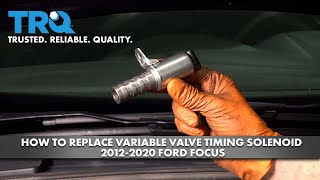
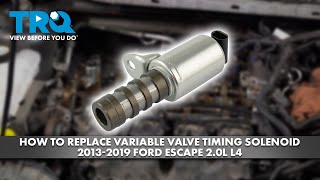
Typical fix: Replace the exhaust VCT solenoid. 🎬 Watch this step-by-step Ford 2.0L VVT solenoid replacement guide It is recommended to replace both intake and exhaust solenoids at the same time.
Est. part cost: $30-$100 - Damaged VCT Solenoid Wiring or Connector ⚪ Low Probability
How to confirm: Visually inspect the wiring harness and connector leading to the exhaust VCT solenoid for any signs of fraying, corrosion, or loose pins. A wiggle test on the harness while the engine is running may trigger the fault. In one documented case on an F-150, the intake and exhaust solenoid connectors were accidentally swapped after a repair, causing similar codes.
Typical fix: Repair the damaged section of the wiring harness or replace the pigtail connector.
Est. part cost: $15-$40
Rare But Worth Checking
- Failed Camshaft Phaser: The phaser is the mechanical gear that the solenoid controls. If it fails internally or gets stuck due to debris, it can cause this code even with a good solenoid. This is a more complex and expensive repair, often accompanied by a rattling noise.
- Stretched Timing Chain or Failed Tensioner: While more likely to cause crank/cam correlation codes (like P0016/P0017), excessive slack in the timing chain can sometimes manifest as a position-specific code like P0025. This is usually seen on higher-mileage vehicles.
Diagnosis Steps
- Read the code with an OBD-II scanner to confirm P0025 is present.
- Check the engine oil level and condition. If it is low, dirty, or the wrong viscosity, perform an oil and filter change with the manufacturer-specified oil (Ford 5W-20), clear the code, and drive the vehicle to see if the code returns.
- Locate the two VCT solenoids on the top of the valve cover. They are identical. The one towards the front of the vehicle is for the intake cam, and the one towards the rear (firewall) is for the exhaust ('B') cam.
- Inspect the electrical connector and wiring to the exhaust VCT solenoid for any damage, corrosion, or loose connections.
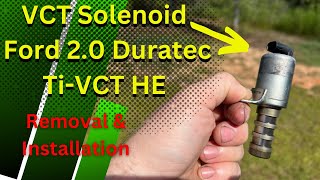
- Swap the exhaust VCT solenoid with the intake VCT solenoid. They are identical parts held in by a single bolt. 🎬 See how to remove and install a Ford Duratec VCT solenoid Clear the codes and start the engine, letting it idle and then driving it.
- If the trouble code changes to an intake-related fault (like P0012 or P0022), the solenoid you moved is confirmed to be faulty and must be replaced.
- If the code P0025 returns after the swap, the problem is not the solenoid. The issue may lie with clogged oil passages, the camshaft phaser itself, or the timing chain system.
- For advanced diagnosis, a scan tool can be used to command the VCT solenoid on and off to check for a response in engine operation. No change in idle quality when activated suggests a stuck solenoid or clogged oil passage. At this point, professional diagnosis may be required.
Parts You'll Likely Need
- Engine Variable Valve Timing (VVT) Solenoid
(OEM #CJ5Z-6M280-A)— This solenoid controls oil flow to the cam phaser and is the most common point of failure, often getting stuck or clogged with debris as noted in Ford TSB SSM 50067. It is a shared part across many Ford 2.0L, 2.3L, and 2.5L engines.
Trusted brands: Motorcraft, Dorman (p/n 917-196), NGK, Standard Motor Products
OEM price range: $70-$120
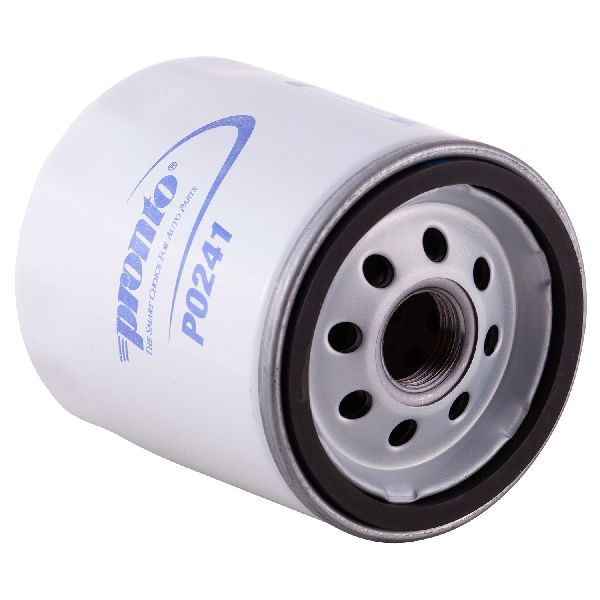
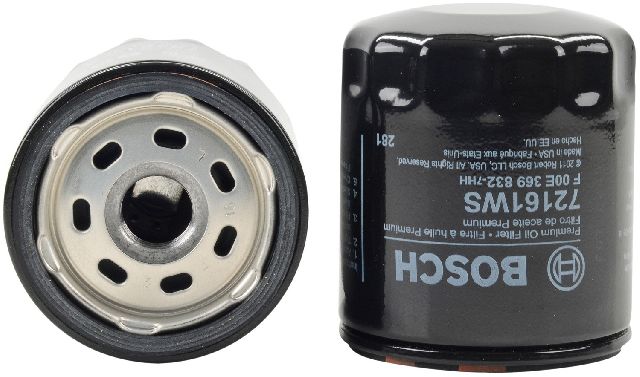
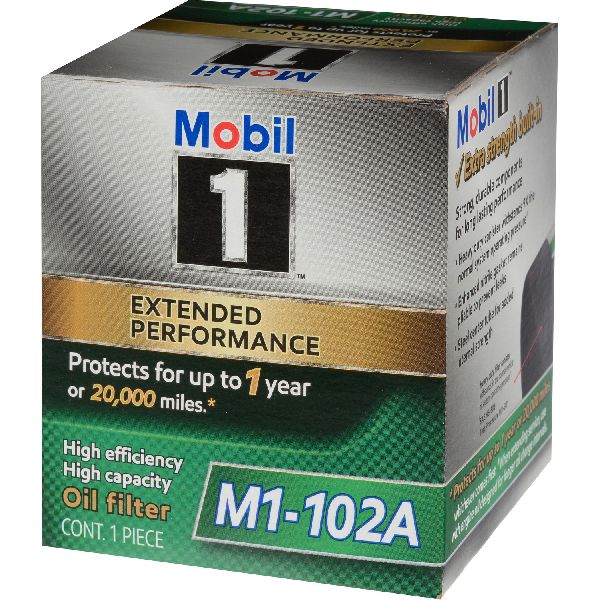
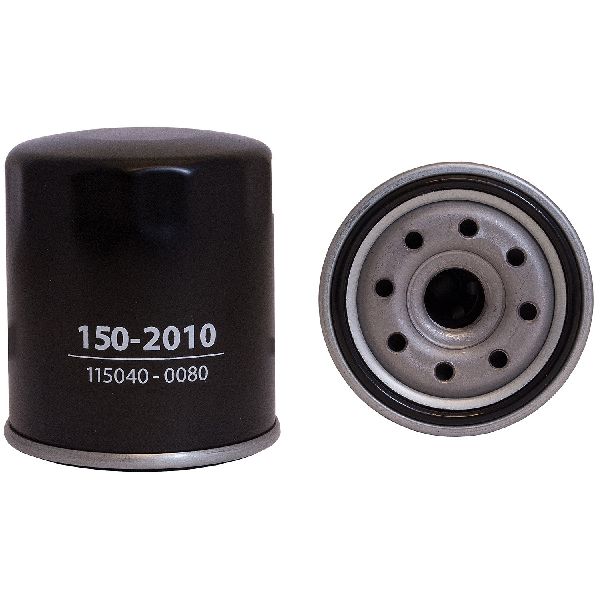
Aftermarket price range: $30-$80 - Engine Oil and Filter — Contaminated or low oil is a primary cause of VCT system faults. An oil change is a critical first step in diagnosis and repair.
Trusted brands: Motorcraft, Mobil 1, Castrol
OEM price range: $50-$80
Aftermarket price range: $40-$60
Related Codes That Often Appear With This One
- P0015 — This is the equivalent code for 'B' Camshaft Position Timing Over-Retarded on Bank 1. Since the C-MAX only has Bank 1, seeing P0025 may be an electronic error where P0015 was intended.
- P0011, P0012, P0014 — These are other VCT-related codes for Bank 1. Seeing them together can indicate a more widespread oil pressure or contamination issue affecting the entire VCT system.
- P0021, P0022, P0024 — These are the other VCT codes for 'Bank 2'. Seeing them with P0025 could point to a wiring issue common to that bank's sensors or a more severe mechanical timing problem.
Technical Service Bulletins (TSBs) & Recalls
- SSM 54366: Mentions that diagnostic tests have been updated for a group of VCT codes including P0025.
- SSM 50067: Suggests P0025 can be caused by a VCT solenoid sticking due to small debris and advises checking for contamination before replacing components.
Platform-Specific Known Issues
- The VCT system on the 2.0L engine is sensitive to oil contamination. Ford TSB SSM 50067 specifically mentions that small debris can cause the VCT solenoid to stick, leading to codes like P0025. This highlights the importance of regular oil changes with the correct oil.
- TSB SSM 54366 indicates that Ford has updated its diagnostic procedures (Pinpoint Test HK) for this and other related VCT codes, suggesting it's a well-documented issue requiring specific diagnostic steps, such as checking solenoid resistance (5-14 ohms).
Mechanic-Grade Diagnostic Values
- VCT Solenoid Internal Resistance — expected: 6.9 to 7.9 ohms at 68°F (20°C). Failure: A reading of OL (infinite resistance) indicates an open circuit, while a reading near 0 ohms indicates a short circuit.
- VCT Solenoid Connector Voltage (Key On, Engine Off) — expected: ~12V (Battery Voltage) at the power supply pin. Failure: No voltage points to a wiring issue, blown fuse, or PCM power relay problem.
- Engine Oil Pressure at Idle (Hot) — expected: Minimum 15 PSI. Failure: Pressure below 15 PSI at idle when the engine is warm can cause the VCT system to malfunction and set timing codes.
- Live Data VCT Advanced Error PID (e.g., VCT_EXH_ERR for exhaust) — expected: Should hover around 0° (±5° is acceptable for short periods). Failure: A consistent, large error value indicates the phaser is not reaching its commanded position, pointing to a solenoid, phaser, or oil flow issue.
Scan Tool Commands That Help
- FORScan / Ford IDS: VCT Solenoid Duty Cycle Command (e.g., VCT_EXH_DSD) — This bidirectional control allows a technician to manually command the solenoid to activate while monitoring the camshaft position sensor and VCT error PIDs. If the cam angle doesn't change when the solenoid is commanded, it points to a stuck solenoid, clogged oil passage, or failed phaser.
- Ford IDS: Pinpoint Test HK — Referenced directly in TSB SSM 54366, this is Ford's guided diagnostic routine within their factory scan tool. It walks a technician through a specific sequence of tests for VCT codes, including P0025, ensuring a systematic diagnosis.
Real Owner Repair Stories
- Ford F150 Forum (Ford F-150 with a similar VCT system architecture) — Check engine light with P0022 (Over-Retarded, Bank 2) after extensive driving.
❌ Tried (didn't work) Initial diagnosis was uncertain between solenoid and phaser.
✅ What actually fixed it The user monitored live data with FORScan and saw the VCT error PID (VCT_INT_DIF2) showing large deviations and slow reactions. This pattern was identified by another forum member as characteristic of a failing VCT solenoid, not a mechanical phaser issue. Replacing the VCT solenoid resolved the problem.
Diagnostic Flowchart
Other Known Issues on This Vehicle
Issues unrelated to this code that are worth knowing about as an owner of this generation:
- HF35 Transmission Grinding/Thumping Noise 🟠 Medium — Affects vehicles built on or before August 15, 2015. The noise occurs while moving but not when stationary. (Ref: TSB 17-0039 (supersedes 16-0105).)
- 12V Battery Parasitic Drain 🔴 High — Common complaint where the 12V accessory battery dies unexpectedly, preventing the car from starting. Often linked to the SYNC infotainment system or Audio Control Module (ACM) not shutting down properly. (Ref: Multiple software updates were released, but owner complaints persist. TSB 13-4-22 was an early attempt to fix related module communication issues.)
- Shifter Cable Bushing Failure 🔴 High — The bushing that attaches the shifter cable to the transmission can degrade, causing the cable to detach. This results in the vehicle not shifting into the selected gear (e.g., stuck in Drive, won't go into Park), creating a rollaway risk. (Ref: NHTSA Recall 22V-472.)
- MyFord Touch / SYNC System Failures 🟡 Low — Owners frequently report the infotainment system freezing, becoming unresponsive, or having Bluetooth connectivity issues. (Ref: Various software updates were issued by Ford to address stability.)
Used vs. New Parts: Buying Guide for This Vehicle
When a used part is the smart pick: A used VCT solenoid is generally not recommended. The failure mode is often internal sticking or electrical failure due to age and oil contamination, which is impossible to verify from a visual inspection of a used part. The low cost of a new, quality aftermarket part makes buying used a poor risk.
Donor-vehicle mileage cap: roughly under 50000 miles for the part to have meaningful remaining life.
What to inspect on the donor part:
- If buying used is unavoidable, source from a vehicle with the lowest possible mileage.
- Ask for the VIN of the donor car to check its service history for regular oil changes.
- Inspect the connector for corrosion and the screen for any visible sludge or debris, though a clean screen doesn't guarantee internal function.
OEM-only on this vehicle (don't cheap out):
- Camshaft Phaser: If the phaser itself is diagnosed as faulty, using an OEM (Motorcraft) part is strongly recommended. Aftermarket phasers have a much higher reported failure rate across many Ford engine platforms.
Aftermarket brands forum-validated for this vehicle:
- Motorcraft (OEM)
- Dorman (Ensure it's the latest revision, as early versions sometimes had issues)
- Standard Motor Products (SMP)
- NGK/NTK
Brands owners have reported issues with on this vehicle:
- No-name, unbranded solenoids from online marketplaces should be avoided. They often have high failure rates, incorrect resistance values, and may not last, causing the code to return quickly.
Real Owner Stories
Aggregated from forums and TSBs cited above. Mileages and costs reflect what owners reported in those sources.
Ford F-150 (Shared VCT Architecture)
Symptoms: The vehicle was throwing both over-advanced and over-retarded timing codes (P0021 and P0025) immediately following a cam phaser service.
What fixed it: The technician discovered that the wiring connectors for the intake and exhaust VCT solenoids had been accidentally swapped during the repair.
Source hint: Ford F150 Forum - "P0021 & P0025 after cam phaser job"
2013-2018 Ford C-MAX 2.0L
Symptoms: The owner was concerned about the safety of driving the vehicle on a trip while the P0025 code was active.
What fixed it: The context identifies that for this engine, the most common fix is replacing the exhaust VCT solenoid or performing an oil change to clear debris as per SSM 50067.
Source hint: Reddit r/MechanicAdvice - "P0025 help requested"
Related OBD-II Codes
Frequently Asked Questions
Does Ford TSB SSM 50067 apply to my C-MAX if I have a P0025 code?
What oil should I use in my 2013-2018 Ford C-MAX 2.0L to prevent VCT issues?
Can I just swap the solenoids to see if one is bad?
Is there an updated diagnostic test for P0025 on the C-MAX?
Could a recent repair on my engine cause this code to appear?
What is the resistance specification for the VCT solenoid on this vehicle?
Helpful Videos
Used OEM Parts in Stock

New Aftermarket Parts Available


The information in this article is provided for general reference and educational purposes only. Vehicle specifications, procedures, and part compatibility can vary by production date, trim level, and region. Always consult your vehicle's factory service manual and verify part numbers before purchasing or performing repairs. Safety-critical components such as airbags, seat belts, and braking systems should be installed by a qualified professional.
- Ford C-MAX:
- 🎬 Helpful Videos
- 🛍️ Shop This Part
- What's Unique About the 2013-2018 Ford C-MAX
- Symptoms You May Notice
- Most Likely Causes
- Rare But Worth Checking
- Diagnosis Steps
- Parts You'll Likely Need
- Related Codes That Often Appear With This One
- Technical Service Bulletins (TSBs) & Recalls
- Platform-Specific Known Issues
- Mechanic-Grade Diagnostic Values
- Scan Tool Commands That Help
- Real Owner Repair Stories
- Diagnostic Flowchart
- Other Known Issues on This Vehicle
- Used vs. New Parts: Buying Guide for This Vehicle
- Real Owner Stories
- Ford F-150 (Shared VCT Architecture)
- 2013-2018 Ford C-MAX 2.0L
- Related OBD-II Codes
- Frequently Asked Questions
- 🎟️ Get 5% Off