

P0022 on 2009-2019 Ford Flex 3.5L V6: Causes and Fixes for Over-Retarded Cam Timing
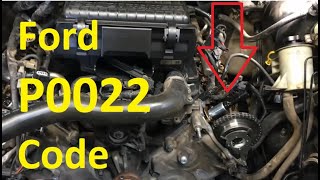
On a 2009-2019 Ford Flex, P0022 is almost always caused by low or dirty engine oil, or a sticking Bank 2 intake VCT solenoid. Start by checking your oil. If that's not the issue, replacing the Bank 2 (firewall side) intake VCT solenoid is the most common fix, with the part costing around $40-$90. Accessing this solenoid requires removing the upper intake manifold.
- Always start by checking the engine oil level and condition. A simple oil change is the cheapest and easiest first step and often fixes the problem.
- The most common failed part for P0022 is the Bank 2 (radiator side) intake VCT solenoid. This is a DIY-friendly job for many.
- Do not replace the camshaft position sensor; it is almost never the cause of this code.
- If you hear a loud rattling noise from the engine for a few seconds on a cold start, the problem is likely a more serious mechanical issue with the cam phasers or timing chain, which requires professional repair.
What's Unique About the 2009-2019 Ford Flex
The 3.5L V6 engine family in the Ford Flex is known for its Twin Independent Variable Camshaft Timing (Ti-VCT) system being very sensitive to oil quality and maintenance. The VCT solenoids have fine internal screens that can easily get clogged by sludge or debris from delayed oil changes. This is such a common failure that Ford has issued multiple Technical Service Bulletins (TSBs) acknowledging that debris can cause the solenoids to stick, directly leading to codes like P0022. Additionally, these engines feature an internal, timing-chain-driven water pump; a failure of this pump can leak coolant directly into the engine oil, creating sludge that can quickly destroy the VCT system.
Generation note: The Ford Flex spans one generation from 2009 to 2019, with a major facelift in 2013. However, the 3.5L Cyclone and 3.5L EcoBoost V6 engines and their Ti-VCT systems are fundamentally the same across all years, making the causes and fixes for P0022 consistent for the entire 2009-2019 range.
Symptoms You May Notice
- Check Engine Light is on
- Rough or unstable idle
- Reduced engine power and sluggish acceleration
- Poor fuel economy
- Engine hesitation or stalling, especially at low speeds
- Rattling or ticking noise from the engine, particularly on cold starts (if timing chain/phasers are involved)
- Shuddering or vibration while driving
- Replacing the camshaft position sensor. The sensor is almost always doing its job correctly by reporting the timing error. The fault lies with the mechanical or hydraulic components (oil, solenoid, phaser) that control the camshaft's position.
Most Likely Causes
- Low, Old, or Incorrect Viscosity Engine Oil 🔴 High Probability The Ti-VCT system is hydraulically operated and highly dependent on clean oil at the correct pressure. Sludge or debris from neglected oil changes is the leading cause of VCT system faults. In some cases, an oil change can stir up debris and temporarily cause the code, which may clear after a few drive cycles.
How to confirm: Check the oil level on the dipstick and examine its condition. If the oil is below the 'add' mark, very dark, or past its recommended change interval, this is the most likely cause.
Typical fix: Perform an engine oil and filter change using the Ford-specified synthetic oil (typically 5W-20 or 5W-30, check owner's manual) and a high-quality filter (e.g., Motorcraft). If sludge is suspected, using an engine flush product before the oil change may be beneficial. Clear the codes and drive to see if the issue returns.
Est. part cost: $40-$80 - Failing VCT Solenoid (Bank 2 Intake) 🔴 High Probability This is a well-documented failure point. Ford TSBs like SSM 47170 and SSM 50067 directly state that P0022 can be caused by small debris making the VCT solenoid stick. The internal screens can get clogged or the solenoid can fail electrically.
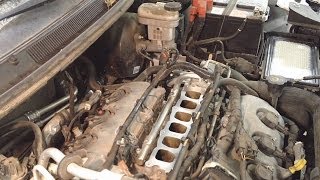
How to confirm: After an oil change, if the code persists, the solenoid is the next suspect. A mechanic can command the solenoid with a scan tool. A common DIY diagnostic is to swap the Bank 2 intake solenoid with the Bank 2 exhaust solenoid. If the code changes to P0024 (exhaust over-retarded), the solenoid is confirmed bad. Accessing the Bank 2 solenoids requires removing the upper intake manifold. 🎬 Watch: A professional walkthrough of the upper intake removal procedure.
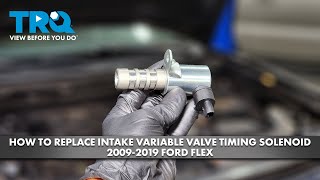
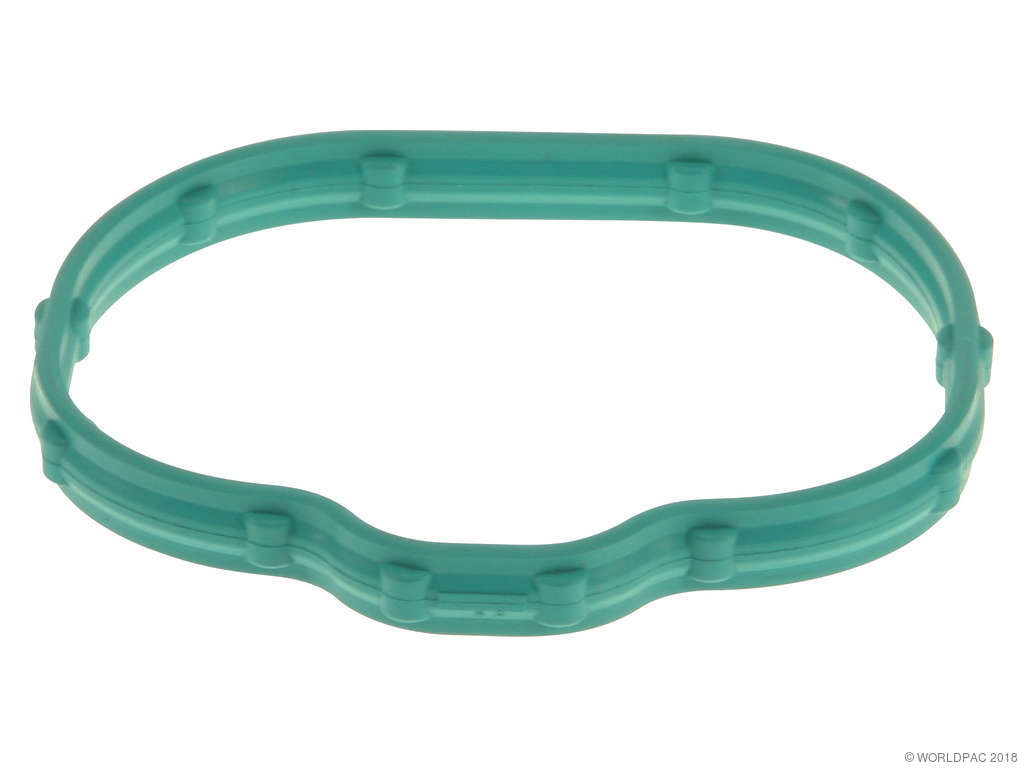
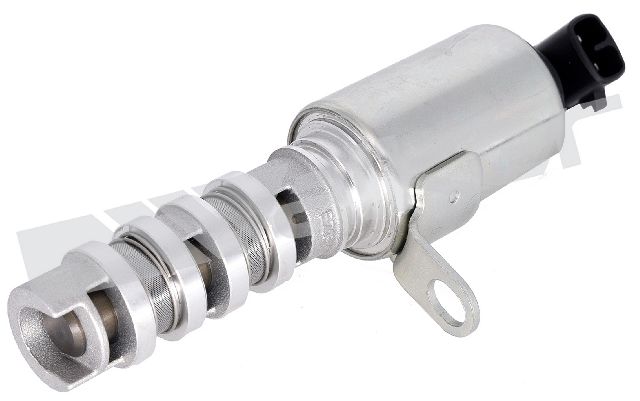
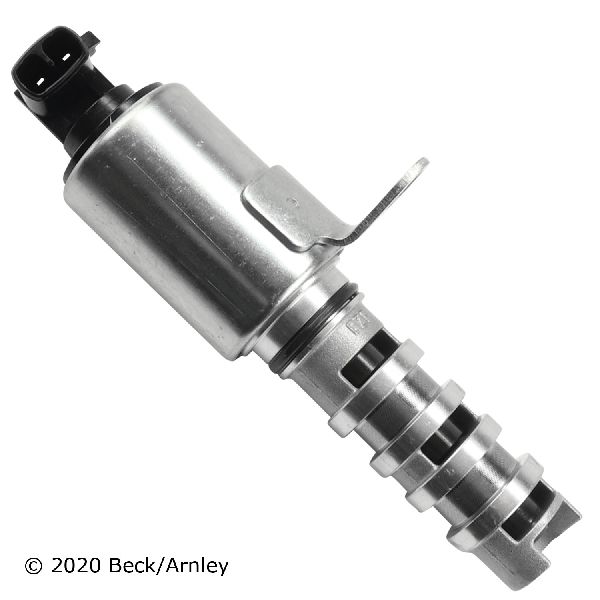
Typical fix: Replace the Bank 2 intake VCT solenoid 🎬 Watch: Step-by-step guide to replacing the intake VVT solenoid. (Part No. AT4Z-6M280-B). Since the valve cover and upper intake manifold must be removed for the firewall-side bank, it is critical to replace the valve cover gasket and intake gaskets (e.g., BR3Z-9E936-A) at the same time to prevent future oil and vacuum leaks.
Est. part cost: $40-$90 - Worn Camshaft Phaser (VCT Unit) 🟡 Medium Probability The 3.5L EcoBoost, in particular, is known for cam phaser issues, often signaled by a cold-start rattle. Neglected oil changes accelerate wear on these mechanical components, but they can fail even on well-maintained engines.
How to confirm: This is typically diagnosed after ruling out oil and VCT solenoid issues. A distinct rattling noise from the engine on cold starts that lasts 2-5 seconds is a classic symptom. If the code persists after solenoid replacement, the phaser is the next likely cause.
Typical fix: Replace the Bank 2 intake camshaft phaser. This is a major, labor-intensive repair that should also include replacing the timing chain, guides, and tensioner. This is best left to a professional. Repair costs at a dealership or independent shop can range from $2,500 to over $5,000.
Est. part cost: $200-$400 for a phaser kit, but labor is the primary cost.
Rare But Worth Checking
- Stretched Timing Chain: While less common than a solenoid failure, the timing chain can stretch over 100,000 miles, causing timing deviations that trigger VCT codes. This is a major repair and is usually accompanied by rattling noises. It is often addressed during a cam phaser replacement.
- PCM Calibration Issue: Ford issued TSB 15-0151 for some 2016 3.5L GTDI engines where P0022 could be fixed by reprogramming the PCM to the latest software calibration. While this TSB specifically mentions the Explorer built on or before 9/12/2015, it highlights the possibility of a software fix on related platforms.
- Internal Water Pump Failure: The 3.5L Cyclone engine features a timing-chain-driven water pump located inside the engine. If the pump's seal fails, it can leak coolant directly into the engine oil. This contaminates the oil, creating sludge that clogs VCT solenoids and oil passages, leading to codes like P0022 and potentially catastrophic engine damage if not addressed.
Diagnosis Steps
- Check Engine Oil: Verify the oil level is full and the oil is clean. If low, top it off. If old or dirty, perform a complete oil and filter change with the manufacturer-specified oil and a quality filter. Clear the code and see if it returns.
- Scan for Other Codes: Check for any other DTCs that could provide more clues, such as codes for the other bank (P0012) or correlation codes (P0018).
- Inspect Wiring: Visually inspect the wiring harness and connector for the Bank 2 intake VCT solenoid (rear of the engine, near the firewall) for any damage, corrosion, or loose connections.
- Test the Solenoid: Using a capable scan tool, command the Bank 2 intake VCT solenoid on and off to check for an audible click and response. Some TSBs suggest cycling it multiple times to dislodge debris.
- Swap Test the Solenoid: For a definitive test, remove the Bank 2 intake and exhaust VCT solenoids and swap their positions. Clear the codes and drive the vehicle. If the code changes to P0024 ('B' Camshaft Position - Over-Retarded), the solenoid is faulty. Note that this requires removing the upper intake manifold.
- Advanced Diagnosis: If the oil and solenoid are confirmed to be good, the issue is likely a mechanical fault with the camshaft phaser or timing chain. This requires professional diagnosis, including checking oil pressure with a mechanical gauge and potentially removing the timing cover for inspection.
Parts You'll Likely Need
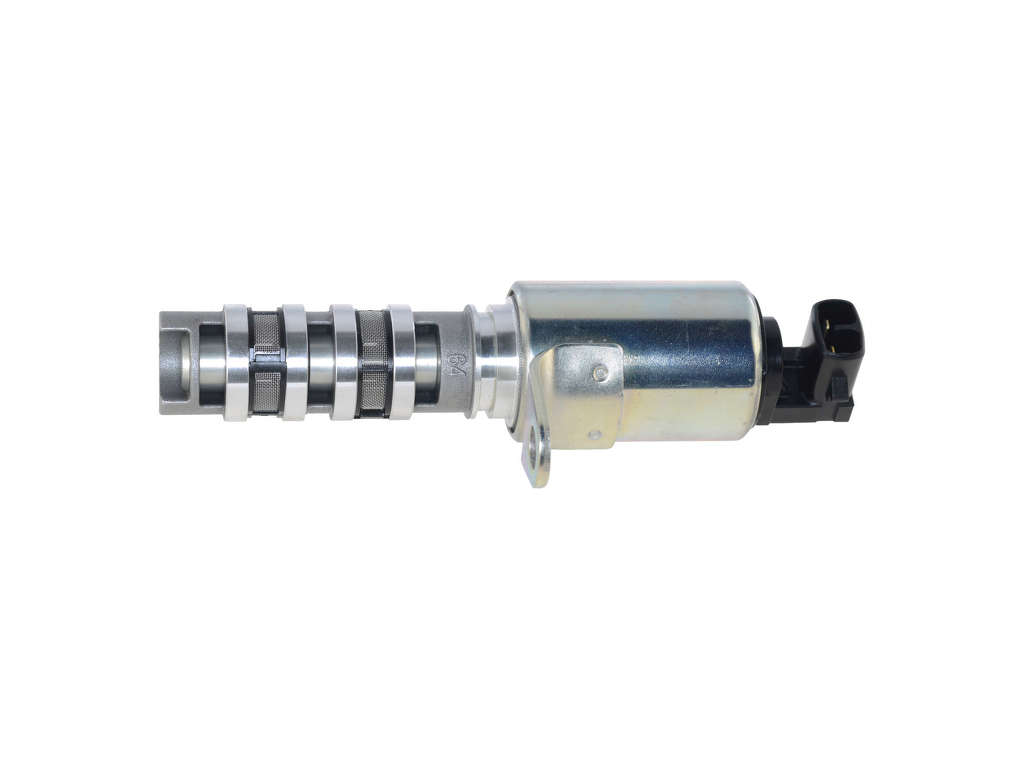
- Engine Variable Valve Timing (VVT) Solenoid
(OEM #AT4Z-6M280-B)— This is the most common part to fail for code P0022, typically due to internal clogging from oil debris, an issue acknowledged by Ford in multiple TSBs. This part number is widely used across Ford's 3.3L, 3.5L, and 3.7L engines.
Trusted brands: Motorcraft, Dorman, Standard Motor Products (SMP), Delphi
OEM price range: $60-$90
Aftermarket price range: $30-$60 - Valve Cover Gasket
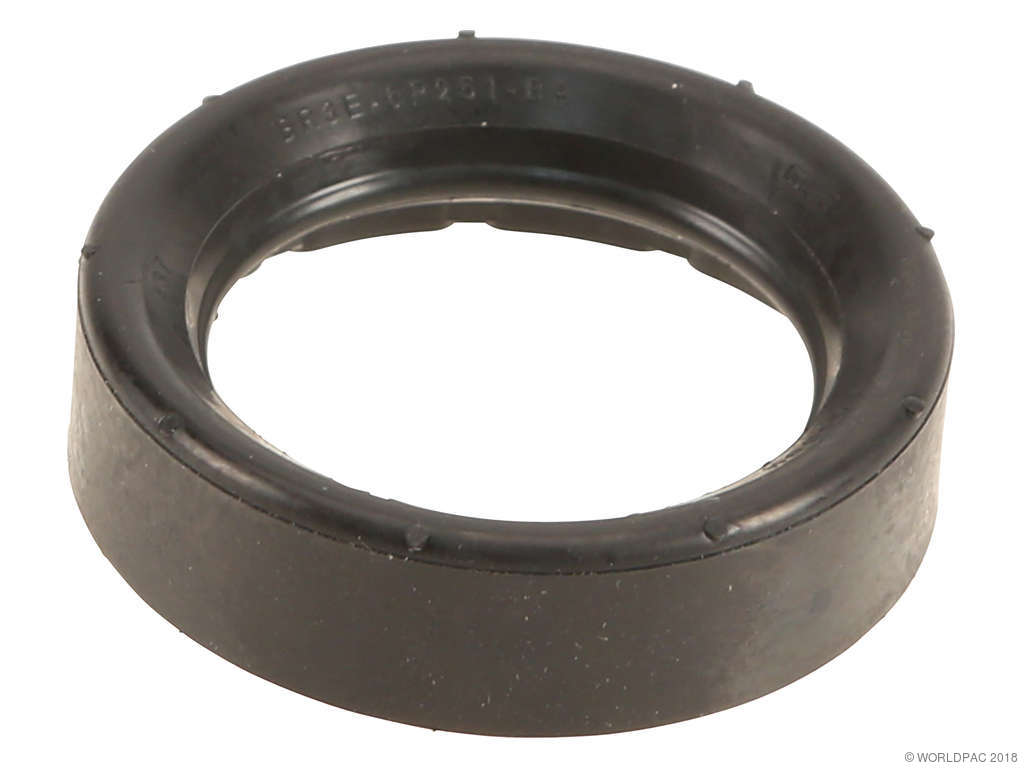
(OEM #BR3Z-6584-C (Example - Verify for specific bank))— The VCT solenoids are located under the valve covers. The gasket must be replaced whenever the cover is removed to prevent future oil leaks.
Trusted brands: Motorcraft, Fel-Pro, Mahle
OEM price range: $20-$50
Aftermarket price range: $15-$30 - Upper Intake Manifold Gaskets
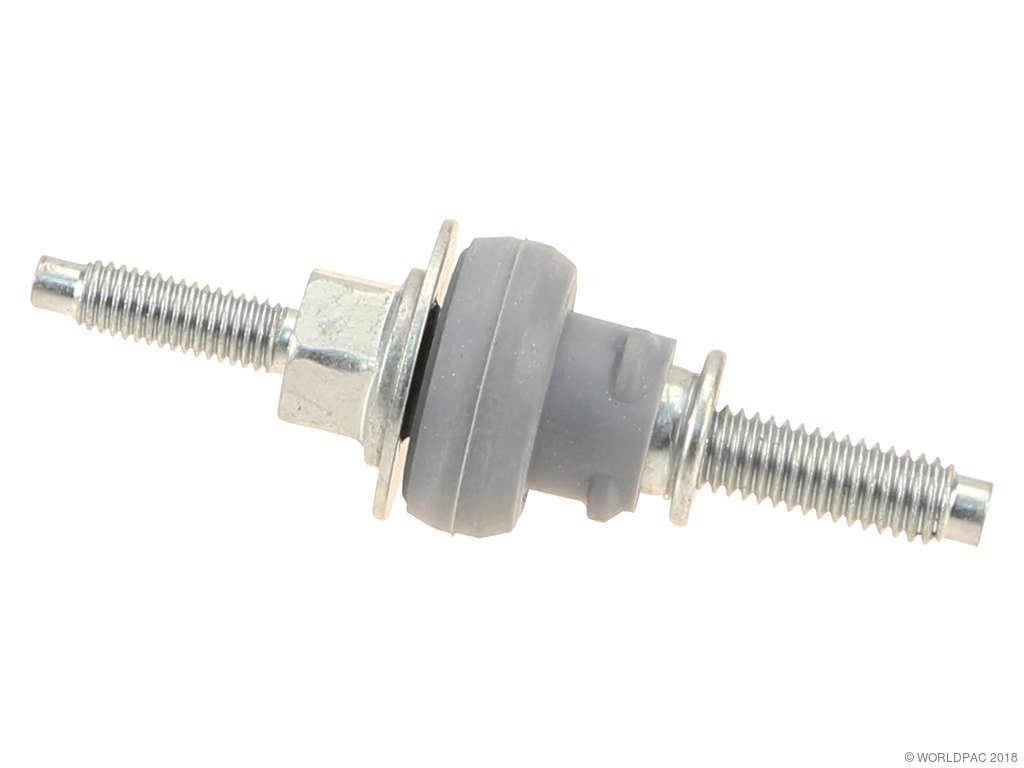
(OEM #BR3Z-9E936-A (Example - Verify for specific engine))— To access the Bank 2 (firewall side) VCT solenoids, the upper intake manifold must be removed. These gaskets are single-use and must be replaced to prevent vacuum leaks.
Trusted brands: Motorcraft, Fel-Pro
OEM price range: $30-$50
Aftermarket price range: $15-$30
Related Codes That Often Appear With This One
- P0012 — This is the same 'over-retarded' code but for Bank 1 (radiator side). Seeing both P0012 and P0022 together strongly suggests a systemic issue like low oil pressure, severe oil contamination, or a PCM software issue affecting the entire engine.
- P0021 — This is for 'Timing Over-Advanced' on the same bank. Seeing them together can indicate an erratic VCT solenoid or a more complex mechanical timing problem where the phaser is moving uncontrollably.
- P0016, P0018 — These are crankshaft/camshaft correlation codes. If they appear with P0022, it increases the likelihood of a serious base timing issue, such as a stretched timing chain or a jumped tooth on a phaser.
Technical Service Bulletins (TSBs) & Recalls
- Sticking VCT Solenoids Due to Debris: These functionally identical bulletins state that various VCT codes, including P0022, can be caused by small debris in the oil causing the VCT solenoid to stick. They recommend using a scan tool to cycle the affected solenoid multiple times to try and dislodge the debris before resorting to replacement.
- MIL ON With DTC P0012 And/Or P0022: Issued for 2016 Ford Explorer models with the 3.5L GTDI (EcoBoost) engine built on or before 9/12/2015. The fix for these specific vehicles is to reprogram the Powertrain Control Module (PCM) to the latest calibration, as the code may be triggered by a software issue rather than a mechanical fault.
- VCT Related Diagnostic Trouble Codes: A general bulletin that groups P0022 with other VCT codes and refers technicians to standard workshop manual diagnostic procedures, specifically Pinpoint Test HK, for diagnosis.
Platform-Specific Known Issues
- The 3.5L Cyclone and EcoBoost engines are known for VCT solenoid failure due to oil contamination, as documented in Ford TSBs SSM 47170, SSM 50067, and others.
- Higher mileage 3.5L engines, especially the EcoBoost version, can suffer from stretched timing chains and failing cam phasers, which often present with a cold-start rattle alongside VCT codes.
Mechanic-Grade Diagnostic Values
- VCT Solenoid Resistance — expected: 6.9 - 7.9 Ohms at 68°F (20°C). A general acceptable range is 5-15 Ohms.. Failure: A reading of 0 Ohms (short), OL/infinity (open circuit), or a value significantly outside the expected range.
- VCT Solenoid Connector Voltage (Key On, Engine Off) — expected: Battery voltage (~12V) at the power supply pin (Pin 1).. Failure: No voltage or significantly low voltage suggests a problem with the wiring, fuse, or power supply circuit.
- Engine Oil Pressure (Warm Idle) — expected: Minimum of 15-25 PSI.. Failure: Pressure below this minimum threshold can cause the VCT system to malfunction and set timing codes. The factory dash gauge is often just a switch and is not reliable for accurate pressure diagnosis.
- Scan Tool PID: VCT_ADV_ERR (VCT Advance Error, Bank 2) — expected: Should be close to 0° at a stable, warm idle.. Failure: A consistent, non-zero value (e.g., more than +/- 5 degrees) indicates the camshaft is not at its commanded position, confirming a timing deviation.
Hidden / Shadow Codes Worth Checking
- Mode 6, Test ID $81: This test monitors the Bank 2 variable camshaft timing position for errors. A failing result can confirm a VCT system fault on that bank even before a persistent DTC is set. (see via A professional scan tool capable of displaying Mode 6 test data.)
Scan Tool Commands That Help
- Ford IDS, Forscan, or other professional bidirectional scan tool: VCT Solenoid Actuator Test / Output State Control — Use this command with the engine at a warm idle. Activating the Bank 2 intake solenoid should cause the engine to stumble, run rough, or stall. If there is no change in engine operation, the solenoid is either stuck, clogged, or there is an oil flow problem to it. Ford TSBs (SSM 50067) suggest cycling the solenoid multiple times with the scan tool to potentially dislodge debris as a first step before replacement.
Wiring & Ground Locations
- VCT Solenoid Connector (Bank 2) — On the VCT solenoid itself, located under the valve cover on the firewall side of the engine. Access requires removing the upper intake manifold.. This is the connection point for testing voltage and the solenoid's resistance. Pin 1 is the 12V power supply wire (VPWR), and Pin 2 is the control wire that the PCM pulses to ground to activate the solenoid.
- G101 — Located on the left (driver's side) front of the engine compartment.. This is a primary engine ground. A poor connection at this point can cause a variety of sensor and actuator issues, including erratic behavior of the VCT system. While not a direct cause of P0022 alone, verifying major grounds is a key step in diagnosing any electronic fault.
- Camshaft Position Sensor 2 (CMP21) — Located on the rear of the left (firewall side) cylinder head.. This sensor reports the camshaft's position to the PCM. While rarely the cause of the code, its wiring runs in the same area as the VCT solenoid and could be inspected for damage simultaneously.
Real Owner Repair Stories
- Reddit user on r/mechanicadvice and r/FordFlex (2009 Ford Flex, 114k miles) — Check Engine Light came on one day after an oil change. Codes P0012 and P0022 were present. No noticeable running issues like ticking or power loss.
❌ Tried (didn't work) The owner planned to clean or replace the VCT solenoids but did not have to.
✅ What actually fixed it The Check Engine Light turned off by itself after a couple of days of driving, and the codes cleared. The owner theorized that the fresh oil change dislodged some sludge or debris, which temporarily clogged the VCT system, and then subsequently broke free, restoring normal operation.
OEM Part Supersession History
AT4Z-6M280-A→AT4Z-6M280-B— Updated design for improved durability or performance. The -B revision is the current recommended part for this application.
Heads up: The -A and -B parts are generally interchangeable, but using the latest -B revision is highly recommended for reliability.
Model Year Variations Within This Range
- 2013-2019: The VCT solenoid part number AT4Z-6M280-B is explicitly listed for the 2013-2019 Ford Flex. While the same 3.5L engine was used in 2009-2012 models, and the solenoid is likely physically identical, it's always best to verify the part number by VIN for pre-facelift models.
Diagnostic Flowchart
Used vs. New Parts: Buying Guide for This Vehicle
When a used part is the smart pick: For this repair, buying a used VCT solenoid is strongly discouraged. The primary failure mode is internal clogging from oil debris, which is impossible to see. Given the significant labor required to access the Bank 2 solenoids (removing the upper intake manifold), the risk of a used part failing shortly after installation outweighs the small cost savings.
Donor-vehicle mileage cap: roughly under 30000 miles for the part to have meaningful remaining life.
What to inspect on the donor part:
- If buying used is unavoidable, request the VIN of the donor vehicle to verify low mileage and a clean history.
- Visually inspect the solenoid's screens for any visible debris, though clean screens do not guarantee internal passages are clear.
- Test the resistance with a multimeter (should be 7-8 Ohms).
- Briefly apply 12V power to the pins to listen for a sharp 'click' of the internal plunger actuating.
OEM-only on this vehicle (don't cheap out):
- VCT Solenoid
- Cam Phaser
Aftermarket brands forum-validated for this vehicle:
- Motorcraft (OEM)
- Standard Motor Products (SMP)
- NGK/NTK
- Gates
Brands owners have reported issues with on this vehicle:
- Unnamed, low-cost brands from online marketplaces. Owners report higher rates of premature failure with the cheapest available options, making the labor-intensive job a risky gamble.
Real Owner Stories
Aggregated from forums and TSBs cited above. Mileages and costs reflect what owners reported in those sources.
2009 Ford Flex 3.5L V6
Symptoms: Codes P0012 and P0022 appeared the day after an oil change.
What fixed it: The codes disappeared on their own after a few days of driving. It was suspected that debris stirred up by the new oil temporarily clogged the VCT system and then cleared itself.
Source hint: Reddit r/FordFlex - P0012 & P0022 codes went away by themselves?
2014 Ford Flex 3.5L V6
Symptoms: A transmission-like shudder feeling between 35-70 MPH.
What fixed it: A transmission specialist diagnosed timing codes P0022 and P0341 and suggested fixing the timing issue first, as it was believed to be the cause of the shudder.
Source hint: Reddit r/FordFlex - shudder or not
Ford 3.5L EcoBoost
Symptoms: Cam phaser failure requiring replacement.
What fixed it: The entire cam phaser job, including updated parts, was performed by an independent shop.
Cost: $3200-$3200
Source hint: Ford F150 Forum - 2018 3.5 Ecoboost Cam Phaser Replacement
Ford 3.5L EcoBoost
Symptoms: Cam phaser failure requiring replacement.
What fixed it: Cam phaser replacement at a dealership.
Cost: $3500-$4100
Source hint: Reddit r/f150 - 3.5l Cam Phaser Replacement Costs
Related OBD-II Codes
Frequently Asked Questions
I just changed the oil in my Ford Flex and now the P0022 code is on. What happened?
My Flex has a rattling noise on startup and a P0022 code. Is this a serious problem?
Are there any Ford TSBs that address the P0022 code on this engine?
How can I be sure the VCT solenoid is bad before replacing it on my 3.5L Flex?
My mechanic says I need to replace the cam phasers. How much should that cost for the 3.5L EcoBoost?
I'm replacing the Bank 2 VCT solenoid. Is there anything else I should replace at the same time?
My 2014 Flex is shuddering while driving. Could the P0022 code be the cause?
Helpful Videos

Used OEM Parts in Stock


New Aftermarket Parts Available

The information in this article is provided for general reference and educational purposes only. Vehicle specifications, procedures, and part compatibility can vary by production date, trim level, and region. Always consult your vehicle's factory service manual and verify part numbers before purchasing or performing repairs. Safety-critical components such as airbags, seat belts, and braking systems should be installed by a qualified professional.
- Ford Flex:
- 🎬 Helpful Videos
- 🛍️ Shop This Part
- What's Unique About the 2009-2019 Ford Flex
- Symptoms You May Notice
- Most Likely Causes
- Rare But Worth Checking
- Diagnosis Steps
- Parts You'll Likely Need
- Related Codes That Often Appear With This One
- Technical Service Bulletins (TSBs) & Recalls
- Platform-Specific Known Issues
- Mechanic-Grade Diagnostic Values
- Hidden / Shadow Codes Worth Checking
- Scan Tool Commands That Help
- Wiring & Ground Locations
- Real Owner Repair Stories
- OEM Part Supersession History
- Model Year Variations Within This Range
- Diagnostic Flowchart
- Used vs. New Parts: Buying Guide for This Vehicle
- Real Owner Stories
- 2009 Ford Flex 3.5L V6
- 2014 Ford Flex 3.5L V6
- Ford 3.5L EcoBoost
- Ford 3.5L EcoBoost
- Related OBD-II Codes
- Frequently Asked Questions
- 🎟️ Get 5% Off