

P0017 on 2014-2018 Subaru Forester 2.0L: Crank/Cam Correlation Causes and Fixes
On the 2014-2018 Forester XT with the 2.0L turbo engine, code P0017 is most often caused by low or dirty engine oil, or a failing passenger-side exhaust Oil Control Valve (OCV). Always check your oil first. Replacing the OCV is a common DIY fix costing around $80-$150 for the part. If that fails, the next likely cause is a more serious mechanical failure of the AVCS cam sprocket.
- Always check your engine oil level and condition first. Low or dirty oil is the #1 cause of P0017 on this engine.
- The second most likely cause is a faulty passenger-side exhaust Oil Control Valve (OCV). This is a relatively inexpensive part and is DIY-friendly to replace.
- Do not immediately assume the issue is a bad camshaft or crankshaft sensor; they are rarely the cause of a correlation code.
- If an oil change and a new OCV do not fix the code, the problem is likely a more serious mechanical issue like a failed AVCS cam sprocket, which requires professional diagnosis and repair.
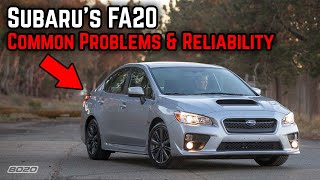
What's Unique About the 2014-2018 Subaru Forester 🎬 Watch: A deep dive into FA20 engine reliability and common issues.
The FA20 DIT engine in the Forester XT is a direct-injected, turbocharged engine that relies heavily on precise oil pressure for its AVCS (variable valve timing) system. Unlike some other platforms where this code might immediately suggest a stretched timing chain, on the FA20, the issue is very frequently related to the oiling system that controls the cam phasers. The primary culprits are often low or dirty oil, or a faulty Oil Control Valve (OCV), making these the first and most important things to check before suspecting more serious mechanical issues like a failed cam sprocket.
Symptoms You May Notice
- Check Engine Light is on
- Rough or uneven idle, sometimes stumbling on a cold start which may resolve after 20-30 seconds
- Reduced engine power and poor acceleration
- Decreased fuel economy
- Engine may hesitate or stall, especially at low RPM
- Rattling sounds from the front of the engine
- Replacing the camshaft or crankshaft position sensors. A correlation code like P0017 means the sensors are likely working correctly, but the signals they are sending do not line up. The problem is almost always mechanical or hydraulic (oil-related), not the sensor itself. Multiple owners have replaced these sensors with no effect.
Most Likely Causes
- Low or Dirty Engine Oil 🔴 High Probability The AVCS system is hydraulic and highly sensitive to oil level, quality, and pressure. Low pressure from a low oil level or sludge from infrequent oil changes is the number one cause of VVT-related codes on Subarus.
How to confirm: Check the engine oil dipstick for proper level and inspect the oil's color and consistency. This should always be the first step before any parts are replaced.
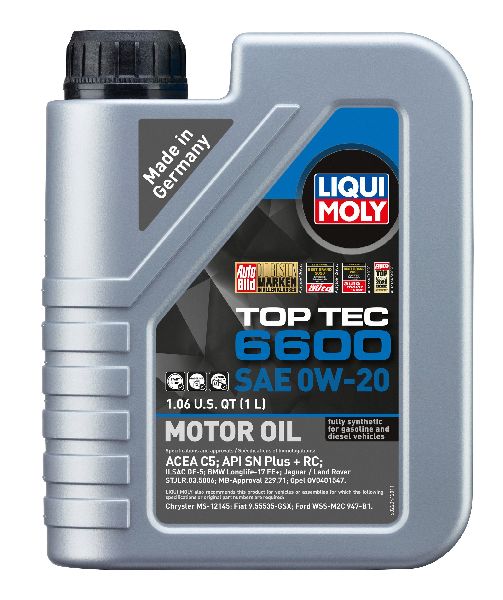
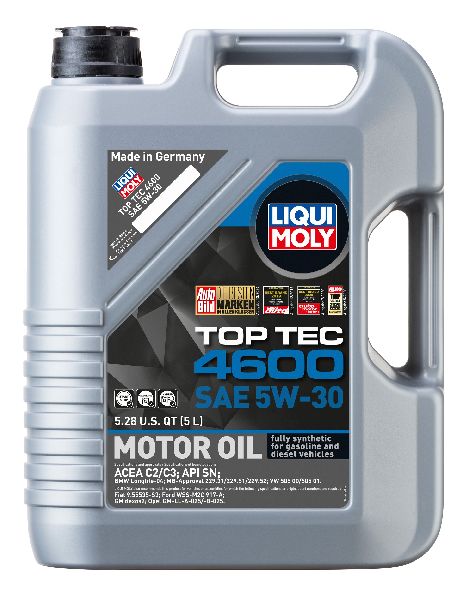
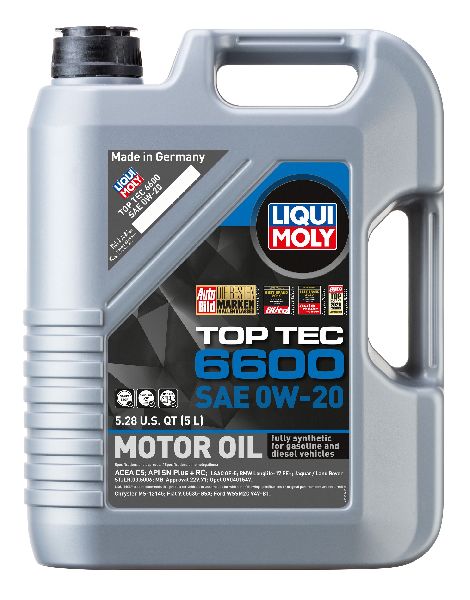
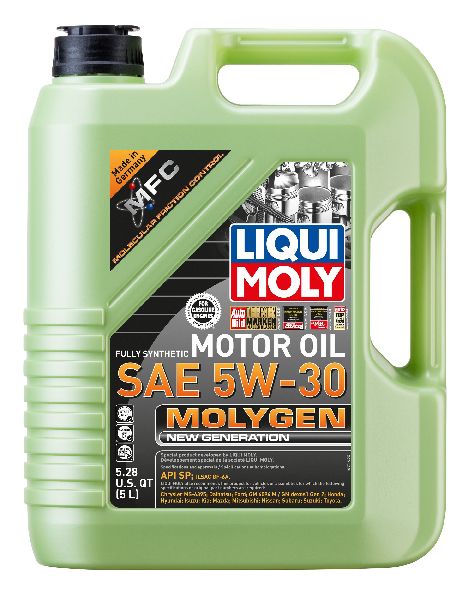
Typical fix: Perform an engine oil and filter change using a high-quality, full synthetic 5W-30 oil that meets Subaru's specifications. Some owners recommend an engine oil flush if sludge is suspected.
Est. part cost: $40-$80 - Faulty Oil Control Valve (OCV) / VVT Solenoid 🔴 High Probability The OCV is an electronic solenoid that is constantly working and is exposed to engine oil. It can fail electrically or become clogged with sludge, preventing it from correctly directing oil pressure to the cam phaser.
How to confirm: Swap the suspected faulty exhaust OCV (Bank 1, passenger side) with the intake OCV on the same bank. They are the same part. Clear the codes and drive. If the code changes to P0016 (Intake Cam Correlation), the OCV is confirmed to be the faulty part.
Typical fix: Replace the Bank 1 exhaust Oil Control Valve. It is located on the front timing cover on the passenger side and held in by a few 10mm bolts, making it an easy DIY job. 🎬 See this walkthrough on diagnosing and replacing the oil control valve.
Est. part cost: $80-$150 - Failing AVCS Cam Sprocket (Phaser) 🟡 Medium Probability After ruling out oil issues and the OCV, a mechanically failing cam sprocket is a common cause on the FA20 engine. The internal mechanism can stick, or a rear cap can fail, preventing it from adjusting the cam timing correctly even with a good OCV.
How to confirm: This requires advanced diagnostics, often involving monitoring cam angle deviation with a professional scan tool. A mechanic may need to remove the timing cover for physical inspection. Forum users report this is often the true cause when a new OCV doesn't fix the issue.
Typical fix: Replace the Bank 1 exhaust camshaft sprocket. This is a labor-intensive job that involves removing the timing cover and re-timing the engine.
Est. part cost: $150-$250
Rare But Worth Checking
- Stretched Timing Chain or Failed Tensioner: While possible, this is less common on lower-mileage FA20 engines compared to OCV or cam sprocket failure. It becomes a higher probability on high-mileage vehicles or those with a history of poor maintenance.
- Clogged Oil Passages or Filter Screens: Small mesh filter screens in the oil passages leading to the AVCS components can become clogged with sludge or debris, starving the system of oil pressure. TSB 02-163-16R outlines inspecting these passages, which often requires significant engine disassembly.
- Incorrectly Learned ECM Values: In some cases, if the vehicle is driven for too long with a correlation fault, the ECM can 'learn' and retain incorrect timing values. Even after the mechanical issue (like a sprocket) is fixed, the code may return. This can require a special memory clearing procedure or, in rare cases, ECM replacement.
Diagnosis Steps
- Check Engine Oil: Verify the oil level is full and the oil is clean. If low, dirty, or overdue, perform an oil and filter change, clear the code, and see if it returns. This is the most common and cheapest fix. 🎬 Watch: Four simple DIY methods to clear the P0017 code.
- Test the Oil Control Valve (OCV): Swap the Bank 1 exhaust OCV with the Bank 1 intake OCV (they are identical). Clear codes and drive. If the code changes to P0016, the OCV is faulty and must be replaced. This is a very reliable diagnostic step.
- Check Base Mechanical Timing (TSB Procedure): Use a scan tool (like Subaru Select Monitor). Clear codes, then disconnect the Bank 1 exhaust OCV electrical connector. Start the engine and, within 10 seconds, read the live data for 'VVT Adv. Ang. Amount'. A value deviating by +/- 10 degrees or more from the reference of 0 degrees indicates a slipped timing chain tooth.
- Inspect Wiring: Check the wiring harness and connector for the Bank 1 exhaust OCV for any damage, corrosion, or oil contamination.
- Advanced Mechanical Checks: If the above steps do not resolve the issue, the problem is likely a faulty AVCS cam sprocket (phaser) or a stretched timing chain. This was the confirmed fix in several owner accounts after an OCV replacement failed. This repair requires removing the front timing cover and is best left to a professional or experienced DIYer.
Parts You'll Likely Need
- Engine Oil and Filter — Low or dirty oil is the most frequent cause of P0017, as the AVCS system relies on clean oil at the proper pressure to function.
Trusted brands: Subaru Genuine, Mobil 1, Pennzoil
OEM price range: $50-$70
Aftermarket price range: $40-$60 - Oil Control Valve (Bank 1 Exhaust)
(OEM #10921AA231)— This solenoid is a very common failure point. It gets stuck or fails electronically, preventing correct cam timing adjustments. This part number supersedes previous versions 10921AA230 and 10921AA220.
Trusted brands: Subaru (OEM), Denso, Hitachi
OEM price range: $120-$180
Aftermarket price range: $60-$110 - AVCS Camshaft Sprocket (Bank 1 Exhaust)
(OEM #13326AA011 (Verify with VIN))— If the OCV and oil are good, the mechanical sprocket itself is the next likely culprit. It can fail internally, causing it to stick. This is often the root cause when an OCV replacement doesn't fix the code.
Trusted brands: Subaru (OEM)
OEM price range: $150-$250
Aftermarket price range: $100-$180
Related Codes That Often Appear With This One
- P0016 — This is the correlation code for the intake camshaft on the same bank (Bank 1). Seeing both P0016 and P0017 together strongly suggests a larger timing issue on the passenger side, such as a stretched chain or a problem with the oil supply to that cylinder head.
- P0019 — This is the same exhaust cam correlation code, but for Bank 2 (driver's side). If you see P0017 and P0019 together, it points towards a systemic problem affecting the exhaust cams on both sides, like severe oil contamination or a major timing chain issue.
- P000B — This code for "'B' Camshaft Position Slow Response Bank 1" is also for the passenger-side exhaust cam. It often precedes or accompanies P0017, pointing directly to a sluggish OCV or cam sprocket on that specific camshaft.
Technical Service Bulletins (TSBs) & Recalls
- 02-163-16R: Provides a comprehensive diagnostic procedure for a family of AVCS-related DTCs on FA and FB engines. It details steps for checking oil, testing OCVs, checking base timing, and inspecting oil passages.
Platform-Specific Known Issues
- Official TSB Diagnostic Guidance: Subaru has issued Technical Service Bulletin #02-163-16R which provides a detailed diagnostic flowchart for AVCS-related codes, including P0017. It prioritizes checking oil condition, testing the OCV, and checking base timing with a scan tool before recommending disassembly to inspect sprockets or chains.
- Real-World Repair Story: OCV Misdiagnosis: A well-documented case on subaruforester.org for a 2014 Forester XT with P0017 involved a dealer first replacing the exhaust OCV. The Check Engine Light returned within a mile. Further diagnosis revealed the true culprit was a faulty AVCS cam sprocket, which required engine removal to replace and verify oil passages were clear. This highlights a common pitfall where the cheaper OCV
Mechanic-Grade Diagnostic Values
- Oil Control Valve (VVT Solenoid) Resistance — expected: 6.9 to 7.9 Ohms at 68°F (20°C). Failure: A reading outside this range, or an open circuit (no reading), indicates a failed solenoid coil.
- Mode $06 - Cam/Crank Correlation Angle — expected: Within the MIN/MAX thresholds specified by the ECU for Test ID (TID) $8B, $8C, $8D, or $8E.. Failure: A measured value ('Val.') that is at or exceeds the specified limit indicates the timing deviation that triggered the P0017 code. This can confirm the fault without waiting for the CEL to return after a reset.
- Live Data - OCV Duty Cycle at Idle — expected: The duty cycle for the Bank 1 exhaust OCV should be stable and match the duty cycle of the Bank 2 exhaust OCV.. Failure: During a rough idle or stumble, if the Bank 1 exhaust OCV duty cycle dips significantly lower than the Bank 2 OCV, it points to a problem with the Bank 1 valve or its circuit.
Hidden / Shadow Codes Worth Checking
- Mode $06, Monitor ID $35 (Bank 1): This is not a shadow code, but a report from a non-continuous monitor. For P0017, it shows the raw test data for the cam/crank correlation. You can see the exact measured angle of deviation and the ECU's acceptable threshold. A value near the limit can indicate a developing problem before a code is set. (see via An advanced OBD-II scan tool capable of displaying Mode $06 test results.)
Scan Tool Commands That Help
- Subaru Select Monitor (SSM) or advanced aftermarket (Autel, Launch): VVT Initial Learning Value Reset — Use this after a mechanical repair (like replacing a cam sprocket) if the P0017 code returns immediately. The ECM can store incorrect learned correlation values in non-volatile memory (EEPROM). This procedure forces a reset of those values, which previously required ECM replacement per TSB 02-163-16r.
- Subaru Select Monitor (SSM) or advanced aftermarket: Test Mode Change (via Inspection Mode Fuse) — This is a critical part of the VVT learning value reset. After inserting a fuse into the 'inspection mode' slot in the under-hood fuse box, this scan tool function activates a test mode, allowing the 'Clear Memory' command to fully erase the stubborn learned values.
Wiring & Ground Locations
- Bank 1 Exhaust OCV Connector — On the front of the engine, passenger side. The FA20 has two OCVs on each side; the exhaust OCV is the lower of the two solenoids on the timing cover.. This 2-pin connector (part number reference 6189-7036) is the direct electrical interface to the solenoid. It should be inspected for oil contamination, which is a sign of an internal OCV seal failure. Oil wicking into the harness from this connector can cause erratic solenoid operation and mimic a failed part.
Real Owner Repair Stories
- Reddit user on r/SubaruForester (2014 Subaru Forester XT, 78k miles) — Check Engine Light with code P0017, stumbles for 20-30 seconds on cold start then clears up.
❌ Tried (didn't work) Dealer replaced the Bank 1 exhaust OCV (VVT solenoid).
✅ What actually fixed it The Check Engine Light returned less than a mile after the OCV replacement. Further diagnosis by a Subaru specialist identified a malfunctioning AVCS camshaft gear (phaser) as the true cause. The final repair involved replacing the cam gear. - Reddit user on r/MechanicAdvice (2017 Subaru WRX (FA20 DIT engine), ~37,000 miles) — P0017 code appeared after fixing a short on a cam sensor wire (P0390/P0391).
❌ Tried (didn't work) Visual timing check through OCV ports seemed okay., Dealer confirmed timing was correct via sensor waveforms but suggested replacing all 4 sprockets and the ECU for $3,100.
✅ What actually fixed it The owner suspected the ECU had 'burned in' the P0017 code after being run for a long time with the previous sensor fault. A mechanic friend performed a memory clear (likely the VVT learned value reset), and the code did not return. This points to an ECM logic issue rather than a mechanical failure in this case.
When the Usual Fixes Don't Work
- In several documented cases, replacing the Oil Control Valve (OCV), which is a very common fix, did not resolve the P0017 code. The light returned almost immediately. The actual root cause was a mechanically failed AVCS cam sprocket (phaser). This indicates that while the OCV is a high-probability cause, if it doesn't work, the next logical step is to suspect the sprocket itself, which is a much more involved and expensive repair.
OEM Part Supersession History
10921AA220, 10921AA230→10921AA231— Subaru revised the Oil Control Valve to improve reliability and address known failure modes, including a redesigned internal oil seal to prevent leaks that can contaminate the wiring harness.
Heads up: While older parts will physically fit, it is critical to use the latest revision (10921AA231) for the most reliable repair. Using old stock or an older part number may lead to a repeat failure.
Model Year Variations Within This Range
- 2017-2018: For the 2017 model year, the Forester 2.0XT gained a brake-based torque vectoring system. While this does not directly affect the P0017 code, it is a notable change in the vehicle's dynamics and control systems within this generation.
Diagnostic Flowchart
Real Owner Stories
Aggregated from forums and TSBs cited above. Mileages and costs reflect what owners reported in those sources.
2014 Subaru Forester — 78000 miles
Symptoms: Check Engine Light with code P0017, engine stumbles for 20-30 seconds on cold start then clears up. Dealer initially replaced the OCV, but the CEL returned within a mile.
What fixed it: The final diagnosis was a malfunctioning exhaust cam sprocket (phaser) that was slow to respond. The repair required pulling the engine to access, inspect, and replace the sprocket.
Source hint: Reddit r/SubaruForester - Problematic Code P0017
2017 Subaru Forester XT — 32000 miles
Symptoms: Check Engine Light (DTC P0017). The shop found that the Cam Sprocket was acting up only once the engine was started, and then would behave itself.
What fixed it: Engine was pulled to check Cam Carriers and reseal, replace Cam Sprocket, replaced all OCVs and engine wiring harness.
Source hint: Reddit r/SubaruForester
2016 Subaru WRX 2.0L FA20 DIT
Symptoms: Dealer replaced the OCV, only for the CEL to return within a mile.
What fixed it: Subsequent diagnosis revealed a bad cam gear.
Source hint: Reddit r/WRX - Need help with P0017 Code
Related OBD-II Codes
Frequently Asked Questions
Is there a specific Subaru Technical Service Bulletin (TSB) for code P0017 on my 2014-2018 Forester?
My mechanic wants to replace the Oil Control Valve (OCV) for P0017. Is this the right first step?
I replaced the exhaust OCV on my Forester XT but the P0017 code came right back. What's next?
Can low engine oil really cause a P0017 code on the FA20 DIT engine?
How can I test if my timing chain has skipped a tooth causing the P0017?
Does this P0017 issue affect other Subaru models besides the Forester?
Helpful Videos
![How to Fix P0017 Engine Code in 6 Minutes [4 DIY Methods / Only $6.81]](https://img.youtube.com/vi/Vcj-f_J2hyo/mqdefault.jpg)
We Have This Part in Stock


The information in this article is provided for general reference and educational purposes only. Vehicle specifications, procedures, and part compatibility can vary by production date, trim level, and region. Always consult your vehicle's factory service manual and verify part numbers before purchasing or performing repairs. Safety-critical components such as airbags, seat belts, and braking systems should be installed by a qualified professional.
- Subaru Forester:
- 🎬 Helpful Videos
- 🛍️ Shop This Part
- What's Unique About the 2014-2018 Subaru Forester
- Symptoms You May Notice
- Most Likely Causes
- Rare But Worth Checking
- Diagnosis Steps
- Parts You'll Likely Need
- Related Codes That Often Appear With This One
- Technical Service Bulletins (TSBs) & Recalls
- Platform-Specific Known Issues
- Mechanic-Grade Diagnostic Values
- Hidden / Shadow Codes Worth Checking
- Scan Tool Commands That Help
- Wiring & Ground Locations
- Real Owner Repair Stories
- When the Usual Fixes Don't Work
- OEM Part Supersession History
- Model Year Variations Within This Range
- Diagnostic Flowchart
- Real Owner Stories
- 2014 Subaru Forester — 78000 miles
- 2017 Subaru Forester XT — 32000 miles
- 2016 Subaru WRX 2.0L FA20 DIT
- Related OBD-II Codes
- Frequently Asked Questions
- 🎟️ Get 5% Off