

P0017 on 2011-2019 Kia 2.0L & 2.4L Engines: Crank/Cam Correlation Causes and Fixes
On Kia vehicles with the 2.0L Nu or 2.4L Theta II engine, code P0017 is most often caused by low or dirty engine oil, or a failing exhaust Oil Control Valve (OCV). Always check your oil level and condition first. If the oil is full and clean, replacing the exhaust OCV is a common and affordable fix, typically costing between $40 and $100 for the part. On 2.0L Nu engines specifically, a sheared exhaust camshaft dowel pin is also a very common and more serious cause.
- Always check your engine oil level and condition first. Low or dirty oil is the #1 cause of P0017 on these engines.
- The second most likely culprit is a faulty exhaust Oil Control Valve (OCV), which is an affordable and accessible part to replace.
- Do not immediately assume the camshaft or crankshaft sensors are bad; they are usually reporting a real mechanical or oil pressure problem.
- If oil and the OCV are good, the issue is almost certainly a more serious mechanical problem like a stretched timing chain or a sheared CVVT dowel pin, which requires significant labor.
- Be aware of the known engine issues and warranty extensions for the 2.4L Theta II engine, as this code can be an early symptom of a larger problem.
What's Unique About the 2011-2019 Kia Multiple

Both the 2.0L Nu and 2.4L Theta II engines in this era of Kia vehicles are known for specific issues that directly cause the P0017 code. The Theta II GDI engines, in particular, were subject to class-action lawsuits and recalls for excessive oil consumption and catastrophic engine bearing failure, which can lead to oil starvation or contamination that triggers timing codes like P0017. A very common and well-documented failure point on the 2.0L Nu engine is the dowel pin on the exhaust camshaft phaser shearing off or recessing into the camshaft, causing a sudden and significant timing error that is often misdiagnosed as a simple sensor or solenoid failure. Technicians familiar with this engine report it as a frequent cause for P0017 and P0014 codes.
Generation note: This guide covers multiple Kia models like the Optima, Sorento, Sportage, and Forte across their respective generations from 2011-2019 that used the 2.0L Nu or 2.4L Theta II engines. While body styles and electronics changed, the core engine architecture and the common causes for P0017 are largely consistent. The sheared dowel pin issue is particularly noted on the 2.0L Nu engine found in models like the Forte and Soul.
Symptoms You May Notice
- Check Engine Light is on
- Rough or unstable idle
- Engine stalling, sometimes at stops or during highway driving
- Poor acceleration and reduced engine power
- Rattling noise from the engine, especially on startup or a constant rattle
- Increased fuel consumption
- Engine cranks but won't start (in severe cases of timing jump)
- Replacing the camshaft position sensor or crankshaft position sensor without diagnosing the root cause. These sensors are usually reporting the problem, not causing it.
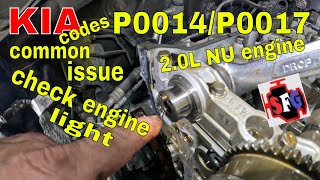
- Assuming a rattling noise is just a bad tensioner when it could be a sheared dowel pin on the 2.0L Nu engine 🎬 Watch: See how a sheared dowel pin causes these codes., which requires camshaft replacement.
Most Likely Causes


- Low or Dirty Engine Oil 🔴 High Probability The Theta II engines are known for oil consumption issues, making low oil levels a frequent problem. The variable valve timing (CVVT) system relies entirely on clean oil at the correct pressure to function. Sludge from infrequent oil changes can clog the small passages in the OCVs and phasers. One owner reported the code appeared when the oil was nearly empty, and an oil change was a temporary fix. NHTSA ODI #11288719 describes a case where P0014 and P0017 codes were diagnosed as being caused by faulty oil.
How to confirm: Check the engine oil dipstick. The level should be at the 'Full' mark and the oil should be amber-brown, not black, thick, or gritty. An oil change is the first and cheapest diagnostic step.
Typical fix: Perform an oil and filter change using the manufacturer-recommended oil viscosity (e.g., 5W-20 or 5W-30). Use a quality OEM filter. Clear the code and see if it returns.
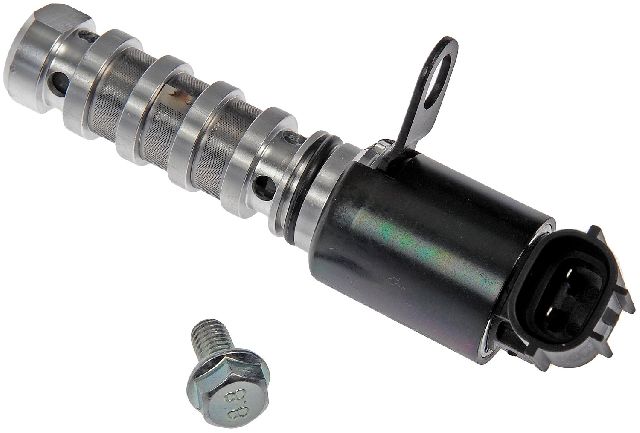
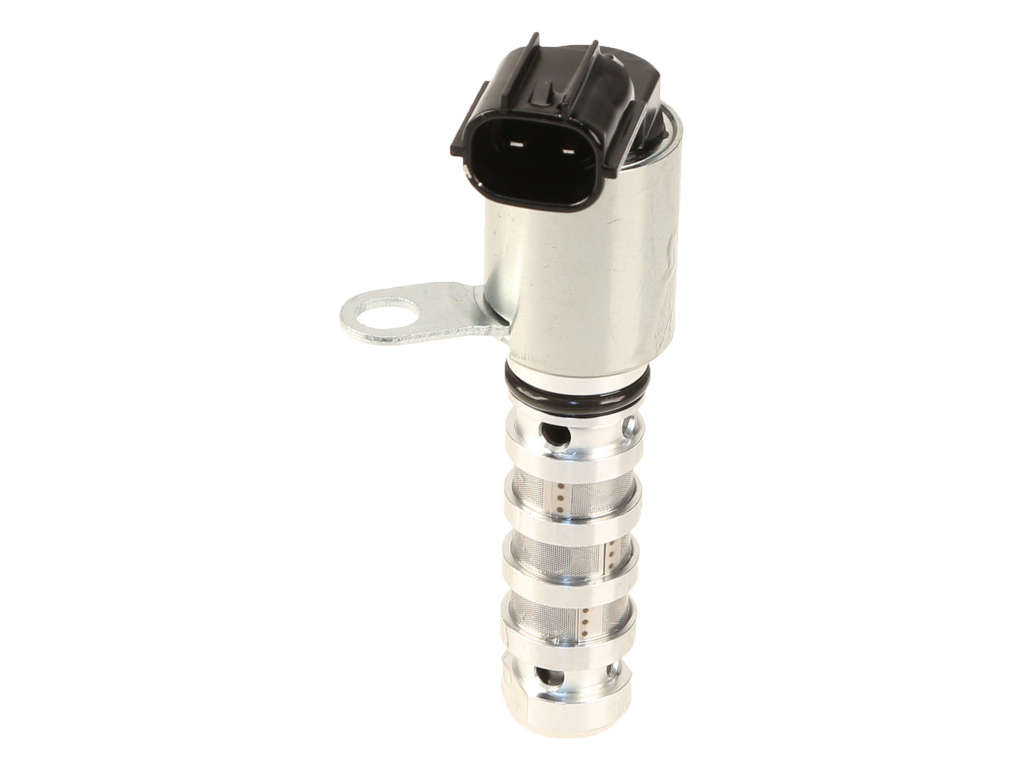
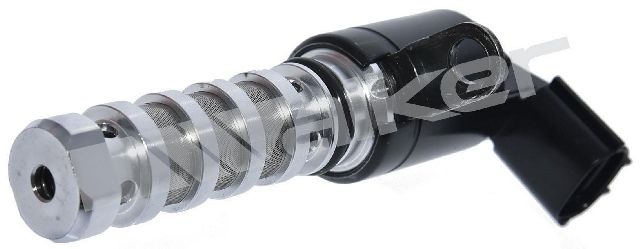
Est. part cost: $30-$70 - Failing Exhaust Oil Control Valve (OCV) 🔴 High Probability The OCV (also called a VVT solenoid) is a common failure point. It can get clogged with sludge or debris from the oil, or the solenoid coil can fail electrically. Many owners have fixed P0017 by replacing this part.
How to confirm: Remove the exhaust OCV (typically held by one 10mm bolt). Inspect the screens for sludge or debris. You can test its mechanical function by applying 12V power and ground to its pins; you should hear a distinct click. Resistance should be between 6.9-7.9 ohms. A common diagnostic step is to swap it with the identical intake OCV and see if the code changes to P0016 (intake correlation).
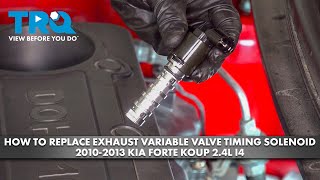
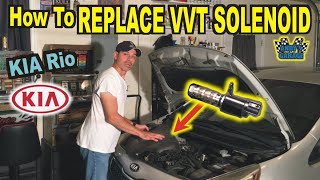
Typical fix: Replace the Bank 1 (exhaust) Oil Control Valve. 🎬 See this walkthrough for replacing the exhaust VVT solenoid.
Est. part cost: $40-$100 - Stretched Timing Chain / Failed Tensioner 🟡 Medium Probability Timing chains on these engines can stretch over time, causing slack that leads to correlation errors. A failing hydraulic tensioner can also cause the chain to lose tension, allowing it to jump a tooth. This can happen even at mileages around 125,000 miles.
How to confirm: This is a more advanced diagnosis. It involves removing the valve cover to inspect for visible chain slack. A mechanic can also use a scan tool to compare commanded vs. actual camshaft angles to confirm a timing deviation of several degrees.
Typical fix: Replace the timing chain, guides, and tensioner as a kit. This is a labor-intensive job.
Est. part cost: $150-$300 - Sheared Camshaft Phaser (CVVT) Dowel Pin 🟡 Medium Probability This is a well-documented issue, particularly on the 2.0L Nu engine. The small pin that aligns the exhaust CVVT phaser to the camshaft can shear off or sink into the camshaft, allowing the phaser to rotate freely and lose timing. A technician on YouTube noted this issue is so common that their dealership stocks the required parts.
How to confirm: After removing the valve cover, a technician can attempt to wiggle the exhaust CVVT phaser by hand. If it moves independently of the camshaft, the pin has failed. In some cases, the bolt for the phaser may be visibly loose.
Typical fix: Requires replacement of the exhaust camshaft and the CVVT phaser assembly. This often involves a full timing job as well.
Est. part cost: $300-$600
Rare But Worth Checking
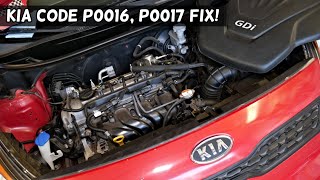
- Faulty Camshaft or Crankshaft Position Sensor: While often replaced first, the sensors themselves are rarely the cause. The P0017 code usually means the sensor is accurately reporting a real mechanical 🎬 Watch: Understanding the mechanical causes behind P0016 and P0017 codes. or hydraulic problem. Multiple owners on forums report replacing sensors with no success. Only replace a sensor after testing it and ruling out all other causes.
- Incorrectly Installed Camshaft Reluctor Wheel: If the engine was recently repaired or replaced, the reluctor wheel (or pulse wheel) on the camshaft may have been installed incorrectly. Kia issued a technical service bulletin (PS731) detailing how to verify the correct alignment by setting the engine to Top Dead Center (TDC) and inspecting the wheel's position.
Diagnosis Steps

- Check the engine oil level and condition. If low or dirty, perform an an oil and filter change with the correct viscosity oil and an OEM filter, clear the codes, and drive the vehicle to see if the light returns.
- Use a scan tool to confirm P0017 is the primary code and check for any other related codes like P0014 or P0016. Observe live data for 'Commanded' vs 'Actual' exhaust cam position. A large, fixed deviation (e.g., 12 degrees) points to a mechanical timing issue.
- Inspect the wiring and connectors for the exhaust camshaft position sensor and the exhaust Oil Control Valve (OCV) for any damage, corrosion, or oil saturation.
- Test the exhaust OCV. Remove it (one 10mm bolt) and check the mesh screens for sludge. Apply 12V power to the terminals to listen for a click. Check resistance with a multimeter; it should be within 6.9-7.9 Ohms.
- If the OCV seems functional, swap the exhaust OCV with the intake OCV. Clear the codes. If the code changes to P0016 (intake correlation), the OCV is confirmed to be faulty and needs replacement.
- If the above steps do not resolve the issue, the problem is likely mechanical. Remove the valve cover to inspect the timing chain for slack.
- Specifically for the 2.0L Nu engine, check the exhaust CVVT phaser for rotational play independent of the camshaft, which would indicate a sheared dowel pin.
- If a mechanical fault is found, proceed with replacing the timing components (chain, guides, tensioner) and/or the camshaft and CVVT phaser as needed.
Parts You'll Likely Need

- Exhaust Oil Control Valve (VVT Solenoid)
(OEM #24375-2G500 (for 2.4L Theta II & some 2.0L), 24375-2E100 (for some 2.0L Nu))— This is the most common part to fail due to oil sludge or electrical issues, causing the P0017 code.
Trusted brands: Kia (OEM), Hyundai (OEM), Delphi, Dorman
OEM price range: $70-$120
Aftermarket price range: $40-$80
Related Codes That Often Appear With This One
- P0014 — This code means 'Exhaust Camshaft Position Timing - Over-Advanced'. It is often triggered by the same faults as P0017, such as a stuck OCV or a sheared dowel pin, and frequently appears alongside P0017.
- P0016 — This is the correlation code for the intake camshaft. If P0016 and P0017 appear together, it strongly suggests a base timing issue affecting both cams, like a stretched or jumped timing chain, or widespread oil sludge.
- P1326 — This is a Kia-specific code for the Knock Sensor Detection System. It can be triggered by the engine knock resulting from severe timing issues or, more critically, from the connecting rod bearing failure common in Theta II engines. The presence of metallic flakes in the oil with these codes is a sign of impending engine failure and may be related to an engine warranty extension or recall.
Technical Service Bulletins (TSBs) & Recalls
- PS731: DTC P0011/ P0014/ P0016/ P0017 DUE TO INCORRECT CAMSHAFT RELUCTOR WHEEL CONFIGURATION: This bulletin, dated May 2022, provides a procedure for vehicles that set timing correlation codes after an engine replacement. It guides technicians to verify the correct rotational position ('clocking') of the camshaft reluctor wheel relative to the camshaft when the engine is at Top Dead Center.
Platform-Specific Known Issues
- Theta II Engine Settlement: Many 2011-2019 vehicles with the 2.4L Theta II GDI engine are covered by a lifetime warranty for engine short block issues related to connecting rod bearing failure. While P0017 is a timing code, it can be a symptom of the widespread oiling problems that lead to bearing failure. If you also have code P1326, your vehicle may be eligible for an engine replacement.
- Sheared Camshaft Dowel Pin: A widely reported failure on the 2.0L Nu engine involves the dowel pin for the exhaust CVVT phaser breaking or receding into the camshaft. This causes an immediate P0017/P0014 code and requires replacing both the camshaft and the phaser.
- Oil Consumption: Both the 2.0L Nu and 2.4L Theta II engines can suffer from high oil consumption. This starves the CVVT system of oil, leading directly to correlation codes like P0017.
Mechanic-Grade Diagnostic Values
- Oil Control Valve (VVT Solenoid) Resistance — expected: 6.9 - 7.9 Ohms. Failure: A reading outside this range indicates an electrical failure of the solenoid coil.
- Scan Tool Live Data: Commanded vs. Actual Camshaft Position — expected: The 'Actual' value should closely track the 'Commanded' value with minimal delay.. Failure: A large, fixed deviation between commanded and actual angles (e.g., more than 5-10 degrees) that doesn't change with RPM points to a mechanical timing issue like a jumped chain or sheared dowel pin. A lazy or non-responsive 'Actual' value points to a hydraulic/electrical issue (OCV, oil pressure).
Scan Tool Commands That Help
- Kia GDS (Global Diagnostic System) or equivalent professional scanner: CVVT (OCV) Activation Test — This bidirectional command allows the technician to manually command the exhaust OCV to activate while the engine is running. It's used to verify if the solenoid is mechanically functioning and if the oil passages are clear. A corresponding change in engine sound and RPM, along with a change in the actual cam angle on live data, confirms the OCV and hydraulic circuit are working.
Wiring & Ground Locations
- Camshaft Position Sensor Connector — On the top of the valve cover, near the respective camshaft (exhaust side is typically towards the rear/firewall).. The connector is a 3-wire plug. Damage to these wires or corrosion in the connector can interrupt the signal from the sensor to the ECM, causing a false correlation code. The pigtail connector is a common replacement part.
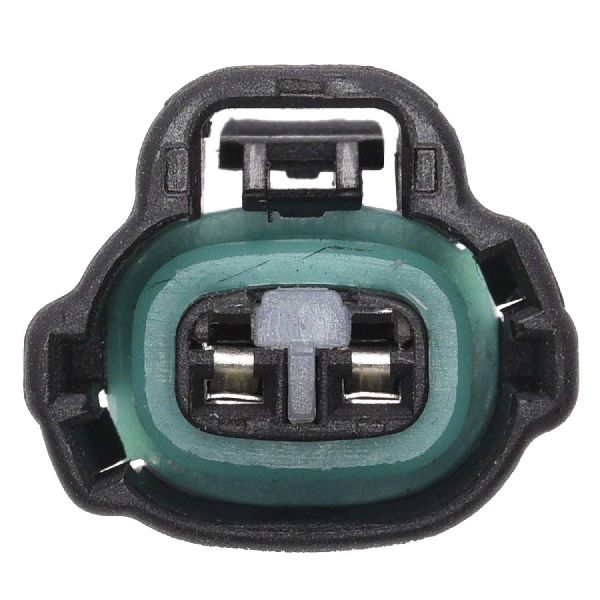
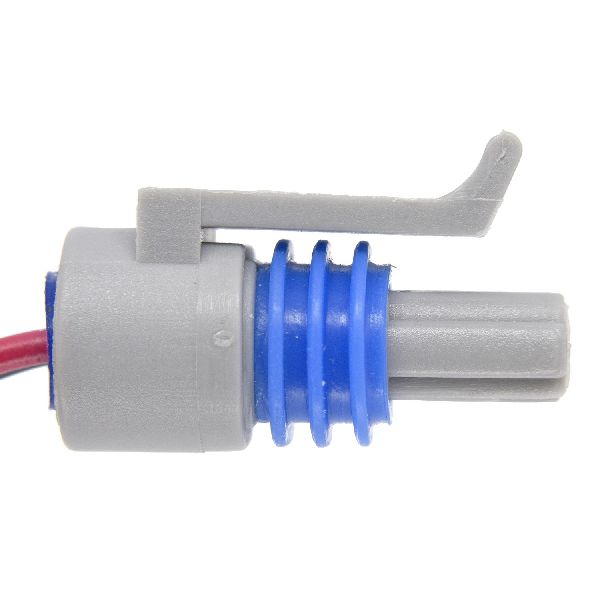
- Oil Control Valve (OCV) Connector — On the front or side of the cylinder head, directly on the body of the solenoid which is inserted into the head.. This 2-wire connector provides power and ground to actuate the solenoid. Oil can leak into this connector, causing a poor connection and preventing the OCV from functioning correctly. Inspecting for oil saturation is a key diagnostic step.
- Main Engine Ground (G-03 / GC204) — Typically a strap or heavy gauge wire from the engine block or cylinder head to the chassis frame rail or firewall.. A corroded or loose main engine ground can cause a host of electrical issues, including erratic sensor readings. While not a direct cause, a poor ground can create voltage offsets that may lead the ECM to misinterpret sensor data, potentially contributing to correlation codes.
Real Owner Repair Stories
- Reddit user in r/MechanicAdvice (Kia with oil consumption problem) — P0017 code, car running badly, found oil was very low.
❌ Tried (didn't work) Replacing the crankshaft position sensor., Cleaning and testing the OCVs (they actuated correctly).
✅ What actually fixed it The timing had jumped two teeth. The final repair involved replacing the timing chain, tensioners, both CVVT sprockets, and the exhaust camshaft due to the infamous sheared dowel pin. The code was gone after the full mechanical timing job. - Reddit user in r/kia (2.0L Kia) — P0017 code, light vibrations, then noticeable shaking and noise.
❌ Tried (didn't work) Initial research pointed to OCV or sensors.
✅ What actually fixed it A mechanic confirmed the common failure: the dowel pin on the 2.0L engine. The recommended fix was replacing the camshaft, and while apart, also the timing chain and tensioner. The user was warned that if ignored, the engine would eventually stall and not restart. - Reddit user in r/KiaForte (Kia Forte) — P0017, decreased acceleration, higher RPM.
❌ Tried (didn't work) Dealership performed an oil consumption test, which was inconclusive., Owner visually inspected OCVs and they appeared to be in good condition.
✅ What actually fixed it The owner was advised by the dealership to replace both the intake and exhaust Oil Control Valves as the next troubleshooting step. The question posed to the forum was which to replace first, confirming this is a very common dealer-recommended fix after an oil change.
Documented NHTSA Reports
- An owner reported in NHTSA ODI #11532992 that after a check engine light illuminated with codes P0017 and P0014, a dealer technician found metal shavings inside the engine, necessitating an engine replacement.
- According to NHTSA ODI #11722774, a vehicle experienced hard idling and would stall if it exceeded 3000 RPMs, with a code reader showing P0014 and P0017.
- NHTSA ODI #11721571 describes a case involving excessive oil consumption, rough idle, and reduced power with codes P1327 and P0017, which were attributed to progressive cylinder wall scoring from improperly heat-treated rings.
OEM Part Supersession History
22100-2G520, 416Z4-2GH00→24375-2G500— Standard part evolution and consolidation for the 2.4L Theta II OCV.Unknown early PNs→24375-2E100— Standard part evolution for the 2.0L Nu engine OCV. This part is distinct from the 2.4L version.
Heads up: Using the 2.4L OCV (24375-2G500) on a 2.0L Nu engine that specifies 24375-2E100 (or vice-versa) may result in improper fitment or incorrect oil flow characteristics, and should be avoided.
Model Year Variations Within This Range
- 2011-2019: While the core P0017 causes are consistent, the Theta II GDI engines were subject to recalls and a class-action lawsuit settlement for engine bearing failure. A 2011-2014 Optima may have a higher likelihood of underlying engine wear from manufacturing debris contributing to oiling issues than a later 2018-2019 model, although the risk is present across the range. Always check for open recalls or warranty extensions related to the engine.
Diagnostic Flowchart
Used vs. New Parts: Buying Guide for This Vehicle
When a used part is the smart pick: For external, easily accessible electronic components like the Oil Control Valve (OCV) or Camshaft/Crankshaft Position Sensors, a used part from a low-mileage, reputable junkyard can be a cost-effective diagnostic step. For example, if swapping a used OCV fixes the problem, you've confirmed the diagnosis cheaply before buying a new part.
Donor-vehicle mileage cap: roughly under 60000 miles for the part to have meaningful remaining life.
What to inspect on the donor part:
- Check for signs of heavy sludge or varnish on the part; clean screens on an OCV are a good sign.
- Ask for the VIN of the donor car to verify its year, model, and engine, ensuring part compatibility.
- Avoid parts from vehicles that show signs of a major collision near the engine, which could have caused unseen damage.
- If possible, test the resistance of electronic parts like sensors or solenoids before purchase.
OEM-only on this vehicle (don't cheap out):
- Timing Chain and Tensioner: Given that a stretched chain is a primary mechanical failure, using a new OEM or high-quality OEM-equivalent kit is critical for a lasting repair.
- Camshaft and CVVT Phaser: Due to the specific nature of the sheared dowel pin failure and the precise tolerances required, using new OEM parts is strongly recommended to ensure proper timing and function. A used camshaft carries the risk of having the same defect or other wear.
- Engine Bearings: If the engine requires a rebuild due to the common Theta II bearing failure, only new, correctly specified bearings should be used.
Aftermarket brands forum-validated for this vehicle:
- For sensors and solenoids, brands like Delphi, NTK, and Denso are generally considered reliable alternatives to OEM.
- For timing components, kits from reputable manufacturers that supply OEM parts are a good choice.
Brands owners have reported issues with on this vehicle:
- Avoid unbranded, 'white box' electronic sensors and solenoids from online marketplaces. These often have high failure rates, incorrect specifications, and can make diagnosis more difficult. Sticking to known brands or OEM is safer for these critical components.
Real Owner Stories
Aggregated from forums and TSBs cited above. Mileages and costs reflect what owners reported in those sources.
2017 Kia Forte
Symptoms: Check Engine Light with code P0017 after failed attempts to fix it by replacing camshaft and crankshaft sensors.
What fixed it: Replacing both the intake and exhaust Oil Control Valves (VVT Solenoids).
Source hint: Reddit r/MechanicAdvice: 2017 Kia Forte code P0017 Experience sharing
2013 Kia Rio
Symptoms: A persistent P0017 code that would return intermittently over several years.
What fixed it: A dealership replaced all timing components (chain, tensioners, actuators), but the code still returned, highlighting how difficult the issue can be to resolve.
Source hint: Car Talk Community: P0017 coming back to haunt me!
2018 Kia Forte 2.0L
Symptoms: Rough idle and a P0017 error code.
What fixed it: The dealer diagnosed and replaced bad solenoids (OCVs), which were covered under the vehicle's powertrain warranty.
Source hint: Reddit r/kia: Kia Forte 2018 P0017 error code
2019 Kia Forte 2.0L Nu
Symptoms: Check Engine Light with codes P0017 and P0014.
What fixed it: A professional technician diagnosed the common issue of a sheared dowel pin on the exhaust camshaft, which requires replacement of the camshaft and CVVT phaser.
Source hint: YouTube: KIA 2.0L NU Engine Codes P0014/P0017 Common Issue by Shop Foreman Garage
Related OBD-II Codes
Frequently Asked Questions
My 2.4L Theta II engine has code P0017 and also P1326. Is this related to the engine settlement?
I have a 2.0L Nu engine and heard a sheared dowel pin is a common cause for P0017. Is this true?
How likely is it that just low or dirty oil is causing P0017 on my Kia?
Should I replace the camshaft position sensor to fix P0017?
How can I test the Oil Control Valve (OCV) before replacing it?
My mechanic just replaced my engine and now I have code P0017. What could be wrong?
Helpful Videos
We Have This Part in Stock


The information in this article is provided for general reference and educational purposes only. Vehicle specifications, procedures, and part compatibility can vary by production date, trim level, and region. Always consult your vehicle's factory service manual and verify part numbers before purchasing or performing repairs. Safety-critical components such as airbags, seat belts, and braking systems should be installed by a qualified professional.
- Kia Multiple:
- 🎬 Helpful Videos
- 🛍️ Shop This Part
- What's Unique About the 2011-2019 Kia Multiple
- Symptoms You May Notice
- Most Likely Causes
- Rare But Worth Checking
- Diagnosis Steps
- Parts You'll Likely Need
- Related Codes That Often Appear With This One
- Technical Service Bulletins (TSBs) & Recalls
- Platform-Specific Known Issues
- Mechanic-Grade Diagnostic Values
- Scan Tool Commands That Help
- Wiring & Ground Locations
- Real Owner Repair Stories
- Documented NHTSA Reports
- OEM Part Supersession History
- Model Year Variations Within This Range
- Diagnostic Flowchart
- Used vs. New Parts: Buying Guide for This Vehicle
- Real Owner Stories
- 2017 Kia Forte
- 2013 Kia Rio
- 2018 Kia Forte 2.0L
- 2019 Kia Forte 2.0L Nu
- Related OBD-II Codes
- Frequently Asked Questions
- 🎟️ Get 5% Off