

P0017 on 2007-2018 Ford Edge 3.5L V6: VCT Solenoid, Timing Chain, and Water Pump Fixes
On the 3.5L Ford Edge, P0017 is most often caused by low/dirty oil or a faulty Bank 1 exhaust VCT solenoid (~$40-$80 part). However, it can also be a severe warning for a stretched timing chain, often caused by a failing internal water pump leaking coolant into the oil, which is a major repair ($2,000+).
- Always check your engine oil first. Low, old, or milky oil is a primary cause of P0017 and must be addressed before any parts are replaced.
- If the oil is fine and there's no startup rattle, the most likely culprit is a sticking Bank 1 exhaust VCT solenoid, which is a moderately difficult repair due to its location at the firewall.
- A rattling noise on cold startup is a major red flag for a stretched timing chain and/or a failing internal water pump. This requires an immediate and expensive professional repair to avoid engine destruction.
- Do not replace the camshaft position sensor as a first step; it is almost always reporting a real timing issue, not causing it.
- When replacing a failed water pump on the 3.5L V6, it is mandatory to also replace the timing chain, guides, and tensioners due to likely oil contamination and wear.
What's Unique About the 2007-2018 Ford Edge
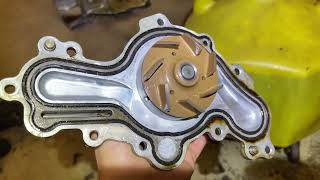
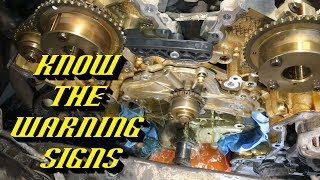
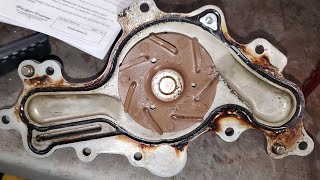
The 3.5L Duratec V6 in the Ford Edge has a critical design element: the water pump is located inside the engine and is driven by the timing chain. When this internal pump fails, it can leak coolant directly into the engine oil. This coolant contamination destroys the oil's lubricating properties, leading to rapid and catastrophic wear on the timing chain, guides, and tensioners. This chain stretch is a primary cause of correlation codes like P0017, turning what might be a simple sensor code on other vehicles into a potential indicator of a major engine repair. There is a weep hole designed to leak coolant externally as a warning, but this system is not foolproof, and internal leakage into the oil pan 🎬 Watch: How to check for internal water pump failure before it destroys your engine. is a common and severe failure mode.
Generation note: This guide covers the first generation (2007-2014) and the second generation (2015-2018) Ford Edge. The 3.5L Duratec V6 engine and its associated issues with the VCT system and internal water pump are common across both generations covered in this timeframe.
Symptoms You May Notice
- Check Engine Light illuminated
- Rough or unstable idle
- Hesitation or loss of power during acceleration
- Decreased fuel economy
- Engine stalling at low speeds
- Rattling or ticking noise from the engine, especially on cold startups
- Engine cranks but won't start (in severe cases of jumped timing)
- Replacing the Bank 1 exhaust camshaft position sensor. The sensor is almost always doing its job correctly by reporting the timing correlation error. The root cause is typically the oil, VCT solenoid, or the mechanical timing components themselves.
Most Likely Causes
- Low or Dirty Engine Oil 🔴 High Probability The Variable Camshaft Timing (VCT) system is fully hydraulic and highly sensitive to oil pressure and cleanliness. Ford has issued multiple TSBs noting that debris in the oil is a primary cause of VCT faults.
How to confirm: Check the oil level on the dipstick and inspect its condition. If the level is low or the oil is dark, gritty, or appears milky (like chocolate milk), it needs immediate attention. Milky oil is a definitive sign of coolant contamination.
Typical fix: Perform an engine oil and filter change using the manufacturer-specified grade (e.g., 5W-20) and a high-quality filter. If oil is milky, the water pump has likely failed and this is only a temporary measure before a major repair.
Est. part cost: $40-$80 - Sticking or Failed VCT Solenoid (Bank 1 Exhaust) 🔴 High Probability These solenoids have fine mesh screens that can become clogged with oil sludge or debris, causing them to stick. This is a well-documented issue in Ford TSBs.
How to confirm: Use a bidirectional scan tool to command the solenoid on and off. A simpler method is to swap the Bank 1 exhaust solenoid with the Bank 1 intake solenoid. If the code changes to P0016, the solenoid is faulty.
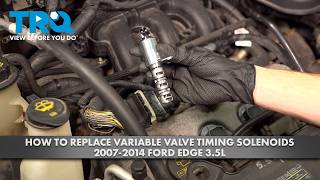
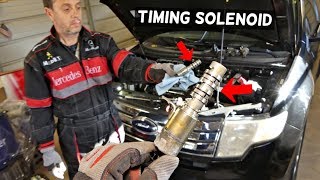
Typical fix: Replace the Bank 1 exhaust VCT solenoid. Since Bank 1 is at the firewall, this requires removing the upper intake manifold, making it more labor-intensive than 🎬 See this step-by-step guide on replacing the VVT solenoids. the Bank 2 solenoids.
Est. part cost: $40-$150 - Stretched Timing Chain 🟡 Medium Probability Often a direct result of a failing internal water pump contaminating the oil, or from extended oil change intervals. The chain slack causes a discrepancy between cam and crank signals.
How to confirm: A persistent rattling noise from the engine for 2-5 seconds on a cold start is a classic symptom. Confirmation requires engine disassembly to physically inspect the chain tension and timing marks.
Typical fix: Replace the timing chain, guides, and tensioners. This is a major, labor-intensive job. The water pump should always be replaced at the same time.
Est. part cost: $400-$800 for a complete kit - Failing Internal Water Pump 🟡 Medium Probability The timing-chain-driven water pump is a known failure point on the 3.5L Duratec. When its seals fail, it leaks coolant into the oil pan, contaminating the oil. Failures are reported as early as 50,000 miles, but are common in the 100k-150k mile range.
How to confirm: Inspect the engine oil for a milky, chocolate-milk-like appearance. Check for unexplained coolant loss. A mechanic can also check for coolant leaking from the weep hole located behind the alternator.
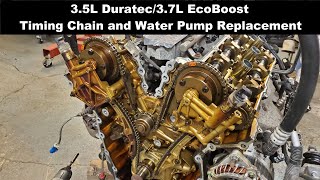
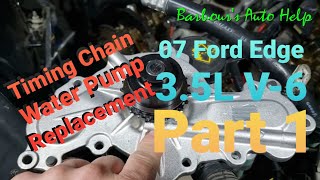
Typical fix: The water pump must be replaced. This requires a full timing chain job, as the pump is located behind the timing cover. All timing components should be replaced simultaneously. This is a very expensive repair, 🎬 Watch: A full DIY guide for water pump and timing chain replacement. often quoted between $2,500 and $3,500.
Est. part cost: $150-$300 for the pump, but it's part of the larger timing job.
Rare But Worth Checking
- Failed Camshaft Position Sensor: It's uncommon for the sensor itself to fail. It is more likely that the sensor is accurately reporting a real mechanical or hydraulic problem. Replacing it is usually not the fix.
- Failed Cam Phaser: The actuator on the end of the camshaft can fail mechanically, getting stuck or developing excessive play. This is often diagnosed and replaced during a full timing chain service.
- Incorrect Timing After Repair: If the P0017 code appears immediately after a timing chain replacement, it's highly probable that the Bank 1 exhaust camshaft was mistimed by one tooth during reassembly, or slack was left on the wrong side of the chain before releasing the tensioner.
Diagnosis Steps
- Check Engine Oil: Verify the oil level is full and the condition is good (not dirty, gritty, or milky). If the oil is suspect, perform an oil and filter change with the correct viscosity oil before proceeding. If oil is milky, stop immediately; the water pump has failed.
- Scan for Codes: Confirm P0017 and look for any other related codes (P0016, P0018, P0019) to understand the scope of the problem. Codes on both banks strongly suggest a base timing issue.
- Listen for Noise: On a cold engine, listen for a rattling sound from the timing chain area (passenger side of the engine) for the first 2-5 seconds after startup. A rattle strongly suggests a timing chain/tensioner issue.
- Test VCT Solenoid: If you have a bidirectional scanner, command the Bank 1 exhaust VCT solenoid to cycle. Alternatively, swap the Bank 1 exhaust and intake solenoids. Clear codes and drive. If the code changes to P0016, the solenoid is bad.
- Inspect Wiring: Check the connector and wiring for the Bank 1 exhaust VCT solenoid and camshaft position sensor for any damage, corrosion, or oil contamination.
- Mechanical Inspection: If the above steps do not resolve the issue, a mechanical inspection is necessary. This involves removing the valve cover and timing cover to check the timing marks, chain tension, and look for signs of a leaking water pump. This step is best left to a professional.
Parts You'll Likely Need
- Engine Variable Camshaft Timing (VCT) Solenoid (Bank 1 Exhaust)
(OEM #AT4Z-6M280-A or AT4Z-6M280-C)— This is the most common part to fail due to clogging from oil debris, causing the timing correlation fault.
Trusted brands: Motorcraft, Dorman
OEM price range: $50-$90
Aftermarket price range: $30-$60 - Engine Water Pump (Internal)
(OEM #PW532 (Motorcraft) or BR3Z-8501-D (Ford))— The root cause of many timing chain failures. Its failure contaminates the oil with coolant. It is always replaced during a timing chain job on this engine.
Trusted brands: Motorcraft, Gates
OEM price range: $80-$150
Aftermarket price range: $50-$100 - Timing Chain Kit (Primary and Secondary Chains, Guides, Tensioners)
(OEM #Primary Chain: BL3Z-6268-A, Secondary Chains (2): AT4Z-6268-A)— Required when the chain is stretched, typically due to oil contamination from a failed water pump or extended oil change intervals.
Trusted brands: Cloyes, Melling
OEM price range: $400-$600
Aftermarket price range: $200-$400
Related Codes That Often Appear With This One
- P0016 — This is the correlation code for the intake camshaft on the same bank (Bank 1). If P0016 and P0017 appear together, it strongly points to a base timing issue like a stretched chain affecting the entire bank.
- P0018 / P0019 — These are the equivalent codes for Bank 2 (radiator side). Seeing codes for both banks (e.g., P0017 and P0019) is an almost certain indicator of a problem with the primary timing chain or crankshaft sensor system affecting the whole engine.
- P0012 / P0015 — These codes indicate over-retarded timing on Bank 1. They often appear with correlation codes as they all point to a general VCT system fault related to oil flow, solenoids, or phasers.
Technical Service Bulletins (TSBs) & Recalls
- SSM 47170 / SSM 48423: Note that P0017 and other VCT codes may be caused by small debris causing the VCT solenoid to stick.
- TSB-16-0093: Notes that P0017 can appear on low-mileage 3.5L V6 vehicles and recommends VCT solenoid replacement.
- SSM 49821: General TSB for 2015-2021 vehicles covering a wide range of VCT-related DTCs including P0017.
Platform-Specific Known Issues
- The internal, timing-chain-driven water pump is the most significant platform-specific issue. Its failure leaks coolant into the engine oil, which is not externally visible. This contamination quickly degrades the oil, leading to insufficient lubrication, stretched timing chains, and eventual catastrophic engine failure if not addressed. Codes P0016/P0017 are often the first electronic symptom of this mechanical failure.
Mechanic-Grade Diagnostic Values
- VCT Solenoid Resistance — expected: 6.9 to 14.0 Ohms. Failure: A reading outside this range, or an open/infinite reading (OL), indicates a faulty solenoid coil.
- Camshaft Position Sensor (CMP) Signal Voltage (3-wire Hall-effect) — expected: Signal wire should show ~5V with key on, engine off. When running or cranking, it should produce a square wave, and passing a metal object in front of it should cause the voltage to drop to near 0V.. Failure: No voltage on the power or signal wire, or a signal voltage that does not change when the engine is cranked.
- VCT Solenoid Control Voltage (Key On, Engine Off) — expected: Greater than 10.5V (effectively battery voltage) on the power feed pin.. Failure: Voltage below 10.5V indicates an open circuit in the power feed, a blown fuse, or a PCM driver issue.
- Engine Oil Pressure at Idle (Hot) — expected: At least 25 PSI.. Failure: Pressure below 25 PSI indicates oil starvation, which will prevent the VCT system from functioning correctly and can trigger correlation codes.
Hidden / Shadow Codes Worth Checking
- Mode $06, TID $84: This is not a separate code but a diagnostic test monitor within the standard OBD-II system. It tracks the Cam/Crank position error. A high reading in the Mode $06 data for this Test ID can indicate that the timing correlation is approaching the threshold to set a P0017 code, even before the Check Engine Light is on. (see via An advanced OBD-II scan tool capable of displaying Mode $06 data.)
Scan Tool Commands That Help
- Ford IDS (Integrated Diagnostic System): VCT Solenoid Actuator Test / Output State Control — This bidirectional command allows a technician to directly command the VCT solenoid on and off while the engine is running. By monitoring engine performance and camshaft angle PIDs (Parameter IDs), you can confirm if the solenoid is physically responding to PCM commands. A lack of change in engine idle or cam angle when the solenoid is commanded indicates a stuck/failed solenoid or an oil flow blockage.
- Ford IDS (Integrated Diagnostic System): VCT_ERR PID Histogram — When diagnosing intermittent VCT issues, the VCT_ERR PID (VCT Error) can be monitored. Using the histogram function in IDS allows the tech to see the distribution of timing errors over a drive cycle. This can help identify specific operating conditions (e.g., high load, low RPM) where the timing correlation deviates, pointing towards a hydraulic or mechanical issue that isn't present at idle.
Wiring & Ground Locations
- Bank 1 Camshaft Position Sensors — Bank 1 is the cylinder head closer to the firewall. The sensors are located on the rear of the cylinder head, accessible after removing the airbox assembly.. P0017 specifically refers to the exhaust camshaft sensor ('B') on this bank. Damaged wiring or a corroded connector at this location can cause a loss of signal, triggering the code. The location at the firewall makes it susceptible to heat damage and difficult to access.
Real Owner Repair Stories
- Ford F150 Forum user 'PappyConfused' (2017 3.5L EcoBoost (similar VCT system)) — Cam phaser rattle at start and running. After timing job, P0017 code appeared with a slight shudder at idle.
❌ Tried (didn't work) A complete timing job was performed with new phasers, chains, guides, and tensioners., The technician initially 'corrected' what appeared to be a one-tooth-off factory assembly on the exhaust cam., Verifying timing marks post-repair showed everything was aligned correctly per the manual, but the code persisted., A Ford dealer suggested the new phaser must be bad.
✅ What actually fixed it The user tore the engine down again and found the brand new Motorcraft phaser for Bank 1 was defective. After replacing the new, faulty phaser with another new one and setting the timing to factory marks, the issue was resolved. - Ford F150 Forum user 'AHenry014' (2011 3.5L (similar VCT system)) — P0017 and then a pending P0018 appeared immediately after a full timing chain and phaser replacement.
❌ Tried (didn't work) Clearing the code, which returned instantly.
✅ What actually fixed it The user concluded the timing was off by one tooth on the main chain, despite believing the marks were aligned during assembly. The key challenge was managing chain slack properly on the tensioner side while keeping the cams perfectly aligned. The fix required tearing it down and re-timing the engine with extreme care.
OEM Part Supersession History
AT4Z-6M280-A→AT4Z-6M280-C— Standard part revision and improvement by the manufacturer. The -C revision is the current recommended replacement for the Bank 1 Exhaust VCT solenoid.
Heads up: AT4Z-6M280-C is specified for the right-hand (Bank 1) exhaust camshaft and has a blue connector. While other solenoids may look similar, using the incorrect part number for the position can cause issues. For example, AT4Z-6M280-B is for the intake side.
Diagnostic Flowchart
Other Known Issues on This Vehicle
Issues unrelated to this code that are worth knowing about as an owner of this generation:
- Power Transfer Unit (PTU) Failure 🔴 High — Common on AWD models, especially pre-2015. Fluid is cooked by the nearby exhaust, leading to gear oil breakdown and unit failure, often between 60k-120k miles. (Ref: No recall, but a well-known issue. Ford considers the unit 'filled for life,' but owners recommend fluid changes every 20-30k miles.)
- Faulty Door Ajar Sensor 🟡 Low — Extremely common across all first-gen (2007-2014) models. The switch inside the door latch fails, causing the 'Door Ajar' light to stay on, draining the battery. (Ref: No recall. Common fixes involve cleaning the latch with brake cleaner or WD-40, or bypassing the sensor wiring.)
- Leaking Brake Booster 🟠 Medium — Common on 2007-2015 models. The internal diaphragm can tear, causing a hissing noise when the brake pedal is pressed and a hard pedal feel. (Ref: Ford issued an extended warranty (Customer Satisfaction Program 13N02) for this issue.)
- Swollen Lug Nuts 🟡 Low — Affects many Ford models from this era. The two-piece lug nuts have a chrome cap that swells and deforms over time, making it impossible to use the factory lug wrench. (Ref: No recall. The recommended fix is to replace the OEM two-piece lug nuts with solid one-piece aftermarket nuts.)
- Transmission Failure (Early Models) 🔴 High — Particularly noted on 2007-2008 models, which can experience sudden transmission shutdown or failure, often around 80,000 miles.
Used vs. New Parts: Buying Guide for This Vehicle
When a used part is the smart pick: For this specific set of repairs, using used parts is generally not recommended. The only potential exception might be a simple wiring connector pigtail if the original is damaged.
Donor-vehicle mileage cap: roughly under 80000 miles for the part to have meaningful remaining life.
What to inspect on the donor part:
- For any part, verify the donor vehicle did not have a 'milky' oil cap, indicating coolant contamination.
- If considering a used sensor or solenoid, try to get it from a lower-mileage, accident-damaged vehicle rather than a high-mileage engine with unknown history.
OEM-only on this vehicle (don't cheap out):
- Timing Chain Kit: Due to the catastrophic consequences of failure, using OEM (Motorcraft) or high-quality, well-regarded aftermarket kits (like Cloyes, Melling) is critical. Avoid no-name kits.
- Water Pump: Given that its failure destroys the engine, using an OEM Motorcraft pump is the safest choice. The cost difference is minimal compared to the labor involved.
- Cam Phasers: As evidenced by repair stories, even new OEM parts can fail. Using used phasers is a significant gamble not worth the risk.
Aftermarket brands forum-validated for this vehicle:
- Cloyes (Timing Kits)
- Melling (Timing Kits, Oil Pumps)
- Gates (Water Pumps, Belts)
Brands owners have reported issues with on this vehicle:
- Unnamed/white-box eBay or Amazon timing kits. Forum discussions are filled with stories of these kits failing prematurely.
Real Owner Stories
Aggregated from forums and TSBs cited above. Mileages and costs reflect what owners reported in those sources.
2012 Ford Edge 3.5L Duratec — 100000 miles
Symptoms: Catastrophic engine failure due to an internal water pump leak that contaminated the oil.
What fixed it: Replacement of the engine with a new short block.
Cost: $5,500-$5,500
Source hint: Glamisdunes Forum: Warning if you have a Ford 3.5 Duratec engines.
2011 Ford Edge 3.5L V6 — ~106875 miles
Symptoms: Errors P0016 and P0017; the water pump bearing had significant play, causing the timing to jump.
What fixed it: Replacement of the water pump and all associated OEM timing components.
Cost: $2,500-$2,500
Source hint: YouTube: 2011 Ford Edge Bad water pump after 172K Kms errors P0016, P0017
2013 Ford Edge 3.5L V6 — 133000 miles
Symptoms: Vehicle required a timing and water pump job; owner was debating if the repair cost was worth it versus trading the vehicle.
What fixed it: Timing and water pump replacement (quoted).
Cost: $2,500-$3,500
Source hint: Reddit r/FordEdge: Timing and Water Pump- Worth It or Trade?
Related OBD-II Codes
Frequently Asked Questions
I have a 2012 Ford Edge with 100,000 miles and a P0017 code. Is it true the water pump could be the cause?
Does Ford have any technical service bulletins for P0017 on the 3.5L V6?
My mechanic says the oil looks like chocolate milk. How does this relate to the P0017 code?
Can I just replace the Bank 1 exhaust VCT solenoid to fix P0017?
Why is the repair estimate for my 2013 Edge so high for a timing code?
Helpful Videos

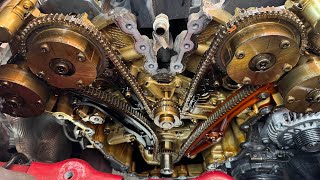
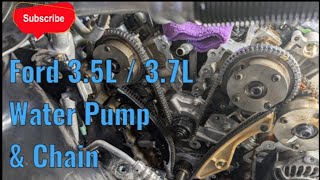
Used OEM Parts in Stock
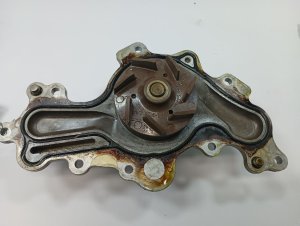


New Aftermarket Parts Available


The information in this article is provided for general reference and educational purposes only. Vehicle specifications, procedures, and part compatibility can vary by production date, trim level, and region. Always consult your vehicle's factory service manual and verify part numbers before purchasing or performing repairs. Safety-critical components such as airbags, seat belts, and braking systems should be installed by a qualified professional.
- Ford Edge:
- 🎬 Helpful Videos
- 🛍️ Shop This Part
- What's Unique About the 2007-2018 Ford Edge
- Symptoms You May Notice
- Most Likely Causes
- Rare But Worth Checking
- Diagnosis Steps
- Parts You'll Likely Need
- Related Codes That Often Appear With This One
- Technical Service Bulletins (TSBs) & Recalls
- Platform-Specific Known Issues
- Mechanic-Grade Diagnostic Values
- Hidden / Shadow Codes Worth Checking
- Scan Tool Commands That Help
- Wiring & Ground Locations
- Real Owner Repair Stories
- OEM Part Supersession History
- Diagnostic Flowchart
- Other Known Issues on This Vehicle
- Used vs. New Parts: Buying Guide for This Vehicle
- Real Owner Stories
- 2012 Ford Edge 3.5L Duratec — 100000 miles
- 2011 Ford Edge 3.5L V6 — ~106875 miles
- 2013 Ford Edge 3.5L V6 — 133000 miles
- Related OBD-II Codes
- Frequently Asked Questions
- 🎟️ Get 5% Off