

P0017 on 2011-2016 Chevrolet Cruze 1.4L Turbo: Exhaust Cam Correlation Causes and Fixes
On a 2011-2016 Cruze 1.4L, P0017 is most often caused by low/dirty engine oil or a faulty exhaust camshaft actuator solenoid (VVT solenoid). An oil change and solenoid replacement are easy DIY fixes costing under $50. However, if you hear rattling noises, this code often points to a more serious stretched timing chain, which is a professional repair costing $800-$1,500.
- Always check your engine oil level and condition first. Low or dirty oil is a primary cause of P0017 on this engine.
- The easiest and cheapest next step is to swap the intake and exhaust VVT solenoids to see if the code changes to P0016. If it does, you've found the problem: a bad solenoid.
- A rattling noise from the engine is a major red flag. Do not ignore it. It almost certainly means you have a stretched timing chain that requires immediate professional attention to avoid catastrophic engine failure.
- Do not immediately replace the camshaft or crankshaft sensors; they are less common failure points for this specific code than the VVT solenoids or the timing chain itself.
What's Unique About the 2011-2016 Chevrolet Cruze

The 1.4L Turbo engine in the first-generation Cruze relies heavily on clean oil and proper oil pressure to operate its Variable Valve Timing (VVT) system. Many owner experiences show that this code can appear intermittently and sometimes be temporarily resolved with an oil change, highlighting the system's sensitivity. While sensors can fail, the most common culprits for P0017 on this platform are the VVT actuator solenoids getting clogged or a stretched timing chain. The presence of both P0016 and P0017 codes at the same time is a very strong indicator of a stretched timing chain.
Generation note: The 2011-2015 models are all first-generation. The 2016 model year is split: the 'Cruze Limited' is a carryover of the first generation, while an all-new second-generation sedan was also introduced. This guide applies to the first-generation models (2011-2015) and the 2016 Cruze Limited with the 1.4L LUV engine.
Symptoms You May Notice
- Check Engine Light illuminated
- Rough or unstable idle
- Engine stalling, especially at low speeds
- Loss of power and poor acceleration
- Increased fuel consumption
- Rattling noise from the engine, especially on startup
- Engine running rougher than usual
- Replacing the camshaft position sensor or crankshaft position sensor when the root cause is a faulty VVT solenoid, low/dirty oil, or a stretched timing chain. Always diagnose in order of probability, starting with the oil and VVT solenoids.
Most Likely Causes

- Low or Dirty Engine Oil 🔴 High Probability The VVT system uses pressurized engine oil to adjust cam timing. Low levels or contaminated oil can't provide the necessary pressure, causing the phasers to respond slowly and trigger a correlation code. The 1.4L engine is known to consume oil, so levels can drop unexpectedly.
How to confirm: Check the engine oil dipstick for proper level and inspect the oil's condition. If it is dark, gritty, or past its service interval, it needs to be changed. This should always be the first step.
Typical fix: Perform an oil and filter change using the manufacturer-specified full synthetic DEXOS oil. Clear codes and re-test.
Est. part cost: $40-$70 - Faulty Exhaust Camshaft Position Actuator Solenoid (VVT Solenoid) 🔴 High Probability These solenoids have fine mesh screens that can become clogged with debris from old oil, restricting oil flow to the camshaft phaser. They can also fail electrically, getting stuck in one position.
How to confirm: A simple and effective test is to swap the exhaust solenoid with the identical intake solenoid. They are located on top of the valve cover. Clear the codes and drive the vehicle. If the code changes to P0016 (Intake Cam Correlation), the solenoid is confirmed to be faulty. You can also test the solenoid's resistance with a multimeter; both should read between 6 and 12 ohms.
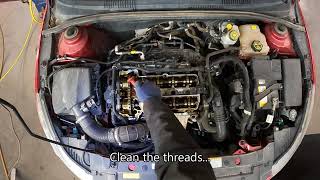
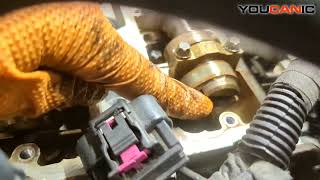
Typical fix: Replace the faulty solenoid. Both intake and exhaust solenoids are located on the top of the valve cover and are easily accessible, held by one bolt each. 🎬 Watch: How to locate and replace your VVT solenoids.
Est. part cost: $25-$60 - Stretched Timing Chain 🟡 Medium Probability Over time, the timing chain can stretch, which directly affects the correlation between the crank and cam sensors. This is a known issue on the 1.4L LUV engine, often exacerbated by extended oil change intervals.
How to confirm: A rattling sound from the passenger side of the engine, especially on cold starts, 🎬 Listen: What a failing timing chain rattle sounds like. is a strong indicator. Confirmation requires removing the valve cover and timing cover to physically inspect the chain for slack and verify timing marks. This is best done by a professional. The presence of both P0016 and P0017 codes together strongly suggests a timing chain issue.
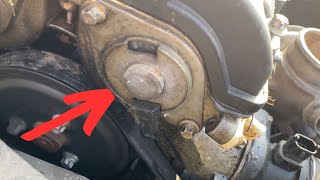
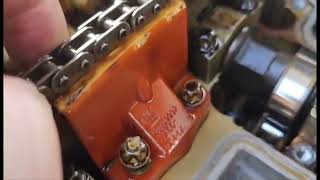
Typical fix: Replace the timing chain, guides, and tensioner. This is a labor-intensive job that often costs over $1,000 at a shop. 🎬 See a complete walkthrough of the timing chain replacement.
Est. part cost: $150-$400 for a kit - Failed Camshaft or Crankshaft Position Sensor ⚪ Low Probability
How to confirm: These sensors can be tested with a multimeter or by observing their live data on an advanced scan tool. However, they are less likely to be the cause for a correlation code than the VVT solenoids or timing chain. Sensor-specific codes (like P0365) would more directly point to a sensor failure.
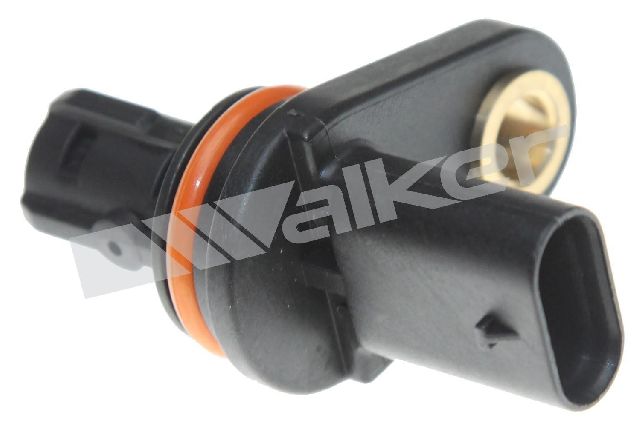
Typical fix: Replace the specific sensor that has failed. The exhaust cam sensor is on the top of the engine, while the crank sensor is located on the back of the engine block.
Est. part cost: $20-$50 per sensor
Rare But Worth Checking
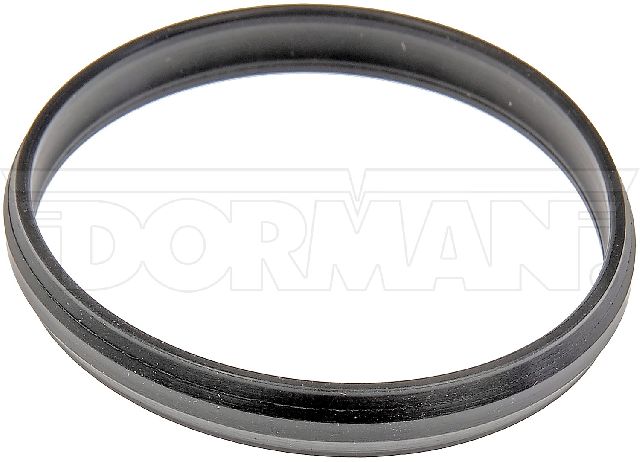
- Missing Camshaft Actuator Oil Sleeve: Per TSB #PIP4543D, if the engine has recently been serviced (e.g., cylinder head or cam actuator work), a small black plastic oil sleeve between the camshaft and actuator may have been lost or damaged. This will prevent the VVT system from working correctly and set this code. The sleeve is only available with a new camshaft actuator.
- Damaged Camshaft Reluctor Wheel: The reluctor wheel (or tone ring) on the camshaft, which the sensor reads, can become damaged or slip out of position, leading to incorrect signals. TSB #21-NA-268 addresses this on slightly newer models but it remains a possibility. One owner of a related vehicle with the same engine found a broken tooth on the reluctor wheel was the cause of a persistent timing code.
- Failed Camshaft Phaser (Actuator): The camshaft phaser itself, which is the gear that the solenoid directs oil to, can fail mechanically. It can get stuck, or the internal locking pin can fail. This is less common than a solenoid failure but is a possibility if other diagnostics don't reveal the cause. This would likely require professional diagnosis.
Diagnosis Steps

- Check Engine Oil: Verify the oil level is full and the oil is clean. If low or dirty, perform an oil and filter change with full synthetic DEXOS-approved oil and clear the code. This is the simplest and most common first step.
- Inspect VVT Solenoids: Locate the two VVT solenoids on the valve cover. The exhaust solenoid is toward the front of the engine (radiator side), and the intake is toward the rear (firewall side).
- Swap VVT Solenoids: Disconnect the electrical connectors and unbolt both the intake and exhaust solenoids (one 10mm bolt each). Swap their positions. Reinstall and reconnect them.
- Verify the Code Change: Clear the P0017 code with a scanner and drive the vehicle. If the code returns as P0016 (Intake Correlation), the solenoid you moved to the intake position is faulty and must be replaced.
- Inspect Wiring: If the code does not change, inspect the wiring and connectors for the VVT solenoid and the camshaft/crankshaft sensors for any damage, corrosion, or oil contamination.
- Listen for Noise: Start the engine from cold and listen carefully for any rattling or slapping noises from the timing chain area (passenger side of the engine). Any rattling strongly suggests a timing chain, tensioner, or guide issue.
- Professional Inspection: If the above steps do not resolve the issue, the problem is likely mechanical (stretched timing chain, worn phaser, damaged reluctor wheel). This requires professional diagnosis, which involves removing the engine covers to inspect the timing components directly.
Parts You'll Likely Need

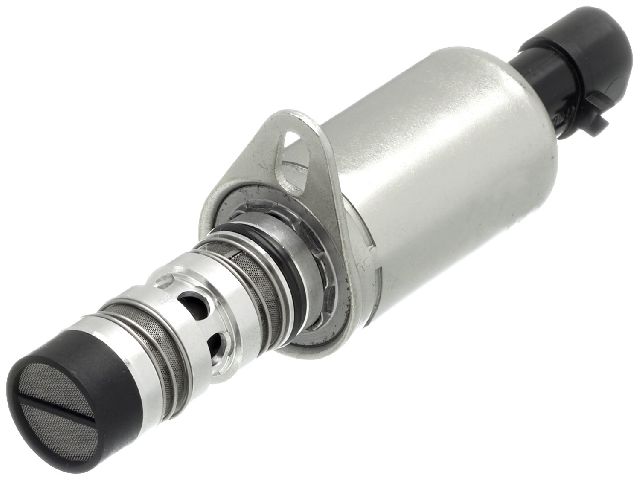
- Camshaft Position Actuator Solenoid (VVT Solenoid)
(OEM #55567050)— This is one of the most common failure points for P0017, caused by clogging or electrical failure. The intake and exhaust solenoids are identical.
Trusted brands: ACDelco, Delphi, Dorman (p/n 917-216)
OEM price range: $40-$60
Aftermarket price range: $25-$45
Related Codes That Often Appear With This One
- P0016 — This is the correlation code for the intake camshaft. If both P0016 and P0017 appear together, it is a very strong indication of a base timing issue, such as a stretched timing chain affecting both camshafts.
- P0014 — This code indicates the exhaust camshaft timing is over-advanced. It can be caused by a sticking VVT solenoid or a timing chain issue, both of which are common causes for P0017.
- P0366 — This code indicates a circuit performance issue with the exhaust camshaft position sensor itself. If seen with P0017, it can point more strongly toward a mechanical timing problem that is causing an erratic signal, rather than just a sensor failure.
- P0171 — System Too Lean. This code is often caused by a failed PCV system on the 1.4L engine. While not directly related to timing, a severe vacuum leak from the PCV can cause rough running and other driveability issues that might occur alongside timing codes.
Technical Service Bulletins (TSBs) & Recalls
- TSB #PIP4543D: Warns technicians that after engine repairs like cylinder head or camshaft actuator replacement, codes P0016 or P0017 can be set if a small, black plastic oil sleeve between the camshaft and actuator is missing or damaged. This part is not sold separately from the actuator.
- TSB #N202299080 / N192210230: Special coverage for a faulty PCV pressure regulator valve diaphragm in the camshaft cover on 2011-2016 Cruze models. A failed PCV system can cause a host of driveability issues and oil consumption, which can indirectly contribute to VVT problems by degrading oil quality.
Platform-Specific Known Issues

- A rattling noise on startup that quickly goes away is a classic early sign of a failing timing chain tensioner or a stretched chain on the 1.4L engine, which will eventually lead to P0017.
Mechanic-Grade Diagnostic Values
- Camshaft Position Actuator Solenoid (VVT Solenoid) Resistance — expected: 6 to 12 Ohms. Failure: A reading of infinite Ohms (open circuit) or near zero Ohms (short circuit) indicates a failed solenoid.
- Camshaft Position Sensor Connector - Signal Wire Voltage (Key On, Engine Off, Sensor Unplugged) — expected: ~5V. Failure: 0V or significantly lower voltage points to a wiring or ECM issue, not a sensor failure.
- Camshaft Position Sensor Signal Test (Live) — expected: Voltage should toggle between ~5V and 0V as a metal object is passed in front of the sensor tip.. Failure: If the voltage does not change, the sensor is faulty.
- Scan Tool - Commanded vs. Actual Camshaft Position Angle — expected: Actual angle should be within <2° of the commanded angle during a bidirectional test.. Failure: A larger variance indicates a problem with the solenoid, phaser, or oil pressure.
Scan Tool Commands That Help
- GDS2 (GM Global Diagnostic System 2): Camshaft Position Actuator Control — This bidirectional control allows a technician to command the exhaust camshaft phaser to a specific angle (e.g., 10, 20 degrees) and observe if the 'Actual Position' PID on the scan tool matches the command. This directly tests the functionality of the VVT solenoid and the phaser's range of motion, helping to isolate a sticky solenoid or a mechanically failed phaser.
- GDS2 (or other capable scan tool): Crankshaft Position Variation Learn (CASE Relearn) — This procedure should be performed after replacing a crankshaft position sensor or performing major engine work. It allows the ECM to learn the minor variations of the new sensor and crankshaft reluctor wheel. Failure to perform this can sometimes cause persistent correlation codes like P0016/P0017.
Wiring & Ground Locations
- G103 — On the cowl at the left rear of the engine compartment, sometimes cited as being on the left front shock tower.. This is a major ground point for the Engine Control Module (ECM). A loose or corroded connection here can cause erratic sensor readings and unpredictable ECM behavior, potentially leading to false timing correlation codes.
- G105 — Located at the left front of the engine compartment, often near the underhood fuse block or cooling fan relays.. This is another primary engine harness ground point. A poor connection can affect the power and ground integrity for various engine sensors and actuators, including the VVT system components.
- Exhaust VVT Solenoid Connector — On top of the valve cover, the rearmost of the two solenoids (closer to the firewall).. This is the direct connection point for the solenoid. It is prone to oil contamination from valve cover leaks or a bad solenoid seal, which can degrade the connection and cause intermittent operation or high resistance faults.
Real Owner Repair Stories
- YouTube Channel 'Flat Rate Mechanic' (Chevy 1.4L Turbo (similar design to Cruze)) — No-start condition, multiple timing codes (P0016, P0017, etc.). The engine would start and run only if the camshaft position sensor was unplugged.
❌ Tried (didn't work) Initial diagnosis might point to a bad camshaft sensor or wiring.
✅ What actually fixed it A failed vacuum pump. The drive lugs on the vacuum pump broke off, got wedged, and caused the press-fit camshaft reluctor wheel to spin on the camshaft. This threw the sensor reading completely off from the actual mechanical timing. The fix required replacing the exhaust camshaft and the vacuum pump. - Reddit user /u/JetOneTV on r/Chevy (2014 Chevy Cruze 1.4T) — Persistent P0016, P0017, and P0315 codes.
❌ Tried (didn't work) Replacing sensors., Visually inspecting timing chain for slack (appeared okay)., Verifying cam and crank timing marks were aligned.
✅ What actually fixed it The final resolution was not posted by the original user, but expert advice pointed to performing a 'Crankshaft Position System Variation Learn' procedure with a scan tool to address the P0315 code, which can lock out proper operation even if mechanical timing is correct. If that failed, the next likely culprit was a faulty VVT actuator (phaser) that was not holding its position under oil pressure.
OEM Part Supersession History
55567050→12655421, then 12679100— Standard part evolution for improved reliability and material changes.
Heads up: All part numbers (55567050, 12655421, 12679100) are considered interchangeable for this application. The intake and exhaust solenoids are also identical.
Model Year Variations Within This Range
- 2011-2016: While the core engine design (LUV) remained consistent, there were minor running changes. The most significant variation is the PCV system, which was updated mid-generation. A failing PCV system can lead to accelerated oil degradation and sludge, which is a primary cause of VVT solenoid failure and subsequent P0017 codes.
Diagnostic Flowchart
Other Known Issues on This Vehicle
Issues unrelated to this code that are worth knowing about as an owner of this generation:
- PCV System Failure 🔴 High — Very common, often occurs between 60,000-120,000 miles. A failed check valve in the intake manifold pressurizes the crankcase, rupturing a diaphragm in the valve cover. (Ref: TSB #N202299080, #N192210230 (Special Coverage Adjustment))
- Leaking Water Pump 🔴 High — Extremely common failure item. Leaks can be slow or sudden, leading to coolant loss and potential engine overheating. (Ref: Special Coverage #14371 (10 years / 150,000 miles))
- Turbocharger Failure 🔴 High — Common, especially on higher mileage vehicles or those with poor maintenance. Often caused by oil starvation/coking or failure of the integrated bypass valve. A failed PCV system can also cause repeat turbo failure. (Ref: TSB #N232395330 (for some later models))
- Coolant Leaks (Thermostat Housing / Water Outlet) 🟠 Medium — The plastic water outlet and thermostat housing are prone to cracking and leaking over time due to heat cycles.
- Oil Leaks (Oil Cooler, Valve Cover) 🟠 Medium — Gaskets for the valve cover and oil cooler seals are common failure points, leading to external oil leaks.
Used vs. New Parts: Buying Guide for This Vehicle
When a used part is the smart pick: A used VVT solenoid from a low-mileage, reputable junkyard can be a cost-effective option, especially since they are easy to access and replace if the used part is faulty. Always test the resistance (6-12 ohms) before installation.
Donor-vehicle mileage cap: roughly under 60000 miles for the part to have meaningful remaining life.
What to inspect on the donor part:
- Check the mesh screens on the solenoid; they should be perfectly clean and free of any metallic debris or sludge.
- Ensure the electrical connector is not cracked or filled with oil.
- Ask for the VIN of the donor vehicle to check for any history of major engine failure.
OEM-only on this vehicle (don't cheap out):
- Timing Chain Kit (Chain, Guides, Tensioner)
- Camshaft Phasers (Actuators)
- Crankshaft Position Sensor
Aftermarket brands forum-validated for this vehicle:
- ACDelco (OEM)
- Delphi (Often an OEM supplier)
- Gates (For timing chain kits)
Brands owners have reported issues with on this vehicle:
- Unnamed or 'white box' brands from online marketplaces, especially for critical components like timing chains and sensors. Forum users frequently report premature failures with these parts.
Real Owner Stories
Aggregated from forums and TSBs cited above. Mileages and costs reflect what owners reported in those sources.
2014 Chevrolet Cruze 1.4L Turbo
Symptoms: P0016 and P0017 codes present along with engine correlation issues.
What fixed it: Full timing chain replacement, including the chain, guides, and tensioner.
Source hint: YouTube - "2014 1.4L Chevy Cruze LT Timing Chain Replacement - P0016 Code Fixed!"
2015 Chevrolet Cruze 1.4L Turbo
Symptoms: Engine noises that were initially difficult to diagnose.
What fixed it: Accurate diagnosis of engine rattles to avoid unnecessary repairs like water pump replacement.
Cost: $1,000-$1,100
Source hint: Reddit (r/Cruze)
2011-2016 Chevrolet Cruze 1.4L Turbo — ~90000 miles
Symptoms: Driveability issues and oil consumption caused by a ruptured diaphragm in the valve cover.
What fixed it: Replacement of the camshaft cover under special coverage for the PCV pressure regulator valve.
Source hint: TSB #N202299080 / N192210230
Related OBD-II Codes
Frequently Asked Questions
Is there a TSB for the P0017 code on my 2011-2016 Chevrolet Cruze regarding the camshaft actuator?
Can a faulty PCV system on my Cruze cause issues that lead to a P0017 code?
I have a rattling noise on startup; is this related to the P0017 code?
What type of oil should I use to prevent VVT issues like P0017 in my 1.4L Turbo engine?
Can I test the VVT solenoids myself before paying for a timing chain replacement?
Helpful Videos

We Have This Part in Stock


The information in this article is provided for general reference and educational purposes only. Vehicle specifications, procedures, and part compatibility can vary by production date, trim level, and region. Always consult your vehicle's factory service manual and verify part numbers before purchasing or performing repairs. Safety-critical components such as airbags, seat belts, and braking systems should be installed by a qualified professional.
- Chevrolet Cruze:
- 🎬 Helpful Videos
- 🛍️ Shop This Part
- What's Unique About the 2011-2016 Chevrolet Cruze
- Symptoms You May Notice
- Most Likely Causes
- Rare But Worth Checking
- Diagnosis Steps
- Parts You'll Likely Need
- Related Codes That Often Appear With This One
- Technical Service Bulletins (TSBs) & Recalls
- Platform-Specific Known Issues
- Mechanic-Grade Diagnostic Values
- Scan Tool Commands That Help
- Wiring & Ground Locations
- Real Owner Repair Stories
- OEM Part Supersession History
- Model Year Variations Within This Range
- Diagnostic Flowchart
- Other Known Issues on This Vehicle
- Used vs. New Parts: Buying Guide for This Vehicle
- Real Owner Stories
- 2014 Chevrolet Cruze 1.4L Turbo
- 2015 Chevrolet Cruze 1.4L Turbo
- 2011-2016 Chevrolet Cruze 1.4L Turbo — ~90000 miles
- Related OBD-II Codes
- Frequently Asked Questions
- 🎟️ Get 5% Off