

P0016 on 2007-2014 Ford Edge 3.5L: Internal Water Pump, Timing Chain, and VCT Fixes
On the 2007-2014 Ford Edge 3.5L, P0016 is most often a sign of a major mechanical issue. The most likely and dangerous cause is a failed internal water pump leaking coolant into the oil, which destroys the timing chain, guides, and tensioners. This is a very expensive repair, often costing $1,800-$3,000+. Immediate diagnosis is critical to avoid complete engine replacement.
- P0016 on a 2007-2014 Edge 3.5L is a critical code that should be addressed immediately.
- The first and most important diagnostic step is to check the engine oil for a milky consistency, which indicates a failed internal water pump.
- Do not simply replace the camshaft or crankshaft sensors; this code almost always points to a mechanical timing problem.
- Any repair involving the timing chain MUST also include replacing the internal water pump to prevent a repeat failure.
- Due to the high cost and complexity of the repair, getting a professional diagnosis is essential before authorizing work.
What's Unique About the 2007-2014 Ford Edge

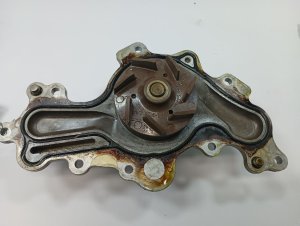
The 3.5L Duratec V6 in this generation of Ford Edge has a critical design characteristic: the water pump is located inside the engine and is driven by the timing chain. When this pump fails, it often leaks coolant directly into the oil pan, contaminating the oil. This coolant-laced oil loses its ability to lubricate, which rapidly wears out the timing chain, guides, and tensioners, leading directly to the P0016 correlation code. The water pump has a weep hole behind the alternator, but it can become clogged, preventing an external leak 🎬 Watch: How this internal pump design can destroy your engine. and forcing all coolant internally. The water pump itself can also act like a faulty idler pulley if its internal bearings develop play, introducing slack into the timing chain system. Therefore, unlike on many other vehicles where P0016 might point to a simple sensor or solenoid, on this specific platform it is frequently a warning of imminent and catastrophic engine damage.
Generation note: The 2007-2014 year range covers the entire first generation of the Ford Edge, including the 2011-2014 facelift. The 3.5L Duratec V6 and its internal water pump design are consistent across this entire period, making the causes and fixes for P0016 highly similar for all years in this range.
Symptoms You May Notice

- Check Engine Light illuminated
- Engine runs rough or has an unstable idle
- Reduced engine power and sluggish acceleration
- Rattling or chain-slap noise from the engine, especially on a cold start
- Engine cranks but won't start, or has extended cranking time
- Decreased fuel economy
- Engine overheating and/or unexplained coolant loss (if water pump has failed)
- Milky, 'chocolate milk' appearance on the oil dipstick or oil filler cap (if water pump has failed)
- Replacing only the Camshaft Position Sensor (CMP) or Crankshaft Position Sensor (CKP). This code indicates a *correlation* error between the two, not a failure of the sensors themselves. The PCM is receiving valid but conflicting timing data, which almost always points to a mechanical issue like a stretched chain or faulty VCT system.
Most Likely Causes

- Failed Internal Water Pump & Stretched Timing Chain 🔴 High Probability The water pump is located inside the timing cover and is driven by the timing chain. When the pump's bearing or seal fails, it leaks coolant directly into the engine oil. This contaminated oil destroys the plastic timing chain guides and causes the chain to stretch or jump time, triggering P0016.
How to confirm: Check the oil dipstick and oil filler cap for a milky, frothy, or 'chocolate milk' consistency. Also, check for unexplained coolant loss from the reservoir. A mechanic can inspect the water pump weep hole (located behind the alternator) for signs of dried coolant ('crusties'), though a lack of external leakage does not rule out an internal failure. Definitive confirmation requires removing the timing cover.
Typical fix: This is a major, labor-intensive repair. It requires replacing the water pump (use the updated Motorcraft PW-538), the primary timing chain, all timing chain tensioners, and all guides. It is critical to replace all these components as a set. Multiple oil flushes, an oil and filter change, and a full coolant replacement are also required.
Est. part cost: $400-$700 for a complete OEM timing chain and water pump kit. - Sticking or Failed VCT Solenoid (Bank 1 Intake) 🟡 Medium Probability The Variable Camshaft Timing (VCT) system relies on clean oil to function. Oil sludge or debris from infrequent oil changes can clog the fine screens on the solenoid, causing it to stick. TSB 16-0093 notes that some low-mileage 3.5L engines can experience this code from a faulty VCT solenoid from the factory.
How to confirm: First, check engine oil level and condition. If oil is low or dirty, an oil change may temporarily fix the issue. A mechanic can use a scan tool to command the solenoid on and off to test its response. The solenoid can also be removed and tested with a 12V source to see if it actuates (clicks). Resistance should be between 5-14 Ohms.
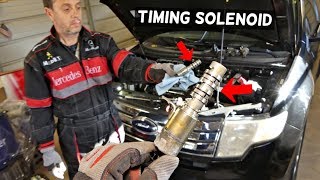
Typical fix: Replace the Bank 1 intake VCT solenoid. On the 3.5L Edge, Bank 1 is the rear bank (by the firewall), so replacing this solenoid is difficult as it requires removing the upper intake manifold 🎬 Watch: Step-by-step guide to replacing the VVT solenoids. to access the valve cover.
Est. part cost: $25-$70
Rare But Worth Checking
- Failed Camshaft Phaser: The phaser is the gear on the end of the camshaft that actually adjusts the timing. While less common than a solenoid failure, the phaser itself can fail mechanically or get clogged with debris, requiring a full timing chain job to replace.
- Low Oil Pressure/Level: While often a symptom or contributing factor, severely low oil levels or pressure from other issues (like a failing oil pump or sludge) can prevent the VCT system from operating correctly and set this code.
Diagnosis Steps
- Check the engine oil level and condition immediately. Look for a low level or a milky/frothy consistency on the dipstick. 🎬 See a mechanic's walkthrough on diagnosing a failed water pump.
- If oil is milky, STOP. The internal water pump has failed. The vehicle needs to be towed for major timing component service.
- If oil is just low or dirty, perform an oil and filter change using the correct viscosity oil (5W-20) and a quality filter.
- Scan for other DTCs to see if codes for other banks or misfires are present.
- Using a professional scan tool, monitor the desired vs. actual camshaft angle for Bank 1 Intake. Command the VCT solenoid on and off to see if the angle changes. This tests the solenoid's operation.
- Listen for a timing chain rattle on cold startup. A distinct 1-3 second rattle points towards a stretched chain or broken guides.
- If the VCT solenoid is suspect, it can be swapped with the exhaust solenoid on the same bank to see if the code changes to P0017. However, on Bank 1 this is labor-intensive due to intake manifold removal.
- If all else fails, a mechanical inspection is necessary. This involves removing the valve cover and/or timing cover to physically inspect the timing chain for slack, check guide integrity, and verify mechanical timing marks.
Parts You'll Likely Need

- Engine Timing Chain and Water Pump Kit
(OEM #Motorcraft Water Pump: PW-538 (Interchangeable with PW-683). Timing kits vary, but a comprehensive Cloyes kit is 9-0738S.)— This is the definitive fix for the most common and severe cause. A complete kit ensures all worn components (chain, guides, tensioners) and the root-cause water pump are replaced simultaneously. Using the updated Motorcraft pump is highly recommended.
Trusted brands: Motorcraft (OEM), Cloyes, Melling
OEM price range: $450-$700
Aftermarket price range: $300-$500 - Engine Variable Valve Timing (VVT) Solenoid
(OEM #AT4Z-6M280-C (Bank 1 Exhaust/Bank 2 Intake) or AT4Z-6M280-A (Bank 1 Intake/Bank 2 Exhaust). Verify with VIN.)— If the issue is isolated to the VCT system due to oil contamination, replacing the solenoid is a targeted fix. TSB 16-0093 points to this part for low-mileage failures.
Trusted brands: Motorcraft, Dorman
OEM price range: $40-$70
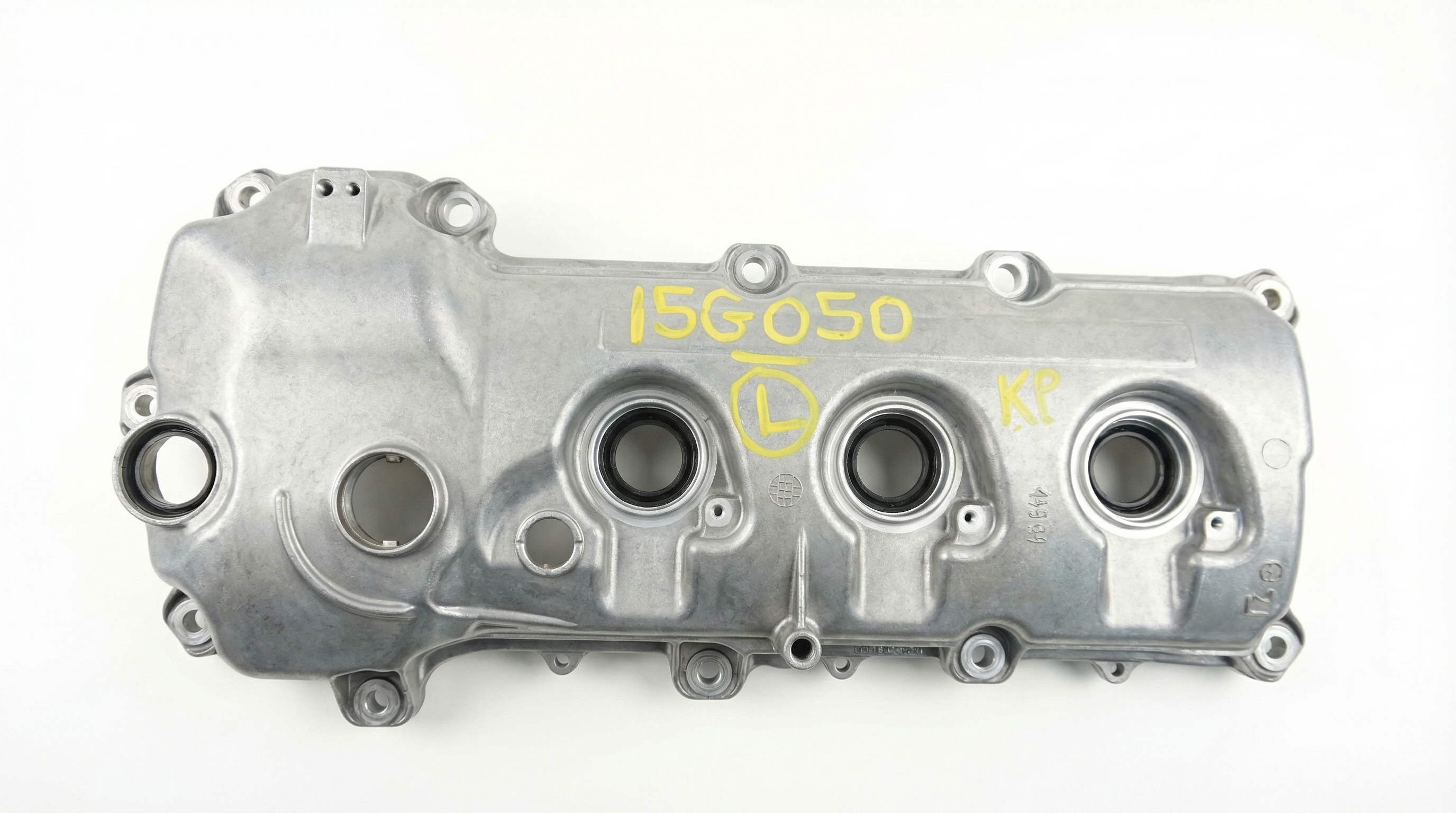
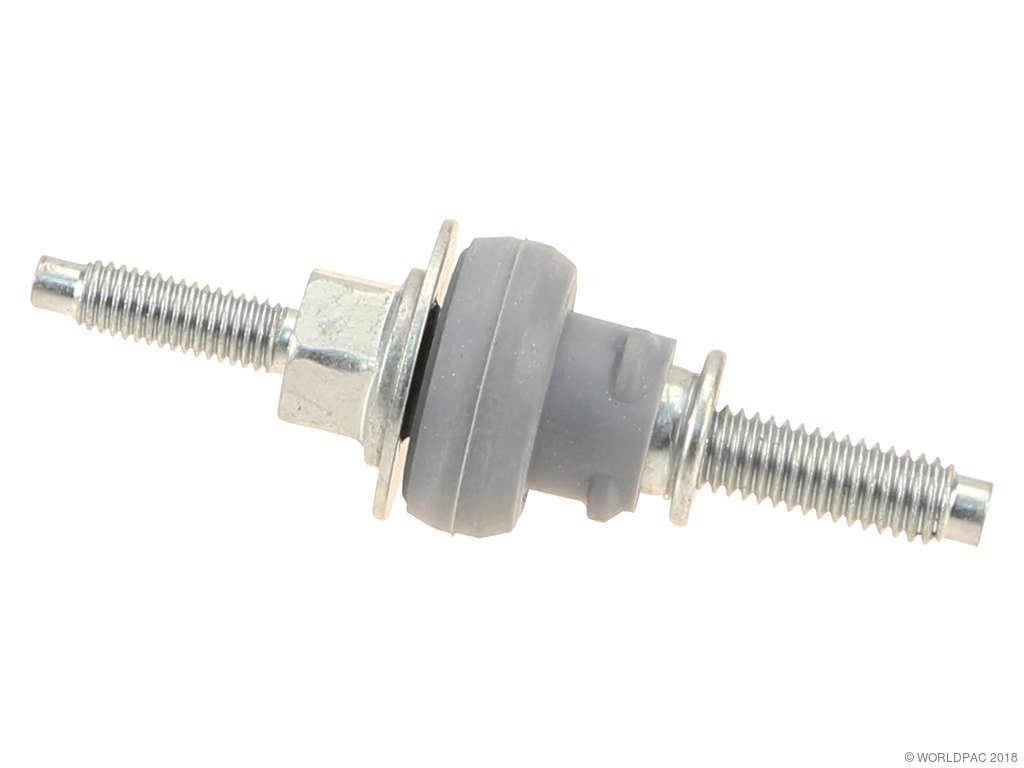
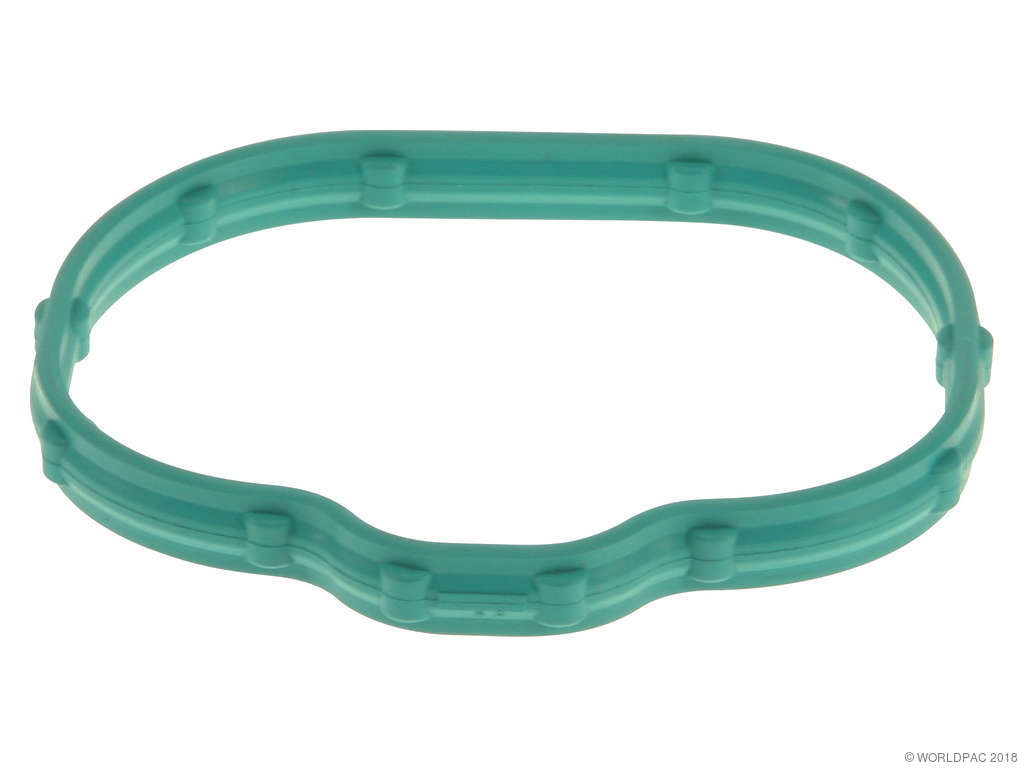
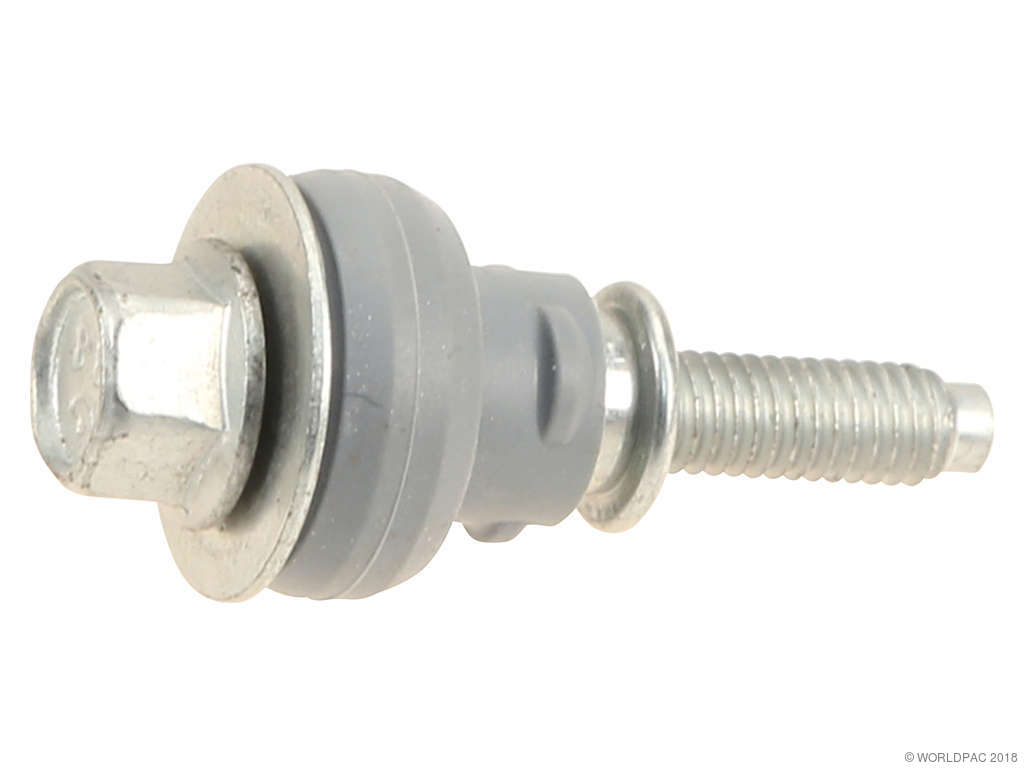
Aftermarket price range: $25-$50 - Valve Cover and Intake Manifold Gasket Set — Required for replacing the Bank 1 (rear) VCT solenoid, as the upper intake manifold and valve cover must be removed. Also required for any timing chain job.
Trusted brands: Motorcraft, Fel-Pro
OEM price range: $60-$100
Aftermarket price range: $40-$70
Related Codes That Often Appear With This One
- P0017 — Crankshaft Position - Camshaft Position Correlation (Bank 1, Sensor 'B' - Exhaust). If the timing chain has stretched or jumped, it can affect both the intake and exhaust cam timing on Bank 1.
- P0018 / P0019 — Cam/Crank correlation codes for Bank 2 (front/radiator side). If the timing chain is severely stretched, it can affect both banks, though Bank 1 codes are more common.
- P0300, P0301, P0302, P0303 — Random or specific cylinder misfire codes for Bank 1. Incorrect cam timing leads to poor combustion, causing misfires on the affected bank.
Technical Service Bulletins (TSBs) & Recalls

- TSB 16-0093: Addresses P0016 and other VCT codes on some low-mileage 2016 3.5L engines, pointing to a faulty VCT solenoid as the cause, requiring replacement.
Platform-Specific Known Issues
- The internal timing-chain-driven water pump is the most significant issue for this engine. Its failure is a well-documented cause of P0016 and subsequent catastrophic engine damage due to oil contamination. Any timing service on a high-mileage 3.5L Duratec should include a new water pump as a preventative measure.
Mechanic-Grade Diagnostic Values
- VCT Solenoid Internal Resistance — expected: 5 - 14 Ohms. Failure: A reading of OL (open circuit) or near zero (short circuit).
- Camshaft Position (CMP) Sensor Resistance (2-wire VR type) — expected: 586 - 2,033 Ohms. Failure: Resistance reading outside this range.
- Crankshaft Position (CKP) Sensor Resistance — expected: 250 - 1,100 Ohms. Failure: A reading of zero or infinite resistance.
- Scan Tool PID: VCT_INT_ACT1 (Bank 1 Intake Cam Angle) — expected: Less than +6 degrees at idle. Failure: A reading of +6 degrees or greater at idle strongly suggests a stretched primary timing chain.
- Scan Tool PID: VCT Intake Differential (Bank 1) — expected: Should not exceed 5-10 degrees on initial startup.. Failure: A spike to 15 degrees or more on startup indicates significant chain stretch.
Hidden / Shadow Codes Worth Checking
- Mode 6, TID $83, CID $0B: This is the Cam/Crank Position Error monitor. It tracks the maximum deviation detected between the camshaft and crankshaft. A high value here, even before the main P0016 code is set, can indicate an emerging timing problem. (see via An advanced OBD-II app like FORScan or a professional scan tool that can display Mode $06 data.)
Scan Tool Commands That Help
- Ford IDS / FORScan: VCT Solenoid Actuator Test — Used to command a specific VCT solenoid on and off while the engine is running. If the engine idle stumbles or stalls when the solenoid is commanded on, it indicates the solenoid is mechanically functioning. If there is no change in idle, the solenoid is stuck.
- Ford IDS / FORScan: Reset All Adaptations / PCM Reset / Misfire Monitor Neutral Profile Correction — This procedure should be performed after replacing timing components or the PCM. It clears the learned values for cam/crank correlation, forcing the PCM to relearn the new positions from scratch. Failure to do this can cause a P0016 to return even after a successful mechanical repair.
Wiring & Ground Locations
- G104 / G105 — Located in the left front of the engine compartment.. These are primary engine compartment grounds. A poor ground connection here can cause erratic voltage and signal issues for the PCM and its sensors, including the CMP and CKP sensors, potentially leading to false correlation codes.
- Bank 1 CMP Sensor Connector — Rear of the cylinder bank, closer to the firewall. Access requires removing the air cleaner assembly.. This is the connection point for testing the Bank 1 CMP sensor and its circuit. The wiring harness runs near hot engine components and can be susceptible to damage.
- Crankshaft Position (CKP) Sensor Connector — Lower left rear of the engine.. This is the connection point for testing the CKP sensor. Due to its location, the wiring can be exposed to oil, heat, and road debris, making it a point of potential failure.
Real Owner Repair Stories
- F150forum.com user 'Got Boost?' (2012 Ford F-150 3.5L (same engine family)) — Loss of power, misfire at idle, P0016 code.
❌ Tried (didn't work) Initial diagnosis pointed towards expensive timing chain/phaser replacement.
✅ What actually fixed it The user disconnected the VCT solenoid connector and manually applied 12V from the battery multiple times to 'un-stick' the solenoid. The first few attempts produced no click, but it eventually freed up. After this, the misfire and code were resolved, indicating the solenoid was stuck from debris or varnish.
Diagnostic Flowchart
Other Known Issues on This Vehicle
Issues unrelated to this code that are worth knowing about as an owner of this generation:
- Power Transfer Unit (PTU) Failure 🔴 High — Common on AWD models, often occurring between 70,000 and 120,000 miles. The unit is 'sealed for life' with no drain plug, causing the fluid to overheat and break down, leading to seal and gear failure. (Ref: No formal recall, but a widely known issue. Repair costs are high, often $1,800-$3,000.)
- Faulty Brake Booster 🔴 High — Common on 2007-2015 models. A tear in the internal diaphragm causes a hissing noise when the brake pedal is pressed and leads to increased pedal effort. (Ref: Ford issued Customer Satisfaction Program 13N02, extending the warranty for the brake booster to 10 years or 150,000 miles for a one-time replacement.)
- Door Ajar Light Stays On 🟡 Low — Very common across many Ford models of this era. A faulty switch inside the door latch mechanism fails, causing the car to believe a door is open. This can drain the battery and prevent doors from locking. (Ref: TSB 18-2013 addresses this issue. The fix is to replace the entire door latch assembly.)
- Transmission Hard Shifting / Failure 🟠 Medium — More prevalent in early 2007-2008 models, but can occur throughout the generation. Symptoms include clunking, delayed engagement, or sudden failure. Regular fluid changes are critical.
- Leaking Power Steering Hoses 🟡 Low — A fairly common issue where power steering fluid leaks from hoses, causing a whining or buzzing noise when turning and a loss of power steering assist.
Used vs. New Parts: Buying Guide for This Vehicle
When a used part is the smart pick: For this specific repair, using used parts is generally not recommended due to the nature of the failures. The primary failure parts (timing chain, guides, tensioners, water pump) are all wear items that should always be replaced with new components. A used VCT solenoid could be considered if from a very low-mileage donor, but the low cost of a new aftermarket part makes it a poor value proposition.
Donor-vehicle mileage cap: roughly under 30000 miles for the part to have meaningful remaining life.
What to inspect on the donor part:
- For a VCT solenoid, verify the donor vehicle had no VCT-related trouble codes.
- Inspect the solenoid's screens to ensure they are intact and free of debris.
- Confirm the donor vehicle has a documented history of regular oil changes.
OEM-only on this vehicle (don't cheap out):
- Engine Timing Chain Kit: While high-quality aftermarket kits from brands like Cloyes or Melling are acceptable, avoiding cheap, unbranded kits is critical. Fitment or material quality issues in these kits are known to cause the P0016 code to return immediately after the repair.
- Water Pump: Given the catastrophic consequences of failure, using an OEM Motorcraft pump (PW-538 or superseding part) is the safest choice to ensure longevity.
Aftermarket brands forum-validated for this vehicle:
- Cloyes (Timing Kits)
- Melling (Timing Kits, Oil Pumps)
- Fel-Pro (Gaskets)
Brands owners have reported issues with on this vehicle:
- Unbranded or 'white box' timing chain kits and VCT solenoids from online marketplaces. Users report higher failure rates and incorrect dimensions on critical components like phaser bolts.
Real Owner Stories
Aggregated from forums and TSBs cited above. Mileages and costs reflect what owners reported in those sources.
2007-2014 Ford Edge 3.5L Duratec V6
Symptoms: A direct link between the internal water pump failure and the P0016 code, often involving a video explanation of how the internal leak destroys the timing components.
What fixed it: Replacing the water pump, primary timing chain, all timing chain tensioners, and all guides as a complete set, followed by multiple oil flushes.
Source hint: FordEdgeForum.com: 'What does a P0016 have to do with water pump failure? Video'
Related OBD-II Codes
Frequently Asked Questions
Does TSB 16-0093 apply to my Ford Edge 3.5L?
Why does a water pump failure cause a P0016 timing code on the 3.5L Duratec?
Is there a specific water pump part number I should use for the repair?
Can I just replace the VCT solenoid to fix P0016 on my Edge?
Is the brake booster hissing related to my P0016 code?
Where is the Bank 1 VCT solenoid located on the 3.5L Duratec V6?
Helpful Videos
Used OEM Parts in Stock



New Aftermarket Parts Available


The information in this article is provided for general reference and educational purposes only. Vehicle specifications, procedures, and part compatibility can vary by production date, trim level, and region. Always consult your vehicle's factory service manual and verify part numbers before purchasing or performing repairs. Safety-critical components such as airbags, seat belts, and braking systems should be installed by a qualified professional.
- Ford Edge:
- 🎬 Helpful Videos
- 🛍️ Shop This Part
- What's Unique About the 2007-2014 Ford Edge
- Symptoms You May Notice
- Most Likely Causes
- Rare But Worth Checking
- Diagnosis Steps
- Parts You'll Likely Need
- Related Codes That Often Appear With This One
- Technical Service Bulletins (TSBs) & Recalls
- Platform-Specific Known Issues
- Mechanic-Grade Diagnostic Values
- Hidden / Shadow Codes Worth Checking
- Scan Tool Commands That Help
- Wiring & Ground Locations
- Real Owner Repair Stories
- Diagnostic Flowchart
- Other Known Issues on This Vehicle
- Used vs. New Parts: Buying Guide for This Vehicle
- Real Owner Stories
- 2007-2014 Ford Edge 3.5L Duratec V6
- Related OBD-II Codes
- Frequently Asked Questions
- 🎟️ Get 5% Off