

P0015 on 2011-2023 Chrysler 300 3.6L: Exhaust Cam Timing Causes and Fixes
On the 3.6L Pentastar, code P0015 is most often caused by low or dirty engine oil, or a failing exhaust VVT solenoid on the passenger side. An oil change and a new solenoid (~$40-$90) is the most likely fix. DIY difficulty is 2/5 for an oil change and 3/5 for the solenoid. However, this code can also be an early symptom of rocker arm failure, a more serious issue known to plague this engine.
- Always check your engine oil first. Low, old, or dirty oil is the #1 cause of P0015 on this engine.
- If the oil is fine, the Bank 1 (passenger side) exhaust VVT solenoid is the next most likely culprit and is relatively inexpensive and easy to replace.
- Listen for a 'ticking' sound. This is a classic sign of rocker arm failure on the 3.6L Pentastar, a deeper issue that can cause P0015 by contaminating the oil.
- Do not replace the Bank 1 camshaft position sensor unless you have proven it is faulty by swapping it with the Bank 2 sensor, as it is very difficult to access.
What's Unique About the 2011-2023 Chrysler 300
The 3.6L Pentastar V6 has a well-documented issue with premature rocker arm bearing failure, often causing a distinct engine tick (the "Pentastar Tick"). When these bearings fail, they release small metal particles into the engine oil. This contaminated oil can clog the narrow passages of the Variable Valve Timing (VVT) solenoids and cam phasers, directly causing timing-related codes like P0015. Therefore, this code may not just be a simple sensor or solenoid failure, but a symptom of this deeper, more serious mechanical issue that requires inspection of the valvetrain.
Symptoms You May Notice
- Check Engine Light is on
- Rough or unstable idle
- Reduced engine power and poor acceleration
- Decreased fuel economy
- Engine rattling or ticking noise, especially on startup or from the top end
- Engine may stall at low speeds or when stopping
- A growling or bung-bung-bung sound at idle may indicate a failing cam phaser.
- Replacing the camshaft position sensor without confirming it's faulty. The difficult location of the Bank 1 sensor makes this a costly mistake if the problem is simply a bad VVT solenoid or dirty oil.
- Replacing the cam phaser without first replacing the much cheaper and more common failure point, the VVT solenoid.
Most Likely Causes
- Low, Dirty, or Incorrect Viscosity Engine Oil 🔴 High Probability The Pentastar's VVT system is entirely dependent on clean oil at the correct pressure to function. Sludge from extended oil change intervals or contamination from failing rocker arms can easily disrupt it.
How to confirm: Check the oil level on the dipstick and inspect its color and consistency. If it's low, black, or appears sludgy, it needs to be changed. Note the mileage since the last oil change.
Typical fix: Perform an engine oil and filter change using the manufacturer-specified full synthetic 5W-20 oil and a quality filter. Clear the code and drive to see if it returns. Consider an engine flush only if significant sludge is confirmed, as it can sometimes dislodge debris that causes further issues.
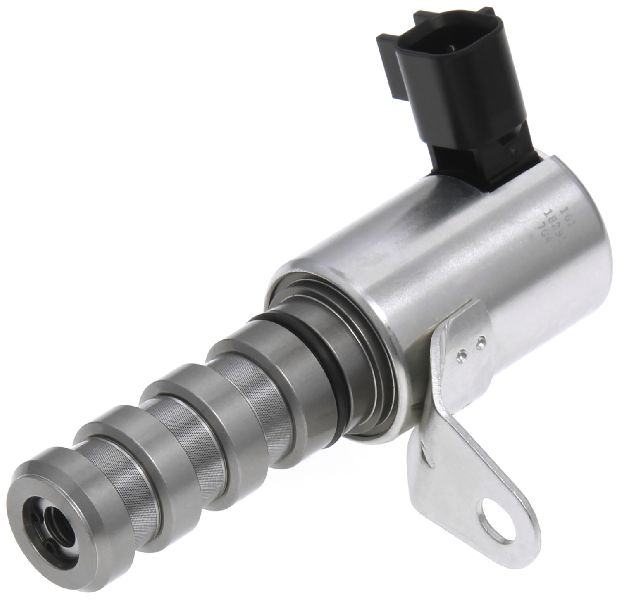
Est. part cost: $40-$80 - Faulty Bank 1 Exhaust VVT Solenoid (Oil Control Valve) 🔴 High Probability This solenoid is a common failure point. It can get clogged with debris from the oil or fail electrically, preventing it from properly directing oil to the cam phaser. Real-world owner reports on forums frequently cite this as the successful fix.
How to confirm: The solenoid is located on the front of the passenger-side cylinder head. You can test its resistance with a multimeter (should be around 6.9-7.9 ohms). A more definitive test is to swap it with the intake solenoid on the same bank to see if the code changes to P0013 ('B' Camshaft Position - Timing Over-Advanced). If the code changes, the solenoid is bad.
Typical fix: Replace the Bank 1 exhaust VVT solenoid. It is held in by one bolt and is relatively easy to access after removing the engine cover.
Est. part cost: $30-$90 - Failing Rocker Arms and Lifters 🟡 Medium Probability This is a known pattern failure on the 3.6L Pentastar. The needle bearings in the rocker arms fail, causing a ticking noise and shedding metal into the oil, which then clogs VVT components and can score the camshaft lobes.
How to confirm: Listen for a distinct ticking/tapping noise from the top of the engine, which is the primary symptom. A mechanic can remove the valve cover to visually inspect the rocker arms for excessive play and check the camshaft lobes for scoring.
Typical fix: If a rocker arm has failed, it's highly recommended to replace all 24 rocker arms and all 24 lifters, as debris can damage others. A thorough cleaning of the VVT system and multiple oil changes are necessary to flush out metal debris. This is a labor-intensive job.
Est. part cost: $200-$400 for parts, but labor is significant. - Faulty Bank 1 Camshaft Position Sensor ⚪ Low Probability While sensors can fail, they are often replaced unnecessarily for this code. On the 3.6L, the Bank 1 (passenger side) exhaust sensor is notoriously difficult to access, tucked against the firewall, making it a costly misdiagnosis.
How to confirm: The best diagnostic step is to swap the Bank 1 sensor with the easier-to-access Bank 2 sensor (driver's side). If the code changes to P0019 (Bank 2 Exhaust Cam Position Correlation), the sensor is confirmed bad. This is often difficult due to access. A voltage test can also be performed: with the ignition on, the supply wire should have 5V, and the signal wire should toggle between 5V and 0V when a magnet is passed over the sensor.
Typical fix: Replace the camshaft position sensor. Accessing the Bank 1 sensor often requires removing the upper intake manifold.
Est. part cost: $25-$60
Rare But Worth Checking
- Stretched Timing Chain or Failed Tensioner: While less common than other causes, a stretched timing chain can cause correlation codes. This is a major mechanical repair and should be considered after all other possibilities are exhausted or if there is a significant rattling noise from the front of the engine, especially on higher mileage vehicles.
- Failed Bank 1 Exhaust Cam Phaser: The phaser is the mechanical gear that actually adjusts the cam timing. It can fail internally (broken lock pin, weak spring) or become clogged with debris. It's less common than a solenoid failure and much more expensive to replace as it requires timing chain removal.
- Slipped Camshaft Tone Wheel: The tone wheel, which the camshaft sensor reads, is press-fit onto the camshaft. In rare cases, it can slip or rotate slightly, causing a persistent timing correlation code even with a good sensor and perfect mechanical timing. This requires camshaft replacement or specialized tools to re-clock the wheel.
- Loose Oil Galley Plugs: Inside the cylinder head, behind the cam phasers, are small 13mm bolts that plug oil galleys. These have been known to work themselves loose, causing a loss of oil pressure to the VVT system on that head, which can trigger timing codes. This should be checked anytime the valve cover is off.
Diagnosis Steps
- Check Engine Oil: Verify the oil level is full and the oil is clean and of the correct viscosity (5W-20). If low, dirty, or overdue for a change, perform an oil and filter change. Clear the code and test drive. This is the cheapest and most common first step.
- Inspect VVT Solenoid Wiring: Check the connector and wiring to the Bank 1 (passenger side) exhaust VVT solenoid for any damage, corrosion, or oil contamination from a leaking valve cover gasket.
- Test the VVT Solenoid: A definitive test is to swap the exhaust VVT solenoid with the intake VVT solenoid on the same bank (passenger side). They are identical parts. Clear the codes and drive. If the code changes to P0013, you have confirmed the solenoid is faulty and needs replacement.
- Listen for Engine Noises: Carefully listen for a sharp, rhythmic ticking from the passenger side valve cover area. This is the classic sign of rocker arm failure. If this noise is present, further diagnosis is pointless until the valve cover is removed for inspection.
- Test the Camshaft Position Sensor: If access allows, swap the Bank 1 exhaust sensor with the Bank 2 exhaust sensor (driver's side). Clear codes and drive. If the fault moves to Bank 2 (P0019), the sensor is bad. This is often skipped due to the difficulty of accessing the Bank 1 sensor.
- Advanced Mechanical Checks: If all else fails, the issue is likely deeper in the timing system. This requires removing the valve cover to inspect for loose oil galley plugs, failed rocker arms, or scored camshafts. If nothing is found, checking for timing chain stretch and cam phaser health is the next step, which is best left to a professional.
Parts You'll Likely Need
- Engine Oil Filter and 5W-20 Full Synthetic Oil
(OEM #Mopar MO-349 (Filter))— The most common cause of VVT issues is old, dirty, or low oil. This should always be the first step.
Trusted brands: Mopar, Pennzoil, Mobil 1
OEM price range: $15-$25 (Filter)
Aftermarket price range: $40-$80 (Oil + Filter) - VVT Solenoid / Oil Control Valve
(OEM #5184332AA)— These solenoids frequently get clogged with debris or fail electrically, making them a high-probability cause for P0015.
Trusted brands: Mopar, Dorman, Standard Motor Products
OEM price range: $50-$90
Aftermarket price range: $30-$70 - Rocker Arm
(OEM #5184296AH)— Due to the known 'Pentastar Tick' issue, rocker arm failure is a common underlying cause. If one fails, it's recommended to replace all 24.
Trusted brands: Mopar
OEM price range: $10-$20 (each)
Aftermarket price range: $150-$300 (kit of 24)
Related Codes That Often Appear With This One
- P0300, P0301, P0303, P0305 — Misfire codes for Bank 1 cylinders can occur because the incorrect exhaust valve timing disrupts the combustion process in those cylinders.
- P0520 — This code for the Engine Oil Pressure Sensor/Switch circuit can appear alongside VVT codes, as low or incorrect oil pressure is a root cause for both.
- P0016, P0017, P0018, P0019 — These are all crankshaft/camshaft correlation codes. Seeing them alongside P0015 can point towards a more serious base timing issue like a stretched timing chain or slipped tone wheel, rather than just a single component failure.
Technical Service Bulletins (TSBs) & Recalls
- TSB 18-017-15: Addresses slow camshaft response codes (P000A, P000B, P000C, P000D) via a PCM software update for 2015 models, which can be related to the conditions causing P0015.
- Recall P60 (NHTSA 14V-634): Covers sudden failure of the 160-amp alternator on 2011-2014 models. While not a direct cause of P0015, alternator failure can cause widespread electrical issues and stalling.
Platform-Specific Known Issues
- Rocker Arm Failure: The 3.6L Pentastar engine, especially from 2011-2015, is known for the needle bearings in the rocker arms failing. This creates a ticking noise and contaminates the oil with metal debris, which clogs VVT solenoids and oil passages, leading to codes like P0015.
Mechanic-Grade Diagnostic Values
- VVT Solenoid (Oil Control Valve) internal resistance — expected: 6.9 to 7.9 Ohms at 68°F (20°C).. Failure: A reading of infinite resistance (OL) indicates an open coil, while a very low reading (e.g., under 2 ohms) indicates a short. Both require replacement.
- Camshaft Position Sensor voltage (at the sensor connector) — expected: With ignition on, engine off: The supply wire should read ~5V. The signal wire should toggle between 5V and 0V when a magnet is passed over the sensor tip.. Failure: No voltage on the supply wire points to a wiring or PCM issue. A signal wire that doesn't switch indicates a failed sensor.
- Scan Tool Live Data: Camshaft Position Difference — expected: At warm idle, the Bank 1 exhaust cam may normally show a higher difference (e.g., 6-8 degrees) than the other three cams (which are typically 2-4 degrees). This is considered normal.. Failure: A consistent difference of over 10-11 degrees on any single cam points to a mechanical problem like a slipped tone wheel, stretched chain, or failing phaser.
- Scan Tool Live Data: Engine Oil Pressure — expected: Should be above 16 PSI at hot idle.. Failure: Consistently low oil pressure (below 16 PSI) can trigger VVT codes and may indicate worn engine components or loose oil galley plugs.
Scan Tool Commands That Help
- Autel MaxiSys (or similar advanced scanner): VVT Phaser Cleaning Cycle — After an oil change, this function can be used to cycle clean oil through the cam phasers to potentially dislodge small debris that could be causing intermittent timing issues. It actuates the solenoids to flush the oil passages.
- Chrysler wiTECH (or similar advanced scanner): VVT Solenoid Actuation Test — This bidirectional command allows a technician to manually command the VVT solenoid on and off while the engine is running to verify its mechanical operation and observe the effect on cam timing via live data, confirming if the solenoid is stuck or responding slowly.
Wiring & Ground Locations
- G103 / G105 — Located on the passenger (Bank 1) side of the engine bay, often near the shock tower or inner fender.. These are primary engine bay grounds. A corroded or loose connection here can cause erratic voltage and signal issues for sensors on Bank 1, including the camshaft position sensor and VVT solenoid.
- Camshaft Position Sensor Connector (Bank 1) — On the rear of the passenger side cylinder head, against the firewall.. The Bank 1 sensor has a 4-wire connector that serves both intake and exhaust cams on that bank. The PCM provides a shared 5V supply and ground. A bad connection here will affect both sensors. The exhaust cam signal is on the (K441) circuit.
- Main Engine Block to Chassis Ground — A 4-gauge cable often runs from the engine block (near an accessory or motor mount) to a grounding point on the vehicle's frame rail/unibody.. This is the main ground path for the entire engine block. If this strap is broken or corroded, sensors that ground through the block can behave erratically, leading to phantom codes.
Real Owner Repair Stories
- JK-Forum.com user 'Tricky_Dick' (2018 Jeep Wrangler JKU (3.6L Pentastar)) — Engine sludge led to rocker noise. After a rebuild, experienced crank-no-start with codes for all four cam positions (P0345, P0390, P0340, P0365).
❌ Tried (didn't work) Verified 5V supply and ground at the sensor connectors were in spec., Wiggled wiring harness with no change.
✅ What actually fixed it The user did not post the final fix, but the diagnostic process pointed away from a simple sensor failure toward a deeper wiring or PCM issue since all four sensors were flagging errors simultaneously after a major engine rebuild. - Reddit user in r/MechanicAdvice (2014 Jeep Wrangler (3.6L Pentastar), 171k miles) — After major service (timing set, phasers, solenoids, etc.), got P000A-D codes (Camshaft Slow Response) and limp mode.
❌ Tried (didn't work) Replaced cam position sensors., Replaced crank position sensor., Replaced VVT solenoids., Checked timing marks visually., Cleaned metal powder off camshaft tone rings.
✅ What actually fixed it The user found high resistance on a ground wire. After tracing, they discovered a typo in the 2014 factory wiring diagram showing incorrect ground terminal locations. Correcting the ground path based on physical tracing resolved the issue.
OEM Part Supersession History
5184296AD, 5184296AE, 5184296AF, 5184296AG→5184296AH— Revisions to address the premature wear and failure of the rocker arm needle bearings, which cause the 'Pentastar Tick'.
Heads up: The latest revision (AH) is considered the most durable and should be used for all repairs. Using older stock or non-updated aftermarket parts may lead to a repeat failure.
Model Year Variations Within This Range
- 2011-2015: These first-generation Pentastar engines were more susceptible to the rocker arm bearing failure. Early models (2011-2013) were also subject to a warranty extension for left cylinder head issues (TSB 09-002-14), which could cause misfires but is a separate issue from the common rocker tick.
- 2016-2023: The Pentastar engine was significantly upgraded (PUG) starting in 2016. This included a two-step variable valve lift (VVL) system and redesigned VVT components. While the root causes of P0015 are similar, part numbers for phasers and solenoids may differ from earlier models.
Diagnostic Flowchart
Other Known Issues on This Vehicle
Issues unrelated to this code that are worth knowing about as an owner of this generation:
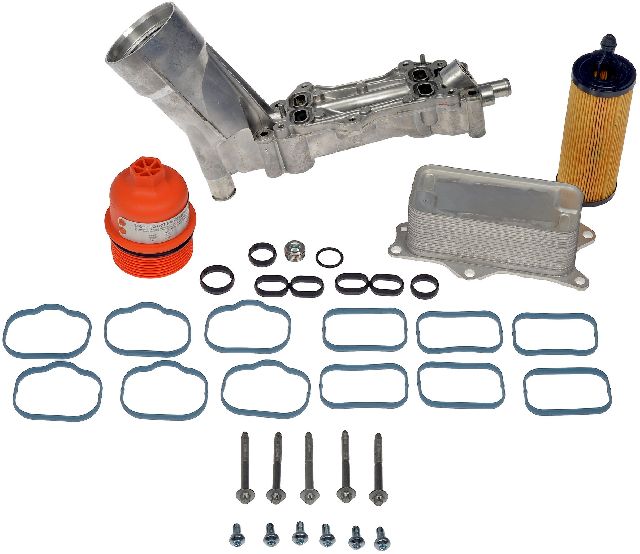
- Cracked Oil Filter Housing / Oil Cooler Assembly 🔴 High — Very common, especially on 2011-2015 models. Can occur from 60,000 miles onward.
- Premature Alternator Failure (160 Amp) 🔴 High — Common on 2011-2014 models, leading to a recall. (Ref: Recall P60 / NHTSA Campaign 14V-634)
- Rocker Arm Bearing Failure ('Pentastar Tick') 🔴 High — Widespread issue, particularly on pre-2016 engines. Often appears between 70,000-120,000 miles.
- Left Cylinder Head Failure (2011-2013) 🔴 High — Affected a significant number of early Pentastar engines, typically under 100,000 miles. (Ref: Extended Warranty (10 years/150,000 miles) was issued by Chrysler for this specific issue.)
- Uconnect System Glitches and Failures 🟡 Low — Common across all model years and trim levels. (Ref: Numerous software update TSBs exist.)
Used vs. New Parts: Buying Guide for This Vehicle
When a used part is the smart pick: For this repair, using used parts is generally not recommended for the core components. The only exception might be a major structural part like a valve cover if the original is cracked, but even then, new gaskets are a must.
Donor-vehicle mileage cap: roughly under 50000 miles for the part to have meaningful remaining life.
What to inspect on the donor part:
- For any used engine component, look for signs of overheating (discoloration).
- Check for sludge buildup under the oil cap of the donor vehicle, which indicates poor maintenance.
- Avoid parts from engines that show obvious signs of external damage or have been sitting exposed to the elements.
OEM-only on this vehicle (don't cheap out):
- Rocker Arms: Given the well-documented failure of the original design, it is critical to use the latest revised OEM part (5184296AH) or a reputable aftermarket equivalent specifically designed to fix the flaw. Using used rocker arms is a significant risk of repeat failure.
- Camshaft/Crankshaft Position Sensors: While some aftermarket sensors work, many owners report issues with incorrect readings or premature failure. Given the labor to replace the Bank 1 sensor, using an OEM Mopar sensor is a wise investment to avoid repeat work.
Aftermarket brands forum-validated for this vehicle:
- Melling: Often cited by professionals for timing chain and oil pump components.
- Standard Motor Products (SMP): A generally reliable source for sensors and solenoids.
Brands owners have reported issues with on this vehicle:
- Unnamed/white-box brands: For critical timing components like VVT solenoids and sensors, ultra-cheap parts from online marketplaces are notorious for failing quickly or being dead-on-arrival.
Real Owner Stories
Aggregated from forums and TSBs cited above. Mileages and costs reflect what owners reported in those sources.
2016 Dodge Challenger 3.6L Pentastar V6
Symptoms: Owner experienced code P0015 (B Camshaft Position Timing Over-Retarded Bank 1).
What fixed it: Replacing the Bank 1 exhaust VVT solenoid.
Source hint: ChallengerTalk Forums: P0015 - B Camshaft Position Timing Over-Retarded Bank 1
2011-2015 Chrysler 300 3.6L Pentastar V6
Symptoms: Rhythmic ticking from the valve cover area and oil contamination with metal debris.
What fixed it: Replacement of rocker arms and lifters (often all 24) and thorough cleaning of the VVT system to flush out metal debris.
Source hint: vehicle_specific_issues: Rocker Arm Failure
2011-2023 Chrysler 300 3.6L Pentastar V6 — 245000 miles
Symptoms: Chasing a misfire and cam code; concern over whether cam phasers were bad.
What fixed it: Checking for rocker arm/lifter failure as these are more common weak points than the phasers themselves.
Source hint: Reddit r/MechanicAdvice: Are my cam phasers likely bad? 3.6 pentastar engine
Related OBD-II Codes
Frequently Asked Questions
Is there a TSB for my 2015 Chrysler 300 regarding slow camshaft response?
My 2012 Chrysler 300 has a P0015 code and just stalled; could this be related to the alternator recall?
I hear a ticking noise from the passenger side of my Pentastar V6 along with the P0015 code. What is the likely cause?
Can I swap parts to diagnose if the Bank 1 exhaust VVT solenoid is bad on my Chrysler 300?
Why is the Bank 1 camshaft position sensor so expensive to diagnose on the 3.6L Pentastar?
What type of oil should I use in my 2011-2023 Chrysler 300 to prevent VVT issues?
Used OEM Parts in Stock


New Aftermarket Parts Available


The information in this article is provided for general reference and educational purposes only. Vehicle specifications, procedures, and part compatibility can vary by production date, trim level, and region. Always consult your vehicle's factory service manual and verify part numbers before purchasing or performing repairs. Safety-critical components such as airbags, seat belts, and braking systems should be installed by a qualified professional.
- Chrysler 300:
- 🛍️ Shop This Part
- What's Unique About the 2011-2023 Chrysler 300
- Symptoms You May Notice
- Most Likely Causes
- Rare But Worth Checking
- Diagnosis Steps
- Parts You'll Likely Need
- Related Codes That Often Appear With This One
- Technical Service Bulletins (TSBs) & Recalls
- Platform-Specific Known Issues
- Mechanic-Grade Diagnostic Values
- Scan Tool Commands That Help
- Wiring & Ground Locations
- Real Owner Repair Stories
- OEM Part Supersession History
- Model Year Variations Within This Range
- Diagnostic Flowchart
- Other Known Issues on This Vehicle
- Used vs. New Parts: Buying Guide for This Vehicle
- Real Owner Stories
- 2016 Dodge Challenger 3.6L Pentastar V6
- 2011-2015 Chrysler 300 3.6L Pentastar V6
- 2011-2023 Chrysler 300 3.6L Pentastar V6 — 245000 miles
- Related OBD-II Codes
- Frequently Asked Questions
- 🎟️ Get 5% Off