

P0014 on 2019-2024 Subaru Ascent: Exhaust Cam Timing Causes and Fixes
On a 2019-2024 Subaru Ascent, P0014 is most often caused by low or dirty engine oil. For 2019-2022 models, a simple ECM software update from a dealer (TSB 09-98-22) may be the fix. If oil and software are good, the passenger-side exhaust Oil Control Valve (OCV) is the next likely culprit, costing ~$50-$100 for the part.
- First, check your engine oil. Low, dirty, or incorrect oil is the #1 cause of P0014 on a Subaru Ascent.
- If you have a 2019-2022 Ascent, contact a dealer about TSB 09-98-22. A simple software update may fix the problem, especially if you also have code P0024.
- If oil and software are good, the passenger-side exhaust Oil Control Valve (OCV) is the next most likely part to fail.
What's Unique About the 2019-2024 Subaru Ascent
The FA24F engine in the Ascent uses a sophisticated Dual AVCS that is highly dependent on clean oil and correct oil pressure to function properly. While oil-related issues are the primary cause, a crucial factor for the 2019-2022 Ascent is a specific Technical Service Bulletin (TSB 09-98-22). This TSB indicates that the P0014 code can be falsely triggered by a software logic error, making an ECM reprogram a unique and critical first diagnostic step for those model years before any parts are replaced. Seeing P0014 along with its Bank 2 counterpart, P0024, is a strong indicator that either the oil is dirty or this software update is needed, as reported by owners. Additionally, manufacturer documentation such as TSB Bulletin #02-132-12R has long established standardized diagnosis and repair procedures for AVCS-related DTCs like P0014 across the Subaru lineup.
Symptoms You May Notice
- Check Engine Light is on
- Rough or unstable idle
- Reduced engine power and sluggish acceleration
- Decreased fuel economy
- Engine stalling in some cases
- Rattling or knocking noise from the engine bay
- Replacing the camshaft position sensor. The P0014 code indicates a timing *performance* problem, not an electrical circuit failure of the sensor itself. The sensor is usually just reporting the problem correctly.
Most Likely Causes
- Low, Dirty, or Incorrect Viscosity Engine Oil 🔴 High Probability The Subaru AVCS system is hydraulic and extremely sensitive to oil level, condition, and viscosity. Sludge or low levels can easily disrupt the precise oil pressure needed to operate the cam phasers, or clog the small passages in the Oil Control Valves.
How to confirm: Check the engine oil dipstick. The oil should be at the full mark and have a light brown, translucent color. Dark, thick, or gritty oil, or a level below the 'low' mark, is a primary suspect. Forum users on Reddit have confirmed that dirty oil can trigger both P0014 and P0024 simultaneously.
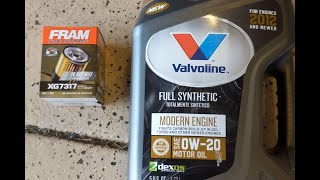
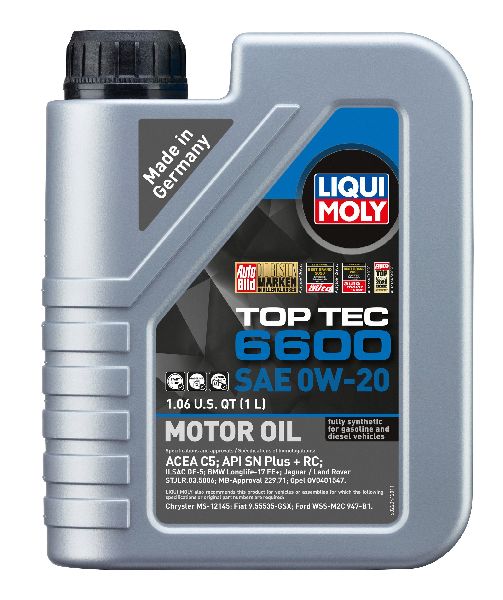
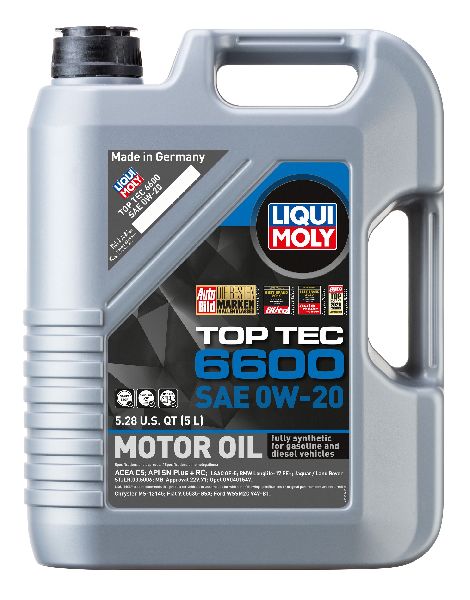
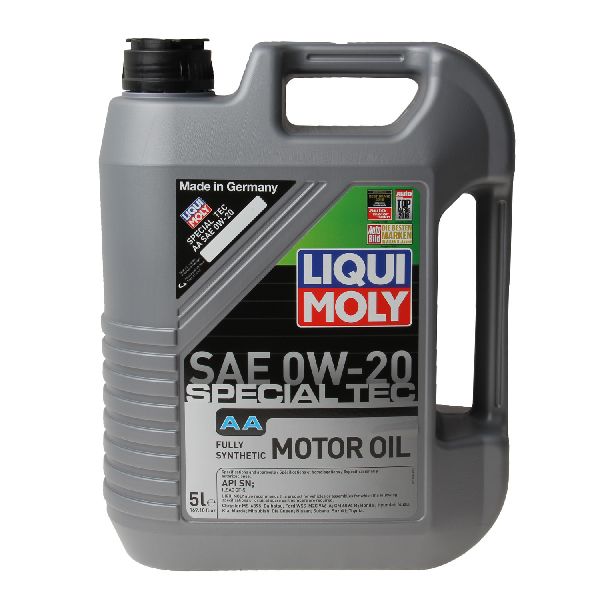
Typical fix: Perform an engine oil and filter change using the manufacturer-specified 0W-20 full synthetic oil. 🎬 Watch: A step-by-step guide to changing your Ascent's oil. If oil is very sludgy, an engine flush may be considered by a professional. Clearing the codes after an oil change is often the complete fix.
Est. part cost: $60-$100 - Outdated Engine Control Module (ECM) Software (2019-2022 Models) 🔴 High Probability Subaru identified a logic error in the original ECM software that could cause P0014 and other timing codes to be set incorrectly. TSB 09-98-22 was released to address this specific issue.
How to confirm: Contact a Subaru dealership and provide your vehicle's VIN. They can check service records to see if TSB 09-98-22 has been performed. The TSB explicitly lists P0014, P0024, and several P0016-P0019 correlation codes as being addressed by the update.
Typical fix: A Subaru dealership needs to reprogram the ECM with the updated software file. This is a software-only fix and may be covered under warranty.
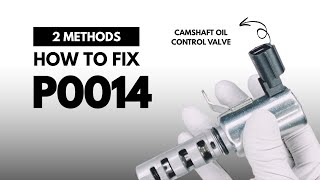
Est. part cost: $0-$200 - Faulty Bank 1 Exhaust Oil Control Valve (OCV) 🟡 Medium Probability The OCV is a solenoid that can become clogged with sludge from dirty oil or fail electrically over time, causing it to get stuck in the open or closed position. It is located on the lower front of the engine on the passenger's side.
How to confirm: A common DIY diagnostic is to swap the Bank 1 (passenger side) exhaust OCV with the Bank 2 (driver's side) exhaust OCV, as they are identical parts. Clear the codes and drive. If the trouble code changes to P0024 (Bank 2), the original OCV is confirmed to be faulty.
Typical fix: Replace the Bank 1 (passenger side) exhaust Oil Control Valve. The part is shared across many modern Subaru engines.
Est. part cost: $50-$100
Rare But Worth Checking
- Stretched Timing Chain or Failing Tensioner: While less common on this relatively new platform, a stretched chain can cause the camshaft and crankshaft correlation to be off, triggering timing codes. This is a more serious mechanical issue that usually requires professional repair and would likely be accompanied by rattling noises.
- Failing AVCS Camshaft Sprocket (Phaser): The mechanical actuator on the camshaft can fail or get stuck. This is typically a more costly and labor-intensive repair than an OCV replacement and is less common than oil or solenoid issues.
Diagnosis Steps
- Check the engine oil level and condition. If it is low, dark, or gritty, perform an oil and filter change with 0W-20 synthetic oil and clear the code. This is the most common and cheapest first step.
- For 2019-2022 models: Contact a Subaru dealer to determine if TSB 09-98-22 has been performed. If not, this ECM reprogram is the next logical step, especially if codes P0014 and P0024 appear together.
- Inspect the wiring harness and connector for the Bank 1 (passenger side) exhaust OCV. Look for any signs of damage, corrosion, or loose connections.
- If oil and software are confirmed good, consider swapping the passenger-side exhaust OCV with the driver-side exhaust OCV. They are the same part (P/N 10921AA23B). Clear the codes and drive. If the code returns as P0024, the original OCV is faulty and should be replaced.
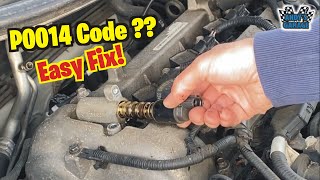
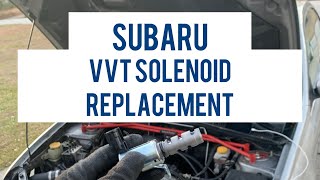
- If the code does not change, test the OCV's resistance with a multimeter (it should be between 6.9-7.9 Ohms at room temperature). You can also apply 12V power to the solenoid to see if it actuates. 🎬 See how to test and replace the VVT solenoid.
- If the OCV tests good and the problem persists, the issue may be more complex, such as a clogged oil passage, a failing cam phaser, or a timing chain issue, and may require professional diagnosis.
Parts You'll Likely Need
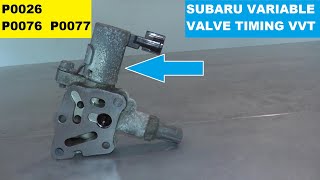
- Oil Control Valve / VVT Solenoid
(OEM #10921AA23B)— This solenoid is the most common hardware failure for P0014 after oil issues are ruled out. It controls the oil flow that adjusts cam timing and can get stuck or clogged. This part number supersedes 10921AA23A.
Trusted brands: Subaru (Genuine), Denso
OEM price range: $60-$100
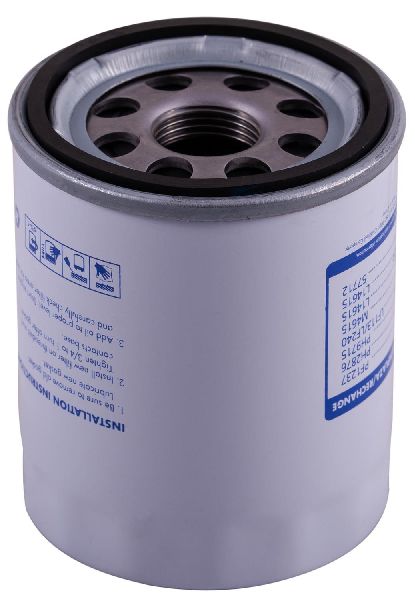
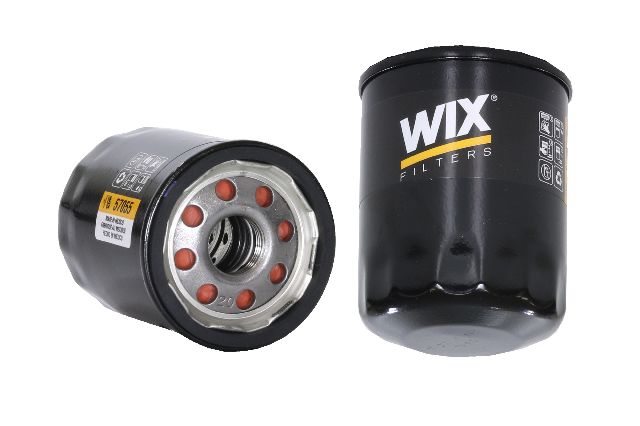
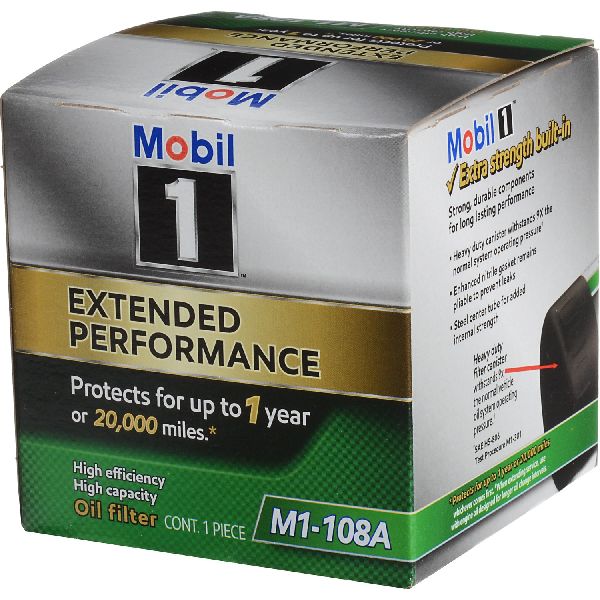
Aftermarket price range: $40-$80 - Engine Oil and Filter — The AVCS system is highly sensitive to oil quality. Fresh, correct-viscosity oil is the simplest and most common fix.
Trusted brands: Subaru (Idemitsu), Mobil 1, Pennzoil Platinum
OEM price range: $70-$100
Aftermarket price range: $50-$80
Related Codes That Often Appear With This One
- P0024 — This is the identical 'over-advanced' code for the exhaust cam on Bank 2 (driver's side). Seeing both together strongly suggests a systemic issue like low/dirty oil or the need for the ECM software update mentioned in TSB 09-98-22.
- P0016, P0017, P0018, P0019 — These are crankshaft-camshaft position correlation codes. TSB 09-98-22 also addresses these codes, indicating a shared root cause in the ECM logic for 2019-2022 models that can be fixed with a software update.
Technical Service Bulletins (TSBs) & Recalls
- 09-98-22: Addresses incorrectly set DTCs including P0014 on 2019-22MY Ascent via an ECM reprogram.
- TSB Bulletin #02-132-12R: Provides comprehensive diagnosis and repair procedures for AVCS-related DTCs, including P0014 and P0024, across various Subaru engine platforms.
Platform-Specific Known Issues
- Subaru Technical Service Bulletin 09-98-22 was issued for 2019-2022 Ascents to correct a software logic issue that can cause P0014 to be set erroneously. An ECM reprogram by a dealer is the specified fix.
Mechanic-Grade Diagnostic Values
- Oil Control Valve (OCV) Solenoid Resistance — expected: 6.9 - 7.9 Ω at 68°F (20°C). Failure: A reading outside this range, or an open/infinite reading, indicates a faulty solenoid coil.
- OCV Connector Voltage (Key On, Engine Off) — expected: Battery Voltage (approx. 12V). Failure: No voltage suggests a problem with the power supply from the main relay or a wiring issue.
- Live Data: Camshaft Position Deviation — expected: Actual position should closely match desired position.. Failure: The ECM may set code P0014 if the difference between the actual and desired exhaust camshaft position exceeds 20 degrees.
Scan Tool Commands That Help
- Professional Scan Tool (e.g., Subaru Select Monitor): Actuator Test for Bank 1 Exhaust OCV — Use this function with the engine idling to command the OCV to activate. A functioning solenoid and clear oil passages should cause the engine to hesitate or stall, confirming the hydraulic circuit is working.
Wiring & Ground Locations
- OCV Harness Connector — Connected to the Bank 1 (passenger side) exhaust Oil Control Valve, located on the front of the engine.. Subaru TSB 02-170-17R notes that on some FA/FB engines, oil can seep past the OCV's internal seal and 'wick' into the wiring harness, causing corrosion and electrical faults that can trigger AVCS-related DTCs like P0014. Inspecting the connector for oil contamination is a key diagnostic step.
OEM Part Supersession History
10921AA23A→10921AA23B— Subaru TSB 02-170-17R indicates a redesigned internal oil seal was implemented in OCVs for FA/FB engines to prevent oil from wicking into the harness connector. While the TSB doesn't explicitly name the Ascent, the part number change aligns with this improvement.
Model Year Variations Within This Range
- 2019-2022: These model years are subject to TSB 09-98-22, which indicates that P0014 can be falsely triggered by a software logic error. An ECM reprogram is the specified fix before replacing hardware.
- 2019-2020 (approx.): Early production models may be more susceptible to the OCV oil wicking issue described in TSB 02-170-17R. Later models likely came from the factory with the updated OCV (P/N 10921AA23B) that has an improved internal seal.
Diagnostic Flowchart
Other Known Issues on This Vehicle
Issues unrelated to this code that are worth knowing about as an owner of this generation:
- CVT Transmission Failure/Shudder 🔴 High — Common on 2019-2020 models. A class-action lawsuit was settled, and recall WRK-21 was issued for a TCU logic error that could cause chain slip and failure. (Ref: Recall WRK-21 (NHTSA 21V955), TSB 16-122-19R)
- Parasitic Battery Drain 🟠 Medium — Affects 2019-2022 models among others. Owners report dead batteries after the vehicle sits for short periods. A class-action lawsuit has been filed. (Ref: TSB 07-178-21R (Diagnosis), TSB 11-174-17R (Related))
- Weak Power Rear Gate / Tailgate Struts 🟡 Low — Owners report the power tailgate not opening fully or drooping after opening, especially on an incline. (Ref: Updated parts are available (e.g., 63329XC00C), but no specific TSB for this exact symptom is widely cited.)
- Front Strut Rumble/Rattle Over Bumps 🟡 Low — Affects 2019-2023 models. A rumbling or rattling sound from the front suspension when going over bumps. (Ref: TSB 05-90-24)
Used vs. New Parts: Buying Guide for This Vehicle
When a used part is the smart pick: A used Oil Control Valve (OCV) from a reputable salvage yard can be a cost-effective option for diagnosis (to confirm the fault by swapping) or as a replacement, provided the donor vehicle is low-mileage.
Donor-vehicle mileage cap: roughly under 50000 miles for the part to have meaningful remaining life.
What to inspect on the donor part:
- Verify the donor vehicle's mileage.
- Inspect the electrical connector for any signs of oil contamination or corrosion, which indicates a leaking internal seal.
- Check the small screen on the valve for any metallic debris or heavy sludge.
- If possible, test the resistance with a multimeter to ensure it is within the 6.9-7.9 Ohm specification.
OEM-only on this vehicle (don't cheap out):
- While not strictly required, using a Genuine Subaru or OEM-supplier (Denso) OCV is highly recommended for reliability and to avoid compatibility issues with the ECM.
Aftermarket brands forum-validated for this vehicle:
- Denso (often the original equipment manufacturer for Subaru)
Real Owner Stories
Aggregated from forums and TSBs cited above. Mileages and costs reflect what owners reported in those sources.
2019 Ascent Limited
Symptoms: Check Engine Light with codes P0014 and P0024; owner noted the oil level was within range but the oil was dirty.
What fixed it: The owner was advised that dirty oil is a likely cause for both codes appearing together and that an oil change is the first diagnostic step.
Source hint: Reddit thread titled 'P0014 and P0024' in r/subaru
Related OBD-II Codes
Frequently Asked Questions
Does TSB 09-98-22 apply to my 2023 Subaru Ascent?
Can I use 5W-30 oil in my FA24F engine if I'm getting a P0014 code?
Is there a specific part number for the Oil Control Valve if I need to replace it?
Why did my Ascent throw both P0014 and P0024 at the same time?
Where is the Bank 1 Exhaust OCV located on the Ascent's 2.4L Turbo engine?
Will a simple oil change really fix a P0014 code on this vehicle?
Helpful Videos
Used OEM Parts in Stock


New Aftermarket Parts Available

The information in this article is provided for general reference and educational purposes only. Vehicle specifications, procedures, and part compatibility can vary by production date, trim level, and region. Always consult your vehicle's factory service manual and verify part numbers before purchasing or performing repairs. Safety-critical components such as airbags, seat belts, and braking systems should be installed by a qualified professional.
- Subaru Ascent:
- 🎬 Helpful Videos
- 🛍️ Shop This Part
- What's Unique About the 2019-2024 Subaru Ascent
- Symptoms You May Notice
- Most Likely Causes
- Rare But Worth Checking
- Diagnosis Steps
- Parts You'll Likely Need
- Related Codes That Often Appear With This One
- Technical Service Bulletins (TSBs) & Recalls
- Platform-Specific Known Issues
- Mechanic-Grade Diagnostic Values
- Scan Tool Commands That Help
- Wiring & Ground Locations
- OEM Part Supersession History
- Model Year Variations Within This Range
- Diagnostic Flowchart
- Other Known Issues on This Vehicle
- Used vs. New Parts: Buying Guide for This Vehicle
- Real Owner Stories
- 2019 Ascent Limited
- Related OBD-II Codes
- Frequently Asked Questions
- 🎟️ Get 5% Off