

P0011 on 1999-2009 Saab 9-5 2.3T: Camshaft Timing Over-Advanced Causes & Fixes
On a Saab 9-5 with the B235 engine, P0011 is almost always caused by low/dirty oil or oil sludge clogging the camshaft position actuator solenoid. Start with a full synthetic oil change; if that fails, the solenoid likely needs cleaning or replacement (~$70-$150 for the part). Dropping the oil pan to clean the pickup screen is a common final step if the issue persists.
- For a 1999-2009 Saab 9-5, P0011 is most likely an oil problem, not a sensor problem.
- Always start diagnosis by checking the oil. An oil and filter change with full synthetic oil may fix the code.
- The next most likely culprit is the camshaft position actuator solenoid, which can often be cleaned instead of replaced.
- If you have a 1999-2003 model, you MUST verify you have the latest PCV update kit installed to prevent recurring sludge and oiling problems.
- Do not replace the camshaft position sensor unless a specific sensor fault code (like P0340) is also present.
What's Unique About the 1999-2009 Saab 9-5
The Saab B235 engine, particularly in 1999-2003 models, is famously prone to developing engine oil sludge. This is due to an inadequate original Positive Crankcase Ventilation (PCV) system design, which Saab later addressed with multiple updated kits, culminating in 'Kit #6'. This sludge clogs fine mesh screens in the oiling system, most notably the oil pump pickup screen in the oil pan and the camshaft position actuator solenoid. Therefore, unlike on many other vehicles, a P0011 code on this Saab is very frequently a direct symptom of this platform-specific oil sludge problem, rather than a random component failure.
Generation note: This range covers the first generation Saab 9-5 (1999-2005) and the facelift (2006-2009). The B235 engine was used throughout. However, the oil sludge and PCV system issues are most severe on models from 1999-2003. Saab redesigned the engine block and PCV system starting in the 2004 model year, making later cars less susceptible to the sludge-induced causes of P0011.
Symptoms You May Notice
- Check Engine Light is on
- Rough or unstable idle, sometimes described as 'sounding like a diesel'
- Engine stalling, especially at low RPM or when coming to a stop
- Poor acceleration and loss of power
- Increased fuel consumption
- Rattling or ticking noise from the engine, especially on startup or from the top end
- Replacing the Camshaft Position Sensor. The sensor reads the position, but P0011 indicates a mechanical timing problem (cam is actually in the wrong position), not a sensor reading problem. The sensor is rarely the cause for this specific code. A failing sensor would typically set a code like P0340.
Most Likely Causes
- Low, Old, or Incorrect Engine Oil 🔴 High Probability The B235 engine is highly sensitive to oil quality and prone to sludge, which directly impacts the hydraulically operated VVT system. Using conventional oil or extending change intervals beyond 5,000 miles exacerbates this.
How to confirm: Check the oil level and condition on the dipstick. If the oil is dark, thick, or below the minimum mark, this is the first suspect. Varnish on the dipstick is a sign of sludge.
Typical fix: Perform an engine oil and filter change using a high-quality, full synthetic oil that meets GM-LL-A-025 or ACEA A3/B4 specifications (e.g., Mobil 1 0W-40 or Castrol 5W-40).
Est. part cost: $60-$100 - Clogged or Faulty Camshaft Position Actuator Solenoid (VVT Solenoid) 🔴 High Probability Oil sludge often clogs the fine mesh screens on the solenoid, restricting oil flow and causing it to stick in the advanced position. This is the most common component-level failure for P0011.
How to confirm: Remove the solenoid. Inspect its screens for sludge. Test resistance between the two pins; it should be 8-12 Ω. You can also briefly apply 12V to the pins to check for an audible 'click' indicating the internal plunger is moving. No click means it's seized.
Typical fix: Thoroughly clean the solenoid and its screens with brake cleaner. However, many owners report this is a temporary fix. If cleaning doesn't resolve the issue or if it fails the resistance/actuation test, replace the solenoid.
Est. part cost: $70-$180 - Outdated or Clogged PCV System 🟡 Medium Probability The original PCV system on 1999-2003 models was inadequate, leading to the sludge that causes P0011. Hoses become soft, collapse, and check valves fail.
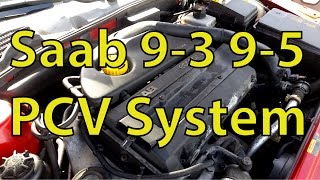
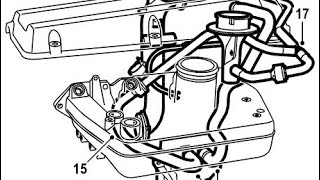
How to confirm: Check if the PCV system has been updated to the latest version (#6). The definitive sign of the updated kit on a pre-2004 car is a hose running from the back of the oil dipstick tube to the valve cover area. If this is missing, the system is outdated. 🎬 Watch: How to identify which PCV version you have
Typical fix: Install the latest PCV update kit (Saab part #55561200). This is a preventative measure crucial for engine longevity, even if it doesn't immediately clear the P0011 code.
Est. part cost: $50-$80 - Stretched Timing Chain ⚪ Low Probability While the chains are generally robust, high mileage and poor lubrication from sludge can accelerate wear on the chain and plastic guides, causing stretch.
How to confirm: Listen for a persistent rattling noise from the timing cover side of the engine. A quick check can be done by removing the oil filler cap and using a long screwdriver to gently try and lift the timing chain between the cam gears. If there is significant slack/upward movement, the chain or guides are worn.
Typical fix: Replacement of the timing chain, guides, and tensioner. This is a labor-intensive job.
Est. part cost: $300-$600
Rare But Worth Checking
- Clogged Oil Pump Pickup Screen: If the car has a history of sludge, the oil pickup screen in the oil pan can become severely clogged, starving the entire engine of oil pressure. This is a severe condition that will cause P0011 along with other major issues. This requires dropping the oil pan to inspect and clean, 🎬 Watch: A walkthrough of the oil pan removal process a common 'final step' for owners chasing this code.
- Failed VVT Camshaft Gear (Phaser): In very rare cases, the mechanical VVT gear on the end of the camshaft can fail internally. The locking pin can break or the internal vanes can get jammed by debris, causing it to stick in an advanced position. This is usually only diagnosed after all other causes are eliminated.
Diagnosis Steps
- Check the engine oil level and condition. If low, dirty, or showing signs of varnish/sludge, perform an oil and filter change using a full synthetic 0W-40 or 5W-40 oil. Clear the code and test drive.
- If the code returns, locate the intake camshaft position actuator solenoid on the top of the engine, near the oil filler cap.
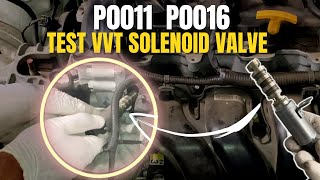
- Disconnect the electrical connector and remove the single Torx bolt holding the solenoid 🎬 See how to remove and inspect the VVT solenoid in place.
- Carefully pull and twist the solenoid out. Inspect its small metal screens for sludge or debris. Clean thoroughly with brake cleaner.
- Test the solenoid. Using a multimeter, check the resistance between the two pins. It should read between 8 and 12 Ohms. You can also use jumper wires to briefly apply 12V from the battery; you should hear a distinct click. If it fails either test or is heavily contaminated, replacement is recommended over cleaning.
- Reinstall the cleaned/new solenoid, clear the code, and test drive.
- Inspect the PCV system. On pre-2004 models, verify that the latest update kit (#6) is installed (look for a hose on the dipstick tube). If not, upgrading is highly recommended to prevent future issues.
- Listen for a rattling noise from the timing chain area. As a quick check, remove the oil cap and gently probe the chain between the cam gears to check for excessive slack.
- If sludge is heavily suspected and other steps fail, the final step is to have a mechanic drop the oil pan to inspect and clean the oil pump pickup screen. This is often the ultimate cure for persistent P0011 issues on high-mileage or poorly maintained cars.
Parts You'll Likely Need
- Camshaft Position Actuator Solenoid (VVT Solenoid)
(OEM #12628347, 12655420, 12646783)— This part directly controls the camshaft timing with oil pressure and is the most common component to fail or become clogged with sludge, causing P0011.
Trusted brands: ACDelco (Genuine GM), Saab Genuine, Dorman, NTK
OEM price range: $120-$180
Aftermarket price range: $70-$130 - PCV System Update Kit (#6)
(OEM #55561200)— For 1999-2003 models, an outdated PCV system is the root cause of the oil sludge that leads to P0011. Installing the latest kit is a critical long-term fix.
Trusted brands: Saab Genuine, Proparts Sweden, OES
OEM price range: $60-$80
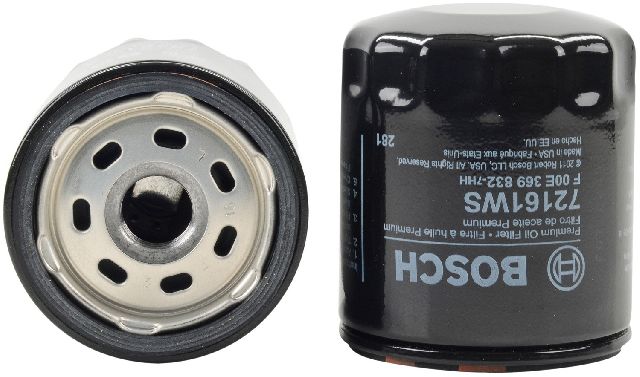
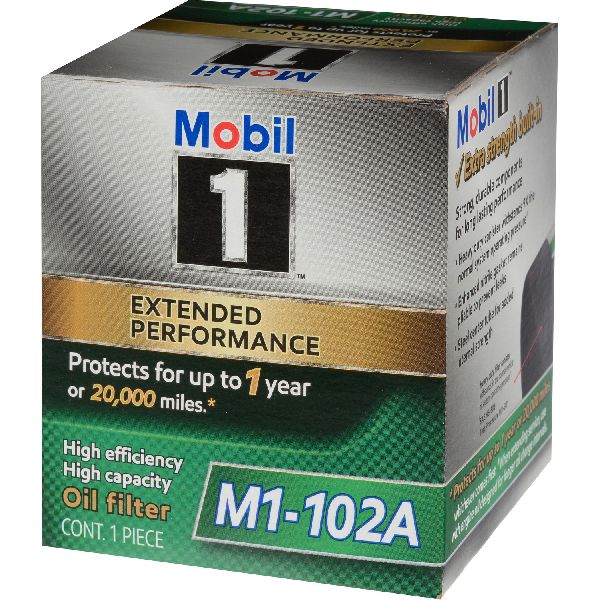
Aftermarket price range: $45-$60 - Full Synthetic Engine Oil and Filter — Clean, high-quality oil is essential for the VVT system's operation and for preventing sludge. Using the wrong viscosity or a non-synthetic oil can trigger P0011 even if the oil level is correct.
Related Codes That Often Appear With This One
- P0300 — Random Misfire. Incorrect camshaft timing disrupts the air/fuel mixture and combustion stability, leading to misfires across multiple cylinders.
- P0340 — Camshaft Position Sensor Circuit Malfunction. While less common, a severe sludge issue or wiring problem affecting the VVT solenoid could potentially affect the nearby sensor circuit, or a failing timing chain could cause erratic signals from the sensor.
- P1230 — Throttle Body Malfunction. While seemingly unrelated, Saab 9-5s are also known for throttle body issues, and engine performance problems can sometimes lead to multiple, confusing codes being stored.
Technical Service Bulletins (TSBs) & Recalls
- TSB 210-2554 / 210-2561: Addresses procedures for diagnosing and cleaning engine oil sludge, and what to do when noises from the timing chain are present. It outlines a step-by-step check, starting with oil level and pressure.
- TSB 210-2417 / 210-2418: Details the installation of the updated PCV system (specifically the final version #6 kit) to prevent the formation of oil sludge. This is considered a critical preventative update for pre-2004 models.
Platform-Specific Known Issues
- Oil Sludge Propensity (1999-2003): These models have a well-documented issue with oil sludge formation due to an insufficient PCV system design. Saab issued TSB 210-2554/2561 to address sludge cleaning procedures and TSB 210-2417/2418 for the PCV update. This sludge is the number one cause of VVT-related fault codes like P0011.
- Oil Pan Drop for Pickup Screen Cleaning: Due to the sludge issue, a common repair story for persistent P0011 codes involves dropping the oil pan to manually clean the oil pump pickup tube's mesh screen. This screen becomes clogged with sludge debris, starving the upper engine (including the VVT system) of adequate oil pressure, even if the oil level is full. This is considered an advanced DIY or shop job.
Mechanic-Grade Diagnostic Values
- Engine Oil Pressure (B235 Engine) — expected: Minimum 2.5 bar (36.3 PSI) at 2000 RPM with the engine warm (105°C) and using 10W-30 oil.. Failure: Pressure significantly below 2.5 bar at 2000 RPM indicates oil starvation, which will cause VVT system malfunction and trigger P0011.
- VVT Solenoid Control Circuit Voltage (at harness connector) — expected: A test lamp should NOT illuminate between the control circuit (Pin A) and ground with key-on, engine-off. The circuit is pulled-up to a low current voltage of 1.5-4.5V, which is normal.. Failure: If the test lamp illuminates, it indicates a short to voltage in the control circuit, potentially pointing to a wiring issue or a faulty ECM.
- VVT Solenoid Low Reference Circuit Resistance — expected: Less than 5 Ω between the low reference circuit (Pin B) and a known good ground.. Failure: Resistance higher than 5 Ω indicates a poor ground connection, which can cause erratic solenoid operation.
- Scan Tool Camshaft Position Variance — expected: Less than 2 degrees of variance when commanding the camshaft position from 0 to 40 degrees using a scan tool.. Failure: Variance greater than 2 degrees suggests a mechanical issue with the camshaft phaser itself, not the solenoid or oil pressure.
Scan Tool Commands That Help
- Saab Tech 2: Camshaft Position Actuator Solenoid Control — This bidirectional command allows a technician to manually command the VVT solenoid's duty cycle from 0% to 100% (or 0 to 40 degrees) while monitoring the 'Camshaft Position Variance' parameter. It is the definitive test to determine if the solenoid is responding to commands and if the mechanical phaser is moving as expected. If the variance is high, the phaser is faulty; if the solenoid doesn't respond, it's an electrical or solenoid issue.
- Saab Tech 2 / T7Suite: OpenSID Live Data Monitoring — By enabling 'OpenSID' via software flashing (a common practice in the Saab community), live engine data including desired vs. actual cam angle can be displayed on the car's main information display. This allows for real-time monitoring during a test drive to see exactly when and under what conditions the cam angle deviation occurs, which is invaluable for diagnosing intermittent P0011 faults.
Wiring & Ground Locations
- G7 — On the side of the intake manifold, near cylinder 4 for 4-cylinder petrol engines.. This is a primary grounding point for the engine management system. A corroded or loose G7 ground can cause erratic sensor readings and incorrect operation of actuators like the VVT solenoid, leading to various engine codes including P0011.
- VVT Solenoid Connector — Two-pin connector on top of the VVT solenoid, located on the valve cover near the oil filler cap.. This connector provides power and the control signal from the ECM. Pin 1 is typically ignition voltage, and Pin 2 is the Pulse Width Modulated (PWM) control signal from the ECM. Testing for B+ at Pin 1 and checking the control signal integrity are key diagnostic steps.
- Trionic 7 ECM (ECU) — Located in the plenum chamber on the passenger side, at the base of the windscreen (cabin side).. The VVT solenoid control circuit originates here. A failure in the ECM's driver for the solenoid, though rare, can cause P0011. The specific pins controlling the solenoid are 67 and 68 on the ECM connector.
Real Owner Repair Stories
- Reddit user in r/MechanicAdvice (Toyota Yaris (demonstrates a universal VVT principle)) — Check Engine Light with code P0011 appeared days after an oil change.
❌ Tried (didn't work) The owner was about to start replacing parts.
✅ What actually fixed it The shop had used 5W-20 oil instead of the manufacturer-specified 5W-30. Changing the oil back to the correct viscosity (5W-30) resolved the P0011 code. The VVT system's reliance on specific oil pressure and flow characteristics makes it highly sensitive to the correct oil viscosity. - YouTube comment on a P0011 diagnostic video (Not specified, but B235-relevant issue) — P0011 code returned one week after an oil change. The same thing happened after a second oil change.
❌ Tried (didn't work) Two consecutive oil changes.
✅ What actually fixed it The owner removed and cleaned the VVT solenoid screens, which were clogged with sludge. This finally resolved the recurring code, demonstrating that if sludge is present, a simple oil change may not be enough to clear the blockage in the solenoid itself. - Reddit user in r/saab (2001 Saab 9-5, 2.3t B235E, 250,000km) — Oil pressure light on at idle, which goes away with increased RPM.
❌ Tried (didn't work) A mechanic replaced a single O-ring on an oil line, which did not fix the problem long-term.
✅ What actually fixed it The consensus from experienced Saab owners was that the ultimate fix required dropping the oil pan to clean the clogged oil pickup strainer and replacing all three O-rings for the pickup tube and crossover pipe. This is the classic sludge-related oil starvation issue that directly causes P0011.
When the Usual Fixes Don't Work
- While cleaning the VVT solenoid is a common diagnostic step, many experienced owners report that it is only a temporary fix. If the solenoid's screens are found to be clogged with sludge, it is highly likely the internal plunger mechanism is also worn or contaminated. In a forum discussion, a user noted that after cleaning the solenoid, the P0011 code returned within a few hundred miles. The final fix was a complete replacement of the solenoid, suggesting that once contaminated by sludge, the part's reliability is permanently compromised.
OEM Part Supersession History
55567050 (Saab)→12655420, 12679099 (GM)— GM took over parts supply and consolidated part numbers. The design was updated for better reliability and resistance to sludge.
Heads up: While most GM-superseded parts are direct replacements, some owners on forums report subtle differences in performance with aftermarket versions. It is widely recommended to use a genuine ACDelco/GM part to avoid issues.
Model Year Variations Within This Range
- 1999-2009: All B235 engines in this range use the Trionic 7 (T7) engine management system. This is distinct from the later Trionic 8 (T8) system used in the next-generation Saab 9-3, which had a different ECU and control strategies. Therefore, diagnostic approaches and software tools (like T7Suite) are specific to this T7 system across the entire 1999-2009 9-5 range.
- 2004-2009: As noted in Pass 2, the PCV system was updated from the factory starting in 2004, making these later models less prone to the severe sludge that causes P0011. However, poor maintenance can still lead to sludge, so while less likely, it should not be ruled out entirely on post-2003 cars.
Diagnostic Flowchart
Real Owner Stories
Aggregated from forums and TSBs cited above. Mileages and costs reflect what owners reported in those sources.
Saab 9-5 2.3T B235
Symptoms: P0011 code kept returning after initially cleaning the VVT solenoid.
What fixed it: Replaced the VVT solenoid, as cleaning was only a temporary fix. Also verified solenoid resistance was in the 8-12 Ohm range.
Source hint: SaabCentral Forums: Multiple threads on P0011
Saab 9-5 2.3T B235
Symptoms: Severe oil sludge buildup linked to long oil change intervals with non-synthetic oil and the faulty initial PCV design.
What fixed it: Installed the #6 PCV update kit and switched to strict 5,000-mile oil change intervals using full synthetic 0W-40 or 5W-40 oil.
Source hint: BobIsTheOilGuy Forums: Discussion on Saab Sludge
Saab 9-5 2.3T B235
Symptoms: Persistent low oil pressure symptoms and P0011 code despite full oil level.
What fixed it: Dropped the oil pan to manually clean the oil pump pickup tube's mesh screen, which was clogged with sludge debris.
Source hint: Reddit r/saab: Oil Pan Drop Discussion
Related OBD-II Codes
Frequently Asked Questions
Does my 1999-2003 Saab 9-5 need a specific PCV update to fix P0011?
What oil should I use in my B235 engine to prevent the P0011 code from returning?
I cleaned the VVT solenoid on my Saab 9-5, but the P0011 code came back. What's next?
Why is my Saab 9-5 engine sounding like a diesel and throwing a P0011 code?
Is dropping the oil pan necessary to fix P0011 on my Saab 9-5?
Helpful Videos
We Have This Part in Stock


The information in this article is provided for general reference and educational purposes only. Vehicle specifications, procedures, and part compatibility can vary by production date, trim level, and region. Always consult your vehicle's factory service manual and verify part numbers before purchasing or performing repairs. Safety-critical components such as airbags, seat belts, and braking systems should be installed by a qualified professional.
- Saab 9-5:
- 🎬 Helpful Videos
- 🛍️ Shop This Part
- What's Unique About the 1999-2009 Saab 9-5
- Symptoms You May Notice
- Most Likely Causes
- Rare But Worth Checking
- Diagnosis Steps
- Parts You'll Likely Need
- Related Codes That Often Appear With This One
- Technical Service Bulletins (TSBs) & Recalls
- Platform-Specific Known Issues
- Mechanic-Grade Diagnostic Values
- Scan Tool Commands That Help
- Wiring & Ground Locations
- Real Owner Repair Stories
- When the Usual Fixes Don't Work
- OEM Part Supersession History
- Model Year Variations Within This Range
- Diagnostic Flowchart
- Real Owner Stories
- Saab 9-5 2.3T B235
- Saab 9-5 2.3T B235
- Saab 9-5 2.3T B235
- Related OBD-II Codes
- Frequently Asked Questions
- 🎟️ Get 5% Off