

P0011 on 2021-2024 Ford F-150 3.5L PowerBoost: Causes and Fixes
P0011 on a 2021-2024 F-150 PowerBoost is most often caused by low or dirty engine oil, or a failing Variable Camshaft Timing (VCT) solenoid for Bank 1 (passenger side). Always check the engine oil first; if the level and quality are good, the VCT solenoid is the next likely culprit. On the 3.5L engine, this code accompanied by a cold-start rattle is a strong indicator of failing cam phasers, a more involved repair.
- P0011 means the passenger side intake camshaft timing is stuck in an over-advanced position.
- Always check your engine oil level and condition first. A simple oil change with the correct full synthetic 5W-30 oil can sometimes fix the issue.
- The most common failed part is the Bank 1 (passenger side) intake VCT solenoid. Replacing it is a moderate DIY job as the valve cover must be removed.
- If you hear a rattling noise from the engine for a few seconds on a cold start, the problem is likely more serious, involving the cam phasers, and requires professional repair.
- Do not immediately replace the camshaft position sensor; it is rarely the cause of a P0011 code.
What's Unique About the 2021-2024 Ford F-150
The 3.5L PowerBoost V6 is a full hybrid system that pairs the twin-turbo 3.5L EcoBoost engine with a 47-horsepower electric motor integrated into the 10-speed transmission. While the hybrid system itself doesn't directly cause P0011, the underlying 3.5L EcoBoost engine has a well-documented history of sensitivity in its VCT system across multiple generations. These engines rely heavily on clean, correct-viscosity oil to operate the cam phasers. While P0011 is often a simple fix like an oil change or a VCT solenoid, on this platform it can be an early warning for failing cam phasers, which often produce a distinct rattling noise on cold starts and have been the subject of multiple Ford TSBs and customer satisfaction programs for prior model years that use the same engine design.
Symptoms You May Notice
- Check Engine Light is on
- Rough or unstable idle
- Engine stalling at low RPMs
- Poor acceleration and reduced engine power, sometimes with loss of turbo function
- Decreased fuel economy
- Rattling, ticking, or knocking noise from the engine, especially a 2-5 second rattle on a cold start
- Replacing the camshaft position sensor. While a sensor can fail, it typically produces a different set of codes (e.g., P0340, P0344). P0011 is a mechanical timing correlation issue, not usually a sensor circuit fault.
- Immediately assuming cam phaser failure without ruling out the much simpler and cheaper VCT solenoid. A faulty solenoid can sometimes produce a similar noise to a failing phaser.
Most Likely Causes
- Low, Dirty, or Incorrect Viscosity Engine Oil 🔴 High Probability The Ti-VCT system uses oil as hydraulic fluid to actuate the cam phasers. Thicker-than-specified oil, or oil that is dirty and sludgy, cannot flow quickly enough through the small passages in the VCT solenoids, causing a timing error.
How to confirm: Check the oil level on the dipstick and examine the oil's condition. If it's low, dark, or sludgy, it needs to be changed. Verify the oil viscosity used matches the manufacturer's specification on the oil cap (typically SAE 5W-30 for this engine).
Typical fix: Perform an oil and filter change using the manufacturer-recommended full synthetic SAE 5W-30 oil and a quality filter like Motorcraft. Reset the Battery Monitoring System (BMS) after the change.
Est. part cost: $50-$100 - Failing VCT Solenoid (Oil Control Valve) 🟡 Medium Probability The solenoids can get clogged with small debris from the oil or fail electronically, causing them to stick in the advanced position. This is a very common failure point on Ford V6 and V8 engines.
How to confirm: Use a scan tool to monitor the PIDs for commanded vs. actual cam position (e.g., VCT_ADV_ERR1). A definitive DIY method is to swap the Bank 1 intake solenoid with the Bank 2 intake solenoid. Clear the codes and drive. If the code changes to P0021 (Bank 2 intake cam), the solenoid is confirmed to be faulty.
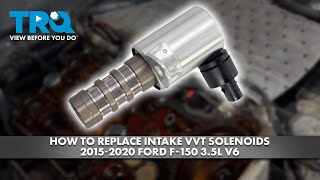
Typical fix: Replace the Bank 1 intake VCT solenoid. On the 3.5L engine, this requires removing the valve cover. 🎬 See this walkthrough on replacing the intake VVT solenoids The VCT solenoids are also referred to as 'Seal Valves' by Ford.
Est. part cost: $40-$80 - Failing Cam Phaser ⚪ Low Probability The 3.5L EcoBoost platform has a notorious history of cam phaser issues, often signaled by a distinct rattling noise on cold starts ('cold start rattle'). The internal locking pins can fail, or the phaser can get stuck. Ford has released multiple updated part designs and TSBs to address this on previous model years which use the same engine architecture.
How to confirm: This is usually suspected when a distinct 2-5 second cold-start rattle 🎬 Watch: Everything you need to know about the cold start rattle is present along with timing codes, and replacing the VCT solenoid does not fix the issue. A professional diagnosis is recommended as it's an internal engine issue.
Typical fix: Replace the cam phasers, timing chain, guides, and tensioners. This is a labor-intensive and expensive repair that requires removing the engine's front cover.
Est. part cost: $400-$800
Rare But Worth Checking
- Stretched Timing Chain or Worn Guides: While less common on newer vehicles, a stretched timing chain can cause correlation issues and trigger P0011. This is usually a high-mileage problem but can be accelerated by poor maintenance or frequent, short trips.
- Damaged VCT Solenoid Wiring: Before replacing parts, always check the wiring harness and connector for the Bank 1 intake VCT solenoid for any visible damage, oil contamination, or loose connections.
- Low Oil Pressure: A failing oil pump or clogged oil passages can lead to low oil pressure, starving the VCT system and causing timing codes for both banks (P0011 and P0021). This is a more serious mechanical issue.
Diagnosis Steps
- Check Engine Oil: Verify the oil level is correct and the oil quality is good. If an oil change was recently performed, confirm the correct viscosity (e.g., SAE 5W-30 Full Synthetic) was used. If in doubt, perform an oil and filter change.
- Scan for Codes: Use an OBD-II scanner to confirm P0011 and check for any other related codes. Note the freeze frame data, which shows engine conditions when the code was set.
- Inspect VCT Solenoid Connector: Check the electrical connector and wiring for the Bank 1 intake VCT solenoid (passenger side) for damage or oil saturation.
- Swap VCT Solenoids: This is a highly effective diagnostic step. Swap the Bank 1 intake VCT solenoid with the Bank 2 intake solenoid. Clear the codes and drive the vehicle. If the fault code changes to P0021 (the code for Bank 2), the solenoid is confirmed to be faulty and should be replaced.
- Test the Solenoid: If swapping is not feasible, you can test the solenoid's resistance with a multimeter (should be 5-15 Ohms) or by applying a 12V source to its terminals and listening for a distinct click. A scan tool can also be used to command the solenoid on and off while monitoring cam position PIDs.
- Listen for Cold Start Rattle: If the above steps do not resolve the issue, pay close attention to the engine sound for the first 2-5 seconds after a cold start. A loud, distinct rattle strongly points towards a failing cam phaser.
- Advanced Mechanical Diagnosis: If the oil is good and the solenoid is confirmed to be working, the issue is likely mechanical within the timing system. This points towards a failing cam phaser or a timing chain issue. This level of diagnosis and repair is complex and best left to a professional.
Parts You'll Likely Need
- Variable Camshaft Timing (VCT) Solenoid / Seal Valve
(OEM #ML3Z-6C535-A (Verify with VIN, this is a common part number for this application))— This is the most common part to fail. It gets clogged with debris from the oil or fails electronically, causing it to stick.
Trusted brands: Motorcraft, Dorman
OEM price range: $20-$50
Aftermarket price range: $20-$40 - Engine Oil and Filter
(OEM #Motorcraft FL-500S (Filter))— Low, old, or incorrect viscosity oil is a primary cause of VCT system problems and can trigger P0011.
Trusted brands: Motorcraft, Mobil 1, Pennzoil
OEM price range: $50-$100
Aftermarket price range: $50-$100 - Valve Cover Gasket Kit
(OEM #BR3Z-6C535-A (Individual seal, full gasket kit recommended))— Required to be replaced when accessing the VCT solenoids on the 3.5L engine, as they are located under the valve covers.
Trusted brands: Motorcraft, Fel-Pro
OEM price range: $60-$120
Aftermarket price range: $40-$80
Related Codes That Often Appear With This One
- P0021 — This is the equivalent code for Bank 2 (driver's side). Seeing both P0011 and P0021 together strongly suggests a systemic problem affecting the whole engine, like low/dirty oil or low oil pressure.
- P0016 — This is a Crankshaft/Camshaft Position Correlation code. If the cam timing is stuck in an over-advanced position, it will no longer be in sync with the crankshaft, triggering P0016. This combination often points towards a timing chain or phaser issue.
- P0012 — This code means 'Timing Over-Retarded' for Bank 1. Seeing P0011 and P0012 together can indicate a VCT solenoid or phaser that is sticking erratically in both directions.
Technical Service Bulletins (TSBs) & Recalls
- SSM 49821: A general Special Service Message for 2015-2021 Ford vehicles that lists P0011 among a wide range of VCT-related DTCs, showing the commonality of these faults across the lineup.
- TSB 21-2315: While for a slightly older model range (2017-2020), this TSB addresses the cam phaser rattle on cold start for the 3.5L EcoBoost engine, which is the direct predecessor to the PowerBoost engine and shares the same fundamental design and issues.
- Customer Satisfaction Program 21N03: An extended warranty program covering the cost of replacing failing cam phasers on many 3.5L EcoBoost engines due to the widespread nature of the problem.
Platform-Specific Known Issues
- The 3.5L EcoBoost/PowerBoost engine family is known for developing a 'cold start rattle' which is a key indicator of failing cam phasers. If you hear a rattling noise for 2-5 seconds after starting a cold engine along with code P0011, it is highly likely the cam phasers need replacement.
- Ford has issued multiple Technical Service Bulletins (TSBs) and Customer Satisfaction Programs (e.g., 21N03, 21B10) over the years for the 3.5L EcoBoost related to VCT codes and cam phaser rattle, indicating a history of issues with these components.
Mechanic-Grade Diagnostic Values
- VCT Solenoid Internal Resistance — expected: 5 - 15 Ohms. More specifically, 6.9 - 7.9 Ohms at 68°F (20°C).. Failure: A reading of 0 Ohms (short circuit) or infinite/OL (open circuit) indicates a failed solenoid coil.
- VCT Solenoid Connector Voltage (Key On, Engine Off) — expected: Battery voltage (approx. 12.0-12.6V) on Pin 1 (Power Supply).. Failure: Voltage significantly below battery voltage indicates a wiring or fuse issue (e.g., Fuse F16 in the underhood fuse box).
- Scan Tool PID: VCT_ADV_ERR1 (VCT Advance Error Bank 1) — expected: Should be close to 0° at a stable, warm idle.. Failure: A consistent, non-zero value (e.g., greater than +/- 5 degrees) indicates the PCM cannot achieve the desired cam angle, pointing to a stuck solenoid or phaser.
- Engine Oil Pressure at Idle (Hot) — expected: At least 25 PSI.. Failure: Pressure below 25 PSI indicates a systemic oiling problem that would starve the VCT system and cause timing codes.
Hidden / Shadow Codes Worth Checking
- Mode 6, Test ID $83: This is an on-board diagnostic monitor test for VCT system performance. It measures the response of the camshaft timing system. A failing value in this test can confirm a VCT system fault even before a persistent CEL is triggered. (see via An advanced OBD-II scan tool capable of reading Mode 6 data, such as FORScan or professional-grade scanners.)
Scan Tool Commands That Help
- Ford IDS / FORScan: VCT Solenoid Bi-Directional Control / On-Off Test (Pinpoint Test HK11/HK12) — This is a critical diagnostic step to differentiate a stuck solenoid from a mechanical phaser issue. The command rapidly cycles the solenoid to try and dislodge debris. If activating the solenoid at idle causes the engine to stumble or smooth out, it confirms the solenoid is responding and oil passages are at least partially clear. No change in idle suggests a dead solenoid or complete blockage.
Wiring & Ground Locations
- VCT Solenoid Connector (Bank 1 Intake) — Under the passenger side valve cover, at the front of the engine.. This is the primary electrical connection for the component. Pin 1 (typically Blue-Green wire) is the power supply from the fuse box. Pin 2 is the control wire that the PCM provides a pulsed ground to. Checking for voltage at Pin 1 and for harness integrity is a key step before replacing the solenoid.
- Fuse F16 (example, verify for specific year) — In the Battery Junction Box (underhood fuse box).. This fuse often provides the 12V power to the VCT solenoids. If there is no voltage at the solenoid connector, this fuse should be checked before diagnosing a wiring break.
Real Owner Repair Stories
- Reddit user post in r/f150 (2018 F-150 Limited 3.5L EcoBoost, ~70,000 miles) — Intermittent hesitation and rough idle, with P0011 code.
❌ Tried (didn't work) The owner noted the cam phasers had already been replaced under warranty at 40k miles, so this was not the initial suspect.
✅ What actually fixed it Replaced the two passenger side (Bank 1) VVT solenoids (Part Number: HL3Z6M280A) and the passenger side valve cover (Part Number: HL3Z6582F). The issue was resolved.
OEM Part Supersession History
Varies by production date (e.g., HL3Z-6256-A/B)→HL3Z-6256-CD (and potentially newer revisions)— Updated design to address premature wear and failure that causes the 'cold start rattle'. The new phasers have a more robust locking pin mechanism and improved oil flow characteristics.
Heads up: When replacing phasers, it is critical to also perform the associated PCM software update (from program 21B10) which alters the VCT control strategy to work correctly with the new parts.
Model Year Variations Within This Range
- 2021: Vehicles produced in 2021 may have been built before the widespread implementation of the updated cam phaser parts and PCM software from Ford's Customer Satisfaction Programs (21B10 and 21N03). While these programs targeted 2017-2020 models, the underlying engine is the same. A 2021 model experiencing P0011 with a cold start rattle should be repaired using the latest superseded phaser parts and software strategy developed under these programs.
Diagnostic Flowchart
Other Known Issues on This Vehicle
Issues unrelated to this code that are worth knowing about as an owner of this generation:
- 10-Speed Transmission Harsh/Erratic Shifting 🟠 Medium — Widespread complaint across the 14th generation. A class-action lawsuit has been filed regarding this transmission.
- Rear Axle Hub Bolt Shearing 🔴 High — A recall was issued for this problem, primarily affecting PowerBoost models with the max tow package. The bolt can shear, potentially leading to a loss of power or separation of the axle assembly. (Ref: NHTSA Recall 23V-023)
- 12V Battery Drain / Electrical Gremlins 🟡 Low — Commonly reported, especially on PowerBoost models. Owners report dead batteries after the truck sits for short periods, often attributed to parasitic drain from onboard electronics and an insufficient charging strategy. (Ref: TSB 23-2121 addresses some related software issues.)
- Cracked Differential Housings 🟠 Medium — Less common but reported by some owners, where the rear differential housing cracks without obvious abuse, potentially due to a manufacturing defect.
- Build Quality Issues (Rattles, Paint) 🟡 Low — Some owners report various minor build quality problems like A-pillar rattles and paint imperfections.
Used vs. New Parts: Buying Guide for This Vehicle
When a used part is the smart pick: A used part is not recommended for any of the primary components related to this repair (solenoids, phasers, timing components). The risk of acquiring a part that is already worn or clogged is extremely high. A used valve cover is acceptable if it is not warped and is thoroughly cleaned.
Donor-vehicle mileage cap: roughly under 30000 miles for the part to have meaningful remaining life.
What to inspect on the donor part:
- For VCT Solenoids/Phasers: Visual inspection is unreliable. The internal condition cannot be verified.
- For a Valve Cover: Check for cracks, warping (check on a flat surface), and deep scoring in the gasket channels.
OEM-only on this vehicle (don't cheap out):
- Cam Phasers: This is critical. Ford has released multiple updated parts to fix the inherent design flaw. Aftermarket phasers are widely reported to fail prematurely. Only the latest revision Motorcraft part should be used.
- VCT Solenoids: While some aftermarket options exist, the OEM Motorcraft solenoids are recommended due to their role in precise oil control. Forum discussions often warn against budget brands like Dorman for this specific part.
Aftermarket brands forum-validated for this vehicle:
- Fel-Pro: A trusted brand for the valve cover gasket kit if you are not buying a new OEM cover which may come with gaskets.
Brands owners have reported issues with on this vehicle:
- Dorman: Some owners have reported issues or express caution when using their VCT solenoids for this application.
Real Owner Stories
Aggregated from forums and TSBs cited above. Mileages and costs reflect what owners reported in those sources.
2019 Ford F-150 XLT 3.5L EcoBoost
Symptoms: The owner experienced intermittent power loss accompanied by P0011 and P0016 codes.
What fixed it: The discussion suggested starting with the VCT solenoid replacement before assuming a repeat cam phaser failure.
Source hint: f150forum.com: A thread titled 'P0011 and P0016 codes on 2019 F150 XLT Screw with 3.5 Ecoboost'
2019 Ford F-150 3.5L EcoBoost
Symptoms: The vehicle triggered a P0011 code.
What fixed it: The owner performed an oil change as the first diagnostic and repair step.
Source hint: YouTube: A video titled 'Is it the oil? 2019 F150 Oil Change - P0011'
Ford F-150 5.4L V8
Symptoms: Owner continued to receive P0011 and P0021 codes even after completing a full timing job.
What fixed it: The case highlighted that systemic issues like oil pressure can cause these codes even with new parts installed.
Source hint: f150forum.com: In a thread titled 'P0011 and P0021 Codes after Timing Job'
Related OBD-II Codes
Frequently Asked Questions
Does Customer Satisfaction Program 21N03 apply to my 3.5L engine if I have cam phaser rattle?
I have a 2021-2024 PowerBoost; is my P0011 code different because it's a hybrid?
What specific oil should I use for my 3.5L PowerBoost to avoid VCT issues?
My truck makes a 2-5 second rattle when I first start it in the morning. Is this related to P0011?
Can I just swap parts to see if the VCT solenoid is bad on my F-150?
Is there a TSB for cam phaser rattle that applies to the 3.5L EcoBoost architecture?
Helpful Videos
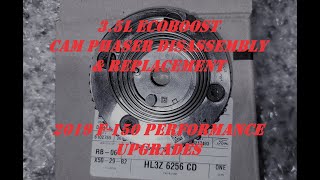
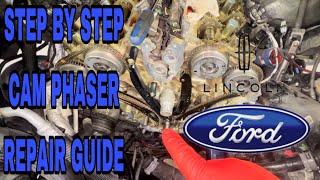
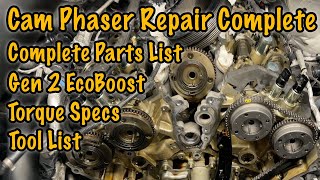
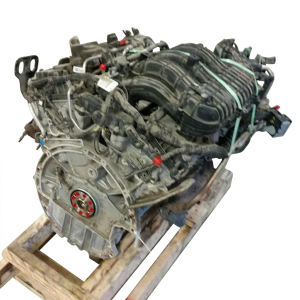
Used OEM Parts in Stock
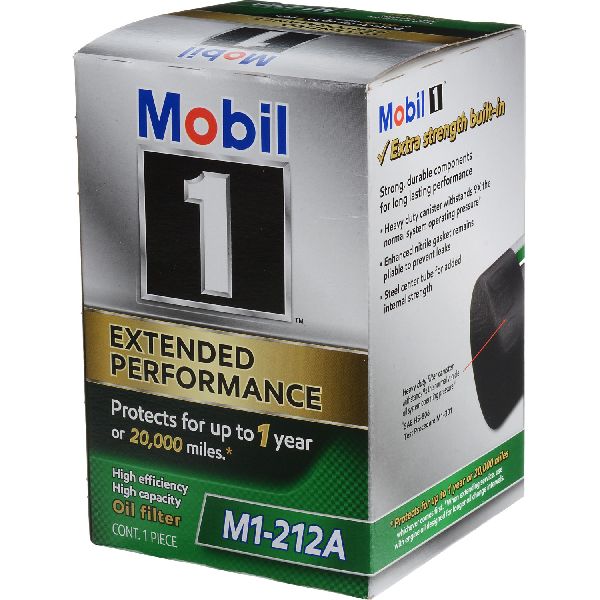
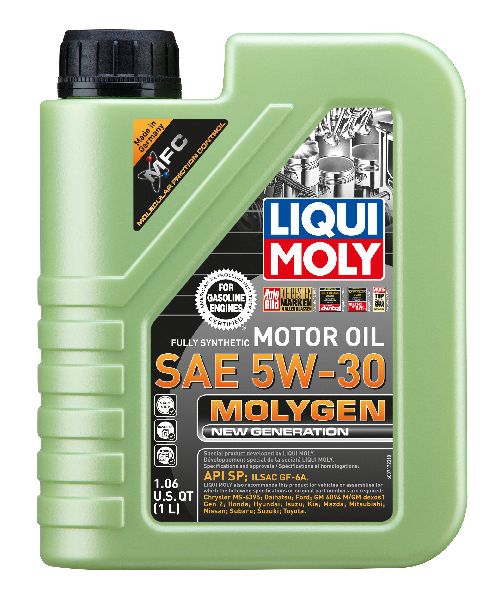
New Aftermarket Parts Available


The information in this article is provided for general reference and educational purposes only. Vehicle specifications, procedures, and part compatibility can vary by production date, trim level, and region. Always consult your vehicle's factory service manual and verify part numbers before purchasing or performing repairs. Safety-critical components such as airbags, seat belts, and braking systems should be installed by a qualified professional.
- Ford F-150:
- 🎬 Helpful Videos
- 🛍️ Shop This Part
- What's Unique About the 2021-2024 Ford F-150
- Symptoms You May Notice
- Most Likely Causes
- Rare But Worth Checking
- Diagnosis Steps
- Parts You'll Likely Need
- Related Codes That Often Appear With This One
- Technical Service Bulletins (TSBs) & Recalls
- Platform-Specific Known Issues
- Mechanic-Grade Diagnostic Values
- Hidden / Shadow Codes Worth Checking
- Scan Tool Commands That Help
- Wiring & Ground Locations
- Real Owner Repair Stories
- OEM Part Supersession History
- Model Year Variations Within This Range
- Diagnostic Flowchart
- Other Known Issues on This Vehicle
- Used vs. New Parts: Buying Guide for This Vehicle
- Real Owner Stories
- 2019 Ford F-150 XLT 3.5L EcoBoost
- 2019 Ford F-150 3.5L EcoBoost
- Ford F-150 5.4L V8
- Related OBD-II Codes
- Frequently Asked Questions
- 🎟️ Get 5% Off