

P0011 on 2009-2012 Ford Escape 3.0L V6: Causes and Fixes for Over-Advanced Camshaft Timing
On a 2009-2012 Ford Escape with the 3.0L V6, code P0011 is most often caused by low/dirty engine oil or a faulty Bank 1 VCT solenoid. An oil change is the first step; if that fails, replacing the VCT solenoid for Bank 1 (rear bank, by the firewall) is the likely fix. The solenoid costs approximately $30-$70 for an aftermarket part.
- Always check your engine oil level and condition first; a simple oil change can sometimes fix this code.
- The most likely failed part is the Bank 1 VCT solenoid, which is located on the rear cylinder bank (near the firewall) and requires removing the intake manifold for access.
- A great way to confirm a bad solenoid is to swap it with the one from the front bank (Bank 2) and see if the code changes to P0021.
- When replacing the solenoids, it is best practice to replace the valve cover gaskets at the same time.
What's Unique About the 2009-2012 Ford Escape
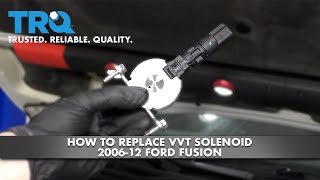
The 3.0L Duratec V6's Variable Camshaft Timing (VCT) system is highly sensitive to oil level and quality. Ford issued a Technical Service Bulletin (TSB 12-10-12) for the 2012 model year that directly addresses this code, pointing to the VCT oil control solenoid as a primary failure point. Unlike some engines where the solenoids are easily accessible, on this 3.0L V6, they are located under the valve covers, making 🎬 Watch: See the VCT solenoid location and replacement process. replacement a more involved job requiring removal of the upper intake manifold to access the rear (Bank 1) cover.
Symptoms You May Notice
- Check Engine Light is on
- Rough or erratic engine idle
- Engine stalling, especially at low speeds
- Noticeable loss of power and poor acceleration
- Reduced fuel economy
- Engine rattling noises, particularly if the issue is progressing to cam phaser or timing chain problems.
- Engine surging while driving, which may require shifting into neutral to bring the vehicle to a stop (NHTSA ODI #11062784).
- Replacing the camshaft position sensor when the actual problem is a sticking VCT solenoid or dirty oil.
- Replacing the cam phaser (a costly repair) before properly diagnosing the much cheaper and more common VCT solenoid failure.
- Assuming a jumped timing chain without first performing the VCT solenoid swap diagnostic.
Most Likely Causes
- Low or Dirty Engine Oil 🔴 High Probability The VCT system uses oil pressure to actuate the cam phasers. Low oil levels or oil that is old, dirty, or the wrong viscosity can clog the fine mesh screens in the VCT solenoids, causing them to stick and not respond to the PCM's commands. This is the most common and first-to-check cause for P0011.
How to confirm: Check the engine oil level on the dipstick and inspect its condition. If the oil is low, very dark, or past its recommended change interval, this is the likely starting point.
Typical fix: Perform an engine oil and filter change using the correct oil viscosity specified for your vehicle (SAE 5W-20 Synthetic Blend). Consider using an engine flush product before draining the old oil to help clean out sludge and deposits.
Est. part cost: $30-$60 - Failing VCT Solenoid (Bank 1) 🔴 High Probability These solenoids are a common failure item. Ford TSB 12-10-12 directly identifies this part as the probable cause for a P0011 code on the 2012 3.0L Escape. Manufacturer service bulletins such as SSM 48423 and SSM 47170 note that this issue is often caused by small debris causing the VCT solenoid to stick.
How to confirm: A definitive diagnostic step is to swap the Bank 1 (rear) and Bank 2 (front) VCT solenoids. Clear the codes and drive the vehicle. If the trouble code changes to P0021 (the equivalent code for Bank 2), the solenoid is confirmed to be faulty. This requires removing both valve covers.
Typical fix: Replace the Bank 1 VCT solenoid. Since the valve covers must be removed for this job, many owners choose to replace both solenoids (Bank 1 and Bank 2) and the valve cover gaskets at the same time as preventative maintenance.
Est. part cost: $30-$70 - Faulty Camshaft Position Sensor (Bank 1) ⚪ Low Probability While less common than a solenoid failure, the camshaft position sensor can fail and send incorrect data to the PCM, triggering a false timing code. TSB 12-10-12 notes that camshaft position sensor DTCs may accompany the VCT codes.
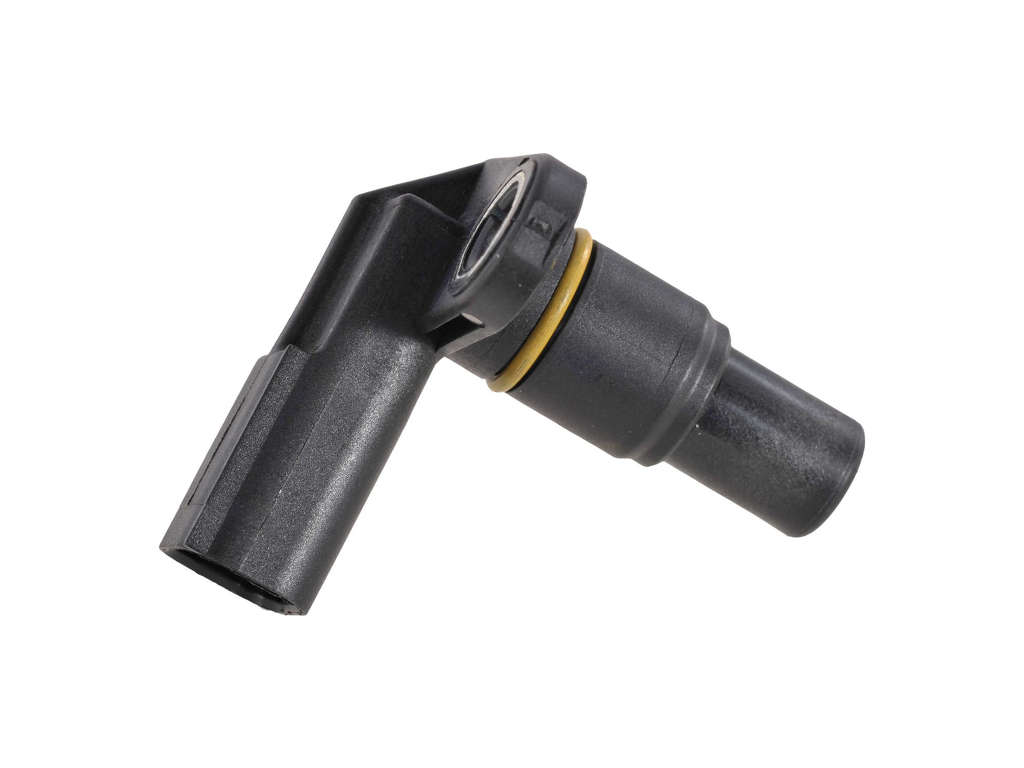
How to confirm: Diagnostic procedures recommend addressing any camshaft position sensor codes (like P0340 or P0344) before troubleshooting the VCT system. The sensor's wiring and connector should be inspected for damage.
Typical fix: Replace the Bank 1 camshaft position sensor.
Est. part cost: $20-$50
Rare But Worth Checking
- Worn Timing Components: If the engine has high mileage and oil changes have been neglected, a stretched timing chain or a failing cam phaser (actuator) could be the cause. This is a much more serious and expensive repair and is often accompanied by rattling noises from the engine.
- Clogged Oil Passages: In cases of severe oil sludging, the oil passages within the cylinder head that feed the VCT system can become restricted. This starves the components of the necessary oil pressure to function correctly and may require extensive engine cleaning or disassembly.
Diagnosis Steps
- Check Engine Oil: Verify the oil level is correct and the oil is clean. If low or dirty, perform an oil and filter change, clear the code, and see if it returns. Use the specified SAE 5W-20 oil.
- Scan for Other Codes: Check for any other related codes, especially for the camshaft position sensor (P0340) or the other bank (P0021, P0022). Address those first.
- Inspect Wiring: Visually inspect the wiring harness and connector for the Bank 1 VCT solenoid (rear bank) for any signs of damage, corrosion, or loose connections. Access may be limited without removing the intake.
- Swap VCT Solenoids: The most effective DIY diagnostic is to swap the Bank 1 (rear) and Bank 2 (front) VCT solenoids. This requires removing the upper intake manifold and both valve covers. After swapping, clear the codes and drive the vehicle. If the code returns as P0021, you have confirmed the solenoid is the problem.
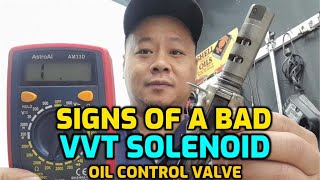
- Test Solenoid: If you have a multimeter, you can test the resistance of the solenoid. It should typically be within a specific range (e.g., 5-15 ohms, though spec should be verified). You can also apply 12V to the solenoid terminals to see if the internal plunger actuates with an audible click. 🎬 Watch: How to test if your solenoid is working properly.
- Advanced Diagnostics: If the solenoid and oil are good, the issue may be mechanical. This involves checking the timing chain, tensioners, and cam phasers, which is best left to a professional. A technician can use a scan tool to monitor VCT error PIDs to see how the system is behaving in real-time. Manufacturer bulletin SSM 54366 recommends using Pinpoint test HK in the Powertrain Control and Emissions Diagnosis manual for these codes.
Parts You'll Likely Need
- Variable Camshaft Timing (VCT) Solenoid / Oil Control Valve
(OEM #9L8Z-6M280-B)— This is the most common failure point for code P0011 on this engine, as identified by common experience and Ford's own TSB 12-10-12. It gets stuck due to oil debris or electrical failure. Note: The solenoid for the other bank (Bank 2) may have a different part number (e.g., 8L8Z-6M280-B). It's crucial to verify the correct part for the specific bank being serviced.
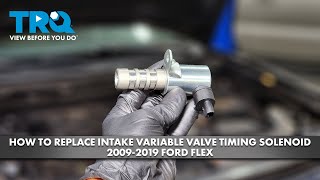
Trusted brands: Motorcraft, Dorman, Standard Motor Products (SMP) 🎬 See this walkthrough for replacing the solenoid on a 3.0L engine.
OEM price range: $50-$90
Aftermarket price range: $30-$70 - Valve Cover Gasket Set — Required for replacing the VCT solenoids, which are located under the valve covers. The set should include the main gasket and spark plug tube seals.
Trusted brands: Fel-Pro, Mahle, Motorcraft
OEM price range: $40-$60
Aftermarket price range: $20-$40
Related Codes That Often Appear With This One
- P0021 — This is the equivalent code for Bank 2 (front bank). If both P0011 and P0021 are present, it strongly suggests a systemic issue like low/dirty oil affecting the entire engine, or that both solenoids have failed.
- P0012 — This code is for 'Timing Over-Retarded' on Bank 1. Seeing it with P0011 can indicate a VCT solenoid that is sticking erratically or a more severe oil flow problem.
- P0340 — This code indicates a fault in the Bank 1 Camshaft Position Sensor circuit. A faulty sensor can cause the PCM to incorrectly report a timing issue, leading to a P0011 code. TSB 12-10-12 acknowledges these codes can appear together.
- P0016 — Crankshaft/Camshaft Correlation (Bank 1 Sensor A). This code indicates a misalignment between the crank and cam, which can be triggered by the same root causes as P0011, such as a sticking VCT phaser or a stretched timing chain. NHTSA ODI #11062784 reports an instance where P0011 and P0016 appeared together during an engine surging event.
Technical Service Bulletins (TSBs) & Recalls
- TSB 12-10-12: Recommends replacing the VCT oil control solenoid on the right-hand cylinder head (Bank 1) if DTC P0011 is present on a 2012 Ford Escape 3.0L.
- SSM 48423 & SSM 47170: Manufacturer bulletins noting that P0011 and related timing codes may be due to small debris causing the VCT solenoid to stick.
- SSM 54366: Directs technicians to use Pinpoint test HK for diagnosing VCT-related trouble codes including P0011 and P0021.
Platform-Specific Known Issues
- Ford TSB 12-10-12 was issued for the 2012 Escape and Fusion with the 3.0L engine, specifically citing codes P0011, P0012, P0021, and P0022. The bulletin recommends replacing the VCT oil control solenoid for the corresponding bank.
- Owner Experience: A common repair story on forums like 'escape-city.com' involves an owner first getting a P0011 code, performing an oil change which doesn't fix it, then proceeding to replace both VCT solenoids and valve cover gaskets, which resolves the issue permanently. The difficulty of accessing the rear (Bank 1) solenoid under the intake manifold is a frequent point of discussion.
Mechanic-Grade Diagnostic Values
- VCT Solenoid Resistance — expected: 6.9 to 12 Ohms. Failure: A reading outside this range, or an open/short circuit (OL or near 0 Ohms), indicates a failed solenoid coil.
- Scan Tool PID: VCT_ADV_ERR (VCT Advance Error) — expected: Close to 0 degrees at idle and under steady-state driving.. Failure: A large, persistent, or fluctuating value (e.g., more than +/- 5 degrees) when the code is set indicates the PCM cannot control the cam angle, pointing to a sticking solenoid or phaser.
- VCT Solenoid Connector Voltage — expected: One pin should have 12V+ with the key on (power), and the other is the control wire that the PCM will pulse to ground to activate the solenoid.. Failure: Absence of 12V+ power indicates a wiring or fuse issue. Inability of the PCM to ground the control circuit points to a PCM or wiring fault.
Hidden / Shadow Codes Worth Checking
- Mode $06, Test ID $53: This refers to the VCT system monitor in the onboard diagnostic tests. While not a 'shadow code' in the traditional sense, viewing Mode $06 data can show if the VCT system is failing its self-test, sometimes before a hard code like P0011 is set. It provides raw test data from the PCM. (see via A professional-grade OBD-II scan tool with Mode $06 functionality is required.)
Scan Tool Commands That Help
- Ford IDS (Integrated Diagnostic System) or equivalent professional scan tool (Autel, Snap-on): VCT Solenoid On/Off State or Duty Cycle Command — This is a bidirectional control that allows a technician to command the VCT solenoid to activate independently of the engine's needs. While the engine is idling, activating the solenoid should cause a noticeable change in idle quality or even stall the engine. If there is no change, it confirms a problem with the solenoid, wiring, or oil flow to the phaser.
- Ford IDS: Pinpoint Test HK — As described in manufacturer bulletin SSM 54366 and other Ford TSBs, this automated test cycles the VCT solenoid multiple times to attempt to dislodge small debris. If the code clears after running this test, it suggests the issue was a temporary blockage rather than a hard failure.
Wiring & Ground Locations
- G101 — Near the battery tray in the engine compartment.. This is a primary engine and PCM ground. A corroded or loose connection at G101 can cause erratic voltage and sensor readings, potentially leading the PCM to misinterpret data from the camshaft position sensor and trigger false timing codes.
- G104 — At the left front corner of the engine compartment, near the Battery Junction Box (BJB).. Another critical chassis and engine system ground. A poor connection here can affect the stability of the entire electrical system, including the power supply to the PCM and its related sensors and actuators like the VCT solenoids.
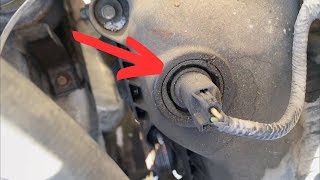
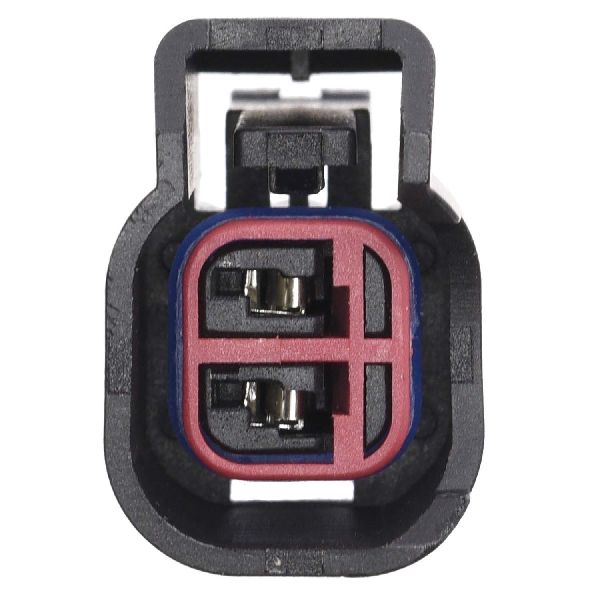
- VCT Solenoid Connector — On top of the VCT solenoid, which is located under the valve cover for the respective bank. It is a 2-pin female connector.. This is the direct electrical connection to the solenoid. The pins are for 12V power and the PCM ground signal. Damage to this connector or its wiring is a possible, though less common, cause of the code.
- PCM Connector C175b / C175e — Located at the Powertrain Control Module (PCM) on the rear center of the firewall.. This is the main connector where the signals from the VCT solenoids and camshaft position sensors terminate. A pin-out test here can confirm continuity of the entire circuit from the PCM to the component without having to access the component directly.
OEM Part Supersession History
9L8Z-6M280-A→9L8Z-6M280-B— Part revision or improvement by the manufacturer.9L8Z-6M280-B→9L8Z-6M280-C— Part revision or improvement by the manufacturer.
Heads up: Parts are generally forward-compatible. Always use the latest available part number when ordering.
Diagnostic Flowchart
Other Known Issues on This Vehicle
Issues unrelated to this code that are worth knowing about as an owner of this generation:
- 6F35 Transmission Failure 🔴 High — Widespread issue, particularly in 2009-2013 models. Can occur under 100,000 miles. Symptoms include harsh shifting, shuddering, slipping, and complete failure. (Ref: Multiple TSBs exist for shift quality issues, but no widespread recall for complete failure. A class-action lawsuit was filed regarding these issues.)
- Rear Shock Tower Rust 🔴 High — Very common in regions that use road salt ('Rust Belt'). The upper shock mount on the passenger side, and sometimes driver side, rusts completely through, causing the shock to detach and enter the cabin. (Ref: No recall, but the problem is so common that aftermarket repair panels/kits are widely available.)
- Electronic Power Steering (EPS) Failure 🔴 High — Common enough to warrant a recall. Failure results in a sudden loss of power assist, making the vehicle very difficult to steer. (Ref: Ford Recall 14S05 was issued to address this by either updating software or replacing the steering column.)
- Throttle Body Failure 🟠 Medium — A common failure item that can cause the vehicle to enter 'limp mode' with sudden loss of power, stalling, and rough idle. (Ref: Ford had a Customer Satisfaction Program (13N03) that extended the warranty on the throttle body for some vehicles.)
- Leaking Axle Seals 🟡 Low — The front axle seals, particularly on the driver's side where it enters the transmission, are known to leak transmission fluid. If left unchecked, low fluid can damage the 6F35 transmission.
- Water Pump Failure 🟠 Medium — While not as prevalent as on the later 3.5L engines, the water pump on the 3.0L can fail. On some versions of the Duratec 3.0, the pump is driven by the camshaft, making replacement more complex than a belt-driven pump.
Used vs. New Parts: Buying Guide for This Vehicle
When a used part is the smart pick: For this specific repair, using used parts is generally not recommended. The primary failure components (VCT solenoids) are relatively inexpensive new and are known wear items. A used solenoid carries a high risk of premature failure due to sludge or internal wear from the donor vehicle.
Donor-vehicle mileage cap: roughly under 100000 miles for the part to have meaningful remaining life.
What to inspect on the donor part:
- If sourcing a larger component like a valve cover, inspect for cracks, warping, or stripped bolt holes.
- For any electronic component, there is no reliable way to visually inspect its internal condition. Buying used is a gamble.
OEM-only on this vehicle (don't cheap out):
- VCT Solenoids: While aftermarket options exist, many professional technicians and forum veterans strongly recommend using OEM Motorcraft solenoids. Aftermarket solenoids can have a higher failure rate or inconsistent performance, potentially causing the code to return.
Aftermarket brands forum-validated for this vehicle:
- Dorman
- Standard Motor Products (SMP)
- Walker Products
Brands owners have reported issues with on this vehicle:
- No-name, unbranded parts sold on online marketplaces are a significant risk and should be avoided. They often lack quality control and may fail quickly.
Real Owner Stories
Aggregated from forums and TSBs cited above. Mileages and costs reflect what owners reported in those sources.
2012 Ford Escape 3.0L V6
Symptoms: Check engine light with P0011 and P0021 codes appearing together.
What fixed it: Swapping the solenoids to confirm the fault, then replacing both VCT solenoids and the valve cover gaskets.
Source hint: escape-city.com thread titled 'P0011 and P0021 codes - VCT Solenoids?'
2012 Ford Escape 3.0L V6
Symptoms: P0011 code present on the right-hand cylinder head.
What fixed it: Replacement of the VCT oil control solenoid as per manufacturer instructions.
Source hint: TSB 12-10-12
Ford Escape Owner
Symptoms: Check engine light was stuck on. Diagnostics pulled codes P0011 and P0012.
What fixed it: Both solenoids needed to be replaced, and potentially the phasers as well.
Source hint: NHTSA ODI #10507293
Related OBD-II Codes
Frequently Asked Questions
Is there a Technical Service Bulletin for P0011 on my 2012 Ford Escape 3.0L?
Which side of the engine is Bank 1 on my 3.0L Duratec V6?
What type of oil should I use to prevent VCT issues in my 2009-2012 Escape?
Do I need to remove the intake manifold to fix a P0011 code?
Can I test if the VCT solenoid is actually bad before buying a new one?
Are there other common failures on the 2009-2012 Escape I should look out for while fixing this?
Helpful Videos
Used OEM Parts in Stock
New Aftermarket Parts Available



The information in this article is provided for general reference and educational purposes only. Vehicle specifications, procedures, and part compatibility can vary by production date, trim level, and region. Always consult your vehicle's factory service manual and verify part numbers before purchasing or performing repairs. Safety-critical components such as airbags, seat belts, and braking systems should be installed by a qualified professional.
- Ford Escape:
- 🎬 Helpful Videos
- 🛍️ Shop This Part
- What's Unique About the 2009-2012 Ford Escape
- Symptoms You May Notice
- Most Likely Causes
- Rare But Worth Checking
- Diagnosis Steps
- Parts You'll Likely Need
- Related Codes That Often Appear With This One
- Technical Service Bulletins (TSBs) & Recalls
- Platform-Specific Known Issues
- Mechanic-Grade Diagnostic Values
- Hidden / Shadow Codes Worth Checking
- Scan Tool Commands That Help
- Wiring & Ground Locations
- OEM Part Supersession History
- Diagnostic Flowchart
- Other Known Issues on This Vehicle
- Used vs. New Parts: Buying Guide for This Vehicle
- Real Owner Stories
- 2012 Ford Escape 3.0L V6
- 2012 Ford Escape 3.0L V6
- Ford Escape Owner
- Related OBD-II Codes
- Frequently Asked Questions
- 🎟️ Get 5% Off