

P0011 on 2007-2010 Ford Edge 3.5L: VCT Solenoid and Oil-Related Fixes
On a 2007-2010 Ford Edge, P0011 is almost always caused by low/dirty engine oil or a faulty Bank 1 intake VCT (Variable Camshaft Timing) solenoid. First, check your oil. If the oil is fine, the VCT solenoid is the next likely culprit, but replacing it is labor-intensive as it's on the rear bank, requiring removal of the intake manifold.
- Do not ignore this code. Start by checking your engine oil level and condition immediately.
- An oil and filter change with the correct 5W-20 oil is the cheapest and easiest first step and may solve the problem.
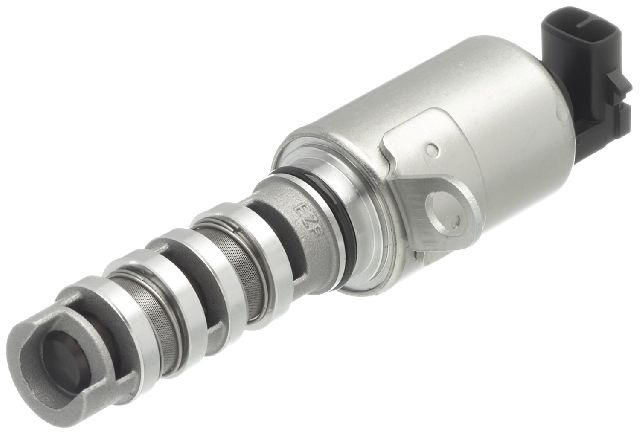
- The most likely failed part is the Bank 1 (rear, firewall side) intake VCT solenoid.
- Replacing the Bank 1 VCT solenoid is a labor-intensive job that requires removing the upper intake manifold.
- If you hear rattling noises along with the code, especially on a 2007-2009 model, suspect a more serious cam phaser issue per TSB 11-6-1.
- Be aware of the platform's other major issues, like the internal water pump, which can cause catastrophic engine damage if it fails.
What's Unique About the 2007-2010 Ford Edge
The Ford 3.5L Cyclone V6 engine uses a Twin Independent Variable Camshaft Timing (Ti-VCT) system that is highly dependent on oil pressure and cleanliness to function correctly. Ford has issued multiple service bulletins and special service messages (SSMs) for this engine family acknowledging that VCT solenoids can stick due to small debris in the oil, leading to codes like P0011. On the transverse-mounted engine in the Edge, the Bank 1 solenoid is on the firewall side, making its replacement significantly more labor-intensive than the easily accessible Bank 2 solenoid at the front of the vehicle.
Symptoms You May Notice
- Check Engine Light is on
- Rough or rolling idle
- Poor acceleration or lack of power
- Engine stalling
- Reduced fuel economy
- Engine making unusual rattling or ticking noises
- Replacing the camshaft position sensor. While a sensor can fail, P0011 specifically points to a mechanical timing position issue (over-advanced), which is more often caused by the VCT solenoid, oil problems, or phasers, not the sensor itself.
Most Likely Causes
- Low or Dirty Engine Oil 🔴 High Probability The Ti-VCT system uses oil pressure to adjust cam timing. Incorrect oil level, viscosity, or contamination from overdue oil changes directly impacts its performance. This is the number one cause of VCT-related codes.
How to confirm: Check the engine oil dipstick. Verify the level is between the 'min' and 'max' marks and that the oil is not dark, thick, or sludgy. The correct oil is 5.5 quarts of SAE 5W-20.
Typical fix: Perform a complete engine oil and filter change using the correct Ford-specified viscosity oil (SAE 5W-20) and a quality oil filter. This simple step resolves the issue in many cases. 🎬 Watch: Why you should check your oil before replacing parts.
Est. part cost: $30-$80 - Failing Bank 1 Intake VCT Solenoid 🔴 High Probability Ford TSBs and SSMs confirm these solenoids are prone to sticking or clogging from small debris in the engine oil. This prevents them from accurately controlling oil flow to the cam phaser, causing the timing to become over-advanced. Manufacturer service bulletin SSM 47170 notes that small debris can cause the VCT solenoid to stick, leading to an illuminated MIL and DTC P0011.
How to confirm: A definitive diagnostic step is to swap the suspected faulty solenoid with a known good one (e.g., the Bank 2 intake solenoid). If the trouble code changes to P0021 (for Bank 2), the solenoid is bad. This requires significant labor for the Bank 1 solenoid, as the upper intake manifold must be removed for access.
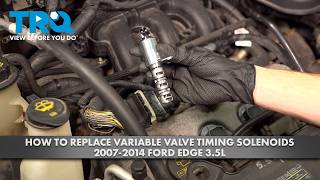
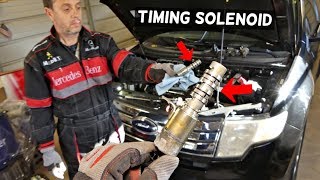
Typical fix: Replace the Bank 1 intake VCT solenoid. This requires removing the upper intake manifold to access the rear valve cover. It is highly recommended to replace the valve cover gasket and upper intake manifold gaskets at the same time. 🎬 Watch: Step-by-step walkthrough for replacing the VVT solenoids.
Est. part cost: $40-$120
Rare But Worth Checking
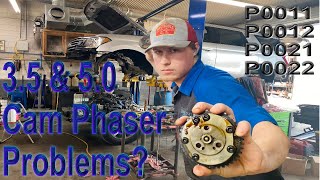
- Damaged Cam Phaser: A TSB (11-6-1) exists for 2007-2009 models that can lead to cam phaser replacement for this code. The TSB instructs technicians to check phaser part numbers and replace them if they are not the updated versions (7T4E-6C524-EC for left, 8T4E-6C524-AC for right). This is a more serious mechanical issue, often accompanied by rattling noises, and is much more expensive to fix.
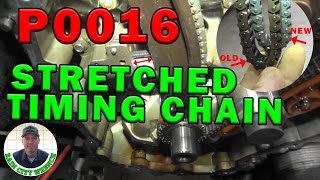
- Stretched Timing Chain: While less common than oil or solenoid issues, a stretched timing chain can cause the camshafts to be out of sync with the crankshaft, triggering correlation codes like P0011, often along with P0016/P0018. This is a major repair. 🎬 See how a stretched timing chain causes these correlation codes.
- Wiring to VCT Solenoid: Check the electrical connector and wiring going to the Bank 1 intake VCT solenoid for any damage, corrosion, or oil contamination before replacing parts. A poor connection can mimic a failed solenoid. Bulletin #SSM 54366 suggests that for various timing codes including P0011, technicians should refer to pinpoint test HK in the Powertrain Control and Emissions Diagnosis manual.
- Failing Internal Water Pump: A catastrophic failure of the internally-mounted, timing-chain-driven water pump can cause coolant to leak into the engine oil. This contaminated oil can cause timing components to fail and may throw timing correlation codes like P0016 along with P0011. If the oil on the dipstick appears milky or like chocolate milk, this is a likely and severe cause.
Diagnosis Steps
- Check Engine Oil: This is the most important first step. Verify the oil level is correct and that the oil is clean. If the oil is low, dirty, or past its change interval, perform an oil and filter change with SAE 5W-20 synthetic blend oil. Clear the codes and drive the vehicle to see if the light returns.
- Inspect VCT Solenoid Wiring: Visually inspect the wiring harness and connector for the Bank 1 (rear) intake VCT solenoid. Check for any breaks, corrosion, or oil saturation.
- Test the Solenoid (Advanced): For a definitive diagnosis, the best method is to swap the Bank 1 intake solenoid with the Bank 2 intake solenoid. Clear the codes and drive. If the code changes to P0021, the original Bank 1 solenoid is faulty. Note: This requires removing the upper intake manifold for access. Manufacturer bulletin SSM 48423 reinforces that VCT solenoids are susceptible to sticking due to small debris.
- Check for TSBs: A Ford dealer or qualified shop can check for relevant Technical Service Bulletins. TSB 11-6-1 is critical for 2007-2009 models built on or before 12/15/2008, as it may point to a known phaser issue requiring replacement with updated parts. Additionally, Bulletin #TSB-16-0093 notes that vehicles may exhibit an illuminated MIL with DTC P0011 stored in the Powertrain Control Module (PCM) memory.
- Inspect Timing Components: If the above steps do not resolve the issue, the problem is likely more severe, such as a failing cam phaser or a stretched timing chain. This requires significant engine disassembly and should be handled by a professional.
Parts You'll Likely Need
- Intake VCT Solenoid (Bank 1)
(OEM #AT4Z-6M280-C (Note: This part may be superseded by AT4Z-6M280-A or -B, confirm with dealer))— This is the most common mechanical part to fail for this code due to its susceptibility to clogging from oil debris. The part number AT4Z-6M280-C is widely cited, but applications show it fits many 3.5L engines, sometimes with different connectors or positions (intake/exhaust). Always verify the correct part for your specific VIN.
Trusted brands: Motorcraft, Dorman, Standard Motor Products (SMP)
OEM price range: $60-$100
Aftermarket price range: $40-$70 - Upper Intake Manifold Gasket Set — Required when replacing the Bank 1 (rear) VCT solenoid, as the intake manifold must be removed for access.
Trusted brands: Motorcraft, Fel-Pro, Mahle
OEM price range: $30-$50
Aftermarket price range: $20-$40
Related Codes That Often Appear With This One
- P0016 — This code indicates a correlation issue between the crankshaft and the Bank 1 intake camshaft. It often appears with P0011 when the timing is significantly off due to a failing solenoid, phaser, or a stretched timing chain.
- P0021 — This is the equivalent code for Bank 2 (front bank). Seeing both P0011 and P0021 together strongly points to a systemic issue like old, dirty oil or low oil pressure affecting the entire VCT system.
- P0018 — This is a correlation code for the Bank 2 exhaust camshaft. Seeing multiple timing codes at once (e.g., P0011, P0016, P0018, P0021) can indicate a severe timing issue, such as a jumped or severely stretched timing chain, or a catastrophic water pump failure affecting the timing chain tension.
Technical Service Bulletins (TSBs) & Recalls
- TSB 11-6-1: Addresses DTCs P0011, P0012, P0016, P0018, P0021, P0022 on 2007-2009 Edge/MKX models built on or before 12/15/2008, potentially requiring cam phaser replacement.
- TSB 16-0093: While for a later model year, this TSB confirms Ford's continued acknowledgement of VCT solenoid issues on the 3.5L engine causing P0011.
- SSM 47170: Notes that small debris can cause the VCT solenoid to stick, resulting in DTCs such as P0011, P0012, P0021, and P0022.
- SSM 48423: A manufacturer service message stating that VCT solenoids may stick due to small debris, leading to an illuminated MIL and codes including P0011 and P0021.
- SSM 54366: Directs technicians to pinpoint test HK for vehicles exhibiting DTCs P0011 through P0025.
Platform-Specific Known Issues
- TSB 11-6-1 Cam Phaser Inspection: TSB 11-6-1 was issued for 2007-2009 Edge/MKX models built on or before 12/15/2008 for VCT-related codes, including P0011. It instructs technicians to inspect the cam phasers and replace them if they are not the updated part numbers (7T4E-6C524-EC and 8T4E-6C524-AC).
- Real Owner Experience: P0011 and P0016: On fordedgeforum.com, a 2008 MKX owner with codes P0011 and P0016 reported that changing the camshaft position sensors and VCT solenoids did not fix the issue. The final diagnosis from a Lincoln dealer was faulty cam phasers, aligning with the guidance in TSB 11-6-1.
- Real Owner Experience: Multiple Codes After Timing Job: A user on the Ford Edge subreddit reported getting P0011, P0016, P0018, and P0021 one year after a complete timing chain job. This indicates that even with new parts, a failure in one component (like a tensioner or a new VCT solenoid) can cause a cascade of timing codes.
Mechanic-Grade Diagnostic Values
- VCT Solenoid Internal Resistance — expected: 7-14 Ohms. A more precise target is 6.9-7.9 Ohms at ~68°F (20°C).. Failure: A reading of 0 Ohms (short), OL/infinite resistance (open circuit), or a value significantly outside the 7-14 Ohm range.
- VCT Solenoid Connector Voltage (KOEO) — expected: Battery voltage (~12.0V) on the power supply pin.. Failure: Voltage below 10.5V suggests a problem in the power supply (VPWR) circuit, fuse, or PCM power relay.
- Engine Oil Pressure (Hot Idle) — expected: Minimum 10-15 PSI (69–103 kPa). Ideal pressure is higher.. Failure: Pressure below the minimum threshold will starve the VCT system of the hydraulic pressure needed to operate, causing timing codes.
- Camshaft Position (CMP) Sensor Signal Voltage (Hall-Effect Type) — expected: The signal wire should toggle between approximately 0V (low state) and 5V (high state) as the engine is cranked.. Failure: A signal that is stuck high or low, or a low state voltage that is significantly above 0V (e.g., >0.1V), can indicate a failing sensor providing a weak or noisy signal to the PCM.
Scan Tool Commands That Help
- Ford Integrated Diagnostic System (IDS) or equivalent advanced scan tool: VCT Solenoid On/Off Command or Duty Cycle Control — This bidirectional test is used to verify if the solenoid is mechanically functioning. The technician can command the solenoid to activate and listen for an audible click or a change in engine idle quality. Some procedures suggest cycling the solenoid multiple times to dislodge small debris as a diagnostic or temporary fix.
Wiring & Ground Locations
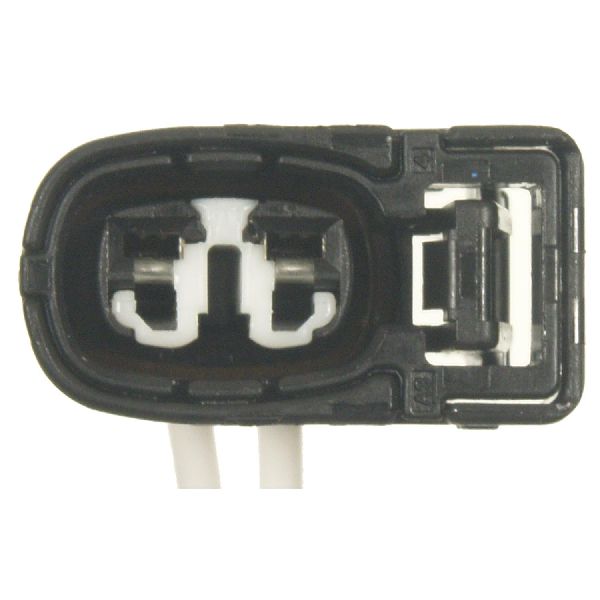
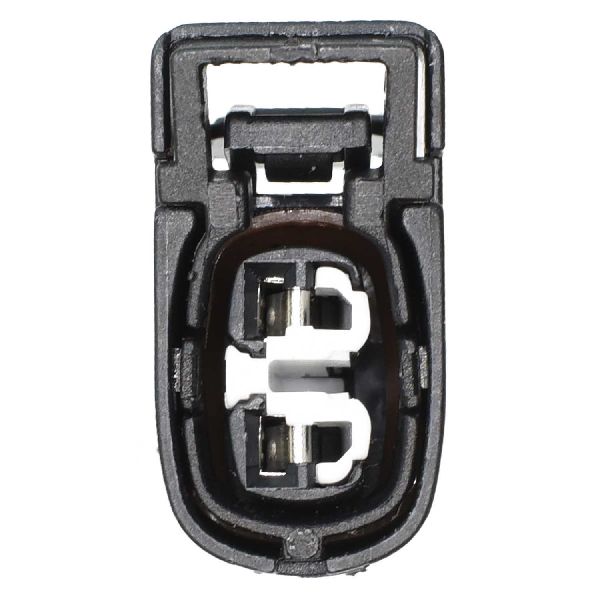
- VCT Solenoid Connector — On the VCT solenoid itself, protruding from the valve cover. Bank 1 (rear bank) is under the upper intake manifold.. The connector has two pins. One receives ~12V power with the key on (VPWR circuit), and the other is the control wire that the PCM pulses to ground to activate the solenoid. Checking for voltage here is a primary electrical diagnostic step. A loose, corroded, or oil-soaked connector can cause an open or shorted circuit, mimicking a failed solenoid.
- PCM Connector — The Powertrain Control Module (PCM) is typically located in the engine bay, often near the firewall or battery.. The ground-side control wires for the VCT solenoids run directly from the solenoids to the PCM. A continuity test from the solenoid connector pin to the corresponding pin at the PCM connector can identify a break or short in the wiring harness.
Real Owner Repair Stories
- Ford Truck Enthusiasts Forum user (2004 Ford F-150 5.4L 3v (similar VCT system)) — Rough running when warm, knocking sound from passenger side, multiple VCT and correlation codes (P0010, P0012, P0020, P0022).
❌ Tried (didn't work) Replaced cam phasers, Replaced VCT solenoids, Replaced timing chains, guides, and tensioners, Replaced oil pump
✅ What actually fixed it The user discovered there was no voltage at the passenger side VCT solenoid connector. The root cause was identified as a wiring issue, where the solenoid was not receiving power to actuate, preventing oil flow despite all new mechanical timing components.
OEM Part Supersession History
Varies by position→AT4Z-6M280-A, AT4Z-6M280-B, AT4Z-6M280-C— Part consolidation and design updates.
Heads up: The solenoids are position-specific. Per Ford TSB 16-0093, the correct part numbers are: AT4Z-6M280-A (Left Side Exhaust OR Right Side Intake), AT4Z-6M280-B (Left Side Intake), and AT4Z-6M280-C (Right Side Exhaust). Using the wrong part for the position can result in improper function even if it physically fits.
Model Year Variations Within This Range
- 2007-2009 (built on or before 12/15/2008): These models are subject to TSB 11-6-1, which identifies an issue with the original cam phasers. If P0011 is present, especially with other timing codes, the TSB directs technicians to inspect and potentially replace the phasers with updated parts, making it a more likely cause on these earlier builds.
- 2007-2010: All models in this range use the 265 hp version of the 3.5L Cyclone V6. The engine was updated for the 2011 model year with Ti-VCT, which changed some components and increased power output. Therefore, diagnostic information and parts are generally consistent across the 2007-2010 range.
Diagnostic Flowchart
Other Known Issues on This Vehicle
Issues unrelated to this code that are worth knowing about as an owner of this generation:
- Internal Water Pump Failure 🔴 High — A notorious and widespread issue for the 3.5L Cyclone V6. Failure can occur without warning, often between 80,000 and 120,000 miles.
- Power Transfer Unit (PTU) Failure 🔴 High — Common in AWD models. The unit is located next to the hot catalytic converter, causing the gear oil to cook and break down, leading to seal leaks and eventual failure. Many fail before 100,000 miles.
- Electronic Throttle Body (ETB) Failure 🟠 Medium — A well-documented problem where internal electronics fail, causing the vehicle to enter a dangerous 'limp mode' with sudden loss of power. Ford had a Customer Satisfaction Program (13N03) for some models, but it has expired. (Ref: TSB 10-21-6)
- Transmission Speed Sensor Failure (TSS/OSS) 🟠 Medium — Particularly common on 2007-2008 models, the internal Turbine Shaft Speed (TSS) or Output Shaft Speed (OSS) sensors in the 6F50 transmission can fail, causing harsh shifting, loss of speedometer, and the transmission defaulting to a single gear. (Ref: TSB 07-21-11)
- Cracked Flexplate 🟠 Medium — Owners may hear a rattling or ticking noise from the transmission bellhousing area, which can be a cracked flexplate. If left untreated, it can shatter and cause a loss of power.
Used vs. New Parts: Buying Guide for This Vehicle
When a used part is the smart pick: For this specific repair, using used parts is generally not recommended. The primary failure parts (VCT solenoids) are electronic and wear-sensitive, and their remaining lifespan is unknown. Given the significant labor required to access the Bank 1 solenoid, the risk of premature failure of a used part outweighs the cost savings.
Donor-vehicle mileage cap: roughly under 50000 miles for the part to have meaningful remaining life.
What to inspect on the donor part:
- If considering a used solenoid, request one from a documented low-mileage vehicle.
- Inspect the mesh screens on the solenoid; they should be perfectly clean, intact, and free of any metallic debris or sludge.
- Test the resistance of the used solenoid with a multimeter before installation to ensure it is within the 7-14 Ohm specification.
OEM-only on this vehicle (don't cheap out):
- Cam Phasers: Due to the complexity of the part and the high cost of labor for a timing job, using OEM (Motorcraft) phasers is strongly recommended by mechanics to ensure longevity and prevent repeat failures.
- Timing Chain Kit: Similar to phasers, the timing chain, guides, and tensioners are critical components where OEM quality provides the best assurance against premature stretching or wear.
Aftermarket brands forum-validated for this vehicle:
- Dorman: A widely available and commonly used aftermarket brand for VCT solenoids with a generally acceptable reputation, though some sources note differences in build quality compared to OEM.
- Standard Motor Products (SMP): Another reputable aftermarket manufacturer for VVT system components.
Brands owners have reported issues with on this vehicle:
- Unbranded/White-Box Parts: Avoid extremely cheap solenoids from online marketplaces with no brand recognition. These often have high failure rates and questionable quality control, leading to repeat repairs.
Real Owner Stories
Aggregated from forums and TSBs cited above. Mileages and costs reflect what owners reported in those sources.
2008 Lincoln MKX 3.5L V6
Symptoms: Owner had codes P0011 and P0016. Changing the camshaft position sensors and VCT solenoids did not fix the issue.
What fixed it: Replacement of faulty cam phasers, as recommended by a Lincoln dealer following TSB 11-6-1.
Source hint: fordedgeforum.com thread titled 'P0011 and P0016'
Ford Edge 3.5L V6
Symptoms: One year after a complete timing chain job, the vehicle threw multiple codes: P0011, P0016, P0018, and P0021.
What fixed it: The report indicates a failure in a single component like a tensioner or a new VCT solenoid can cause a cascade of timing codes even after a recent repair.
Source hint: Ford Edge subreddit
Related OBD-II Codes
Frequently Asked Questions
Does TSB 11-6-1 apply to my 2008 Ford Edge with the P0011 code?
What is the recommended oil for my 3.5L Cyclone V6 to prevent VCT issues?
Why is the Bank 1 VCT solenoid repair more expensive on the Edge than Bank 2?
Can I just swap the solenoids to see if one is bad?
Are there other common mechanical failures on the 2007-2010 Edge I should watch for while fixing this?
I have AWD; could my P0011 be related to the PTU issue?
Helpful Videos
Used OEM Parts in Stock


New Aftermarket Parts Available


The information in this article is provided for general reference and educational purposes only. Vehicle specifications, procedures, and part compatibility can vary by production date, trim level, and region. Always consult your vehicle's factory service manual and verify part numbers before purchasing or performing repairs. Safety-critical components such as airbags, seat belts, and braking systems should be installed by a qualified professional.
- Ford Edge:
- 🎬 Helpful Videos
- 🛍️ Shop This Part
- What's Unique About the 2007-2010 Ford Edge
- Symptoms You May Notice
- Most Likely Causes
- Rare But Worth Checking
- Diagnosis Steps
- Parts You'll Likely Need
- Related Codes That Often Appear With This One
- Technical Service Bulletins (TSBs) & Recalls
- Platform-Specific Known Issues
- Mechanic-Grade Diagnostic Values
- Scan Tool Commands That Help
- Wiring & Ground Locations
- Real Owner Repair Stories
- OEM Part Supersession History
- Model Year Variations Within This Range
- Diagnostic Flowchart
- Other Known Issues on This Vehicle
- Used vs. New Parts: Buying Guide for This Vehicle
- Real Owner Stories
- 2008 Lincoln MKX 3.5L V6
- Ford Edge 3.5L V6
- Related OBD-II Codes
- Frequently Asked Questions
- 🎟️ Get 5% Off