

P0010 on 2003-2009 Toyota 4Runner 4.0L: "A" Camshaft Actuator Circuit Causes and Fixes
On a 2003-2009 Toyota 4Runner with the 4.0L V6, code P0010 almost always points to a faulty Bank 1 (passenger side) VVT solenoid, also called an Oil Control Valve (OCV). It's an electrical circuit fault, not a mechanical timing issue. The most definitive diagnosis is to swap the passenger (Bank 1) and driver (Bank 2) side solenoids; if the code changes to P0020, the solenoid is bad. Replacing it is a common DIY fix, with an aftermarket part costing around $50-$90.
- P0010 is an electrical circuit code for the passenger side intake VVT solenoid, not a mechanical timing failure.
- The most reliable and cost-free diagnostic step is to swap the passenger and driver side VVT solenoids and see if the code follows the part (changing to P0020).
- Before replacing the solenoid, always inspect the wiring right at the connector, as it is a known point of failure due to heat and vibration.
- This issue is shared across other Toyota models with the 4.0L 1GR-FE engine, including the Tacoma, FJ Cruiser, and Tundra.
What's Unique About the 2003-2009 Toyota 4Runner
The 1GR-FE engine in the 4th generation 4Runner relies heavily on its Variable Valve Timing (VVT) system for its powerband and efficiency. While generally reliable, the oil control valves (solenoids) are a known failure point that can fail electrically over time. Unlike performance-related VVT codes (like P0011, P0012, or P0016) which can be caused by oil sludge or stretched timing chains, P0010 is almost always an electrical failure of the solenoid itself or its wiring. This makes diagnosis more direct and typically isolates the problem to one of two components, avoiding unnecessary, expensive repairs like timing chain replacement.
Symptoms You May Notice
- Check Engine Light is on
- Rough or unstable idle
- Hesitation or lack of power during acceleration
- Reduced fuel economy
- Stalling, especially when coming to a stop
- Replacing the Camshaft Position Sensor. The P0010 code is for the actuator circuit (the solenoid), not the sensor that reads the camshaft's position. Replacing the sensor will not fix this code.
- Replacing the timing chain. This is a major, expensive repair that is not indicated by a P0010 circuit code. Timing chain issues would typically set correlation codes like P0016, not an electrical fault code.
Most Likely Causes
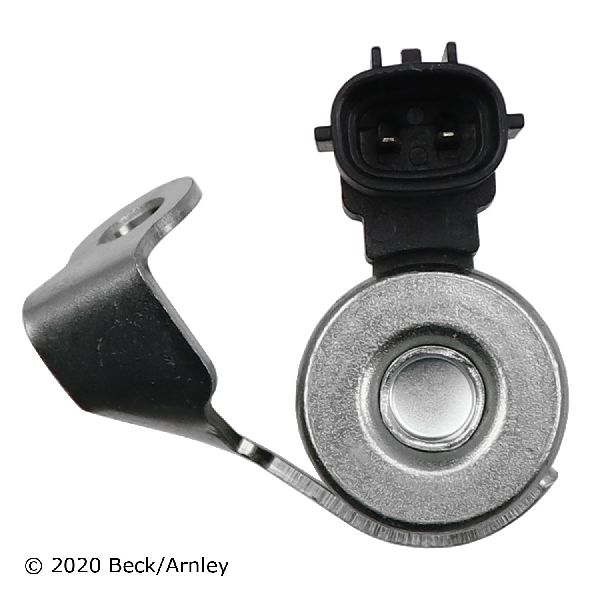
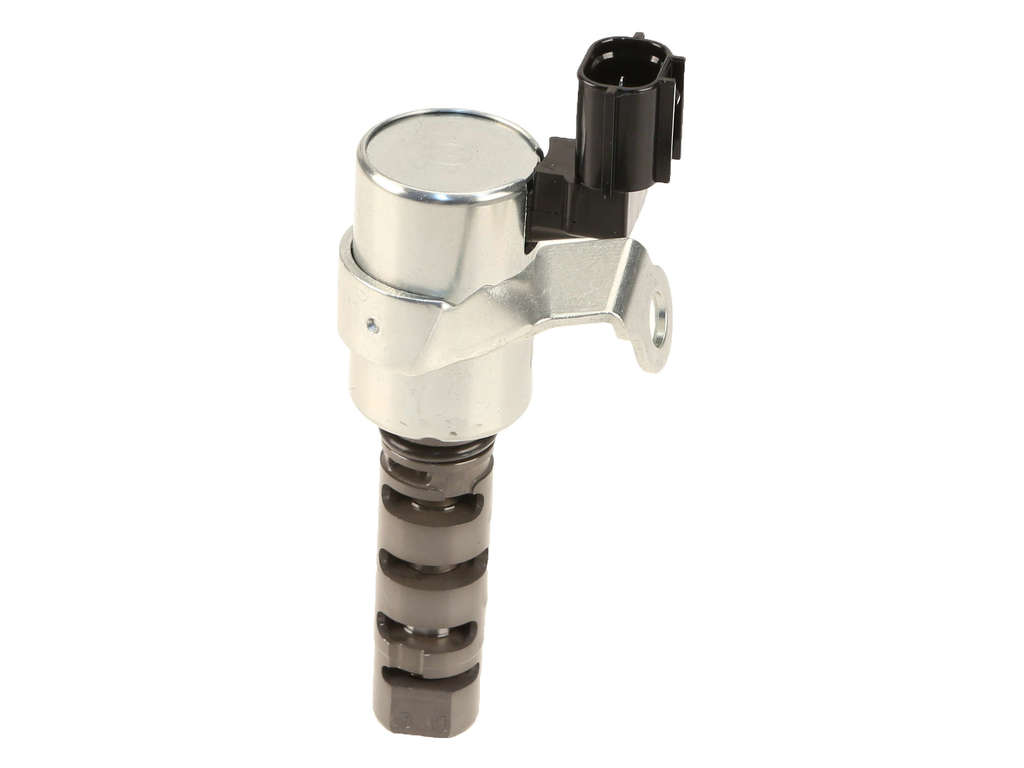
- Faulty Bank 1 VVT Solenoid / Oil Control Valve (OCV) 🔴 High Probability The solenoid is an electro-mechanical part that cycles thousands of times during operation. The internal coil winding is prone to developing an open or short circuit after many years and heat cycles, leading to an electrical failure.
How to confirm: Swap the Bank 1 (passenger side) and Bank 2 (driver side) intake VVT solenoids. They are identical parts. Clear the codes and drive the vehicle. If the code returns as P0020 (the equivalent for Bank 2), the solenoid is definitively faulty. Alternatively, measure the resistance across the two pins of the solenoid with a multimeter; it should be between 6.9 and 7.9 Ohms at 68°F (20°C). An open circuit (infinite resistance) or zero resistance confirms failure.
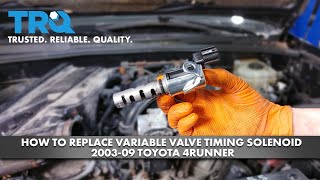
Typical fix: Replace the Bank 1 intake VVT solenoid. 🎬 Watch: Step-by-step guide to replacing the VVT solenoid Access on the passenger side (Bank 1) can be tight; some owners temporarily move the power steering fluid reservoir for better access to the 10mm bolt.
Est. part cost: $50-$180 - Damaged Wiring or Connector 🟡 Medium Probability The wiring harness in the engine bay is exposed to constant heat and vibration. Over time, the insulation on the wires leading to the OCV connector can become brittle and break, often right at the point where the wire enters the connector.
How to confirm: Visually inspect the wiring harness and connector for the Bank 1 VVT solenoid. Gently tug on the two wires at the connector to see if they are broken internally. Look for cracked insulation, corrosion in the pins, or exposed copper. Use a multimeter to check for continuity from the ECM connector to the solenoid connector.
Typical fix: Repair the broken wire or replace the connector pigtail. Soldering and heat-shrinking the new pigtail is the most durable repair.
Est. part cost: $10-$40 - Clogged VVT Solenoid / OCV Filter Screen ⚪ Low Probability If oil changes are neglected, sludge and debris can accumulate and clog the small filter screen that protects the VVT solenoid. While this more commonly causes performance/timing correlation codes (like P0011 or P0016), a severe blockage could potentially cause the solenoid to stick, though it's less likely to cause a purely electrical circuit code like P0010.
How to confirm: Remove the VVT solenoid and inspect its built-in screens. Also, locate and remove the separate OCV filter, which is under a 14mm banjo-style bolt on the cylinder head, often below the solenoid. Check it for sludge or debris.
Typical fix: Clean or replace the OCV filter screen. If the solenoid screen is clogged, cleaning may work temporarily, but replacement of the solenoid is often necessary as the debris may have damaged it internally.
Est. part cost: $5-$45
Rare But Worth Checking
- Faulty Engine Control Module (ECM): This is extremely rare. The ECM's internal driver for the OCV circuit can fail, but this should only be considered after all other possibilities, including the solenoid, wiring, and connectors, have been exhaustively tested and ruled out.
Diagnosis Steps
- Check Engine Oil: Verify the engine oil level is correct and the oil is clean. Low or sludgy oil can cause VVT system problems, though usually performance codes rather than circuit codes. If the oil is old or dirty, perform an oil change.
- Inspect Wiring: Carefully inspect the electrical connector and wiring going to the Bank 1 (passenger side) intake VVT solenoid. Look for any breaks, chafing, or corrosion right at the connector.
- Swap Solenoids: This is the most effective diagnostic step. Swap the Bank 1 (passenger) and Bank 2 (driver) intake VVT solenoids. They are identical and held by a single 10mm bolt each. Clear the codes and drive the vehicle. If the fault code changes to P0020, you have confirmed the solenoid is the problem.
- Test Solenoid Resistance: If you cannot swap the solenoids, disconnect the suspect one and measure the resistance between its two terminals with a multimeter. A reading between 6.9 and 7.9 ohms is expected. A reading of 'OL' (Open Loop) or zero indicates a failed solenoid.
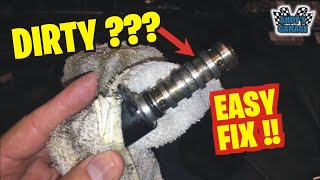
- Check OCV Filter: If the solenoid 🎬 Watch: How to locate and clean the OCV filter screens and wiring are good, check the small, banjo-bolt-style OCV filter located on the cylinder head, often below the solenoid. Remove it and check for clogging. This is good preventative maintenance but an unlikely cause for P0010.
- Check for Power at Connector: With the key on and engine off, use a multimeter to verify that one of the pins in the solenoid's connector has battery voltage. The ECM controls the ground side via a duty cycle.
Parts You'll Likely Need
- VVT Solenoid / Oil Control Valve (Bank 1 Intake)
(OEM #15340-31010 (superseded by 15340-0P010))— This is the most common component to fail electrically, causing the P0010 circuit code.
Trusted brands: Denso (OEM supplier), Aisin, Dorman, Standard Motor Products (SMP)
OEM price range: $150-$250
Aftermarket price range: $50-$90 - Oil Control Valve Filter
(OEM #15678-31010)— This small filter screen can become clogged with sludge from infrequent oil changes, restricting oil flow to the VVT solenoid. It's inexpensive and wise to replace while servicing the solenoid.
Trusted brands: Toyota (OEM)
OEM price range: $5-$15
Aftermarket price range: $5-$10 - VVT Solenoid Connector Pigtail
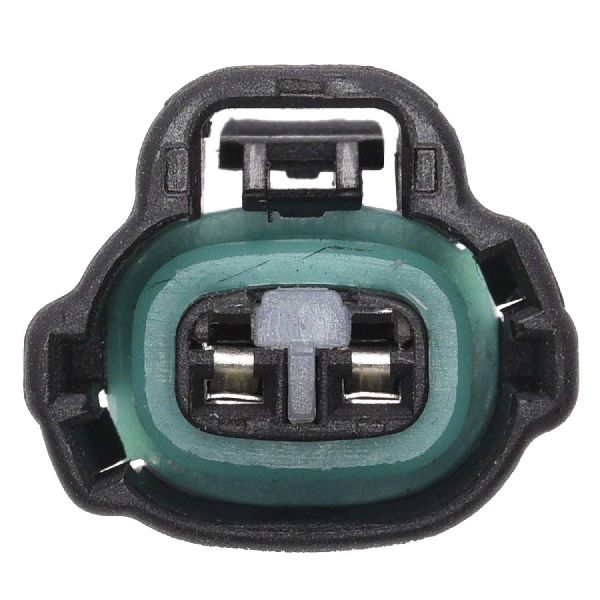
(OEM #90980-11162)— If the wiring has broken off right at the connector, replacing the pigtail is the most reliable repair.
Trusted brands: Toyota (OEM), Dorman, Standard Motor Products (SMP)
OEM price range: $20-$40
Aftermarket price range: $10-$20
Platform-Specific Known Issues
- Real-World Repair Story: Solenoid Swap Confirms Failure: A user on T4R.org with a 2004 4Runner V6 reported getting a P0010 code along with a rough idle. Following advice from the forum, they swapped the passenger side (Bank 1) and driver side (Bank 2) VVT solenoids. After clearing the codes and restarting the engine, the code immediately returned as P0020. This confirmed the solenoid originally from Bank 1 was faulty. They replaced the bad solenoid with a new Denso part, and the issue was resolved.
- Real-World Repair Story: Broken Wire at Connector: In a YouTube video, a technician diagnosed a 2008 4Runner with a P0010 code. After removing the air intake for access, the technician discovered that one of the wires going into the Bank 1 OCV connector had broken off completely, causing an open circuit. The fix was to repair the broken wire, which resolved the code without needing to replace the solenoid itself. This highlights the importance of physically inspecting the wiring 🎬 See how a broken wire can trigger the P0010 code before buying parts.
Mechanic-Grade Diagnostic Values
- VVT Solenoid (OCV) Resistance — expected: 6.9 to 7.9 Ω at 20°C (68°F). Failure: A reading of infinity (Open Loop) or near zero ohms indicates a failed internal coil.
- VVT Solenoid (OCV) Connector Waveform — expected: With the engine idling, an oscilloscope should show a square wave (duty cycle pulse).. Failure: A flat line at 0V or battery voltage indicates a lack of signal from the ECM or a dead short/open in the wiring.
- Techstream Live Data - VVT OCV Duty Cycle — expected: The ECM compares a target duty cycle (e.g., 3% to 80%) with the actual measured duty cycle.. Failure: The P0010 DTC is set when the ECM detects the actual duty cycle is stuck at 100% (short) or 3% or less (open) when it should be actively changing.
Hidden / Shadow Codes Worth Checking
- Freeze Frame Data: While not a hidden code, professional scan tools like Techstream will capture a snapshot of critical engine parameters (engine speed, coolant temp, vehicle speed, etc.) at the exact moment the P0010 fault was triggered. This data is invaluable for determining the conditions under which the fault occurs. (see via Toyota Techstream or other advanced OBD-II scanner with freeze frame data capability.)
Scan Tool Commands That Help
- Toyota Techstream: Active Test: Control the VVT System (Bank 1) / VVT CTRL B1 — This is a bidirectional command that allows the technician to manually command the VVT solenoid ON and OFF. With the engine idling, commanding the solenoid ON should cause the engine to run rough or stall. If there is no change in engine behavior, it confirms a fault in the solenoid, wiring, or ECM driver.
Wiring & Ground Locations
- Bank 1 VVT Solenoid (OCV) Circuit — The circuit runs from the Bank 1 (passenger side) VVT solenoid connector to the Engine Control Module (ECM).. This is the complete electrical path for the component flagged by P0010. Testing must be done at both ends (solenoid connector and ECM connector) to isolate a wiring break from a component failure.
- ECM Connector E6, Pins 14 & 17 — At the main Engine Control Module (ECM), which is typically located behind the glove box.. According to wiring diagrams for the 1GR-FE, the Bank 1 OCV circuit connects to these specific pins (OC1- and OC1+). This allows for testing continuity and checking for a signal directly from the ECM, which is the final step to diagnose a potential ECM failure.
OEM Part Supersession History
15340-31010→15340-0P010— Standard part revision by the manufacturer. The new part is a direct replacement.
Heads up: There are no known incompatibilities. 15340-0P010 is the correct current part for the entire 2003-2009 range.
Model Year Variations Within This Range
- 2003-2009: There are no significant variations related to the VVT system or the P0010 fault for the 4.0L V6 (1GR-FE) engine within the 2003-2009 Toyota 4Runner model range. All years use the same single VVT-i system and share the same common causes and fixes for this code.
Diagnostic Flowchart
Used vs. New Parts: Buying Guide for This Vehicle
When a used part is the smart pick: A used VVT solenoid is NOT recommended, as the primary failure mode is an internal electrical coil failure, making a used part a significant gamble. However, a used connector pigtail from a salvage yard is a good, cost-effective option if the wiring is pliable and the connector is not damaged.
Donor-vehicle mileage cap: roughly under 150000 miles for the part to have meaningful remaining life.
What to inspect on the donor part:
- For a connector pigtail, ensure the plastic is not brittle or cracked.
- Check that the wire insulation is flexible and not hardened or flaking.
- Inspect the connector pins to ensure they are clean, straight, and free of corrosion.
OEM-only on this vehicle (don't cheap out):
- Engine Control Module (ECM). A used ECM must be from an identical vehicle and may require programming, while non-OEM remanufactured units can be unreliable.
Aftermarket brands forum-validated for this vehicle:
- Denso (OEM Supplier)
- Aisin (OEM Supplier)
- NTK
Brands owners have reported issues with on this vehicle:
- While widely available, brands like Dorman are sometimes viewed by forum members as having lower quality control for electronic parts compared to OEM suppliers; use with caution if OEM/OES parts are available.
Real Owner Stories
Aggregated from forums and TSBs cited above. Mileages and costs reflect what owners reported in those sources.
2004 Toyota 4Runner 4.0L V6
Symptoms: P0010 code along with a rough idle.
What fixed it: Swapped the passenger side (Bank 1) and driver side (Bank 2) VVT solenoids. The code changed to P0020, confirming the original solenoid was bad. Replacing the faulty solenoid with a new Denso part resolved the issue.
Source hint: Real-World Repair Story: Solenoid Swap Confirms Failure
2008 Toyota 4Runner 4.0L V6
Symptoms: A P0010 code was present.
What fixed it: A technician discovered one of the wires going into the Bank 1 OCV connector had broken off completely. Repairing the broken wire fixed the code without needing to replace the solenoid.
Source hint: Real-World Repair Story: Broken Wire at Connector
Related OBD-II Codes
Frequently Asked Questions
On my 4.0L V6 4Runner, where is the Bank 1 VVT solenoid that causes code P0010?
What is the most reliable way to test the VVT solenoid without a multimeter?
I have a multimeter. What resistance reading should a good VVT solenoid have on this 4Runner?
Could a P0010 code be caused by a clogged VVT filter screen or dirty oil?
I replaced the VVT solenoid but the P0010 code came back. What's the next most likely cause?
I have a Toyota Tacoma with the 4.0L V6. Is the information for this P0010 code the same for my truck?
Helpful Videos

We Have This Part in Stock



The information in this article is provided for general reference and educational purposes only. Vehicle specifications, procedures, and part compatibility can vary by production date, trim level, and region. Always consult your vehicle's factory service manual and verify part numbers before purchasing or performing repairs. Safety-critical components such as airbags, seat belts, and braking systems should be installed by a qualified professional.
- Toyota 4Runner:
- 🎬 Helpful Videos
- 🛍️ Shop This Part
- What's Unique About the 2003-2009 Toyota 4Runner
- Symptoms You May Notice
- Most Likely Causes
- Rare But Worth Checking
- Diagnosis Steps
- Parts You'll Likely Need
- Platform-Specific Known Issues
- Mechanic-Grade Diagnostic Values
- Hidden / Shadow Codes Worth Checking
- Scan Tool Commands That Help
- Wiring & Ground Locations
- OEM Part Supersession History
- Model Year Variations Within This Range
- Diagnostic Flowchart
- Used vs. New Parts: Buying Guide for This Vehicle
- Real Owner Stories
- 2004 Toyota 4Runner 4.0L V6
- 2008 Toyota 4Runner 4.0L V6
- Related OBD-II Codes
- Frequently Asked Questions
- 🎟️ Get 5% Off