

U0121 on 2020-2025 Ford Explorer: Lost Communication With ABS Module Causes and Fixes
On a 2020-2025 Ford Explorer, code U0121 means the ABS module has stopped communicating. This is often caused by a poor ground connection (especially on 2020 models), a wiring issue, or a weak battery. A faulty ABS module is also possible but less common. This will disable ABS, traction control, and other driver aids, often triggering a cascade of other system warnings like 'Pre-Collision Assist Not Available'.
- U0121 on a 2020-2025 Explorer means the ABS module is offline, which will disable ABS, traction control, and many driver aids.
- Before suspecting an expensive module failure, thoroughly check the battery, fuses, and wiring.
- For 2020 models, the ground point G108 is a known issue (TSB 21-2017) and should be the first place you inspect.
- This is a serious safety issue. Driving without ABS and stability control significantly increases risk. Professional diagnosis is strongly recommended.
What's Unique About the 2020-2025 Ford Explorer
The sixth-generation Ford Explorer (2020-2025) and its platform-mate, the Lincoln Aviator, have a complex and interconnected network of electronic modules. A communication failure with the ABS module often creates a cascade of warnings for seemingly unrelated systems like Pre-Collision Assist, Hill Start Assist, and AWD, which rely on wheel speed data from the ABS system. Notably, early production 2020 models are subject to a Technical Service Bulletin (TSB 21-2017) for a poor ground connection at stud G108 that can cause ABS faults, making it a prime suspect for this code on those specific vehicles.
Symptoms You May Notice
- ABS warning light illuminated
- AdvanceTrac / Traction Control warning light illuminated
- Hill Start Assist Not Available warning
- Pre-Collision Assist Not Available warning
- Service AWD warning
- Cruise control is inoperative
- A 'Christmas tree' of multiple warning lights on the instrument cluster
- Brake warning light illuminated
- Immediately replacing the ABS module without first checking for the known ground issue (TSB 21-2017 on 2020 models), testing the battery, and thoroughly inspecting the wiring harness and connector.
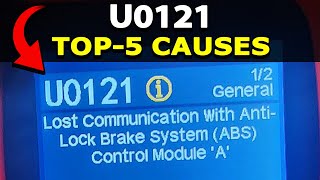
- Replacing a wheel speed sensor when no wheel-specific codes are present. The U0121 code is for the entire 🎬 Watch this overview on diagnosing a U0121 code module's communication, not a single sensor input.
Most Likely Causes
- Poor Ground Connection at G108 🔴 High Probability Ford issued TSB 21-2017 specifically for 2020 Explorers (built on or before 24-Dec-2020) due to a poor ground connection at G108 causing ABS faults. This is a known factory issue. The ground stud may have been manufactured with excessive paint or coating, preventing a solid connection.
How to confirm: Locate ground G108, which is typically on the driver's side inner fender/apron area, near the battery tray. Inspect the ground cable fasteners for looseness or corrosion. A voltage drop test from the ABS ground wire to the negative battery terminal should show less than 0.2 volts.
Typical fix: Replace and properly tighten the ground cable fasteners as per the instructions in TSB 21-2017. This involves removing the existing nut, cleaning the stud and contact surfaces to bare metal, and installing a new nut.
Est. part cost: $5-$20 - Wiring Harness or Connector Issue 🔴 High Probability The ABS module's wiring harness runs through the engine bay where it is exposed to moisture, heat, and vibration. A loose pin in the main connector or a wire chafing against another component can cause an intermittent open or short in the CAN bus circuit.
How to confirm: Visually inspect the wiring harness and connector at the ABS module for any signs of corrosion, chafed or broken wires, or bent/loose pins. Disconnect the connector and check for moisture or green/white corrosion on the pins. Wiggle the harness with the vehicle on to see if the fault can be triggered or cleared.
Typical fix: Clean the connector pins with electrical contact cleaner and a small brush. Repair any damaged wires using automotive-grade butt connectors and heat shrink. If the connector itself is damaged, it may need to be replaced with a new pigtail.
Est. part cost: $10-$100 - Weak or Failing Battery 🟡 Medium Probability Modern vehicles like the Explorer are packed with electronics that are highly sensitive to battery voltage. A weak battery can cause random communication faults between modules before it gets weak enough to cause a no-start condition.
How to confirm: Test the battery voltage with a multimeter. A healthy AGM battery should read at least 12.4V with the engine off. With the engine running, the alternator should be charging it between 13.7V-14.7V. Many auto parts stores will perform a load test for free, which is a more definitive test of battery health.
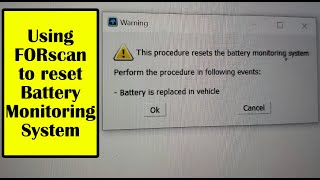
Typical fix: Replace the vehicle's battery. The Explorer uses an AGM (Absorbent Glass Mat) battery, which must be registered to the vehicle with a scan tool after installation. This resets the battery monitoring system (BMS) 🎬 See how to reset your Ford's Battery Monitoring System and ensures the charging system works correctly.
Est. part cost: $200-$350 - Faulty ABS Control Module ⚪ Low Probability While less common than wiring or power issues, the module itself can fail internally due to solder joint cracks or electronic component failure. This is a diagnosis of exclusion after all other possibilities are ruled out.
How to confirm: After confirming the module has proper power, ground, and the CAN bus wiring is intact (checking for ~60 ohms of resistance across the CAN lines with the battery disconnected), the module is the remaining culprit. A professional scan tool will show the ABS module as completely unresponsive.
Typical fix: The ABS control module/pump assembly must be replaced. The new module must be programmed to the vehicle's VIN using a dealer-level scan tool (FDRS) 🎬 Watch the Ford ABS module programming procedure and a brake bleed procedure must be performed.
Est. part cost: $600-$900
Rare But Worth Checking
- Faulty Wheel Speed Sensor: While U0121 points to a module communication failure, a shorted or faulty wheel speed sensor can sometimes disrupt the ABS module's internal operation enough to knock it off the network. This is worth considering if you also have codes specific to a single wheel speed sensor (e.g., C0031-C003A).
- Blown Fuse: A simple blown fuse for the ABS module will cut its power and cause a communication loss. Always check the fuse boxes (both in the engine bay and interior) before proceeding with more complex diagnostics.
Diagnosis Steps
- Scan for All Codes: Use an OBD-II scanner capable of reading ABS codes (like FORScan or a professional tool). Note all present codes, especially other 'U' (network) codes, and from which modules they were reported.
- Check the Battery: Test the battery's state of charge and the alternator's output. Ensure voltage is stable and above 12.4V with the engine off and 13.7-14.7V when running. Perform a load test if possible.
- Inspect Fuses: Check all fuses related to the ABS and stability control systems in the vehicle's fuse boxes (engine bay and passenger compartment).
- Inspect Ground G108 (especially 2020 models): Locate and inspect the ground connection G108 on the driver-side inner fender near the battery tray. Per TSB 21-2017, ensure it is clean, tight, and free of corrosion or paint.
- Inspect ABS Module Connector: Disconnect the battery. Locate the ABS module (part of the brake hydraulic unit) and carefully inspect its electrical connector and wiring harness for corrosion, damage, or loose pins.
- Test CAN Bus signals: This is an advanced step. With the battery disconnected, use a multimeter to check for 60 ohms of resistance between pins 6 (CAN-H) and 14 (CAN-L) on the OBD-II port. With the key on, check for approximately 2.3V on CAN-L and 2.7V on CAN-H.
- Isolate the Module: If all wiring, power, and grounds are confirmed good, the ABS module itself is the likely point of failure. This is best confirmed by a professional with advanced diagnostic tools who can attempt to communicate directly with the module.
Parts You'll Likely Need
- ABS Control Module / Pump Assembly
(OEM #L1MZ-2C219-BA)— This is the part that needs to be replaced if it has failed internally, after all other causes are ruled out.
Trusted brands: Motorcraft
OEM price range: $600-$900
Aftermarket price range: $400-$700 - AGM Battery — A weak battery is a common cause of network communication faults on modern vehicles.
Trusted brands: Motorcraft, Interstate, DieHard
OEM price range: $250-$350
Aftermarket price range: $200-$300
Related Codes That Often Appear With This One
- U0100 — Lost Communication with ECM/PCM. This can appear with U0121 if there is a widespread network failure or a problem with a primary module.
- U0140 — Lost Communication with Body Control Module. Often seen in a cluster of 'U' codes when a network problem exists, such as a bad ground or CAN bus wiring fault.
- C-codes (e.g., C0031-C003A) — Wheel speed sensor codes. If one of these is present, it could point to the root cause being a faulty sensor or its wiring, which is disrupting the ABS module.
Technical Service Bulletins (TSBs) & Recalls
- TSB 21-2017: ABS Light On With DTCs U0121, U0415, U0418 And/Or U0422: Applies to 2020 Explorer models built on or before 24-Dec-2020. Addresses a poor ground connection at G108 causing various ABS-related communication codes. The fix involves cleaning the ground stud and replacing the nut.
Platform-Specific Known Issues
- TSB 21-2017 documents a poor ground connection at G108 on 2020 Explorers built on or before December 24, 2020, which can cause ABS faults.
Mechanic-Grade Diagnostic Values
- CAN Bus Network Resistance — expected: Approximately 60 Ω. Failure: A reading of 120 Ω indicates one of the two terminating resistors is offline; a reading near 0 Ω indicates a short between the CAN High and CAN Low wires.
- CAN Bus Voltage (Key On, Engine Off) — expected: CAN High (Pin 6 at OBD-II port): ~2.7V to 3.5V. CAN Low (Pin 14 at OBD-II port): ~1.5V to 2.3V.. Failure: Voltages that are stuck high, low, or at battery/ground potential indicate a short or open on the network.
- ABS Module Power Supply Voltage — expected: Greater than 11V at the module's power pin with the key on.. Failure: Voltage below 11V indicates a power supply issue to the module, which must be fixed before condemning the module.
Hidden / Shadow Codes Worth Checking
- U0121:87: The ':87' is a Ford-specific Fault Type Code meaning 'Missing Message'. This confirms the primary code's definition, indicating that a module expected a message from the ABS module but did not receive it within the specified time. (see via Advanced scan tools like Ford's IDS/FDRS or FORScan will display these two-digit suffixes.)
Scan Tool Commands That Help
- FORScan / Ford FDRS: ABS Module Self-Test (On-Demand) — Use this after initial code scanning to command the ABS module to run an internal diagnostic. If the test fails to initiate or returns an error, it points towards a problem with the module itself or its primary power/ground connections.
- FORScan / Ford FDRS: ABS Service Bleed — This command is required after replacing the ABS hydraulic control unit (HCU) or if air is suspected to be trapped in the module. It cycles the internal pump and valves to purge air from the system, which cannot be done with a manual bleed.
- FORScan / Ford FDRS: ABS Module Configuration / PMI (Programmable Module Installation) — This is mandatory when installing a new or used ABS module. It programs the vehicle's VIN and specific configuration (As-Built data) into the replacement module, allowing it to communicate correctly with other systems like the PCM and BCM.
- FORScan: BMS (Battery Monitoring System) Reset — After replacing the vehicle's battery, this function must be used to tell the vehicle's computer that a new battery has been installed. Failing to do so can lead to improper charging and premature battery failure, which can cause various electronic faults, including communication codes.
Wiring & Ground Locations
- G108 — On the driver's side inner fender/apron area, near the battery tray.. This is a primary ground point, and Ford issued TSB 21-2017 for poor connections here on 2020 models causing ABS faults. It's a critical first check.
- ABS Module Connector C135 — The main electrical connector on the ABS module/hydraulic unit, located in the engine bay.. This is the single point of failure for all power, ground, and communication signals to the ABS module. Corrosion or loose pins here are a common cause of U0121.
- Fuse F40 (Engine Bay Fuse Box) — In the under-hood fuse box (Battery Junction Box).. This 40A fuse typically supplies power to the ABS pump motor. A failure here will cause communication loss.
- Fuse F53 (Engine Bay Fuse Box) — In the under-hood fuse box (Battery Junction Box).. This 20A fuse typically powers the ABS module valves. A failure here will cause communication loss.
- Gateway Module (GWM) — Located under the driver's side dash, often on the back of the interior fuse box.. The GWM acts as a central router for CAN bus messages. A problem with the GWM or its connections can isolate the ABS module from the rest of the network.
Real Owner Repair Stories
- Ford Explorer Forum user (2020 Ford Explorer XLT) — Multiple warning lights including ABS, traction control, pre-collision assist unavailable, and hill start assist warning. Code U0121 was present.
❌ Tried (didn't work) The dealership initially suspected a faulty ABS module.
✅ What actually fixed it A technician found a corroded wire in the harness near the ABS module connector. The wire was repaired, and all codes were cleared, resolving the issue without replacing the module.
OEM Part Supersession History
L1MC-2C219-BA→L1MZ-2C219-BA— Standard part revision and update by the manufacturer.CB5Z-2C219-C→EB5Z-2C219-B— Part revision for earlier generation Explorers, but illustrates Ford's practice of superseding ABS module part numbers.
Heads up: Using a module from a different vehicle or one with different features (e.g., with/without adaptive cruise) can cause programming to fail even if the part physically fits.
Model Year Variations Within This Range
- 2020 (built on or before Dec 24, 2020): These vehicles are specifically called out in TSB 21-2017 for a potential poor ground at G108, making this a much higher probability cause for this specific model year range.
Diagnostic Flowchart
Other Known Issues on This Vehicle
Issues unrelated to this code that are worth knowing about as an owner of this generation:
- Rear Axle Bolt Fracture 🔴 High — Common enough to trigger multiple recalls (22S27/22V255, 23S55) affecting 2020-2022 models. The bolt can fracture, leading to a loss of motive power or a rollaway condition if the parking brake is not engaged. (Ref: Recall 23S55)
- 10R60/10R80 Transmission Harsh/Delayed Shifting 🟠 Medium — Widespread issue across many Ford models with the 10-speed transmission, including the 2020-2023 Explorer. Symptoms include harsh engagements, clunky downshifts, and delayed shifts. (Ref: TSB 22-2428, TSB 23-2176)
- 360-Degree Camera System Failure (Blue/Black Screen) 🟠 Medium — A very common complaint leading to recalls (e.g., 23S23) for 2020-2023 models. The screen goes blue or black intermittently, disabling the rearview and 360-degree camera views. (Ref: Recall 23S23)
- Cracked Rear Applique Panel 🟡 Low — A cosmetic but very common issue where the black plastic panel across the liftgate develops cracks, often starting from the Ford emblem. It is a well-documented quality issue on owner forums.
- Powertrain Control Module (PCM) Software Faults 🔴 High — Affects various model years, including a recall for 2025 models where the PCM can reset, causing potential power loss or preventing the transmission from engaging Park. (Ref: Recall for 2025 models)
Used vs. New Parts: Buying Guide for This Vehicle
When a used part is the smart pick: A used ABS module can be a cost-effective option ONLY if you have access to a Ford-specific scan tool like FORScan (with an extended license) or the dealer's FDRS. The module is not plug-and-play and MUST be reprogrammed with your vehicle's VIN and As-Built data. Without the ability to perform this programming, a used module is useless.
Donor-vehicle mileage cap: roughly under 80000 miles for the part to have meaningful remaining life.
What to inspect on the donor part:
- Verify the part number on the used module matches your original part number exactly.
- Inspect the electrical connector pins for any signs of corrosion, moisture damage, or being bent.
- Ensure the hydraulic block has not been exposed to the elements and the brake line ports are capped.
- Source from a vehicle that was not in a major front-end collision, which could have damaged the module.
OEM-only on this vehicle (don't cheap out):
- ABS Control Module/Pump Assembly: While rebuilt units exist, their quality can be inconsistent. Given the critical safety function and the need for precise programming, a new OEM (Motorcraft) or a professionally remanufactured unit from a highly reputable source with a warranty is strongly recommended over a standard junkyard part.
Brands owners have reported issues with on this vehicle:
- Unbranded or 'white-box' ABS modules from online marketplaces. These often fail programming or have a short operational life.
Real Owner Stories
Aggregated from forums and TSBs cited above. Mileages and costs reflect what owners reported in those sources.
2022 Explorer ST
Symptoms: Intermittent ABS failure and loss of brakes.
What fixed it: The issue was highlighted as a sensitivity to voltage related to a weak battery.
Source hint: https://www.explorerst.org/threads/abs-not-available-sometime.7619/
2020 Explorer
Symptoms: AWD Module communication failure and multiple faults.
What fixed it: Replacing the AWD module (Part # L1MZ-7P238-A).
Source hint: https://www.explorerst.org/threads/6-faults-and-awd-module.3082/page-4
Related OBD-II Codes
Frequently Asked Questions
Does TSB 21-2017 apply to my 2020 Ford Explorer?
Where is the G108 ground located on the 2020 Explorer?
Why did my Explorer display 'Hill Start Assist Not Available' and 'Service AWD' at the same time?
Do I need to do anything special after replacing the battery to fix communication codes?
Can a weak battery cause U0121 even if my Explorer still starts?
Is there a recall for the ABS module communication issue?
Helpful Videos
![Avoid Expensive Shop Repairs: DIY Reset the Ford Vehicle Battery Monitoring System [BMS]](https://img.youtube.com/vi/QTtb7rKaZTE/mqdefault.jpg)

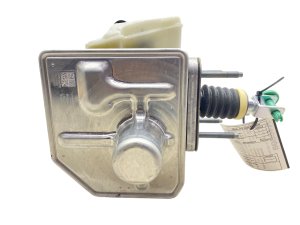
Used OEM Parts in Stock


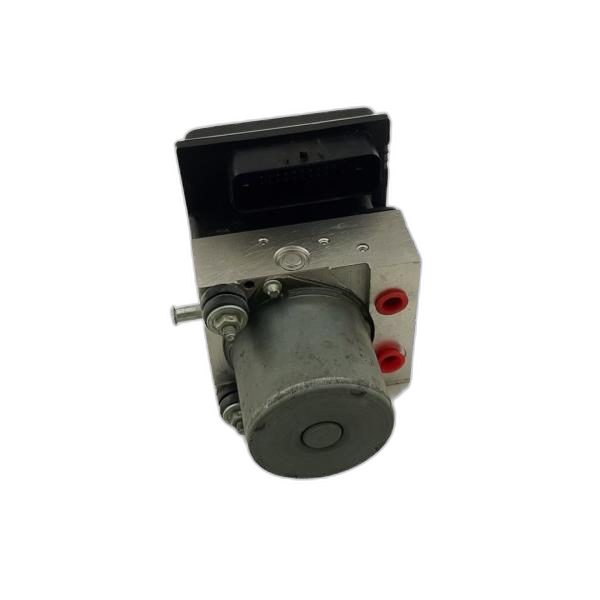
New Aftermarket Parts Available
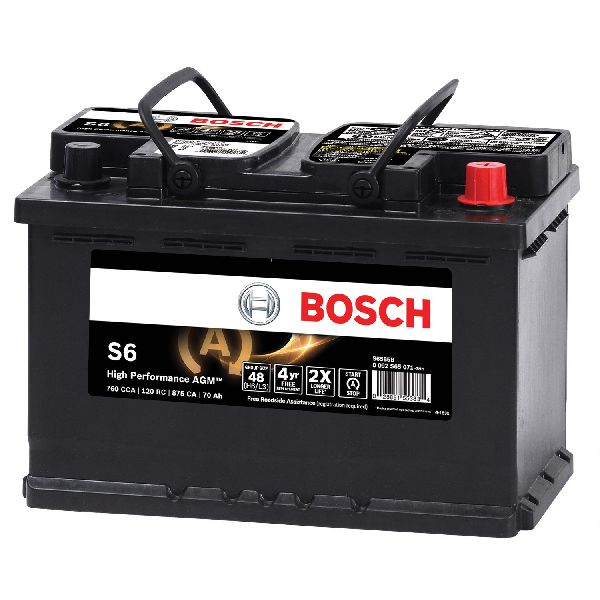

The information in this article is provided for general reference and educational purposes only. Vehicle specifications, procedures, and part compatibility can vary by production date, trim level, and region. Always consult your vehicle's factory service manual and verify part numbers before purchasing or performing repairs. Safety-critical components such as airbags, seat belts, and braking systems should be installed by a qualified professional.
- Ford Explorer:
- 🎬 Helpful Videos
- 🛍️ Shop This Part
- What's Unique About the 2020-2025 Ford Explorer
- Symptoms You May Notice
- Most Likely Causes
- Rare But Worth Checking
- Diagnosis Steps
- Parts You'll Likely Need
- Related Codes That Often Appear With This One
- Technical Service Bulletins (TSBs) & Recalls
- Platform-Specific Known Issues
- Mechanic-Grade Diagnostic Values
- Hidden / Shadow Codes Worth Checking
- Scan Tool Commands That Help
- Wiring & Ground Locations
- Real Owner Repair Stories
- OEM Part Supersession History
- Model Year Variations Within This Range
- Diagnostic Flowchart
- Other Known Issues on This Vehicle
- Used vs. New Parts: Buying Guide for This Vehicle
- Real Owner Stories
- 2022 Explorer ST
- 2020 Explorer
- Related OBD-II Codes
- Frequently Asked Questions
- 🎟️ Get 5% Off