

OBD-II Code U0415: Invalid Data Received From Anti-Lock Brake System (ABS) Control Module
What U0415 means, why it triggers, and how to fix it
- Code U0415 disables critical safety systems like ABS and stability control, increasing stopping distances and skid risk.
- Always scan all modules for secondary codes; a specific wheel speed sensor 'C' code (like C0035) pinpoints the exact root cause 80% of the time.
- Check your brake fluid level and battery voltage (needs 12.4V+ resting) before paying for advanced diagnostics.
- Do not replace the $800+ ABS module without first checking for manufacturer Technical Service Bulletins (TSBs), as a simple software update often fixes this code.
What Does U0415 Mean?

Code U0415 means your car's Powertrain Control Module (PCM) or another module is receiving invalid data from the Anti-Lock Brake System (ABS) module. The ABS module is communicating over the CAN bus network, but the data it broadcasts is corrupt, implausible, or illogical to the receiving modules (like the power steering, transmission, or instrument cluster).
Technical definition: Invalid Data Received From Anti-Lock Brake System (ABS) Control Module. This generic OBD-II network code sets when the PCM or other control modules detect that a signal from the ABS control module falls outside the expected range or fails a plausibility check. The ABS module is actively broadcasting, but the data packets are flagged as unreliable.
🎬 Watch: A quick overview of U0415 causes and common fixes.Can I Drive With U0415?
Yes, But With Caution. You can drive the vehicle, but do so with extreme caution. Your Anti-Lock Braking System (ABS) and traction/stability control are disabled, significantly reducing safety. In a panic stop, your wheels lock up, causing a loss of steering control. On wet or icy roads, the risk of skidding is much higher. Your normal hydraulic brakes still function, but stopping distances increase. Limit driving to reaching a repair shop.
Common Causes

- Damaged Wiring or Poor Connections (Very Common) — Wires leading to the ABS module or wheel speed sensors fray, corrode, pinch, or suffer damage from road debris. Common problem areas include harnesses under door sill plates, behind the dashboard, and near suspension components where wires rub or suffer water intrusion.
- Faulty Wheel Speed Sensor or its Circuit (Very Common) — The ABS module relies on data from wheel speed sensors. If a sensor fails, its wiring breaks, or the connector loosens, it sends bad data to the ABS module. This almost always sets a separate, specific 'C' code (e.g., C0035) pointing directly to the problematic sensor circuit.
- Damaged, Rusty, or Debris-Covered ABS Tone Ring (Common) — The wheel speed sensor reads a notched tone ring on the axle or wheel hub. If this ring cracks, loses teeth, or accumulates excessive rust, the sensor generates an erratic signal. A failing wheel bearing also causes the tone ring to wobble, creating inconsistent data.
- Low Battery Voltage or Bad Ground (Common) — Modern vehicles are highly sensitive to voltage drops. An old, weak battery or a corroded ground wire causes unpredictable communication errors between modules, triggering a U0415 code. Always verify battery health and check main ground connections early in the diagnosis.
- ABS Module Software/Firmware Issue (Common) — A software glitch within the ABS or Power Steering Control Module (PSCM) frequently triggers this code. Dealership software updates resolve this, a known issue documented in many Technical Service Bulletins (TSBs).
- Low Brake Fluid Level (Less Common) — On certain GM trucks, low brake fluid sloshes during turns or stops. This momentarily trips the level sensor, sending data that other modules interpret as invalid, setting the U0415 code.
- Vehicle Network Configuration Mismatch (Less Common) — After replacing a major component like a steering rack or ABS module, the new part requires electronic configuration. Skipping this re-learn procedure causes the module to send mismatched data, triggering the code.
- Failed ABS Control Module (Rare) — Complete failure of the ABS module hardware is the least common cause. Internal circuit board damage or processor failure corrupts data transmission. Rule out wiring, power supply, sensors, and software before condemning the module.
Symptoms

- ABS Warning Light On — The primary indicator. The dashboard light for the Anti-Lock Brake System illuminates immediately when the fault is detected.
- Traction/Stability Control Light On — Because these systems rely on the same wheel speed data as the ABS, their warning lights (often a skidding car icon) illuminate simultaneously.
- ABS and Stability Control are Disabled — Wheels lock up during a hard stop, and the vehicle experiences more tire slippage on wet or icy roads because the safety systems are offline.
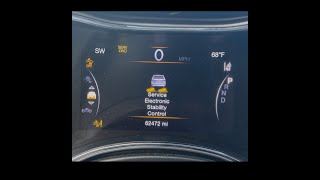
- Multiple Warning Lights or Messages — The dashboard displays messages like 'Service Trailer Brake', 'Service AdvanceTrac', or 'Hill Start Assist Not Available', depending on the manufacturer.
- Hard Steering or Steering Assist Reduced Message — On vehicles with electric power steering, the Power Steering Control Module (PSCM) relies on ABS speed data. Invalid data reduces steering assist, making the wheel harder to turn.
- Cruise Control Inoperative — The cruise control system requires accurate wheel speed data from the ABS module and disables itself when this code is present.
Diagnostic Flowchart
Tap your situation to follow the diagnostic path that matches what you're seeing on this code.
Common Fixes & Costs
- Repair Damaged Wiring or Connectors — Parts: $10-$50, Labor: $150-$450, ~1.5 hr book time (Intermediate)
- Replace a Faulty Wheel Speed Sensor
— Parts: $35-$150 per sensor, Labor: $100-$200 (per axle), ~1.0 hr book time
(DIY)
Ford F-150 (2018-2020): OEM Motorcraft BRAB-514 (Alt: Standard Motor Products ALS3138 ($16), Holstein 2ABS3178 ($18), Delphi SS21794)
Chevy/GMC Silverado/Sierra 1500 (2014-2018): OEM ACDelco 23498355 (Alt: NTK (Varies, ~$29), Walker 241-1158, Standard Motor Products ALS2635)
Jeep Grand Cherokee (2016-2021): OEM Mopar 68250893AA (Front), Mopar 5154230AD (Rear) (Alt: Standard Motor Products ALS2064 ($39), Various on eBay/Amazon) - Replace a Weak or Dead Battery — Parts: $150-$350, Labor: $50-$100 (includes registration on some vehicles), ~0.5 hr book time (DIY)
- Update ABS/PSCM Module Software — Parts: $0, Labor: $100-$250 (dealership labor charge), ~1.0 hr book time (Professional)
- Replace the ABS Control Module
— Parts: $800-$1,500+ for a new part, or $150-$400 for a repair service., Labor: $150-$300 (plus programming/coding fee), ~2.0 hr book time
(Professional)
Ford F-150 (2019-2020): OEM HL3Z-2C215-C (Varies by configuration) (Alt: Remanufactured units available, programming required.)
Chevy/GMC Silverado/Sierra 1500 (2014-2018): OEM GM 23223284, 84256777, 84384400 (Varies by year/options) (Alt: ACDelco 84778377 (Remanufactured), Dorman (Varies))
Jeep Grand Cherokee (2016-2021): OEM Mopar 68262200AA, 68547566AC (Varies by year/options) (Alt: Remanufactured units available, programming required.)
DIY vs Professional
- Repair Damaged Wiring or Connectors — Beginner:
Tools: Multimeter, wire strippers, crimpers, solder, heat shrink tubing, quality electrical tape. - Replace a Faulty Wheel Speed Sensor — Beginner:
Tools: Jack and jack stands, socket/wrench set, torque wrench, penetrating oil. - Replace a Weak or Dead Battery — Beginner:
Tools: Socket/wrench set. Some modern vehicles require a scan tool to register the new battery with the vehicle's computer. - Update ABS/PSCM Module Software — Beginner:
Tools: Manufacturer-specific diagnostic tool (e.g., Ford FDRS, GM GDS2) and a subscription to their service portal. - Replace the ABS Control Module — Beginner:
Tools: Socket/wrench set, flare nut wrenches (for brake lines), scan tool with programming capabilities, brake bleeding equipment.
Used vs. New Parts: Buying Guide
When a used part is worth it: For a wheel speed sensor, a used OEM part from a low-mileage vehicle is a viable option if the new OEM part is expensive. Avoid used sensors from high-mileage or rust-belt vehicles due to wear and corrosion.
Donor-vehicle mileage cap: roughly under 60000 miles for the part to have meaningful remaining life.
Donor quality checklist:
- Verify the donor vehicle's mileage and history if possible.
- Inspect the sensor and its wiring for any signs of physical damage, cracking, or corrosion.
- Match the part number exactly, as even sensors that look identical have different internal calibrations.
Decision logic:
- If The cost of a new, quality aftermarket or OEM sensor is under $100 → buy new. The small savings aren't worth the risk and labor of a potential repeat failure.
- If The vehicle is old and budget is the top priority → a used sensor from a reputable salvage yard with a short warranty is acceptable.
- If The sensor is integrated into the wheel hub/bearing assembly → always buy a new, quality assembly. The labor is too intensive to risk using a used bearing.
Warranty tradeoff: Used sensors typically have a 30-90 day warranty at best. New aftermarket sensors often have a 1-year to limited lifetime warranty. New OEM parts carry a 1-2 year warranty.
Worst-case if a used part fails: $150-$300 if a used sensor fails after installation, requiring repeat labor for diagnosis and replacement.
What Happens If You Wait — Timeline
- Immediate: ABS, Traction Control, and Stability Control disable. Conventional brakes work, but wheels lock up in a panic stop. (MPG impact: 0%% · Added cost: $0 (but safety risk is significantly increased))
- 1-4 weeks: A faint hum or growl from a failing wheel bearing becomes noticeable. Moisture intrusion worsens wiring corrosion. (MPG impact: 0%% · Added cost: $100-$200 (Diagnostic fee to identify the now-worsened problem))
- 1-3 months: Wheel bearing noise progresses to loud grinding. Excessive play damages the wheel speed sensor. Wiring corrosion spreads. (MPG impact: 0-1%% · Added cost: $300-$600 (Cost of a new tire and potential damage to the sensor, in addition to the original repair))
- 3+ months: Catastrophic wheel bearing failure seizes the hub assembly. The wheel separates from the vehicle in worst-case scenarios. (MPG impact: 0-2%% · Added cost: $1,000-$2,500+ (Cost to replace a damaged hub assembly, axle, and potentially brake components))
Cost of Not Fixing It
- Immediate: Loss of Anti-Lock Brakes (ABS), Traction Control, and Stability Control. This significantly increases the risk of losing control and having an accident, especially during emergency braking or in poor weather conditions. (Added cost: Potential for accidents, injury, and increased insurance premiums.)
- Weeks to Months: Other systems relying on wheel speed data malfunction, such as electric power steering or cruise control. Continued driving on a bad wheel bearing leads to catastrophic hub failure. (Added cost: $500-$1500+ if a failing wheel bearing is ignored and leads to hub and axle damage.)
- Long-Term: Ignoring the warning light masks new, more serious brake system problems. It guarantees a failed state safety inspection and significantly reduces vehicle resale value. (Added cost: Cost of a failed inspection, potential denial of an insurance claim, and reduced vehicle resale value.)
Diagnosis Steps

- Read All Trouble Codes from All Modules
Use a high-quality OBD-II scanner to read codes from all vehicle modules. Look for 'C' codes for wheel speed sensors (like C0035) or 'U' codes for communication (like U0121). U0415 is usually a secondary code; the other codes pinpoint the root cause.
Tools: OBD-II Scanner (with All-Module capability) (Beginner) - Check Battery, Grounds, and Fuses
Ensure the battery is fully charged. Use a multimeter to verify at least 12.4 volts with the engine off and 13.7-14.7 volts running. Inspect the main battery ground and the ABS module chassis ground for corrosion. Visually inspect all ABS-related fuses.
Tools: Multimeter, Owner's Manual (for fuse locations) (Beginner) - Inspect Brake Fluid Level
Check the brake fluid reservoir. If the fluid is near the 'MIN' line, top it off with the correct fluid specified in the owner's manual. Low fluid is a known cause for this code on many GM vehicles.
Tools: None (Brake fluid if needed) (Beginner) - Check for Technical Service Bulletins (TSBs)
Search online for Technical Service Bulletins related to code U0415 for your specific vehicle. Manufacturers release bulletins for known issues, often pointing directly to a software update or specific wiring repair.
Tools: Internet Access (Intermediate) - Visually Inspect Wiring and Tone Rings
Look for damage to wiring harnesses. Check wires going to each wheel speed sensor for rubbing against suspension parts. Inspect the main ABS module connector for corrosion. Examine the ABS tone rings on the axles for cracks, missing teeth, or heavy rust.
Tools: Flashlight, Jack and Jack Stands (Intermediate) - Analyze Live Data from Wheel Speed Sensors
Use a scan tool's live data function to view output from all four wheel speed sensors simultaneously. Drive slowly in a straight line (5-10 MPH). All four sensors must read the exact same speed. An erratic or zero reading identifies the problem circuit.
Tools: Advanced Scan Tool (with live data) (Advanced) - Check CAN Bus Resistance
Disconnect the battery. At the OBD-II port, measure resistance between Pin 6 (CAN High) and Pin 14 (CAN Low). A healthy CAN bus reads exactly 60 ohms. A 120-ohm reading indicates a broken wire or missing terminating resistor. Zero ohms indicates a short.
Tools: High-Impedance Multimeter, Vehicle Wiring Diagram (Advanced) - Test Wheel Speed Sensor Resistance (Passive Sensors)
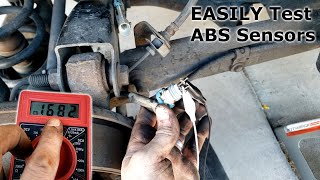
For older 2-wire passive sensors, disconnect the sensor and measure resistance across its pins. Typical values are 800-2,500 ohms. Infinite or zero resistance indicates a failed sensor. Note: This test does not work for modern active sensors.
Tools: Multimeter, Service Manual (Advanced) - Analyze Wheel Speed Sensor with an Oscilloscope
Connect an oscilloscope to the sensor's signal wire. Spin the wheel by hand to view the waveform. Dropouts, noise, or misshapen waves indicate a faulty sensor or damaged tone ring.
Tools: Oscilloscope, Back-probe Pins, Breakout Leads (Professional)
When This Code Triggers (Freeze-Frame Conditions)
- Vehicle Speed: 15-55 mph (During normal driving, especially when braking or turning)
- System Voltage: 11.5-14.5V (Triggers at low voltage during startup or if the alternator fails)
- Wheel Speed Sensor Readings: Mismatch detected (One sensor reading differs significantly from the others)
- Brake Pedal Status: On or Off (Sets during braking if a sensor signal is lost or erratic)
Related Codes
- U0121 — Lost Communication With ABS Module. U0415 means data is bad; U0121 means the module is offline. If the scan tool cannot connect to the ABS module, it is a U0121 condition (power, ground, or CAN bus failure).
- C0031 - C0050 — Specific codes for wheel speed sensor circuits. U0415 is usually a secondary code caused by a primary wheel speed sensor fault. Fixing the 'C' code resolves the U0415.
- P0500 — Vehicle Speed Sensor Malfunction. VSS data comes from the ABS module. If the ABS module sends invalid data (U0415), the PCM flags the vehicle speed data as unreliable, triggering P0500.
- U0420 — Invalid Data Received From PSCM. The ABS and PSCM modules work together. A U0415 in the PSCM and a U0420 in the ABS module frequently appear as a pair, indicating a mutual communication problem.
Climate & Environmental Factors
- High Humidity and Rain: Moisture seeps into unsealed connectors or cracked wiring insulation, causing corrosion. This increases resistance, corrupts data signals, and triggers the U0415 code.
- Cold Weather: Extreme cold makes wire insulation brittle and susceptible to cracking in flexing harnesses. A weak battery's performance degrades in the cold, dropping voltage during startup and causing communication glitches.
- Salt Belt Regions: Road salt aggressively corrodes wiring, connectors, ground points, and ABS tone rings. It accelerates under-vehicle degradation, making wiring and sensor failures highly common.
How to Talk to a Mechanic About This Code
Say this: "I have a U0415 code and my ABS light is on. I checked for other codes, and there are no specific wheel speed sensor 'C' codes. Please check for TSBs, inspect the wheel speed sensor wiring, and verify power/ground at the ABS module before recommending a replacement."
This signals you are an informed customer and directs the shop to follow a logical diagnostic path.
Avoid saying:
- 'My ABS light is on, can you just fix it?'
- 'I think I need a new ABS computer.'
- 'Just do whatever it takes to get the light off.'
Questions to ask before authorizing the repair:
- Did you find any other codes in any other modules?
- Did you see the wheel speed sensor data drop out on the live data scan?
- Have you ruled out all wiring, power, ground, and software issues first?
- Is there a Technical Service Bulletin for this issue?
- What is the warranty on this specific repair and part?
Where to Take It: Dealer vs Independent vs Chain
- Dealer:
Recommended if a known TSB points to a software update or if the vehicle is under warranty.
Best for: Vehicles under warranty., Known software issues that require a TSB-directed update (common on Ford, GM)., Complex electrical issues where manufacturer-specific diagnostic tools are required.
Downsides: Highest labor rates., May default to replacing an expensive module when a software flash or wiring repair suffices. (Typical cost: +50% vs. baseline) - Independent Shop:
Best first choice for most out-of-warranty vehicles. They diagnose and fix the vast majority of U0415 causes.
Best for: Out-of-warranty vehicles., Diagnosing and repairing common causes like bad wheel speed sensors, damaged wiring, or battery issues., More affordable diagnostic fees and labor rates.
Downsides: May not have the expensive, manufacturer-specific tools to perform software updates., Quality varies, so choose a shop with good reviews and ASE-certified technicians. (Typical cost: +0% vs. baseline) - Chain Shop:
Acceptable for a simple battery test, but avoid for diagnosing an unknown U0415 fault due to limited diagnostic capabilities.
Best for: Simple, clear-cut repairs like a battery replacement or a single, easily accessible wheel speed sensor replacement.
Downsides: Technician skill varies widely., Generally not equipped for in-depth electrical or communication network diagnostics., Higher risk of misdiagnosis and being sold unnecessary parts. (Typical cost: -10% vs. baseline)
When to Walk Away From the Repair
If the estimated repair cost exceeds 40-50% of your car's private-party value, consider selling or trading it in.
- Car worth $5000, fix is $2200: Walk away. The repair cost is nearly half the car's value, and an ABS light significantly hurts resale value.
- Car worth $15000, fix is $450: Fix it. This is a relatively inexpensive repair on a more valuable vehicle and is critical for safety.
- Car worth $3000, fix is $1800: Walk away. The repair cost is a huge percentage of the car's value. It makes no financial sense.
What Scan Tool You Need for This Code
Minimum: A scanner that reads and clears ABS codes and views live data for all four wheel speed sensors.
A basic engine-only code reader cannot communicate with the ABS module or view critical live wheel speed data.
Budget: BlueDriver Pro (~$99) — Connects via Bluetooth. Reads ABS codes and displays live data from all four wheel speed sensors simultaneously.
Mid-range: Foxwell NT510 Elite / NT630 Plus (~$150) — Handheld unit with bidirectional controls to activate the ABS pump for bleeding procedures.
Professional: Autel MaxiCOM MK808S / MK808BT Pro (~$450-550) — Full-featured tablet with advanced functions for module coding and programming.
Rent vs buy: Buying a tool like the BlueDriver is a better investment for DIY diagnosis than relying on free auto parts store scans.
How to Clear the Code After You Fix It
- Fix the underlying mechanical or electrical fault.
- Use a compatible OBD-II scan tool to clear the U0415 code from the ABS module and any other related modules.
- Perform a drive cycle to allow the vehicle's computers to verify the repair.
Drive cycle (~15 minutes): After clearing the codes, start the engine and let it idle for 2-3 minutes. Drive the vehicle at a mix of city speeds (25-45 mph), including several slow, complete stops. Then, drive at a steady highway speed (55-60 mph) for at least 5 minutes. The warning lights should remain off. Some vehicles require a specific steering wheel calibration or sensor re-learn procedure after repair.
Readiness monitors affected: This code does not affect emissions readiness monitors like Catalyst or O2 sensors.
Watch out for:
- Clearing the code without fixing the root cause results in the code returning almost immediately.
- Forgetting to perform a required re-learn procedure after replacing a component like a steering angle sensor or ABS module.
- Using a basic code reader that cannot access or clear codes from the ABS control module.
Will This Fail Emissions / State Inspection?
No — by itself this code doesn't fail OBD inspection (but it can keep readiness monitors from setting, which causes a separate fail).
- California: An ABS light does NOT cause a failure of the emissions-only smog check. However, if the Check Engine Light is also on, it is an automatic failure.
- New York: An illuminated ABS warning light IS grounds for failure of the annual safety inspection.
- Texas: An illuminated ABS warning light does NOT cause a failure of the state safety inspection. The regular service brakes must function correctly, but the ABS system itself is not a point of failure.
Most Commonly Affected Vehicles
- Ford F-150 (2018-2022) — Often caused by a software glitch. Look for TSB 22-2214 or SSM 50276, especially on 2021 models where a U0415:86 code causes the loss of reverse camera guidelines. Damaged wheel speed sensor wiring is also common.
- Chevrolet / GMC Silverado / Sierra 1500/2500/3500 (2014-2020) — Frequently caused by non-module issues. TSB PIT5490B points to a low brake fluid level. TSB PIT5457D indicates corroded wires under door sill plates, and TSB PIT5288H points to a pinched dashboard harness.
- Jeep Grand Cherokee (2011-2022) — Often appears with other communication codes. The transfer case control module (TCCM) under the passenger seat is a known failure point that floods the CAN bus with bad data.
- Ram 1500 / 2500 / 3500 (2013-2022) — Appears with a dashboard lit up with multiple warnings. Common causes include a weak battery, a faulty brake light switch, or damaged wiring harnesses around the front differential.
- Ford Escape / Bronco Sport / Maverick (2020-2022) — Commonly caused by a software issue in the Power Steering Control Module (PSCM). Ford TSB SSM 51437 directs technicians to perform a PSCM software update.
- Volkswagen Jetta / Golf (2012-2018) — Triggered by a failing wheel speed sensor. The EPC light illuminates along with ABS and traction control lights. ABS module repair services are a cost-effective alternative to replacement.
- Subaru Outback / WRX / Legacy (2013-2020) — A faulty or misadjusted brake light switch is a common cause. It sends conflicting network data, leading to a cascade of warning lights and setting the U0415 code.
- Nissan Murano / Altima (2010-2019) — Triggered by an unusual vehicle speed signal from the ABS actuator. Diagnosis involves checking the entire wheel speed sensor and ABS actuator circuit.
Manufacturer-Specific Notes
- General Motors (Chevrolet/GMC): On many GM trucks, U0415 and a 'Service Trailer Brake' message trigger due to low brake fluid, documented in TSB PIT5490B. Always check and top off brake fluid first.
- Ford: On late-model F-150s, U0415:86 is often a software glitch requiring a dealer ABS module reprogram per TSB 22-2214. A common symptom is the loss of backup camera guidelines.
- Stellantis (Jeep/Ram/Chrysler): On Jeep Grand Cherokees, U0415 is a symptom of a failing Transfer Case Control Module (TCCM). On Ram trucks, a weak battery or faulty brake light switch causes a cascade of warnings.
- Subaru: A faulty brake light switch triggers U0415 along with ABS, traction control, and hill assist lights. The switch sends conflicting data about brake application.
Real Owner Stories
2015 Chevy Silverado with 'Service Trailer Brake' message
Owner reported 'Service Trailer Brake' message and ABS light. Scan tool showed U0415.
What they tried:
- Initially suspected a faulty trailer brake controller or wiring at the rear of the truck.
Outcome: Following GM TSB PIT5490B, the owner topped off the brake fluid to the 'MAX' line, resolving the issue completely.
Lesson: Always check brake fluid level first on GM trucks. A low level causes fluid to slosh and momentarily trip the sensor, which the system flags as invalid data.
2021 Ford F-150 with 25K miles
Driver experienced 'Reverse Brake Assist Unavailable' and lost backup camera guidelines. Code U0415:86 stored.
What they tried:
- Owner considered replacing the camera or IPMA module.
Outcome: Dealership performed an ABS module software update per TSB 22-2214, fixing the problem under warranty.
Lesson: Check TSBs for specific symptoms; the fix for a communication code is often a simple software update, not a hardware replacement.
2015 Ford F-150 with 129K miles
Intermittent 'Service AdvanceTrac' warnings and ABS lights. Only code U0415 found.
What they tried:
- Cleaned and applied dielectric grease to the connector near the spare tire.
Outcome: Owner replaced a single wheel speed sensor with a damaged wire, resolving the issue.
Lesson: Visually inspect wheel speed sensor wiring at all four corners, even without a specific 'C' code. The root cause is very often a damaged sensor circuit.
2016 Jeep Grand Cherokee
Dashboard lit up with multiple warnings. Codes U0415 and U0121 present.
What they tried:
- Checked battery and wheel speed sensors, which all tested good.
Outcome: Shop disconnected the Transfer Case Control Module (TCCM), clearing other communication codes. Replacing the TCCM resolved U0415.
Lesson: Multiple communication codes often point to a single module poisoning the network. Disconnecting modules one by one isolates the culprit.
How to Prevent This Code From Triggering
- Periodically clean and protect electrical connectors. (Every 2-3 years or during any brake/wheel work.) — Apply dielectric grease to wheel speed sensor connectors to prevent moisture and salt corrosion.
- Maintain a healthy, fully charged battery. (Monthly check, replace every 3-5 years.) — Regularly test the battery and avoid short trips to prevent voltage drops that trigger U0415.
- Inspect and clean ABS tone rings during brake service. (Whenever brakes are replaced.) — Clean brake dust and rust buildup with a wire brush to prevent erratic sensor signals.
- Secure and inspect under-vehicle wiring harnesses. (Annually or during oil changes.) — Visually check that wiring harnesses are secured and not rubbing against suspension components.
Frequently Asked Questions
What is the most common misdiagnosis for a U0415 code?
The most common mistake is immediately condemning the ABS control module. U0415 is usually a symptom of a cheaper issue, like a faulty wheel speed sensor, damaged wiring, or a weak battery. Always rule out these simpler components before considering a module replacement.
My mechanic says I need a new ABS module. What should I ask?
Ask if they performed a full-system scan and found any 'C' codes for wheel speed sensors. Verify they inspected the wiring, tested power/ground connections, and checked for Technical Service Bulletins (TSBs). A software update is often the required fix.
Can a bad wheel bearing cause a U0415 code?
Yes, indirectly. A worn wheel bearing causes excessive movement in the wheel hub. This wobble damages the fragile wheel speed sensor or ABS tone ring, generating the erratic signal that triggers U0415.
What does the suffix code like ':86' in U0415:86 mean?
The two digits after the main code are a Failure Type Byte (FTB) that specifies the fault nature. For example, ':86' means 'Signal Invalid'. These suffixes help technicians pinpoint specific TSBs or known issues, like the software glitch on certain Ford F-150s.
Will clearing the code make it go away?
Clearing the code with a scanner turns off the light temporarily, but it returns almost immediately if the underlying problem remains. The code indicates an active fault requiring physical repair or a software update.
Can I use a cheaper aftermarket wheel speed sensor?
Using cheap aftermarket sensors is a gamble because they often lack precise OEM specifications. This leads to incorrect readings and repeat U0415 codes. Always use a quality OEM or OEM-equivalent part for critical safety components.
How much does it cost to diagnose a U0415 code?
Most repair shops charge a diagnostic fee ranging from $100 to $200. This covers the technician's time to scan modules, analyze live data, and pinpoint the cause. Shops often apply this fee toward the final repair cost if you authorize the work.
Key Takeaways
- Code U0415 disables critical safety systems like ABS and stability control, increasing stopping distances and skid risk.
- Always scan all modules for secondary codes; a specific wheel speed sensor 'C' code (like C0035) pinpoints the exact root cause 80% of the time.
- Check your brake fluid level and battery voltage (needs 12.4V+ resting) before paying for advanced diagnostics.
- Do not replace the $800+ ABS module without first checking for manufacturer Technical Service Bulletins (TSBs), as a simple software update often fixes this code.
Helpful Videos


The information in this article is provided for general reference and educational purposes only. Vehicle specifications, procedures, and part compatibility can vary by production date, trim level, and region. Always consult your vehicle's factory service manual and verify part numbers before purchasing or performing repairs. Safety-critical components such as airbags, seat belts, and braking systems should be installed by a qualified professional.
- 🎬 Helpful Videos
- What Does U0415 Mean?
- Can I Drive With U0415?
- Common Causes
- Symptoms
- Diagnostic Flowchart
- Common Fixes & Costs
- DIY vs Professional
- Used vs. New Parts: Buying Guide
- What Happens If You Wait — Timeline
- Cost of Not Fixing It
- Diagnosis Steps
- When This Code Triggers (Freeze-Frame Conditions)
- Related Codes
- Climate & Environmental Factors
- How to Talk to a Mechanic About This Code
- Where to Take It: Dealer vs Independent vs Chain
- When to Walk Away From the Repair
- What Scan Tool You Need for This Code
- How to Clear the Code After You Fix It
- Will This Fail Emissions / State Inspection?
- Most Commonly Affected Vehicles
- Manufacturer-Specific Notes
- Real Owner Stories
- 2015 Chevy Silverado with 'Service Trailer Brake' message
- 2021 Ford F-150 with 25K miles
- 2015 Ford F-150 with 129K miles
- 2016 Jeep Grand Cherokee
- How to Prevent This Code From Triggering
- Frequently Asked Questions
- What is the most common misdiagnosis for a U0415 code?
- My mechanic says I need a new ABS module. What should I ask?
- Can a bad wheel bearing cause a U0415 code?
- What does the suffix code like ':86' in U0415:86 mean?
- Will clearing the code make it go away?
- Can I use a cheaper aftermarket wheel speed sensor?
- How much does it cost to diagnose a U0415 code?
- Key Takeaways
- 🎟️ Get 5% Off