

U0101 on 2010-2017 GMC Terrain: Lost Communication with TCM Causes and Fixes
This code means the Transmission Control Module (TCM) has stopped communicating with other vehicle computers. On the 2010-2017 Terrain and its platform-mate, the Chevrolet Equinox, the most common causes are wiring or connector problems. Specifically, corrosion in the X411 connector under the rear of the vehicle, poor pin fitment at the transmission connector and underhood fuse block, or chafed wiring harnesses are more frequent culprits than a failed TCM itself.
- Code U0101 on a 2010-2017 GMC Terrain is most often a wiring or connector problem, not a bad TCM.
- Before replacing any parts, thoroughly inspect the X411 connector under the rear of the vehicle for corrosion.
- Also check the main harness connector at the transmission and the underhood fuse block for loose or damaged pins.
- Due to the risk of unpredictable shifting, it is unsafe to drive the vehicle until this issue is repaired.
- Diagnosing this code can be complex and may require professional assistance to avoid damaging other electronic components.
What's Unique About the 2010-2017 Gmc TERRAIN

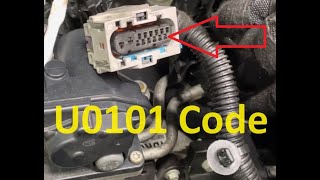
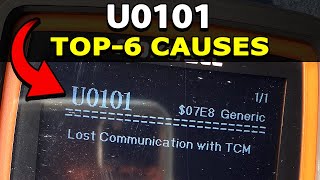
The first-generation GMC Terrain, and its sibling the Chevrolet Equinox, are known for specific wiring vulnerabilities that can trigger a U0101 code. 🎬 Watch: Top 6 causes and fixes for the U0101 code. Manufacturer Technical Service Bulletins (TSBs) repeatedly point technicians toward checking specific electrical connectors for corrosion and poor pin connections, rather than immediately suspecting the TCM itself. One key area is the X411 connector located under the rear of the vehicle, which is highly susceptible to moisture and road salt, leading to communication breakdowns across multiple vehicle systems. Another known failure point is poor terminal fit or chafing in the wiring harness near the main transmission connector and underhood fuse block.
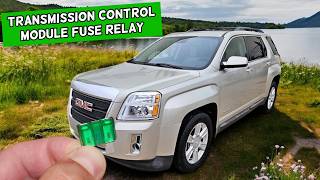
🎬 See how to locate and replace the TCM fuse and relay.Diagnostic Flowchart

Tap your situation to follow the diagnostic path that matches what you're seeing on this vehicle.
Symptoms You May Notice
- Check Engine Light is on
- Transmission warning light is illuminated
- Vehicle enters 'limp mode,' limiting speed
- Harsh, erratic, or delayed shifting
- Inability to shift out of Park
- The gear indicator (PRNDL) on the instrument cluster may be blank or incorrect.
- Service StabiliTrak, ABS, or AWD warning messages may appear.
- Service Power Steering message may appear on the Driver Information Center (DIC).
- Replacing the Transmission Control Module (TCM) before thoroughly inspecting all related wiring and connectors. The TSBs for this vehicle strongly suggest that wiring and connection issues are a more frequent cause of U0101 than a failed TCM.
Most Likely Causes

- Corroded or Damaged X411 Connector 🔴 High Probability As identified in TSB PIT5427B, this large connector is located under the rear of the vehicle, behind and to the left of the fuel tank. Its exposed position makes it highly susceptible to water, salt, and road debris, which causes corrosion on the CAN bus and other wiring pins passing through it.
How to confirm: Visually inspect the pins and terminals inside the X411 connector for any green or white corrosion, moisture, or physical damage. It may be necessary to remove tape and conduit to see the full extent of the damage.
Typical fix: Clean the connector and terminals with a specialized contact cleaner. If corrosion is severe, the affected terminals or the entire connector pigtail may need to be replaced.
Est. part cost: $10-$100 - Poor Terminal Pin Fit at Transmission or Fuse Block 🟡 Medium Probability TSB PIP4990D specifically calls out poor terminal connections at the main transmission harness connector (TEHCM connector) and the underhood fuse block as a known issue causing U0101. The female pins can lose tension over time, causing intermittent communication. This is a very common failure point across many GM vehicles.
How to confirm: Disconnect the connectors and check for loose-fitting female terminals using a pin drag test with a correctly sized male terminal. Inspect for any signs of fretting corrosion (dark dust) or backed-out pins.
Typical fix: Repair or replace the affected terminals to ensure a tight connection. Applying a small amount of dielectric grease can help prevent future fretting corrosion. Sometimes, simply re-seating the connector can temporarily resolve the issue.
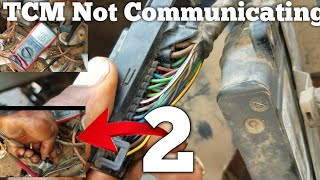
Est. part cost: $5-$50 - Wiring Harness Damage 🟡 Medium Probability TSB PIP4990D also notes that the harness can rub through on sharp objects, particularly on top of the transmission where it can contact the engine block. Other owners have found chafed or broken wires near the TCM connector from rubbing against other components.
How to confirm: Visually inspect the wiring harness running to the TCM and along the CAN bus routes for any signs of chafing, melting, or breaks. Test for continuity and shorts using a multimeter.
Typical fix: Repair the damaged section of wire with a solder and heat-shrink splice. Secure the harness away from any sharp edges or heat sources using zip ties or loom.
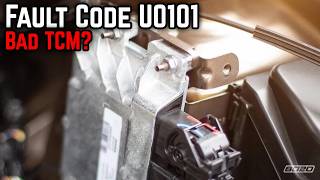
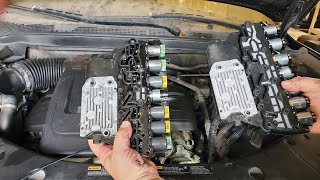
Est. part cost: $1-$20 - Faulty Transmission Control Module (TCM) ⚪ Low Probability While less common than wiring issues for this specific code, the TCM (also known as the TEHCM, as it's combined with the valve body solenoids inside the transmission) can fail internally due to heat, vibration, or age.
How to confirm: This is typically diagnosed by exclusion. If all wiring, connectors, power, and grounds to the TCM test good, the module itself is the likely culprit. An advanced scan tool will fail to communicate directly with the TCM.
Typical fix: Replace the Transmission Control Module. The new module is located inside the transmission oil pan and will require programming to the vehicle's VIN.
Est. part cost: $275-$550 - Low Battery Voltage or Poor Ground Connection ⚪ Low Probability All control modules require a stable voltage to operate. A weak battery, failing alternator, or corroded ground strap (TSB PIP4990D mentions checking grounds G106/G107) can cause intermittent communication faults across the vehicle.
How to confirm: Test the battery voltage with the engine off (should be >12.4V) and running (should be 13.7V-14.7V). Check the main engine and chassis ground connections for corrosion and tightness. Perform a voltage drop test on the ground circuit; resistance should be below 0.5 Ω.
Typical fix: Replace the battery, alternator, or clean/repair the ground connection.
Est. part cost: $5-$300
Diagnosis Steps
- Scan for All Codes: Use an OBD-II scanner capable of reading codes from all modules (ECM, TCM, BCM, ABS) to get a full picture of the communication faults. Note all codes present and in which modules they are stored.
- Check Battery and Fuses: Verify the battery has a full charge (>12.4V) and the charging system is working correctly (13.7-14.7V). Inspect all fuses related to the TCM and other control modules, particularly in the underhood fuse block.
- Inspect Key Connectors: Following TSB guidance, perform a detailed visual inspection of the X411 connector (under the rear of the vehicle, left of the fuel tank), the main transmission harness connector, and connectors at the underhood fuse block. Look for corrosion, damage, or loose pins.
- Test TCM Power and Ground: Using a multimeter and a wiring diagram, confirm that the TCM is receiving proper battery voltage (12.0-12.6V with key on) and has a solid ground connection. TSB PIP4990D specifically mentions checking grounds G106/G107. A voltage drop test under load is essential, with ground resistance ideally below 0.5 Ω.
- Inspect Wiring Harness: Trace the wiring harness for the CAN bus (typically a twisted pair of Tan and Tan/Black wires) between the ECM, TCM, and other modules. Look for any signs of physical damage, chafing (especially on top of the transmission), or melting.
- Test CAN Bus Network: With the battery disconnected, test the CAN bus resistance at the OBD-II port (Pin 6 and Pin 14). It should be approximately 60 ohms. If it's 120 ohms, there is a break in the circuit or a missing/faulty terminating resistor (one is in the ECM, the other often in the TCM). If it's near zero, the lines are shorted together.
- Isolate the Fault: If wiring, power, and grounds are confirmed to be good, the TCM is the most likely point of failure. Confirm by attempting to communicate directly with the TCM using a bidirectional scan tool. If communication fails, the TCM needs replacement.
Parts You'll Likely Need
- Transmission Control Module (TCM/TEHCM)
(OEM #24256524, 24261875 (Verify by VIN, multiple revisions exist))— If all wiring and connector issues are ruled out, the TCM itself has likely failed. This is the final step in diagnosis. It is located inside the transmission side cover.
Trusted brands: ACDelco (Genuine GM), Dorman
OEM price range: $450-$600
Aftermarket price range: $275-$450 - Connector Terminals / Pigtail
(OEM #Varies, e.g., 13576634 for X411 connector body)— Corrosion or damage at the X411 connector, transmission connector, or fuse block often requires replacement of the affected pins or the connector housing itself to ensure a lasting repair.
Related Codes That Often Appear With This One
- U0100 — Lost Communication with ECM/PCM. This often appears with U0101 because the communication network is disrupted.
- U0073 — Control Module Communication Bus 'A' Off. This is a general CAN bus fault code that points to a network-wide problem, often triggered by the same wiring faults as U0101.
- C0045, C0050, U0121 — These are wheel speed sensor and ABS module communication codes that can be set alongside U0101 when the X411 connector is corroded, as it carries signals for multiple systems. [⭐ MANUFACTURER TSB — highest authority] Bulletin #PIT5427B
Technical Service Bulletins (TSBs) & Recalls
- PIT5427B: Points to corrosion in the X411 connector as a cause for a wide array of communication codes, including U0101.
- PIP4990D: Advises checking for poor terminal fit at the transmission and fuse block connectors, as well as harness chafing, before replacing the TCM.
- PIT5171B: Mentions internal wire breaks near the X411 connector, sometimes caused by rodents, leading to communication faults.
Platform-Specific Known Issues
- X411 Connector Corrosion: The most widely documented issue for this platform. The X411 connector, a large 'pass-through' connector located under the vehicle near the rear axle, is poorly protected from the elements. Water and road salt wick into the connector, corroding the pins for the high-speed CAN bus (and other systems), causing a U0101 and a host of other communication DTCs.
- Harness Chafing on Transmission: The wiring harness that routes over the top of the transmission is known to rub against sharp edges on the transmission case or engine block. Over time, this can wear through the insulation on the CAN bus wires, causing them to short to ground or to each other, bringing down the network.
Mechanic-Grade Diagnostic Values
- CAN Bus Network Resistance — expected: ~60 Ω (measured between Pin 6 and Pin 14 of the OBD-II port with battery disconnected). Failure: A reading of ~120 Ω indicates an open circuit or a faulty terminating resistor in a module. A reading near 0 Ω indicates the CAN High and CAN Low wires are shorted together.
- CAN High Voltage (Key On, Engine Off) — expected: ~2.5V to 3.5V (average ~2.7V) (measured between Pin 6 of OBD-II port and chassis ground). Failure: Significant deviation or a steady 2.5V can indicate a short.
- CAN Low Voltage (Key On, Engine Off) — expected: ~1.5V to 2.5V (average ~2.3V) (measured between Pin 14 of OBD-II port and chassis ground). Failure: Significant deviation or a steady 2.5V can indicate a short.
- TCM Power Supply Voltage — expected: 12.0V - 12.6V (measured at the TCM connector power supply pin with ignition on). Failure: Low or no voltage indicates a problem with the fuse, relay, or wiring supplying power to the module.
- TCM Ground Circuit Resistance — expected: < 0.5 Ω (measured between the TCM connector ground pin and a clean chassis ground). Failure: High resistance indicates a corroded or loose ground connection, which can cause intermittent module operation.
Hidden / Shadow Codes Worth Checking
- U0101 (in ECM/BCM after TCM replacement): If a used TCM/TEHCM is installed, the ECM and BCM may log a U0101 code. This does not necessarily mean there is a new communication problem. It means the modules have lost communication with the *original* VIN-matched TCM they were paired with. The used TCM must be reprogrammed to the vehicle's VIN to resolve this. (see via Professional scan tool like GM GDS2/Tech2 after installing a used module.)
Scan Tool Commands That Help
- GM GDS2 / High-End Bidirectional Scanner: Module Communication Test — To actively ping the TCM and verify if it is capable of responding on the network. A lack of response when all wiring tests good points to an internal module failure.
- GM GDS2: Solenoid Command Status Test / Clean Cycle — This function allows a technician to individually command transmission solenoids on and off. While not a direct fix for U0101, it can help determine if the TEHCM is partially functional or has internal hydraulic/mechanical issues that might accompany communication faults.
- GM GDS2 / J2534 Pass-Thru Device: TCM Programming/Reflash — This is required after installing a new or used TCM to load the correct vehicle-specific software and VIN. Failure to program the module will result in a persistent U0101 code and a no-start or limp mode condition.
Wiring & Ground Locations

- X411 — Under the rear of the vehicle, located behind and to the left of the fuel tank.. This is a major inline harness connector that carries CAN bus and other critical signals. Its exposed location makes it extremely prone to corrosion from road salt and moisture, causing a network-wide communication failure that often sets U0101.
- G106 / G107 — TSB PIP4990D points to these as the primary grounds for the TCM. A common GM location for G106 is on the front center of the frame cross rail, under the crank pulley. G107 is often nearby on the RH front of the frame. Always verify with a vehicle-specific diagram.. A poor ground connection at these points will starve the TCM of a stable electrical reference, leading to intermittent operation and communication loss.
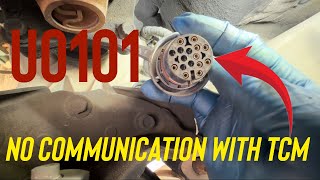
- TEHCM Connector — On the side of the transmission, where the main vehicle harness connects to the internal transmission electronics.. The pins in this connector can lose tension or corrode, causing an intermittent connection. The harness itself can also chafe on the engine block or transmission case near this connector.
When the Usual Fixes Don't Work
- Some owners have performed all the common wiring and connector checks without success. One detailed account from a 2014 Equinox owner showed that even after cleaning the TCM, BCM, and fuse box connectors, adding dielectric grease, and verifying CAN bus resistance (61 ohms) and voltages (2.6V high, 2.1V low), the U0101 code persisted. This highlights that while wiring and connectors are the most common cause, a comprehensive diagnostic approach is necessary, and in some cases, the fault may lie within a module or a hard-to-find harness break that passes simple continuity tests.
OEM Part Supersession History
24256524 (For 6T40/6T45)→24041956, among many others (e.g., 24258573, 24260028, 24275860).— Revisions to address internal component failures, improve reliability, and update software logic.
Heads up: Even if a TEHCM from another vehicle physically fits, its internal circuitry and programming may be different. Using the wrong part number, even if it's for the same transmission model, can cause programming failures or operational issues. Always verify the correct part number by VIN.24261875 (Common for 6T70/6T75 V6 models)→Multiple revisions exist, such as 24275870.— Revisions to improve durability and performance of the valve body and electronics.
Heads up: This part is not interchangeable with the TEHCMs used in the 4-cylinder models' 6T40/6T45 transmissions.
Model Year Variations Within This Range
- 2010-2017: The 2.4L I4 engine is paired with the 6T40 or 6T45 automatic transmission, while the 3.0L and 3.6L V6 engines are paired with the heavier-duty 6T70 or 6T75 transmission. These transmission families use different, non-interchangeable TEHCMs with unique part numbers.
- 2010-2017: The TCM architecture evolved during this period. Earlier models may use a 'T43' generation controller, while later models may use a 'T87' style architecture, affecting software and diagnostic procedures.
Helpful Videos

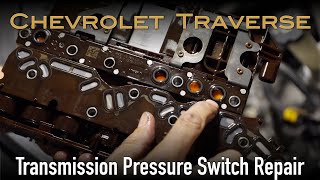
Used OEM Parts in Stock


New Aftermarket Parts Available


The information in this article is provided for general reference and educational purposes only. Vehicle specifications, procedures, and part compatibility can vary by production date, trim level, and region. Always consult your vehicle's factory service manual and verify part numbers before purchasing or performing repairs. Safety-critical components such as airbags, seat belts, and braking systems should be installed by a qualified professional.
- Gmc TERRAIN:
- 🎬 Helpful Videos
- 🛍️ Shop This Part
- What's Unique About the 2010-2017 Gmc TERRAIN
- Diagnostic Flowchart
- Symptoms You May Notice
- Most Likely Causes
- Diagnosis Steps
- Parts You'll Likely Need
- Related Codes That Often Appear With This One
- Technical Service Bulletins (TSBs) & Recalls
- Platform-Specific Known Issues
- Mechanic-Grade Diagnostic Values
- Hidden / Shadow Codes Worth Checking
- Scan Tool Commands That Help
- Wiring & Ground Locations
- When the Usual Fixes Don't Work
- OEM Part Supersession History
- Model Year Variations Within This Range
- 🎟️ Get 5% Off