

U0101 on 2010-2017 Chevrolet Equinox: Lost Communication with TCM Causes and Fixes
On a 2010-2017 Equinox, code U0101 means the Transmission Control Module (TCM) has stopped communicating. This is most often caused by wiring issues like poor pin connections at the transmission or fuse block, a corroded ground, or chafed wires near the engine. Always inspect all wiring, connectors, and grounds thoroughly before suspecting a failed TCM.
- U0101 on a 2010-2017 Equinox is a communication code, not a mechanical failure code.
- Before suspecting a bad TCM, thoroughly inspect all related wiring, especially the main transmission connector, underhood fuse block, and grounds, as per GM's own service bulletins.
- Symptoms include a check engine light, harsh or no shifting, and the vehicle possibly entering a low-power 'limp mode'.
- This is not a simple DIY fix; proper diagnosis requires electrical testing, and replacing the TCM requires special programming tools.
- Always check for a weak battery or failing alternator, as low voltage can trigger this code.
What's Unique About the 2010-2017 Chevrolet EQUINOX

For this generation of Equinox and its platform mate, the GMC Terrain, General Motors has issued multiple Technical Service Bulletins (TSBs) that point directly to wiring and connector integrity as the primary culprits for a U0101 code. Unlike many other vehicles where the module itself is the first suspect, on the Equinox, technicians are specifically advised to check for poor terminal fit at the transmission connector, underhood fuse block, and harness grounds before considering module replacement. TSBs also identify specific harness chafe points, such as against the engine block or valve cover, and corrosion in the X411 connector under the rear of the vehicle as known vulnerabilities.
Diagnostic Flowchart

Tap your situation to follow the diagnostic path that matches what you're seeing on this vehicle.
Generation note: The 2010-2017 model years cover the entire second generation of the Chevrolet Equinox. The issues and fixes are generally consistent across this generation and also apply to the GMC Terrain.
Symptoms You May Notice

- Check Engine Light is on
- Transmission may not shift gears or gets stuck in one gear
- Harsh or erratic shifting
- Vehicle enters 'limp mode,' limiting speed
- Service StabiliTrak warning light may appear
- Service Power Steering message on DIC
- Gear position indicator (PRNDL) on the dash may be blank or incorrect
- Door locks may cycle randomly when the fault occurs
- Replacing the Transmission Control Module (TCM) without first thoroughly inspecting all related wiring and connectors. TSBs and numerous owner experiences strongly suggest that wiring is a more common point of failure for this code on this specific vehicle.
Most Likely Causes

- Poor Terminal Connection at Transmission or Fuse Block 🔴 High Probability Multiple GM TSBs (#PIP4990C, #PIP4990D) specifically call out poor terminal pin fit at the main transmission connector and the underhood fuse block as a frequent cause. Vibration and heat cycles can cause these connections to become loose, and fretting corrosion can build up, increasing resistance and disrupting communication.
How to confirm: Visually inspect the pins in the transmission harness connector and relevant fuses/relays in the fuse block for looseness, corrosion, or damage. A technician performs a 'pin drag' test using a special probe to check if the female terminals grip the male pins with adequate tension. Even if pins look clean, microscopic corrosion can cause issues that are only resolved by cleaning with a terminal brush and contact cleaner.
Typical fix: Repairing or replacing the affected connector terminals. In many cases, thoroughly cleaning the male and female pins with a terminal cleaning brush and contact cleaner, followed by an application of dielectric grease, will restore the connection.
Est. part cost: $10-$50 - Damaged or Corroded Wiring Harness 🟡 Medium Probability TSB #PIP4990D notes the harness can rub on sharp areas of the engine block. TSB #PI1004 is more specific, identifying a chafe point for CAN bus circuits 2500 and 2501 at the right rear corner of the engine/valve cover. TSB #PIT5427B also points to potential corrosion in the X411 connector, located under the rear of the vehicle behind the fuel tank, which can cause a host of communication codes including U0101.
How to confirm: Perform a continuity and resistance test on the CAN bus wires between the ECM and TCM. Visually inspect the harness for any signs of chafing, melting, or corrosion, paying close attention to where it routes over the transmission and near the back of the engine. Wiggle the harness while checking resistance to find intermittent breaks.
Typical fix: Repair the damaged section of the wire. Wrap the repaired area and the rest of the harness with protective tape or loom and re-route it away from sharp edges to prevent recurrence.
Est. part cost: $5-$25 - Poor TCM Ground Connection 🟡 Medium Probability TSB #PIP4990C/D specifically advises checking the TCM ground location (e.g., G106, G107) for integrity. Body grounds are susceptible to corrosion over time, leading to intermittent electrical issues, especially voltage drops that can knock the TCM offline.
How to confirm: Locate the main ground point for the TCM using a service manual (eSI), such as G112 on the lower left front of the 2.4L engine. Disassemble, clean the connection point to bare metal, and re-secure it. A voltage drop test from the TCM connector's ground pin to the battery negative terminal can confirm a bad ground under load.
Typical fix: Cleaning and securing the ground connection. A new ground strap may be needed if the original is heavily corroded.
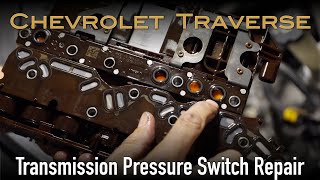
Est. part cost: $5-$20 - Failed Transmission Control Module (TCM) ⚪ Low Probability The TCM on these models is part of the TEHCM (Transmission Electro-Hydraulic Control Module) located inside the transmission side cover, subject to heat and vibration. While TSBs emphasize that this is less common than wiring issues, internal failure of the module's circuit board can occur.
How to confirm: This is a process of elimination. If all wiring, connectors, power, and grounds test good, the TCM itself is the likely culprit. A professional scan tool may also fail to communicate with the module even when directly connected. A bypass test (jumping the CAN wires at the TCM connector) can prove the external wiring is good if other modules resume communication.
Typical fix: Replace the TCM/TEHCM. This part is located inside the transmission side cover and requires draining fluid and removing the valve body to access. The new module must be programmed to the vehicle's VIN.
Est. part cost: $250-$500
Rare But Worth Checking
- Low Battery Voltage or Failing Alternator: Control modules require a stable voltage (typically above 12.0V) to communicate properly. A weak battery or failing alternator can cause random communication codes, including U0101, especially during startup or when electrical loads like the radiator fan activate.
- Blown Fuse: A blown fuse for the TCM will cut its power and cause an immediate U0101 code. On the Equinox, check fuse F25 (10A) in the interior fuse box (passenger side center console) and fuses F17, F44, and F52 in the underhood fuse box.
Diagnosis Steps
- Check for other DTCs. Codes like P0700 are expected, but other U-codes (U0100, U0121) can help pinpoint a wider network issue.
- Check Battery Voltage and Charging System. Ensure the battery has a full charge (12.4V+ with engine off) and the alternator is charging correctly (13.5-14.5V with engine running). Low voltage can cause communication drops.
- Inspect Fuses. Check fuse F25 in the interior fuse box and fuses F17, F44, and F52 in the underhood fuse box.
- Inspect Connectors and Grounds per TSBs. This is the most critical step. Visually inspect and check for secure connections at the main transmission harness connector, the underhood fuse block, and the primary TCM ground strap (G106/G107/G112). Check the X411 connector under the rear of the vehicle for corrosion.
- Inspect Wiring Harness for Chafing. Carefully check the wiring harness for any signs of rubbing or heat damage, especially where it passes over the transmission and at the right rear corner of the engine/valve cover, per TSB PI1004.
- Test CAN Bus Circuit. Using a multimeter, disconnect the battery and check for resistance between pins 6 (CAN High) and 14 (CAN Low) of the DLC. It should be ~60 ohms. If it's 120 ohms, there is a break in the circuit or a terminating resistor is offline. If it's near 0 ohms, there is a short. Check for continuity on the CAN wires between the TCM and ECM connectors.
- Condemn the TCM. If all previous steps show no faults in the wiring, connectors, power, or grounds, the Transmission Control Module is the most likely cause of the failure.
Parts You'll Likely Need
- Transmission Control Module (TCM/TEHCM)
(OEM #24256524)— This is the part to replace if all wiring and connection checks pass. It is the 'brain' of the transmission, located inside the transmission case.
Trusted brands: ACDelco (OEM), Dorman
OEM price range: $300-$500
Aftermarket price range: $200-$350 - Connector Terminals or Pigtail — Loose or corroded terminals in the main transmission connector are a very common cause of U0101 and should be checked before replacing expensive modules.
Trusted brands: ACDelco, Dorman
OEM price range: $20-$60
Aftermarket price range: $10-$40
Related Codes That Often Appear With This One
- P0700 — P0700 means 'Transmission Control System Malfunction'. It's a general code set by the ECM to turn on the check engine light when the TCM has detected a fault. It almost always accompanies specific transmission codes like U0101.
- U0100 — This code means 'Lost Communication with ECM/PCM'. If there is a major network problem or a wiring chafe affecting multiple CAN bus lines, several modules may lose communication, triggering multiple U-codes simultaneously.
- U0121 — This code means 'Lost Communication With Anti-Lock Brake System (ABS) Control Module'. It often appears with U0101 if the fault is in a shared wiring harness or connector, like the X411 connector mentioned in TSB PIT5427B.
Technical Service Bulletins (TSBs) & Recalls
- PIP4990D
- PIP4990C
- PIT5427B
- PI1004
- PIT5171C
Platform-Specific Known Issues
- TSB #PIP4990D specifically highlights that U0101 on the 2010-2017 Equinox/Terrain is frequently caused by poor terminal fit at the transmission connector or underhood fuse block, or a bad ground. It explicitly states to check these before replacing the TEHCM.
- TSB #PIT5427B points to corrosion in the X411 connector, located under the rear of the vehicle to the left of the fuel tank, as a cause for a wide range of communication codes, including U0101.
- TSB #PI1004 identifies a specific wire chafing location for the CAN bus wires (circuits 2500 and 2501) against the right rear corner of the engine or cam/valve cover on 2.4L models.
Mechanic-Grade Diagnostic Values
- CAN Bus Network Resistance — expected: ~60 Ω. Failure: A reading of ~120 Ω indicates an open circuit or one of the two terminating resistors is offline. A reading near 0 Ω indicates a short between the CAN High and CAN Low wires.
- CAN Bus Voltage (Key On, Engine Off) — expected: CAN High (Pin 6 to Ground): ~2.6V. CAN Low (Pin 14 to Ground): ~2.1V.. Failure: Voltages that are stuck high, low, or are equal to each other indicate a short to power, ground, or a short between the two CAN lines.
- TCM Power Supply Voltage — expected: 12.0 - 12.6V (Ignition On). Failure: Voltage below 12.0V, especially dropping under load (e.g., when the radiator fan activates), can cause the TCM to drop offline intermittently.
Scan Tool Commands That Help
- GDS2 / Tech2: Reset Transmission Adapts — This function must be performed after replacing and programming a new TCM/TEHCM to ensure proper transmission operation and avoid misdiagnosis.
- Professional Scan Tool: Bidirectional Communication Test — To actively confirm a communication loss. The tool sends a request directly to the TCM; if no response is received, it verifies the TCM is offline, helping to distinguish from a broader network issue.
Wiring & Ground Locations
- G112 (for 2.4L Engine) — On the lower left front of the engine block.. This is a primary ground point for the powertrain control systems. Corrosion or a loose connection here can cause a floating ground, leading to intermittent communication codes like U0101.
- G106 / G107 — G106 is on the front center frame cross rail. G107 is on the upper left front side of the engine.. These are additional critical engine and chassis grounds. The TSBs specifically call for checking ground integrity, and these are known locations to inspect for corrosion or looseness.
- X411 Connector — Under the rear of the vehicle, located behind and to the left of the fuel tank.. TSB #PIT5427B identifies this connector as a common source of corrosion that can cause U0101 and a host of other communication codes due to its exposed location.
- Data Link Connector (DLC) Pins — Under the driver's side dashboard.. Pin 6 (CAN High) and Pin 14 (CAN Low) are the primary test points for checking the overall health of the high-speed CAN bus network with a multimeter.
Real Owner Repair Stories
- YouTube channel '99 F' on a 2015 Chevy Captiva (similar 6T45 platform) (2015 Chevrolet Captiva Sport 2.4L with 6T45 transmission) — Intermittent U0101, slamming gears, possessed door locks, multiple dash lights (Service Stabilitrak, etc.), PRNDL display disappearing. Fault occurred when coasting/idling and the radiator fan would activate, or when battery voltage was low.
❌ Tried (didn't work) A visual inspection of the connector pins showed no obvious signs of corrosion or damage.
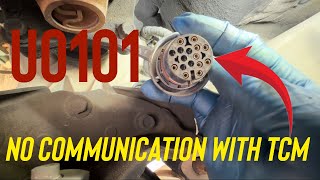
✅ What actually fixed it The problem was resolved by thoroughly cleaning the male and female pins of the main transmission connector with a small interdental brush and contact cleaner, then applying dielectric grease. This fixed the high-resistance connection that was sensitive to small voltage drops.
"I Checked Everything" — The Actual Cause
- A common scenario for U0101 on the Equinox is when all wiring appears visually intact and tests show good continuity, but the code persists intermittently. The root cause is often microscopic fretting corrosion on the TCM connector pins, which isn't visible to the naked eye. This creates just enough resistance to knock the module offline during momentary voltage drops (like a fan turning on), but not enough to cause a hard fault during static testing. The fix is to aggressively clean the pins with a terminal brush and contact cleaner, not just visually inspect them.
OEM Part Supersession History
24256524→24041956— GM frequently revises TEHCM units to improve reliability of internal electronics and solenoids.
Heads up: This TEHCM has a long list of superseded part numbers. It is critical to ensure the replacement module is programmed for the specific vehicle VIN, as installing a module with the wrong calibration will result in a no-start or immediate limp mode.
Helpful Videos
Used OEM Parts in Stock


New Aftermarket Parts Available


The information in this article is provided for general reference and educational purposes only. Vehicle specifications, procedures, and part compatibility can vary by production date, trim level, and region. Always consult your vehicle's factory service manual and verify part numbers before purchasing or performing repairs. Safety-critical components such as airbags, seat belts, and braking systems should be installed by a qualified professional.
- Chevrolet EQUINOX:
- 🎬 Helpful Videos
- 🛍️ Shop This Part
- What's Unique About the 2010-2017 Chevrolet EQUINOX
- Diagnostic Flowchart
- Symptoms You May Notice
- Most Likely Causes
- Rare But Worth Checking
- Diagnosis Steps
- Parts You'll Likely Need
- Related Codes That Often Appear With This One
- Technical Service Bulletins (TSBs) & Recalls
- Platform-Specific Known Issues
- Mechanic-Grade Diagnostic Values
- Scan Tool Commands That Help
- Wiring & Ground Locations
- Real Owner Repair Stories
- "I Checked Everything" — The Actual Cause
- OEM Part Supersession History
- 🎟️ Get 5% Off