

U0100 on 2018-2024 Chevrolet Traverse: Lost Communication with ECM Fixes
On a 2018-2024 Traverse, code U0100 is most often caused by an electrical issue, not a failed ECM. Suspect a failing alternator causing voltage drops or a weak/badly connected battery before replacing any major components. A proper charging system and ground circuit test is the most critical first step.
- U0100 on a 2018-2024 Traverse is most likely an electrical power supply issue, not a failed computer.
- Always test the alternator under load and perform a load test on the battery before considering more complex repairs.
- Do not automatically assume a transmission problem if P0700 is present with U0100; it is almost always a symptom, not the cause.
- Check simple physical connections: battery terminals, grounds, and the main ECM connectors are common and easy-to-check failure points.
What's Unique About the 2018-2024 Chevrolet Traverse
On this generation of Chevrolet Traverse, the U0100 code is frequently a symptom of an underlying electrical system problem rather than a truly failed ECM. Real-world diagnostics show that a failing alternator with a bad diode can cause momentary voltage drops ('brownouts'), rebooting the ECM and triggering this code. This creates a classic misdiagnosis scenario where drivers or shops may suspect a major transmission or computer failure, when the root cause is actually the charging system or a poor ground connection.
Symptoms You May Notice
- Engine may not start, or may crank but fail to fire
- Intermittent stalling while driving, sometimes without warning
- Check Engine Light is on
- "Service StabiliTrak" message on the dash
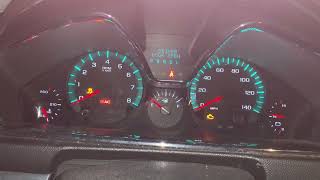
- Instrument cluster gauges may suddenly drop to zero or sweep back and forth
- Harsh or erratic transmission shifting as it enters 'limp mode'
- Loss of power steering assist (intermittently)
- Warning lights for multiple systems (ABS, Traction Control, etc.) may illuminate simultaneously
- Sudden inability to turn the steering wheel while errors appear on the dash, as described in NHTSA ODI #11205597.
- Replacing the ECM when the actual fault is the alternator, battery, or a bad ground connection.
- Performing a transmission repair or replacement due to the presence of a P0700 code, which is often just a symptom of the U0100 fault requesting the check engine light. 🎬 Watch: Real-world fix for U0100 and P0700 codes on a Traverse.
Most Likely Causes
- Failing Alternator 🔴 High Probability A documented case on a 2018 Traverse showed a failing alternator with a weak diode caused momentary voltage drops ('brownouts') under load. This is too fast for a standard multimeter to catch but is enough to reboot the ECM, triggering the U0100 code and associated P0700.
How to confirm: Perform a comprehensive charging system test. This involves checking the alternator's voltage and amperage output under various electrical loads (headlights, A/C, etc.). Watch for sudden voltage dips on a graphing multimeter or scope when loads are applied; a simple static voltage check is insufficient.
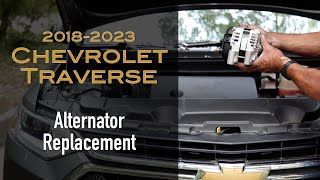
Typical fix: Replace the alternator and fully charge the battery. Ensure all connections are clean and tight. 🎬 See this step-by-step alternator replacement walkthrough for 2018-2023 models.
Est. part cost: $250-$550 - Weak or Failing Battery 🟡 Medium Probability Modern vehicles are highly sensitive to voltage. A battery that can no longer provide stable voltage, especially during engine cranking or when the auto start/stop system engages, can cause communication modules to drop offline and set U-codes. A Traverse owner on Reddit confirmed a bad battery was the cause of their communication codes, even though it showed over 12V at rest.
How to confirm: Test the battery with a digital battery tester that can perform a load test and check internal resistance. A simple voltage reading should be at least 12.4V at rest, but a load test is required to confirm its health.
Typical fix: Replace the battery and clean the terminals.
Est. part cost: $150-$300 - Corroded or Loose Negative Battery Cable/Grounds 🟡 Medium Probability GM has issued TSBs like 18-NA-161 for conditions caused by high resistance in battery cables. A loose or corroded main ground connection at the engine block, chassis, or battery fuse block can create an unstable ground reference for the ECM, leading to communication loss.
How to confirm: Perform a voltage drop test on the main ground cables while cranking the engine; the drop should not exceed 200mV. Visually inspect and physically check the main battery-to-chassis and engine-to-chassis ground straps. Ensure they are tight and free of corrosion.
Typical fix: Clean the contact surfaces of the ground connection to bare metal and tighten securely. If the cable fails a voltage drop test, it must be replaced.
Est. part cost: $0-$100 - Loose or Corroded ECM Connector ⚪ Low Probability Vibration and heat cycles in the engine bay can affect the large multi-pin connectors at the ECM over time. Moisture intrusion can also lead to pin corrosion, interrupting communication.
How to confirm: With the battery disconnected, carefully unplug the main connectors from the ECM. Inspect for any signs of corrosion (green or white powder), moisture, or bent/damaged pins. Re-seat the connectors firmly until they click and lock into place.
Typical fix: Clean the connector pins with electrical contact cleaner and apply a small amount of dielectric grease. Ensure the connector is fully seated and locked. In rare cases of damage, the connector pigtail may need repair.
Est. part cost: $5-$20
Rare But Worth Checking
- Faulty Engine Control Module (ECM): This should only be considered after all power, ground, and charging system issues have been definitively ruled out. It is the most commonly misdiagnosed cause.
- Damaged CAN Bus Wiring: A short or open in the twisted pair CAN bus wiring harness can take the network down. This usually requires advanced diagnostics, like checking for 60 ohms of resistance between pins 6 and 14 of the OBD-II port, to pinpoint the location of the break or short.
- Faulty Serial Data Gateway Module (SDGM): On some GM platforms, a faulty SDGM can cause a total network shutdown. TSBs for other GM vehicles (like #PIT5586G for Silverados) point to this module locking up. While not specifically documented for the Traverse, it remains a possibility for a technician to investigate.
- Loose EBCM (ABS) Connector: On some GM platforms, the Electronic Brake Control Module (ABS module) is a key node on the data bus. A loose connector there can interrupt communication for other modules downstream, including the ECM.
- Accessory Wake Up Circuit Issues: As noted in manufacturer TSB Bulletin #PIT6198 for similar GM platforms, a Check Engine Light at startup with U0100 may require testing the accessory wake up circuit to the ECM for proper power.
Diagnosis Steps
- Read all codes from all modules. Note any other 'U' codes or the P0700 code, as they provide context.
- Check the Battery: Start with the simplest cause. Have the battery professionally load-tested, even if it's relatively new. A simple voltage reading is not enough.
- Test the Charging System: With the engine running, use a graphing multimeter or oscilloscope to monitor alternator output. Voltage should be stable (typically 13.5V-14.5V). Turn on all accessories (high beams, A/C, rear defrost) to put the alternator under maximum load and watch for significant, sharp voltage drops, which indicate a failing alternator diode.
- Inspect and Test Grounds: Visually inspect and physically check the main battery ground cable and the engine-to-chassis ground strap. Perform a voltage drop test on the ground side while cranking the engine; per TSB 18-NA-161, the reading should be under 200mV.
- Inspect ECM Connectors: Disconnect the battery. Locate the ECM and carefully inspect its main electrical connectors for damage, corrosion, or moisture. Reseat them firmly.
- Check Fuses: Inspect all fuses related to the ECM, PCM, BCM, and ignition systems in the under-hood and interior fuse blocks.
- Advanced Diagnostics (Professional): If the above steps do not resolve the issue, a technician will need to perform CAN bus network testing. This involves checking for 60 ohms of resistance across pins 6 and 14 of the OBD-II port (with the battery disconnected) to verify the integrity of the network's terminating resistors. They will also use an oscilloscope to check for proper data signals on the CAN high and low lines.
Parts You'll Likely Need
- Alternator
(OEM #13552642 (ACDelco, for 3.6L V6))— A failing alternator causing voltage instability is a documented primary cause of U0100 on this vehicle.
Trusted brands: ACDelco (GM Genuine), Denso, Duralast
OEM price range: $250-$550
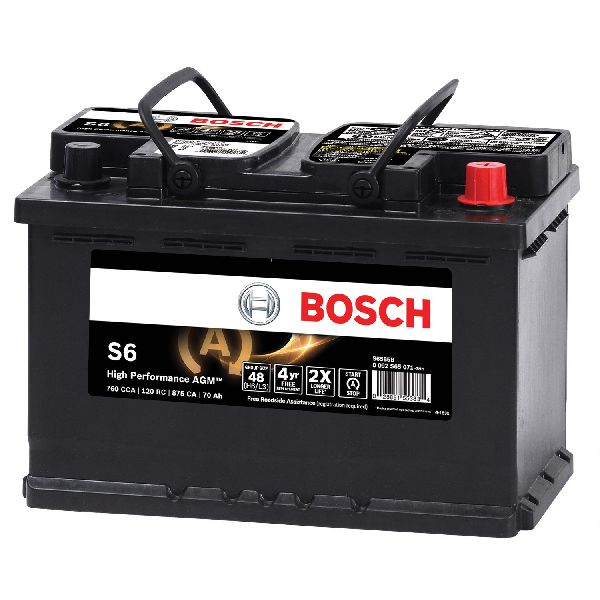
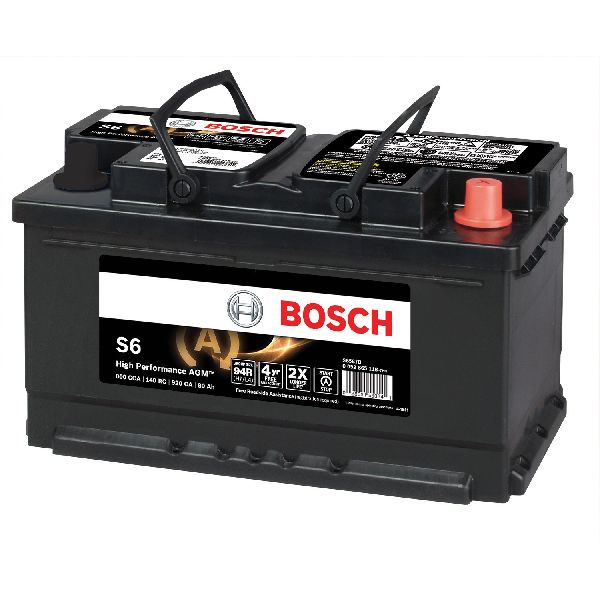
Aftermarket price range: $180-$350 - Battery — A weak battery unable to provide stable voltage is a common cause of module communication errors.
Trusted brands: ACDelco, Interstate, DieHard
OEM price range: $200-$300
Aftermarket price range: $150-$250
Related Codes That Often Appear With This One
- P0700 — When the ECM goes offline (U0100), the Transmission Control Module (TCM) loses the engine data it needs to function. The TCM then sets P0700 to request the Check Engine Light be turned on as a default response.
- U0073 — This code means 'Control Module Communication Bus 'A' Off'. It's a more general network failure code that can appear alongside U0100 when the communication interruption is severe.
- U0121 — 'Lost Communication with Electronic Brake Control Module'. This can be set when the ECM or another primary module disrupts the entire network, causing a cascade of communication faults.
- U0140 — 'Lost Communication with Body Control Module'. This often appears in a cascade of communication failures when a primary module like the ECM goes offline.
- U0146 — Lost Communication with Gateway A. This code was reported alongside U0100 in NHTSA ODI #11297440 and #11326382 during instances of multiple module communication loss.
Technical Service Bulletins (TSBs) & Recalls
- TSB 18-NA-161: Addresses conditions of battery discharge, which can be caused by high resistance or loose connections in battery cables, including poor grounds.
- TSB 08-07-30-021H: While for an older platform, it details the diagnostic philosophy for GM LAN communication issues, pointing to wiring, grounds, and connectors as primary culprits, which is still relevant.
- TSB 18-NA-091: Pertains to the common transmission shudder issue, which can sometimes be confused with the harsh shifting caused by a U0100 event.
- TSB Bulletin #PIT6198: Provides a diagnostic tip for a Malfunction Indicator Lamp at startup with DTC U0100, advising technicians to test the accessory wake up circuit to the ECM for power.
Mechanic-Grade Diagnostic Values
- CAN Bus Network Resistance — expected: ~60 Ohms. Failure: A reading of ~120 Ohms indicates an open in the circuit or a faulty terminating resistor in a module. A reading near 0 Ohms indicates a short between the CAN High and CAN Low wires.
- Negative Battery Cable Voltage Drop — expected: Less than 200 mV (0.2V). Failure: A reading above 200 mV indicates high resistance in the ground cable or its connections.
- Positive Battery Cable Voltage Drop (Fuse block to Starter) — expected: Less than 100 mV (0.1V). Failure: A reading above 100 mV indicates high resistance in the positive cable or connections.
- Battery Fuse Block Nut Torque — expected: 15 Nm (11 ft lb). Failure: Loose nuts can cause intermittent power loss to critical modules.
- Engine Block Ground Cable Nut Torque — expected: 45 Nm (33 ft lb). Failure: A loose ground connection at the engine block is a primary cause of unstable module operation.
Scan Tool Commands That Help
- GDS2 (GM Global Diagnostic System 2): Vehicle DTC Information — This is the first step. It queries all modules on all networks (High Speed CAN, Low Speed CAN, Chassis) and displays which ones are communicating and which have set DTCs. This quickly identifies the scope of the communication failure.
- GDS2: Module Diagnostics > Output Controls — If a specific module is suspected of being faulty (e.g., BCM), a technician can use GDS2 to command its outputs (like headlights, horn, window motors). If the module responds to commands but is not communicating on the network, it points towards a network wiring issue rather than a failed module.
- Data Bus Diagnostic Tool (installs with GDS2): Message Monitor — This advanced tool acts as a 'smart' module on the bus. The Message Monitor can identify which modules are actively communicating and which have gone silent, helping to pinpoint the exact point of failure in the network chain, especially for intermittent faults.
Wiring & Ground Locations
- G218 — Under the driver's side dash, in the passenger compartment.. GM TSB 18-NA-161 identifies a poor connection at the BCM ground G218 as a potential cause for a cascade of communication DTCs, including U0100. The bulletin notes the retaining nut can be loose or the dash insulator mat can get trapped underneath it, preventing a good connection.
- Engine Block Ground — The main negative battery cable connection point on the engine block.. This is the primary ground reference for the ECM. High resistance here, confirmed by a voltage drop test, will cause the ECM to operate unreliably or shut down, triggering U0100. TSB 18-NA-161 specifies a torque of 45 Nm (33 ft lb) for this connection.
- CAN Bus at OBD-II Port — Pins 6 (CAN High) and 14 (CAN Low) on the Data Link Connector (DLC) under the driver's side dash.. These are the primary diagnostic access points for the high-speed data network. Measuring the resistance between these two pins (with the battery disconnected) is the standard method for checking the electrical integrity of the entire network backbone.
- Serial Data Gateway Module (SDGM) — Varies by specific GM model, but on many modern platforms it is located behind the instrument panel or center console.. The SDGM acts as a router between the various vehicle networks (high speed, low speed, etc.). A failure of this module can cut off communication between essential systems, including the ECM. It requires programming upon replacement.
Real Owner Repair Stories
- YouTube user 'DIY with Dave' (2017 Chevrolet Traverse LS AWD, 70,000 miles) — While driving, all dash gauges swept to max and back down, 'Stabilitrac Disabled' message appeared, and the accelerator pedal became unresponsive for 3-5 seconds. A long list of communication codes were stored, including U0100, U0073, U0121, and U0140.
❌ Tried (didn't work) The owner initially suspected a major electrical failure.
✅ What actually fixed it The owner discovered that by physically wiggling and pushing on the main electrical connectors at the ECM, the symptoms could be reproduced and then resolved. The gauges would work, then fail, then work again as the connectors were manipulated. The final fix was to disconnect the battery, unplug, clean, and securely re-seat the ECM connectors to ensure a solid connection. - NHTSA ODI #11405799 — An owner reported that their vehicle stored error codes U0700 and U0100. After being towed to a second dealer, it was discovered that the first dealer had simply cleared the codes without performing a full diagnosis.
- NHTSA ODI #11326382 — An owner reported that their engine light went off and the engine shut off an hour later after throwing eight codes, including P25A2, U0146, U0100, and U0101.
OEM Part Supersession History
13518851, 13526314, 13532107, 13532121→13534928— Standard part evolution and consolidation for the Serial Data Gateway Module (SDGM).
Heads up: This part requires programming and/or special setup procedures after installation. Failure to program the module will result in a no-start condition or continued communication errors.13552642→13565647— Standard part update for the alternator assembly.
Model Year Variations Within This Range
- 2022-2024: The Traverse received a mid-cycle refresh for the 2022 model year, including new front/rear fascias, standard LED headlights, and interior tech updates like a new standard 8-inch digital driver display and wireless Apple CarPlay/Android Auto. While core electrical architecture remained similar, these changes introduced new software and minor hardware variations.
- 2022: Due to the global chip shortage, some 2022 Traverse models were built and delivered without certain features like heated/ventilated seats and heated steering wheels. GM later initiated a retrofit campaign to install the missing components. This is relevant as it indicates potential variations in module presence and wiring on specific vehicles from this period.
Diagnostic Flowchart
Other Known Issues on This Vehicle
Issues unrelated to this code that are worth knowing about as an owner of this generation:
- 9-Speed Transmission Shudder 🔴 High — Very common, especially on 2018+ models. Can occur at low mileage. Often felt at low speeds during shifts. (Ref: TSB 18-NA-091, TSB 23-NA-072)
- 'Shift to Park' Message When in Park 🟠 Medium — Common issue on 2018 models, preventing the vehicle from shutting off completely.
- Auto Start/Stop System Failure 🟠 Medium — Often related to a failing start/stop accumulator. Can cause hesitation or failure to restart at stops. TSB 18-NA-345 addresses a related accumulator issue. (Ref: TSB 18-NA-345)
- Brake Noise and Premature Wear 🟡 Low — Complaints of grinding or squealing noises from brakes at low mileage have been noted. (Ref: TSB #19NA115)
Used vs. New Parts: Buying Guide for This Vehicle
When a used part is the smart pick: For a faulty alternator, a used OEM unit from a low-mileage (under 60,000 miles) donor vehicle can be a cost-effective alternative to a new aftermarket part. It avoids potential quality issues of some aftermarket brands while being cheaper than a new OEM unit.
Donor-vehicle mileage cap: roughly under 60000 miles for the part to have meaningful remaining life.
What to inspect on the donor part:
- Check the donor vehicle's VIN to ensure it wasn't involved in a flood or fire.
- Inspect the alternator's pulley for smooth rotation with no grinding or excessive play.
- Look at the electrical connector pins to ensure they are straight and free of corrosion.
- Verify the part number on the used unit matches the required OEM part number or a known compatible supersession.
OEM-only on this vehicle (don't cheap out):
- Engine Control Module (ECM)
- Body Control Module (BCM)
- Serial Data Gateway Module (SDGM)
Aftermarket brands forum-validated for this vehicle:
- ACDelco (GM Genuine or Professional series)
- Denso (Often the OEM supplier)
Brands owners have reported issues with on this vehicle:
- No-name or unbranded 'white box' alternators from online marketplaces often have high failure rates and may not regulate voltage as cleanly as required by modern GM vehicles, potentially causing the same U0100 code to return.
Real Owner Stories
Aggregated from forums and TSBs cited above. Mileages and costs reflect what owners reported in those sources.
2018 Chevrolet Traverse 3.6L V6
Symptoms: The vehicle experienced a U0100 and P0700 code. The symptoms mimicked a total transmission failure, including harsh or erratic shifting.
What fixed it: Replacement of the alternator after a diagnostic video identified a failing diode causing momentary voltage drops that rebooted the ECM.
Source hint: youtube.com - A detailed diagnostic video on a 2018 Traverse with U0100 and P0700
2018 Chevrolet Traverse
Symptoms: Classic U0100 symptoms including the Stabilitrak light and various dash warnings.
What fixed it: Replacing the battery resolved the communication codes, even though the original battery tested with acceptable voltage at rest.
Source hint: reddit.com/r/ChevyTraverse - A user with a 2018 model described classic U0100 symptoms
Documented NHTSA Reports
An owner reported in NHTSA ODI #11297440 that they found four codes including P25A2, U0101, U0100, and U0146, but the dealer stated no problems were found. Another report, NHTSA ODI #11205597, describes a situation where a U0100 code was stored after errors appeared on the dash and the steering wheel could not be turned.
Related OBD-II Codes
Frequently Asked Questions
My 2018 Traverse has a U0100 code and harsh shifting; could this be the common transmission shudder issue?
Does TSB 18-NA-161 apply to the communication issues on my Traverse?
My battery shows over 12V at rest, but I'm still getting 'Service StabiliTrak' and U0100. Is the battery still a suspect?
How can I check if a ground issue is causing U0100 on my Traverse?
Can a bad alternator cause a U0100 code even if my lights aren't dimming?
Helpful Videos

Used OEM Parts in Stock


New Aftermarket Parts Available

The information in this article is provided for general reference and educational purposes only. Vehicle specifications, procedures, and part compatibility can vary by production date, trim level, and region. Always consult your vehicle's factory service manual and verify part numbers before purchasing or performing repairs. Safety-critical components such as airbags, seat belts, and braking systems should be installed by a qualified professional.
- Chevrolet Traverse:
- 🎬 Helpful Videos
- 🛍️ Shop This Part
- What's Unique About the 2018-2024 Chevrolet Traverse
- Symptoms You May Notice
- Most Likely Causes
- Rare But Worth Checking
- Diagnosis Steps
- Parts You'll Likely Need
- Related Codes That Often Appear With This One
- Technical Service Bulletins (TSBs) & Recalls
- Mechanic-Grade Diagnostic Values
- Scan Tool Commands That Help
- Wiring & Ground Locations
- Real Owner Repair Stories
- OEM Part Supersession History
- Model Year Variations Within This Range
- Diagnostic Flowchart
- Other Known Issues on This Vehicle
- Used vs. New Parts: Buying Guide for This Vehicle
- Real Owner Stories
- 2018 Chevrolet Traverse 3.6L V6
- 2018 Chevrolet Traverse
- Documented NHTSA Reports
- Related OBD-II Codes
- Frequently Asked Questions
- 🎟️ Get 5% Off