

P2705 on 2020-2023 Ford Explorer: Transmission Friction Element 'F' Causes and Fixes
On a 2020-2023 Ford Explorer, code P2705 is most often caused by sticking valves in the transmission's main control valve body or a failing bushing in the CDF clutch drum. The fix typically involves a specific dealer-performed break-in procedure, overhauling/replacing the valve body, or replacing the CDF drum assembly, which can be a costly repair.
- P2705 on a 2020-2023 Explorer is a serious transmission code that points to an internal problem, most commonly a faulty main control valve body.
- Symptoms include harsh, delayed, or slipping shifts and an illuminated Check Engine Light.
- This is not a typical DIY repair. Diagnosis and repair require professional-level tools and knowledge of Ford-specific procedures.
- Before authorizing expensive repairs, ensure your mechanic has consulted the relevant Ford TSBs, as a specific software procedure may be part of the fix.
- Do not ignore this code, as it can lead to more severe and costly transmission damage if left unaddressed.
What's Unique About the 2020-2023 Ford EXPLORER
The 2020-2023 Ford Explorer uses the 10-speed 10R60 or 10R80 automatic transmission, which was co-developed with GM. This specific generation of transmission has been the subject of numerous Technical Service Bulletins (TSBs) related to harsh or delayed shifting. The most prominent issues for this platform, directly linked to P2705, are known problems with sticking valves within the main control valve body and a bushing in the CDF clutch drum that can move out of place, causing hydraulic leaks.
Diagnostic Flowchart
Tap your situation to follow the diagnostic path that matches what you're seeing on this vehicle.
Symptoms You May Notice
- Harsh, abrupt, or delayed shifts between gears, sometimes described as a 'jerk' or 'clunk'.
- Transmission slipping, where the engine RPMs flare up without an increase in speed.
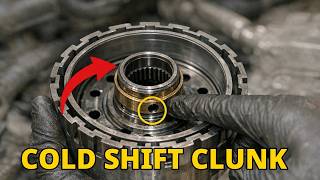
- A noticeable 'jerk' or 'jolt' during shifting, particularly on the 3-5 upshift. 🎬 Watch: How the CDF bushing causes these harsh cold shifts.
- Illuminated Malfunction Indicator Lamp (Check Engine Light) or Wrench Light.
- Vehicle may enter 'limp mode', with limited gear availability and performance.
- Delayed engagement when shifting from Park to Drive or Reverse.
- Replacing the entire transmission when only the main control valve body or CDF drum needs service.
- Replacing transmission speed sensors, which are unlikely to be the root cause for this specific code on this platform.
- Performing only a fluid change when the underlying cause is a mechanical issue with the valve body or clutch drum.
- Assuming an engine misfire is a transmission problem. In one documented case on an F-150 with a 10R80, fouled spark plugs caused symptoms that set a P2704 code, which was resolved by replacing the plugs.
Most Likely Causes
- Sticking Valves in the Main Control Valve Body 🔴 High Probability This is a well-documented issue for the 10R60/10R80 transmissions, as cited in multiple Ford TSBs like 22-2102 and 21-2046. The valves can stick due to debris or design, causing erratic hydraulic pressure.
How to confirm: A technician will use a Ford-specific diagnostic tool (FDRS) to run a 'Transmission Accelerated Main Control Break In' routine. If the symptoms persist after the procedure, the valve body is likely faulty. TSB 21-2046 notes that for vehicles under 5,000 miles, this procedure is the first step, while for those over 5,000 miles, a valve body overhaul is recommended.
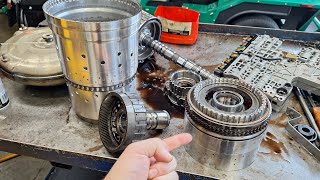
Typical fix: In some cases, the break-in routine can resolve the issue. If not, the main control valve body must be overhauled or replaced. 🎬 Watch this step-by-step walkthrough of a 10R80 valve body replacement. Some owners on forums report parts backorders for valve bodies.
Est. part cost: $800-$1500 for a valve body - Worn or Damaged CDF Clutch Drum Assembly 🔴 High Probability Another widely known issue with the 10R series transmission involves a bushing in the CDF clutch drum that can move out of place ('walk'), uncovering a fluid port and causing a significant pressure loss to the C, D, and F clutches. TSB 24-2254 directly attributes a group of codes including P2705 to this 'axial movement' of the CDF clutch cylinder sleeve. Ford later released an updated drum with a lip on the bushing to prevent it from sliding.
How to confirm: This requires transmission disassembly and visual inspection of the CDF drum. A tell-tale sign is a visible gap where the bushing has slid down, exposing part of a feed hole. This is usually diagnosed after ruling out the valve body.
Typical fix: The transmission must be removed and disassembled to replace the CDF clutch drum with the updated part.
Est. part cost: $400-$800 for internal drum parts - Low or Degraded Transmission Fluid (ATF) 🟡 Medium Probability Low fluid levels can prevent proper hydraulic pressure from building, which is necessary to apply the clutch packs in time. The 10R transmissions use a specific Motorcraft MERCON ULV fluid, and using the wrong type can cause damage.
How to confirm: Check the transmission fluid level and condition according to the manufacturer's procedure. The fluid should be at the correct level, red in color, and not smell burnt. Burnt fluid indicates a more serious internal problem.
Typical fix: Top off the fluid or perform a complete fluid and filter change using the correct Motorcraft MERCON ULV fluid (Part # XT-12-QULV).
Est. part cost: $150-$300 for fluid and filter
Rare But Worth Checking
- Faulty Powertrain/Transmission Control Module (PCM/TCM): While possible, control module failure is rare. It should only be considered after all mechanical and hydraulic issues have been thoroughly ruled out. Sometimes a software or calibration error is the root cause, which can be fixed with a re-flash by the dealer.
- Wiring Harness Issues: Damage to the wiring between the TCM and the transmission can cause communication errors or incorrect solenoid commands, but this is less common than internal mechanical faults.
Diagnosis Steps
- Check for and record all stored Diagnostic Trouble Codes (DTCs) with a quality OBD-II scanner. Note if a wrench light is also present.
- Check the transmission fluid level and condition. Ensure it is clean, at the proper level, and does not have a burnt smell. Use only Motorcraft MERCON ULV fluid.
- Inspect the transmission and wiring harness for any visible signs of damage or leaks.
- Consult Technical Service Bulletins (TSBs) for the vehicle. TSBs 22-2102, 22-2428, and 24-2254 are highly relevant.
- If available, use a Ford-specific diagnostic tool (FDRS) to perform the 'PCM - Transmission Accelerated Main Control Break In' routine as described in TSB 22-2102.
- Perform an adaptive learning drive cycle.
- If symptoms persist or the vehicle has high mileage, the next step is to inspect, overhaul, or replace the main control valve body.
- If the valve body is confirmed to be good or has been replaced, the next likely culprit is the CDF clutch drum. This requires transmission removal and disassembly for inspection and replacement.
Parts You'll Likely Need
- Main Control Valve Body
(OEM #L1MZ-7A100-B (superseded by L1MZ-7A100-F for 10R60))— This is a primary point of failure for this code on this vehicle, as identified by multiple Ford TSBs. The original part L1MZ-7A100-B has been superseded by L1MZ-7A100-F.
Trusted brands: Motorcraft
OEM price range: $370 - $1500 (plus a core charge of ~$200)
Aftermarket price range: $700-$1200 - CDF Clutch Drum Assembly — The bushing in the original drum is a known failure point causing hydraulic leaks. An updated part is available from Ford.
Trusted brands: Motorcraft
OEM price range: $400-$800 - Automatic Transmission Fluid
(OEM #XT-12-QULV)— Required for any service involving the valve body or internal transmission components. Must be this specific MERCON ULV type.
Trusted brands: Motorcraft
OEM price range: $10-$15 per quart
Aftermarket price range: $8-$12 per quart - Transmission Fluid Filter
(OEM #LP5Z-7A098-A (10R60), L1MZ-7A098-A (10R80))— Should be replaced whenever the transmission pan is removed for service.
Trusted brands: Motorcraft
OEM price range: $40-$60
Aftermarket price range: $25-$45
Related Codes That Often Appear With This One
- P0729 - P0736 — These codes indicate incorrect gear ratios, which are a direct symptom of a clutch failing to apply correctly, often due to the same underlying valve body or CDF drum issue.
- P2700, P2701, P2702, P2703, P2704 — These are sister codes to P2705, each pointing to a performance issue with a different friction element (A, B, C, D, E). Seeing them together strongly suggests a systemic problem like the valve body, low fluid pressure, or a failing CDF drum.
Technical Service Bulletins (TSBs) & Recalls
- TSB 22-2102: Addresses harsh/delayed shifts with DTC P2705 on 2020 Explorers, pointing to sticking valves in the main control valve body.
- TSB 22-2428: A comprehensive TSB for 2020-2023 models that lists multiple potential causes for shift quality issues and DTCs, including P2705.
- TSB 24-2254: Supersedes earlier TSBs and specifically calls out 'axial movement of the CDF clutch cylinder sleeve causing hydraulic circuit leaks' as the cause for many shift-related DTCs, including P2705.
- TSB 21-2046: Specific to 2020 Explorer/Aviator models, this TSB details the diagnostic path of performing a 'Transmission Accelerated Main Control Break In' for low-mileage vehicles before resorting to a valve body overhaul.
Platform-Specific Known Issues
- Ford has issued multiple Technical Service Bulletins (TSBs) for the 10R60/10R80 transmission concerning harsh or delayed shifts. TSB 22-2102 directly links P2705 to 'sticking valves in the main control valve body' for 2020 models.
- TSB 22-2428 and the later TSB 24-2254 expand on this, listing software updates, solenoid strategy, sticking valves, and 'axial movement of the CDF clutch cylinder sleeve' as potential causes for a wide range of transmission codes, including P2705, on vehicles up to the 2023 model year.
- Owner forums for the Explorer and related platforms are filled with complaints about the 10-speed transmission's behavior, with many eventually requiring a valve body or full transmission replacement.
Helpful Videos
Used OEM Parts in Stock


New Aftermarket Parts Available


The information in this article is provided for general reference and educational purposes only. Vehicle specifications, procedures, and part compatibility can vary by production date, trim level, and region. Always consult your vehicle's factory service manual and verify part numbers before purchasing or performing repairs. Safety-critical components such as airbags, seat belts, and braking systems should be installed by a qualified professional.
- Ford EXPLORER:
- 🎬 Helpful Videos
- 🛍️ Shop This Part
- What's Unique About the 2020-2023 Ford EXPLORER
- Diagnostic Flowchart
- Symptoms You May Notice
- Most Likely Causes
- Rare But Worth Checking
- Diagnosis Steps
- Parts You'll Likely Need
- Related Codes That Often Appear With This One
- Technical Service Bulletins (TSBs) & Recalls
- Platform-Specific Known Issues
- 🎟️ Get 5% Off