

P2281 on 2011-2016 Chevrolet Cruze 1.4L Turbo: Air Leak Causes and Fixes
Code P2281 means there's an air leak between the MAF sensor and the throttle body. On the 1.4L Turbo Cruze, this is often a simple cracked air duct or loose clamp. However, it is most frequently a symptom of the engine's notorious PCV system failure, which creates a massive vacuum leak and requires replacing the intake manifold and valve cover.
- P2281 indicates an unmetered air leak in the intake system.
- Before buying any parts, check for the classic Chevy Cruze 1.4L PCV failure: listen for a hiss from the valve cover and check for strong suction at the oil cap while the engine is running.
- If the PCV system has failed, you MUST replace both the intake manifold and the valve cover together.
- If the PCV system seems okay, perform a smoke test to find simpler leaks like a cracked hose or loose clamp before replacing any sensors.
- Do NOT replace the MAF sensor; it is almost never the cause of this specific code.
What's Unique About the 2011-2016 Chevrolet Cruze
While any car can get a simple intake leak, the 2011-2016 Cruze 1.4L Turbo is uniquely prone to a complex PCV (Positive Crankcase Ventilation) system failure that creates a massive vacuum leak. A non-serviceable check valve inside the intake manifold fails, allowing boost pressure to enter the crankcase and rupture a regulator diaphragm in the valve cover. This creates a loud hissing noise and allows unmetered air to be sucked into the engine from the atmosphere through a vent hole in the valve cover, triggering various air-related codes, including P2281. Many owners and shops misdiagnose this as a simple intake boot leak, leading to repeat repairs when only the valve cover is replaced without addressing the root cause in the intake manifold.
Generation note: The 2011-2016 year range covers the first generation of the Chevrolet Cruze. The 2016 model year is a split; this guide applies to the first-generation model, which was sold as the 'Cruze Limited' in 2016. The all-new second-generation 2016 Cruze uses a different engine (LE2) with different common issues.
Symptoms You May Notice
- Check Engine Light is on
- Rough or fluctuating idle
- Engine hesitation or surging during acceleration
- Stalling at low speeds or when stopped
- Audible hissing or whistling noise from the engine bay, especially at idle.
- Reduced fuel economy
- Strong vacuum suction when trying to remove the oil filler cap or oil dipstick while the engine is running.
- Chirping noise from the front of the engine (crankshaft seal) at idle, which stops when the oil dipstick is removed.
- Replacing the Mass Airflow (MAF) sensor. A P2281 code indicates a leak, not necessarily a faulty sensor. The sensor is correctly reporting low airflow because air is sneaking in elsewhere. Always diagnose for leaks before replacing the MAF.
- Replacing only the valve cover. If the root cause is the failed check valve inside the intake manifold, a new valve cover diaphragm will rupture again quickly, often within a few drive cycles. The intake manifold must also be addressed or bypassed with an external kit.
Most Likely Causes
- PCV System Failure (Intake Manifold Check Valve and Valve Cover Diaphragm) 🔴 High Probability This is a well-documented, widespread design flaw on the 1.4L LUJ/LUV engine. A non-serviceable check valve inside the plastic intake manifold fails, which then allows turbo boost pressure to enter the crankcase and rupture the PCV regulator diaphragm in the valve cover.
How to confirm: With the engine running, listen for a loud hissing/whistling sound from the top of the valve cover, specifically from a small hole on the diaphragm cap. Try to remove the oil filler cap; if very strong suction holds it down, the diaphragm is ruptured. A secondary check is to pull the oil dipstick; a change in idle and a sucking sound from the tube also indicates a failed diaphragm. To confirm the root cause, remove the PCV hose from the intake manifold and look inside the port for the small, orange, cross-shaped check valve. If it is missing, broken, or the surrounding flap is gone, the intake manifold has failed.
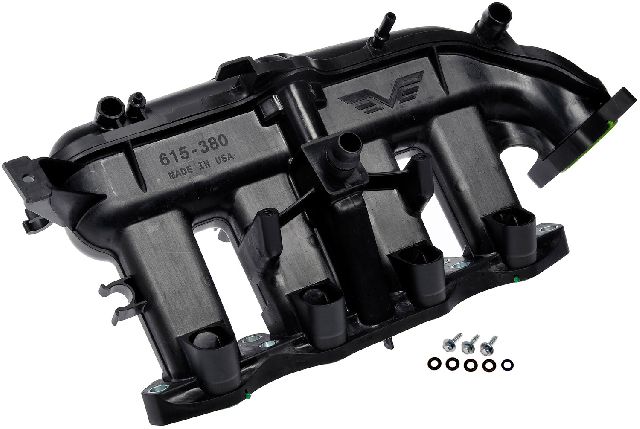
Typical fix: Replace both the intake manifold and the valve cover assembly. Replacing only the valve cover will result in a repeat failure, as the underlying cause (bad intake check valve) has not been addressed. Aftermarket companies like Dorman offer a redesigned intake manifold (P/N 615-380). Some owners opt for external PCV check valve kits as a more permanent solution.
Est. part cost: $200-$400 - Cracked or Loose Intake Air Duct / Charge Pipe 🟡 Medium Probability The plastic and rubber components in the engine bay become brittle over time due to heat cycles and vibration. Clamps can also loosen, especially on the pipes connected to the intercooler and throttle body.
How to confirm: Visually inspect all air ducts between the air filter, turbo, intercooler, and throttle body for visible cracks, tears, or loose connections. A smoke test is the most effective way to pinpoint leaks in the charge air system that are not visible to the naked eye.
Typical fix: Replace the damaged duct or pipe and ensure all clamps are secure.
Est. part cost: $50-$150 - Leaking Throttle Body Gasket ⚪ Low Probability The seal between the throttle body and the plastic intake manifold can degrade over time, causing a small vacuum leak.
How to confirm: Perform a smoke test. Smoke will be seen escaping from the junction between the throttle body and the plastic intake manifold. This is often done while diagnosing the larger PCV issue.
Typical fix: Remove the throttle body, clean the mating surfaces, and install a new gasket. Most replacement intake manifold kits include a new throttle body gasket.
Est. part cost: $5-$15
Rare But Worth Checking
- Leaking Intake Manifold Gasket: The gasket between the intake manifold and the cylinder head can leak, but this is less common than the other issues. This would typically be found during a smoke test if no other leaks are present.
- Failed Turbocharger Inlet PCV Check Valve: A second check valve is located in the PCV line that runs from the valve cover to the turbocharger inlet. While less common to fail than the intake manifold valve, if it sticks open it can cause improper crankcase ventilation and contribute to air/oil metering issues.
Diagnosis Steps
- Check for Stored Codes: Use an OBD-II scanner to confirm P2281 and look for other related codes like P0171, P1101, or P0299. The presence of these codes together is a strong indicator of the common PCV failure.
- Perform PCV System Check: With the engine idling, listen for a distinct hissing or whistling sound from the valve cover. Carefully try to remove the oil cap; if strong vacuum holds it in place, the PCV diaphragm has failed. Also, pull the oil dipstick; if the hissing stops and the idle changes, this further confirms the ruptured diaphragm.
- Visual Inspection: If the PCV check is inconclusive, thoroughly inspect all intake hoses, charge pipes, and clamps from the airbox to the throttle body. Look for obvious cracks, tears, or loose connections.
- Perform a Smoke Test: If no visual leaks are found, perform a smoke test on the intake system. Introduce smoke into the intake after the MAF sensor. Watch for smoke escaping from any charge pipe connections, the intercooler, the throttle body gasket, or, most importantly, the small vent hole on the valve cover diaphragm cap.
- Inspect Intake Manifold Check Valve: If a major PCV leak is confirmed, the final step is to remove the corrugated PCV hose from the intake manifold and look into the manifold's port with a flashlight. The small, orange, cross-shaped check valve should be visible and intact. If it is missing or broken, the intake manifold must be replaced or an external check valve kit must be installed.
Parts You'll Likely Need
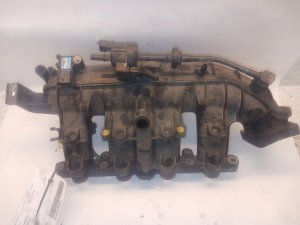
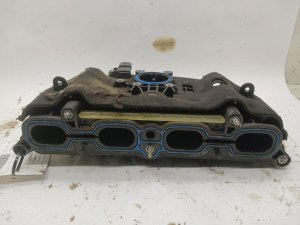
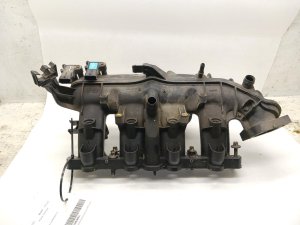
- Intake Manifold
(OEM #55573171 (superseded by 25200449))— Required to fix the integrated PCV check valve, which is a primary failure point on this engine and the root cause of the subsequent valve cover failure.
Trusted brands: ACDelco, Dorman (P/N 615-380)
OEM price range: $150-$250
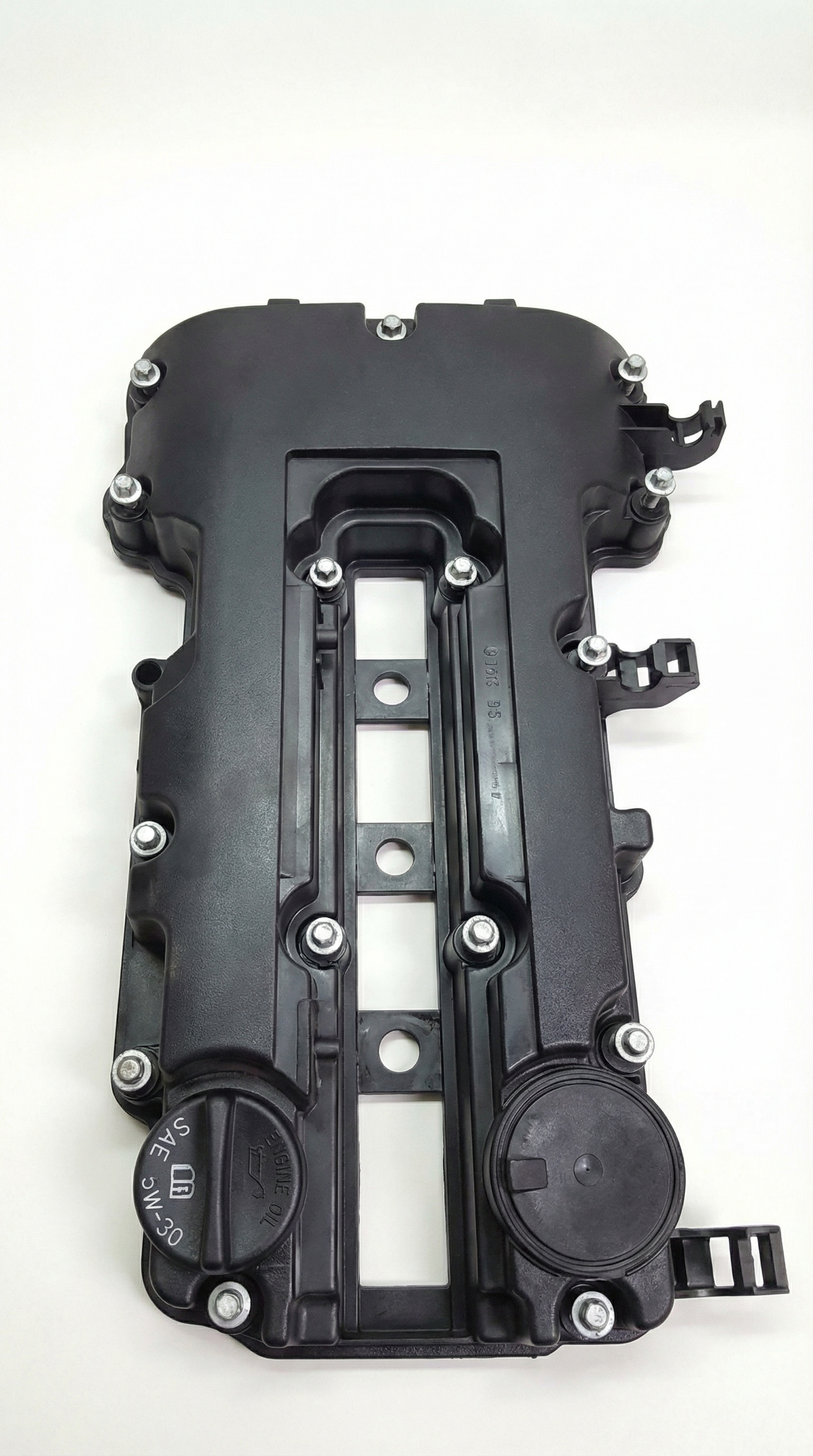
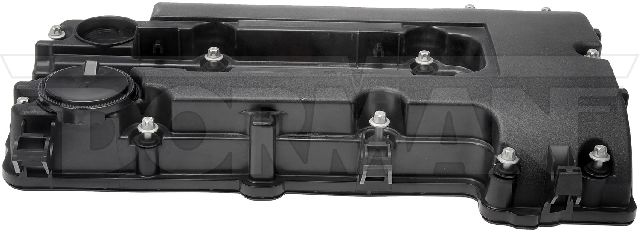
Aftermarket price range: $100-$180 - Valve Cover (Camshaft Cover)
(OEM #25198874 (superseded by 25209141))— The PCV regulator diaphragm inside the cover ruptures as a result of the failed intake manifold check valve. It is not sold separately from the cover and must be replaced along with the manifold.
Trusted brands: ACDelco, Dorman
OEM price range: $100-$150
Aftermarket price range: $50-$100 - Intake Air Duct (Charge Pipe) — These rubber or plastic pipes can crack or the connections can loosen over time, causing a simple air leak that can trigger P2281.
Related Codes That Often Appear With This One
- P0171 — System Too Lean. This code is extremely common with the PCV system failure, as the ruptured valve cover diaphragm creates a large unmetered vacuum leak, causing a lean fuel mixture.
- P1101 — Intake Air Flow System Performance. This is another code directly related to the PCV vacuum leak. The MAF sensor's readings don't match what the ECM expects based on throttle position and engine speed, which is the definition of this fault. Seeing P0171 and P1101 with P2281 strongly points to the PCV system failure.
- P0299 — Turbocharger Underboost. The massive boost leak created by the failed PCV system (boost pressure escaping into the crankcase) can prevent the turbo from building its target pressure, triggering an underboost code.
- P0106 — Manifold Absolute Pressure (MAP) Sensor Performance. The erratic vacuum and pressure signals caused by the PCV failure can lead to MAP sensor readings that are out of the expected range, triggering this code.
Technical Service Bulletins (TSBs) & Recalls
- GM Special Coverage 14371B: Extends warranty on the water pump for certain 2011-2014 models to 10 years/150,000 miles due to frequent leaks.
- GM TSB PIP5090: A technical service bulletin that addresses the PCV issues, often leading to the replacement of the intake manifold and/or valve cover.
- GM Special Coverage 14311B / 14870: Covers a faulty negative battery cable that can cause a wide range of erratic electrical issues.
Platform-Specific Known Issues
- The Positive Crankcase Ventilation (PCV) system on the 1.4L LUJ/LUV engine has a critical design flaw. A check valve inside the intake manifold fails, which then pressurizes the crankcase and ruptures the diaphragm in the valve cover, creating a significant unmetered air leak. This is the most common cause of P2281 and related codes.
- GM issued warranty extensions for some of these components on certain model years, but many vehicles are now outside the coverage period. Owners should check for any applicable Special Coverage programs with a dealer.
Mechanic-Grade Diagnostic Values
- Mass Airflow (MAF) Sensor Reading at Idle — expected: Approximately 1.4-2.5 g/s at normal operating temperature. A common rule of thumb is for the g/s value to be slightly higher than the engine displacement in liters.. Failure: A reading significantly higher than expected at idle, or a reading that does not increase smoothly with RPM, can indicate a leak or a faulty sensor.
- Long Term Fuel Trim (LTFT) at Idle — expected: Close to 0% (+/- 5%).. Failure: Stuck at a high positive value, often +25% or higher. This indicates the ECM is adding the maximum amount of fuel to compensate for a large vacuum leak.
- Short Term Fuel Trim (STFT) at Idle — expected: Fluctuating near 0%.. Failure: Consistently high positive value, often fluctuating wildly but staying above 10-15%. A Reddit user reported STFT at +35.16% during a PCV failure event.
Scan Tool Commands That Help
- GDS2 / Professional Scan Tool: Fuel Trim Learn Reset — After replacing components that cause a vacuum leak, such as the valve cover or intake manifold, it is critical to reset the learned fuel trim values. This forces the ECM to relearn the base fuel strategy immediately, rather than slowly adapting over time, which can cause persistent rough running even after the repair is complete.
- GDS2 / Professional Scan Tool: View 'With Purge' vs 'Without Purge' Fuel Trims — This GM-specific data PID helps differentiate between a general vacuum leak and a problem with the EVAP system. If the 'Without Purge' total fuel trim is high, it confirms a vacuum leak (like the PCV failure). If only the 'With Purge' trim is high, the issue is more likely related to the EVAP purge valve or system.
Wiring & Ground Locations
- G103 — Located on the left (driver's side) shock tower in the engine compartment.. This is a primary ground point for the Engine Control Module (ECM). A poor connection here can cause erratic sensor readings and phantom codes. While not a direct cause of the air leak itself, ensuring this ground is clean and tight is a crucial step when diagnosing any electronic engine control issues.
- MAF Sensor Connector — On the air filter box housing.. The MAF sensor signal is sent to the ECM via Pin 42 (D-GN/WH wire) on the X1 connector. A damaged wire or corroded pin in this 8-pin connector can cause incorrect MAF readings, potentially confusing the diagnosis of a physical air leak.
Real Owner Repair Stories
- Reddit user in r/cruze (2014 Chevrolet Cruze 1.4L LT, ~99,360 miles) — Check Engine Light with code P0171 (System Too Lean) and later P013B. Live data showed Long Term Fuel Trim at ~40%.
❌ Tried (didn't work) Replacing a clamp on the intake duct, which temporarily improved fuel trims., Replacing the entire intake duct from the MAF to the turbo., Spraying soapy water to find leaks with no success.
✅ What actually fixed it The user had not yet fixed it but was experiencing the classic symptoms of the PCV system failure. The community correctly pointed out that high positive fuel trims that decrease significantly with RPM (~15% at 2500RPM) are a textbook sign of a vacuum leak, and on this engine, that points directly to the valve cover and intake manifold check valve failure. - CruzeTalk.com forum user (2012 Chevrolet Cruze 1.4L) — P2281, P0171, hissing noise, high oil consumption.
❌ Tried (didn't work) Replacing the valve cover only. The code and symptoms returned shortly after.
✅ What actually fixed it The user installed an external PCV check valve kit (from CruzeKits.com) which bypasses the failed internal check valve in the intake manifold. This, combined with the previously replaced valve cover, permanently resolved the codes and symptoms. This is a common repair path for owners who want a more robust fix than replacing the OEM intake manifold.
OEM Part Supersession History
55573171→25200449 (which was later superseded by 28289977)— GM updated the part number for the intake manifold over the years. However, sources suggest these revisions did not fix the underlying check valve design flaw.
Heads up: All versions are physically compatible, but all OEM versions are considered prone to the same failure.25198874→25209141— Standard part number update for the valve cover assembly.
Model Year Variations Within This Range
- 2011-2016: The 1.4L turbo engine was available under two RPO codes, LUJ and LUV. For the purpose of diagnosing P2281, they are mechanically very similar and both suffer from the exact same PCV system design flaw. All parts and diagnostic procedures are interchangeable between them.
Diagnostic Flowchart
Other Known Issues on This Vehicle
Issues unrelated to this code that are worth knowing about as an owner of this generation:
- Coolant Leaks (Water Pump & Thermostat Housing) 🔴 High — Extremely common. The water pump often fails before 100,000 miles, and the plastic thermostat housing and coolant outlet are prone to cracking. (Ref: TSB 14371B (Special Coverage for water pump))
- Oil Cooler Gasket Leaks 🟠 Medium — Very common, typically after 60,000 miles. The seals between the oil cooler/filter housing and the engine block degrade, causing oil to leak onto the exhaust manifold and create a burning smell.
- Faulty Negative Battery Cable 🟠 Medium — Common across 2011-2015 models. A poor internal crimp in the negative battery cable causes high resistance, leading to flickering lights, erratic gauge behavior, and random warning messages like 'Service Stabilitrac'. (Ref: TSB 14311B / 14870 (Special Coverage))
- High Oil Consumption 🔴 High — Directly related to the PCV system failure. When the system fails, it can also damage piston rings over time, leading to significant oil consumption even after the PCV components are repaired.
- 6T40 Automatic Transmission Failures 🟠 Medium — Reported with some frequency. Issues include harsh shifting, slipping, and in some cases, complete failure requiring a rebuild or replacement. (Ref: Multiple TSBs exist for various shift quality issues.)
Used vs. New Parts: Buying Guide for This Vehicle
When a used part is the smart pick: For this specific P2281 repair, buying a used intake manifold or valve cover is NOT recommended. Both parts contain integrated rubber components (check valve and diaphragm) that are known to fail with 100% certainty over time. A used part is likely already failed or very close to failing.
What to inspect on the donor part:
- Do not purchase a used OEM intake manifold or valve cover for this repair.
Aftermarket brands forum-validated for this vehicle:
- Intake Manifold: Dorman (P/N 615-380) is a widely used alternative that claims a redesigned check valve retainer.
- External PCV Kit: CruzeKits.com and ZZP Performance are well-regarded by the owner community for providing robust external check valve kits that bypass the need to replace the intake manifold entirely.
Brands owners have reported issues with on this vehicle:
- Avoid unbranded, no-name valve covers and intake manifolds from online marketplaces, as quality control can be poor, leading to premature failure.
Real Owner Stories
Aggregated from forums and TSBs cited above. Mileages and costs reflect what owners reported in those sources.
2011-2016 Chevrolet Cruze 1.4L Turbo
Symptoms: Loud hissing/whistling sound from the top of the valve cover, specifically from a small hole on the diaphragm cap. Strong suction held the oil filler cap down when trying to remove it.
What fixed it: Replacement of both the intake manifold and the valve cover assembly because the intake check valve was missing.
Cost: $200-$400
Source hint: CruzeTalk.com - '2011-2016 Cruze 1.4 PCV Valve Cover / Intake Manifold Issues'
Gen1 Chevrolet Cruze 1.4L Turbo
Symptoms: The intake check valve appeared visually intact but the vehicle still exhibited PCV-related symptoms.
What fixed it: Pressure testing the intake manifold to confirm the check valve was failing under load even though it was present.
Source hint: Reddit r/cruze - 'Gen1 1.4L Turbo Intake Manifold check valve testing discovery'
Related OBD-II Codes
Frequently Asked Questions
I have a 2014 Cruze with a whistling engine and P2281; is there a TSB or special coverage for this?
Can I just replace the valve cover on my 1.4L LUJ engine to fix the P2281 code?
How can I tell if my intake manifold check valve is actually missing?
Is there a more permanent fix for the PCV design flaw than the OEM plastic manifold?
Why does my Cruze make a chirping noise that stops when I pull the dipstick?
Does this P2281 issue affect the Chevrolet Sonic or Buick Encore as well?
Used OEM Parts in Stock
New Aftermarket Parts Available


The information in this article is provided for general reference and educational purposes only. Vehicle specifications, procedures, and part compatibility can vary by production date, trim level, and region. Always consult your vehicle's factory service manual and verify part numbers before purchasing or performing repairs. Safety-critical components such as airbags, seat belts, and braking systems should be installed by a qualified professional.
- Chevrolet Cruze:
- 🛍️ Shop This Part
- What's Unique About the 2011-2016 Chevrolet Cruze
- Symptoms You May Notice
- Most Likely Causes
- Rare But Worth Checking
- Diagnosis Steps
- Parts You'll Likely Need
- Related Codes That Often Appear With This One
- Technical Service Bulletins (TSBs) & Recalls
- Platform-Specific Known Issues
- Mechanic-Grade Diagnostic Values
- Scan Tool Commands That Help
- Wiring & Ground Locations
- Real Owner Repair Stories
- OEM Part Supersession History
- Model Year Variations Within This Range
- Diagnostic Flowchart
- Other Known Issues on This Vehicle
- Used vs. New Parts: Buying Guide for This Vehicle
- Real Owner Stories
- 2011-2016 Chevrolet Cruze 1.4L Turbo
- Gen1 Chevrolet Cruze 1.4L Turbo
- Related OBD-II Codes
- Frequently Asked Questions
- 🎟️ Get 5% Off