

P2196 on 2017-2023 BMW M5 (F90): Causes for Stuck Rich Signal and Fixes
On a 2017-2023 BMW M5, code P2196 most often points to a faulty Bank 1 upstream oxygen (O2) sensor or a leaking fuel injector on that bank. An O2 sensor is the more common and less expensive fix, but a leaking injector is a known issue on modern BMW direct-injection engines and should be investigated thoroughly. A failing high-pressure fuel pump (HPFP) is also a possible, though less common, cause.
- P2196 on your M5 means the engine's computer sees too much fuel on the passenger-side cylinder bank.
- The most likely cause is a failed upstream O2 sensor on that bank, which is a common wear item.
- A leaking fuel injector is another strong possibility on this engine and is a more serious issue that requires professional diagnosis.
- Do not ignore this code. It will cause poor performance, high fuel consumption, and can lead to expensive damage to your catalytic converters or engine internals.
What's Unique About the 2017-2023 BMW M5
The F90 M5 uses the S63 engine, a high-performance, twin-turbo V8 with a 'hot-vee' layout and high-pressure direct fuel injection. While the P2196 code can occur on any vehicle, this engine's complexity introduces specific probabilities. Leaking piezoelectric fuel injectors are a relatively common issue on modern direct-injection BMWs and can be a primary cause of a true rich condition. BMW has released multiple revisions (indexes) of these injectors to improve reliability. Additionally, owners who have installed aftermarket downpipes (removing the primary catalytic converters) have reported this specific code, sometimes leading to premature O2 sensor failure due to higher exhaust temperatures and gas velocity.
Symptoms You May Notice
- Check Engine Light is on.
- Significantly reduced fuel economy.
- Rough or unstable idle.
- Black smoke from the exhaust.
- Smell of raw fuel from the exhaust.
- Hesitation or loss of power during acceleration.
- Engine misfires, potentially with corresponding codes (P0301-P0304).
- Hard starting or long crank times, especially when the engine is warm.
- Replacing the catalytic converter. The P2196 code relates to the sensor *before* the converter. A rich condition can damage the converter over time, but the converter itself does not cause this code.
- Replacing spark plugs or ignition coils. While these can cause misfires, they typically lead to specific misfire codes (e.g., P0301) or sometimes a lean condition due to unburnt oxygen, not a stuck rich code.
Most Likely Causes
- Faulty Upstream Oxygen Sensor (Bank 1, Sensor 1) 🔴 High Probability O2 sensors are wear items and can fail from age, contamination from oil/coolant, or the high heat of a performance engine. Aftermarket modifications like catless downpipes are known to accelerate failure.
How to confirm: A technician can monitor live data from the O2 sensor. A healthy sensor's voltage fluctuates rapidly between approximately 0.1V and 0.9V. If the Bank 1 Sensor 1 voltage is stuck high (e.g., >0.8V) while Bank 2's sensor is fluctuating normally, the sensor is suspect. Swapping the Bank 1 and Bank 2 upstream sensors and seeing if the code moves to Bank 2 (P2198) is a definitive test.
Typical fix: Replace the Bank 1, Sensor 1 oxygen sensor.
Est. part cost: $150-$250 - Leaking Fuel Injector(s) on Bank 1 🟡 Medium Probability Modern high-pressure direct injection systems put immense stress on fuel injectors, and they are a known failure point on S63 engines, leading to excess fuel entering a cylinder. BMW has issued service bulletins and updated part indexes for these injectors across N63 and S63 platforms.
How to confirm: This is more difficult to diagnose. If swapping O2 sensors does not move the code, a leaking injector is a prime suspect. A technician can check fuel trims, perform a cylinder balance test using diagnostic software, or pull the spark plugs on Bank 1 to look for signs of heavy carbon fouling or being wet with fuel. A specialized tool like ISTA can perform a rough running measurement to help isolate the cylinder.
Typical fix: Replace the faulty fuel injector(s) on Bank 1. It is often recommended to replace all injectors on the affected bank at the same time, especially if they are an older index number. New injectors must be coded to the DME.
Est. part cost: $200-$400 per injector - Faulty High-Pressure Fuel Pump (HPFP) ⚪ Low Probability The S63 engine uses two HPFPs, one for each bank. While robust, a failure in the Bank 1 pump can potentially lead to incorrect fuel pressure regulation, though it more commonly results in low pressure issues.
How to confirm: A fuel pressure test must be performed using a diagnostic tool capable of reading the high-pressure fuel system. The live data for fuel rail pressure on Bank 1 should be compared against the DME's target pressure. Deviations can indicate a pump or sensor issue.
Typical fix: Replace the faulty high-pressure fuel pump for the corresponding bank.
Est. part cost: $500-$900
Rare But Worth Checking
- Faulty Mass Airflow (MAF) Sensor: A MAF sensor that is dirty or failing can send incorrect airflow data to the DME, causing it to command an incorrect fuel mixture. This usually affects both banks, but can sometimes manifest on one side first.
- Wiring Issue in O2 Sensor Circuit: A short to power in the sensor's signal wire could cause a constant high voltage reading, mimicking a stuck rich sensor. The harness should be inspected for damage, especially near hot exhaust components.
- Powertrain Control Module (DME/PCM) Fault: This is the least likely cause. An internal failure in the DME's analog-to-digital converter or driver circuit could lead it to misinterpret the sensor's signal. This should only be considered after all other possibilities have been exhaustively ruled out.
Diagnosis Steps
- Connect a professional OBD-II scanner to verify the P2196 code and check for any other stored codes.
- View live data for short-term and long-term fuel trims for both banks. High negative numbers on Bank 1 (e.g., -15% or more) confirm the DME is trying to correct a rich condition.
- View live data for the upstream oxygen sensors (Bank 1 Sensor 1 and Bank 2 Sensor 1).
- Confirm that Bank 1 Sensor 1 voltage is stuck high (above 0.8V) and not fluctuating.
- Compare to Bank 2 Sensor 1. If it is fluctuating normally, the issue is isolated to Bank 1.
- If accessible, swap the upstream O2 sensors between Bank 1 and Bank 2. Clear the codes and drive the vehicle.
- If the code returns as P2198 (Stuck Rich Bank 2), the O2 sensor is faulty and must be replaced.
- If the code returns as P2196, the sensor is likely good, and the engine has a true rich condition on Bank 1. Proceed to check fuel components.
- Inspect the spark plugs on Bank 1 (cylinders 1-4). Plugs that are black, sooty, or wet with fuel are a strong indicator of a leaking injector in that cylinder.
- Perform a fuel pressure test, monitoring the high-pressure rail for Bank 1 to ensure it is within BMW's specified range and not erratic.
- Inspect the O2 sensor wiring harness for any signs of melting, chafing, or corrosion that could cause a short circuit.
Parts You'll Likely Need
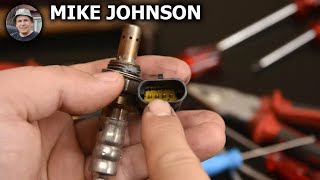
- Upstream Oxygen Sensor (Pre-Catalytic Converter, Bank 1)
(OEM #11788657235 or 11787935100 (Verify with VIN))— This is the most common failure point for a P2196 code when the engine is not actually running rich. The sensor itself fails and sends a false signal.
Trusted brands: Bosch, Genuine BMW
OEM price range: $200-$275
Aftermarket price range: $150-$220 - Fuel Injector (Index 12 or higher)
(OEM #13538616079 or 13537585261-12 (Verify with VIN and check for latest index))— If the O2 sensor is confirmed to be working correctly, a leaking fuel injector is the next most likely cause on the S63 engine, creating a true rich condition. BMW has updated these parts multiple times.
Trusted brands: Bosch, Genuine BMW
OEM price range: $300-$450
Aftermarket price range: $200-$350
Related Codes That Often Appear With This One
- P0301-P0304 — If a fuel injector is leaking badly on one of the cylinders in Bank 1 (cylinders 1-4), it can cause a cylinder-specific misfire code alongside the rich code.
- P2198 — This is the code for 'O2 Sensor Signal Stuck Rich, Bank 2, Sensor 1'. If both this code and P2196 appear together, it points towards a systemic issue affecting both engine banks, such as a faulty fuel pressure regulator, MAF sensor, or a tune-related issue after installing downpipes.
- P0172 — System Too Rich (Bank 1). This is a more general code indicating a rich condition confirmed by long-term fuel trim adjustments, and it often accompanies P2196 when a true rich condition (like a leaking injector) exists.
Technical Service Bulletins (TSBs) & Recalls
- SI B13 08 15: Service Action for S63 engines in E70/E71 models to check and replace high-pressure injectors with index numbers below 11. While for an older S63, it establishes a history of injector issues.
- SI B13 07 12: Bulletin for N63 and S63 engines outlining diagnostic procedures for misfires and rough running related to high-pressure fuel injectors, and replacement criteria based on injector index numbers.
- SI B11 08 15: Details the procedure for replacing valve stem seals on N63 and S63 engines to address oil consumption, a separate but common issue with this engine family.
Platform-Specific Known Issues
- On Bimmerpost forums, a user with an F90 M5 reported getting P2196 and P2198 codes a few days after installing catless downpipes. The community consensus was that the original O2 sensors had failed due to the modification, which is a common occurrence.
- BMW issued Service Information bulletin SI B13 08 15 for older S63 engines regarding updated fuel injectors (Index 11 and higher) to address reliability issues. These injectors have improved internal filters and construction.
Mechanic-Grade Diagnostic Values
- Upstream O2 Sensor (Lambda) Voltage at Idle (Warm Engine) — expected: For BMW wideband sensors, the voltage should be stable around 2.0V at idle.. Failure: A voltage stuck significantly higher or lower than the 2.0V target, or a voltage that does not respond to changes in engine load, indicates a sensor or circuit fault.
- O2 Sensor Heater Resistance — expected: Approximately 2-6 Ω at room temperature (68°F).. Failure: An open circuit (infinite resistance) or a resistance value far outside the 2-6 Ω range indicates a failed heater element within the sensor, which will prevent it from reaching operating temperature quickly and can cause fault codes.
- Long Term Fuel Trim (Additive Mixture Adaptation) — expected: Ideally close to 0%. A value between -10% and +10% is generally acceptable.. Failure: A large negative value, such as -15% or more, on Bank 1 indicates the DME is consistently removing fuel to compensate for a rich condition detected by the O2 sensor. This strongly supports either a faulty (biased) sensor or a true rich condition (leaking injector).
- High-Pressure Fuel Rail Pressure — expected: The S63 engine's high-pressure system can operate up to 350 bar (over 5000 PSI) on later models. At idle, it should be lower but must closely match the target value requested by the DME.. Failure: While P2196 is a rich code, erratic HPFP behavior or pressure that significantly deviates from the DME's target value can point to a fuel system regulation problem. Low pressure is a more common HPFP failure symptom, often triggering codes like 11A401 or 11B401.
Hidden / Shadow Codes Worth Checking
- 11A401 / 11B401: These are BMW-specific codes for 'Fuel high pressure... Pressure too low'. While they indicate low pressure, not high, they are critical context. If these codes are present alongside P2196, it could point to an intermittent HPFP failure or a fuel pressure sensor issue that is confusing the DME, rather than a simple leaking injector. (see via These are often stored as shadow codes and are best read with BMW-specific software like ISTA or advanced scanners like BimmerLink.)
- 118002: Mixture control: Fuel-air mixture, too rich. This is a more direct BMW-specific equivalent to the generic P0172 and often accompanies P2196, confirming the DME's long-term fuel adaptations are maxed out trying to correct the rich condition. (see via Visible with BMW diagnostic software (ISTA) or advanced OBD-II scanners.)
Scan Tool Commands That Help
- ISTA (BMW Dealer Software): Calculate Test Plan — After reading the fault memory, selecting the P2196/118002 fault and clicking 'Calculate test plan' will guide the technician through a structured diagnostic procedure, suggesting specific checks for wiring, sensors, and fuel components in a logical order.
- ISTA: Call up ECU functions > Diagnosis Scan > Operational smoothness values (Rough running measurement) — This function is critical for identifying a leaking injector. It displays a value for each cylinder, indicating combustion quality. A cylinder with a significantly different value (often showing high deviation) is likely the one with the leaking injector. This helps pinpoint the exact cylinder on Bank 1 that is causing the rich condition.
- ISTA: Service Functions > Engine Electronics > Fuel Supply > Fuel injector adjustment — This is not a diagnostic test, but a mandatory procedure AFTER replacing a fuel injector. Each new injector has a calibration value printed on it that must be entered into the DME. Failure to perform this coding will result in incorrect fueling, poor running, and likely a repeat of the P2196 code.
Wiring & Ground Locations
- Engine Ground Strap — On the related N63/S63 platforms, a primary engine ground strap is located on the driver's side (Bank 2 side in the US) near the engine mount. It is a braided metal strap connecting the engine block to the chassis.. While not on Bank 1, a poor primary engine ground can cause electrical noise and voltage offsets throughout the entire engine management system. This can lead to erratic sensor readings, including from O2 sensors, causing the DME to misinterpret data. A faulty ground on the ignition coil harness duct can also cause BSD communication faults which may indirectly affect DME operation.
Real Owner Repair Stories
- Bimmerpost user on M5POST (F90) (BMW F90 M5 (year not specified)) — Check Engine Light with codes P2196 and P2198 (Stuck Rich on both banks).
❌ Tried (didn't work) Checking for turbo leaks., Repositioning and re-clamping downpipes.
✅ What actually fixed it The user had just installed aftermarket catless primary and secondary downpipes. The community consensus, based on numerous similar experiences, was that the increased exhaust gas temperature and velocity from removing the catalytic converters had destroyed the stock upstream O2 sensors. The fix was to replace both upstream O2 sensors.
OEM Part Supersession History
Various PNs with Index 10 and lower→13538616079 (Bosch), which is an Index 11 or Index 12 injector. The number on the injector itself is often 13537585261-12.— Older index injectors were prone to leaking and failure. BMW released updated versions (Index 11 and higher) with improved internal construction, including an internal filter and better thermal compensation, to increase reliability.
Heads up: Injectors with Index 10 or lower CANNOT be mixed with Index 11 or higher on the same engine bank (e.g., Cyl 1-4). Doing so will cause severe running issues. If replacing a single failed injector on a bank with older indexes, the entire bank must be updated to the new index.
Model Year Variations Within This Range
- 2017-2023: There were no major internal engine or fuel system component changes between the pre-LCI (2017-2020) and LCI (2021-2023) F90 M5 that would fundamentally alter the diagnosis of a P2196 code. The S63B44T4 engine remained mechanically consistent. Changes were primarily cosmetic, infotainment-related (iDrive versions), and involved minor suspension tuning for the Competition models.
Diagnostic Flowchart
Other Known Issues on This Vehicle
Issues unrelated to this code that are worth knowing about as an owner of this generation:
- Excessive Oil Consumption 🟠 Medium — More common on earlier S63 engines but can still occur on the F90 M5. Often linked to valve stem seals or issues related to the 'hot-vee' turbo layout causing high temperatures. (Ref: SI B11 08 15 (relates to valve seal replacement on S63 engines))
- Rod Bearing Wear 🔴 High — A notorious issue on high-performance BMW engines, including earlier S63 variants. While less frequent on the later S63B44T4, premature wear can still occur, especially on tuned or hard-driven cars. Failure can be catastrophic.
- VANOS Solenoid Failure 🟠 Medium — The VANOS solenoids control variable valve timing and can become clogged or fail, leading to rough idle, loss of power, and fault codes. This is considered a common maintenance item on high-mileage S63 engines.
- Ignition Coil and Spark Plug Failure 🟡 Low — Due to the high-output, high-heat nature of the engine, ignition coils and spark plugs are considered regular wear items and may fail more frequently than on standard engines, causing misfires.
- Coolant Leaks 🟠 Medium — The complex cooling system required for the 'hot-vee' turbo setup has multiple hoses and connections that can become brittle and leak over time, particularly the turbocharger coolant lines.
Used vs. New Parts: Buying Guide for This Vehicle
When a used part is the smart pick: For this specific repair, buying used parts is generally not recommended. The potential for engine damage from a faulty used fuel component far outweighs the cost savings.
Donor-vehicle mileage cap: roughly under 40000 miles for the part to have meaningful remaining life.
What to inspect on the donor part:
- For O2 sensors, there is no reliable way to assess remaining life from a visual inspection.
- For fuel injectors, avoid any with physical damage, corrosion on the electrical connector, or a clogged/dirty tip. However, internal leaking cannot be seen.
- Crucially, for injectors, you must verify they are a matching set of Index 11 or, preferably, Index 12. Buying used single injectors is extremely risky.
OEM-only on this vehicle (don't cheap out):
- Fuel Injectors: Given the history of failures and the critical need for proper coding and matching indexes, using Genuine BMW or the OEM supplier (Bosch/Vitesco) is strongly advised. The risk of a cheap or used injector leaking and causing catastrophic engine damage is too high.
- High-Pressure Fuel Pump (HPFP): While a used one might function, the labor to replace it is significant. A new OEM or OEM-supplier part provides peace of mind against repeat failure.
Aftermarket brands forum-validated for this vehicle:
- Oxygen Sensors: Bosch is the OEM supplier to BMW for many sensors and is a reliable alternative to the Genuine BMW part.
- Fuel Injectors: Vitesco (formerly part of Siemens/Continental) and Bosch are the OEM suppliers. Purchasing from these brands is equivalent to Genuine BMW.
Brands owners have reported issues with on this vehicle:
- Unbranded or no-name fuel injectors from online marketplaces. Many forum users report these are often refurbished older-index injectors that are cleaned and re-stamped, leading to quick failure.
Real Owner Stories
Aggregated from forums and TSBs cited above. Mileages and costs reflect what owners reported in those sources.
2018-2023 BMW M5 (F90) S63 4.4L V8
Symptoms: Owner reported getting P2196 and P2198 codes a few days after installing aftermarket catless downpipes.
What fixed it: The community consensus was that the modification caused the pre-cat O2 sensors to fail, and they required replacement.
Source hint: Bimmerpost (F90 M5 Forum) - 'P2196 P2198 codes after DPs'
2011-2017 BMW M5 (F10) S63B44T0
Symptoms: Rough running and misfires related to high-pressure fuel injectors.
What fixed it: Following BMW diagnostic procedures to check and replace high-pressure injectors with older index numbers (below 11) with the updated parts.
Source hint: BMW Service Information bulletin SI B13 08 15
Related OBD-II Codes
Frequently Asked Questions
I just installed catless downpipes on my F90 M5 and now I have a P2196 code. Is this related?
My mechanic says I need new fuel injectors for my M5. Is this a known issue?
How can I tell if my P2196 code is caused by a bad O2 sensor or a leaking fuel injector?
What does my mechanic mean by 'injector index' and why is it important?
If I have to replace a fuel injector on my S63 engine, is there a special procedure?
My M5 has black smoke coming from the exhaust and a P2196 code. What's the most likely cause?
Helpful Videos

Used OEM Parts in Stock



New Aftermarket Parts Available


The information in this article is provided for general reference and educational purposes only. Vehicle specifications, procedures, and part compatibility can vary by production date, trim level, and region. Always consult your vehicle's factory service manual and verify part numbers before purchasing or performing repairs. Safety-critical components such as airbags, seat belts, and braking systems should be installed by a qualified professional.
- BMW M5:
- 🎬 Helpful Videos
- 🛍️ Shop This Part
- What's Unique About the 2017-2023 BMW M5
- Symptoms You May Notice
- Most Likely Causes
- Rare But Worth Checking
- Diagnosis Steps
- Parts You'll Likely Need
- Related Codes That Often Appear With This One
- Technical Service Bulletins (TSBs) & Recalls
- Platform-Specific Known Issues
- Mechanic-Grade Diagnostic Values
- Hidden / Shadow Codes Worth Checking
- Scan Tool Commands That Help
- Wiring & Ground Locations
- Real Owner Repair Stories
- OEM Part Supersession History
- Model Year Variations Within This Range
- Diagnostic Flowchart
- Other Known Issues on This Vehicle
- Used vs. New Parts: Buying Guide for This Vehicle
- Real Owner Stories
- 2018-2023 BMW M5 (F90) S63 4.4L V8
- 2011-2017 BMW M5 (F10) S63B44T0
- Related OBD-II Codes
- Frequently Asked Questions
- 🎟️ Get 5% Off