

P2135 on 2011-2015 Kia Sorento 2.4L: Causes and Fixes for Limp Mode
On a 2011-2015 Sorento 2.4L, code P2135 almost always means the electronic throttle body assembly has failed. The internal sensors are not sold separately, so replacing the entire unit (OEM Part #35100-2G700) is the standard fix. This is a well-documented failure on this platform. Expect to pay $150-$350 for an aftermarket part or around $325 for an OEM part. A manual throttle relearn procedure is often sufficient after replacement.
- P2135 on your Sorento almost certainly means the electronic throttle body has failed.
- Do not replace just a sensor; the entire throttle body assembly must be replaced as the sensors are integrated.
- This is a serious safety issue as the vehicle can enter limp mode at any time, drastically reducing power.
- Before ordering parts, double-check for code P1326, which causes similar symptoms but indicates a much more severe engine problem.
- After replacement, a throttle relearn procedure may be needed, which can often be done manually without special tools.
What's Unique About the 2011-2015 Kia Sorento
The 2011-2015 Kia Sorento, equipped with the 2.4L Theta II GDI engine, shares its electronic throttle control system with many other Hyundai and Kia models from this era. This system has a well-documented history of the electronic throttle body (Part #35100-2G700) being a high-failure item. The internal throttle position sensors (TPS) are integrated into the assembly and are not sold separately by Kia, making replacement of the entire throttle body the most common and required repair for a P2135 code. Kia service documentation specifically directs technicians to check the throttle body for P2135, distinguishing it from pedal sensor codes like P2138.
Symptoms You May Notice
- Sudden and severe loss of engine power (Limp Mode)
- Check Engine Light is on
- Vehicle will not accelerate properly or has hesitant acceleration
- Erratic or unstable idle
- Stalling at idle or when coming to a stop
- ESC (Electronic Stability Control) OFF light may illuminate simultaneously with the Check Engine Light
- Replacing the accelerator pedal position (APP) sensor. While possible, a failure here is more likely to set a P2138 code. Kia service documents specifically help technicians distinguish between P2135 (throttle body) and P2138 (pedal).
- Cleaning the throttle body. While cleaning a dirty throttle body is good maintenance, P2135 is an electrical correlation fault, not a mechanical sticking issue. 🎬 Watch: Understanding P2135 causes and fixes Cleaning will almost never fix this code.
Most Likely Causes
- Faulty Electronic Throttle Body Assembly 🔴 High Probability The integrated Throttle Position Sensor (TPS) electronics are a known high-failure item on the Theta II engine platform due to internal wear of the sensor contacts. This part is shared across numerous Hyundai and Kia models, all exhibiting the same failure pattern.
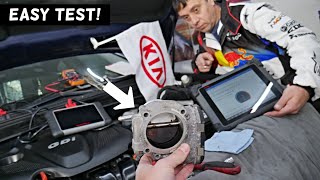
How to confirm: Using a scan tool, monitor the live data for TPS1 and TPS2 voltages with the key on and engine off. As you slowly press the accelerator, the voltages should move smoothly and inversely to each other (one rises, one falls). If one signal is erratic, stuck, jumps, or doesn't respond, and the wiring is confirmed to be good, the throttle body has failed. Wiggling the connector at the throttle body while watching the data can also reveal an internal fault if the signal drops out.
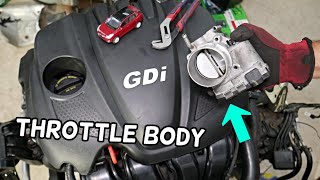
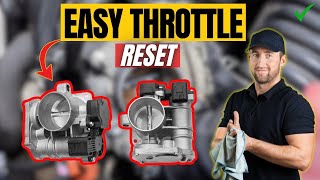
Typical fix: Replace the entire electronic throttle body assembly (OEM part #35100-2G700). The sensors are not sold separately. After installation, a throttle relearn procedure is required. This can often be done manually by turning the ignition ON (engine off) for 15-30 seconds, then OFF for 15-30 seconds, and repeating 2-3 times. 🎬 Watch: Quick tips for resetting your throttle position sensor
Est. part cost: $150-$350 - Wiring Harness or Connector Issue ⚪ Low Probability
How to confirm: Visually inspect the wiring harness and the 6-pin connector at the throttle body for any signs of damage, corrosion, backed-out pins, or frayed wires. Wiggle the connector and wiring while monitoring live sensor data on a scan tool to see if the signal drops out, indicating an intermittent connection. Use a multimeter to confirm a stable 5V reference and good ground at the connector.
Typical fix: Repair the damaged section of the wiring harness or replace the connector pigtail.
Est. part cost: $20-$50 - Faulty Accelerator Pedal Position (APP) Sensor ⚪ Low Probability
How to confirm: A faulty APP sensor will typically trigger a different code, such as P2138. However, you can use a scan tool to monitor APP Sensor 1 and APP Sensor 2 live data. On Kia systems, Sensor 2 voltage should be exactly half of Sensor 1. If the 2:1 ratio is broken or signals are erratic as you press the pedal, the pedal assembly is faulty.
Typical fix: Replace the accelerator pedal assembly. The sensor is integrated and not sold separately.
Est. part cost: $150-$250
Rare But Worth Checking
- Faulty Powertrain Control Module (PCM): This is very rare. The PCM should only be considered after all other possibilities, including the throttle body and wiring, have been thoroughly tested and ruled out. Some older Kia models had recalls for ECU issues causing stalling, but this is less common for P2135.
- Dirty or Carbon-Clogged Throttle Body: While heavy carbon buildup is common on GDI engines and can cause sticking or slow response, it is unlikely to be the sole cause of an electrical correlation code like P2135. Cleaning the throttle body is good practice but will almost never fix this specific code.
Diagnosis Steps
- Connect an OBD-II scanner and check for any other codes, paying close attention to P0122, P0222, or especially P1326.
- Visually inspect the throttle body connector and its wiring harness for any obvious damage, corrosion, or loose connections.
- With the key on and engine off, use a scan tool to view live data for Throttle Position Sensor 1 (TPS1) and Throttle Position Sensor 2 (TPS2).
- Slowly press the accelerator pedal to the floor and watch the voltage readings. They should change smoothly without any spikes or dropouts. One will typically sweep from low to high voltage, and the other from high to low.
- If one or both sensor readings are erratic, jumpy, or do not change, the throttle body assembly is the likely culprit.
- If sensor readings appear normal, wiggle the wiring harness at the throttle body to see if the signal is interrupted, which would indicate a wiring problem.
- If the throttle body and wiring are confirmed good, investigate the less likely cause: the Accelerator Pedal Position (APP) sensor, by monitoring its specific sensor data for a correct 2:1 voltage ratio.
Parts You'll Likely Need
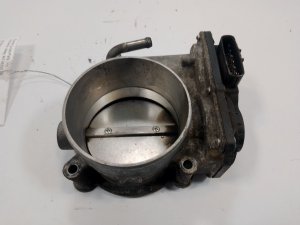
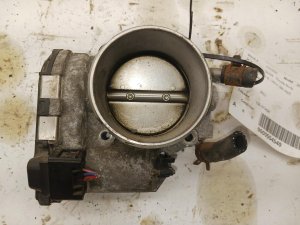
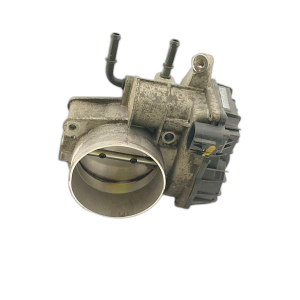
- Electronic Throttle Body Assembly
(OEM #35100-2G700)— This is the most common cause of P2135 on this vehicle. The internal throttle position sensors fail and are not sold separately.
Trusted brands: Kia (OEM), Bosch, Hitachi, Dorman
OEM price range: $215-$325
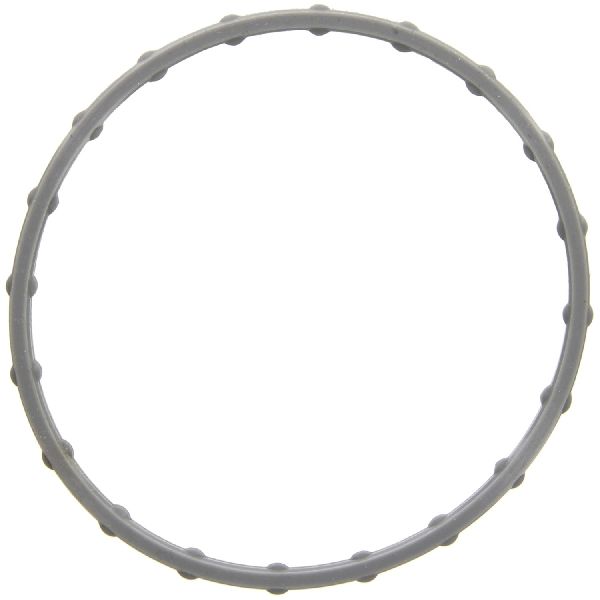
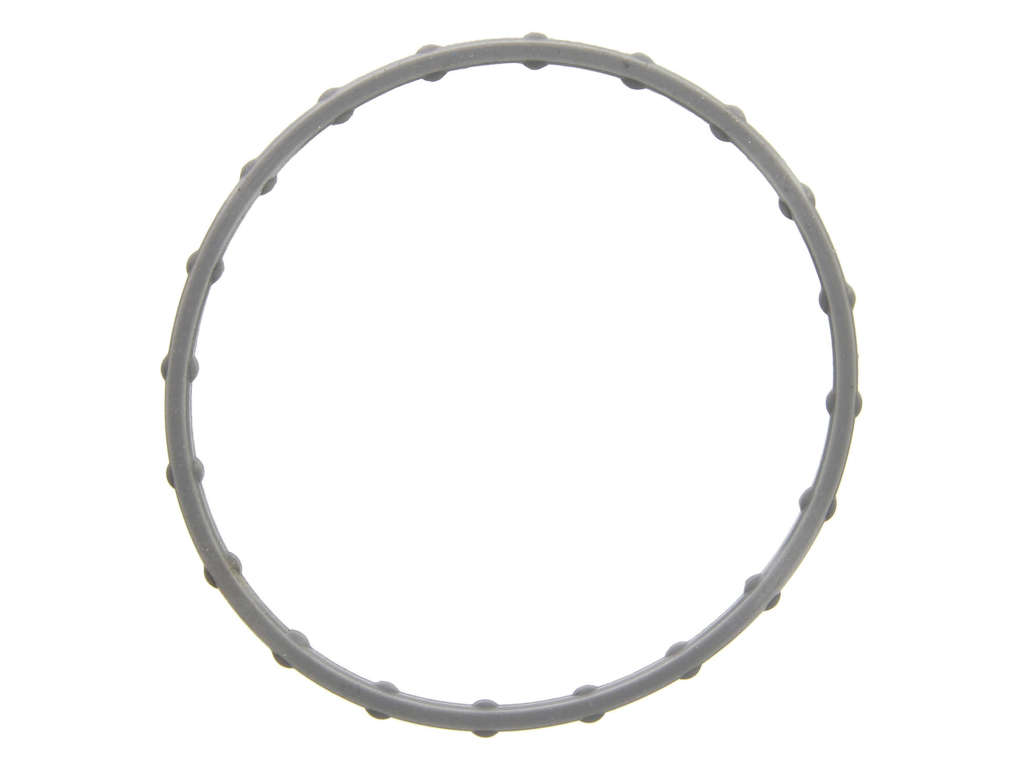
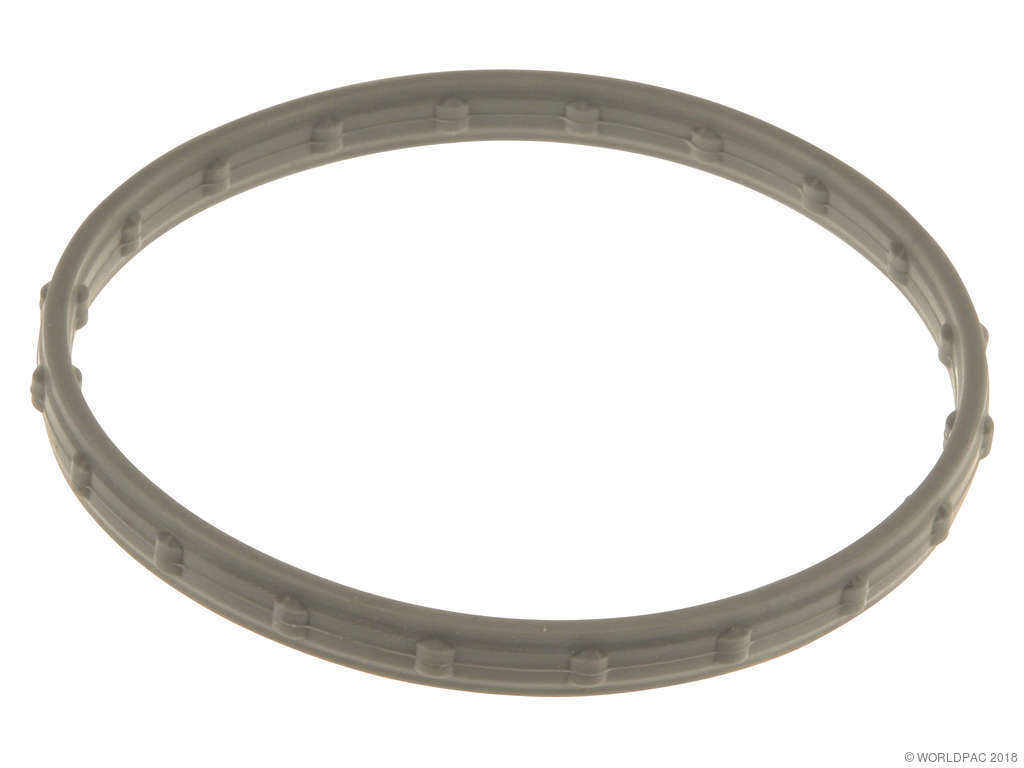
Aftermarket price range: $150-$250 - Throttle Body Gasket
(OEM #28312-2G000)— It is best practice to replace the gasket any time the throttle body is removed to prevent future vacuum leaks.
Trusted brands: Kia (OEM), Fel-Pro, Mahle
OEM price range: $5-$15
Aftermarket price range: $3-$10
Related Codes That Often Appear With This One
- P0122 — Indicates 'Throttle Position Sensor 'A' Circuit Low Input', which can be triggered when the internal sensor fails as part of the P2135 correlation error.
- P0222 — Indicates 'Throttle Position Sensor 'B' Circuit Low Input', the companion code to P0122, further pointing to a failure within the throttle body assembly.
- P1326 — This code for the Knock Sensor Detection System (KSDS) can cause identical limp-mode symptoms (limited to ~2000 RPM). It is critical to check for P1326, as it points to a more severe engine bearing failure issue that may be covered by an extended warranty or recall (like NHTSA 23V877).
Technical Service Bulletins (TSBs) & Recalls
- While no specific TSB for P2135 on this Sorento was found, Kia TSB-044 for other models addresses P2135/P0638 with an ECM upgrade and sensor replacement, showing a history of addressing throttle control issues.
- A related GM TSB (11-06-04-007B) for P2135 highlights that the cause is the difference between TP Sensor 1 and TP Sensor 2 exceeding a calibrated value, which is the same logic Kia uses.
Platform-Specific Known Issues
- The 2.4L Theta II GDI engine in this Sorento is known for electronic throttle body failures across multiple Hyundai and Kia models.
- This engine is also subject to recalls and warranty extensions for connecting rod bearing failure, which can present with similar limp-mode symptoms but will typically set code P1326. It is critical to differentiate between the two issues.
- Owner experiences often describe the P2135 failure as intermittent at first, sometimes only happening on cold starts, before becoming more frequent.
Mechanic-Grade Diagnostic Values
- TPS 'A' (TPS1) Signal Voltage — expected: Approx. 0.5V at closed throttle, sweeping smoothly to approx. 4.5V at wide-open throttle (Key On, Engine Off).. Failure: Voltage is stuck, erratic, or shows sudden jumps or dropouts when the pedal is pressed smoothly.
- TPS 'B' (TPS2) Signal Voltage — expected: Approx. 4.5V at closed throttle, sweeping smoothly and inversely to approx. 0.5V at wide-open throttle (Key On, Engine Off).. Failure: Voltage does not sweep inversely to TPS1, is stuck, or is erratic. The PCM flags P2135 when the two signals are no longer plausible relative to each other.
- 5V Reference at Throttle Body Connector Pin 5 — expected: 4.75V – 5.25V with key on, engine off.. Failure: Voltage is significantly lower or absent, indicating a wiring or PCM fault, not a throttle body failure.
- Sensor Ground at Throttle Body Connector Pin 3 — expected: Less than 0.2V (or minimal resistance to chassis ground).. Failure: Voltage is significantly above 0.2V, indicating a poor ground connection which can cause erratic sensor readings.
- Throttle Body Connector Pinout (Typical) — expected: Pin 3: Sensor Ground; Pin 4: TPS1 Signal; Pin 5: 5V Reference; Pin 6: TPS2 Signal.. Failure: Allows for direct testing of power, ground, and signal wires at the component, bypassing the need for a scan tool for basic circuit integrity checks.
Scan Tool Commands That Help
- Kia GDS (Global Diagnostic System) or equivalent professional scanner: Active Test / Actuator Driving - ETC Motor — This bidirectional command allows a technician to directly command the throttle plate to open and close, bypassing the accelerator pedal. It is used to definitively confirm if the throttle motor is functional and if the TPS sensors respond correctly to the plate movement, isolating the fault to the throttle body assembly itself.
- Kia GDS (Global Diagnostic System) or equivalent professional scanner: S/W Management -> Reset Adaptive Values — This is the official factory procedure to reset the ECM's learned throttle values after replacing the throttle body. While a manual relearn often works, using this function ensures the adaptive memory is cleared, which can resolve idle or drivability issues that persist after parts replacement.
Wiring & Ground Locations
- Main Powertrain Ground — A primary ground strap connects the engine block/transmission case to the vehicle's chassis/frame rail in the engine bay.. A Kia technical note advises that a poor or corroded main powertrain ground can cause various, otherwise unexplainable, electronic DTCs, including those related to sensor correlation. This ground is critical for stable sensor readings, and a voltage drop test under load should be performed if the cause of P2135 is not obvious.
- Throttle Body Connector — A 6-pin electrical connector plugged directly into the electronic throttle body assembly, located where the main air intake duct meets the engine's intake manifold.. This single connector carries the 5V reference, ground, and both TPS signal wires. Corrosion, moisture intrusion, or backed-out pins in this specific connector are a common point of failure and can mimic a faulty throttle body. A 'wiggle test' of this connector while monitoring live data is a crucial diagnostic step.
Real Owner Repair Stories
- YouTube Commenter on 'Backyard Mechanic' video (Unknown Year/Model with P2135) — Persistent P2135 error code over several years.
❌ Tried (didn't work) Spending 'thousands of dollars' on unspecified repairs.
✅ What actually fixed it The owner reseated every electrical connector in the circuit path, from the throttle body, along the harness, to both plugs on the ECM, and the accelerator pedal connector. They also blew out the connectors with compressed air and wiped them. This 10-minute process of checking the physical connections resolved the long-standing issue.
Documented NHTSA Reports
- An owner reported in NHTSA ODI #10779832 that their vehicle threw codes P1295, P2135, and P2106, noting that Kia service documentation (Ref: 044 Bulletin) calls for the ECM to be reprogrammed using the GDS (Global Diagnostic System) and for the TPS to be replaced.
- According to NHTSA ODI #10477012, a dealership confirmed TPS and brake sensor failure alongside an Electronic Stability Control issue requiring reprogramming after reading error codes P2135, P0638, and P2A00.
OEM Part Supersession History
35100-2G700→35100-2G700 (current)— No official supersession to a new number was found. The part number appears to be consistent across the entire 2011-2015 model year range for the 2.4L engine.
Heads up: While the part number is the same, aftermarket manufacturers like Dorman have released 'OE FIX' versions that replace the original mechanical wear-prone contacts with non-contact Hall Effect sensors for improved durability.
Model Year Variations Within This Range
- 2011-2015: The Kia Sorento received a major facelift for the 2014 model year with a new chassis and interior, but the 2.4L GDI engine continued to use the same electronic throttle body, part number 35100-2G700. Therefore, the cause and fix for P2135 are identical across the 2011-2015 range for this engine.
Diagnostic Flowchart
Other Known Issues on This Vehicle
Issues unrelated to this code that are worth knowing about as an owner of this generation:
- Catastrophic Engine Failure (Rod Bearing Wear) 🔴 High — Widespread issue across the Theta II engine family, can occur at any mileage but often cited between 60,000-120,000 miles. Triggers code P1326. (Ref: Multiple recalls (e.g., NHTSA 17V-224, 23V877) and a class-action settlement led to the KSDS update and a lifetime engine warranty for many affected vehicles.)
- Excessive Oil Consumption 🔴 High — Extremely common, often starting around 60,000 miles. Many owners report consuming over 1 quart per 1,000 miles, which can lead to engine damage if not monitored. (Ref: Kia TSB ENG123 addresses oil consumption testing procedures.)
- Engine Compartment Fire Risk 🔴 High — Affects 2011-2016 models. Can be caused by leaks in the ABS/HECU module or other engine-related faults. (Ref: Multiple recalls issued by Kia to address fire risks from various sources, including NHTSA 23V877 for general engine fire risk.)
- GDI Carbon Buildup 🟠 Medium — Inherent to all GDI engines, including the Theta II. Causes rough idle, misfires, and hesitation, typically becoming noticeable between 60,000-100,000 miles.
- Theft Vulnerability (No Immobilizer) 🔴 High — Affects 2011-2021 models with key-start ignitions. These vehicles lack an engine immobilizer, making them easy targets for theft. (Ref: Kia has offered a free anti-theft software update and steering wheel locks to affected owners.)
- Peeling Exterior Paint (Snow White Pearl) 🟡 Low — Common on 2013-2016 models with 'Snow White Pearl' paint, which can bubble and peel in large sheets, exposing bare metal.
Used vs. New Parts: Buying Guide for This Vehicle
When a used part is the smart pick: Buying a used throttle body for this vehicle is generally NOT recommended. The failure is due to internal wear of electronic contacts, a common design flaw. A used part from a junkyard carries a very high risk of having the same issue or failing shortly after installation. It only makes sense as a temporary, low-cost diagnostic step if you are on a strict budget and can source a part from a very low-mileage donor.
Donor-vehicle mileage cap: roughly under 40000 miles for the part to have meaningful remaining life.
What to inspect on the donor part:
- Verify the donor vehicle's mileage is as low as possible.
- Inspect the connector pins for any signs of corrosion, moisture, or damage.
- Check the throttle plate for excessive carbon buildup, which might indicate a rough service life.
- Ask the seller if there is any warranty or return period, even if short.
Aftermarket brands forum-validated for this vehicle:
- Bosch (Often the original OEM supplier)
- Hitachi
- Dorman (Specifically their 'OE FIX' versions which claim to use upgraded non-contact Hall Effect sensors to prevent the original failure mode).
Brands owners have reported issues with on this vehicle:
- Unbranded, 'white-box' parts from online marketplaces should be avoided. Forum discussions frequently show mixed results with the cheapest available options, with some failing quickly. Sticking to reputable brands is advised for this critical part.
Real Owner Stories
Aggregated from forums and TSBs cited above. Mileages and costs reflect what owners reported in those sources.
2012 Kia Sorento EX 2.4L
Symptoms: After receiving the Knock Sensor (KSDS) update, the vehicle would stall or nearly stall while driving.
What fixed it: The owner's report highlights the overlap in symptoms between P2135 and P1326 issues, though the specific fix for this instance was tied to the engine's response to the KSDS update.
Source hint: CarComplaints.com: An owner of a 2012 Sorento EX 2.4L reports that after receiving the Knock Sensor (KSDS) update, the vehicle would stall or nearly stall
2011-2015 Kia Sorento 2.4L
Symptoms: The failure was intermittent at first, sometimes only happening on cold starts, before becoming more frequent.
What fixed it: Replacement of the electronic throttle body assembly (OEM part #35100-2G700) followed by a manual recalibration.
Source hint: vehicle_specific_issues: Owner experiences often describe the P2135 failure as intermittent at first
Related OBD-II Codes
Frequently Asked Questions
My 2012 Sorento 2.4L is in limp mode and showing P2135; could this be related to the engine recall for rod bearings?
Can I just replace the sensor on my 2011-2015 Sorento throttle body?
Is there a specific TSB for the P2135 code on my Kia Sorento?
Do I need a professional scan tool to perform a throttle relearn after replacing the assembly?
Why does my ESC OFF light come on at the same time as the Check Engine Light for P2135?
My Sorento stalls when coming to a stop; is this a symptom of P2135?
Helpful Videos

Used OEM Parts in Stock

New Aftermarket Parts Available


The information in this article is provided for general reference and educational purposes only. Vehicle specifications, procedures, and part compatibility can vary by production date, trim level, and region. Always consult your vehicle's factory service manual and verify part numbers before purchasing or performing repairs. Safety-critical components such as airbags, seat belts, and braking systems should be installed by a qualified professional.
- Kia Sorento:
- 🎬 Helpful Videos
- 🛍️ Shop This Part
- What's Unique About the 2011-2015 Kia Sorento
- Symptoms You May Notice
- Most Likely Causes
- Rare But Worth Checking
- Diagnosis Steps
- Parts You'll Likely Need
- Related Codes That Often Appear With This One
- Technical Service Bulletins (TSBs) & Recalls
- Platform-Specific Known Issues
- Mechanic-Grade Diagnostic Values
- Scan Tool Commands That Help
- Wiring & Ground Locations
- Real Owner Repair Stories
- Documented NHTSA Reports
- OEM Part Supersession History
- Model Year Variations Within This Range
- Diagnostic Flowchart
- Other Known Issues on This Vehicle
- Used vs. New Parts: Buying Guide for This Vehicle
- Real Owner Stories
- 2012 Kia Sorento EX 2.4L
- 2011-2015 Kia Sorento 2.4L
- Related OBD-II Codes
- Frequently Asked Questions
- 🎟️ Get 5% Off